
celebrity radar - gossips
AN OPEN LETTER TO PRESIDENT MUHAMMADU BUHARI

Mr. President, many believe that you cannot read and those that believe that you can claim that you cannot go beyond three lines. They say outside of that you can only comprehend cartoons.
I do not share either view. I know you well enough to concede that when you consider a literary submission of sufficient importance you have the prescence of mind, discipline, health, intelligence and ability to read through it very slowly and very carefully weighing up every word. And that is precisely as it should be.
The first open letter that I wrote to you was in December 2015 and the following serves as the second.
You will forgive me because this is a long letter and I am fully aware that your attention span or ability to retain too much information in one fell swoop may not be as good as it used to be.
Nevertheless I urge you to do your best to muster the courage, energy and intellectual stamina to stay the course and to find the time out of your busy schedule to read it from beginning to end.
I have written it because our nation is entering into dangerous and precarious waters and I sense that something will give very soon. I am therefore constrained to use this medium to bring my observations to your attention.
Be rest assured that I speak out of nothing but love and concern for the welfare of the Nigerian people and it is not my intention to insult you or undermine and disrespect your office but rather to shine the light of truth on all your activities with a view to assisting and encouraging you to change your ways.
You will agree with me that, no matter how bitter it may be, that truth must be told. This is a sacred obligation on our part as leaders and a matter of duty and honor.
I owe you, the Nigerian people and posterity that much and I have little doubt that no matter how badly you may feel after reading it, history will vindicate me and prove me right and one day you will acknowledge and recognise the profundity, wisdom and foresight in my constant and consistent criticisms, admonitions and counsel.
Outside of that it is my earnest prayer that the God of Heaven, whose I am and whom I serve, will judge between you and I.
Your Excellency, kindly note and consider the following.
You released hundreds of Boko Haram fighters from prison claiming that they are reformed and a few days later 30 of your citizens are blown up by the same Boko Haram in Borno state.
Worse still on that same day 16 members of the same family and four others were herded into a room and burnt alive by Fulani militants in Kaduna state.
After these terrible events instead of rushing back home to stand with your people, you stayed in Addis Ababa, lamenting and crying about the security situation in Libya and you sent your Vice to a funeral in Nairobi. Such insensitivity, even by your own standards, is rarely seen.
It took you three long days to finally see fit to leave your foreign friends, leave Addis Ababa and fly directly to Maiduguri to express your condolences to the Governor and people of Borno.
Even then you could not muster the courage to go to the town of Auno where the bombing took place but only to Maiduguri, the capital of the state.
Understandably you were received with boos, jeers and shouts of “ba ma so” (meaning “we dont want”) by the crowds that lined the streets and this was an eloquent testimony to the fact that the entire nation, including the north that you claim to represent and be a champion of, is fed up with you and can no longer bear your incompetence and inability to run the affairs of our nation.
Worst still hours after your condolence visit Boko Haram attacked Maiduguri itself hitting one of its suburbs called Jidari Polo.
Their leader, a cowardly creature that can best be described as a psychopathic, delusional, sociopathic, mentally-deranged, murderous, bloodthirsty, bloodlusting and unconciable monster by the name of Sheik Abubakar Shekau, even had the nerve to send you a public warning in a recorded message that was released to the public after you left in which he arrogantly and boastfully declared that you must never come back to Borno again or you would be attacked and that you “should fear and serve God and not cows”. He added the following,
“Buhari thinks he is a general but God says he is nothing. He hasn’t achieved anything in the sight of God. Buhari is deceiving the people and playing to the gallery”.
Mr. President he has sent his message to you and to Nigeria and we have heard him loud and clear.
Yet most disturbing was not his sheer effontry but the fact that the only thing that you had to offer the leaders and people of Borno state when you got there was a lame and self-debasing question which was “I wonder how Boko Haram still survives?”
You went further by blaming them for “not taking care of local security” forgetting that that is meant to be your job and not theirs.
In your so-called condolence visit you refused to take responsibility for your own inaction and failure and instead you sought to pass the buck to the very victims of terror that you claim to have come to mourn!
You refused to inspire and encourage them and instead you accused them of, at best, rresponsible behaviour and, at worst, collusion with the enemy.
This is not just a case of rubbing salt in their wounds but it is more like blowing them up and killing them all over again. Worse still as you spoke your Minister of Defence, who sat just a few feet away from you, fell fast asleep!
Mr. President I really do wonder whether you have any feeling or any compassion at all? Has the milk of human kindness stopped flowing through your veins?
Do you know that young students, women, infants and babies were amongst those that were blown up in the Auno atrocity?
Yes you issued a statement immediately but you didn’t show up till three days later and your Vice, who was in the country the day it happened, never showed up at all and instead jetted out to President Arap Moi’s burial in Nairobi!
Kindly tell me what the Nigerian people have done to deserve this level of contempt? Or is there more to it than meets the eye?
Forgive me Mr. President but I am constrained to ask, why do you love terrorism, bloodshed and violence so much? Why do you find it so easy to forgive terrorists that are slaughtering your own people? Are you feeding your spiritual foundation and getting your power from the spilling of innocent blood?
Meanwhile your own Chief of Army Staff has told us today that
“we have defeated insurgency but we are facing the challenge of terrorism. There is no-where you will not find Boko Haram, even in Lagos here, there are Boko Haram. In Kaduna there are Boko Haram. There are more across the North East. Many have been arrested here in Lagos. We have been tracking them. We arrest them and take them into custody”.
I commend the Chief of Army Staff for his admission of failure but what he didn’t add was that after taking them “into custody” you ordered him to release them and even draft some of them into the Nigerian Army on the spurious grounds that they have repented and that they have been reformed.
Again the truth is that neither you or him ever “defeated insugency” or anything else. Instead you encouraged and supported it! Both of you have failed the Nigerian people just as I predicted that you would and if you had any decency or honor you would BOTH resign.
Aside that it takes a very mean, callous, wicked and cruel President and Commander-in-Chief to release 1,400 terrorists who have murdered, butchered, slaughtered, tortured and maimed his soldiers and terrorised his people over the last 5 years.
Mr. President I am constrained to tell you that some believe that you are a sadist! They believe that your heart is as hard as stone and your soul is as black as night.
Relevant and instructive are the words of Mr. Charles Ogbu, a brilliant writer and essayist who has consistently proved that he is not only insightful but also deeply profound. Three days after the Auno bombing he wrote the following:
“Those who are asking for the sack of the Service Chiefs as a solution to the upsurge in Boko Haram terrorism are missing the point.
Nigeria is not currently being overrun by terrorists because we have a set of incompetent service Chiefs or soldiers who cannot fight the terrorists. Not at all.The only reason the Boko Haram terrorists are having a field day is because we have a President and a Commander in Chief who shares the same ideology as the terrorists and as a result prefers pandering to them as opposed to fighting them”.
He went further by writing,
“In fact a betting man would bet that the only difference between the Boko Haram terrorists killing, maiming and beheading Nigerians in the Northeast and our President and Commander-In-Chief is in their name and location. One is named “Boko Haram” and operates from the bush while the other one is named “Muhammadu Buhari” and operates from Aso Rock. If we were to remove the cloak of fear of detention by state oppressive forces, we would all admit they are both pursuing the same goal and doing a very good job of it. You that is reading this, you know this is exactly what is happening even if you may not want to publicly say it for whatever reason”.
He concluded by asking,
“Who ‘rehabilitates’ and releases captured terrorists back into the wild at a time the terrorists are still visiting death and destruction on his country? Even America with her sophisticated military doesn’t release arrested terrorists in the heat of the war because the chances of these terrorists going back into the wild to continue killing are very high”.
Mr. President, forgive me for saying so but the verdict is out and Mr. Ogbu has made a valid point. This calls for much soul-searching on your part.
I urge you to bear in mind that trading in the blood of your own people and indulging in all manner of barbarity, suppression of dissent, persecution of your perceived enemies and evil comes with a heavy price.
Every Pharaoh, Sennacherub, Herod, Jezebel and Nebuchadnezzar has a bad end.
Every tyrant, no matter how powerful and highly-placed, will eventually account to God and the people for his brutality and wickedness. Yours will be no different.
Anyone that doubts that should consider the plight of the Sudan’s former President, General Al Bashir. As the great black American Nation of Islam leader and one of my favourite heroes, Malcom X, once said “the chickens have finally come home to roost”. This has always been the case and it will always be the case. It is only a matter of time.
Over the last 5 years hundreds of thousands have died under your watch and virtually all have been killed by those from your core northern region. You turned a blind eye to it and even encouraged it.
Today belongs to you but let me assure you that tomorrow belongs to those of us that you have killed, persecuted, oppressed and treated with disdain and contempt.
On the 11th of February, at the burial ceremony of the 18 year old Christian martyr Nnandi Michael (the Seminarean that was abducted and later murdered by Fulani herdsmen) the respected Catholic cleric Bishop Matthew Hassan Kukah, a man of immense moral authority and intellectual vigour, courageously admonished you before the entire world, spoke the bitter truth and reflected the thoughts of millions from all over the country. Amongst many other things he said the following:
“This President has displayed the greatest degree of insensitivity in managing our country’s rich diversity. He has subordinated the larger interests of the country to the hegemonic interests of his co-religionists and clansmen and women. The impression created now is that, to hold a key and strategic position in Nigeria today, it is more important to be a northern Muslim than a Nigerian.”
He did not stop there but went on to say,
“We are being told that this situation has nothing to do with Religion. Really? It is what happens when politicians use religion to extend the frontiers of their ambition and power. Are we to believe that simply because Boko Haram kills Muslims too, they wear no religious garb? Are we to deny the evidence before us, of kidnappers separating Muslims from infidels or compelling Christians to convert or die? If your son steals from me, do you solve the problem by saying he also steals from you?”
He then said,
“The Fulani, his (President Muhammadu Buhari) innocent kinsmen, have become the subject of opprobrium, ridicule, defamation, calumny and obloquy. His north has become one large grave yard, a valley of dry bones, the nastiest and the most brutish part of our dear country”.
He added,
“Today, our years of hypocrisy, duplicity, fabricated integrity, false piety, empty morality, fraud and Pharisaism have caught up with us. Nigeria is on the crossroads and its future hangs precariously in a balance. This is a wakeup call for us. As St. Paul reminds us; The night is far spent, and the day is at hand. Therefore, let us cast away the works of darkness and put on the armour of light. It is time to confront and dispel the clouds of evil that hover over us.”
He concludes by saying,
“On our part, I believe that this is a defining moment for Christians and Christianity in Nigeria. We Christians must be honest enough to accept that we have taken so much for granted and made so much sacrifice in the name of nation building. We accepted President Buhari when he came with General Idiagbon, two Muslims and two northerners. We accepted Abiola and Kingibe, thinking that we had crossed the path of religion, but we were grossly mistaken. When Jonathan became President, and Senator David Mark remained Senate President while Patricia Ette was chosen by the South West became a Speaker. The Muslim members revolted and forced her resignation with lies and forgery. The same House would shamelessly say that they had no records of her indictment. Today, we are living with a Senate whose entire leadership is in the hands of Muslims. Christians have continued to support them. For how long shall we continue on this road with different ambitions? Christians must rise up and defend their faith with all the moral weapons they have”.
I assure you that these were not the words of Bishop Kukah alone but rather the Holy Spirit speaking through him. He spoke the mind and the oracles of the Living God and you would do well to humble yourself, take heed and appreciate the Lord’s admonition and counsel.
Let us hope that you disregard the advice of the hardliners around you, learn from these words and change your dastardly ways though I doubt that you will.
Whatever the case and whatever you choose to do or not to do, know this: the die is cast, Caesar has crossed the Rubicorn, the horse has bolted from the stable, the cat is out of the bag, our eyes have been opened, we have lost all sense of fear and Nigeria can NEVER be the same again.
Mr. President, here ends my counsel to you but permit me to conclude this contribution with a closer look at the north that you love so much and that you seek to empower and enthrone forever.
According to the World Bank “87% of poor people in Nigeria are in the North”.
One wonders what 58 years of northern oppression, tyranny, aggression, manipulation and hegemony over Nigeria has actually done for the northern masses.
Since indendence mass poverty, terrorism, religious bigotry, ethnic hegemony, Islamic fundamentalism, arrogance, born to rule syndrome, the worship of cows, ignorance, disease, hate, racism, feudalism, pedophilia, child marriage, VVF, gender inequality, male chauvinism, the persecution of Christians, the suppression of women, corruption, deceit, greed, ingratitude, a sense of entitlement, tyranny, insensitivity, bloodshed, genocide, ethnic cleansing, mass murder and gratuitous violence have all been deeply embedded in and associated with the core north.
Worse still, according to UNICEF, if Nigeria were to ever break up the core north would be the poorest spot on planet Earth.
I guess this is why northerners keep screaming “one Nigeria” and threatening the lives and liberty of those that do not share their view. Without Nigeria they would be groping in the dark, wobbling on their feet and literally starve to death.
All this yet they insist that they were “born to rule” and that southerners and Middle Belters were “born to serve” them and be their slaves!
Professor Yusuf Dankofa of the Faculty of Law at Ahmadu Bello University who happens to be a northerner himself put it in very clear terms and spoke the bitter truth when he wrote the following:
“I think the north is only interested in power and nothing more.The sweetness of power and the allure it brings is what appeals to them and not work. If not, how can a region be so decimated by its own internal contradictions and trudge on as if the region is not regressing. In the face of calamity, what you see is eerie silence, since power is with their elites who are thoroughly dependent on public treasury to survive.The poor too draws happiness from the fact that power is in the hands of their elites even if they will die of poverty and insurgency. We are happy that power is with us even though we don’t know what to do with it.This mindset will definitely lead others to seek to move out of the union. You can’t slow down your own progress and those of others and expect them to clap for you”.
Dankofa is absolutely right! What a people! What a country!
Yet I do not blame the core northeners: I blame southern and Middle Belt politicians and leaders who have refused to unite and who have failed to resist them and stand up to them over the last 58 years.
The history of our nation records that there were a few great men of remarkable courage, extraordinary fortitude and immense valour that not only did their best but were also gallant, fearless, selfless and outstanding in their quest to deliver our people.
Some of them were martyred and others were jailed whilst all suffered an unprecedented and unbearable level of humiliation and persecution. Yet despite it all they continued the struggle.
They identified and understood the problem and fought hard in their respective ways to fix it and deliver our people from northern hegemony, domination and bondage but sadly they all failed.
The new generation of southern and Middle Belt leaders must NOT fail because this is the final lap. For our generation failure is NOT an option.
We have no choice but to use all lawful and non-violent means to break the yoke of subjugation, servitude, slavery and bondage and to succeed in our quest for total liberation. If we fail to do so future generations of our people shall NEVER be free again.
We need the prayers of the saints and the fastings and supplications of the intercessors, the Prophets, the men and women of God and the Body of Christ!
We need the Holy Spirit of the Living God: the El Shaddai, the Elohim and the Adonai.
We need the Man of War, the Comforter, the Lord of Hosts and the Ancient of Days!
We need a great deliverer: a Moses, a Joshua, a Caleb, a David, a Cyrus, a Samson, a Gideon, a Jeptha, an Esther and a Jehu all rolled into one.
We need men and women of courage to pick up the gauntlet, take up the challenge and lead us in this great and cataclysmic battle and this monumental struggle.
We need to close ranks, build bridges amongst ourselves and forget past hurts, past disputes and past disagreements and agree to be totally and completely united.
Finally we need to look within ourselves and firmly resolve that it would be better to live a short life and die as free men than live a long one and live as slaves.
We fight not for ourselves but for future generations of our family, our lineage, our loved ones and our compatriots.
God forbid that they should have to live through the hell that we had to suffer called Nigeria: a land where the accursed rule over the blessed and where slaves ride on horseback whilst Princes and Kings walk around in bare feet.




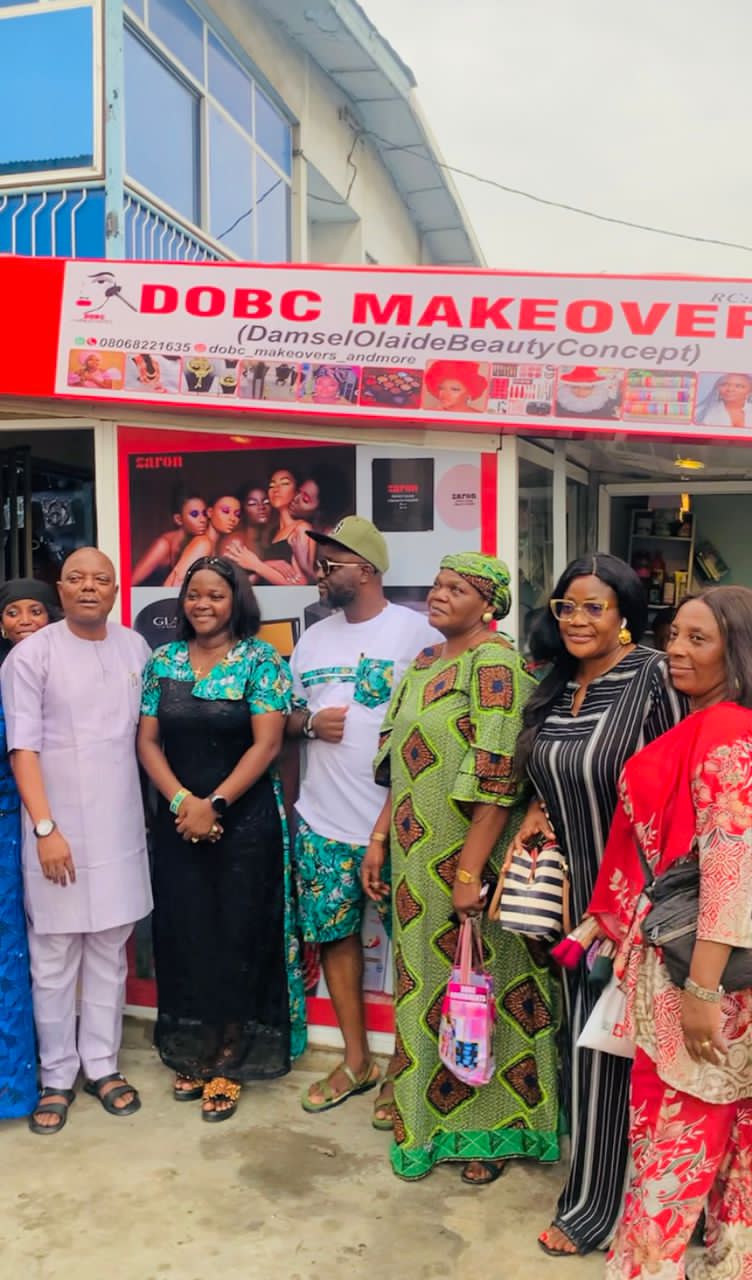
Beauty Meets Glamour as Olaide Ogunyemi Opens New Studio in Mushin
Popular Nollywood actress and professional makeup artiste, Olaide Ogunyemi Oluwayemisi aka Damilola, has expanded her footprint in the beauty industry with the grand opening of her new makeup studio in Lagos.
The talented thespian, who is also the Chief Executive Officer of @Dobc_makeovers_andmore, officially unveiled the ultra-modern beauty space last Thursday, April 2, 2026, in a colourful ceremony filled with glamour, fashion, and pageantry.
Strategically located at 101 Palm Avenue, right beside FitPlus and Sparklight Hospital in Mushin area of Lagos, the new studio is designed to offer top-notch beauty services, reflecting Ogunyemi’s commitment to excellence and professionalism in the ever-growing makeup industry.
The opening ceremony attracted friends, colleagues from the Nollywood industry, beauty enthusiasts, and well-wishers who came out in large numbers to celebrate the entrepreneur’s latest milestone. Guests were treated to a vibrant atmosphere that showcased creativity, style, and the evolving standards of the beauty business in Lagos.
Speaking at the event, Ogunyemi expressed her excitement and gratitude, noting that the new studio represents years of hard work, dedication, and passion for her craft. She reaffirmed her commitment to delivering premium beauty services while empowering aspiring makeup artistes.
The launch of the studio further cements her reputation as a dynamic force, successfully blending her career in Nollywood with a thriving beauty brand.
With this latest development, Olaide Damilola Ogunyemi continues to inspire many young entrepreneurs, proving that talent, consistency, and vision remain key drivers of success in Nigeria’s creative and business landscape.


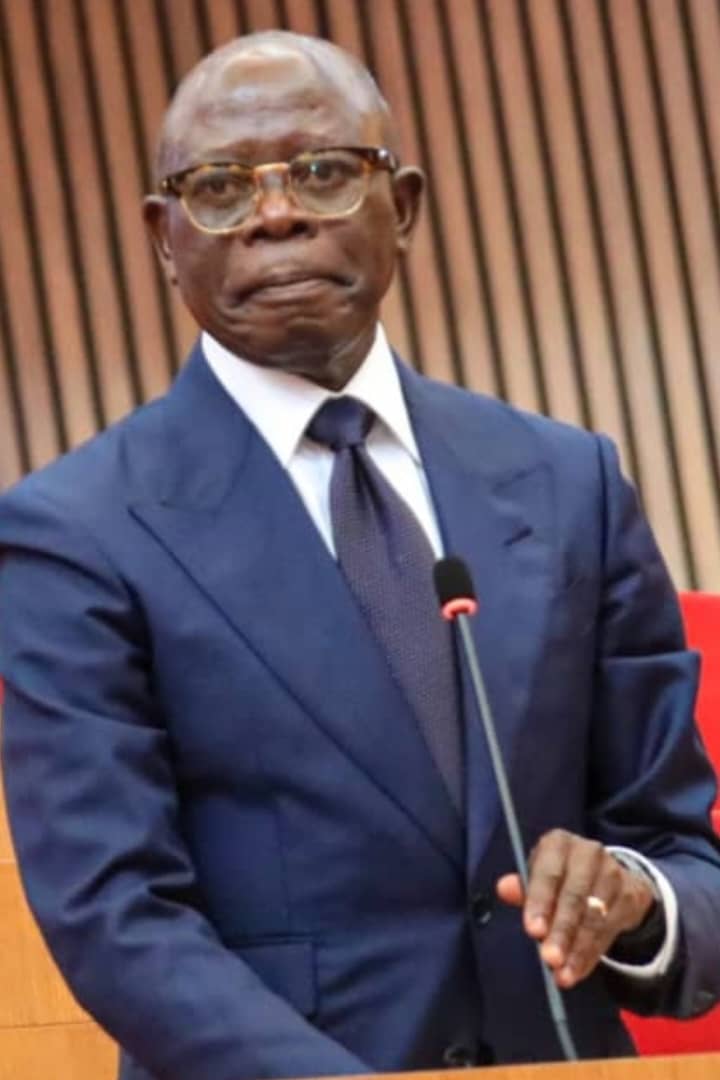
Daniel Eromosele Eulogize Adams Oshiomole as he turns 74 years
Today, I celebrate an exceptional leader, a fearless voice for the people, and a man whose life has remained a symbol of courage, sacrifice, and unwavering commitment to justice—Distinguished Comrade Senator Adams Aliu Oshiomhole.

Your journey has been nothing short of inspiring. From your days as a vibrant labour leader to your impactful tenure as the Executive Governor of Edo State, and now as a respected Senator of the Federal Republic, you have consistently demonstrated what it means to serve with integrity, strength, and purpose. Your contributions to the growth of our nation and the development of Edo State remain indelible and deeply appreciated.
You have not only built structures and institutions but have also built people. I am personally a beneficiary of your leadership, your guidance, and your belief in empowering others. Your influence in my life has been profound, and I remain grateful for the opportunities and inspiration you have given me.
On this special day, I celebrate not just your achievements, but the man you are—resilient, principled, and ever committed to the progress of Nigeria and her people.

May this new year bring you renewed strength, greater wisdom, good health, and more remarkable accomplishments. May your legacy continue to shine brighter with each passing year.
Happy Birthday, sir. Wishing you many more fruitful and impactful years ahead.
celebrity radar - gossips
Accolades to Empress Genevieve Wining as she Celebrate birthday in Grand style

Accolades to Empress Genevieve Wining as she Celebrate birthday in Grand style
Emmanuel Clement
Vilnius, Lithuania – The Grand Hotel Vilnius will host a grand birthday celebration in honor of Her Majesty The Empress Genevieve Wining of the United Kingdom of Atlantis (UKA) on April 4th, 2026.
The four-day event promises to be an extravagant affair, marking the special birthday of Empress Genevieve Wining. The celebration will take place at the prestigious Grand Hotel Vilnius, Lithuania, renowned for its luxurious ambiance and exceptional service.

According to the event flyer, the birthday celebration will be a spectacular occasion, fitting for an empress. Guests can expect an elegant setting adorned with golden accents, sparkling champagne, and festive decorations, creating a regal atmosphere befitting the occasion.
The Empress Genevieve Wining of UKA is expected to grace the event, which will include various festivities and celebrations in her honor. The occasion aims to bring together dignitaries, followers, and guests to commemorate the empress’s birthday with grandeur and joy.
For media inquiries, accreditation, or further information about the birthday celebration of The Empress Genevieve Wining of UKA, please contact the event organizers.
Courtesy of His Excellency Emperor Prof. Solomon Wining. UKA


-

 society7 months ago
Religion: Africa’s Oldest Weapon of Enslavement and the Forgotten Truth
-

 news4 months ago
WHO REALLY OWNS MONIEPOINT? The $290 Million Deal That Sold Nigeria’s Top Fintech to Foreign Interests
-

 society6 months ago
“You Are Never Without Help” – Pastor Gebhardt Berndt Inspires Hope Through Empower Church (Video)
-

 celebrity radar - gossips2 months ago
Dr. Chris Okafor Returns with Power and Fire of the Spirit -Mounts Grace Nation Altar with Fresh Anointing and Restoration Grace on February 1, 2026