
celebrity radar - gossips
APC Will Ensure Buhari Recontests In 2019- Oyegun

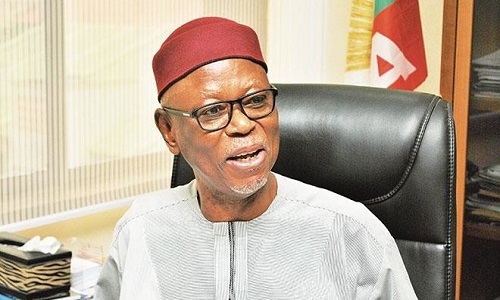

National Chairman of the All Progressives Congress (APC), Chief John Odigie-Oyegun, has revealed plans by the leadership of the party to prevail on President Muhammadu Buhari to seek a second term by contesting the 2019 presidential election. Though the election is still more than two years from now, and Buhari is yet to make any official pronouncement on his plan, Oyegun told New Telegraph in an exclusive chat that the party’s leadership will do everything possible to ensure that the president contests the election. Oyegun hinged this decision on two factors.
One, he said the president is the only politician in Nigeria today that has the capacity to win 12 million votes without major campaign. Two, Buhari, he said, is the only man who has the courage to make the changes that Nigeria need.
According to him, “There is no another Buhari in this country. Buhari is the only man who can command 12 million votes even without any major campaign. So, you can see the picture. Yes, there will be changes, the party will get new members or lose a few members, but there is no Peoples Democratic Party (PDP). So, there is no strong party any more to say you are going to join and strengthen it. It is only APC that is really a strong party.”
Oyegun added that he would commit Buhari’s second term project to prayer. His words: “I will pray, fast to God that Buhari agrees to contest in 2019. If he contests, Nigeria will be better for it. “My prayer is that we can get Buhari to re-contest in 2019. We don’t know his mind yet, but I will do anything in my power to ensure that he re-contests in 2019. Why? He is the only one who has the moral front and the courage to make the changes that Nigeria needs.
“We need more than four years to get this country to subscribe to a new morality, a new ethic and turn its back on corruption of the very type we are trying to uproot now.” When asked if he is convinced that the APC would win the election given the disenchantment over the party at the moment, Odigie-Oyegun said: “Of course, APC will win.”
The national chairman of the governing party ruled out the possibility of the PDP bouncing back in 2019. On the possibility of the PDP bouncing back in 2019, he said: “Well, let them come back first. I am not a theorist. If they bounce back, we will have to deal with that, but as at now, they are not bouncing back. PDP is in confusion. PDP is suffering a terminal illness. The party is unlikely to recover from this cancer that is afflicting them.
The division is a major illness; it is cancerous.” When reminded that the PDP exuded such confidence with its boast of being in power for 60 years before its shocking defeat in the 2015 elections, the APC national chairman, said: “Well, I’m not clairvoyant; I’m not seeing into the future; it is the immediate future that I’m seeing. “APC will continue to be the force to be reckoned with. I cannot tell you how long it will last, but that we will continue to be the chief host in Nigerian politics, there is no question about it. When new parties start developing, then you can ask me the question again. But as at now, the parties don’t exit.”
He, however, did not rule out the possibility of some members of the APC aligning with others to form a new party ahead of the next election, but insisted that they will not make any impact. His words: “APC has come to stay. As at today, strictly speaking there is no other party in the country.
It is possible that a few people within the APC might join others to form other party, but a party doesn’t grow in one day to win an election. So, APC will continue to be the strongest and the largest political party in Nigeria for quite a while, because you don’t form a party today and win an election tomorrow.”
He dismissed opposition’s belief that the president is dragging the country back, saying: “That is what they say. The reality is there for us to see. They have run the country aground. They did not foresee the collapse of oil price; we did not foresee it too. If the collapse of oil prices had happened when Goodluck Jonathan was in office, I doubt if there would have been Nigeria again today.
That is why I said that God brought Buhari at that point in history to make sure that Nigeria remains one country. “Nigerians should continue to trust APC. Yes, we inherited a very difficult situation and the economy has been battered by the collapse of the oil prices, but we have a government that is even-minded in the application of the dwindling resources to produce the very best in the circumstances. The president is working to develop other sources of income like mining and agriculture.
Odigie-Oyegun, who also admitted that Buhari inherited myriads of problems that won’t be solved in four years, said: “We inherited a whole mass of problems. Everything Buhari is doing now is to solve all those problems. If the measures taken begin to yield fruits in the next few months, people will start appreciating that all this time we thought we are suffering; in fact things were being done to save the situation.
And, of course, the picture will change. We are hopeful that the measures being taken will bear fruits before the middle of say next year. We are hopeful that things will change.” While absolving the APC of the crisis rocking the opposition party in Ondo State, he said: “Who else would they blame?
They will look for a scapegoat. That is natural. Who is paying attention to them? Is it APC that is fighting them in Ondo State, where they have a governor that is PDP? Even we have a bit of crisis in Ondo, but things are looking good for us.”
Buhari’s second term project has been in the offing before now with kites being flown in that regard by some chieftains of the ruling party. The belief is that either the arrowheads of the bid are using it to test political waters or to scare potential contenders.
Former governor of Sokoto State, Senator Aliyu Wamakko, and erstwhile Zamfara State governor, Senator Ahmad Sani Yerima, were among the first supporters of second term agenda for Buhari.
For them, Buhari needs to rule beyond 2019 to address the rot in the country. Meanwhile, Imo State governor, Owelle Rochas Okorocha, yesterday disclosed that Buhari will soon address the APC faithful on the need to unite and move the nation forward.
Okorocha, who is also the Chairman of Progressive Governors’ Forum disclosed this yesterday in Abuja after a two-hour meeting with the leadership of the House of Representatives. He noted that they were the foot soldiers that worked hard to actualise change, adding that change was dare to them.
Okorocha boasted that APC will not fail but would continue to remain the ruling party. He however noted that the victory had not been well managed. The governor disclosed that angry party members would be reconciled.
On his part, Speaker Yakubu Dogara said a common decimal at the round table meeting were discussion that those elected in position of authority must put the interest of the people first. He said that the country cannot afford the luxury of arms of government going in different ways. Dogara assured that the APC will deliver on its campaign promises.




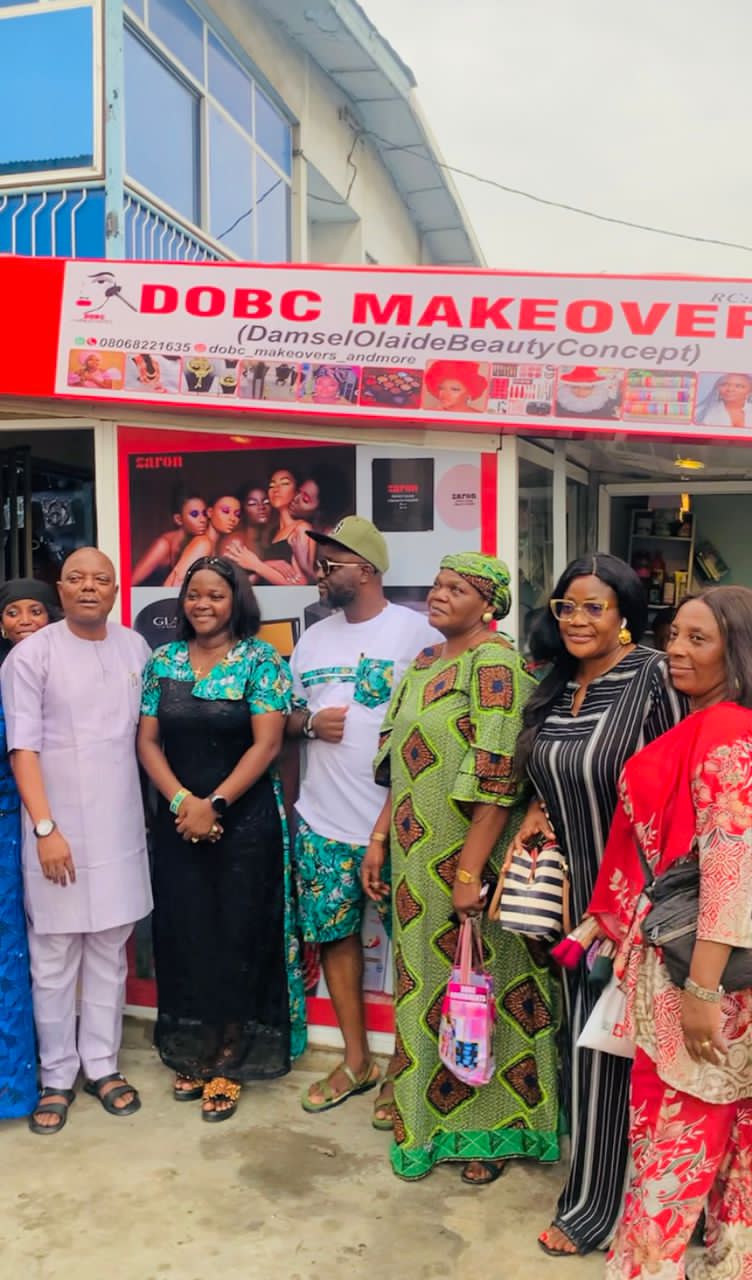
Beauty Meets Glamour as Olaide Ogunyemi Opens New Studio in Mushin
Popular Nollywood actress and professional makeup artiste, Olaide Ogunyemi Oluwayemisi aka Damilola, has expanded her footprint in the beauty industry with the grand opening of her new makeup studio in Lagos.
The talented thespian, who is also the Chief Executive Officer of @Dobc_makeovers_andmore, officially unveiled the ultra-modern beauty space last Thursday, April 2, 2026, in a colourful ceremony filled with glamour, fashion, and pageantry.
Strategically located at 101 Palm Avenue, right beside FitPlus and Sparklight Hospital in Mushin area of Lagos, the new studio is designed to offer top-notch beauty services, reflecting Ogunyemi’s commitment to excellence and professionalism in the ever-growing makeup industry.
The opening ceremony attracted friends, colleagues from the Nollywood industry, beauty enthusiasts, and well-wishers who came out in large numbers to celebrate the entrepreneur’s latest milestone. Guests were treated to a vibrant atmosphere that showcased creativity, style, and the evolving standards of the beauty business in Lagos.
Speaking at the event, Ogunyemi expressed her excitement and gratitude, noting that the new studio represents years of hard work, dedication, and passion for her craft. She reaffirmed her commitment to delivering premium beauty services while empowering aspiring makeup artistes.
The launch of the studio further cements her reputation as a dynamic force, successfully blending her career in Nollywood with a thriving beauty brand.
With this latest development, Olaide Damilola Ogunyemi continues to inspire many young entrepreneurs, proving that talent, consistency, and vision remain key drivers of success in Nigeria’s creative and business landscape.


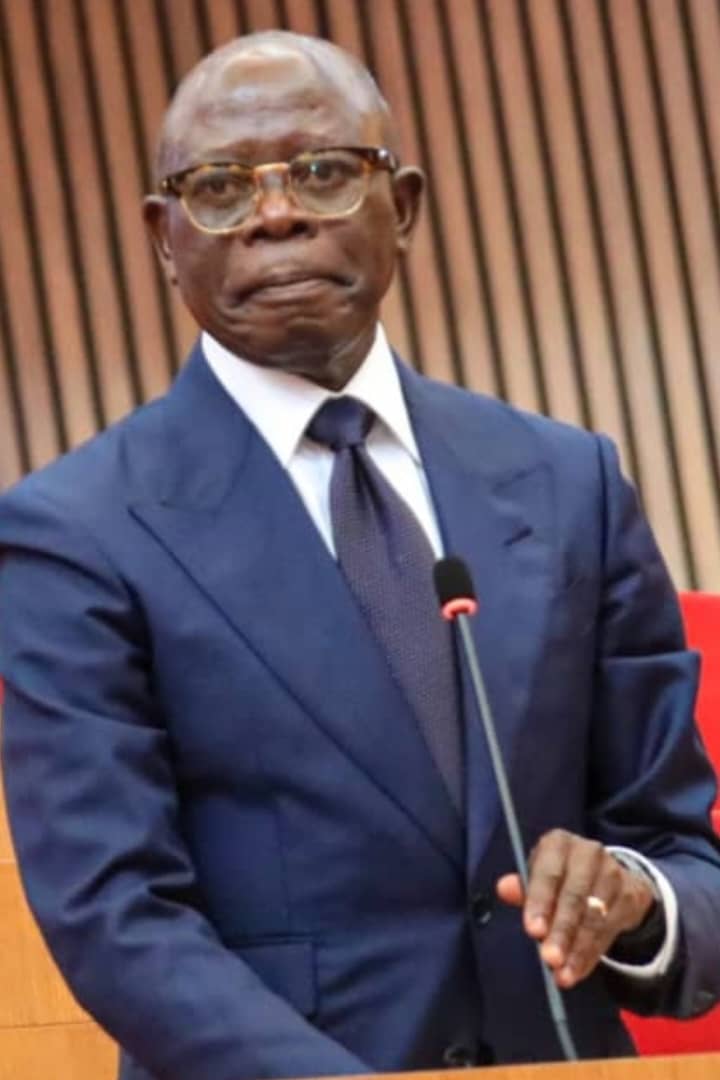
Daniel Eromosele Eulogize Adams Oshiomole as he turns 74 years
Today, I celebrate an exceptional leader, a fearless voice for the people, and a man whose life has remained a symbol of courage, sacrifice, and unwavering commitment to justice—Distinguished Comrade Senator Adams Aliu Oshiomhole.

Your journey has been nothing short of inspiring. From your days as a vibrant labour leader to your impactful tenure as the Executive Governor of Edo State, and now as a respected Senator of the Federal Republic, you have consistently demonstrated what it means to serve with integrity, strength, and purpose. Your contributions to the growth of our nation and the development of Edo State remain indelible and deeply appreciated.
You have not only built structures and institutions but have also built people. I am personally a beneficiary of your leadership, your guidance, and your belief in empowering others. Your influence in my life has been profound, and I remain grateful for the opportunities and inspiration you have given me.
On this special day, I celebrate not just your achievements, but the man you are—resilient, principled, and ever committed to the progress of Nigeria and her people.

May this new year bring you renewed strength, greater wisdom, good health, and more remarkable accomplishments. May your legacy continue to shine brighter with each passing year.
Happy Birthday, sir. Wishing you many more fruitful and impactful years ahead.
celebrity radar - gossips
Accolades to Empress Genevieve Wining as she Celebrate birthday in Grand style

Accolades to Empress Genevieve Wining as she Celebrate birthday in Grand style
Emmanuel Clement
Vilnius, Lithuania – The Grand Hotel Vilnius will host a grand birthday celebration in honor of Her Majesty The Empress Genevieve Wining of the United Kingdom of Atlantis (UKA) on April 4th, 2026.
The four-day event promises to be an extravagant affair, marking the special birthday of Empress Genevieve Wining. The celebration will take place at the prestigious Grand Hotel Vilnius, Lithuania, renowned for its luxurious ambiance and exceptional service.

According to the event flyer, the birthday celebration will be a spectacular occasion, fitting for an empress. Guests can expect an elegant setting adorned with golden accents, sparkling champagne, and festive decorations, creating a regal atmosphere befitting the occasion.
The Empress Genevieve Wining of UKA is expected to grace the event, which will include various festivities and celebrations in her honor. The occasion aims to bring together dignitaries, followers, and guests to commemorate the empress’s birthday with grandeur and joy.
For media inquiries, accreditation, or further information about the birthday celebration of The Empress Genevieve Wining of UKA, please contact the event organizers.
Courtesy of His Excellency Emperor Prof. Solomon Wining. UKA


-

 society7 months ago
Religion: Africa’s Oldest Weapon of Enslavement and the Forgotten Truth
-

 news4 months ago
WHO REALLY OWNS MONIEPOINT? The $290 Million Deal That Sold Nigeria’s Top Fintech to Foreign Interests
-

 society7 months ago
“You Are Never Without Help” – Pastor Gebhardt Berndt Inspires Hope Through Empower Church (Video)
-

 celebrity radar - gossips2 months ago
Dr. Chris Okafor Returns with Power and Fire of the Spirit -Mounts Grace Nation Altar with Fresh Anointing and Restoration Grace on February 1, 2026
You must be logged in to post a comment Login
You must log in to post a comment.