
Politics
Arewa Youths to Tinubu: Ignore Matawalle’s outburst against Emefiele

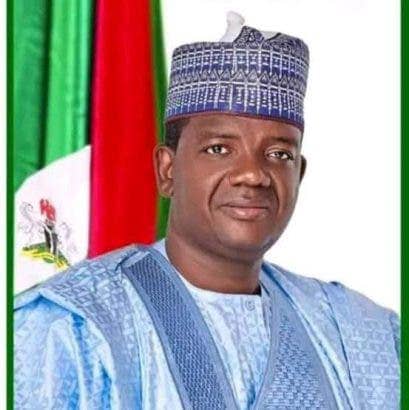
Arewa Youths to Tinubu: Ignore Matawalle’s outburst against Emefiele
….Commend Emefiele for grounding bandits with Naira redesign policy
The Arewa Youth Assembly has raised an alarm over the call by Governor of Zamfara State, Bello Matawalle, for President Muhammadu Buhari not to approve any study leave for the CBN Governor, Mr. Godwin Emefiele and cautioned President-Elect Bola Ahmed Tinubu from acting against Mr. Emefiele.
In a press statement signed by the Publicity Secretary of the Arewa Youth Assembly, Alhaji Aliyu Sani, the group expressed its displeasure at Governor Matawalle for “believing and acting on a baseless rumour.” The statement by the group noted that a spokesperson in the Office of the President, Mallam Garba Shehu, denied the existence of the imaginary study leave.

The group remarked that instead of the Governor to be afraid of his fate when he leaves office, he is more concerned about the destiny of Mr. Emefiele who is serving Nigerians diligently.
The group challenged Matawalle to make public the number of persons kidnapped in Zamfara State when the Naira was not in excessive circulation and the number kidnapped after the reintroduction of the Naira.
The group accused Matawalle of failing to guarantee the right to life for citizens of the state as provided for in the 1999 Constitution of Nigeria (as amended) in Section 33.
“Your failure to provide security in the state has halted educational activities, with the closure of schools. At least 75 secondary schools in the state are still shut because of security, tagging the state as an educationally backward state. Zamfara state has a total of 61.4% of children out of school, with boys at 57.4% and girls at 66%.”
The group said in contrast to the glaring failure of Matawalle, Emefiele was busy working hard to boost the economy by impacting all sectors through programmes like Anchor Borrowers’ Programme, Commercial Agriculture Credit Scheme, intervention programmes and schemes for MSMEs and manufacturers as well as exporting activities.
“This has helped in increasing revenue generation outside crude oil, thus helping this administration to actualize its diversification agenda, creation of employment, alleviating poverty, and recreating Nigeria’s image before the world,” the statement said.
The youths also noted that the, “Only person seeking to damage the good work President Buhari has done is you, that’s why your people voted for APC in the presidential election but never hesitated to vote you out, because you have failed them. This justifies why you were never voted in the first place.”
The Arewa youths said “while you were busy spending Zamfara people’s money on irrelevant things, Emefiele was busy on Naira redesign, a policy that had the power to stop insecurity, curtailed corruption, and drop the prices of commodity immediately. Conversely, the problems came back in full immediately after cash started flowing, people were no longer safe, and bandits hit Zamfara, Kaduna, Minna, and other parts of the country.”
The statement said, “For this alone, Emefiele should be given a gold medal and celebrated, for he helped President Buhari abide by the constitution that states the security and lives of citizens are paramount.
“All that Emefiele has done are with the blessings of the commander in chief, his activities have been completely transparent and accountable, the records are there, the world is digital, every naira, every kobo is accounted for how it comes in and how it is spent.
“For the record, even if there were requests for study leave, it is legal. The Public Service Rules make ample provision for the training and development of Civil Servants, to enhance the officer’s performance.”
The statement added that, “Study leaves are approved to allow an employee to complete an accredited course of study provided by an overseas educational institution. Study leaves are legal and have been granted before in Nigeria and even in superpower countries of the world. An individual has the right to seek study leave in any part of the world.”
The Youth Assembly called on President-Elect Tinubu to note that the North voted for him when the sound of gunshots from bandits went silent as a result of the Naira redesign policy. “Insecurity is the reason why our people rejected the PDP. We saw a workable solution to our number one problem.”
On Tue, May 16, 2023 at 4:12 PM Friday Atufe <[email protected]> wrote:
Good day Mr. Okoya,
FYA.
Press statement for immediate release
Arewa Youths caution President – Elect Bola Tinubu against Emefiele
….Commend Emefiele for Naira Redesined Policy which grounds activities of bandits
The attention of Arewa Youth Assembly has been drawn to a press statement attributed to the out-goingGovernor of Zamfara State, Bello Matawalle wherein he was quoted as saying: “If President Muhammadu Buhari has approved study leave for the CBN Governor, Mr. Godwin Emefiele as reported in the media, the President should cancel it in the interest of peaceful transfer of power, accountability, and good governance.”
In a press statement signed by the Publicity Secretary of the Arewa Youth Assembly, Alhaji Aliyu Sani, the group said, “We find it embarrassing that a sitting governor will allow himself to be swayed into believing and acting on a baseless rumour, concocted from the pit of hell, that Mr. Godwin Emefiele has been granted study leave to flee from the country before Asiwaju Bola Ahmed Tinubu is sworn in.”
“The Office of the President, through one of its Spokespersons, Mallam Garba Shehu has denied the existence of the imaginary study leave. When he was asked to react to the trending news he responded as follows: “If the governor of the Central Bank of Nigeria (CBN), Godwin Emefiele, has been granted study leave supposedly by President Muhammadu Buhari, this is unknown to us. It is also unknown to the president’s secretariat headed by the Chief of Staff.”
The group remarked that, “Despite this official position by the Presidency, Matawalle decided to believe in the lies released to the public by Sahara Reporters,” adding that, “For Matawalle to swallow every content emanating from the media outfit, it shows that their publications on Zamfara alleging that the Matawalle-led government in Zamfara awarded multi Billion Naira Contracts in Zamfara without following due process wasnot far from the truth.”
The statement said instead of the Governor to be afraid of his fate when he leaves office, he is more concerned about the destiny of Mr. Emefiele who is serving Nigerians diligently.
“We wish to challenge Matawalle to make public the number of persons kidnapped in Zamfara State when the Naira was not in excessive circulation and the reintroduction of the Naira following his pyrrhic victory in Court that forced the CBN to recirculate Naira notes. If he can answer this in public, Nigerians will know who has the solution to the problem of insecurity in the country,” the statement said.
“The Governor that has failed his people and the North in terms of security, education, economy and infrastructural development ought not to be heard discussing the national issue. We are in a country where shameless people are the leaders, they wouldn’t mind exporting their show of shame to the global stage. otherwise, how can a man under whose watch over 200 people were killed in 2022 in just two days, with thousands abducted daily. The same state recorded 703 deaths according to The Cable Index which is the highest in the country, still dares to attack another public servant with an unblemished record.”
The statement added that, “As a governor, you have failed to guarantee the right to life provided for in the 1999 Constitution of Nigeria (as amended) in Section 33 of the1999 constitution as amended, which clearly states that every person has a right to life and Article 3 of the Universal Declaration on Human Right that states everyone has a right to life, liberty, and security.”
“Your failure to provide security in the state has halted educational activities, with the closure of schools. At least 75 secondary schools in the state are still shut because of security, tagging the state as an educationally backward state. Zamfara state has a total of 61.4% of children out of school, with boys at 57.4% and girls at 66%.
“Zamfara is one of the poorest states in the world and the poorest in Nigeria. A report by the National Social Registry stated that Zamfara has the highest number of poor and vulnerable people in Nigeria, with a record of 3,836,484 people from 825,337 households.
“While you couldn’t do anything about the situation of your people, Emefiele was busy working hard, feeding the nation, your people inclusive, boosting the economy by impacting all sectors through various programs Viza viz; Anchor Borrowers’ Programme, Commercial Agriculture Credit Scheme, CBN’s Intervention Programmes and Schemes for MSMEs, CBN’s Intervention Programmes and Schemes for Manufacturing, CBN’s Intervention Programmes and Schemes for Export.
“This has helped in increasing revenue generation outside crude oil, thus helping this administration to actualize its diversification agenda, creation of employment, alleviating poverty, and recreating Nigeria’s image before the world. So yes, President Buhari has had an eventful tenure, and so does Dr. Godwin Emefiele President Buhari’s tenure is eventful because he has people like Emefiele,” the statement said l
The youths also noted that the, “Only person seeking to damage the good work President Buhari has done is you, that’s why your people voted for APC in the presidential election but never hesitated to vote you out, because you have failed them. This justifies why you were never voted in the first place.”
The Arewa youths advised Matawalle to lick his wounds and grief alone, do not drag others into his world of shame, while you were busy spending Zamfara people’s money on irrelevant things, Emefiele was busy on Naira redesign, a policy that had the power to stop insecurity, curtailed corruption, and drop the prices of commodity immediately. Conversely, the problems came back in full immediately after cash started flowing, people were no longer safe, and Bandits hit Zamfara, Kaduna, Minna, and other parts of the country.
For this alone, Emefiele should be given a gold medal and celebrated, for he helped President Buhari abide by the constitution that states the security and lives of citizens are paramount.
The policy was only rejected by people like you because of selfish interest, because of public wealth you have a mass and were looking for a way to hide it.
All that Emefiele has done with the blessings of the commander in chief, his activities have been completely transparent and accountable, the records are there, the world is digital, every naira, every kobo is accounted for how it comes in and how it is spent.
For the record, even if there were requests for study leave, it is legal. The Public Service Rules make ample provision for the training and development of Civil Servants, to enhance the officer’s performance, adding value to the Service, and encourage professionalism in the dispatch of their duties (PSR 100223, PSR 100224, PSR 100225, PSR 100226)
The statement said, “Study leaves are approved to allow an employee to complete an accredited course of study provided by an overseas educational institution. Study leaves are legal and have been granted before in Nigeria and even in superpower countries of the world. An individual has the right to seek study leave in any part of the world.”
It is obvious Governor Matawalle is the one suffering from trauma and shock from the election he lost, instead of grieving in silence alone, he chose to take a last dance of shame by ranting under speculations of the media he has not confirmed to be true or otherwise.
The Youth Assembly also remarked that, “We wish to call on Asiwaju Bola Ahmed Tinubu to note that, the North voted for him when the sound of gunshots from bandits went silent as a result of the Naira redesigned Policy introduced by the CBN. Insecurity is the reason why our people rejected the PDP, we saw a workable solution to our number one problem. If he chose to rally obvious failures like Matawalle around him, we will sadly accept that he has failed before his inauguration and nothing good will be expected from his tenure. The North has many qualified and respectable persons that will fit into the Presidency of Tinubu, Bellow Matawalle is not part of them.”




Politics
APC Group Endorses Fubara for 2027, Calls on Tinubu and APC to Prioritise Performance Over Politics in Backing Governor’s Second Term Ambition
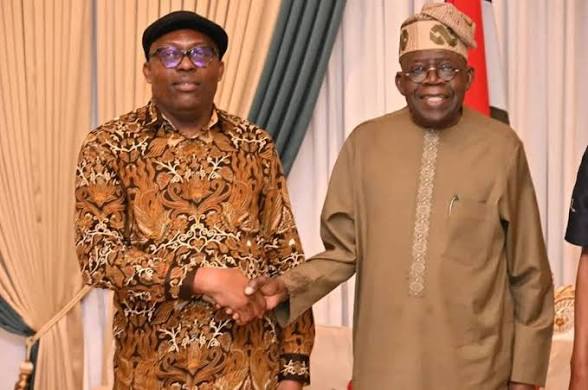
*APC Group Endorses Fubara for 2027, Calls on Tinubu and APC to Prioritise Performance Over Politics in Backing Governor’s Second Term Ambition*
The APC National Vanguard has appealed to President Bola Ahmed Tinubu and the leadership of the All Progressives Congress (APC) to support a second term in office for Siminalayi Fubara, citing what it described as “impressive and verifiable developmental strides” across Rivers State.
In a statement issued on Thursday by its National President, Dr Gbenga Salam (JP), the group said its position followed an extensive assessment tour of key infrastructure and public service projects executed under the Fubara administration.
The APC National Vanguard said the appeal was based strictly on performance, arguing that governance outcomes should outweigh partisan considerations, particularly in a state as economically significant as Rivers.
“We respectfully urge President Bola Ahmed Tinubu and the leadership of the All Progressives Congress to support the continuity of Governor Siminalayi Fubara beyond his current tenure, in recognition of his commitment to development, prudent resource management, and people-focused governance,” the statement read.
According to the group, its delegation visited multiple project sites across the state, observing ongoing and completed works spanning road construction, urban renewal, and public infrastructure upgrades.
It noted that the scale and distribution of these projects reflect a deliberate effort by the state government to extend development beyond traditional urban centres and into underserved communities.
“Our findings from the tour reveal a government that is not only active but intentional in its development agenda. The execution of capital projects across various parts of Rivers State demonstrates a clear understanding of the needs of the people and a commitment to addressing them,” Dr Salam said.
The group particularly commended what it described as prudent financial management by the administration, noting that the projects reviewed showed evidence of careful planning and efficient allocation of resources.
“At a time when economic pressures are evident across the country, it is commendable that the Rivers State government has managed its resources in a way that delivers visible and impactful development without signs of fiscal recklessness,” the statement added.
The APC National Vanguard further observed that despite political tensions in the state, the Fubara administration has maintained focus on governance, ensuring continuity in project execution and service delivery.
The group argued that such stability is critical for sustained development and should be encouraged rather than disrupted.
“Leadership must ultimately be judged by results. In Rivers State, there is clear evidence of progress—projects that are not only announced but executed, and policies that translate into real benefits for citizens,” Dr Salam noted.
The group warned that discontinuity in leadership could stall ongoing projects and reverse gains already recorded, stressing the importance of allowing a performing administration to consolidate its achievements.
“Rivers State is at a pivotal stage where continuity will allow for the completion of ongoing initiatives and the deepening of development gains. Supporting Governor Fubara for a second term is, therefore, a decision in the best interest of the people,” the statement said.
In addition to its call on the APC leadership, the group reaffirmed its support for President Tinubu, expressing confidence in his administration’s broader economic and governance reforms.
The APC group urged Nigerians to remain supportive of efforts aimed at stabilising the economy and strengthening public institutions.
“We reiterate our endorsement of President Bola Ahmed Tinubu for a second term in office, in recognition of his leadership and commitment to national development. With sustained support, the administration can consolidate its reform agenda for the benefit of all Nigerians,” Dr Salam added.
The APC National Vanguard concluded by calling on political actors to prioritise development and public interest over partisan divides, insisting that governance should always be guided by performance and accountability.
“Where leadership demonstrates prudence, delivers development, and remains focused on the welfare of the people, it deserves continuity. This is the position we have reached after a careful and independent assessment of Rivers State,” the statement added.
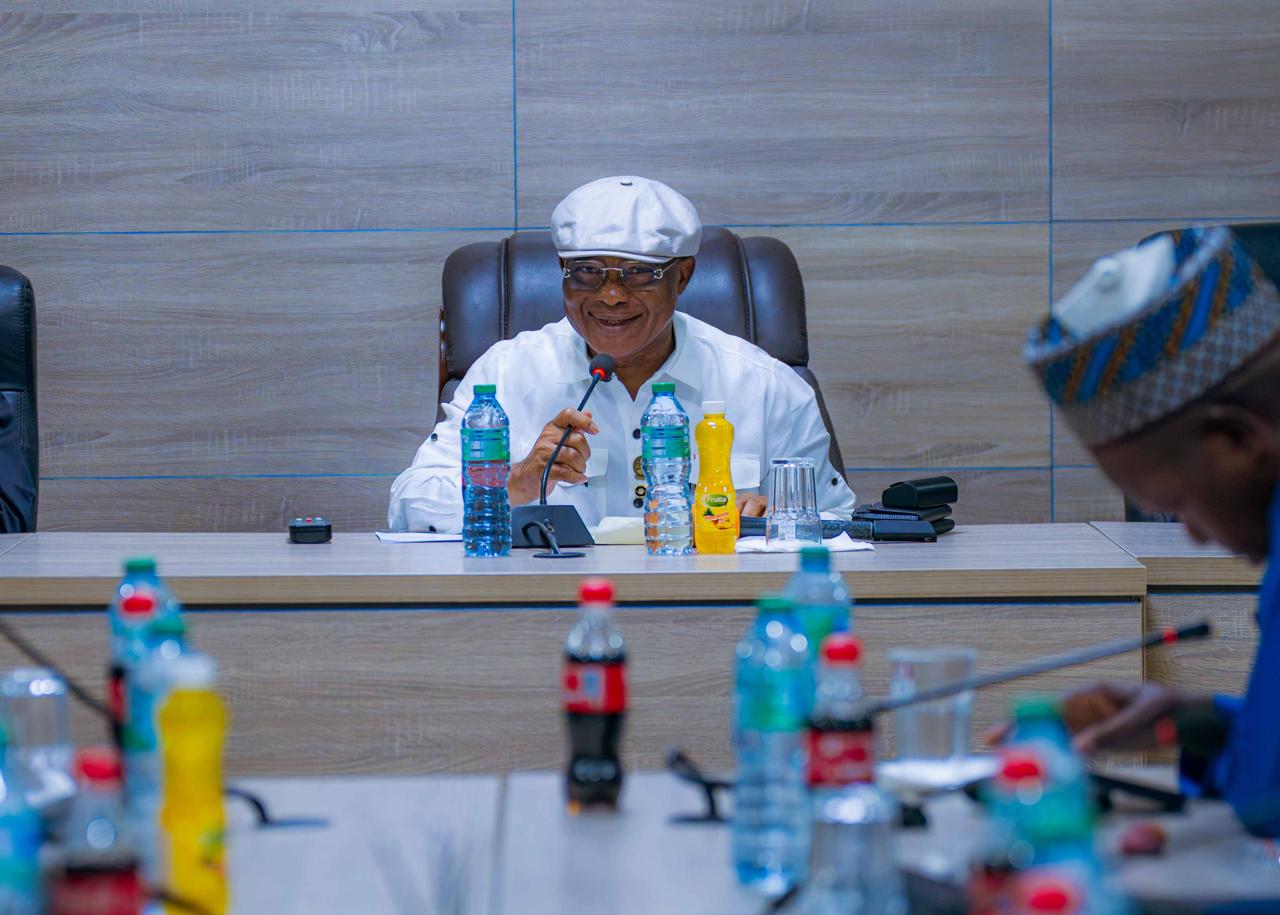
*Renewed Hope Ambassadors Step Into the Next Phase
Fresh from the successful APC 2026 National Convention, the Renewed Hope Ambassadors National, Zonal, and State leadership gathered in Abuja over the weekend, for its fourth strategic meeting, setting the tone for nationwide grassroots activation ahead of 2027.
Chaired by Governor Hope Uzodinma (Imo State) the Director General and National Coordinator of the Renewed Hope Ambassadors, alongside Deputy Director-General, Governor Uba Sani of Kaduna State, and Governor Inuwa Yahaya of Gombe State as Secretary, the session reinforced one clear direction: One Party. One Message. One Mobilization whilst also laying out a strategic roadmap for the activation of the network across all communities in Nigeria.
Backed by the strength of 31 APC-led states, the Renewed Hope Agenda is taking Bola Ahmed Tinubu’s message of progress and reform to every corner of Nigeria.
From bold economic restructuring to initiatives like NELFUND, the increase in the national minimum wage from ₦30,000 to ₦70,000, and strategic investments in critical sectors, including PNiCGI, the mission remains clear: helping Nigerians understand both the purpose and the progress of the Renewed Hope vision.
This is coordination at scale. This is grassroots engagement with purpose. This is the next phase of Renewed Hope with One Party, One Message, and One Mobilisation framework
#RenewedHopeAmbassadors #APC #WeAreAPC


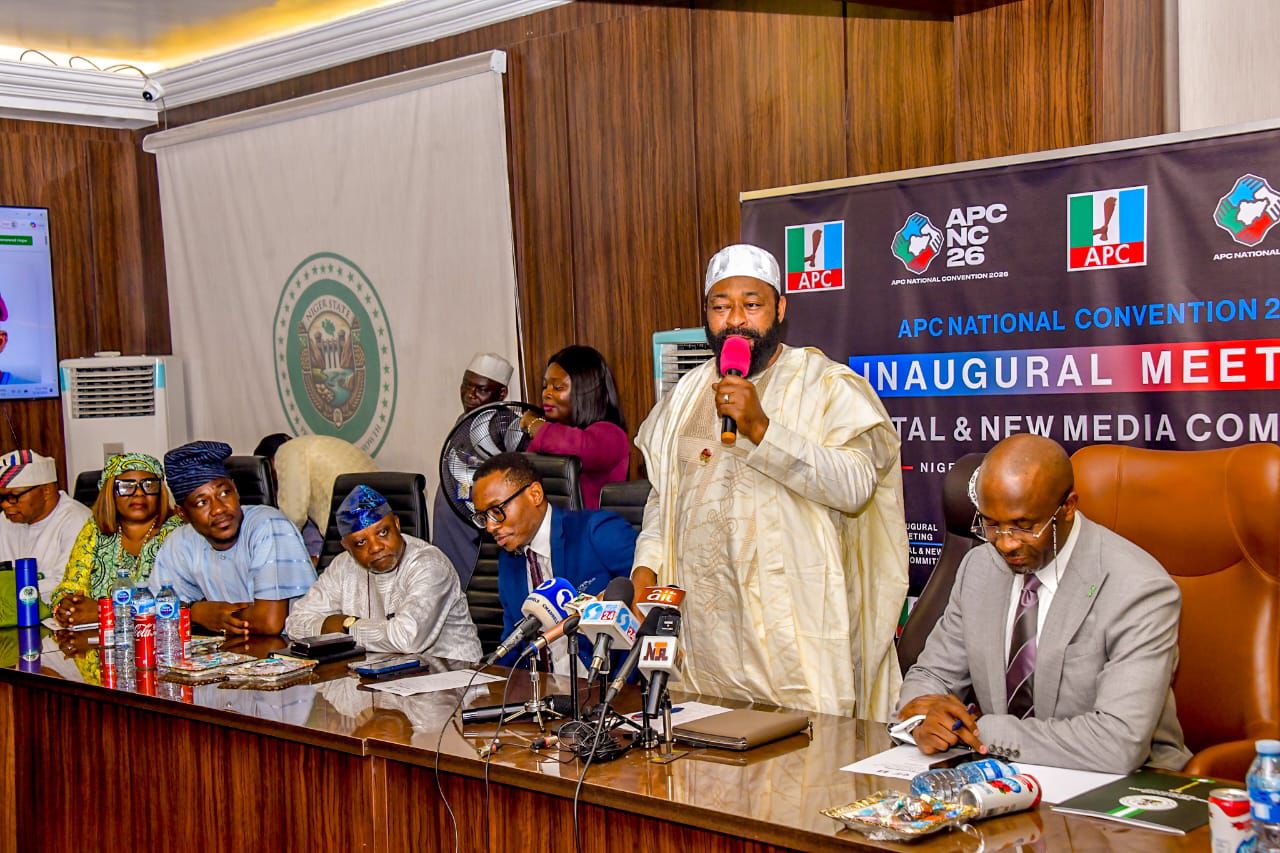
Governor Bago Inaugurates APC Digital Media Sub-Committee Ahead of National Convention.
Governor Umaru Bago has inaugurated the Digital Media Sub-Committee for the forthcoming National Convention of the All Progressives Congress (APC), scheduled to hold on March 27 and 28, 2026 in Abuja.
Chairing the sub-committee, Governor Bago tasked members with the responsibility of effectively communicating the party’s manifesto to the public.
He emphasized the need to leverage social media platforms to highlight the achievements and ongoing efforts of President Bola Ahmed Tinubu, noting that communication gaps have posed challenges that must now be decisively addressed.
The Co-Chair of the sub-committee, Hon. Benjamin Kalu, Deputy Speaker of the House of Representatives, echoed the Governor’s position, urging members to project the activities of both the party and the government to a broader audience.
He called for a deliberate and coordinated effort to showcase the party’s achievements and policy direction, stressing the importance of shaping a compelling and consistent narrative across all digital platforms.
Delivering a presentation to the committee, Otega Ogra, SSA to the President on New Media, who serves as Secretary of the sub-committee, outlined strategic focus areas to guide the team’s operations.
His presentation highlighted communication priorities and actionable steps to achieve the committee’s mandate and strengthen the party’s digital engagement.


-

 society6 months ago
Religion: Africa’s Oldest Weapon of Enslavement and the Forgotten Truth
-

 news4 months ago
WHO REALLY OWNS MONIEPOINT? The $290 Million Deal That Sold Nigeria’s Top Fintech to Foreign Interests
-

 society6 months ago
“You Are Never Without Help” – Pastor Gebhardt Berndt Inspires Hope Through Empower Church (Video)
-

 celebrity radar - gossips2 months ago
Dr. Chris Okafor Returns with Power and Fire of the Spirit -Mounts Grace Nation Altar with Fresh Anointing and Restoration Grace on February 1, 2026