
Business
Atiku Abubakar Will Be President For All”, Atikunation DG, Fatee Muhammed



Hon. Fatee Muhammed, a businesswoman and politician, is the director-general of Atikunation, a volunteer group for the Atiku Abubakar 2019 presidential project. The PDP House of Representatives aspirant in Ifako-Ijaiye, Lagos, in this interview, speaks of her group’s aims and passion for the Atiku project, her political dream, among other issues. Excerpt.

What is that project or accomplishment that is considered to be Alhaji Atiku’s most significant in his political career that you think should win him instant followers and needed support toward 2019?
Institutional reforms were part of the most outstanding achievements of the OBJ/Atiku administration. Atiku was the head of the privatization drive that opened way for revolution in the telecoms industry that solved problems of unemployment to a great extent. Millions have been blessed directly or indirectly through this drive.
In addition, Alhaji Atiku is an employer of labour. He is one of the well-to-do Nigerians that are regularly taking the youths off the job market.
Your group, Atikunation, has begun the inauguration of state coordinators across the country, how have the responses been from each state, and does this give positive hope for the Atiku Abubakar presidential project?
The responses have been very fantastic! The responses are encouraging across the country. In fact, people now realize that it is only Atiku who has the will to deliver Nigerians from the claws of APC government. This indeed is a positive hope for the Atiku Abubakar presidential project. People are getting Atikulated on a daily basis.
The PDP is yet to pick its flag bearer for the 2019 presidency. Likewise the ruling APC. Does this delay have anything to do with fears of what to expect, especially given that you are campaigning for an interested party?
Yes, this is a moment of decision for both parties. At the moment, consultation, networking and strategic meetings are ongoing. None of the parties will take chances by fielding a wrong candidate. They will both weigh all the available options looking at the pros and the cons. But for PDP, Atiku’s candidature is the best.
A dramatic change is required and Nigeria needs forward-looking leadership that has solutions to her myriad of challenges. What difference is a President Atiku Abubakar going to make in this regard?
Restructuring will solve some of these challenges facing Nigeria. Atiku is coming to restructure Nigeria for the good of all and equal opportunity.
Atiku is cosmopolitan and a visionary leader. He is one of the few Nigerians who have created employment like I said earlier. At the moment, he has over 50,000 Nigerians working in his companies nationwide. Having said this, he has the capacity to solve these challenges of unemployment, insecurity, infrastructural deficit, low quality of education. His university is one of the best rated in Nigeria and is a globally acclaimed institution.
How would you react to the thinking from some sections of Nigeria that your candidate, like they are accusing Buhari, is also coming to perpetuate the so-called Hausa/Fulani agenda?
Atiku’s is a household name in Nigeria. The role he played to strengthen our young democracy then during Obasanjo’s third term agenda earned him the respect and honour. So, Atiku is not a religious/racial bigot. Atiku is not in anyway coming to perpetuate the so-called Hausa/Fulani agenda. As a matter of fact, he has no link with them. That I know.
Tell us about your House of Representatives membership aspiration.
It is on course. There is no going back. I want to serve my people and make a positive and lasting impact. My desire is to seek public office to alleviate poverty and suffering of my people.
It is becoming somewhat a pipe dream for the PDP to win Lagos State, not even when it was the ruling party at the centre. Do you foresee PDP ever winning Lagos State, and what do you think is the strategy the party is lacking to win the state?
Winning Lagos is an uphill task. Governor Akinwunmi Ambode is doing a great job. Nonetheless, his policies are not in favour of the masses. Therefore, if we can work on the APC lapses to reach out to the masses at the grassroots, then, PDP will win Lagos. It requires no magic.
When was your best moment in politics?
Good question! My best moment in politics was when I won the House of Representatives primary election and most importantly, the support I got from my people. Also, it was a pointer to the fact that politics can be won without banking on any godfather. Mine was a deviation from the old order.
How do you cope running your private businesses and still stay very active politically?
I have good organization in place and a working structure. I don’t have to be around all the time. I have heads of units and managers coordinating my business for me. Everything is ICT compliant. I monitor everything online. So, it’s easy for me to be active in politics and still run a successful private business.
Visualize Nigeria in 2020 and share with us your expectations for the country.
I see a great Nigeria. A nation filled with milk and honey. By 2020, Nigeria will be one of the 20 largest economies in the world, able to consolidate its leadership role in Africa and establish itself as a significant player in the global economic and political arena.
With Atiku Presidency, Indeed, the geo-political zones would become centres of thriving economic activities. Human capital development would also be made to align with the respective development priorities and aspirations of each of the regions.


Business
Alpha Morgan Bank Reinforces Commitment to Education at Redeemer’s University Business School Commissioning
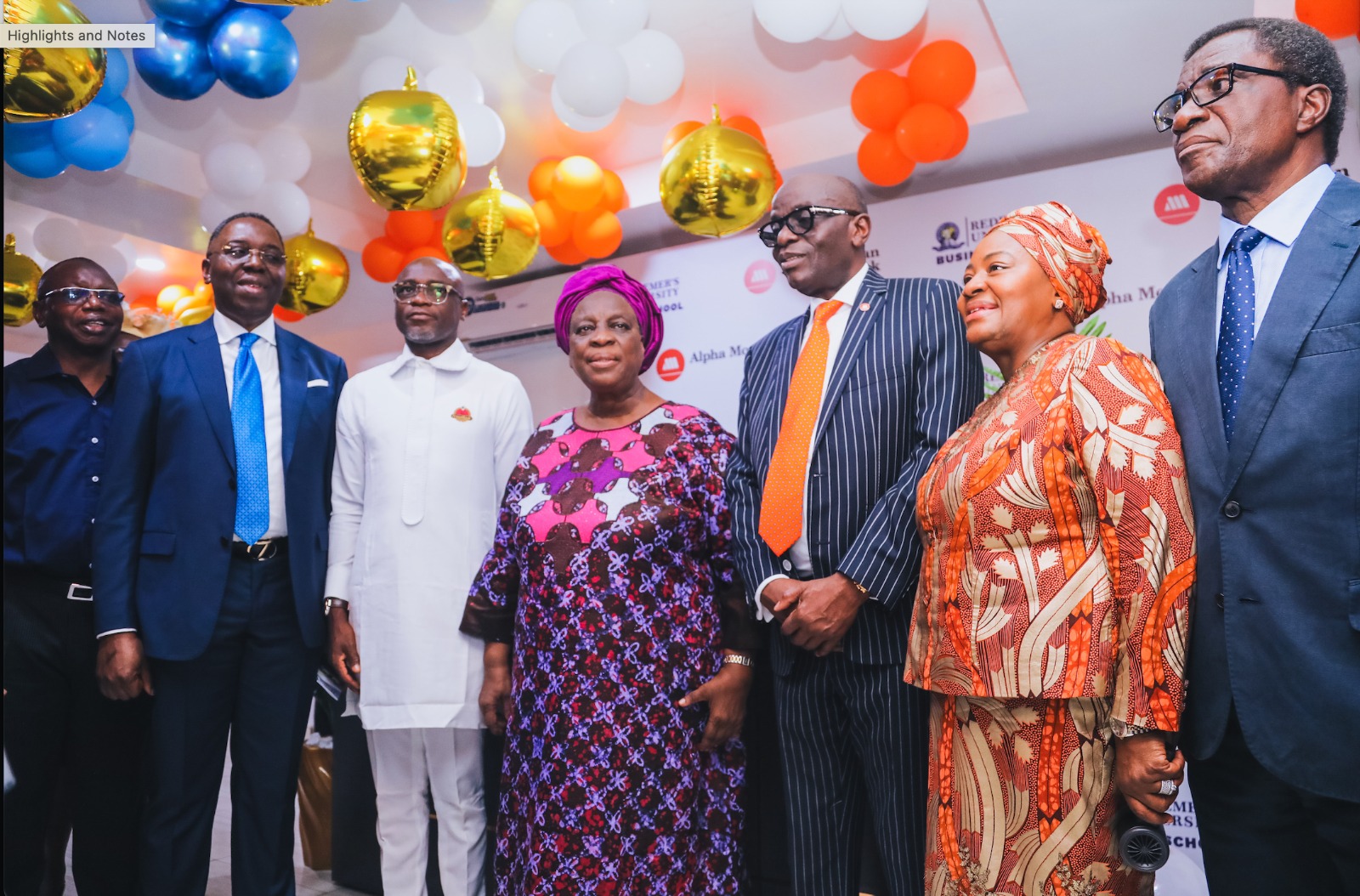
Alpha Morgan Bank Reinforces Commitment to Education at Redeemer’s University Business School Commissioning
Alpha Morgan Bank has reaffirmed its commitment to education and institutional development through its support for the commissioning of the Redeemer’s University Business School.
The Business School was officially inaugurated by Pastor (Mrs.) Folu Adeboye, at the commissioning ceremony attended by distinguished guests including Her Excellency, Mrs. Bola Obasanjo; the Pro-Chancellor and Chairman, Governing Council of Redeemers University, Professor Oluwatoyin Ogundipe; the Vice Chancellor, Professor Shadrach Olufemi Akindele; and other notable dignitaries.
Speaking at the event, the Managing Director of Alpha Morgan Bank reiterated the Bank’s commitment to supporting institutions that drive intellectual growth and national development.
As part of its broader focus on knowledge sharing and thought leadership, Alpha Morgan Bank will host its Economic Review Webinar in May 2026, bringing together experts to share insights on key economic trends and opportunities.
The Bank’s involvement reflects its continued dedication to empowering institutions and shaping the future of business and leadership in Nigeria.
Read more about Alpha Morgan Bank on www.alphamorganbank.com
PHOTO
L-R: Prof. Shadrach Olufemi Akindele, Vice Chancellor, Redeemers University, Engr. Eloka Eje, Dr Perez Araka, Pastor (Mrs) Folu Adeboye, Mother-In-Israel, The Redeemed Christian Church of God, Mr Ade Buraimo, MD/CEO Alpha Morgan Bank, Dr (Mrs) Oluwatomi Somefun, Dr. Simeon Ifere, at the inauguration of the Redeemer’s University Business School, Redemption City, Ogun State on Thursday 2nd April, 2026
Tinubu Aide Rebuts Rufai Oseni Over ₦3.3tn Power Debt Deal
Business
Aare Adetola Emmanuelking Welcomes President Tinubu to Gateway International Airport Commissioning in Iperu-Remo

Aare Adetola Emmanuelking Welcomes President Tinubu to Gateway International Airport Commissioning in Iperu-Remo
In a momentous occasion that underscores the rapid infrastructural advancement of Ogun State, renowned real estate mogul and philanthropist, Aare Adetola Emmanuelking, warmly received the President of the Federal Republic of Nigeria, Bola Ahmed Tinubu, at the official commissioning of the Gateway International Airport, located in Iperu-Remo.
The landmark event, held under the visionary leadership of the Ogun State Governor, Dapo Abiodun, marks a significant stride in the state’s economic transformation agenda, positioning Ogun as a key hub for aviation, commerce, and investment in Nigeria.
Aare Emmanuelking, who is also the Chairman/CEO of Adron Homes and Properties, commended the Ogun State Government for its foresight and commitment to infrastructural excellence. He described the airport project as a “game-changer” that will not only boost connectivity but also stimulate real estate growth, tourism, and industrial expansion across the region.
Speaking during the commissioning, President Tinubu lauded Governor Abiodun’s administration for delivering a world-class facility that aligns with the Federal Government’s Renewed Hope Agenda, emphasizing the importance of strategic infrastructure in driving national development.
The Gateway International Airport is expected to serve as a critical gateway for investors and travelers, further enhancing Ogun State’s reputation as one of Nigeria’s most business-friendly environments.
The presence of top dignitaries, industry leaders, and stakeholders at the event underscores the project’s significance and its anticipated impact on the state’s socio-economic landscape and beyond.


- Afreximbank supports Dangote Group as it targets US$100 billion annual revenue by 2030 April 8, 2026
- Africa's top-ranked Global Reporting Initiative (GRI) Training Partner launches 15th cohort of globally recognized sustainability reporting certification April 8, 2026
- African Energy Chamber (AEC) Intervenes in Landmark Climate Case to Defend Africa’s Energy Future April 8, 2026
- Eswatini opens to investors for first-of-its-kind roadshow April 8, 2026
- Egypt: President El-Sisi Meets Ministers of Electricity, Petroleum April 8, 2026
- Seychelles and Japan explore expanded cooperation and future partnerships April 8, 2026
- President Mahama to headline The Africa Debate 2026 as Ghana-United Kingdom (UK) investment ties deepen April 8, 2026
- Angolan Production Gets New Uplift as Eni’s Guido Brusco Joins Angola Oil & Gas (AOG) 2026 April 8, 2026
- Liquid C2 launches Africa’s first Google Cloud-powered Experience Centre to accelerate Artificial Intelligence (AI) adoption April 8, 2026
- Uganda: Opposition calls for reforms amid rising debt burden April 8, 2026
- Afreximbank supports Dangote Group as it targets US$100 billion annual revenue by 2030 April 8, 2026
- Africa's top-ranked Global Reporting Initiative (GRI) Training Partner launches 15th cohort of globally recognized sustainability reporting certification April 8, 2026
- African Energy Chamber (AEC) Intervenes in Landmark Climate Case to Defend Africa’s Energy Future April 8, 2026
- Eswatini opens to investors for first-of-its-kind roadshow April 8, 2026
- Egypt: President El-Sisi Meets Ministers of Electricity, Petroleum April 8, 2026
- Seychelles and Japan explore expanded cooperation and future partnerships April 8, 2026
- President Mahama to headline The Africa Debate 2026 as Ghana-United Kingdom (UK) investment ties deepen April 8, 2026
-

 news4 months ago
WHO REALLY OWNS MONIEPOINT? The $290 Million Deal That Sold Nigeria’s Top Fintech to Foreign Interests
-

 society7 months ago
“You Are Never Without Help” – Pastor Gebhardt Berndt Inspires Hope Through Empower Church (Video)
-

 celebrity radar - gossips2 months ago
Dr. Chris Okafor Returns with Power and Fire of the Spirit -Mounts Grace Nation Altar with Fresh Anointing and Restoration Grace on February 1, 2026
-

 celebrity radar - gossips4 months ago
Prophet Kingsley Aitafo Releases 2026 Prophecy: ‘Nigeria Will Rise, but the World Must Prepare for Turbulence’
You must be logged in to post a comment Login
You must log in to post a comment.