
Politics
ATIKU ACTIVATES MULTILEVEL CONNECTIONS ACROSS NIGERIA AS CAMPAIGN COMMENCES.

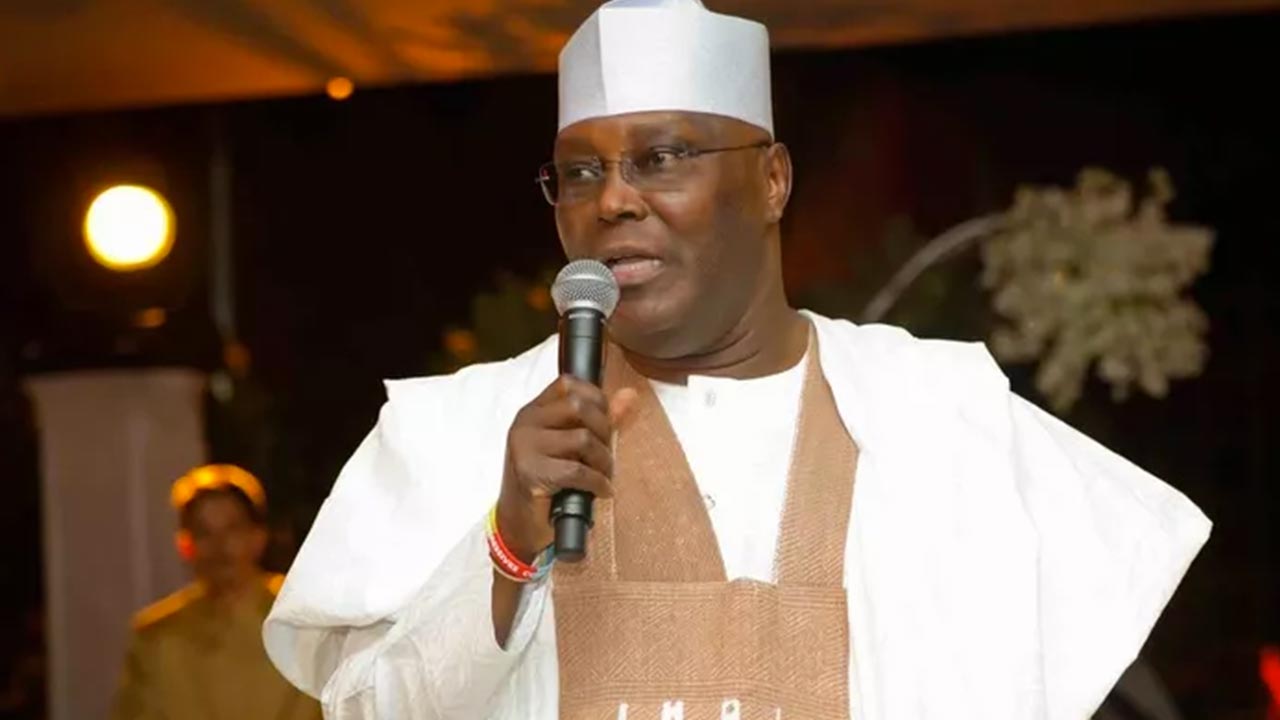
ATIKU ACTIVATES MULTILEVEL CONNECTIONS ACROSS NIGERIA AS CAMPAIGN COMMENCES

In an emphatic affirmation of readiness to lead, His Excellency Atiku Abubakar is set to activate his long standing connections across Nigeria, as the Presidential campaign of the People’s Democratic Party ( PDP) takes off in earnest. Atiku, as the postal boy of the PDP will be adding value to the Party’s electoral chances through old and current political acquaintances and alliances built over 3 decades of political engagement.
Ahead of the campaign activation, Atiku has put together his governance blueprint, which is not only documented for others but internalised in him. Little wonder that he rolls them out at every moment he needs to talk about them. Atiku might not have become President, but even his detractors can not take from him his organisational ability and preparedness anytime he makes a shot at the Presidency. It is perhaps because of this self-leadership that Atiku sometimes turn out as a prophet, because he runs diagnostic sessions on national issues, obtains solutions and makes appropriate prescriptions everytime. To be sure, the solution he prescribed for refineries is what has turned out to be the answer in the end.
A very focused leader, Atiku will be operating along with the Campaign Council, supported by competent and experienced political figures that he has appointed to play various roles in the campaign. These high profile figures are not only political assets, they are reputable Nigerians across diverse geographical, social, cultural and economic colourations.
Atiku is a detribalised Nigerian. He operates with a great sense of inclusion and Integration. During his tenure as the Vice President of the Federal Republic of Nigeria his office was populated by supporting personnel that constituted a mini-Nigeria, from the South and the North and from the East and the West. Therefore, those who see him as another ‘Northerner’ miss the point. While he has never denied his ancestry, he has always conducted himself as a Nigerian. He is at home with all ethnic groups, the high and the low, the rich and the poor, Christians and Muslims, the political and the apolitical old and young, as well as men and women.
During the campaign, Atiku will be going round in his usual calm and patient nature, radiating a great deal of charm offense draped in political artistry . A man of great self-restraint, he sometimes appear inscrutable, making his opponents wonder what next political step he could take. Atiku is a consumate listener; a skill required for eliciting expectations and feedbacks during the usually intense and rigorous campaign movements.
A man of urbane and savvy constitution, Atiku will be connecting with various demographics during his movements. Right from the days of his Vice Presidency Atiku has always been media savvy. He is active in the social media, and he occupies good prominence in the traditional media. The exchanges in these media have prepared him for engagement with the youths, women and men, who as ordinary Nigerians are thirsty for a succor from years of economic stagnation and deprivation.
For those who are despondent, arising from the economic and social tension prevailing at the moment, Atiku offers hope for a business and socially inclined economic agenda, particularly for the Micro, Small and Medium Scale Entreprises. He will also be articulating business support Strategies for high scale industrialists, being a tested and successful business mogul. He will address the issues of Agriculture, Agro processing and food security. Again, this is a sector in which Atiku has made a remarkable impact. The major advantage Atiku has going into this election is his capacity to know what to do to turn the economy around, having been a good player in the formulation of economic policies that resulted in the economic prosperity of the Obasanjo era.
On the political scale, Atiku will speak directly and unpretentiously to the issue of restructuring, devolution of power and resource management. Being a broad minded leader and an advocate of federalism, Atiku will unfold his road map to unbuddling government at the centre and promoting the interest of the federating units. One critical area that Atiku will speak about is security. Again, this is where States may assume increasing responsibilities away from the bureaucratic control of the National security architecture.
As Atiku moves around Nigeria over the next three to four months, he will be going round as a man who is at home with the people, a man with the presence of mind to analyse and appreciate issues, a man to call forth latent political, social and economic structures, and a man to re-assure Nigerians that their best years are in the future.
With contacts across the entire Nigeria landscape, if Atiku was a Banking Institution, he would be described as having branches all over the Federation. He’s a human institution. This has truly earned him the sobriquet; The Unifier. The campaign period is indeed a period of consolidation and harvesting of good political fortune, to pave way for electoral success for His Excellency Atiku Abubakar.
Atise O’ Compatriots, Nigeria call, let us all obey. Nigeria needs Atiku and is calling for him. Happy Independence to our country and may God deliver us from the shackles of ignorance, poverty of the mind and outrageous ineptitude. With Atiku and Okowa we shall overcome.
Senator Dino Melaye
Spokesperson PDP Presidential Campaign Management Committee.




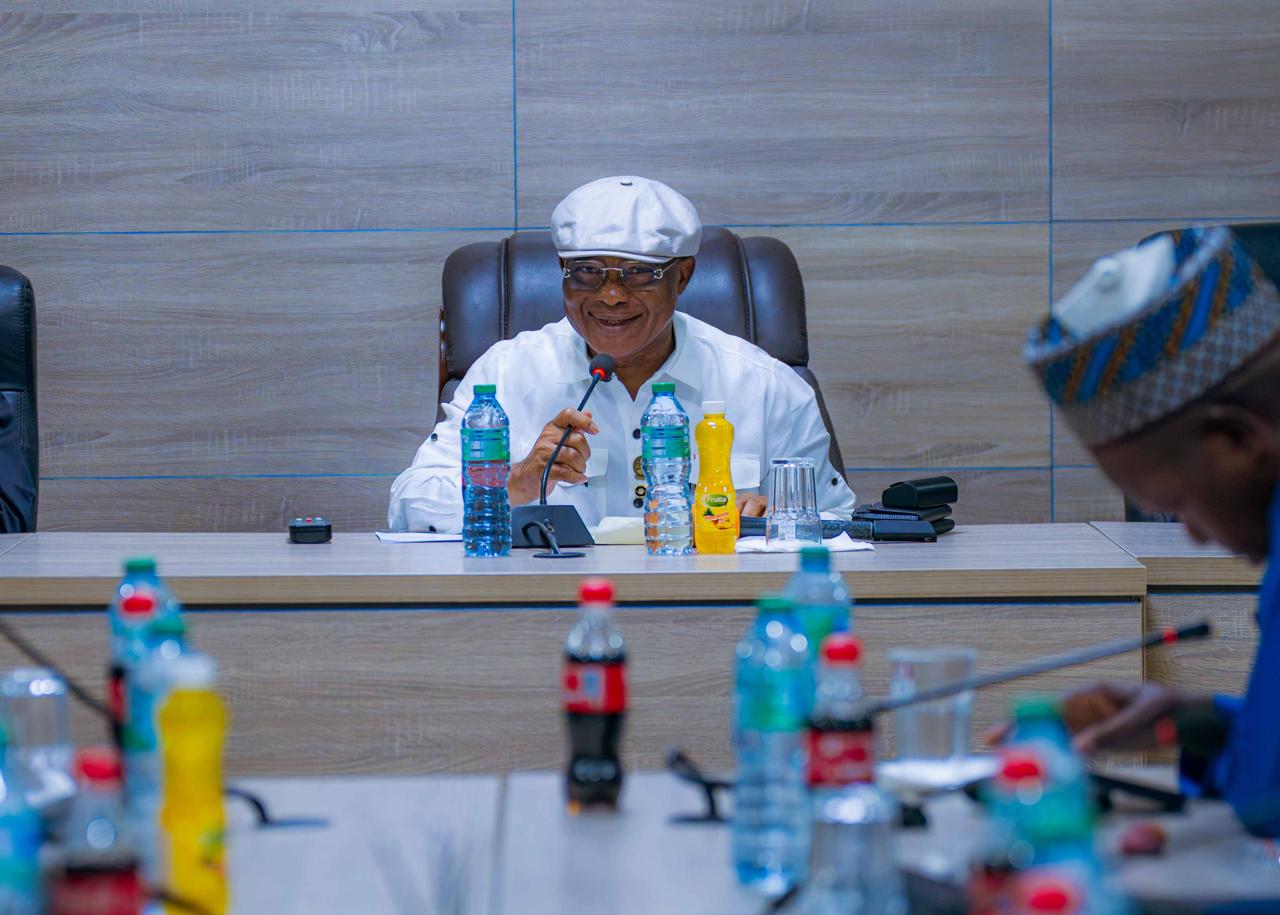
*Renewed Hope Ambassadors Step Into the Next Phase
Fresh from the successful APC 2026 National Convention, the Renewed Hope Ambassadors National, Zonal, and State leadership gathered in Abuja over the weekend, for its fourth strategic meeting, setting the tone for nationwide grassroots activation ahead of 2027.
Chaired by Governor Hope Uzodinma (Imo State) the Director General and National Coordinator of the Renewed Hope Ambassadors, alongside Deputy Director-General, Governor Uba Sani of Kaduna State, and Governor Inuwa Yahaya of Gombe State as Secretary, the session reinforced one clear direction: One Party. One Message. One Mobilization whilst also laying out a strategic roadmap for the activation of the network across all communities in Nigeria.
Backed by the strength of 31 APC-led states, the Renewed Hope Agenda is taking Bola Ahmed Tinubu’s message of progress and reform to every corner of Nigeria.
From bold economic restructuring to initiatives like NELFUND, the increase in the national minimum wage from ₦30,000 to ₦70,000, and strategic investments in critical sectors, including PNiCGI, the mission remains clear: helping Nigerians understand both the purpose and the progress of the Renewed Hope vision.
This is coordination at scale. This is grassroots engagement with purpose. This is the next phase of Renewed Hope with One Party, One Message, and One Mobilisation framework
#RenewedHopeAmbassadors #APC #WeAreAPC


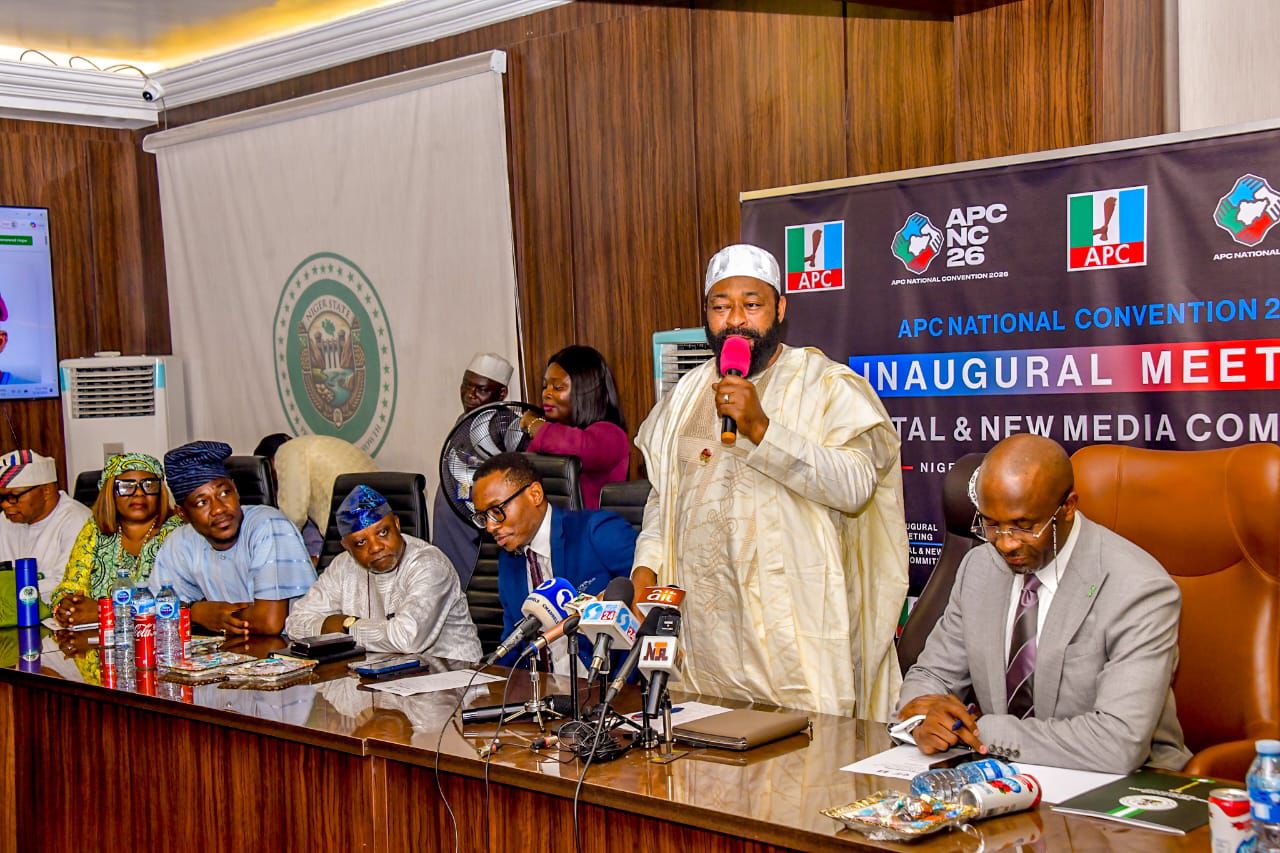
Governor Bago Inaugurates APC Digital Media Sub-Committee Ahead of National Convention.
Governor Umaru Bago has inaugurated the Digital Media Sub-Committee for the forthcoming National Convention of the All Progressives Congress (APC), scheduled to hold on March 27 and 28, 2026 in Abuja.
Chairing the sub-committee, Governor Bago tasked members with the responsibility of effectively communicating the party’s manifesto to the public.
He emphasized the need to leverage social media platforms to highlight the achievements and ongoing efforts of President Bola Ahmed Tinubu, noting that communication gaps have posed challenges that must now be decisively addressed.
The Co-Chair of the sub-committee, Hon. Benjamin Kalu, Deputy Speaker of the House of Representatives, echoed the Governor’s position, urging members to project the activities of both the party and the government to a broader audience.
He called for a deliberate and coordinated effort to showcase the party’s achievements and policy direction, stressing the importance of shaping a compelling and consistent narrative across all digital platforms.
Delivering a presentation to the committee, Otega Ogra, SSA to the President on New Media, who serves as Secretary of the sub-committee, outlined strategic focus areas to guide the team’s operations.
His presentation highlighted communication priorities and actionable steps to achieve the committee’s mandate and strengthen the party’s digital engagement.


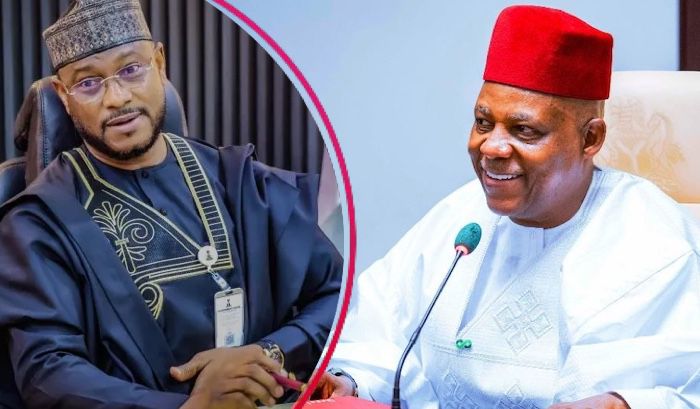
VP Shettima Set to Lead Delegation to Zamfara as Governor Dauda Lawal Formally Joins APC
The Zamfara State chapter of the All Progressives Congress (APC) has finalized plans to receive Vice President Kashim Shettima for the formal defection and reception of Governor Dauda Lawal into the ruling party, scheduled to take place on Tuesday.
State APC Chairman, Tukur Danfulani Maikatako, disclosed this during a high-level stakeholders’ meeting held in Gusau, the state capital. He noted that the Vice President would be joined by the party’s national leadership to mark what he described as a landmark political realignment in the state.
Maikatako expressed the party’s excitement over Governor Lawal’s return, recalling that Zamfara had historically been an APC stronghold and that the Governor was previously a bona fide member of the party before his earlier exit.
“We all know that Zamfara has long been one of the APC’s stronghold states, where the defected Governor was once a bona fide member. Now that he has decided to return home, having been satisfied that the APC remains his second choice after the one he left for obvious reasons,” Maikatako stated.
The Chairman called on all party faithful across the 147 wards in the state’s 14 local government areas to turn out en masse to honour the Vice President’s visit. He emphasized that the event was strategically positioned to bolster the party’s popularity and strengthen its structures ahead of the 2027 general elections.
In a strong appeal for unity, Maikatako urged members to set aside all factional tendencies, stressing that the APC remained one political family with shared goals, particularly the ambition to make Zamfara and Nigeria great again.
Echoing similar sentiments, a former state APC Chairman, Lawal M. Liman, appealed to members to cascade the message to their wards and local government areas. He reinforced the need for cohesion, noting that the party’s collective strength would be critical to achieving success in future elections.

All eyes are now on Gusau as the ruling party prepares for a high-profile political gathering expected to further consolidate its influence in Zamfara State.


-

 society6 months ago
Religion: Africa’s Oldest Weapon of Enslavement and the Forgotten Truth
-

 news4 months ago
WHO REALLY OWNS MONIEPOINT? The $290 Million Deal That Sold Nigeria’s Top Fintech to Foreign Interests
-

 society6 months ago
“You Are Never Without Help” – Pastor Gebhardt Berndt Inspires Hope Through Empower Church (Video)
-

 celebrity radar - gossips2 months ago
Dr. Chris Okafor Returns with Power and Fire of the Spirit -Mounts Grace Nation Altar with Fresh Anointing and Restoration Grace on February 1, 2026