
Politics
Backdoor petition filing: Over 400 lawyers raise alarm over threats to whistleblower’s life

Backdoor petition filing: Over 400 lawyers raise alarm over threats to whistleblower’s life
. Ask SDP to produce valid proofs of petition filing within 21-day window
. Say Tribunal Secretary’s claims of attack suspicious, must be investigated
. Call on President Tinubu, security chiefs to protect colleague, nab sponsors of violence
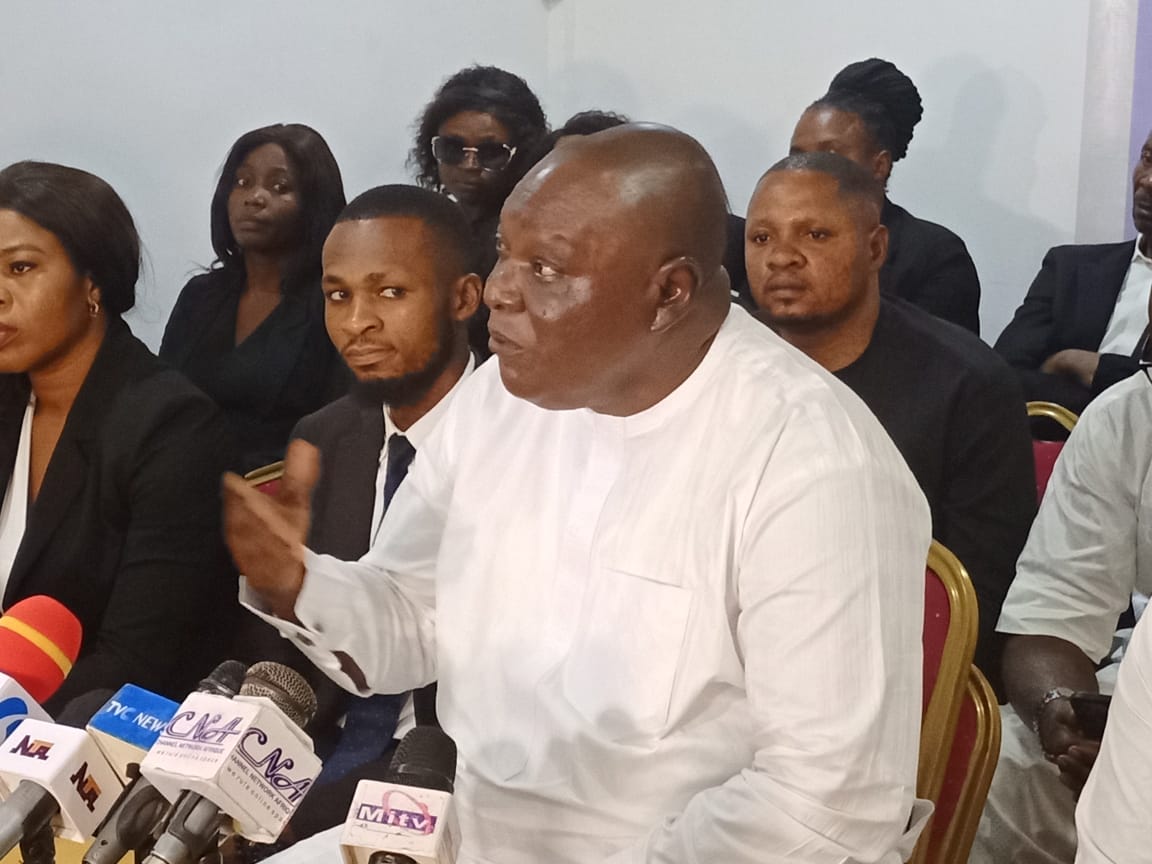
Over 400 lawyers, on Friday, raised the alarm over persistent threats to the life of one of their colleagues, Barr. Yetunde Olubunmi Shaibu, Convener of the United Front for Democracy (UFD), by certain interests loyal to the Social Democratic Party and its Governorship candidate.
The lawyers, from across the six geo-political zones of the county, under the aegis of the Commitee for the Defence of Democracy, said this followed UFD’s whistleblowing on an alleged clandestine move by the Social Democratic Party and its Governorship candidate to file their petition against the outcome of the November 11 election through the backdoor and backdate same to circumvent the provisions of the Electoral Act, having failed to do so within the 21-day window prescribed by law.
The lawyers, who spoke at an emergency press conference in Abuja, attended by 20 representatives of the organisation representing their zones, said the claim by the Secretary of the Tribunal that he was attacked and petitions stolen, shortly after the whistleblowing, was suspicious.
They noted that ever since Shaibu’s organisation raised the alarm on Monday, this week, she had received series of threat messages, while her family members had also been harassed endlessly for no crime other than the fact that she engaged in a patriotic act in defence of democracy and called for investigation into a crucial matter after diligent findings.
The lawyers called on President Bola Ahmed Tinubu, security chiefs and all relevant authorities to leave no stone unturned in protecting their colleague, saying “an injury to one is an injury to all of us.”
“With the insecurity challenge in Nigeria today, and the lawlessness being displayed, especially by desperate politicians in Kogi State in particular, and beyond, threats of this nature must not be glossed over, especially when the dare-devil politicians have made their evil intentions known even on public platforms,” they stressed.
The Convener of CDD, Barr. Ambrose Ajoyo Omoleaupen, Esq, who briefed the press on behalf of others, said, “All threats to her life must not be taken for granted but thoroughly investigated and the culprits and their sponsors nabbed before they carry out their nefarious criminality.”
According to him, the latest twist, which has involved the threat to the life of their colleague called for a closer look at the issues surrounding the issue at hand – petition filing by the political parties concerned in Kogi State.
On this, the laywers said, “It is instructive to note that suddenly after the whistleblowing, as if to lend credence to UFD’s allegations, the Secretary of the Tribunal raised the alarm, in a manner that seemed an effort to cover up something, that he had been attacked by armed hoodlums and all documents related to the petition had been taken away at gunpoint while on his way to the office from his hotel room.
“As lawyers, we deal with tangible evidence and facts, not speculations. It is on the basis of this that we have decided, without prejudice to whatever processes that are currently ongoing, to unveil the facts, to interrogate a few critical variables surrounding the whole incident as a way of furthering the cause of democracy and justice, which is a collective responsibility of all citizens.
“In the first instance, election petition documents are voluminous by nature, moreso when you are talking about petitions purportedly submitted by four (4) Political Parties. One wonders what all of those documents were doing in the custody of the Tribunal’s Secretary when they should have been safely kept in an office.
“You can’t be driving around town with such voluminous and sensitive documents that determine the very life of a petition.
“Secondly, a whole week after the purported filing and allegations raised publicly that no petition was filed, especially by the Social Democratic Party, the latter has not deemed it fit to put in the public domain valid evidence that it submitted any petition to the tribunal. At least there must have been acknowledgement documents or receipts or what is called counterpart copies given to the petitioners by the Election Petition Tribunal.
“We are of the opinion that, if the SDP had any of such documents, it would have displayed it publicly within minutes or hours of the allegations made against it by the whistle blower. Not doing that within reasonable time span, which should not be more than 12 hours after such serious allegations were raised against it, further raises credible suspicions as to question the veracity of any petition submitted within the constitutionally stipulated 21-day limit by SDP or any other Party for that matter on the Kogi State governorship election.
“To the best of our knowledge, in all of its public statements till date, the SDP has not shown any documentary evidence or proof of filing any petition within the window allowed by law. All it has been doing is to make counter allegations. We should ask whether the legal team of the SDP was also attacked by the armed hoodlums and their own copies or receipts relating to the petition were also stolen.
“Furthermore, it is somehow interesting to note that the three other political parties mentioned as having filed their own petitions, too, have remained noticeably silent on the incident whilst the SDP has been so vociferous, even assuming the position of spokesman for the tribunal’s secretary whom they claimed was allegedly ‘working’ on their petition when he was attacked.
“It is suspicious that it was after allegations of non filing of petition by the Parties that the alleged stealing of the petitions was reported. That would be a hard sell anywhere.”
The lawyers, however, threw up key questions:
“When did the SDP Governorship candidate pay for the filing of his petition? Where did he file it? At the secretariat of the Tribunal or the hotel room of the Tribunal Secretary?
“How come there was no display at the tribunal secretariat on the number of petitions filed before it was moved to Abuja?
“Is it procedurally permissible for the Tribunal’s Secretary to receive election petitions in his hotel room? How come only the SDP was aware of the alleged attack on the secretary and the one issuing statements in his defence?
“Where exactly did the Witnesses sign their statements on oath? Did they all physically sign before him and when?”
The lawyers challenged the Tribunal Secretary to show the whole world the receipt of the three other parties he claimed filed petitions.
“It does not serve the purpose of democracy or rule of law to try to supplant the fundamental tenets of justice by compromising set rules of engagement in an election.
“We wish to call on all relevant security agencies to leave no stone unturned in investigating and getting to the root of this laughable but serious incident,” they stated.





*Renewed Hope Ambassadors Step Into the Next Phase
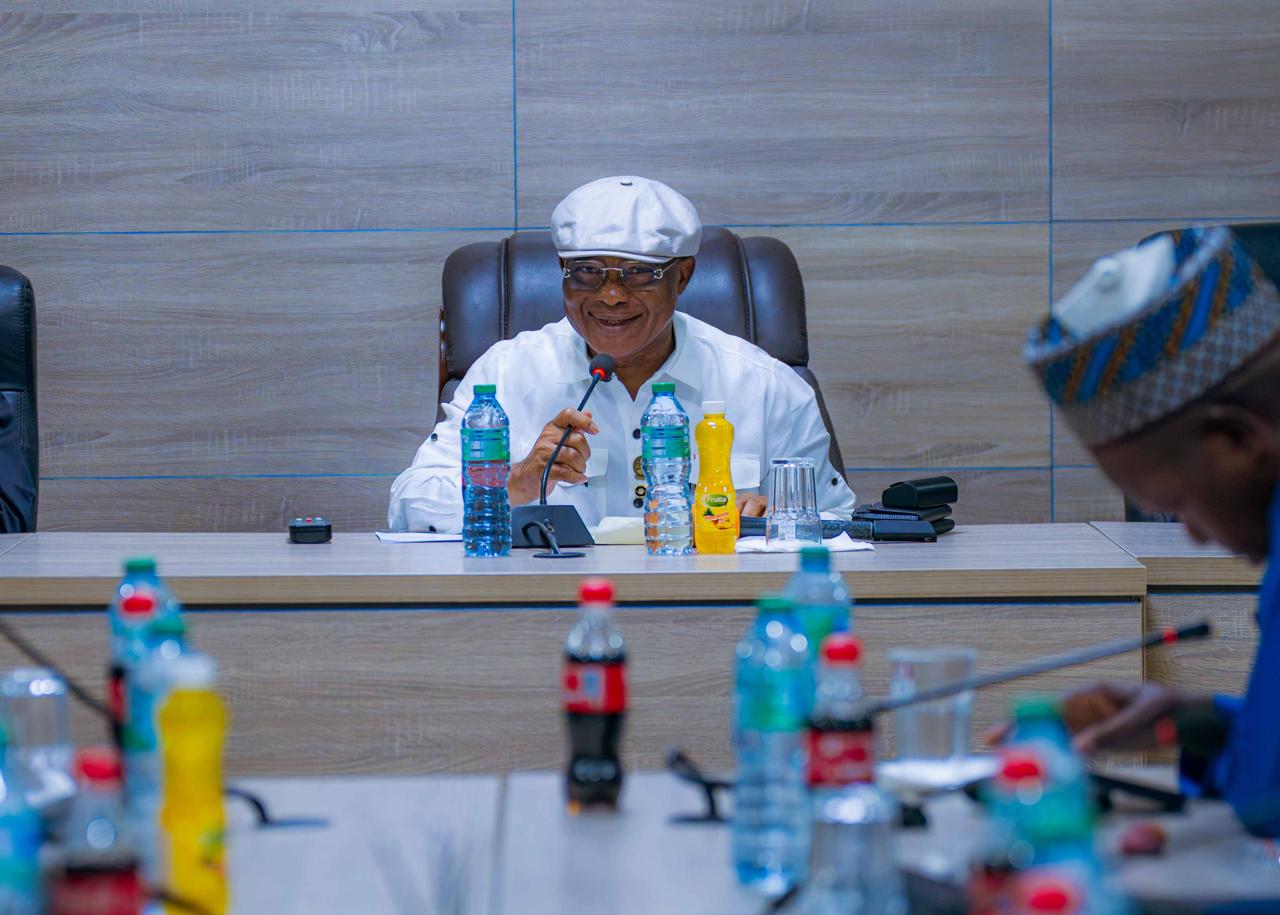
Fresh from the successful APC 2026 National Convention, the Renewed Hope Ambassadors National, Zonal, and State leadership gathered in Abuja over the weekend, for its fourth strategic meeting, setting the tone for nationwide grassroots activation ahead of 2027.
Chaired by Governor Hope Uzodinma (Imo State) the Director General and National Coordinator of the Renewed Hope Ambassadors, alongside Deputy Director-General, Governor Uba Sani of Kaduna State, and Governor Inuwa Yahaya of Gombe State as Secretary, the session reinforced one clear direction: One Party. One Message. One Mobilization whilst also laying out a strategic roadmap for the activation of the network across all communities in Nigeria.
Backed by the strength of 31 APC-led states, the Renewed Hope Agenda is taking Bola Ahmed Tinubu’s message of progress and reform to every corner of Nigeria.
From bold economic restructuring to initiatives like NELFUND, the increase in the national minimum wage from ₦30,000 to ₦70,000, and strategic investments in critical sectors, including PNiCGI, the mission remains clear: helping Nigerians understand both the purpose and the progress of the Renewed Hope vision.
This is coordination at scale. This is grassroots engagement with purpose. This is the next phase of Renewed Hope with One Party, One Message, and One Mobilisation framework
#RenewedHopeAmbassadors #APC #WeAreAPC


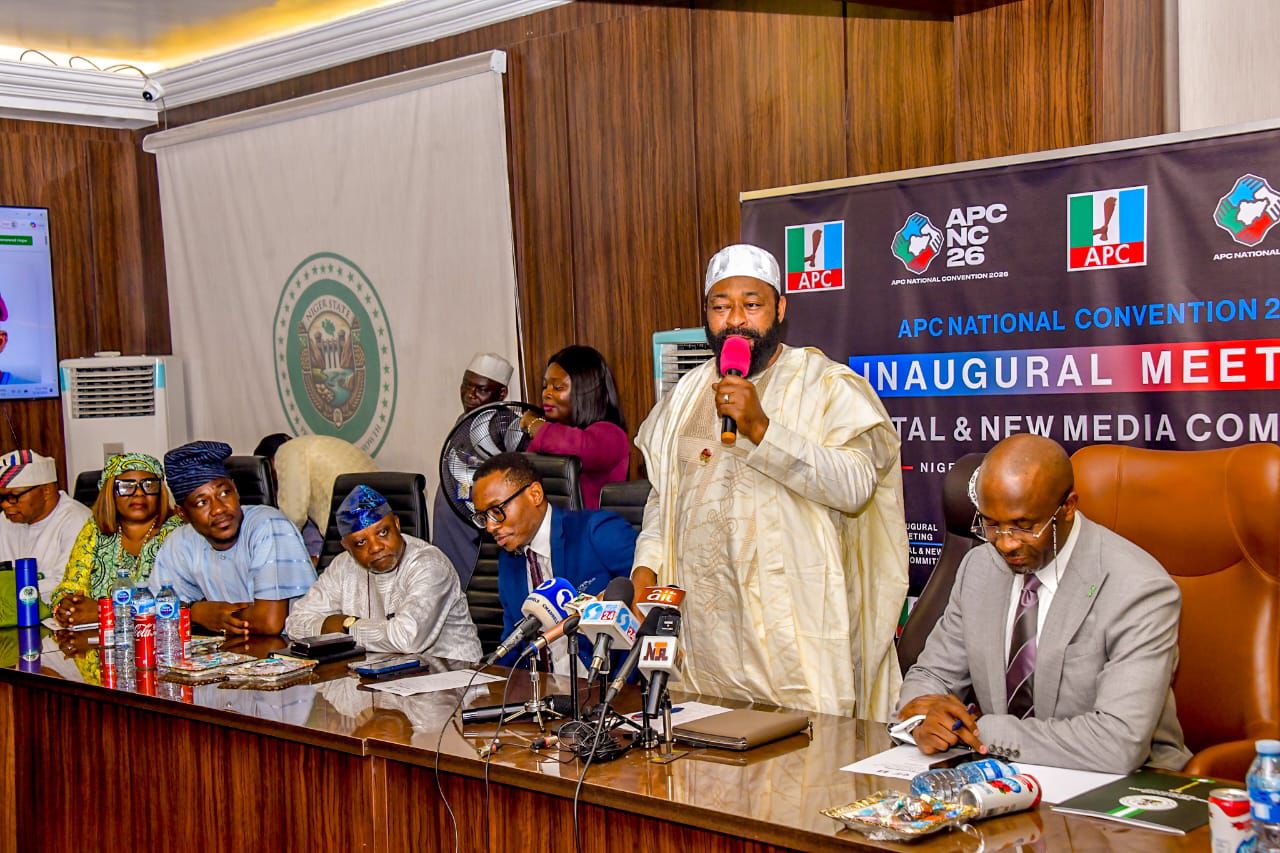
Governor Bago Inaugurates APC Digital Media Sub-Committee Ahead of National Convention.
Governor Umaru Bago has inaugurated the Digital Media Sub-Committee for the forthcoming National Convention of the All Progressives Congress (APC), scheduled to hold on March 27 and 28, 2026 in Abuja.
Chairing the sub-committee, Governor Bago tasked members with the responsibility of effectively communicating the party’s manifesto to the public.
He emphasized the need to leverage social media platforms to highlight the achievements and ongoing efforts of President Bola Ahmed Tinubu, noting that communication gaps have posed challenges that must now be decisively addressed.
The Co-Chair of the sub-committee, Hon. Benjamin Kalu, Deputy Speaker of the House of Representatives, echoed the Governor’s position, urging members to project the activities of both the party and the government to a broader audience.
He called for a deliberate and coordinated effort to showcase the party’s achievements and policy direction, stressing the importance of shaping a compelling and consistent narrative across all digital platforms.
Delivering a presentation to the committee, Otega Ogra, SSA to the President on New Media, who serves as Secretary of the sub-committee, outlined strategic focus areas to guide the team’s operations.
His presentation highlighted communication priorities and actionable steps to achieve the committee’s mandate and strengthen the party’s digital engagement.


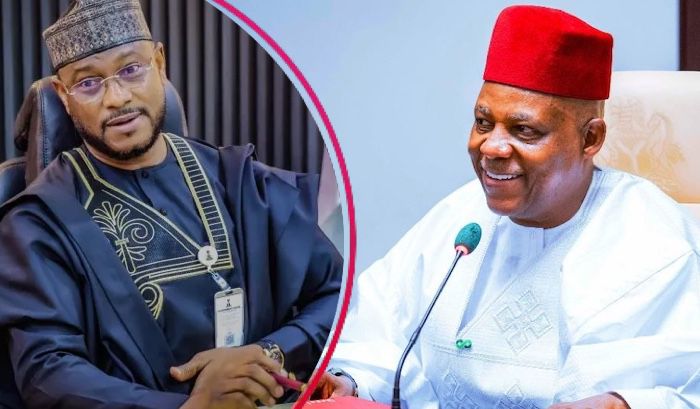
VP Shettima Set to Lead Delegation to Zamfara as Governor Dauda Lawal Formally Joins APC
The Zamfara State chapter of the All Progressives Congress (APC) has finalized plans to receive Vice President Kashim Shettima for the formal defection and reception of Governor Dauda Lawal into the ruling party, scheduled to take place on Tuesday.
State APC Chairman, Tukur Danfulani Maikatako, disclosed this during a high-level stakeholders’ meeting held in Gusau, the state capital. He noted that the Vice President would be joined by the party’s national leadership to mark what he described as a landmark political realignment in the state.
Maikatako expressed the party’s excitement over Governor Lawal’s return, recalling that Zamfara had historically been an APC stronghold and that the Governor was previously a bona fide member of the party before his earlier exit.
“We all know that Zamfara has long been one of the APC’s stronghold states, where the defected Governor was once a bona fide member. Now that he has decided to return home, having been satisfied that the APC remains his second choice after the one he left for obvious reasons,” Maikatako stated.
The Chairman called on all party faithful across the 147 wards in the state’s 14 local government areas to turn out en masse to honour the Vice President’s visit. He emphasized that the event was strategically positioned to bolster the party’s popularity and strengthen its structures ahead of the 2027 general elections.
In a strong appeal for unity, Maikatako urged members to set aside all factional tendencies, stressing that the APC remained one political family with shared goals, particularly the ambition to make Zamfara and Nigeria great again.
Echoing similar sentiments, a former state APC Chairman, Lawal M. Liman, appealed to members to cascade the message to their wards and local government areas. He reinforced the need for cohesion, noting that the party’s collective strength would be critical to achieving success in future elections.

All eyes are now on Gusau as the ruling party prepares for a high-profile political gathering expected to further consolidate its influence in Zamfara State.


-

 society6 months ago
Religion: Africa’s Oldest Weapon of Enslavement and the Forgotten Truth
-

 news4 months ago
WHO REALLY OWNS MONIEPOINT? The $290 Million Deal That Sold Nigeria’s Top Fintech to Foreign Interests
-

 society6 months ago
“You Are Never Without Help” – Pastor Gebhardt Berndt Inspires Hope Through Empower Church (Video)
-

 celebrity radar - gossips2 months ago
Dr. Chris Okafor Returns with Power and Fire of the Spirit -Mounts Grace Nation Altar with Fresh Anointing and Restoration Grace on February 1, 2026