
Uncategorized
Before They Begin Igbo Point-And-Kill In Lagos By Felix Oboagwina

Before They Begin Igbo Point-And-Kill In Lagos By Felix Oboagwina
April last year, I wrote an article, titled, “Didn’t Tinubu Just Goof On MC Oluomo?” The piece did a post-mortem on the crisis rocking the Lagos State chapter of the National Union of Road Transport Workers (NURTW). Long story short, Musiliu Akinsanya, alias “MC Oluomo,” was issued a query by the union’s national leadership, he refused to answer it and he was handed a suspension. Out of the blue, Governor Babajide Sanwo-Olu declared NURTW banned. In its place, they created the Lagos Parks and Garages Management Committee and appointed MC Oluomo to head it as Chairman. Those who know, know that Sanwo-Olu merely served as the hand of Esau carrying out the dictates of the godfather puppeteer, Asiwaju Bola Ahmed Tinubu. MC Oluomo is Tinubu’s strongman.

Lately, MC Oluomo’s pre-Governorship-Election message to the Igbo stock in Lagos became a social media virus. In it, the Tinubu-assisted tough-guy warns all Iya Chukwudis (all Igbo), “Vote APC or stay at home!” Simply put, should the South-Easterners fail to support APC, these attack dogs want to scare Igbo with a promise of Rwandan-style point-and-kill. It is a desperate message from a desperado whose desperate paymasters have read the handwriting on the wall from February 25, where they fell from their Olympian heights and lost Lagos to Peter Obi’s Elu-Pee. However, people like me saw the February 25 fall coming long ago.
In my April 2022 piece, I observed and warned: “As the Nigerian proverb says, ‘It is the foolish fly that gets buried with the corpse.’ Tinubu, in bailing out his embattled unionist godson may have succeeded in damaging his own ambition.” Could I have been more right?
Anywhere in Nigeria, where commercial transportation takes place, NURTW “full ground berekete.” So does its parent body, the Nigeria Labour Congress (NLC). These are nationwide networks. Injury to one of them means injury to all. NURTW and NLC could be making Tinubu pay for robbing them of Lagos.
Apart from the MC Oluomo blunder, several others factors triggered the shock APC and Tinubu received in their traditional hold of Lagos and gave the lead instead to the Labour Party’s Peter Obi, on February 25. That February loss made them zero in on Obi’s Igbo kinsmen in Lagos. They think they have an Igbo problem they could solve through scare tactics. Perish the thought! It has nothing to do with Igbo people.
LAGOS-BORN WANT LAGOS
There is the “Omo Eko factor.” Aboriginal Lagosians from the Awori stock and the Saro Islanders, descendants of the freed slaves who returned to Lagos and Freetown in the dying days of the slave trade, these too want a shot at the throne too. Rallying around the likes of Chief Olabode George and General Tajudeen Olanrewaju, they have formed “Omo Eko Pataki,” dedicated to planting a trueborn, full-blooded Lagosian in Eko Roundhouse.
The dream the aboriginal Lagosians and Island Lagosians dream about ruling Lagos should make sense. They point out that unlike the likes of Rauf Aregbesola (Osun State), who, after a spell of meritorious service in Lagos, still headed back home to vie for state governorship positions, indigenous Lagosians have nowhere to go. Only godfather Tinubu knows why he shunned their yearnings since 1999. He paid dearly for it on February 25. It has nothing to do with Igbo people.
THE #EndSARS FACTOR
The 2020 anti-SARS protests against police brutality threw up leaders like Aisha Yesufu at the national level. In Lagos, from its angry embers rose the likes of the comedian Mr. Macaroni, the musician Eedris Abdulkareem and FALZ, the “Bahd Guy” musician son of quintessential Lagos lawyer, Femi Falana, SAN. The #EndSARS protests eventually became a symbol of youth resistance to constituted authority.
It is an understatement to say that Tinubu and Governor Babajide Sanwo-Olu soiled their hands in the ugly episode, which started out as a peaceful protest. The Lekki Tollgate has today become a symbol of that epic struggle, Nigeria’s own version of China’s Tiananmen Square, a place of sorrows, tears and blood. Lekki Tollgate, a private concern run by LCCI, has its ownership traced to Tinubu. His son Deji owns the advert firm that runs advertisements atop and around the structure. On the D-Day, three things happened at Lekki Tollgate.
· CCTV cameras were removed.
· Lights were switched off.
· A killing squad of soldiers shot into the crowd of hyper-peaceful, flag-waving protestors.
Blood flowed. Corpses of Nigerian youth piled up. The Army whisked away the slain, denying them the decency of a burial. Who sent in the marines? Sanwo-Olu denies but the military insists he did. Those youngsters have been waiting to get their pound of flesh. These 2023 elections provide that chance. They have waited for this moment since October 20, 2020.
Fate only provided Peter Obi as the accidental rallying point. Is it by omission or design that Aisha Yesufu, a veritable symbol of the #EndSARS protests, is highly visible in the Obi’s LP campaigns?
This is payback time. For that desecration of the flower of their youth at Lekki, Benin, Ogbomosho, young Nigerians want their pound of flesh. And they are determined, mobilised and organised enough to get it. It has nothing to do with the Igbo.
ANTI-MEDIA POSTURING
Apart from TVC and The Nation newspapers that he owns, which media can Tinubu identify as friends and allies today? The likes of Arise TV and AIT have gone overboard to denigrate him, after they wooed him without success. So does AIT. They spend generous airtime to mock and disparage Tinubu and his party. Little wonder. Before and since June 2022 that he won the APC ticket, Tinubu shunned the several debates they organised for presidential contestants. What cockiness! This anti-media posturing, unfortunately encouraged by his publicists, has proved a damager.
Who remembers that pre-February 25 even Sanwo-Olu did not much campaigning in Lagos? Instead of running his own political business, he was minding Tinubu’s business –gallivanting all over Nigeria with his godfather. The electoral results of February has sent the poor guy running from mall to shops to churches to computer villages, doing photo ops like a jack-of-all-trades! It has little to do with the Igbo.
MUSLIM-MUSLIM TICKET
By the way, Sanwo-Olu blames their poor show on his godfather’s Muslim-Muslim ticket. And who says that formation would escape unscathed in a multi-religious country? Tinubu performed woefully in the Christian-dominated South-East, South-South, as it did in several Christian featuring states of the North? Ditto Lagos. It has nothing to do with the Igbo.
GODFATHER’S LIMITED TENURE
The governorship is a tenured office. You do your maximum term of eight years and quit the scene. Tinubu became Lagos Governor in 1999. He left office in 2007. Thereafter, he has remained the ultimate godfather of Lagos politics. From Babatunde Fashola, to Akinwunmi Ambode, to Babajide Sanwo-Olu, all Lagos governors have come under the control of this ultimate puppeteer. All local government and Legislature operatives are handpicked by him. The question is: Will Tinubu’s godfather tenure in Lagos last till death do them part? Or will die the natural death of Olusola Saraki in Kwara State, Orji Uzoh Kalu in Abia, Adams Oshiomhole of Edo, Jim Nwobodo in Enugu and James Ibori in Delta, all of whom have had their godfather influence extinguished? The law of diminishing return is a nature thing. It has nothing to do with the Igbo.
THE LOSS OF AFENIFERE
Egbe Afenifere singlehandedly made Tinubu in 1999. His romance with them has long lost its fire –forget the other day’s PR trip to Pa Reuben Fasoranti in Ondo. Today, that foremost Yoruba socio-political group backs Obi 100 percent. Without Afenifere’s pillar of support, it cannot be smooth sailing for the former Lagos Governor.
OBI AND THE IBO FACTOR
Yes, Peter Obi is a boy, an Igbo (or Ibo) boy. Therefore, the former Anambra State Governor will naturally command the support of his kith and kin. However, social media buffs have pointed out that if you drop Obi from LP and replace him with any other Igbo politician, like Orji Uzoh Kalu or Rochas Okorocha, they would abandon LP like hot potato. Obidents swing only in one direction, the Peter Obi direction.
Why Obi? Obi packs qualities that those other politicians lack. Like them, he served in public office, but his integrity rings loudly and deafeningly. Here is a man who has refused to allocate to himself post-service pecks and pecuniary, where his mates corner lifelong cars, cash and castles from the state coffers! He exudes capacity, competence and character. Those qualities make sweet music in Nigerians’ ears.
It has nothing to do with the Igbo people. Obi’s magic goes beyond Igbo backing. His votes in Lagos came majorly from non-Igbo voters. Go and verify.
Agreed that the garrulousness, bragging and verbosity of a minuscule few of Igbo loudmouths would not help matters, but not all Igbo proclaim Lagos as a NO-MAN’S-LAND that they want to TAKE OVER. Yoruba “indigenes” will fight anyone proclaiming that assumption.
However, one thing I know (since serving as Director twice in the Jimi Agbaje governorship campaigns of 2015 and 2019) is that the Tinubu political family dusts up this propaganda-blackmail every election cycle. Fela calls it “their regular trademark.” This Igbo-want-to-take-over-Lagos is a xenophobic slang they apply during every election. They spread the misinformation that the opposition wants to red-carpet and royalise the “Igbo strangers” in Lagos. They used it against Jimi Agbaje. They tried it with Jandor. Now they are bringing that piece of trash against Rhodes-Vivour, whose principal happens to be Igbo. They disguise the blackmail as a clarion call for Yoruba unity, irredentism and nationalism. By these satanic verses, they paint Tinubu’s clique as protectors of Yoruba interest and resisters of Igbo expansionism. Those who know Lagos politics know that the MC Oluomo-Tinubu group are lying. Unfortunately, however, the formula seems to work. Always.
(OBOAGWINA IS AN AUTHOR AND JOURNALIST, AND MAY BE REACHED VIA: [email protected])





FOPCHEN Calls for Dialogue as Court Fixes May 28 for Continuation
OTA, OGUN STATE — Proceedings in a widely followed legal case resumed on March 24, 2026, at the High Court of Ogun State, Ota Division, ending with a fresh adjournment as the court fixed May 28, 2026, for continuation.
During the session, legal representatives for all parties restated their positions and addressed preliminary matters, laying the groundwork for more substantive arguments at the next hearing. Observers noted that the case continues to attract significant public attention due to its perceived implications for law, culture, and societal values.
The Foundation for the Protection of Cultural Heritage in Nigeria (FOPCHEN) used the occasion to reiterate its call for constructive national dialogue. The group emphasized that while the judicial process must be respected, broader societal engagement remains essential.
According to the organization, issues relating to values, responsibility, and cultural identity should not be confined solely to courtroom deliberations but should involve active participation from various sectors of society.
Legal analysts present at the proceedings described the matter as one with far-reaching implications, noting that arguments advanced in court could shape future interpretations surrounding sensitive cultural and moral questions.
The presiding judge subsequently adjourned the case to May 28, granting all parties time to refine their submissions and respond to issues raised during the hearing.
As anticipation builds ahead of the next court date, Nigerians across different sectors continue to monitor developments closely, keen to see how the judiciary navigates the delicate balance between constitutional rights and cultural expectations.
Uncategorized
CRG: Politicians Must Stop Witch-Hunting, Focus on Nation Building — Says NYSC Cleared Deputy Speaker Since 2023
CRG: Politicians Must Stop Witch-Hunting, Focus on Nation Building — Says NYSC Cleared Deputy Speaker Since 2023
By: Boye Ola
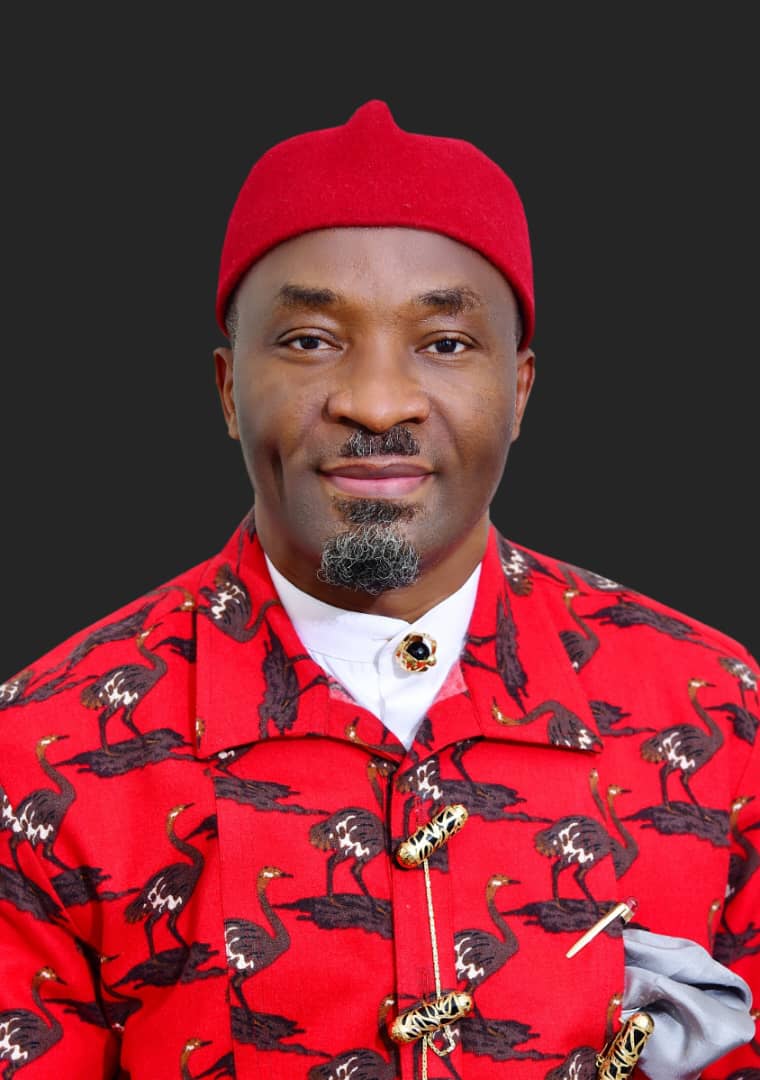
The Centre for Responsible Governance (CRG) has called on political actors and interest groups to desist from what it described as needless witch-hunting of the Deputy Speaker of the House of Representatives, Benjamin Okezie Kalu, following renewed controversies surrounding his National Youth Service Corps records.
The organisation noted that the clarification by the National Youth Service Corps (NYSC) regarding the matter is not a recent development, as a formal verification letter had already been issued as far back as May 23, 2023.
The letter, referenced NYSC/CCD/VER/10/5.1/VOL1/02, had already addressed and cleared the questions surrounding the Deputy Speaker’s NYSC records.
Reacting to the renewed debate, the spokesman of the Centre,
Obande George, said it was troubling that issues which had already been clarified by a competent national institution were being resurrected for political purposes.
According to him, the time has come for political actors to move away from destructive engagements and concentrate on building the nation.
“It is important to note that the NYSC had already issued a verification letter dated May 23, 2023 addressing the matter.
Reopening issues that have already been clarified by a competent authority suggests that some individuals are more interested in political witch-hunting than in national progress,” George said.
The CRG stressed that democracy thrives when institutions are respected and their determinations are accepted in good faith rather than constantly questioned for political advantage.

George also commended the Deputy Speaker for demonstrating maturity and composure throughout the controversy, despite what he described as sustained provocations.
“Honourable Benjamin Kalu has shown remarkable calm and maturity in the face of intense public scrutiny and political provocation.
Instead of engaging in unnecessary public confrontation, he allowed institutions to speak through their records.”
The Centre warned that Nigeria’s political culture must evolve beyond constant character attacks and sensational allegations, which often distract public officials from their responsibilities.
According to the organisation, the country’s development requires constructive engagement among political actors rather than continuous attempts to discredit opponents.
“Nigeria cannot move forward if political energy is constantly spent on digging up allegations and amplifying rumours. Our leaders and political actors must redirect their focus to governance, policy and nation building.”
CRG therefore urged Nigerians to rely on verified information from credible institutions and avoid spreading speculative claims that could damage reputations or destabilise public discourse.
The organisation reiterated that respect for due process and institutional integrity remains essential for strengthening Nigeria’s democracy.

@The Centre for Responsible Governance, Email: [email protected], Instagram: crgngo6, Twitter: crgng06, Threads: crgngo6
Uncategorized
IWD 2026: Ajadi Celebrates Women, Urges Them To Seek More Elective Positions In Future Elections

IWD 2026: Ajadi Celebrates Women, Urges Them To Seek More Elective Positions In Future Elections
A Leading People’s Democratic Party, (PDP) Governorship Aspirant in Oyo State, Ambassador Olufemi Ajadi Oguntoyinbo has felicitates with women in the country on the occasion of this year’s International Women’s Day.
The international Women’s Day is celebrated on 8 March, commemorating women’s fight for equality and liberation along with the women right’s movement. It gives focus to issues such as gender equality and reproductive rights. International Women’s Day originated from labour movements in Europe and North America during the early 20th century.
In a statement issued on Sunday to commemorate this year’s edition of the International Women’s Day, Ajadi said the role of the women in nation building cannot be over emphasised.
He recalled the role played by prominent Nigerian women like Mrs Funmilayo Ransome- Kuti, Margaret Ekpo and Wuraola Esan towards the liberalization and the growth of the country and urges women to follow their footsteps by not only participate in the political process but seek more elective positions.
He urges the political leaders to encourage and give more chances to women for them to contest and occupy elective positions in the country.
Ajadi also called for more respect for women, saying they are definitely behind whatever success recorded by the menfolk.
He said domestic violence against women should be stopped, saying they deserves respect for their role in moulding the future leaders.
According to the statement, “I celebrate and congratulate our women on this year’s occasion of International Women’s Day. We cannot underestimate the role played by our women both at home, in the social circle and in politics. They deserve more respect.
“I equally called on them not only to be a passive participants in politics but to determine to seek more elected positions in future elections. They should aspire more from the position of dancing and singing at campaigns to seek more elective positions. The ratio of men to women in elective positions in the country is embarrassing. Women should stand up and fight for more elective positions.
“I also use the occasion of this year’s Women’s Day to appeal to Nigerians to stop domestic violence against the women. If we treat our women well, our country will witness unprecedented developments”.


- United States (U.S.) and Mozambique Advance Cooperation on Emergency Response and Safety April 6, 2026
- The Impacts of the Middle East Conflict on Africa April 6, 2026
- Ghana: President Mahama announces a high-level panel of the Accra Reset April 6, 2026
- Ghana: President Mahama reiterates his determination to build more businesses April 6, 2026
- Mauritius accelerates energy transition with renewable projects of 405 MW April 6, 2026
- Africa Centres for Disease Control and Prevention (Africa CDC) Appoints His Excellency Prof. Yemi Osinbajo as Senior Strategic Advisor to the Director General April 6, 2026
- 2026 Easter Message by the President of the Catholic Bishops’ Conference of Nigeria (CBCN): The Dawn is Coming, Don’t Let Go Now, Hold on to Hope! April 5, 2026
- "A Time to Pause and Begin Again”: President Dr Patrick Herminie reflects in Easter message April 5, 2026
- President Dr. Patrick Herminie Pays Tribute to the Late Seychellois Artist David Philoe April 5, 2026
- Ghana identifies priority areas to strengthen cholera prevention and control April 5, 2026
- United States (U.S.) and Mozambique Advance Cooperation on Emergency Response and Safety April 6, 2026
- The Impacts of the Middle East Conflict on Africa April 6, 2026
- Ghana: President Mahama announces a high-level panel of the Accra Reset April 6, 2026
- Ghana: President Mahama reiterates his determination to build more businesses April 6, 2026
- Mauritius accelerates energy transition with renewable projects of 405 MW April 6, 2026
- Africa Centres for Disease Control and Prevention (Africa CDC) Appoints His Excellency Prof. Yemi Osinbajo as Senior Strategic Advisor to the Director General April 6, 2026
- 2026 Easter Message by the President of the Catholic Bishops’ Conference of Nigeria (CBCN): The Dawn is Coming, Don’t Let Go Now, Hold on to Hope! April 5, 2026
-

 society7 months ago
Religion: Africa’s Oldest Weapon of Enslavement and the Forgotten Truth
-

 news4 months ago
WHO REALLY OWNS MONIEPOINT? The $290 Million Deal That Sold Nigeria’s Top Fintech to Foreign Interests
-

 society6 months ago
“You Are Never Without Help” – Pastor Gebhardt Berndt Inspires Hope Through Empower Church (Video)
-

 celebrity radar - gossips2 months ago
Dr. Chris Okafor Returns with Power and Fire of the Spirit -Mounts Grace Nation Altar with Fresh Anointing and Restoration Grace on February 1, 2026