
society
Blood on the Prayer Mat: Katsina’s Unguwan Mantau Massacre Exposes a Republic That Cannot Protect Its Own


Blood on the Prayer Mat: Katsina’s Unguwan Mantau Massacre Exposes a Republic That Cannot Protect Its Own.
Written by George Omagbemi Sylvester | published by SaharaWeeklyNG.com
At dawn (an hour meant for quiet devotion) gunmen invaded the small community of Unguwan Mantau in Malumfashi Local Government Area, Katsina State and turned a mosque into a killing ground. Worshippers had gathered for morning prayers when the assailants opened fire and set homes ablaze in nearby villages. By midweek, officials confirmed that at least 50 people were dead and around 60 others abducted, a toll that is as staggering as it is shameful for a state that claims a monopoly on force.

Authorities and residents describe a grim sequence: 30 worshippers shot inside the mosque and 20 more burned to death as the attackers extended their carnage to surrounding settlements. Local legislator Aminu Ibrahim briefed the Katsina State House of Assembly on the horror, while state officials deployed security forces after the fact; too late to save the dead, too thin to deter the abductors.
Early accounts suggest the assault may have been retaliation after townspeople reportedly ambushed and killed several gunmen days earlier. That cycle (residents defending themselves in the absence of reliable protection, only to face brutal vengeance) has become a deadly pattern in northwestern Nigeria, where armed groups and “BANDITS” exploit rainy-season cover and thin state presence to RAID, BURN, KIDNAP and KILL.

Let us be clear: this is not an inevitable tragedy of geography. It is a FAILURE of GOVERNANCE, of SECURITY PLANNING, and of JUSTICE. Over the past years, the northwest and north-central regions have endured relentless attacks linked to FARMER-HERDER tensions over land and water, predation by organized criminal gangs and the broader erosion of state authority outside major urban centers. The line between “CONFLICT” and outright criminal insurgency is now razor-thin.
Political theory provides a precise yardstick for this disgrace. Over a century ago, sociologist Max Weber wrote that a state is “a human community that successfully claims the monopoly of the legitimate use of physical force within a given territory.” When citizens are gunned down in prayer while perpetrators roam and re-attack, that monopoly is shattered and with it, the state’s basic claim to legitimacy.

The late Kofi Annan fused security, rights and development into a single doctrine: “We will not enjoy development without security, we will not enjoy security without development, and we will not enjoy either without respect for human rights.” This massacre in Katsina is the brutal embodiment of that warning. Without security, farmers cannot farm; traders cannot trade; children cannot attend school and families cannot even pray in peace. Development, under such conditions, is a cruel mirage.
What Happened and Why It Matters?
THE ATTACK: Armed men stormed the Unguwan Mantau mosque during Fajr prayers and extended the assault to nearby homes. Dozens were killed; many more abducted.
POSSIBLE TRIGGER: Officials and residents say it may have been a reprisal for an earlier community ambush that killed several gunmen.
THE PATTERN: Such dawn and nighttime raids are frequent in the northwest, where armed groups exploit weak policing, limited military resources across vast rural terrain and dense foliage during the rainy season.

THE TREND: Initial reports counted 13–27 deaths; by Wednesday, the figure rose to about 50, with around 60 abducted, underscoring how quickly casualty numbers escalate as the dust settles.
This is not simply about numbers; it is about a citizen (state covenant in tatters). When communities are compelled to self-arm and mount ambushes (because formal protection is unreliable) retaliation is almost guaranteed and civilians are the softest targets. The state’s reactive deployments after massacres are emblematic of STRATEGY-BY-PRESS-RELEASE, not the PROACTIVE, INTELLIGENCE-DRIVEN SECURITY ARCHITECTURE demanded by these threats.
The Deeper Rot.
The criminal economies driving banditry (KIDNAP-FOR-RANSOM, PROTECTION RACKETS, CATTLE RUSTLING, ILLEGAL MINING CORRIDORS) thrive where the state is ABSENT, PREDATORY or CORRUPT. Meanwhile, climate stress and shrinking livelihoods intensify local disputes. But to reduce this to “AGE-OLD CLASHES” is to excuse the inexcusable. A sovereign republic cannot outsource the safety of its citizens to luck, weather or vigilante valor.
Economist Amartya Sen has argued that “development is freedom,” and freedom requires protective security; the guarantees that shield people from “unfreedoms” such as violence and fear. In Unguwan Mantau, that protective security failed catastrophically. The cardinal test of government (to keep people alive) was not met.
What Must Happen Now.
Relentless, intelligence-led pursuit of the perpetrators. Nigeria’s security agencies must treat this as a priority counter (organized-crime operation) not a one-off sweep. Establish a fusion cell covering Katsina, Kaduna, Zamfara corridors to map command structures, financiers, armories and kidnap logistics. Use signals intelligence, human sources and air-ground coordination to preempt, not merely respond. (The rainy season cover cited by officials must be factored into surveillance and patrol patterns not used as an alibi.)
Secure worship spaces and rural choke points. Pre-dawn prayers and market days are high-risk windows. Station mobile units and community-alert networks around mosques, schools and feeder roads, especially in Malumfashi LGA and adjacent hot spots. Visible deterrence is itself a lifesaver.
Ransom-proof the landscape. Every abduction that results in a quiet payout feeds the monster. Create a state-backed Victim Support & Rapid Recovery Fund tied to non-payment protocols, combined with swift asset seizures from suspected collaborators and money handlers. Follow the money. (Sahara and others report dozens abducted here; if ransoms flow, future attacks are financed before our eyes.)
Professionalize community defense, don’t romanticize it. Where auxiliary community guards exist, fold them into a regulated, trained and accountable rural constabulary under state oversight, with clear rules of engagement to minimize reprisals and human rights abuses that fuel revenge cycles. The alternative (ad hoc vigilantism) invites more massacres.
Justice that is seen and felt. Special fast-track courts for terror, mass murder and banditry, with witness protection, are essential. Publicize arrests, prosecutions and convictions. Impunity is the oxygen of repeat offenses.
Address the economic logic of violence. Expand livelihood programs along known attack corridors, integrate pastoral routes and grazing policy into land-use planning and disrupt illegal mining and gun-running networks that bankroll banditry. Security without economic chokeholds is whack-a-mole policy.
National coordination and honest metrics. Standardize incident reporting and response time audits across the northwest. Publish monthly dashboards, attacks prevented, abductees rescued, networks dismantled. What gets measured gets managed. What is hidden festers.
A Country at a Crossroads.
The killings in Unguwan Mantau join a long, painful ledger of atrocities that stain our conscience and corrode our democracy. This is not the northeast’s Boko Haram front (though its ghosts haunt us still) it is the northwest’s criminal insurgency that feasts on governance voids. The Associated Press, Reuters, Al Jazeera and Anadolu Agency document the evolution of the death toll and the abductions; the facts are uncontested, the devastation undeniable.
And yet, facts alone do not move nations; resolve does. Weber’s test (the monopoly of legitimate force) is not a seminar abstraction; it is the thin line between a republic and a ravaged territory. If Nigeria cannot guarantee that its citizens will not be butchered at prayer, then every promise of reform rings hollow.
Kofi Annan’s injunction should be plastered on the wall of every security council chamber and governor’s office: there is no development without security and no security without human rights. Secure the people; uphold the law; choke the money flows; measure honestly; punish swiftly. Anything less is complicity by incompetence.
Unguwan Mantau is not a headline. It is a warning. If we do not break the cycle (today, not tomorrow) more families will bury their dead after morning prayers and bandits will tighten their grip on the rural heartland. The state must reclaim its authority or concede that others wield it.
May the victims REST IN PEACE. May the ABDUCTED RETURN ALIVE. And may those who failed to protect them feel the full weight of accountability that a republic demands.





NASRE: Building A Safety Net For Nigeria’s Journalists
At a time when Nigeria’s media industry is strained by economic uncertainty, job instability, and shrinking newsroom resources, the Nigerian Association of Social and Resourceful Editors (NASRE) is redefining professional solidarity. More than a network of editors, it is emerging as a critical support system for journalists navigating an increasingly precarious landscape.
Founded on the principles of welfare, solidarity, and professional growth, NASRE has positioned itself as a responsive and forward-looking body within the media ecosystem. While many professional associations remain focused on advocacy and training, NASRE distinguishes itself by combining these roles with direct and practical support for journalists and their families.
At the core of its mission is a clear proposition that no journalist should be abandoned in times of need. Through financial assistance, targeted outreach, and sustained engagement, the association has supported members facing hardship, as well as widows and families of deceased practitioners. These largely understated interventions have steadily earned NASRE credibility and respect across the industry.
The organisation’s approach reflects a keen awareness of the pressures confronting media professionals, including irregular pay, job insecurity, and limited institutional backing. In such an environment, NASRE’s welfare initiatives are not merely charitable, they are essential.
Beyond welfare, the association is investing in professional resilience. Through collaboration, networking, and knowledge-sharing platforms, it is equipping editors and practitioners to remain competitive in a rapidly evolving digital media space, where adaptability is no longer optional.
Headquartered in Lagos, NASRE continues to broaden its reach, attracting a growing membership united by the need for a more responsive and supportive professional community. Its expansion signals a shift in expectations within the industry, away from symbolic affiliations towards institutions that deliver measurable value.
For many observers, NASRE represents a necessary evolution, a professional body anchored not just in ideals, but in impact. By combining empathy with structure, it offers a model of what media associations can become in challenging times.
As the industry continues to evolve, organisations like NASRE may prove indispensable. In a profession devoted to telling society’s stories, it is ensuring that the storytellers themselves are not left behind.
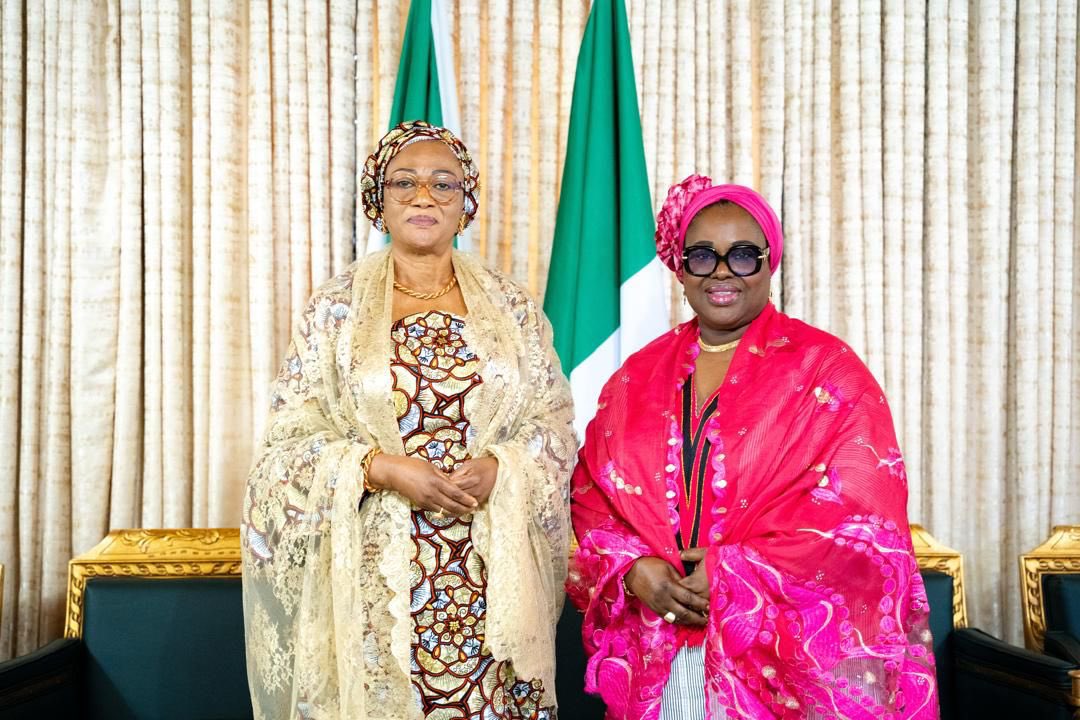
Oluremi Tinubu Hosts Wife of New IGP, Talks Welfare, Empowerment for Police Families
The First Lady of the Federal Republic of Nigeria, Senator Oluremi Tinubu, today welcomed Mrs. Mutiat Disu, wife of the Inspector General of Police, at the State House in Abuja.

During the meeting, the First Lady encouraged Mrs. Disu to continue championing the welfare and wellbeing of police officers’ families, especially through impactful support for their wives.
Speaking after the meeting, Mrs. Mutiat Disu shared her excitement about partnering with the First Lady’s Renewed Hope Initiative (RHI), noting that she is ready to leverage its programs to empower police officers’ wives across the country.
Mrs. Disu, who also serves as the National President of the Police Officers’ Wives Association (POWA), described the meeting as insightful and inspiring. She emphasized her commitment to using RHI platforms to improve healthcare, welfare, and economic empowerment for POWA members nationwide.
“The purpose of this visit is to tap into her wealth of experience and explore how POWA can benefit from her programs,” she said.
She added that her engagement with the First Lady has already provided valuable direction, especially in areas of social intervention and healthcare support for police families.
“I’m ready to work closely with Mama to ensure our women benefit fully, especially since RHI focuses on uplifting women, and POWA is largely made up of women.”
Mrs. Disu assumed leadership of POWA following the appointment of Tunji Disu as Inspector General of Police on February 24, 2026, succeeding Kayode Egbetokun.
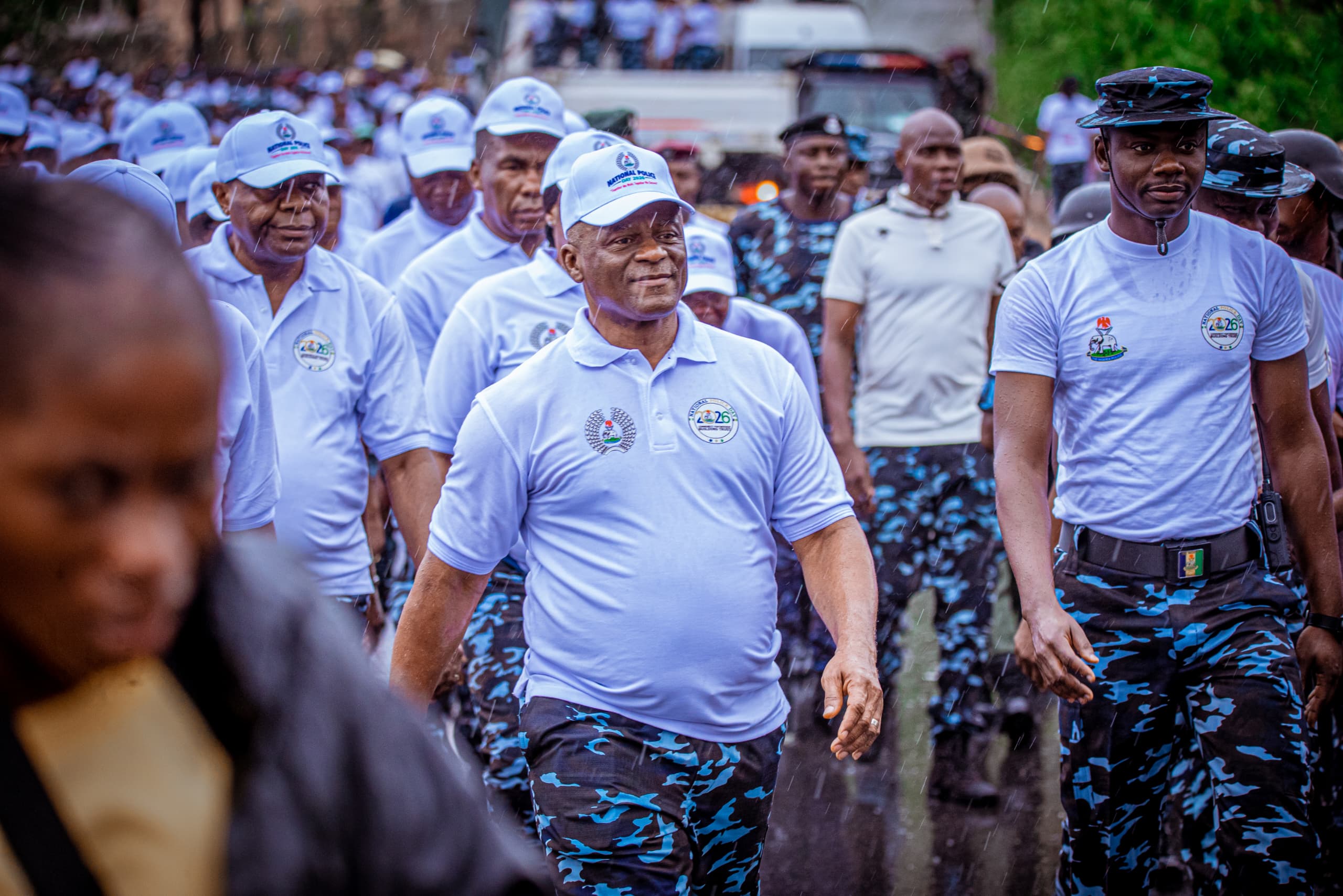
Police Day 2026: IGP Disu Leads Nationwide Walkathon To Strengthen Community Trust
The Inspector-General of Police, Olatunji Disu, on Tuesday led the management team, alongside officers and personnel of the Nigeria Police Force, in a nationwide walkathon to commemorate the 2026 National Police Day.
The event, held across state capitals and the Federal Capital Territory, formed part of activities marking Day Two of the annual celebration, themed “Community Partnership: Building Trust.”
The symbolic exercise, which drew participation from both police personnel and members of the public, was aimed at showcasing unity, discipline, and a renewed commitment to community policing and public safety.
According to the Force leadership, the walkathon underscores the Nigeria Police Force’s resolve to strengthen public trust, deepen engagement with citizens, and enhance collaboration in tackling security challenges across the country.
Participants described the initiative as a practical step toward bridging the gap between law enforcement and the communities they serve, while also promoting physical fitness and mental well-being among officers and civilians alike.
With the theme reflecting a shared responsibility for safety, the Police reiterated that sustainable security can only be achieved through active partnership with the public.
The event concluded with a renewed call for collective action under the banner: “Together We Walk, Together We Secure,” emphasizing unity of purpose in building a safer and more secure society for all Nigerians.


-

 society6 months ago
Religion: Africa’s Oldest Weapon of Enslavement and the Forgotten Truth
-

 news4 months ago
WHO REALLY OWNS MONIEPOINT? The $290 Million Deal That Sold Nigeria’s Top Fintech to Foreign Interests
-

 society6 months ago
“You Are Never Without Help” – Pastor Gebhardt Berndt Inspires Hope Through Empower Church (Video)
-

 celebrity radar - gossips2 months ago
Dr. Chris Okafor Returns with Power and Fire of the Spirit -Mounts Grace Nation Altar with Fresh Anointing and Restoration Grace on February 1, 2026