
society
Breaking!* *Ijebu East LG External Audit Report: Wale Adedayo involved in multi-million naira fraud

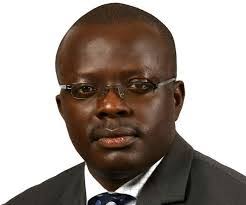
*Breaking!*
*Ijebu East LG External Audit Report: Wale Adedayo involved in multi-million naira fraud
New facts have emerged on how the impeached chairman of Ijebu East LG in Ogun State, Wale Adedayo (Alias Babalawo) allegedly mismanaged the funds of the council running into tens of millions of naira.

Preliminarily reports of external auditors who recently examined the books of the Ijebu East LG made startling revelations on how the impeached chairman mismanaged the council funds as far back as 2021.
*External Auditor Findings*
The Ojowo road project from Ijebu Imushin to Ijebu Ife was “approved” for N4,400,000 (Four Million four hundred thousand naira) was sent to a personal account. After inspection, the said project was discovered to be waste of funds, an act of fraud, because the road is very bad again within three months.
The Council under Adedayo, spent funds against the statutory provisions of federal budget and spent without projects or approval, while money was released and paid out without vouchers.
*Spending without project*
There are instances of money being approved and sent to personal accounts, without prosper documentation of all the projects and money approved.
All local government receipts are fake! There were monthly payments to 12 staff who were not staff of the Council where another non-staff got advance payment of N50,000.
*Transfer to personal account of Adedayo*
In the Community Department, a sum of N2,556,000.00 (Two million, five hundred and fifty-six thousand naira) was withdrawn for “empowerment” but later transferred to the personal account of one “Wale Adedayo” on January 27, 2023, whereas no empowerment was held in the local government area.
Similarly, another sum of N3,556,000 was paid into the personal account of the former HOD of Community Department and later, within 24 hours, transferred into the personal account of one “Wale Adedayo” at Guaranty Trust Bank. However, the sum of N500,000.00 ( five hundred thousand naira only) was transferred back into the account of a local government staff.
Again, the money was said to be meant for “empowerment”, but no such programme held in the Local Government.
*N1,000,000. Spent of Immunization for goats *
The impeached council Chairman claimed to have spent N1,000,000.00 (one million naira) to immunize goats in the local government. The Supervisor for Agriculture, whose department purported handled the immunization, denied knowledge of such immunization. When contacted, the company said to have supplied the vaccine said they do not have the vaccine and even when they had, it was N600.00 (six hundred naira) per one as against N7,000.00 (Seven thousand naira) per one signed by Adedayo.
*Spending on Media*
Adedayo claimed to have spent about N450,000.00 (Four hundred and fifty thousand naira) on media for the commissioning of Legislative Chambers. There was no receipt to back up the amount and there was no clippings of the media reports on the commissioning to back up the expenditure.
*Multiple withdrawals by Adedayo’s driver from Project Account*
Another startling discovery are the startling withdrawal from the council’s project account at the Zenith Bank by Wale Adedayo’s driver by the name Adedayo Balogun. It was discovered that Balogun repeatedly withdrew from the account, more than 25 times, various amounts ranging from N30,000.00 (thirty thousand naira) to N50,000.00 (Fifty thousand naira). Balogun is not even a staff of the project department of the council.
It would be recalled that Adedayo had earlier alleged that the Ogun State government has not been sending money to his local government coffers from the federation account; a claim his fellow chairmen not only disassociated themselves from, but also showcased what many of them have been able to do with the federal allocations. However, Adedayo maintained that his council has not received a dime from the state government since he became chairman.
The state government on its part has published records of disbursement of funds to the 20 local government councils in Ogun State and has petitioned the police against Wale Adedayo for lies and public incitement. The police is currently prosecuting Adedayo on false claims at a Magistrate Court, Abeokuta.
The Ijebu East LG Councilors who impeached the former chairman after his eventual appearance before the legislative council, maintained that the former chairman grossly mismanaged the funds of the council, diverted funds and operated without budget approval, among other impeachable offenses.
The suspended chairman allegedly opened up before the full house of 11 councillors that he diverted federal allocations sent to the council by the state government and used them for purposes other than what the state government approved.
He was said to have also agreed that he spent the council funds till August 2023 even when the budget was yet to be approved whereas the laws only allow him to spend till March 2023.
Adedayo was said to have also opened up that he used N5.2 million to produce 20 pieces of chairs and tables instead of the 290 chairs and tables that the money was meant for as approved by the state government. He could not tell the House what the remnant of the money for chairs and table was used for.
On the issue of illegal levies and stickers to commercial transport operators in the LG, Adedayo said he thought the house had passed a bill to that effect, but Akindele reminded him that a bill if passed, would have been jointly signed by the leader of the house and the council chairman.
The Councilors said Adedayo had severally shunned invitations from the House, maintains that his issues with the Governor were mere ploy to divert attention and cover up his mismanagement of the council’s funds. The House stated that the chairman ran foul of the laws of the land, specifically the Ogun State Local Government Laws 2006, and committed serious impeachable offences.
Therefore, the leader of the House, Hon. Faseyi Akindele, after voting by the Councilors, pronounced Adedayo impeached as the chairman of Ijebu East LG.




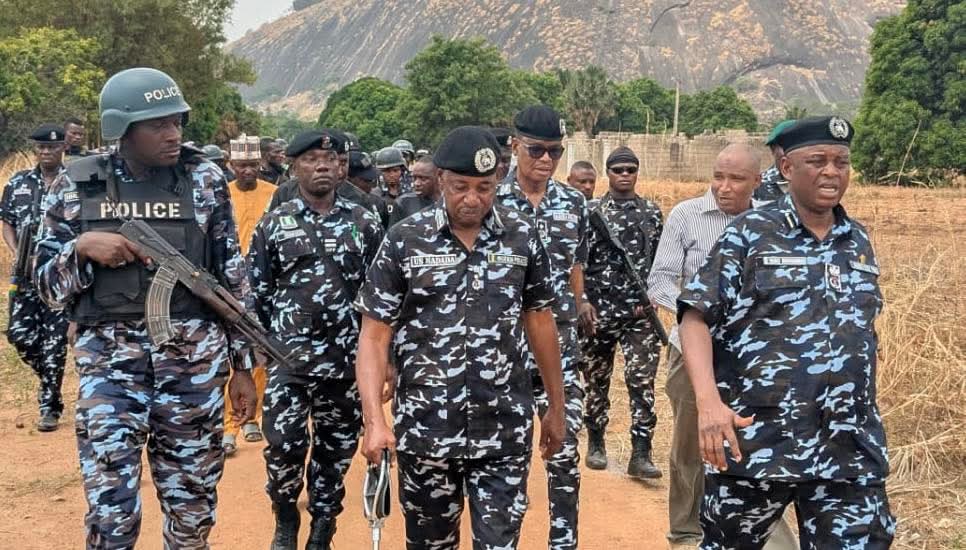
Ariko Church Attack: IGP Disu Deploys DIG As Police Rescue Seven Kidnap Victims
The Inspector-General of Police, Olatunji Rilwan Disu, has ordered the immediate deployment of the Deputy Inspector-General of Police in charge of Operations, Shehu Umar Nadada, to Kaduna State following a deadly bandit attack on Ariko Village near Gurara Dam.
The assault, which occurred on April 5, 2026, targeted worshippers at ECWA and Catholic churches in the community, with gunmen opening fire indiscriminately. Five persons were confirmed dead, while no fewer than fourteen others were abducted during the coordinated হাম.
In a swift operational response, the police high command mandated a high-level intervention, tasking DIG Nadada with leading on-the-ground coordination of security efforts aimed at stabilising the area and facilitating the safe recovery of the victims.
Security operations conducted in collaboration with the Nigerian Army and the Department of State Services (DSS) have already yielded results, with seven of the abducted persons rescued. The victims were evacuated to Katari Hospital for urgent medical attention and are reported to be in stable condition, awaiting reunification with their families.
Police authorities disclosed that tactical operations remain ongoing to secure the release of the remaining captives and apprehend those responsible for the ആക്രമം, underscoring a renewed push to degrade criminal networks operating within the axis.
Reaffirming the Force’s commitment to public safety, the IGP called on residents to remain vigilant and support ongoing operations by providing credible and actionable intelligence to security agencies.


society
The Unfinished Rescue Mission: Ten Reasons Zamfara Must Re-elect Governor Dauda Lawal in 2027
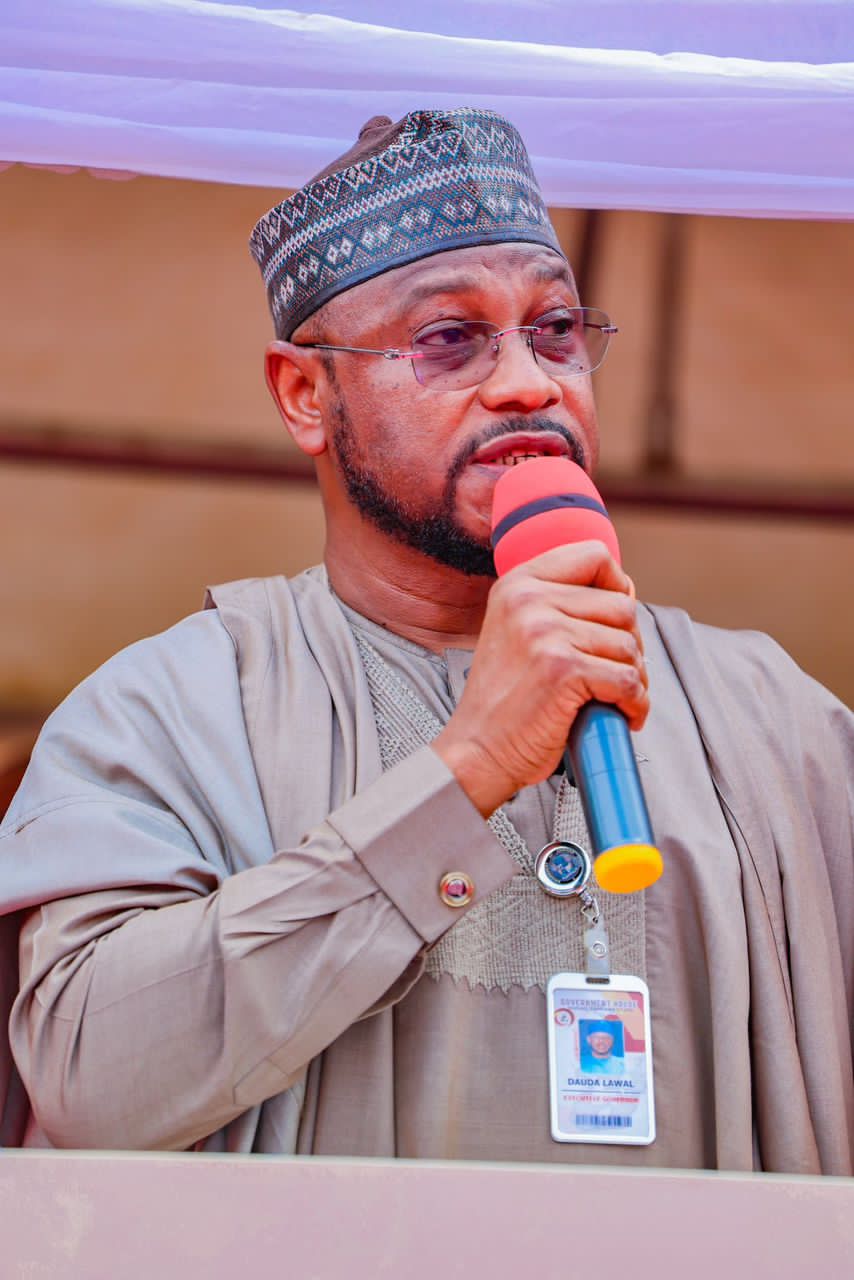
The Unfinished Rescue Mission: Ten Reasons Zamfara Must Re-elect Governor Dauda Lawal in 2027
By Oladapo Sofowora
In the resilient heart of Northwestern Nigeria, a different kind of storm is blowing hard. It is not the whirlwind of banditry that has long defined Zamfara State, but the quiet, determined tempest of reconstruction and recalibration done by Governor Dauda Lawal, who took the reins of a state gasping for air choked by insecurity, bankrupt of spirit, and paralyzed by decades of maladministration steering it to the path of prosperity. Three years into his first term, the landscape is shifting and the story is changing for the better. Yet, every revolution needs time to root. For Zamfara indigenes, here are ten detailed reasons why they must hand Governor Dauda Lawal another mandate to steer the state to the promised land, so as to enable him to finish the work he has so boldly begun.
1. The Security Recalibration
For years, Zamfara’s security apparatus was reactive, arriving after villages had been razed, but Governor Lawal changed the paradigm with a shift. He didn’t just procure guns; he built a comprehensive Zamfara Community Guard integrated with local vigilantes and formal military intelligence that has served its purpose of gathering local intelligence and sharing it with security agencies to tackle all sorts of insecurity in the state. His administration invested over ₦4 billion in surveillance drones, armoured personnel carriers, and rapid-response communication towers across the 14 local government areas. The result? A 60% reduction in major attacks in the last 18 months. Another term means expanding this network to the most remote forests of Tsafe and Maradun, finally breaking the spine of the criminal enclaves. One term was used to stabilize the patient; a second term handed to him will cure the disease totally.
2. The Restoration of Integrity in the Civil Service Structure
Before Lawal, Zamfara’s civil service was a graveyard of productivity, infested with “ghost workers” who drained the treasury, leveraging a lacuna created by the previous administration. Upon resumption, the Governor commissioned a forensic biometric audit in which over 5,000 fictitious names were expunged from the payroll, saving the state over ₦1.2 billion monthly. More importantly, he cleared 18 months of salary arrears inherited from the previous administration within his first 100 days. A second term handed to him via the ballot will focus on capacity building and promotions based on merit, transforming the bureaucracy from a parasitic entity into an engine of service delivery.
3. The Educational State of Emergency
Banditry had turned over 300 schools into abandoned ruins, with teachers fleeing and children being abducted. Governor Lawal declared a state of emergency on education. He has since reconstructed 200 primary schools with fortified walls and secure hostels. The “School Feeding and Safe Return” program brought back 150,000 out-of-school children. But the job is half done. The remaining 150 schools in high-risk zones need the same treatment. Re-electing Lawal means ensuring no child in Zamfara has to choose between a bullet and a book.
4. Functioning Primary Healthcare Across the State
For a decade, rural Zamfara relied on patent medicine sellers for life-saving care. Governor Lawal refurbished 147 Primary Healthcare Centers (PHCs), equipping each with solar power, vaccines, and at least two resident nurses. He launched the Zamfara Health Voucher Scheme, giving 50,000 vulnerable women free antenatal and delivery care. The time of medical pilgrimage is over as the state now boasts of a functioning MRI machine among other sophisticated medical machines. A second term will see the full completion and upgrade of three zonal general hospitals in Gusau, Kaura Namoda, and Anka, bringing surgery and emergency care within reach of every citizen.
5. Agricultural Revolution
Zamfara is a state predominantly with farmers; true to its slogan, ‘Farming is our pride’, despite the rich soil, farmers are poor and are being terrorized from their farmlands due to insecurity. Lawal’s “Farming Without Fear” initiative partnered with the military to create secure agricultural corridors during planting and harvest seasons. He distributed drought-resistant seeds and solar-powered water pumps to 40,000 farmers. The state’s rice and maize output tripled last year. Yet, the missing link is processing. With a cargo airport in place and a readily available market, there will be a major boost in agricultural business in the state. A second term will see the establishment of a staple crop processing zone (SCPZ) in Gusau, turning raw produce into export-ready goods and ending the exploitation of middlemen.
6. The Portable Water Revolution
Gusau and its environs relied on a water treatment plant built in 1978. It was a relic, but Governor Lawal secured a ₦15 billion loan from the World Bank to rehabilitate the Damaturu Water Scheme, increasing daily capacity from 15 million to 50 million liters. For the first time in a generation, taps are flowing in Talata Mafara and Shinkafi. But some rural communities still trek for hours to get portable drinking water. A second term will extend this reticulated network to 200 additional rural communities, making water a right, not a luxury.
7. The Economic Inclusion of Empowering Women and Youth
Banditry thrived because idle young men were easily lured. Lawal countered this with the Zamfara Youth Empowerment Trust (ZAYET), training 10,000 youths in tailoring, ICT, and solar installation, and giving them startup capital. His Kaura Economic Stimulus provided 20,000 women with ₦50,000 each to revive small-scale trading. The recidivism rate into crime among beneficiaries is less than 2%. A second term will scale this to reach all 147 wards, ensuring that the economic ladder is long enough for every willing citizen to climb.
8. Transparency and Accountability in Governance Pact
Governor Lawal is the first Zamfara governor to publish monthly financial statements on the state government website, including details of every constituency project actualized. He voluntarily subjected the state’s accounts to a forensic audit by the EFCC and ICPC; a move his predecessors fought to block. The result is a restored relationship with international donors (UNDP, EU), who have returned to fund developmental projects across the state because Governor Lawal puts to use every fund given with accountability. One term has proven his integrity; a second term will institutionalize it, creating a culture of governance where public funds are put to judicious use without being siphoned.
9. Justice Sector Reform by Decongesting the Prisons and Prosecuting the Convicted
Zamfara’s prisons were incubators for radicalization, filled with petty offenders and low-level herders, while bandit kingpins roamed freely across the state. Lawal’s administration, in partnership with the judiciary, released 1,200 detainees held for minor offenses without trial, decongesting the facilities. Simultaneously, a specialized mobile court has secured 50 convictions against bandit collaborators and informants. A second term will focus on building a modern correctional center and strengthening the witness protection program, ensuring that justice is both swift and safe to administer.
10. The Legacy of Resilience in Rebuilding Social Trust
The most profound reason to re-elect Dauda Lawal is the hope his administration brings. He inherited a traumatized populace that no longer believed the state could protect them. Today, markets in Gusau stay open past 6 PM. Farmers sleep in their own homes instead of bush hideouts. Internally displaced persons are voluntarily returning to their ancestral lands. This psychological shift from fear to cautious optimism is the most fragile and precious asset Zamfara has gained. Destroying it by returning to the old ways would be catastrophic. A second term will solidify this trust, transforming resilience into permanent recovery.
Governor Dauda Lawal has not performed miracles in one term; miracles are for saints, not statesmen. But what he has done is to perform the harder task ahead. He has laid a solid foundation of competence, security, and integrity where there was only rubble. The Zamfara of today does not need a new experiment; it needs the continuation of a working plan already in motion. Re-electing Dauda Lawal again is not about rewarding the past; it is about securing the future ahead. The first term broke the curse of neglect; the second term will recalibrate the fortune of the state to prosperity.
society
WHEN PUBLIC TRUST IS TRADED: A PASSIONATE CALL FOR TRANSPARENCY AND ACCOUNTABILITY IN THE FGCK KANO LAND CONCESSION
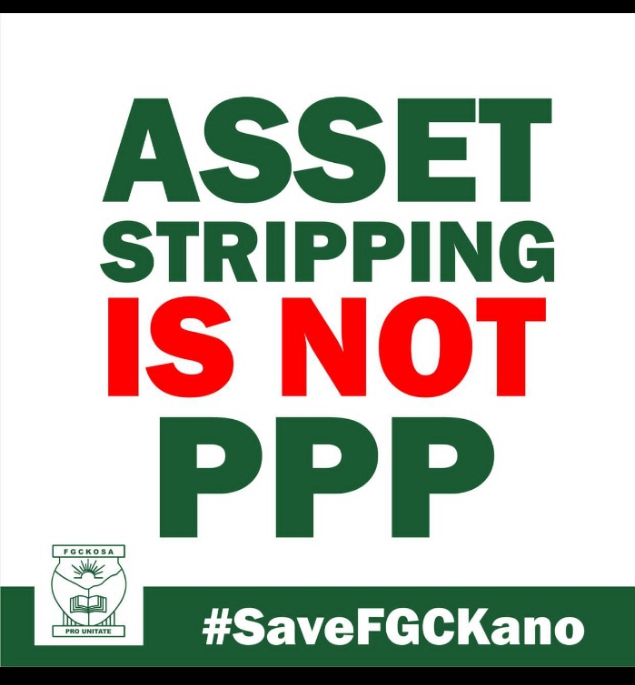
WHEN PUBLIC TRUST IS TRADED: A PASSIONATE CALL FOR TRANSPARENCY AND ACCOUNTABILITY IN THE FGCK KANO LAND CONCESSION
By Tijjani Sarki
It is with deep concern and a profound sense of civic responsibility that I respond to the recent press release issued by Pluck Global Construction Company regarding the proposed concession of a substantial portion of land within Federal Government College, Kano. Beyond the polished assurances and technical justifications lies a matter that touches the very soul of public trust, institutional heritage, and the collective conscience of our society. I feel obliged to add my voice to that of the old students and other critical stakeholders, while also expressing serious concern regarding the implications this arrangement may have on the school’s future expansion projects.
This is not merely about land. It is about legacy, about the sanctity of a national institution, and about the obligation we owe to future generations who deserve to inherit not diminished assets,but strengthened foundations.
While the Company attempts to justify the arrangement under the framework of a Public-Private Partnership (PPP), its response raises more concerns than assurances, and leaves several critical issues either insufficiently addressed or deliberately glossed over.
At the heart of the matter is the proposed concession of approximately 40% of the College’s total land area,a decision of far-reaching implications for the heritage, future expansion, environmental balance, and overall integrity of one of Nigeria’s foremost unity colleges. The characterization of such a vast portion of institutional land as merely “underutilised” is, at best, subjective and, at worst, a convenient pretext for a transaction whose long-term consequences remain unclear.
The justification that this concession is in exchange for infrastructural development valued at over ₦8 billion further invites scrutiny. Given prevailing economic realities, inflationary trends, and the dynamic nature of project costing, the assertion that such an agreement is not subject to review or adjustment raises legitimate questions about transparency, fairness, and value-for-money. Who determined this valuation, and on what basis should it remain static despite changing economic conditions?
Furthermore, while regulatory approvals from bodies such as the Infrastructure Concession Regulatory Commission (ICRC) are cited, mere compliance with procedural requirements does not equate to public acceptability, stakeholder consent, or ethical soundness. Due process must go beyond paperwork, it must reflect inclusiveness, accountability, and sensitivity to institutional legacy.
Of particular concern is the underlying rationale for situating a commercial or quasi-commercial land-swap arrangement within the premises of a functioning educational institution. This naturally leads to a fundamental question:
Why must such a project be tied to land within the school environment?
If indeed the Company possesses the technical and financial capacity it claims, why has it not sought to execute similar developments on virgin land outside the state capital, where there would be no conflict with an academic setting, historical legacy, or public sentiment?
The insistence on acquiring a substantial portion of land within a prestigious federal institution inevitably fuels skepticism regarding the true motives behind the arrangement. Is the primary objective the development of educational infrastructure, or the strategic acquisition of high-value urban land under the guise of a PPP?
Additionally, the assurance that possession of the land will only occur upon project completion, while noted, does not sufficiently mitigate concerns about the eventual permanent transfer of public institutional assets into private hands. What guarantees exist to protect future generations from irreversible decisions taken today?
Equally troubling is the apparent disconnect between the scale of the concession and the voice of critical stakeholders. Institutions such as Federal Government College, Kano, are not merely physical spaces, they are national assets with deep historical and emotional significance. Any decision affecting such institutions must command broad-based consensus,not just regulatory approval.
In light of the foregoing, several key questions remain unanswered:
What independent valuation was conducted to justify the exchange of 40% of institutional land for the proposed developments?
Why is the agreement insulated from review despite obvious economic fluctuations?
What alternative sites were considered, and why were they deemed unsuitable?
What long-term safeguards exist to protect the school’s territorial integrity and future expansion needs?
To what extent were stakeholders, including alumni and the host community, consulted prior to finalizing this agreement?
Until these questions are satisfactorily addressed, the concerns raised by stakeholders remain valid, urgent, and compelling.
This is a defining moment. We must decide whether public institutions exist for the common good or as convenient instruments for opaque transactions. Silence, in this instance, would amount to complicity.
We therefore call on all relevant authorities to act with courage and conscience,revisit this agreement, open it to public scrutiny, and ensure that decisions of such magnitude are guided not only by technical compliance, but by transparency, equity, and the enduring public interest.
Tijjani Sarki
*Good Governance Advocate and Public Policy Analyst*


-

 society7 months ago
Religion: Africa’s Oldest Weapon of Enslavement and the Forgotten Truth
-

 news4 months ago
WHO REALLY OWNS MONIEPOINT? The $290 Million Deal That Sold Nigeria’s Top Fintech to Foreign Interests
-

 society7 months ago
“You Are Never Without Help” – Pastor Gebhardt Berndt Inspires Hope Through Empower Church (Video)
-

 celebrity radar - gossips2 months ago
Dr. Chris Okafor Returns with Power and Fire of the Spirit -Mounts Grace Nation Altar with Fresh Anointing and Restoration Grace on February 1, 2026