
Business
BREAKING: Saraki, Mark, others in trouble as Presidency orders probe of Nigerians named in #PanamaPapers

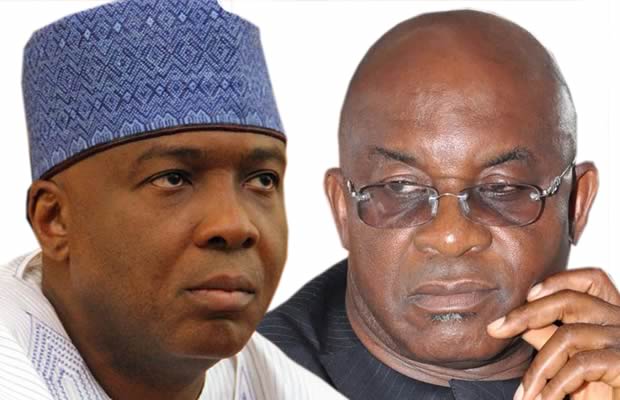

The senate president, Bukola Saraki, and his predecessor, David Mark, and other prominent Nigerians may soon be in trouble as the Presidency has ordered the investigation of present and past Nigerian officials named in the Panama Papers scandal.
The chairman of the Code of Conduct Bureau, CCB, Sam Saba, confirmed the directive to PREMIUM TIMES.
This newspaper had published leaked papers from a Panamanian law firm, Mossack Fonsecca, which were obtained by the German newspaper Süddeutsche Zeitung.
The 2.6 TB files, involving 214,488 entities, exposed incredible secrets of the underworld economy, where a network of banks, law firms and other middlemen utilize shell companies, sometimes to hide illegal wealth.
PREMIUM TIMES identified at least 110 Nigerians and companies operating offshore shell companies in tax havens.
Mr. Saba said the Presidency forwarded names of some persons mentioned in the Panama Papers, to the agency for investigation.
“I want to let you know that government has written to us and given us some names based on what they have been reading and hearing regarding that document,” Mr. Saba said.
He said as soon as the #PanamaPapers reporting started, the CCB attempted to get the full leaks until PREMIUM TIMES assisted it by making some details for its scrutiny.
Mr. Saba said the CCB, after studying the papers, has questions for some public officers in the country.
He would not, however, disclose the names of the affected public officers.
“I think it (Panama Papers) is going to be helpful because already we have some questions for certain public officers, which I will not be able to disclose at the moment. Until they finish answering those questions, I may not be able to discuss it,” he said.
The CCB boss said the agency took some time to respond because it could not secure the leaked documents.
“I tried to access the document via the internet, but I was required to subscribe and pay some money, which I didn’t have,” Mr. Saba said.
“That was what stalled our effort at the time. But I later asked my counterpart in the ICPC if he was in the picture and he replied in the negative. He, however, advised me to approach PREMIUM TIMES.”
Public officers who may be investigated by the CCB
Senate President, Bukola Saraki
Four assets listed in the secret offshore accounts carry Mr. Saraki’s name, but the embattled senate president failed to disclose them in violation of Nigeria’s Code of Conduct law.
One of the companies in Mrs. Saraki’s name in Seychelles Island is Sandon Development Limited, a vehicle used in acquiring a property on 8 Whittaker Street, Belgravia, London, in 2012.
Another shareholder listed for that company is Babatunde Morakinyo, a long-term personal aide and friend of Mr. Saraki. PREMIUM TIMES confirmed that the assets actually belong to Mr. Saraki, and not his wife, Toyin.
Evidence showed that Mrs. Saraki and Mr. Morakinyo were mere fronts and nominee directors holding assets in trust for the Senate president.
According to one of the documents obtained by this newspaper, Mr. Sakari, while still Kwara State governor, and describing himself as landlord of 8 Whittaker Street, London and 70 Bourne Street, London, executed a deed granting his tenants license to alter the premises of the properties.
A part of the deed reads, “This license is supplemental. The reversion immediately expectant on the determination of the lease is now vested in the landlord.
“The unexpired residue of the No. 70 (Bourne Street) lease is still vested in Dr. Saraki and the unexpired residue of the number 8 (Whittaker Street) lease is now vested in the companies.”
The deed was “signed, sealed and delivered” by Mr. Saraki on behalf of himself, Sandon Development Limited and Renocon Property Development Limited.
It was, however, from Renocon that Mrs. Saraki, posing as owner of Sandon, purportedly bought Number 8 Whittaker Street in July 2011.
Both companies belong to Mr. Saraki, but he only used a company owned by him to buy a property from another of his companies.
Toyin acted as a front for her husband in the purported transaction.
The Sarakis also own Girol Properties Ltd, which was registered on August 25, 2004 (a year after Mrs. Saraki’s husband became governor) in the British Virgin Island (BVI).
Company documents show that Mrs. Saraki owns 25,000 numbers of shares with a par value of US$ 1,00 each. She was appointed the first and only director of the company.
Mrs. Saraki had in a letter to the International Center for Investigative Journalism, ICIJ, denied having a shareholding in Girol Properties.
But this newspaper found a document linking her to the firm, as well as another handwritten document suggesting that she was known within Mossack Fonseca as just a nominee director and not the beneficial owner of the company.
Former senate president, David Mark
Former Senate president, David Mark, has links with eight offshore companies in British Virgin Island as shown by the leaked database of Mossack Fonseca.
The database showed Mr. Mark is one of Nigeria’s most extensive users of offshore shell companies, while serving as a public official.
The companies are Sikera Overseas S.A, Colsan Enterprises Limited, Goldwin Transworld Limited, Hartland Estates Limited, Marlin Holdings Limited, Medley Holdings Limited, Quetta Properties Limited, and Centenary Holdings Limited.
In the documents, Mr. Mark was repeatedly marked as a politically exposed person, and at a point the former senate president had to send documents, across to Mossack Fonseca to prove that he was clean.
The 68-year-old former military officer spent the last 40 years covered by the investigation largely as public office holder. He is widely seen to be far richer than his legitimate incomes could have provided.
He served as military governor of Nigeria’s north-central state of Niger, minister of communications, and later as president of the Nigerian Senate from 2007 to 2015.
Mr. Mark has been in the senate since 1999, and remains a senator of the federal republic, representing Benue South Zone in the upper legislative chamber.
Former National Planning Minister, Rasheed Gbadamosi
A former Minister for National Planning, Rasheed Gbadamosi, owns two expensive and luxurious penthouses in Panama, a notorious tax haven.
Mr. Gbadamosi, writer, businessman and bureaucrat, who was recently appointed co-chairman of the Lagos at 50 planning committee, bought the two properties in 2008, while serving as chairman of the Petroleum Products Pricing Regulatory Agency, PPPRA.
He paid a staggering N836.8 million ($2.6 million) for the penthouses located in a swanky tower in Panama.
According to the leaks, sometime in early 2008, the former minister approached Gilberto Aleman, a Panamanian real estate broker, to help him secure two posh penthouses owned by Nicolas Corcione, owner of Ciclones Corporation Inc, and Cosmopolitan Corp, the companies under which the properties were registered.
Valued at N436,800,000 ($1,365,000.00), Penthouse 1, the first penthouse Mr. Gbadamosi bought, is located in Ocean Park Tower 2, and consists of a surface area of 537.33 square meters, on floors 35 and 36 of the Tower.
Former Group Managing Director, Nigerian National Petroleum Corporation, NNPC, Funsho Kupolokun
Mr. Kupolokun, 69, is one of the largest shareholders in one of Ghana’s biggest hotels, the Kempinski Accra Hotel, a 269-luxury rooms five-star facility.
But a close look at the company’s records will not reveal this fact because in 2013, Mr. Kupolokun, who was head of the NNPC between 2003 and 2007, used a shadowy offshore company registered in Mauritius, a known tax haven, to hide his shares in the company that owns the hotel.
The company, Gold Coast Resorts International Limited, is an entity incorporated in the British Virgins Island in 2006.
Details obtained by PREMIUM TIMES from the leaked Mossac Fonseca’s database showed that Mr. Kupolokun became director of Gold Coast Resorts on August 11, 2008 and personally held 17.23 per cent shares in the company.
Correspondence between Mossac Fonseca and a London-based law firm representing Mr. Kupolokun, Kennedys Law LLP, revealed that the former aide to ex-president Olusegun Obasanjo, authorized the transfer of his shares in Gold Coast to Blue Chapel, a company registered in Mauritius (another tax haven), in January 2013.
At a point, Mossac Fonseca raised concern about Mr. Kupolokun, after its compliance unit identified press reports accusing the former NNPC chief of corruption.
In response, on September 7, 2014, Mr. Kupolokun wrote, “Thanks so much, I now know what is being referred to.”
Former Delta State Governor, James Ibori
Mr. Ibori, is found to have established limited liability companies and foundations in secret offshore tax havens to hide some of the funds he looted from the state’s treasury, a leak of secret tax documents has revealed.
The former governor, who is currently serving jail term in the United Kingdom after pleading guilty to fraud charges in 2012, enlisted his immediate family as beneficiaries of the offshore companies and foundations.
To hide his loot, Mr. Ibori, working through a Swiss asset management firm, Clamorgan S.A. in Geneva, established several offshore companies, including Stanhope Investments Limited, a foundation, Julex Foundation, and a trust, The Hopes Trust, enlisting himself, his wife and daughters as beneficiaries.
Clamorgan prides itself as a company that provides asset management, fiduciary services, immovable property administration, amongst others, and operates under the laws of Geneva, Switzerland.
After almost five years of playing cat and mouse with Nigerian and British authorities, the former governor capitulated on February 27, 2012, pleading guilty in a London court to 10 counts of money laundering and conspiracy to defraud. Before Judge Anthony Pitts, Mr. Ibori admitted stealing $250million as alleged by the prosecution.
A former Group Managing Director, NNPC, Abubakar Yar’Adua
Mr. Yar’Adua bought a posh home worth £890,000 in London using a secret offshore company he registered in the British Virgin Island. Leaked files showed the offshore company to be Hydrocarbon Assets Investments Limited.
Mr. Yar’Adua bought the house in 2008, while serving as the Group Managing Director of the NNPC. He became NNPC GMD in August 2007, and was removed from office in January 2009.
In April 2008, eight months after he took the NNPC top job, Mr. Yar’Adua used a London residence address at Beechwood Hall, Regents Park Road, London N3 3AT to register an offshore company, Hydrocarbon Assets Investments Limited in the British Virgin Island.
To cover his track, Mr. Yar’Adua prepared a corporate smokescreen by appointing two front companies to act as directors of Hydrocarbon Assets Investments Limited.
Documents seen by PREMIUM TIMES showed that on November 7, 2008, Mr. Yar’Adua was the sole director of Hydrocarbon Assets Investments Limited.
He resigned on the said day but appointed two companies, Gudson Limited and Roselle Limited as directors of his company.
Additional documents scooped from the Mossack Fonseca files exposed how Mr. Yar’Adua utilized his Hydrocarbon Assets Investments Limited to secure a loan from Dexia Private Bank Limited in Jersey.
This he used to purchase a property worth £890,000 in London. Dexia Private Jersey Limited, Hydrocarbon Assets Investment Limited and Mr. Yar’Adua signed the loan agreement on November 18, 2008. It was effected on December 2, 2008.
The property, until now a secret, is located in a freehold estate at 28A North Crescent, Finchley, London N3 3LL. It was registered under the title number NGL624398. A freehold property refers to outright ownership of a property and land on which it stands. The owner of the land has no time limit to his period of ownership.
Andy Uba, Senator, Anambra State
In November 2004, Mr. Uba was only a special assistant on domestic affairs to the then President Olusegun Obasanjo but he possibly had enormous wealth in his hands that he sought the services of the offshore handlers, Mossack Fonseca, to float for him an anonymous company.
Now a serving senator, Mr. Uba, owns a shell company by name Wentworth Properties Limited in the Republic of Seychelles, an infamous tax haven.
Andy Uba’s net worth was insignificant before May 29, 1999 when Olusegun Obasanjo was sworn in as president. He later returned from the United States to be appointed a presidential aide.
He is believed to have become suddenly rich, running for governor in 2007, and then for senatorial position after his governorship election was annulled.
Mr. Uba’s offshore structure in the Seychelles was erected with the help of two women, Marta Edghill and Vianca Scott, believed to be his fronts.
Minutes of the first meeting of the board of directors of Wentworth Properties Ltd showed that the said meeting was held on November 3, 2004. The minutes said the two women constituted the totality of the board of directors.
Marta Edghill and Vianca Scott elected themselves President and Secretary of the company respectively.
David Umaru, Senator, Niger State
In his native Niger State, David Umaru, the All Progressives Congress, APC, senator representing Niger East Senatorial District, is something of a folk hero.
He was a thorn under the skin of the immediate past administration of Governor Babangida Aliyu. He was an unwavering critic and soon gained the reputation of a whistleblower after be published series of advertorials in national newspapers exposing alleged corrupt practices by the Mu’azu Babangida administration.
But one aspect of his life Mr. Umaru would hesitate to see on the pages of newspapers is his dealings in notorious offshore tax havens and his role in laundering money for the country’s most notorious dictator ever, Sani Abacha.
Documents obtained by PREMIUM TIMES, revealed that Mr. Umaru incorporated two shell companies in the British Virgin Islands.
The first company, Yorkshire Investment Limited was incorporated on April 27, 1998 with a registered address at No2 Commercial Centre Square, Alofi, the capital of the Niue Island.
The company was incorporated by International Trust Company (ITC), a Niue-based registering agent. In other to conceal the true ownership of the shell company, ITC provided two nominee directors for the company – Melvin Scales (Chairman) and Ramses Owens.
Mr. Umaru was named the true and lawful attorney of the company. Not satisfied by the incorporation of his first shell company, five months later, exactly on September 15, 1998, Mr. Umaru again went shopping for his second shell company – Darweng Holding. This time he decided to incorporate it in the British Virgin Islands.
Ibrahim Gobir, Senator, Sokoto State
Ibrahim Gobir, an All Progressives Congress, APC, lawmaker, who represents Sokoto East Senatorial District in the National Assembly has also been named in the leaked document as having secret offshore accounts.
Fuller details of his involvements will be available in future publications.
Source :Premium times




Fidelity Bank grows gross earnings by 38% to N434.95b in Q1
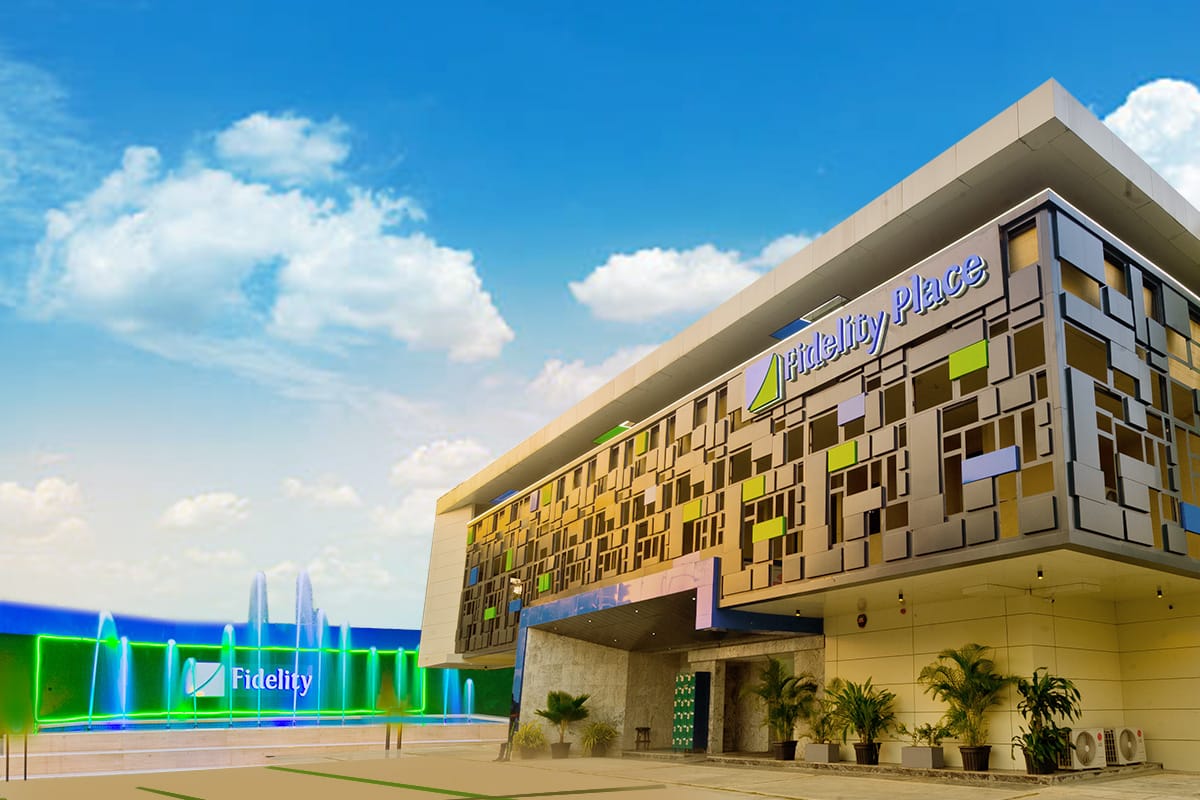
Fidelity Bank Plc recorded 37.9 per cent growth in gross earnings to N434.95 billion in first quarter 2026 as the international commercial bank continued to expand its core banking market share.
Interim report and accounts of Fidelity Bank for the three months ended March 31, 2026 released at the Nigerian Exchange (NGX) showed that gross earnings rose from N315.42 billion in first quarter 20025 to N434.95 billion in first quarter 2026, representing an increase of 37.9 per cent.
The top-line performance was driven by impressive growth in the bank’s core business operations with interest incomes rising by 22.8 per cent to N314.48 billion in first quarter 2026 as against N256.10 billion in first quarter 2025.
With net interest income at N180.97 billion, the bank closed the period with profit before tax of N92.48 billion. After taxes, net profit stood at N74.47 billion for the three-month period. Earnings per share remained high at N5.69, underlining the capacity of the bank to reward its shareholders.
The balance sheet of the bank also emerged stronger. Total assets crossed the N11 trillion mark to N11.35 trillion by March 2026 compared with N10.46 trillion recorded in December 2025. Customers’ deposits increased from N6.89 trillion to N7.38 trillion. Total equity rode on the back of earnings growth to a 27.5 per cent increase from N1.09 trillion in December 2025 to N1.39 trillion by March 2026.
The first quarter 2026 results further consolidated the strong earnings outlook of the bank, which had successfully completed its recapitalisation amidst impressive earnings performance in 2025.
Fidelity Bank had recorded double-digit growths in interest and non-interest incomes as well as key balance sheet items during the year ended December 31, 2025.
The audited report showed that gross earnings rose from N1.04 trillion in 2024 to N1.52 trillion in 2025, an increase of 45.6 per cent. Interest and similar incomes had grown by 38.7 per cent from N803.1 billion in 2024 to N1.11 trillion in 2025. Fees and commission incomes also rose by 44.7 per cent from N78.4 billion to N113.4 billion. The bank recorded net profit after tax of N242.4 billion in 2025.
The bank’s balance sheet emerged stronger with total assets rising by 18.6 per cent to N10.46 trillion in 2025 as against N8.82 trillion in 2024. Customer deposits increased by 16.1 per cent from N5.94 trillion to N6.89 trillion, reflecting continued franchise strength and an improved funding profile. Net loans and advances meanwhile declined by 2.4 per cent to N4.28 trillion in 2025 as against N4.39 trillion in 2024, attributable to customers paying down on their mature obligations.
The bank had in 2025 strengthened its capital position, with eligible capital rising to N561 billion, above the regulatory minimum of N500 billion for banks with international authorisation. In addition, capital adequacy had remained robust, with Capital Adequacy Ratio of 30.94 per cent by December 2025 as against 23.47 per cent by December 2024.
Managing Director, Fidelity Bank Plc, Dr. Nneka Onyeali-Ikpe, said the first quarter 2026 results reinforced the bank’s strong and resilient business model.
She noted that with the remarkable success of its recapitalisation programme and continuing expansion, Fidelity Bank has entered a new era of growth and impressive returns.
“We are on a stronger footing and confident that we will set new growth records that are reflective of our legacy and the future we are working on,” Onyeali-Ikpe said.
Business
Dangote Refinery Ends Nigeria’s Era of Fuel Import Dependence, Boosts GDP, FX Earnings — EIU
Dangote Refinery Ends Nigeria’s Era of Fuel Import Dependence, Boosts GDP, FX Earnings — EIU
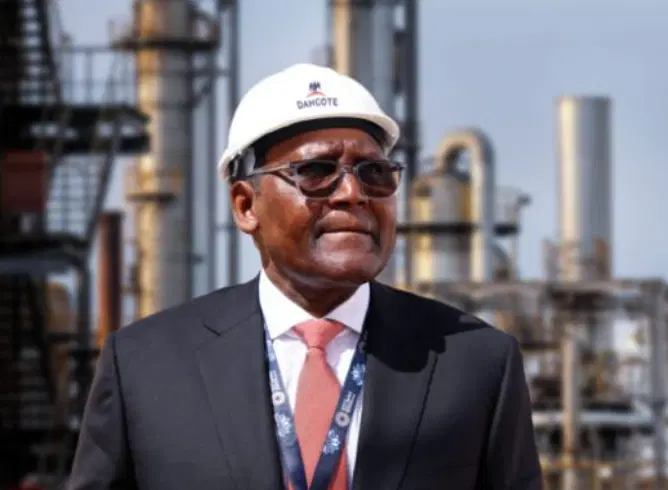
The operational ramp up of the 650,000 barrels per day Dangote Petroleum Refinery & Petrochemicals is fundamentally reshaping Nigeria’s downstream oil sector, significantly reducing the country’s dependence on imported refined petroleum products and strengthening its external position, according to the Economist Intelligence Unit (EIU).
In its latest assessment on Nigeria’s fuel market and regulatory environment, the EIU said the refinery has already transformed a sector that was previously characterised by heavy reliance on imported fuel despite Nigeria being Africa’s largest crude oil producer. The report noted that the refinery met nearly 80 per cent of domestic petrol demand in April and produced enough volumes to satisfy local consumption requirements as operations approached full capacity.
The EIU described Nigeria’s downstream petroleum sector before the refinery as “long dysfunctional”, noting that the country had remained almost entirely dependent on costly imported fuel while producing nearly 1.5 million barrels of crude oil daily.
According to the report, the emergence of the refinery has reduced import dependence, improved domestic fuel availability and strengthened Nigeria’s balance of payments position through lower import demand and rising exports of refined petroleum products.
“The gradual ramp up of the 650,000 barrel/day Dangote refinery since May 2023 has transformed Nigeria’s long dysfunctional downstream sector,” the report stated. “The country’s main refineries, all state owned, had been inoperative for years and Nigeria was almost entirely reliant on costly imported fuel.”
The research and analysis division of The Economist Group, London added that the refinery’s attainment of full operational capacity and its planned expansion would further support Nigeria’s economic growth and foreign exchange earnings over the medium term.
“Meanwhile, the attainment of full capacity at, and an increase in exports from, the Dangote refinery will support real GDP growth and foreign exchange earnings in 2026 and 2027 and beyond, as a planned doubling of the plant’s output comes on stream around the end of the decade,” it added.
Industry analysts said the refinery is increasingly positioning Nigeria as an emerging refining and export hub, altering energy trade flows across Africa and reducing the vulnerability associated with fuel import dependence.
The EIU noted that the refinery’s expansion has coincided with major reforms in Nigeria’s downstream sector, including the removal of fuel subsidies and the introduction of market driven pricing mechanisms.
The report, however, said the transition from a state dominated fuel import structure to large scale domestic refining has triggered resistance from interests linked to the old import regime.
The latest tensions emerged following the decision by the Nigerian Midstream and Downstream Petroleum Regulatory Authority to relax restrictions on petrol imports despite the refinery’s growing capacity to meet domestic demand.
Dangote Industries subsequently initiated legal action, arguing that continued import approvals undermine domestic refining investments and conflict with the objectives of the Petroleum Industry Act, which seeks to encourage local refining capacity and reduce import dependence.
Analysts noted that the availability of large-scale domestic refining capacity has improved Nigeria’s energy security and reduced exposure to external supply shocks and foreign exchange volatility.
The Centre for the Promotion of Private Enterprise also cautioned against unrestrained importation of petroleum products, warning that such a policy could weaken Nigeria’s industrialisation drive and discourage investments in domestic refining.
Chief Executive Officer of CPPE, Muda Yusuf, said continued dependence on imported fuel had historically contributed to pressure on foreign reserves, exchange rate instability and fiscal leakages.
The refinery’s growing impact is also being reflected in Nigeria’s broader macroeconomic indicators. Earlier this month, S&P Global Ratings cited increased domestic refining capacity and rising hydrocarbon exports among the major factors supporting Nigeria’s sovereign credit rating upgrade – the first in 14 years.
Beyond Nigeria, analysts said the refinery is increasingly being viewed as a strategic industrial asset for Africa, where many countries remain heavily dependent on imported fuel despite rising demand for transportation, manufacturing, and power generation.
Business
BREAKING: Court Dismisses $19.6 Million Claim Against NNPCL — Rules Contract Scope Cannot Be Changed Orally
BREAKING: Court Dismisses $19.6 Million Claim Against NNPCL — Rules Contract Scope Cannot Be Changed Orally
In a landmark ruling on Friday, May 22, 2026, the Federal Capital Territory High Court in Abuja threw out a $19.6 million lawsuit filed by Alternate Dimensions Ventures Ltd against the Nigerian National Petroleum Company Limited (NNPCL), affirming a key legal principle: a written contract cannot be expanded through oral agreements or conduct.
Alternate Dimensions had sought $19,600,000 in professional fees, claiming the scope of its Direct Sale, Direct Purchase (DSDP e-pro) contract with NNPCL was orally expanded. Represented by counsel Patrick Peter, the firm argued it was entitled to the revised sum for services rendered under the alleged new terms.
But NNPCL, through its lawyer Ituah Imhanze of KENNA LP, pushed back sharply, arguing that parties are bound exclusively by the clear terms of their written agreement. Imhanze contended that without any written amendment, the claim was legally unsound, and the court agreed.
Delivering judgment, Justice Hamza Mu’azu upheld NNPCL’s defense, stating that the contract was unambiguous and that no evidence was adduced during the trial, which supported the alleged scope expansion. The court further found that NNPCL fully complied with all contractual terms and committed no breach.
Dismissing the suit as meritless, Justice Mu’azu reinforced the doctrine of sanctity of contract: any amendment to a written agreement must be express, unequivocal, and documented, not implied or verbal.
The ruling spares NNPCL from the S19.6 million claim and also a floodgate of similar potential liabilities.


- Uganda: Parliament concludes vetting of ministers June 2, 2026
- Fund for Export Development in Africa (FEDA) Board Appoints Mr. Emmanuel Assiak as Chief Executive Officer June 2, 2026
- Ecobank Group Launches World First Nature Bond Mobilising Global Capital to Protect Africa’s Natural Ecosystems June 2, 2026
- Merck Foundation Chief Executive Officer (CEO) Dr. Rasha Kelej together with Kenya First Lady support the education of 47 Kenyan Schoolgirls by providing Annual Scholarships till they Graduate June 2, 2026
- Annual Meetings 2026: Governors Back the Bank’s Platform Solutions to Transform Aviation and Health Systems in Africa June 2, 2026
- ThinkMarkets launches ChelseaAI, bringing live CFD trading into Artificial Intelligence (AI) assistants June 2, 2026
- Afreximbank Invites Rugby Africa President Herbert Mensah to Address the 33rd Annual Meetings on a Panel Exploring Sport as a Driver of African Industrialisation June 2, 2026
- Afreximbank Deepens Commitment to Economic Progress in The Bahamas June 1, 2026
- African Electric Vehicle (EV) platform Spiro raises $215M in equity to scale electric mobility and energy infrastructure across Africa June 1, 2026
- Africa Centres for Disease Control and Prevention (Africa CDC) Statement on Attacks Against Health Facilities During the Bundibugyo Virus Disease Response in the Democratic Republic of the Congo June 1, 2026
- Uganda: Parliament concludes vetting of ministers June 2, 2026
- Fund for Export Development in Africa (FEDA) Board Appoints Mr. Emmanuel Assiak as Chief Executive Officer June 2, 2026
- Ecobank Group Launches World First Nature Bond Mobilising Global Capital to Protect Africa’s Natural Ecosystems June 2, 2026
- Merck Foundation Chief Executive Officer (CEO) Dr. Rasha Kelej together with Kenya First Lady support the education of 47 Kenyan Schoolgirls by providing Annual Scholarships till they Graduate June 2, 2026
- Annual Meetings 2026: Governors Back the Bank’s Platform Solutions to Transform Aviation and Health Systems in Africa June 2, 2026
- ThinkMarkets launches ChelseaAI, bringing live CFD trading into Artificial Intelligence (AI) assistants June 2, 2026
- Afreximbank Invites Rugby Africa President Herbert Mensah to Address the 33rd Annual Meetings on a Panel Exploring Sport as a Driver of African Industrialisation June 2, 2026
-

 news6 months ago
WHO REALLY OWNS MONIEPOINT? The $290 Million Deal That Sold Nigeria’s Top Fintech to Foreign Interests
-

 society1 month ago
SOCIAL MEDIA IS NOT A BATTLEFIELD COMMAND – WHY THE NIGERIAN ARMY’S ACTION AGAINST JUSTICE CRACK IS A NATIONAL SECURITY IMPERATIVE
-

 celebrity radar - gossips4 months ago
Dr. Chris Okafor Returns with Power and Fire of the Spirit -Mounts Grace Nation Altar with Fresh Anointing and Restoration Grace on February 1, 2026
-

 celebrity radar - gossips6 months ago
Prophet Kingsley Aitafo Releases 2026 Prophecy: ‘Nigeria Will Rise, but the World Must Prepare for Turbulence’
You must be logged in to post a comment Login
You must log in to post a comment.