
celebrity radar - gossips
Buhari Yesterday, Today and Forever By Tunde Odesola

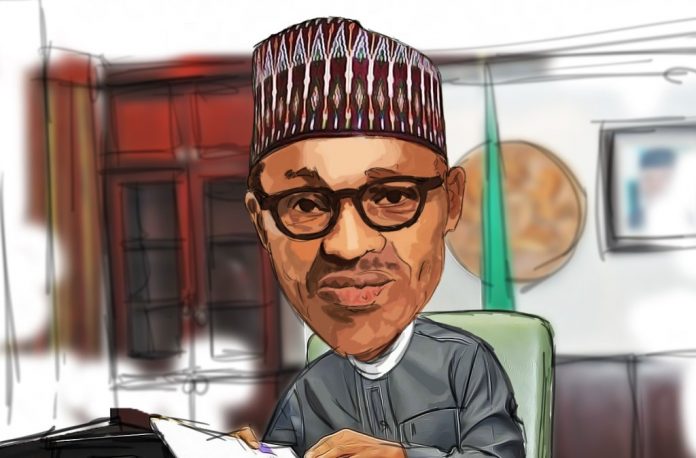
The 23rd child of his father, retired Major General Muhammadu Buhari joined the military in 1962 at 19 and at 40, he toppled a democratically elected civilian government to become Head of State before he was booted out of power at 42.

Within the first 20 years of his working life, Buhari made hay, attaining the pinnacle of his potential. Clearly, he was an exemplary youth.
I ask, who among the unruly Nigerian youths that recently distrup the peace of the country with protests at the Lekki tollgate, possesses any achievement akin to this world-class record of Buhari? Who?

Not given to frivolities like today’s youths, Buhari is serious. Even in middle age, Buhari was quite unlike the fanny-scratching dingbat from Ile-Ife, who always opens his mouth before thinking, recently cursing and spewing rubbish after President Donald Trump lost the American presidential election. That was a terrible example of a brainless youth living off the heritage bequeathed by his controversial lineage.
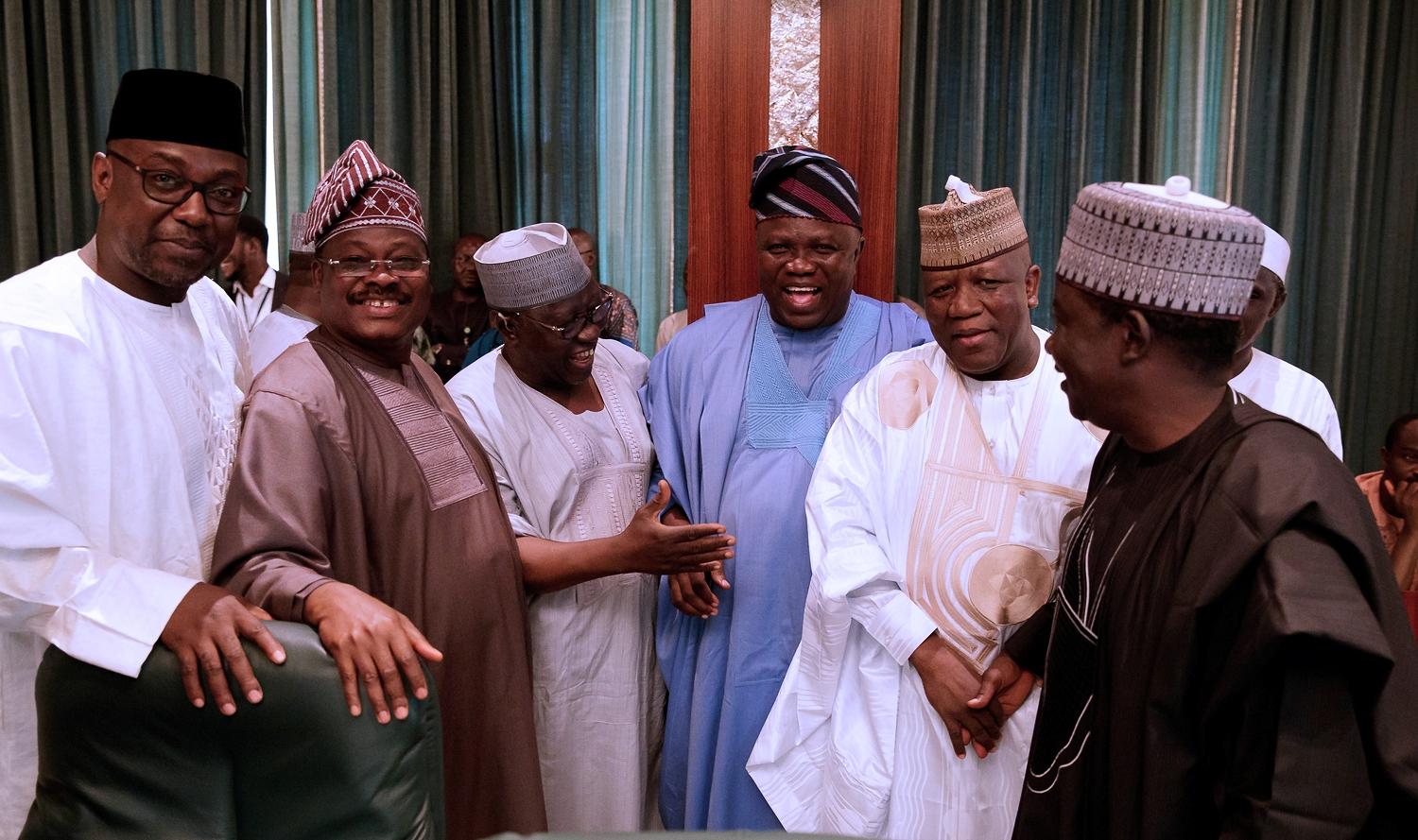
Lagos State Governor, Mr. Akinwunmi Ambode (3rd right); Governor Abdulaziz Yari of Zamfara State (2nd right); Governor Simon Lalong of Plateau State (right); Governor Abubakar Sani Bello of Niger State (left); Governor Abiola Ajimobi of Oyo State (2ndleft) and Governor Umaru Tanko Al-Mukura of Nasarawa State (3rdleft) during the Progressive Governors Forum meeting with President Muhammadu Buhari in Abuja, on Tuesday, April 3, 2018

Unlike the fabled Solomon Grundy, Buhari’s life is eventful and enviable. Therefore, whenever the President looks down on Nigerian youths and harshly mocks their luckless destinies, we should understand; Sai Baba is only holding them up to his own matchless standard.

When presidential spokesperson, Femi Adesina, last week said Buhari acted like a father after deploying soldiers to murder innocent youths protesting police killings and brutality at the Lekki tollgate, he forgot to add that, “Buhari was teaching a lesson in the destructibility and ephemerality of human life because life is but a walking shadow.”

I wish Nigerians knew the value of our President and accord him due respect. With Nigeria proclaimed as the global capital of poverty on the strength of just 80 million of her 200 million population living below poverty line, is it wrong to feel exasperated and deploy soldiers to suppress a legion of hopeless youth protesters disturbing the peace of a retired septuagenarian soldier?

Many have cursed Adesina out for tactlessly defending Buhari’s endless gaffes. Many have argued that working as spokesperson in the Office of the President sends truth, compassion, humility and integrity on sabbatical. I disagree.
Did erstwhile diligent labourer in the presidential vineyard, Reuben Abati, not disclose to an unbelieving nation that demons abound in the Presidency that could turn the hearts of good people into stones, and twist their heads backwards like a roadkill at dusk.

How many of the protesting youths ever enjoyed scholarships like Mr President, or how many of them were ever sponsored by Nigeria for any endeavour? So, shouldn’t these youths who never benefited anything from Nigeria show some respect to a President, who has lived his life on the generosity of the country? If Adesina picks an offence against nameless youths taking the name Buhari in vain, or Minister Lai Mohammed seeks to restrict the use of social media, are they unjustified?

You never value what you have until you lose it. May Nigeria not lose Buhari now. Show me an enterprising president, and I’ll point at Buhari.
At barely 20, Buhari was commissioned a second lieutenant of the Nigerian Army in 1963, before assuming various posts such as military governor of the old Gongola State, petroleum minister, among others – within an Army whose generals were notorious for coup plotting, pepper soup eating, beer guzzling and messing up with ladies inside officers’ mess.
The messiness within Nigeria’s military was publicly derided by the Lagos police command spokesperson, Alozie Ogugbuaja, who stirred the hornets’ nest in the 1980s.
If you ask Adesina and Buhari’s other spin doctors, it’s not Buhari’s fault that Nigeria’s military is even worse off today with loyalty and esteem in tatters while ethnicity, corruption and nepotism have become epaulettes worn over patriotism and competence.

The fault is in Nigeria’s stars which failed to avert the sacking of the Fulani Major General as commander-in-chief by the bloodiest of the Nigerian military generals, Ibrahim Babangida, in 1985. The fault is also in Nigerians who refused to resist Babangida and his bloody co-coupists from taking over power. To perpetually stay in power for Nigeria’s sake, Buhari, surely, wouldn’t have flinched if the dog and baboon were soaked in blood.
No country has a President like Buhari – simple and plain like tea without sugar. I’m proud of my President. I don’t know why you’re not. Unlike the Ghanaian ex-president, Jerry John Rawlings, who died last week at 73, Buhari, 77, can’t produce his secondary school certificate, though he saw the inside of a secondary school.
Shortly after graduating from Achimota College in 1967, Rawlings enlisted in the Ghanaian Air Force, and was commissioned in 1969 as pilot officer.
As much as I tried, I couldn’t lay my hands on any record of Buhari bagging any distinguishing personal award as a soldier in training, whereas Ghanaian military records show that Rawlings won the prestigious ‘Speed Bird Trophy’ as the ‘best cadet in flying the SU-7 ground attack supersonic jet aircraft’.
Idioms don’t fly with soldiers because soldiers mean what they say and say what they mean. With soldiers, kill and shoot are hallowed words without synonyms. With the time Buhari has spent mixing up with bloody civilians in the last 35 years, however, he must have learnt some idioms.

The expression, ‘the fish rots from the head down’ is an idiom that won’t be permissible in Aso Rock because of its meaning, which indicts leadership. Rather, Aso Rock will accept the biology fact that fish truly rots from the guts.
I strongly believe that the Nigerian fish rots from the head down. Were it not so, the Buhari administration wouldn’t have clamped down on the organisers of the Lekki protests, freezing their bank accounts and hounding them. If the Nigerian fish isn’t rotten from the head, under Buhari, soldiers won’t open fire on harmless youth while the Lagos State Governor, Babajide Sanwo-Olu, and military authorities engage in shameless buck passing.

If the head of the Nigerian fish isn’t rotten, Nigeria and her military should have long crushed Boko Haram like Chad and Cameroon have done. If the head of our fish isn’t rotten, Nigeria won’t spend billions of dollars on Boko Haram insurgency, yet our unmotivated soldiers get killed daily because they use obsolete armaments.
If Buhari and his Army were not a crude joke, the military wouldn’t have declared Boko Haram factional leaders, Abubakar Shekau, and Maman Al-Barnawi, along with 84 others wanted, last week, having declared both terrorists killed on a number of occasions in the past.

I love idioms, and I will close with three. Buhari and his military are cut from the same cloth. In 2023, I hope Nigerian youths will strike while the iron is hot so that our nation may be saved by the bell.
Email: [email protected]
Facebook: @tunde odesola
Twitter: @tunde_odesola




celebrity radar - gossips
Adron Homes Celebrates Visionary Chairman, Aare Adetola Emmanuel King, at 51
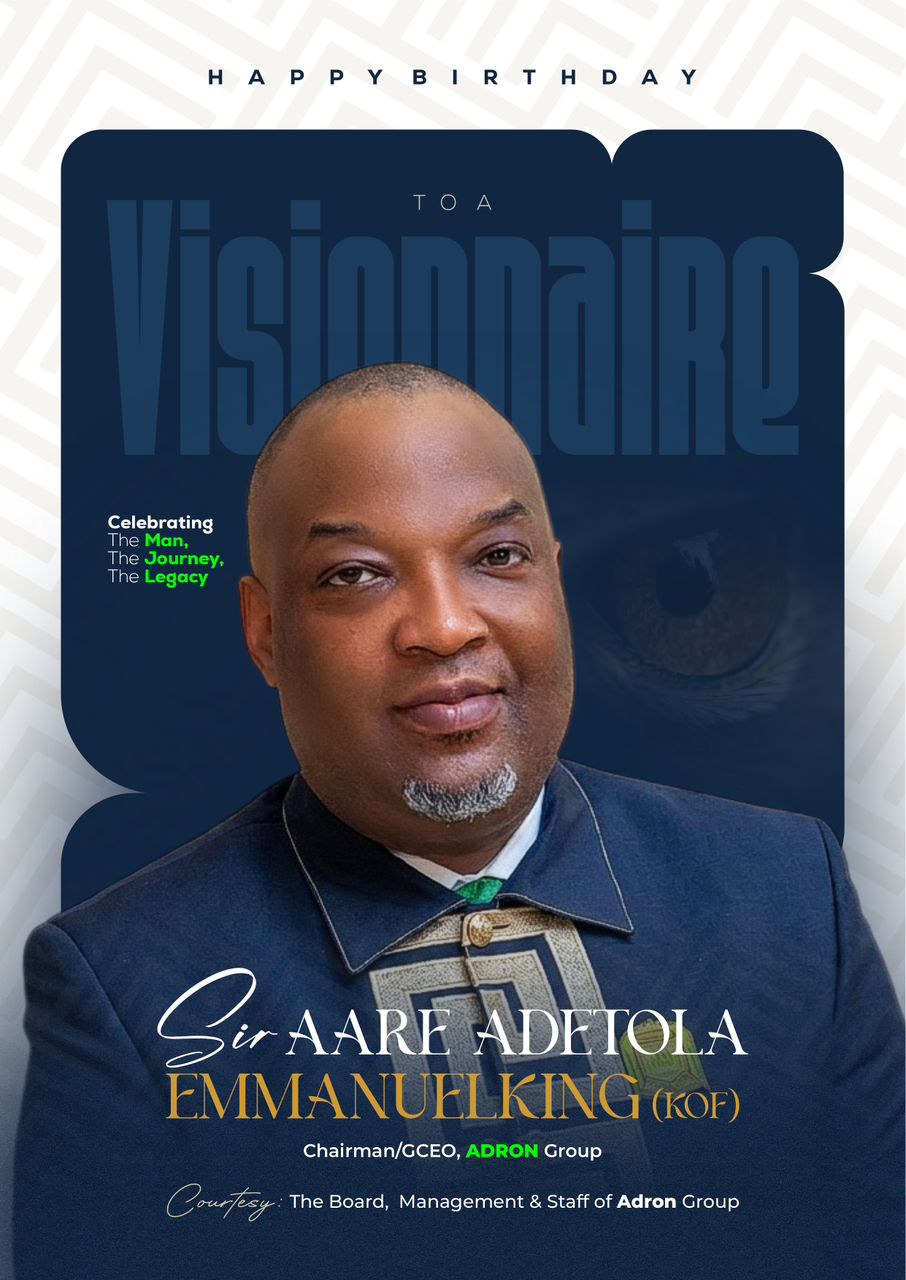
Adron Homes Celebrates Visionary Chairman, Aare Adetola Emmanuel King, at 51
The management and staff of Adron Homes and Properties Limited have joined family, friends, associates, and well-wishers across the globe to celebrate their Chairman and Chief Executive Officer, Aare Adetola EmmanuelKing, as he marks his 51st birthday.

In a statement released by the company, the milestone was described as a celebration of an exceptional leader whose vision, resilience, and entrepreneurial brilliance have not only transformed Adron Homes into a household name in Nigeria’s real estate sector but have also redefined affordable housing across the country.
Under his dynamic leadership, Adron Homes has continued to expand its footprint, delivering value-driven residential solutions while empowering thousands of Nigerians with opportunities for home ownership. His commitment to excellence, innovation, and customer satisfaction has remained the driving force behind the company’s sustained growth and industry leadership.
The statement further highlighted Aare EmmanuelKing’s passion for nation-building and community development, noting his significant contributions to job creation, youth empowerment, and the promotion of socio-economic development through real estate investments.
“As a leader, mentor, and visionary, Aare Adetola EmmanuelKing has consistently inspired a culture of excellence, integrity, and dedication within the organization. His ability to turn bold ideas into reality continues to position Adron Homes as a trailblazer in the industry,” the statement read.
The company expressed profound gratitude for his steadfast leadership and prayed for continued wisdom, strength, and sound health as he embarks on another year of impactful achievements.
As he celebrates his 51st birthday, the entire Adron Homes family proudly honours a man whose legacy continues to shape the future of real estate in Nigeria.
Happy 51st Birthday, Aare Adetola EmmanuelKing!
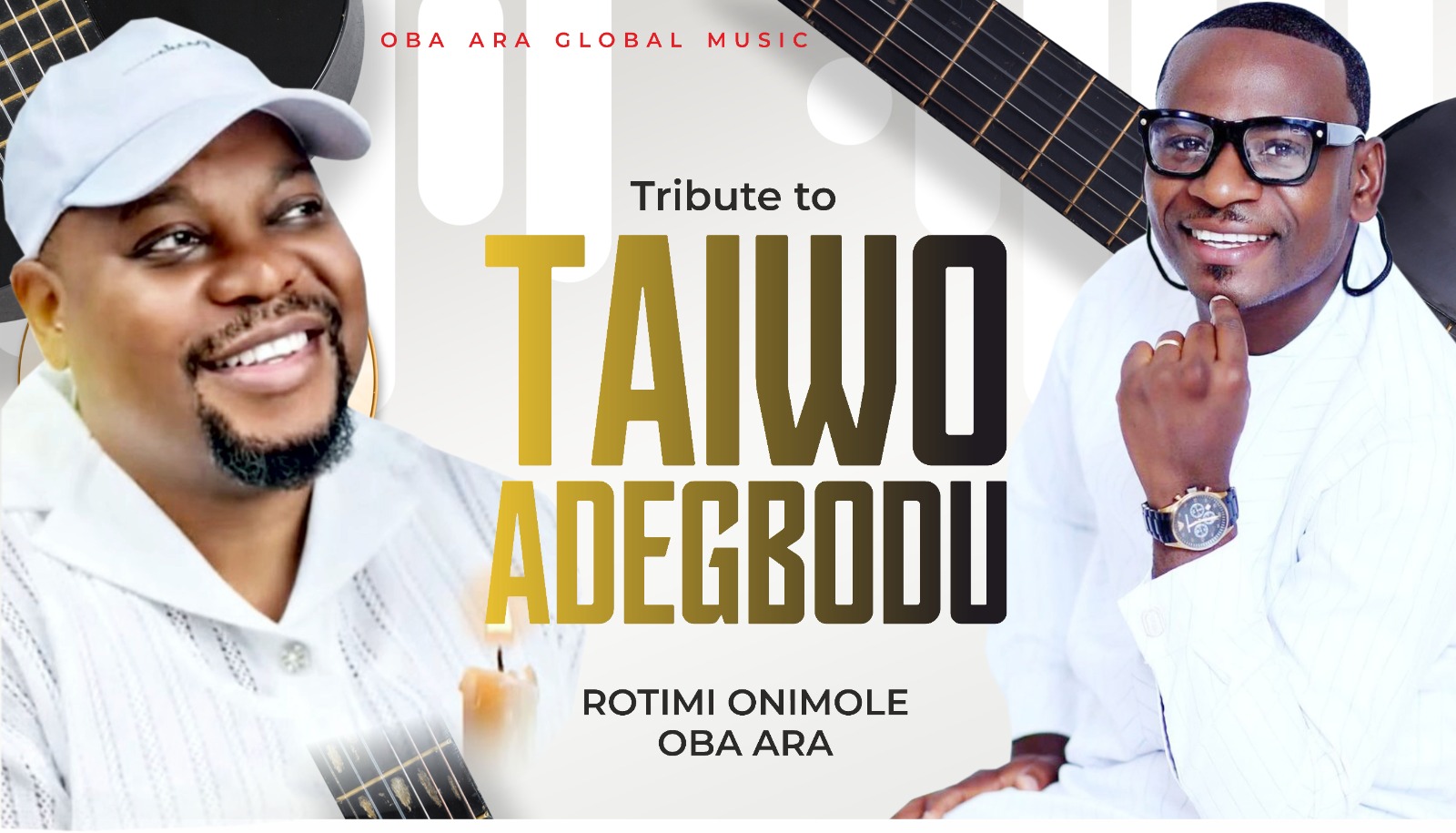
Oba Ara Releases Emotional Tribute to Late Taiwo Adegbodu
Taofik Afolabi
The gospel music community continues to grieve the painful loss of Taiwo Adegbodu, a beloved figure whose sudden departure left a deep void among fans, colleagues, and loved ones. In response to this loss, renowned gospel minister Rotimi Onimole, popularly known as Oba Ara, has released a moving tribute song that captures both the sorrow of the moment and the enduring legacy of the late singer.
Oba Ara, a proud son of Isale Eko, channels raw emotion throughout the song, using heartfelt lyrics and soul-stirring melodies to reflect on his personal connection with Taiwo Adegbodu. In the tribute, he openly expresses how deeply the news of Adegbodu’s passing shook him, describing it as a painful and unexpected loss that is difficult to come to terms with.
The song goes beyond mourning, it celebrates the life, ministry, and impact of Taiwo Adegbodu. Oba Ara highlights the late artist’s dedication to spreading the gospel through music, his inspiring voice, and the spiritual influence he had on many within and beyond Nigeria. Through powerful verses, he paints a picture of a man who lived for God and touched countless lives through his ministry.
Listeners have described the tribute as both comforting and deeply emotional, as it resonates with the collective grief of the gospel music community. It serves as a reminder that although Taiwo Adegbodu is no longer physically present, his music, message, and legacy will continue to live on.
In honoring his late colleague, Oba Ara not only pays his respects but also offers a source of healing for fans and fellow ministers, using music as a tool to process grief and celebrate a life well lived.
celebrity radar - gossips
Buratai, Fagbemi , Shagaya, Olofa, Others Eulogise Olowu Kuta’s Olori On 60th Birthday, Foundation Launch
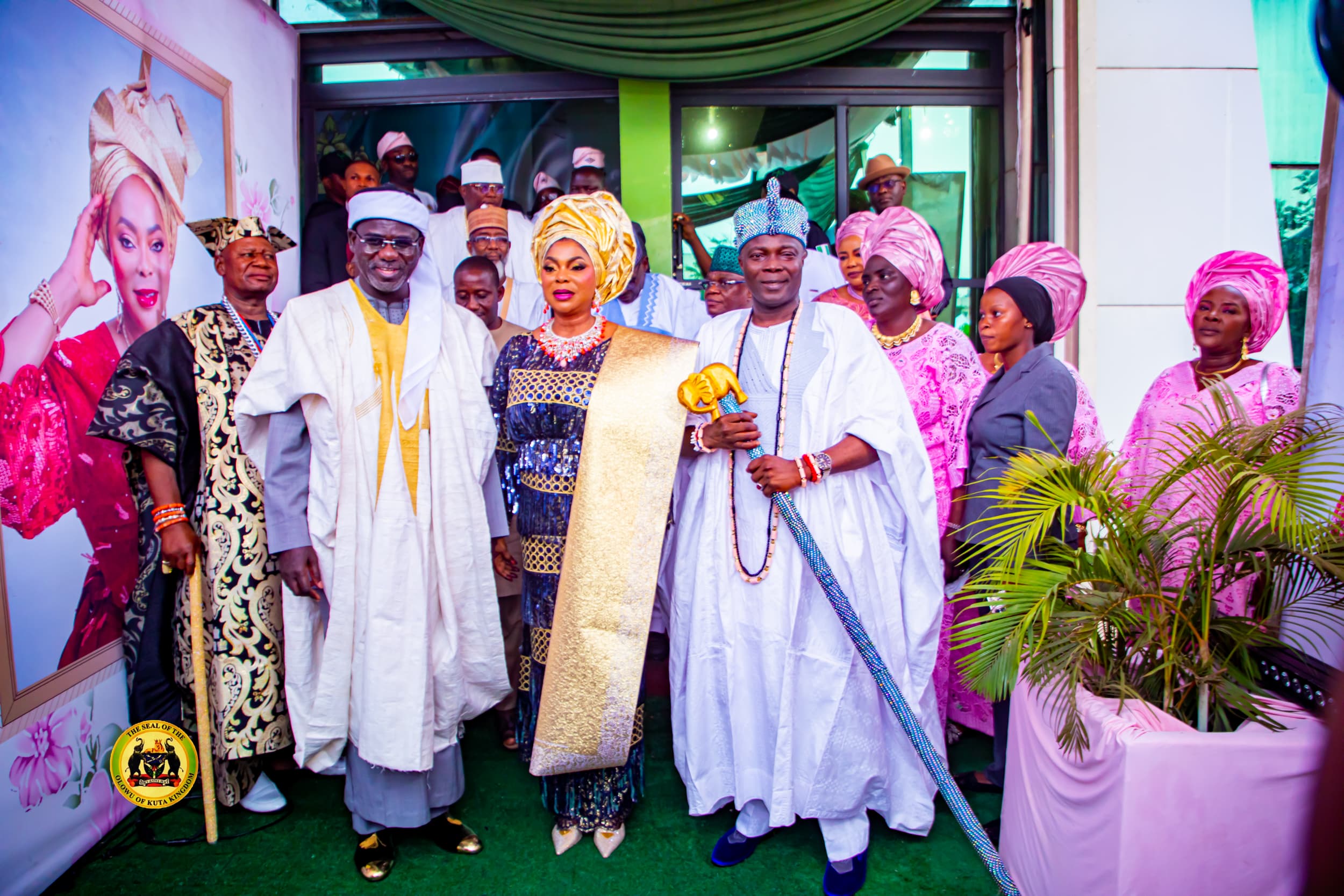
Buratai, Fagbemi , Shagaya, Olofa, Others Eulogise Olowu Kuta’s Olori On 60th Birthday, Foundation Launch
Eminent personalities across the Nigeria stormed the TFK Event Centre, Bala Mohammed Way, Guzape, Abuja, to celebrate the 60th birthday of Olowu Kuta’s Olori, Queen Jumai Amoke and her Foundation Launch on Saturday 28, March 2026.

From former Chief of Army Staff, Lt Gen TY Buratai rtd, to the Minister of Justice and Attorney-General of the Federation, Prince Lateef Fagbemi; Olofa of Offa, HRM Oba Mufutau Gbadamosi. Even top businesswoman and socialite, Chief (Mrs) Bola Shagaya, was in attendance.


Other dignitaries were newly promoted Deputy Inspector-General of Police and former AIG Zone 2 , Lagos , Adegoke Fayoade, Major General Abdumalik, Major General Samuel Adebayo rtd (Fmr CDI);
Major General Anthony Omozoje rtd (Fmr Copp);
Alhaji Tajudeen Owoyemi (Asiwaju of Offa and CEO Radisson Hotel Nigeria;
Dr Waheed Olagunju, former managing director of Bank of Industry, Oniba of Iba, Lagos State, HRM Oba Dr Suleiman Raji ;
Justice Falola, Olu of Ile-Ogbo , Oba Adetoyese amongst many traditional rulers and captains of industry too numerous to mention.
Speaking at the occasion, the Chief Host, Olowu of Kuta, HRM Oba Dr Adekunle Oyelude Makama, CON , Tegbosun iii, who is also the husband of the celebrant commended Queen Jumai for ‘ her slender arms full of kindness’ to establish such humanitarian Foundation, ‘Amoke Children and mother in Need Foundation’ at a time Nigerians are going through economic crisis occassioned by the global meltdown.
Olowu also commended her steadfastness and love for the less privileged and downtrodden.
The monarch refrenced the task before his wife’s humanitarian gesture said her best is yet to come.
” Olori Amoke Jumai, I celebrate you. You will celebrate 70, 80, 90 and continue to shine as you continue to put a smile on people’s faces. I love you, “Olowu Kuta added.
To Lt Gen Buratai, a former army chief and former Nigerian Ambassador to Benin Republic, the reward of hard work is more work.
Buratai, who also doubles as Balogun Agba of Owu Kuta, a chieftaincy title reserved for a generalismo congratulated Queen Jumai for attaining the age of 60 in good health.
The retired army General said he’s not surprised by the turn out of eminent personalities across the country to celebrate the Olowu Kuta’s Olori because she merited it through her hospitality to all, adding that Allah the most merciful, most beneficial would accept all her act of ibadah.
The minister of Justice, Prince Fagbemi, was full of praises for Queen Jumai for deeming it fit to have a place in her heart to accommodate the needy and less privileged in ‘our society.’
Prince Fagbemi urged the guests to contribute generously to support the Foundation in order to continue to alleviate poverty and put a smile on the faces of the people.
” I congratulate you on your 60th birthday and Foundation Launch. I wish you many happy returns of the day and many more fruitful services to the country and motherland”, Prince Fagbemi added.
The celebrant, Queen Jumai who was grining from ear to ear thankfully said she was excited by the turn out and the response of the people to her foundation.
Queen Jumai, however, promised to continue to use her resources and donations received for the good of the needy and less privileged in the society.
” I want to appreciate my own Kabiesi Olofa of Offa , for his presence and im I’m using him as a point of contact to all other Kabiesis present here, the minister of justice and Attorney-General, you’re welcome, sir; Mrs Bola Shagaya, I salute your enterprise, Lt Gen Buratai, I’m grateful, sir; DIG Fayoade, Justice Falola and other dignitaries too numerous to mention, I thank you, all. To my darling husband, Kabiesi Olowu , I thank you immensely for your support. And to my family and friends, I thank you , all. E se pupo!”, she said.


-

 society6 months ago
Religion: Africa’s Oldest Weapon of Enslavement and the Forgotten Truth
-

 news4 months ago
WHO REALLY OWNS MONIEPOINT? The $290 Million Deal That Sold Nigeria’s Top Fintech to Foreign Interests
-

 society6 months ago
“You Are Never Without Help” – Pastor Gebhardt Berndt Inspires Hope Through Empower Church (Video)
-

 celebrity radar - gossips2 months ago
Dr. Chris Okafor Returns with Power and Fire of the Spirit -Mounts Grace Nation Altar with Fresh Anointing and Restoration Grace on February 1, 2026