
celebrity radar - gossips
BUKOLA ADETULA : AKEREDOLU’S KINSMAN WHO IS AFTER HIS JOB

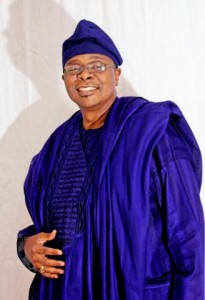
As political activities in Ondo State gather momentum preparatory towards the forthcoming gubernatorial election scheduled to hold later this year, the media space is awashed with political developments and reports from across the State, while political analysts have pontificated that the next few months would be characterised with deft political manouverings and manipulations.
It is believed by many of these analysts that the contest will be a straight fight between the ruling party, APC and the major opposition, PDP. Expectedly, both parties are already witnessing a surge in political activities and the number of aspirants appear to be on the increase as the State approaches the defining moment.
Except for the crisis within the fold of the APC in the State, it is believed in many quarters that the incumbent governor should have a smooth sail to clinching his second term ticket. But this appears an uphill task at the moment, thereby creating sleepless and worrisome nights in the Akeredolu camp.
The incumbent governor hails from Owo in the North Senatorial district of the State while his local government incidentally has the largest number of voters in the district. Interestingly, Bukola Adetula who also hails from Owo has thrown his hat into the ring by showing a very strong interest in Akeredolu’s job as the Executive Governor of the State and seems to have arrested the attention of APC leaders across the 18 local government areas of the state
In 2016, both Akeredolu and Adetula participated in the exercise that led to the former’s emergence as Governor, however, three lines of convergence have been identified between the duo, which are narrowed to their being from the same Owo Kingdom, both are lawyers and are in the same party, APC.
A further dig into the background of Bukola Adetula reveals a successful business man, who sits on the boards of a handful of international and domestic companies in the areas of Oil & Gas, Media and training. He attended the prestigious Government College, Ibadan and thereafter travelled to the United States of America from where he received B.Sc. (Criminal Justice); B.A. & M.A. (Political Science) and a Juris Doctor (J.D) in Law, degrees. Despite being an experienced Criminal Defence Counsel with decades of professorial track records of several high profile feats across the United States, he returned home over a decade ago to be actively involved in the trade that gave fame to his father and has equally amplified his name beyond the borders of Ondo State. He is married to Dr.(Mrs.) Christiana Adetula (Nee Obebe) of Ipoti Ekiti, a medical practitioner who specializes in the treatment of neck and back injuries, and their union is blessed with children.
He is indeed a chip of the old block, as his late father, Chief ZOK Adetula, popularly known as ZOKA was one of the foremost political leaders of the progressive family in Ondo State. He was a contemporary of Pa Adekunle Ajasin and a protege of the late sage, Chief Obafemi Awolowo. ZOKA represented Owo constituency at the Federal House of Representatives between 1979 and 1983.
Again, just as in 2016, Chief Bukola Adetula is aspiring for the highest political office in Ondo State. A man popularly described by his political admirers as”THE CREDIBLE ALTERNATIVE”. His candidacy is creating a frenzy of excitement at the grassroot level where he is being commonly described d as ‘the hope” of the people of Ondo State.
As the political cloud in Ondo State daily thickens, Bukola Adetula stands tall among the frontline gubernatorial aspirants on the platform of the APC with a strong affiliation to the Unity Forum, under the leadership of Alhaji Ali Olanusi, a former Deputy Governor and serving Board of Trustees member of the APC. Recently, he formerly declared his 2020 governorship aspiration during a media parley with gentlemen of the press and on the floor of the Unity Forum during the group’s last meeting, respectively.
The major agenda of his aspiration are industrialisation as well as the resuscitation of the educational system in Ondo State. He believes that the State is more endowed with natural resources than Lagos State and has the capacity of becoming an industrial and commercial hub, given the right leadership. Inquiries into what is responsible for his popularity in Ondo State reveals a man who is passionate about alleviating the hardship that is endemic among his people. In his trademark gentlemanly smile, he would simply say if asked, “it’s all about a yearning by the people for respect, humility and true leadership as against rulership”
With some months away to deciding who becomes the next governor of Ondo State, Bukola Adetula’s actions and utterances potray a visionary man who is determined on his mission to give Akeredolu a run for his money. Without a doubt, amongst all the aspirants, he is certainly the man to watch out for.




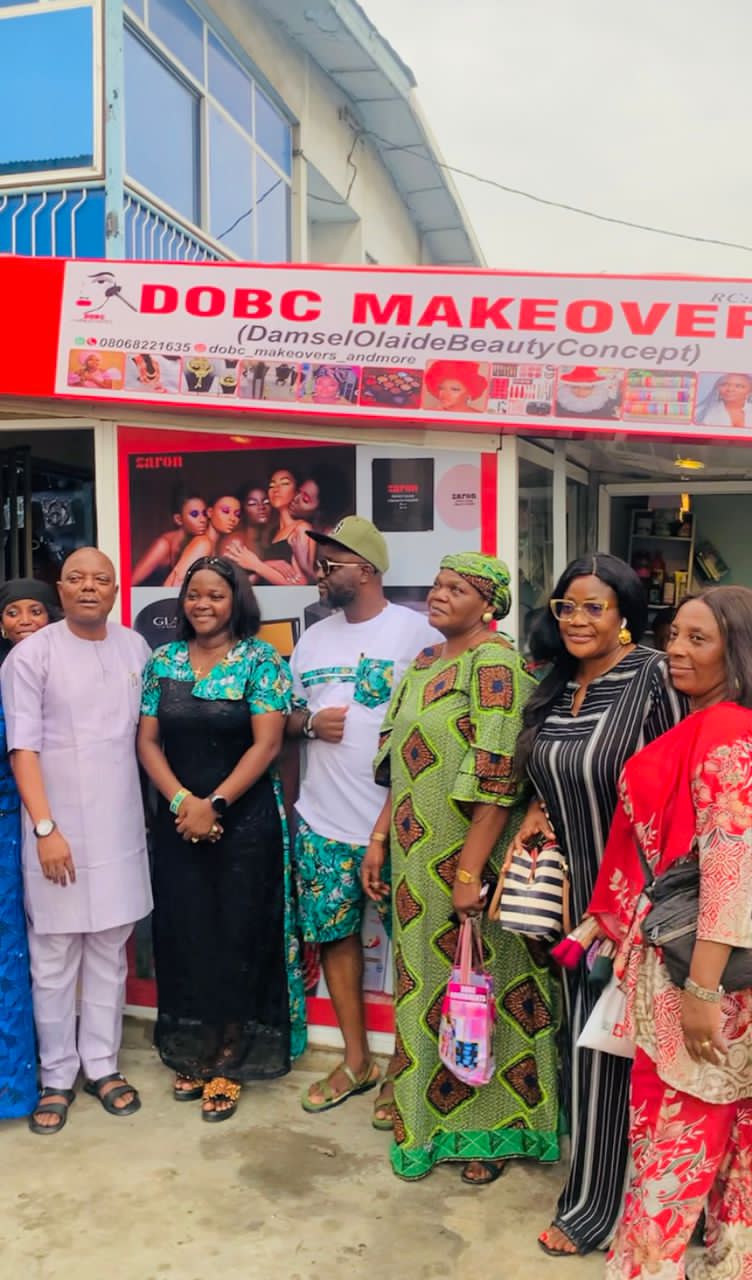
Beauty Meets Glamour as Olaide Ogunyemi Opens New Studio in Mushin
Popular Nollywood actress and professional makeup artiste, Olaide Ogunyemi Oluwayemisi aka Damilola, has expanded her footprint in the beauty industry with the grand opening of her new makeup studio in Lagos.
The talented thespian, who is also the Chief Executive Officer of @Dobc_makeovers_andmore, officially unveiled the ultra-modern beauty space last Thursday, April 2, 2026, in a colourful ceremony filled with glamour, fashion, and pageantry.
Strategically located at 101 Palm Avenue, right beside FitPlus and Sparklight Hospital in Mushin area of Lagos, the new studio is designed to offer top-notch beauty services, reflecting Ogunyemi’s commitment to excellence and professionalism in the ever-growing makeup industry.
The opening ceremony attracted friends, colleagues from the Nollywood industry, beauty enthusiasts, and well-wishers who came out in large numbers to celebrate the entrepreneur’s latest milestone. Guests were treated to a vibrant atmosphere that showcased creativity, style, and the evolving standards of the beauty business in Lagos.
Speaking at the event, Ogunyemi expressed her excitement and gratitude, noting that the new studio represents years of hard work, dedication, and passion for her craft. She reaffirmed her commitment to delivering premium beauty services while empowering aspiring makeup artistes.
The launch of the studio further cements her reputation as a dynamic force, successfully blending her career in Nollywood with a thriving beauty brand.
With this latest development, Olaide Damilola Ogunyemi continues to inspire many young entrepreneurs, proving that talent, consistency, and vision remain key drivers of success in Nigeria’s creative and business landscape.


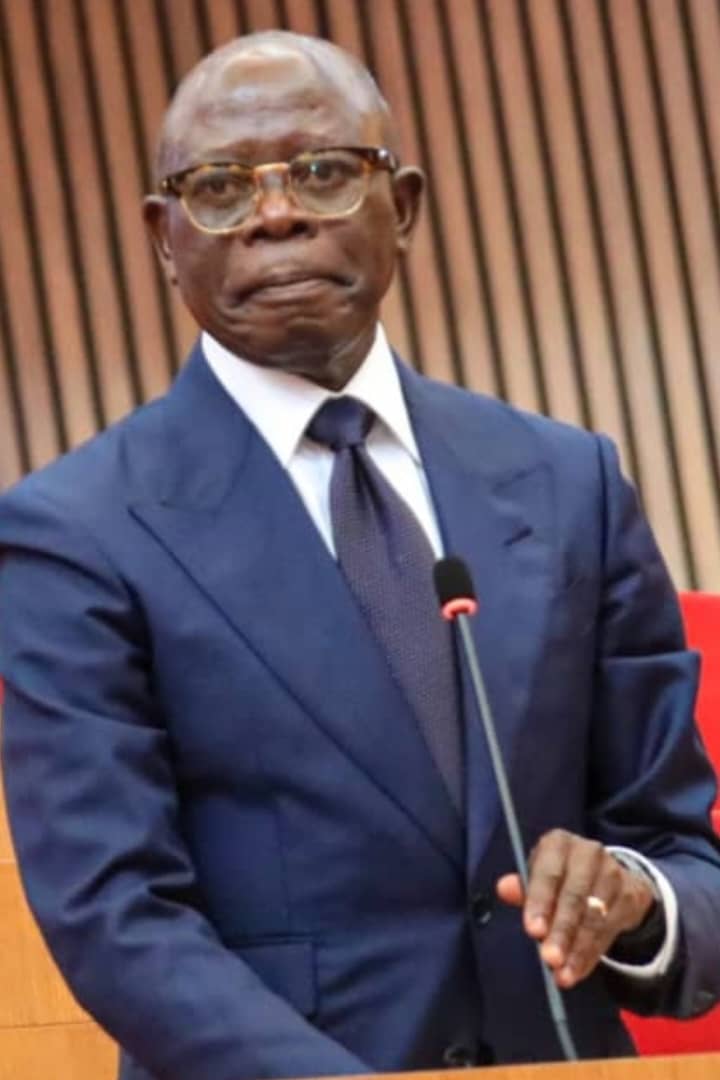
Daniel Eromosele Eulogize Adams Oshiomole as he turns 74 years
Today, I celebrate an exceptional leader, a fearless voice for the people, and a man whose life has remained a symbol of courage, sacrifice, and unwavering commitment to justice—Distinguished Comrade Senator Adams Aliu Oshiomhole.

Your journey has been nothing short of inspiring. From your days as a vibrant labour leader to your impactful tenure as the Executive Governor of Edo State, and now as a respected Senator of the Federal Republic, you have consistently demonstrated what it means to serve with integrity, strength, and purpose. Your contributions to the growth of our nation and the development of Edo State remain indelible and deeply appreciated.
You have not only built structures and institutions but have also built people. I am personally a beneficiary of your leadership, your guidance, and your belief in empowering others. Your influence in my life has been profound, and I remain grateful for the opportunities and inspiration you have given me.
On this special day, I celebrate not just your achievements, but the man you are—resilient, principled, and ever committed to the progress of Nigeria and her people.

May this new year bring you renewed strength, greater wisdom, good health, and more remarkable accomplishments. May your legacy continue to shine brighter with each passing year.
Happy Birthday, sir. Wishing you many more fruitful and impactful years ahead.
celebrity radar - gossips
Accolades to Empress Genevieve Wining as she Celebrate birthday in Grand style

Accolades to Empress Genevieve Wining as she Celebrate birthday in Grand style
Emmanuel Clement
Vilnius, Lithuania – The Grand Hotel Vilnius will host a grand birthday celebration in honor of Her Majesty The Empress Genevieve Wining of the United Kingdom of Atlantis (UKA) on April 4th, 2026.
The four-day event promises to be an extravagant affair, marking the special birthday of Empress Genevieve Wining. The celebration will take place at the prestigious Grand Hotel Vilnius, Lithuania, renowned for its luxurious ambiance and exceptional service.

According to the event flyer, the birthday celebration will be a spectacular occasion, fitting for an empress. Guests can expect an elegant setting adorned with golden accents, sparkling champagne, and festive decorations, creating a regal atmosphere befitting the occasion.
The Empress Genevieve Wining of UKA is expected to grace the event, which will include various festivities and celebrations in her honor. The occasion aims to bring together dignitaries, followers, and guests to commemorate the empress’s birthday with grandeur and joy.
For media inquiries, accreditation, or further information about the birthday celebration of The Empress Genevieve Wining of UKA, please contact the event organizers.
Courtesy of His Excellency Emperor Prof. Solomon Wining. UKA


-

 society7 months ago
Religion: Africa’s Oldest Weapon of Enslavement and the Forgotten Truth
-

 news4 months ago
WHO REALLY OWNS MONIEPOINT? The $290 Million Deal That Sold Nigeria’s Top Fintech to Foreign Interests
-

 society6 months ago
“You Are Never Without Help” – Pastor Gebhardt Berndt Inspires Hope Through Empower Church (Video)
-

 celebrity radar - gossips2 months ago
Dr. Chris Okafor Returns with Power and Fire of the Spirit -Mounts Grace Nation Altar with Fresh Anointing and Restoration Grace on February 1, 2026