Connect with us

Politics

Centre for Responsible Governance Hails Dauda Lawal’s Reform-Driven Turnaround of Zamfara

Published

on

Centre for Responsible Governance Hails Dauda Lawal’s Reform-Driven Turnaround of Zamfara
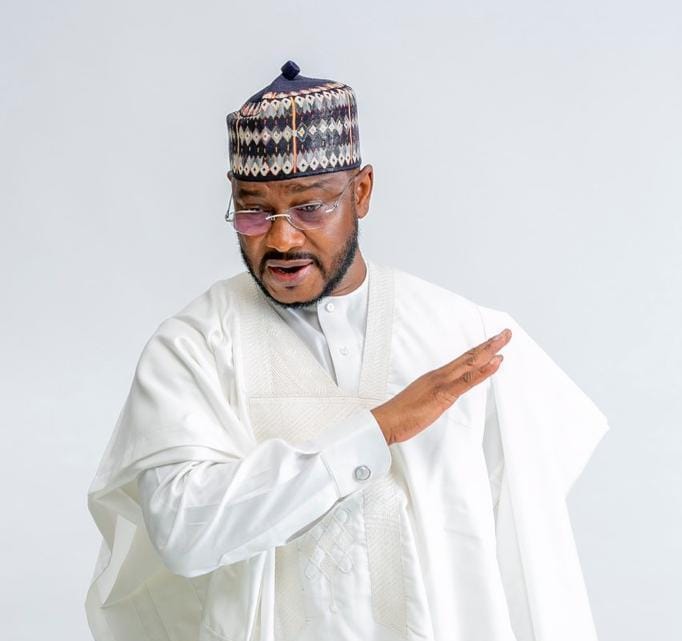


The Centre for Responsible Governance (CRG) has commended Zamfara State Governor, Dauda Lawal, for what it described as a “quiet but far-reaching reform agenda” that is steadily redefining governance and restoring public trust in a state long associated with insecurity and institutional failure.


In a statement issued on Sunday and signed by its Spokesman, George Obande, the Centre said Governor Lawal inherited not merely a struggling state but one in “urgent need of rescue” after years of systemic decay, abandoned public institutions and weakened confidence in government.

According to the Centre, less than three years into his administration, Lawal has pursued a deliberate governance reset anchored on structural reform rather than populist gestures, with measurable impact across security, education, healthcare, infrastructure and economic management.


“Zamfara was for decades a textbook example of how governance failure can trap citizens in cycles of insecurity, poverty and lost opportunity. What the current administration has undertaken is not cosmetic change, but institutional repair,” the statement said.

Students’ Case Symbolises Reform Philosophy

CRG identified as a defining moment of the administration Governor Lawal’s intervention in the long-abandoned case of 50 Zamfara students whose university results had been withheld for nine years due to unpaid tuition fees accumulated under previous governments.


The Centre noted that by settling the outstanding liabilities, securing the release of the students’ results and restoring their academic futures — including those of First Class and Second Class Upper graduates — the governor sent a powerful signal about his administration’s priorities.

“That intervention went beyond compassion. It was a moral and governance statement that the future of Zamfara’s youth would no longer be sacrificed to administrative failure,” CRG said, describing the action as a landmark achievement in human capital development.


Security Reset Through Institutional Reform


On security, the Centre observed that Governor Lawal approached Zamfara’s long-running banditry crisis as a governance challenge requiring institutional correction, rather than short-term emergency responses.

The administration strengthened collaboration with federal security agencies while establishing Community Protection Guards (CPGs) to complement conventional forces. According to CRG, these community-rooted units have improved intelligence gathering, response time and trust between residents and security operatives.


The creation of the Zamfara State Security Trust Fund, the Centre said, further institutionalised security financing by replacing ad-hoc interventions with a structured and accountable funding mechanism.

“While challenges persist, the direction has clearly shifted. Rural communities are reopening, attacks are being disrupted, and citizens are gradually re-engaging with the state as a protector,” the statement added.

Education Declared a Strategic Priority

CRG said the governor’s declaration of a state of emergency in the education sector marked a turning point after years of neglect that left schools dilapidated and students stranded.


Beyond resolving the Crescent University case, the Centre cited the clearing of WAEC and NECO fee backlogs, renovation and construction of schools, expansion of scholarships and bursaries, and initiatives to reduce the number of out-of-school children.

“Education in Zamfara is no longer an afterthought. It is being treated as the foundation of long-term security, productivity and prosperity,” Obande stated.


Healthcare Reforms Gain Momentum


The Centre also highlighted reforms in healthcare, noting the rehabilitation and equipping of hospitals and clinics, improved welfare for health workers, and expanded access to medical services.

The construction of a 200-bed hospital in Talata Mafara, alongside free medical outreaches providing surgeries and specialist care in underserved communities, was described as repositioning Zamfara as a rising performer in primary healthcare delivery in the North-West.


Infrastructure as an Economic Enabler

On infrastructure, CRG said the Lawal administration has treated projects as tools for safety, commerce and dignity rather than political trophies.


The Centre cited the Urban Renewal Project, upgrades to roads and drainage systems, improvements around the Gusau International Airport, construction of a modern stadium, and expansion of street lighting across urban centres as initiatives improving mobility, security and economic activity.

Economic Discipline and Social Repair


According to CRG, the clearing of inherited salary and pension arrears restored morale in the public service, while the Rescue Budget 2.0 redirected spending towards capital investments in critical sectors.

Skills acquisition programmes, youth and women empowerment schemes, and targeted social interventions were described as efforts aimed at restoring livelihoods rather than promoting short-term handouts.


The CRG also drew attention to ongoing investments in sports infrastructure, noting that a modern sports stadium is currently under construction to promote sports development and youth engagement in Zamfara State.


According to the Centre, the project was awarded to a world-class contractor in line with the administration’s emphasis on quality and durability, with commissioning expected by March. The facility is expected to serve as a platform for talent development, community engagement and sports-driven economic activity.


A Quiet, Reformist Governance Style


The Centre concluded that Governor Lawal’s defining strength lies in a restrained, consultative and results-driven leadership style focused on rebuilding institutions and strengthening processes.

“In a political culture often driven by spectacle, this administration has demonstrated that reform is quieter, but far more enduring,” the statement said.


While acknowledging that Zamfara still faces challenges, CRG maintained that the state’s trajectory has clearly shifted.

“Zamfara is no longer where it was. The freeing of abandoned students, the restructuring of security, the revival of education and healthcare, and renewed economic discipline together tell the story of a state undergoing a deliberate reset,” Obande said.


The Centre concluded that Governor Dauda Lawal’s reform-oriented leadership is gradually rewriting Zamfara’s future and offering a model of how disciplined, empathetic governance can transform even the most challenged subnational states.


In closing, the Centre for Responsible Governance stated that its commentary on Zamfara is consistent with its statutory role as an independent governance watchdog.


“Assessment of public institutions and elected office holders forms a core part of the Centre for Responsible Governance’s mandate. Our responsibility is to objectively evaluate leadership performance, policy direction and institutional reform wherever they occur, and to highlight models that strengthen accountability and public trust,” the statement said.


According to the Centre, such assessments are aimed not at political endorsement, but at encouraging reform-oriented leadership and promoting governance standards that can be replicated across states and sectors.


Centre for Responsible Governance, (CRG)

Email: [email protected]

Continue Reading
Advertisement

Politics

Diaspora Power Meets Grassroots Mobilisation: APC’s E-Registration Flag-Off in Awgu Ward II Signals a New Political Momentum in Enugu

Published

on

Diaspora Power Meets Grassroots Mobilisation: APC’s E-Registration Flag-Off in Awgu Ward II Signals a New Political Momentum in Enugu. By George Omagbemi Sylvester | Published by SaharaWeeklyNG.com

Diaspora Power Meets Grassroots Mobilisation: APC’s E-Registration Flag-Off in Awgu Ward II Signals a New Political Momentum in Enugu.

By George Omagbemi Sylvester | Published by SaharaWeeklyNG.com


“From South Africa to Awgu: How Diaspora Stakeholders and Local Leadership Are Re-engineering Party Organisation, Loyalty and Political Participation in Enugu State.”


Politics, at its most effective, is not merely about slogans or election cycles; it is about organisation, legitimacy and the deliberate mobilisation of people across borders and social strata. On Sunday, 18 January 2026, that principle was put into practice in Awgu Ward II, Awgu Local Government Area of Enugu State, with the official flag-off of the APC E-Registration Exercise, an event that symbolised the convergence of diaspora engagement, grassroots mobilisation and party consolidation.

The exercise was officially flagged off under the leadership of High Chief Francis Osy Nwobi, Chief Executive Officer and Managing Director of Fontana Group of Companies, who led party executives, stakeholders and faithful to formally commence the digital registration process in the ward. The event marked not just an administrative milestone, but a strategic political statement: that PARTY GROWTH IN ENUGU STATE MUST BE INCLUSIVE, STRUCTURED and PEOPLE-DRIVEN.


At the heart of this convergence was a strong message of solidarity from the diaspora. Prince (Barr) Smart I. Nwobi, Chief Executive Officer of Smart(N) Attorneys Inc., South Africa, and President of the Nigerian Union South Africa (NUSA), speaking on behalf of Enugu State stakeholders in the diaspora, formally assured His Excellency, Dr. Barr. Peter Ndubuisi Mbah, Executive Governor of Enugu State, of the support, solidarity and political alignment of Enugu indigenes resident in South Africa. He further encouraged eligible party members in Awgu Ward II to fully participate in the ongoing APC E-Registration Exercise, describing it as a foundational step in strengthening internal democracy and political ownership.

Political scholars have long argued that party registration is not a clerical exercise but a democratic act. Professor Larry Diamond, a globally respected political scientist, notes that “Strong parties are built not by rhetoric but by systems that allow citizens to identify, participate and belong.”

The Awgu Ward II exercise fits squarely within this understanding, as it sought to replace informal structures with a verifiable, technology-driven membership system.


In his address to the people of Awgu Ward II, High Chief Francis Osy Nwobi explained that his decision to actively participate in politics was inspired by what he described as the leadership style and developmental drive of Governor Peter Ndubuisi Mbah. According to him, governance must be evaluated not by propaganda but by visible commitment to institutional reform, infrastructure and human capital development. He pledged to work directly with ward registration agents, promising a “FAMILY-to-FAMILY” mobilisation strategy to ensure that NO WILLING MEMBER was excluded from the registration process.

This approach reflects a broader trend in modern political organisation. As political analyst Francis Fukuyama has argued, “Institutions do not strengthen themselves; they are strengthened by people who believe in rules, continuity and collective responsibility.” The decision to take registration beyond party offices and into homes underscores an understanding that political legitimacy begins at the household level.

Equally significant was the symbolic alignment between local ward leadership and diaspora institutions.


The joint messaging from the CEO of Fontana Oil Ltd, the CEO of Nwobi Attorneys Chamber South Africa, and the President of the Nigerian Union South Africa (NUSA) reinforced a unified narrative: that political participation is no longer confined by geography. In an era of global migration, the diaspora has become an essential stakeholder in governance discourse, policy advocacy and political mobilisation.

International development experts increasingly recognise the political value of diaspora communities.


According to the International Organization for Migration (IOM), diaspora groups play a critical role in “knowledge transfer, political engagement and institutional accountability in countries of origin.” The involvement of NUSA leadership in the Awgu Ward II exercise exemplifies this reality, demonstrating how diaspora structures can complement grassroots political efforts rather than compete with them.


The APC E-Registration Exercise itself represents a shift toward digital governance within party systems, a move aimed at reducing manipulation, improving transparency and strengthening internal credibility. Political economist Daron Acemoglu has consistently maintained that “Inclusive institutions (POLITICAL or ECONOMIC) are the foundation of sustainable development.” A credible, technology-based membership register is one such institution, ensuring that party decisions are anchored in verified participation rather than elite consensus alone.

Beyond the mechanics of registration, the Awgu Ward II flag-off carried a broader political message: unity of purpose from ward level to the diaspora. High Chief Nwobi used the occasion to reaffirm his loyalty and solidarity to party leadership “from top to bottom,” stressing that political progress requires discipline, coordination and respect for structure. His remarks resonated with party faithfuls who see internal cohesion as a prerequisite for electoral success.


For Governor Peter Ndubuisi Mbah, the public show of support from both local stakeholders and diaspora leaders is politically significant. While governance is ultimately judged by outcomes, political capital is sustained through continuous engagement with party structures and supporters.


The assurance from Enugu indigenes in South Africa signals that the governor’s leadership enjoys not only local recognition but also transnational backing.

The theme repeatedly echoed throughout the event (“OUR TOMORROW IS HERE”) was more than a slogan. It reflected an assertion that political renewal begins with active participation today. As civic theorist Hannah Arendt famously observed, “Power arises only where people act together.”

The E-Registration Exercise in Awgu Ward II embodied this principle by transforming political support from passive sentiment into documented action.


As Nigeria continues to grapple with questions of political trust, party credibility and citizen engagement, events like the Awgu Ward II flag-off offer a practical template.


They show that political parties can rebuild confidence by opening their structures, embracing technology and integrating diaspora voices into domestic political processes.


Closing Perspectives, the official flag-off of the APC E-Registration Exercise on 18 January 2026 in Awgu Ward II was not an isolated party activity; it was a statement of political intent. It demonstrated how local leadership, corporate-diaspora actors and organised community structures can align behind a shared vision of participatory politics.


By bridging Awgu and South Africa, ward and world, the exercise reinforced a simple but powerful truth: WHEN GRASSROOTS MOBILISATION MEETS DIASPORA COMMITMENT, POLITICAL ORGANISATION BECOMES BOTH RESILIENT and FUTURE-ORIENTED.

Diaspora Power Meets Grassroots Mobilisation: APC’s E-Registration Flag-Off in Awgu Ward II Signals a New Political Momentum in Enugu.

By George Omagbemi Sylvester | Published by SaharaWeeklyNG.com

Continue Reading

Politics

Taxing a Broken Society: Why Nigeria’s Proposed Bank Transaction Levy Threatens Social Stability

Published

on

Taxing a Broken Society: Why Nigeria’s Proposed Bank Transaction Levy Threatens Social Stability.

By George Omagbemi Sylvester

“A Constitutional, Economic, and Moral Indictment of Governance Failure.”


Nigeria stands at a perilous crossroads. At a time when inflation is crushing household incomes, insecurity has become normalized and public trust in government is dangerously eroded, the proposal to impose an additional 7.5 percent charge on bank transactions is not merely an economic policy error and it is a profound governance failure with grave social implications.

This is not a debate about whether taxation is necessary. Every modern state requires revenue. The real question is legitimacy: when, how and under what moral and constitutional conditions can a government tax its citizens? In Nigeria’s current condition, this proposed levy fails every serious test of democratic governance, economic rationality and constitutional responsibility.


The Constitutional Breach: Taxation Without Welfare. Nigeria’s 1999 Constitution is unequivocal. Section 14(2)(b) states that “the security and welfare of the people shall be the primary purpose of government.” This clause is not aspirational rhetoric; it is the philosophical foundation of the Nigerian state.


Yet, after years of deteriorating public services, escalating poverty, collapsing security architecture and declining human development indicators, the Nigerian state can no longer credibly argue that it has fulfilled this foundational obligation.


According to the World Bank, over 63 percent of Nigerians (more than 133 million people) are multidimensionally poor, lacking access to basic healthcare, education, nutrition and clean water. Inflation, driven by subsidy removal and currency depreciation, exceeded 28 percent in 2024, eroding real incomes at a pace unmatched in decades. Insecurity continues to disrupt agriculture, commerce and daily life, while unemployment and underemployment remain stubbornly high.

In this context, imposing an additional financial burden on citizens for merely accessing their own money constitutes what legal scholars describe as regressive extraction with a form of fiscal policy that disproportionately punishes the poor while offering no commensurate public benefit.


As constitutional lawyer Professor Itse Sagay, SAN, once observed, “Taxation is justified only where citizens can see and feel the presence of the state in their daily lives.” In Nigeria today, that presence is largely absent.


Economic Reality: A Tax on Survival, Not Wealth. From an economic standpoint, a bank transaction levy is among the most regressive forms of taxation. Unlike progressive income or wealth taxes, transaction charges do not distinguish between surplus and subsistence. They penalize traders, small businesses, salary earners and informal workers who rely on frequent banking transactions to survive.


Nobel laureate Joseph Stiglitz has consistently warned that “unfair tax systems undermine social cohesion and weaken the legitimacy of the state.” When citizens perceive taxation as punishment rather than contribution, compliance gives way to resistance, avoidance and economic disengagement.


Nigeria’s economy is already suffering from declining productivity, shrinking consumer demand and capital flight. Adding a transaction levy risks pushing more economic activity into cash-based informality, weakening financial inclusion and undermining the very tax base the government seeks to expand.

Taxing a Broken Society: Why Nigeria’s Proposed Bank Transaction Levy Threatens Social Stability.

By George Omagbemi Sylvester

Political Philosophy and the Collapse of Consent. Political legitimacy is not sustained by coercion but by consent. John Locke was clear: governments exist to protect life, liberty and property. Where property is arbitrarily taken without reciprocal protection, the social contract fractures.


Similarly, Jean-Jacques Rousseau argued that laws lose authority when they no longer reflect the general will or promote the common good. In Nigeria’s case, policies that deepen hardship while public officials enjoy unchecked privileges create what scholars term a legitimacy deficit.


Even Thomas Hobbes, often cited in defense of strong authority, warned that when the state becomes more frightening than the chaos it claims to prevent, social order collapses. History (from pre-revolutionary France to more recent cases of fiscal unrest across the Global South) demonstrates that economic injustice is often the spark of political instability.


Utilitarian Failure: Pain Without Public Gain. From a utilitarian perspective, the policy is equally indefensible. Jeremy Bentham’s principle of “the greatest good for the greatest number” is entirely absent. The pain imposed by the levy is collective and immediate; the benefits, if any, are speculative and opaque.


There is no transparent framework showing how revenues from this levy would translate into improved healthcare, education, security or infrastructure. Without such clarity, the policy appears not as reform but as fiscal desperation, shifting the cost of state failure onto citizens already at breaking point.


Economist Dambisa Moyo has cautioned that “states that rely excessively on extraction rather than productivity eventually face social backlash.” Nigeria risks becoming a textbook case.


Comparative Governance: Why Citizens Resist Unjust Extraction. Across the world, citizens tolerate taxation when it is visibly linked to social benefits. In countries with strong welfare systems, taxes fund healthcare, education, housing and social protection. Even in resource-rich states with controversial governance records, citizens often receive direct material benefits that sustain a fragile social bargain.


Nigeria’s tragedy lies in its constitutional promise without constitutional delivery. Chapter Two of the Constitution outlines socio-economic rights, yet Section 6(6)(c) renders them largely non-justiciable, creating what many scholars describe as a structural contradiction: rights promised but not enforceable.


Legal philosopher Ronald Dworkin argued that “a political community must treat all its members with equal concern and respect.” Policies that extract from the poor while protecting elite consumption violate this foundational principle.


The Moral Argument: When Law Loses Authority. The ancient maxim lex iniusta non est lex (an unjust law is no law at all) remains central to jurisprudence. Laws that deepen suffering without serving justice lose moral authority, even if they retain formal legality.


Nigeria’s governance crisis is not merely economic; it is ethical. Excessive public spending on political offices, opaque budgeting, and persistent corruption scandals undermine any moral justification for further taxation.


As former UN Secretary-General Kofi Annan warned, “A government that ignores the suffering of its people forfeits the moral right to demand sacrifice.”


A Warning, Not a Threat. This analysis is not a call to disorder. It is a warning grounded in history and reason. Societies pushed beyond endurance do not require incitement to react; pressure alone is enough. Governments that mistake silence for consent often discover too late that endurance has limits.


Nigeria still has a choice. Genuine fiscal reform must begin with cutting the cost of governance, enforcing accountability, expanding productivity and restoring public trust. Taxation must be the final step not the first reflex of a failing system.


Closing Reflection: The Test of Statesmanship. Great leadership is measured not by how much it can extract from its people, but by how effectively it can serve, protect, and uplift them. Nigeria’s current trajectory risks converting fiscal policy into a catalyst for deeper alienation.


History is unforgiving to governments that treat citizens as expendable revenue sources. Stability is not enforced; it is earned. And legitimacy, once lost, is far harder to recover than revenue.


George Omagbemi Sylvester

Political Analyst & Columnist


Published by SaharaWeeklyNG

Taxing a Broken Society: Why Nigeria’s Proposed Bank Transaction Levy Threatens Social Stability.

By George Omagbemi Sylvester

Continue Reading

Politics

Nigeria 2027: Reject the Crumbs, Demand Your Future

Published

on

Nigeria 2027: Reject the Crumbs, Demand Your Future.

By George Omagbemi Sylvester | Published by SaharaWeeklyNG.com

“Why Nigerians Must Reject Short-Term Handouts and Demand Leaders Who Deliver Security, Dignity and a Future Beyond Crumbs.”


As Nigeria approaches the official campaign season for the 2027 general elections, a critical question confronts every citizen: WHAT WILL YOUR VOTE MEAN FOR THE NEXT FOUR YEARS OF YOUR LIFE? In a nation where political theatrics often overshadow the real struggles of everyday Nigerians, it is crucial that we pause, reflect and make deliberate choices. This is not merely a question of party loyalty, ethnicity, or charisma; it is a question of survival, dignity and the future of generations yet unborn.


The Limits of Symbolic Politics. Over the years, Nigerian politics has become synonymous with symbolic handouts and ephemeral gestures. Face caps, branded T-shirts, sacks of rice, litres of cooking oil and yards of Ankara have replaced substantive governance. Let us be candid: NO T-shirt can shield a family from insecurity, NO rice can fill an empty stomach for a year, let alone four. NO Ankara cloth can clothe the poverty that has become a permanent companion to millions of citizens. These tokens, though momentarily satisfying, are political distractions though a short-term sop designed to obscure long-term neglect.

Nigeria 2027: Reject the Crumbs, Demand Your Future.

By George Omagbemi Sylvester | Published by SaharaWeeklyNG.com

Professor Adebayo Adedeji, a distinguished Nigerian economist, once emphasized, “Governments that measure their impact by the number of handouts they distribute have failed to grasp the essence of development. True leadership provides opportunity, security and empowerment, not temporary appeasements.”


The Cost of Compromised Choices. Many Nigerians, in the throes of economic hardship, are offered cash (sometimes N10,000, N20,000, or even a motorcycle) in exchange for loyalty at the polls. Yet, if we calculate the real cost, a one-time gift pales in comparison to the 4-year consequences of misgovernance. The average Nigerian household is already struggling under an inflation rate that, according to the National Bureau of Statistics, has consistently hovered above 20% in essential commodities. Housing, healthcare and education costs are rising exponentially. How can N10,000 adequately compensate for four years of stagnation, insecurity and mismanagement?


It is imperative to ask: how much do these politicians give their own children every month? If a child of privilege enjoys the luxury of quality education, access to healthcare and global exposure, while the masses are offered crumbs, it is a stark reflection of misplaced priorities and structural inequity.


Your Vote, Your Power. Many Nigerians feel powerless, believing their vote is meaningless in a system dominated by elite interests and entrenched political godfathers. This is a dangerous misconception. Democracy is not a spectator sport; it demands engagement, critical thinking and courage. By voting thoughtfully, Nigerians can disrupt cycles of corruption, favoritism and misrule.


Dr. Joe Obi, a political analyst at the University of Lagos, asserts: “Every citizen holds within their vote the power to redefine governance. It is the only legitimate instrument through which ordinary Nigerians can challenge systemic injustice.”


Your vote is not a mere expression of party loyalty, but it is a statement of self-worth, civic responsibility, and national dignity. It communicates that you refuse to be placated with temporary gestures while your rights, opportunities and security are compromised.


Reject Ethnic Politics. Nigeria’s political history is littered with examples of ethnic manipulation. Politicians routinely exploit identity to divide citizens, ensuring that loyalty to a tribe supersedes accountability to the nation. The suffering does not discriminate between Yoruba, Hausa, Igbo or Itsekiri. It is a Nigerian problem and any solution must be inclusive.

Dr. Chukwuma Soludo, former Governor of the Central Bank of Nigeria, notes: “Ethnicity as a political tool has been used to justify mediocrity, nepotism and the diversion of national resources. Progress demands leaders who rise above parochial loyalties.”


Voters must therefore scrutinize candidates for competence, integrity and a proven commitment to national development, rather than succumb to manipulative ethnic narratives.


The Illusion of Campaign Visits. Politicians are adept at cultivating appearances. During campaign season, they traverse states, meet constituents and promise sweeping reforms. Yet, the cycle is predictable: once elections are over, they vanish, leaving behind unfulfilled promises and neglected communities. The responsibility lies with voters to demand accountable leaders who prioritize sustainable policy over performative displays.


Character Over Charisma. Electoral decisions must hinge on the character, competence and integrity of candidates rather than their charisma, celebrity status, or financial clout. Leadership in Nigeria requires vision, discipline and a commitment to the welfare of all citizens. A leader who cannot guarantee security, economic opportunity, or social justice is a liability, regardless of party affiliation.


Professor Amina Jibril, a governance expert, emphasizes: “Leadership is a moral contract with society. When politicians exploit desperation, they violate that contract. Citizens must hold leaders accountable by demanding transparency and ethical governance.”


Local Votes, Global Implications. It is easy to think of elections as local exercises. In reality, the consequences reverberate far beyond municipal boundaries. Policy decisions made in Abuja influence international trade, security, investment and diplomatic relations. A mismanaged economy, for instance, not only impoverishes citizens but diminishes Nigeria’s credibility on the global stage. Investors, international organizations and diaspora Nigerians watch carefully. Poor leadership affects everyone, irrespective of geography.

Reject the Culture of Political Thuggery. Across the country, youths are often lured into serving as political enforcers, thugs or foot soldiers, risking their lives for candidates whose children live safely abroad. This form of exploitation is both morally reprehensible and strategically self-destructive. The children of politicians enjoy education, health care and freedom and why should ordinary youths risk life and limb for political elites who prioritize their own luxury over national progress?


The Nobel Laureate Wole Soyinka once warned: “A society that trades its youth for political expedience is a society that forfeits its future.” Wise citizens recognize the value of life and reject such coercion.


The Long-Term Vision. Nigeria’s path to sustainable development lies in rejecting short-term appeasement and embracing long-term vision. Citizens must vote for candidates committed to security, education, healthcare, infrastructure and transparent governance. Campaign promises are not merely slogans and they are a blueprint for the next four years. Every Nigerian deserves leaders who will convert these promises into actionable, measurable outcomes.


The International Crisis Group reports that nations that prioritize inclusive governance, anti-corruption measures and citizen engagement consistently achieve better social and economic indicators. Nigeria cannot afford to be left behind.


Final Reflection: Your Future is Non-Negotiable. The 2027 elections present a defining moment. Your vote is not a commodity, it is a declaration of your worth, your voice and your future. Reject temporary handouts, symbolic gestures and manipulative ethnic politics. Demand accountability, character and sustainable policy. The power resides in your hands and the consequences of apathy are profound.


Remember: life is too precious to be mortgaged for crumbs. Do not vote for the same cycle of poverty, insecurity and mediocrity. Vote with wisdom, courage and foresight. Engage, scrutinize and insist on leaders who honor the trust placed in them. Nigeria deserves nothing less than citizens who recognize their power, demand their rights and refuse to settle for less.


Be wise. Be thoughtful. Be relentless in your pursuit of a better Nigeria. The nation’s future depends on your choices.


Nigeria 2027: Reject the Crumbs, Demand Your Future.

By George Omagbemi Sylvester | Published by SaharaWeeklyNG.com

Continue Reading

Cover Of The Week

Trending