
celebrity radar - gossips
CJN: All You Need To Know About Justice Kudirat Motonmori Olatokunbo Kekere-Ekun

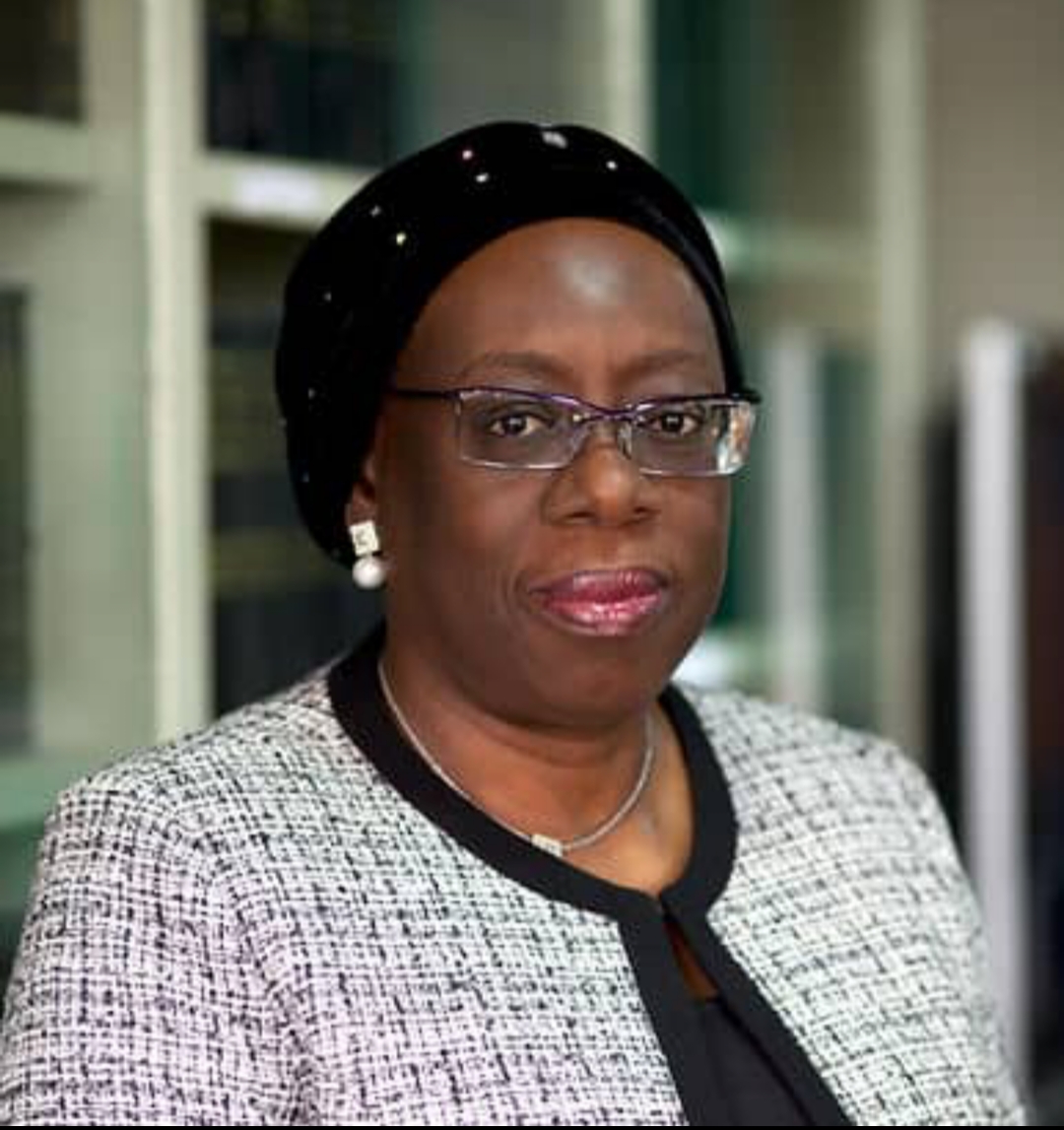
CJN: All You Need To Know About Justice Kudirat Motonmori Olatokunbo Kekere-Ekun
Hon. Justice Kudirat Motonmori Olatokunbo Kekere-Ekun is a serving Justice of the Supreme Court of Nigeria. She is the 5th and youngest female to be appointed as a Justice of the Supreme Court of Nigeria. This article examines the early life, education, and notable achievements of Hon. Justice K.M.O. Kekere-Ekun.
Justice Kekere-Ekun was born in London, the United Kingdom on 7th May 1958. Her parents were both indigenes of Lagos State, Nigeria. She is the eldest of eleven siblings from both parents. Her father, Alhaji Senator H.A.B. Fasinro, OFR, LL.D, was a fervent Muslim and a very dedicated family man of noble lineage. He belonged to at least 3 Royal Families in Lagos. He was a legal practitioner and very active in politics. Throughout his career, he worked for many years as a Crown Counsel in the old Western Region of Nigeria. He also became the Town Clerk of Lagos City Council (similar to being the Mayor of Lagos). In 1975, at the age of 56 years, he retired voluntarily from the civil service. He subsequently became a Senator of the Federal Republic of Nigeria in 1983. His tenure was however brought to an abrupt end with the overthrow of the Alhaji Shehu Shagari-led civilian government in a military coup in December 1983. He was also an author. He died at the age of 99 on 31st March 2019.
Her mother, Mrs. Winifred Layiwola Ogundimu (née Savage), is a devout Christian. She studied nursing in the UK, where she qualified as a Public Health Nurse before returning to Nigeria in December 1965. Upon her return to Nigeria, she built her career in the civil service of Lagos State and retired years later, at the age of 60. Mrs. Ogundimu is currently the head of a large and prominent Lagos family, the Savage Family.

Alhaji Senator H.A.B. Fasinro, OFR, LL.D, and Mrs. Winifred Layiwola Ogundimu both remarried when K.M.O. Kekere-Ekun was still young. K.M.O. Kekere-Ekun grew up in a polygamous home with her father, stepmothers, siblings, and other relations. One of her stepmothers, who greatly influenced her life, was a teacher. She was brought up in an extremely strict and disciplined environment at home, where she was taught lasting values such as hard work, integrity, contentment, and the ability to get on with most people and to cope with most situations. It was always a full house with extended family and other school children spending their holidays, to earn extra tutoring and a disciplined upbringing.
K.M.O. Kekere-Ekun was privileged with quality education. She attended private primary schools before proceeding in 1970 to Queen’s College, Lagos, which was the best Federal Government College for girls in the country at the time. She studied Law at the University of Lagos, Nigeria, from 1977 to 1980 and obtained her LL.B in 1980. Following this, she attended the Nigerian Law School from 1980 to 1981 and was called to the Nigerian Bar in July 1981. From 1981 to 1982, she was engaged in the compulsory National Youth Service at the Ministry of Justice, Benin City, Bendel State (now Edo State). Afterward, she proceeded to the London School of Economics and Political Science (LSE) where she obtained a master’s degree in law in 1983.
After qualifying as a lawyer and obtaining a master’s degree in law from the London School of Economics and Political Science (LSE), she worked in private law practice for a few years. As a result of the toll of the demands of private practice on her domestic responsibilities, she decided to join the bench to be able to enjoy more predictable work hours. She applied and was appointed by the Lagos State Judiciary as a Senior Magistrate Grade II in December 1989. This marked the beginning of her career on the bench. She was subsequently appointed a Judge of the High Court of Lagos State on 19th July 1996. In September 2004, she was elevated to the Court of Appeal. As a Justice of the Court of Appeal, she served in five different Divisions across the country. She was the pioneer Presiding Justice of the Makurdi Division of the Court of Appeal, and also served as the Presiding Justice of the Akure Division of the Court of Appeal before her elevation to the Supreme Court on 8th July 2013. She is currently a member of the Supreme Court Rules Committee and Chairman of the Supervisory Committee of the Litigation Department of the Court.
K.M.O. Kekere-Ekun served as Chairman of the Robbery and Firearms Tribunal, Zone II, Ikeja, Lagos, from November 1996 till May 1999, when the Tribunals were abolished. The constitution of the Tribunal included one Police officer and one Military officer. In the process, the Police officer gained significant insight into the requirements for conducting effective criminal investigations and prosecutions. He was subsequently posted to the Police College (where recruits are trained) as a lecturer and was able to share a lot of what he had learned from his participation in the Tribunal hearings. In recognition of her reputation for integrity and hard work, she was one of 3 Judges of the Lagos State High Court first selected to try offenses relating to financial crimes and money laundering under the Economic and Financial Crimes Commission Establishment Act, 2004 and the Corrupt Practices and Other Related Offences Act, 2000.
Furthermore, in 2003, K.M.O. Kekere-Ekun served as a member of the Ethics Curriculum Planning Committee of the National Center for State Courts (NCSC), in collaboration with the Department for International Development (DFID) and UNODC. This committee produced the Code of Conduct for Judicial Employees. She also chaired the Public Complaints and Training Committee that was part of the UNODC pilot project on strengthening judicial integrity and capacity in Lagos State. This was from February 2003 till July 2004. The Public Complaints Committee investigated complaints against magistrates in the performance of their official duties and became pivotal for the reform of the justice delivery system in the magistrate courts. Moreover, she served as a supervisory judge in charge of the Apapa Magisterial District in Lagos State from October 2002 till July 2004. She also served as a member of the committee that drafted the High Court of Lagos State (Civil Procedure) Rules 2004 from April 2002 till December 2002. The new Civil Procedure Rules introduced innovations in case management such as the front-loading concept, pre-trial conference, and the application of ADR mechanisms for the speedy dispensation of justice. The innovations have also been adopted by most states of the Federation and have proved particularly helpful in the speedy dispensation of electoral disputes.
From December 2001 till December 2004, she served as a member of the Steering Committee of the Lagos State Multi-Door Court House, the first court-connected Alternative Dispute Resolution center in Africa. At the Court of Appeal, she served on the Information Technology Committee, which was to facilitate the computerization of the Court. Hon. Justice K.M.O. Kekere-Ekun is a recipient of prestigious awards. She was a recipient of the Merit Awards of the Lagos State Judiciary, in December 2003 and in September 2013. Again, she was twice awarded the Distinguished Trailblazers Awards by the Nigerian Bar Association Women Forum (August 2012 and 2014). She belongs to several professional associations and groups, including the National Association of Women Judges; International Association of Women Judges; Body of Benchers – Life Bencher W.E.F. 8th February 2018; Nigerian Institute of Advanced Legal Studies (Fellow); and International Dispute Resolution Institute (Fellow). She is also a member of the Ikoyi Club 1938. Hon. Justice K.M.O. Kekere-Ekun has been married to Mr. Akin Kekere-Ekun, OFR, since December 1983. His work ethic and integrity have been a great motivating factor for her. Their union is blessed with three children who are all graduates and excelling in their chosen fields. K.M.O. Kekere-Ekun is passionate about self-examination, being the change that one wants to see in the world and setting your standards early, starting every endeavour in the same manner as one means to carry on. These have been her guiding principles in her personal and professional life.





PROPHET KINGSLEY AITAFO MARKS BIRTHDAY WITH MESSAGE OF FAITH, SERVICE
LAGOS, NIGERIA — Renowned cleric, Prophet Kingsley Aitafo, is being celebrated today by followers, associates, and members of the Christian community as he marks his birthday, with tributes pouring in to honor his spiritual impact and years of dedicated service.
The birthday of the respected prophet has become more than a personal milestone, as admirers describe it as a moment to reflect on a life devoted to faith, leadership, and humanitarian outreach.
Known for his passionate teachings and prophetic ministry, Aitafo has built a reputation as a voice of hope to many within and beyond Nigeria.
Close associates say the cleric’s journey has been defined by unwavering commitment to spiritual growth and the upliftment of lives. Through his ministry, he has continued to emphasize prayer, discipline, and a deep connection with God as pathways to personal transformation.
In commemoration of the occasion, special prayers and goodwill messages have been organized by followers across different platforms, many of whom credit his teachings for inspiring positive change in their lives.
“His life is a testimony of grace and dedication,” one associate noted. “He has remained steadfast in his calling, impacting countless lives with messages of faith and encouragement.”
Observers also highlight his role in mentoring young believers and providing spiritual guidance in challenging times, describing him as a leader whose influence extends beyond the pulpit.
As he celebrates another year, well-wishers have continued to pray for greater strength, wisdom, and expansion of his ministry, expressing confidence that his influence will continue to grow in the years ahead.
Today’s celebration stands not only as a birthday tribute, but as a recognition of a life many say has been committed to service, faith, and the advancement of the gospel.
celebrity radar - gossips
BURATAI HAILED AS ‘FRONTLINE GENERAL’ AS PRAISE TRAILS MILITARY, DIPLOMATIC SERVICE
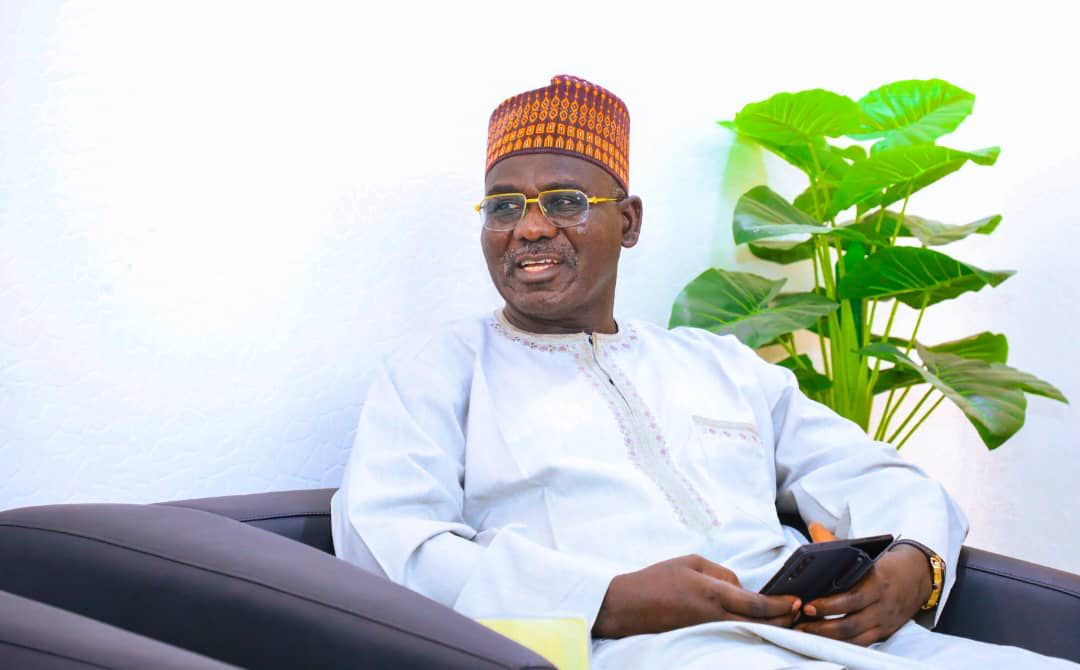
BURATAI HAILED AS ‘FRONTLINE GENERAL’ AS PRAISE TRAILS MILITARY, DIPLOMATIC SERVICE
ABUJA — Former Chief of Army Staff, Tukur Buratai (Rtd), has been described as a “frontline general” whose leadership redefined military command during Nigeria’s prolonged battle against insurgency.
The commendation, contained in a statement by KPUGHUR Sunday Christopher, highlighted Buratai’s direct involvement in combat theatres, noting that his decision to lead from the front distinguished him from many of his contemporaries.
According to the statement, the retired army chief’s presence in conflict zones at critical moments of the war effort underscored his commitment to national security and territorial integrity.
“He was not a distant commander. He was present where it mattered most,” the statement said.
The tribute also emphasized Buratai’s reputation as a detribalized leader, stressing his consistent advocacy for unity and peaceful coexistence across Nigeria’s diverse population.
Observers note that his tenure coincided with some of the country’s most challenging security periods, during which the military recorded significant operational strides against insurgent groups.
Beyond his military career, Buratai’s subsequent diplomatic engagement was also cited as evidence of his versatility in national service.
The statement concluded that his continued involvement in national discourse after retirement reflects a sustained commitment to Nigeria’s progress, describing him as “a statesman whose service transcends uniform.”
celebrity radar - gossips
Prophet Kingsley Aitafo to Mark Birthday with Global Prayer Session, Honours Spiritual Fathers

Prophet Kingsley Aitafo to Mark Birthday with Global Prayer Session, Honours Spiritual Fathers
Renowned cleric, Prophet Kingsley Aitafo, is set to mark his birthday on March 23 with a global prayer session, offering what he described as a “spiritual gift” to followers across the world.
In a departure from conventional birthday celebrations, the prophet announced a Special Live Prayer Session scheduled to hold from 10:00 a.m. to 11:00 a.m. (Nigeria time). The one-hour intercession is expected to draw participants from various countries, focusing on thanksgiving and collective prayers.

According to him, the initiative is aimed at fostering spiritual reflection and unity among believers, rather than personal festivities.
Ahead of the event, Prophet Aitafo paid tribute to his spiritual mentors, acknowledging the profound influence of Prophet and Founder of Celestial church of Christ, Prophet Samuel Bilehou Joseph Oshoffa and Bishop David Olaniyi Oyedepo on his ministerial journey.
He noted that the legacies and “exploits in ministry” of the revered clerics have continually inspired him to pursue greater depth, purpose, and impact in his calling.
The upcoming prayer session is expected to be streamed live across his ministry’s platforms, with followers encouraged to join in the global moment of intercession.


-

 society6 months ago
Religion: Africa’s Oldest Weapon of Enslavement and the Forgotten Truth
-

 news3 months ago
WHO REALLY OWNS MONIEPOINT? The $290 Million Deal That Sold Nigeria’s Top Fintech to Foreign Interests
-

 society6 months ago
“You Are Never Without Help” – Pastor Gebhardt Berndt Inspires Hope Through Empower Church (Video)
-

 celebrity radar - gossips2 months ago
Dr. Chris Okafor Returns with Power and Fire of the Spirit -Mounts Grace Nation Altar with Fresh Anointing and Restoration Grace on February 1, 2026