
Education
Concerned Parents Educators Initiative holds 2nd edition of “Save Education in Nigeria” advocacy.


By Ifeoma Ikem
A non-governmental organization, NGO, the Concerned Parents and Educators has commenced plans for the second edition of the Save Education In Nigeria Advocacy campaign.

The national coordinator, Mrs. Kemi Koleowo, said that just like happened in February 2020 was designed has been as education transformation advocacy month.
Theme for this second edition is “Inspiring Teachers For Education Transformation”.

She also captured some of the achievements of this remarkable online group with over 200,000 members scattered across various parts of Nigeria and abroad
Some of these are; The Gathering(2017) a conference that provided the platform to engage key stakeholders in the Education sector, Free School Leaders program , Free Parenting Seminars,
short story challenge contest that has produced amazing writers with Cash gifts, laptops etc as prizes
donation of cerebral palsy wheelchairs to Super parents group, Donation of N400, 000 to Jesus Kids home Ibadan.
It also include three years of gift connect for poor families during Christmas as well as teachers appreciation ceremony/award
The group also raised over N1.5m to pay school fees of children in poor communities in areas such as Agege, Iwaya, Owode Onirin, Amukoko, Badiya, Ajegunle etc.
Some of the beneficiaries include Audu Jiya, a great ambassador, physical challenge person in an education sector in Niger State
Through the support fund from CPE which raised over N200.000.00 for him with multi million building for him in Minna, Niger state.
He is doing great work with the students because disability is not death sentence but ability.
According to her, the Concerned Parents and Educators initiative also supported a conservative estimate of over 1,400 families during Covid 19 Pandemic. Over 6million naira was raised by the group and members of the group supported various families directly ones.
The organisation has also created a micro interest free loan to enable teachers engage in business which over 78 teachers were given N20, 000 each without interest rate to engage in petty business
CPE, also provides Support for low cost schools in various communities, which includes: chairs, tables, books, shelves, toys etc. were donated to schools in disadvantaged areas.
She noted that the first “Save Education In Nigeria” advocacy was held in February 2020.
CPE members were in churches, mosques, markets, schools speaking on various challenges facing the Education sector.
The second edition will run through state chapters in about 25 states, the states will focus on issues facing the teaching profession in their state and how teachers can be inspired to perform better to improve outcomes





FAB Luxury Court Sets A Rare Benchmark For Excellence In Africa
~By Oluwaseun Fabiyi
Fab Luxury Court distinguishes itself as the premier choice for reliable investors and proactive developers in Nigeria and Africa.While numerous real estate entities operate within the country, Fab Luxury Court stands out for its exceptional honesty and integrity, delivering on the promises showcased on its social media page to distinguished customers globally.
As of now, no investors, whether domestic or international, have expressed regret over investing in or partnering with Fab Luxury Court. The company’s commitment to accessibility, accountability, and transparent financial reviews sets it apart from its contemporaries, rendering it a prized asset among its extensive clientele worldwide. Thousands of customers continue to patronize Fab Luxury Court due to its impeccable integrity and visionary approach.
*Why is Fab Luxury Court a worthwhile investment that warrants prompt consideration rather than hesitation?*
Fab Luxury Court’s security measures are exemplary and deserving of commendation, providing investors with capital protection through a robust structured framework, transparent reporting, and comprehensive legal documentation, thereby guaranteeing outstanding and secure returns.
Fab Luxury Court has further cemented its position as a leading developer and real estate powerhouse in Nigeria and Africa, currently managing several high-end estates in Maryland, Ikeja, Lagos and its surrounding areas.Fab Luxury Court demonstrates its unwavering commitment to excellence in Nigeria’s real estate sector through its best-selling estates in Ikeja.
Undoubtedly, partnering with and patronizing Fab Luxury Court will significantly contribute to securing your future; as you plan to associate with them in 2027, we encourage you to maintain a positive outlook and unwavering confidence in your future wealth.



Edukate Africa holds summit to tackle funding barrier in education
By Ifeoma Ikem
Edukate Africa, an edu-fintech platform is set to host the Disrupt Education Summit Africa (Disrupt ED) aimed at tackling funding barriers, skills gaps and curriculum mismatch in Nigeria’s education system.
The Director of Edukate Africa, Francis Omorojie who disclosed this to newsmen explained that the initiative was driven by the high rate of school dropouts linked largely to financial constraints, particularly at the higher institution
Omorojie said the summit scheduled for January 29 at the University of Lagos will bring together government officials, universities, financial institutions, private sector players and philanthropies to rethink education financing and prepare young Nigerians for the realities of today’s digital workforce.
He said that more than 50 percent of students who drop out of higher institutions do so because they cannot afford tuition and related costs, a situation he described as a major contributor to unemployment, brain drain and irregular migration.
“Africa’s youthful population could either become an economic advantage or a liability, depending on how well education and talent development are managed.
“Education is a fundamental need, but financial exclusion has continued to shut out many promising young people. When students drop out, it feeds unemployment and social instability.
“Our mission is to build innovative and sustainable financial models that keep young Africans in school and help them become productive,” he said.
He noted that Edukate Africa is deploying blended financing solutions that include tuition guarantees, technology driven scholarship platforms, gig and remote work opportunities for students, and partnerships with universities and philanthropies to establish endowment and alumni funds.
He said that the platform pays tuition directly to institutions after verifying students’ admission and academic records, ensuring transparency and accountability for donors.
“The summit would focus on aligning education with the fast changing nature of work, driven by digital transformation, artificial intelligence and emerging technologies as any university curricula are lagging behind workplace realities, leaving graduates ill prepared for employment.
“There is a clear disconnect between what students are taught and what employers need. This summit will create a roundtable where government, academia and the private sector can agree on the skills required for today’s economy and how to integrate them into learning.
“It will also examine education financing models, including how banks and financial institutions can design student friendly funding products, and how existing initiatives such as the Nigeria Education Loan Fund can be strengthened and scaled.’’
Omorojie added that Edukate Africa would use the summit to launch the CommUniversity Endowment Fund, a community led investment fund designed to generate sustainable returns that will be used to sponsor vulnerable students and support young entrepreneurs.
Unlike traditional grant models, he said the fund would invest in revenue generating businesses, with dividends channeled into education support and seed funding for student led startups.
He said the initiative would also promote innovation through activities such as Pitch My Dissertation, Africathon and inter university debates, encouraging students to turn academic research into commercial solutions and job creating ventures.
According to him, over 1,000 students and recent graduates are expected at the summit, with a partners’ pavilion providing employers and organisations direct access to top talent.
He added that Edukate Africa has already supported students in Nigeria, the United Kingdom and Uganda to complete their education, in some cases with relatively small amounts that made the difference between graduation and dropping out.
He said that the ultimate goal is to move beyond access to education and ensure that young people graduate with relevant skills, funding support and pathways into employment or entrepreneurship, thereby contributing meaningfully to Nigeria’s economic development.
Also speaking, Tosin Adebisi, Co-Founder of Edukate Africa said the Disrupt ED Summit was designed as a disruptive and transformative convergence that would move beyond familiar conversations to practical collaboration.
Adebisi said the summit was built around a new framework called Communiversity, which seeks to integrate universities, policymakers, industry, the third sector and students into a single ecosystem.
“Rather than everyone working in silos, Communiversity brings together policymakers, universities, industry and civil society, with students at the centre, to address access to education, the future of work and Africa’s competitiveness.
“Communiversity model would leverage alumni networks, high net worth individuals and diaspora support to unlock sustainable funding for universities.
“The summit is being organised in partnership with the University of Lagos and the University of Birmingham, with support from the Federal Ministry of Education.’’
The dignitaries that would grace the occasion include, Minister of Education, Dr Tunji Alausa; the Provost and Vice Principal of the University of Birmingham, Professor Nick, the Chief Operating Officer of Semicolon Africa, Ms Ashley Immanuel; and the Chief Executive Officer of Sterling One Foundation, Mrs Olapeju Ibikwe
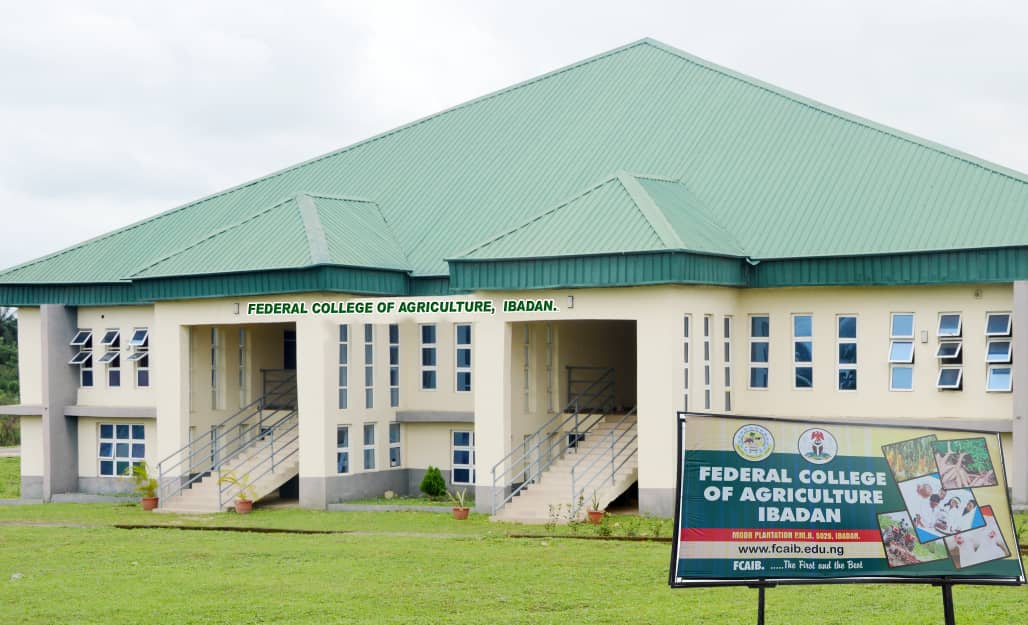
FCAIB is set to launch degree programmes in partnership with FUNAAB
IBADAN, OYO STATE, NIGERIA – In a groundbreaking move, the Federal University of Agriculture, Abeokuta (FUNAAB) has given the green light for the introduction of two innovative degree programmes at the Federal College of Agriculture, Ibadan (FCAIB), set to kick off in the 2025/2026 academic session.
According to an official release e-signed and made available to the media by Mrs. Wilson Oyekemi, Head of the Public Relations Unit of the institution, the newly approved programmes are B.Sc. (Home Science and Management) and B.Agric. (Agricultural Science).
As stated, the next academic session will witness the official commencement of both degree programmes, which constitutes a major breakthrough in the College’s academic development.
Established in 1921, the Federal College of Agriculture, Ibadan (FCAIB), originally known as the School of Agriculture, proudly stands as Nigeria’s and West Africa’s first agricultural institution, with a long and storied history.
The College’s roots trace further back to 1899, when Moor Plantation, Ibadan was established as a model farm to promote rubber cultivation and general agricultural improvement.
By 1905, the station evolved into an experimental research centre, focusing primarily on cotton production and other key agricultural studies.
The formal establishment of the School of Agriculture in 1921 marked the beginning of structured agricultural education in Nigeria.
Following the regionalization of education in 1954, the school relocated to its present site – where it has since grown into a formidable centre of agricultural learning and innovation.
Over the past century, the Federal College of Agriculture, Ibadan, has consistently upheld its mission of contributing to Nigeria’s agricultural development through qualitative education, skills acquisition, and the production of middle-level manpower for the agricultural sector.
The institution remains committed to empowering students with practical, hands-on skills and modern knowledge tailored to meet the evolving needs of agribusiness and food production in the 21st century.
Becoming Nigeria’s Premier Agricultural Institution, FCAIB envisions becoming the foremost agricultural education institution in Nigeria’s tertiary education system – a vision strengthened by its continued academic expansion and infastructural growth.
With over 100 years of continuous service, the Federal College of Agriculture, Ibadan has built a strong reputation as a leader in agricultural education, training, and research across the subregion.
The College currently offers a wide range of National Diploma (ND) and Higher National Diploma (HND) programmes across several disciplines, including:
National Diploma Programmes:
– Agricultural and Bio-Environmental Engineering Technology
– Agricultural Technology
– Home and Rural Economics
– Horticultural Technology
– Cooperative Economics and Management
– Science Laboratory Technology (SLT)
– Computer Science
– Food Technology
– Office Management Technology
– Library and information Science
– Multimedia Technology
– Organic Agricultural Technology
Higher National Diploma Programmes:
– Agricultural and Bio-Environmental Engineering Technology (Farm Power/Post-Harvest Technology/Soil & Water options)
– Agricultural Extension and Management
– Animal Production Technology
– Crop Production Technology
– Horticultural Technology
– Agribusiness Management
– Pest Management Technology
– Science Laboratory Technology (Microbiology Option)
These programmes are designed to blend theory with practical field experience, ensuring graduates are job-ready and self-reliant in the agricultural sector.
Beyond academic instruction, FCAIB maintains a strong emphasis on research and development, particularly in areas that directly impact food production and sustainable agricultural practices.
Recent infrastructural developments at the institution included the establishment of a Meteorological Centre, a Garri Processing Plant and an Oil Palm Processing Unit, all aimed at enhancing research, student training, and community impact.
The 9th and current Provost who doubled as the 28th Head of the 105 year-old Federal College of Agriculture, Ibadan, Prof. Jonathan Jeremiah Atungwu, a distinguished Nigerian academic Professor of Plant Nematology and an expert in Organic Agriculture and Biopesticides development with
research focus on non-chemical crop protection options, remained a focused and visionary leader.
He is Certified locally and internationally with enviable credentials, some of which include but not limited to:
– Over 100 publications in reputable outlets
– Expertise in Organic Agriculture and Biopesticides development.
– A team player with demonstrated leadership skills and experience in various capacities: Past Dean (COLPLANT) in FUNAAB and LASU, President of several professional societies.
– Membership and leadership in international and local organizations, such as ISOFAR, ISPP, NSPP, NISOP, ADAN and many more.
Prof. Atungwu is a renowned mentor for the upcoming agricultural scientists, teachers, agropreneurs, and youths.
He is happily married, and blessed with pleasant, hardworking, and disciplined children.


-

 society6 months ago
Religion: Africa’s Oldest Weapon of Enslavement and the Forgotten Truth
-

 news4 months ago
WHO REALLY OWNS MONIEPOINT? The $290 Million Deal That Sold Nigeria’s Top Fintech to Foreign Interests
-

 society6 months ago
“You Are Never Without Help” – Pastor Gebhardt Berndt Inspires Hope Through Empower Church (Video)
-

 celebrity radar - gossips2 months ago
Dr. Chris Okafor Returns with Power and Fire of the Spirit -Mounts Grace Nation Altar with Fresh Anointing and Restoration Grace on February 1, 2026