
Politics
COVID-19: Gov Abiodun suspends carnivals, cross-over gatherings …orders workers to stay at home till January 4


COVID-19: Gov Abiodun suspends carnivals, cross-over gatherings- Ogun State Governor, Prince Dapo Abiodun has called for restraint in celebrations during the Christmas and New Year festivities as he announced the suspension of street carnivals, crowded cross-over night service, parties and similar gatherings in the Stat, amidst an increase in COVID-19 infections across the nation.
The governor on Wednesday also directed all civil servants and other government workers in the State to proceed on Christmas and New Year holiday from Thursday, December 24.
According to the Chief Press Secretary to the Governor, Mr Kunle Somorin, the directives were issued on Wednesday after a meeting between the state government and religious leaders from the League of Imams and the Christian Association of Nigeria as well as community leaders as part of the measures and guidelines for public health as the state prepares for a second wave of the coronavirus pandemic.
The Governor directed that all Schools in the State are to remain closed until January 18, 2021, while all bars, nightclubs, pubs and event centres, recreational centres in the state have also been closed down indefinitely.
The Governor further directed that the all markets are to open strictly between 8am and 4pm while maintaining social distancing and observing all COVID-19 protocols, including the use of face mask, provision of hand sanitizer and/or hand-washing equipment at every strategic point within their malls, shops, business premises etc.
Gov Abiodun further directed that religious and worship centres should not exceed 50 per cent of their capacity. All services must also be in compliance with all COVID-19 protocols.
In order to stem, the spread of the second wave of the disease, Gov. Abiodun advised that “there should be no gatherings of more than 50 people at any event or ceremonies, such as conferences, congresses, office events, concerts, seminars, sporting activities, cross-over nights, end of year parties, weddings, naming, birthdays, anniversaries, street carnivals, etc until further notice”.
He also called on motorcycle (okada), tricycle, bus, car, taxi and other transport operators to not to carry passengers above 50 percent of their capacity, in compliance with social distancing rules.
While urging citizens to celebrate in moderation, Gov. Abiodun wished the people a Merry Christmas and prosperous 2021, saying they should take personal responsibilities and stay within their residences and not embark on travels within and outside the State to ensure they neither transmit nor contract the virus.
For religious centres, the League of Imams and the Christian leaders adopted the earlier positions taken in the wake of COVID-19 earlier in the year such as:
1. All worship activities must be observed by not more than 50percent of capacity
2. All congregants must wear their face masks appropriately (that is, No facemask, No entry)
3. There should be reliable sources of running water
4. Worship centres should be adequately cleaned and disinfected before and after services
5. Household bleach solution should be adequately prepared for disinfectations
6. There should be adequate provision and supervision of multiple Veronica Buckets for handwashing (fully automated handwashing machines are preferable)
7. There should be provision of alcohol-based sanitiser which must be used before and at intervals of every 20 minutes as well as after service
8. Worship centre should provide adequate toilet facilities with water
9. It is paramount for Muslims to perform ablution at home and go to Mosque with their personal praying mats
10. Qualified Medical Practitioners or trained personnels should check the temperature of worshippers with infrared thermometer before allowing them to enter worship centres
11..There should be adequate medical support for sick persons
12. All services on Friday/Sunday and other week days must adhere strictly to COVID-19 Guidelines
13. There should be pre-designated standing position/sitting points to ensure not less than 2 meter distancing
14. The duration of religious services should not be more than one hour. In addition, same duration must be observed at intervals, where there are multiple services
15. The use of Air-conditioners should be discouraged while worship centres should be well ventilated with the use of fans
16. There should not be any handshake/hugs by worshippers
17. Proper awareness of the susceptibility of the aged and people with signs of ill-health should be adequately created among worshippers at all times
18. Constant sensitisation of COVID-19 and its dangers should be included in sermon and goodwill messages
19. Provision of isolation rooms is mandatory in all worship centres or facilities
20. Religious services and events should be recorded with digital camera for record purposes
21. Government will not hesitate to impose severe sanctions (including, but not limited to lockdown) on any Worship Centre that fails to comply with the laid down guidelines
22. No social gathering should exceed 50 people while 2 meters social distancing must be observed in such gatherings
23..Disposable elements should be used during Holy Communion instead of sharing cups




Politics
APC Group Endorses Fubara for 2027, Calls on Tinubu and APC to Prioritise Performance Over Politics in Backing Governor’s Second Term Ambition
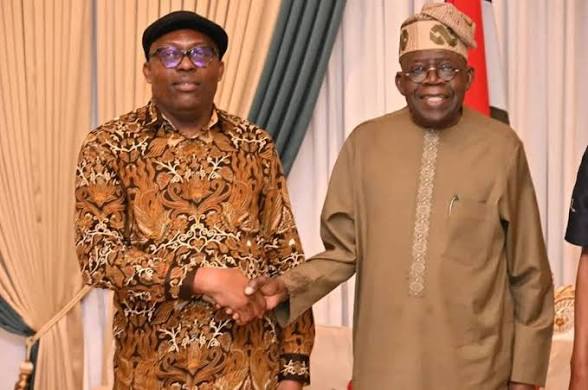
*APC Group Endorses Fubara for 2027, Calls on Tinubu and APC to Prioritise Performance Over Politics in Backing Governor’s Second Term Ambition*
The APC National Vanguard has appealed to President Bola Ahmed Tinubu and the leadership of the All Progressives Congress (APC) to support a second term in office for Siminalayi Fubara, citing what it described as “impressive and verifiable developmental strides” across Rivers State.
In a statement issued on Thursday by its National President, Dr Gbenga Salam (JP), the group said its position followed an extensive assessment tour of key infrastructure and public service projects executed under the Fubara administration.
The APC National Vanguard said the appeal was based strictly on performance, arguing that governance outcomes should outweigh partisan considerations, particularly in a state as economically significant as Rivers.
“We respectfully urge President Bola Ahmed Tinubu and the leadership of the All Progressives Congress to support the continuity of Governor Siminalayi Fubara beyond his current tenure, in recognition of his commitment to development, prudent resource management, and people-focused governance,” the statement read.
According to the group, its delegation visited multiple project sites across the state, observing ongoing and completed works spanning road construction, urban renewal, and public infrastructure upgrades.
It noted that the scale and distribution of these projects reflect a deliberate effort by the state government to extend development beyond traditional urban centres and into underserved communities.
“Our findings from the tour reveal a government that is not only active but intentional in its development agenda. The execution of capital projects across various parts of Rivers State demonstrates a clear understanding of the needs of the people and a commitment to addressing them,” Dr Salam said.
The group particularly commended what it described as prudent financial management by the administration, noting that the projects reviewed showed evidence of careful planning and efficient allocation of resources.
“At a time when economic pressures are evident across the country, it is commendable that the Rivers State government has managed its resources in a way that delivers visible and impactful development without signs of fiscal recklessness,” the statement added.
The APC National Vanguard further observed that despite political tensions in the state, the Fubara administration has maintained focus on governance, ensuring continuity in project execution and service delivery.
The group argued that such stability is critical for sustained development and should be encouraged rather than disrupted.
“Leadership must ultimately be judged by results. In Rivers State, there is clear evidence of progress—projects that are not only announced but executed, and policies that translate into real benefits for citizens,” Dr Salam noted.
The group warned that discontinuity in leadership could stall ongoing projects and reverse gains already recorded, stressing the importance of allowing a performing administration to consolidate its achievements.
“Rivers State is at a pivotal stage where continuity will allow for the completion of ongoing initiatives and the deepening of development gains. Supporting Governor Fubara for a second term is, therefore, a decision in the best interest of the people,” the statement said.
In addition to its call on the APC leadership, the group reaffirmed its support for President Tinubu, expressing confidence in his administration’s broader economic and governance reforms.
The APC group urged Nigerians to remain supportive of efforts aimed at stabilising the economy and strengthening public institutions.
“We reiterate our endorsement of President Bola Ahmed Tinubu for a second term in office, in recognition of his leadership and commitment to national development. With sustained support, the administration can consolidate its reform agenda for the benefit of all Nigerians,” Dr Salam added.
The APC National Vanguard concluded by calling on political actors to prioritise development and public interest over partisan divides, insisting that governance should always be guided by performance and accountability.
“Where leadership demonstrates prudence, delivers development, and remains focused on the welfare of the people, it deserves continuity. This is the position we have reached after a careful and independent assessment of Rivers State,” the statement added.
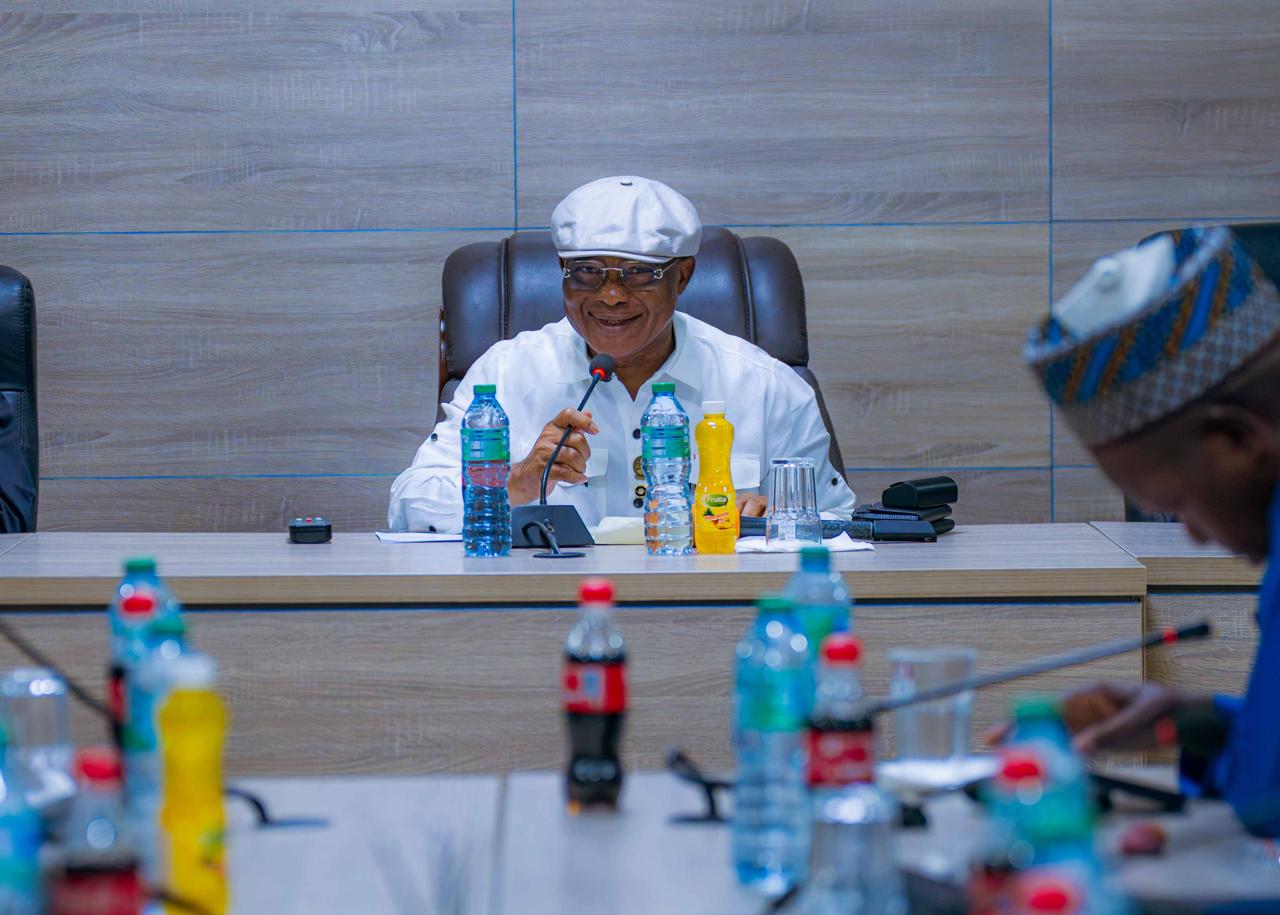
*Renewed Hope Ambassadors Step Into the Next Phase
Fresh from the successful APC 2026 National Convention, the Renewed Hope Ambassadors National, Zonal, and State leadership gathered in Abuja over the weekend, for its fourth strategic meeting, setting the tone for nationwide grassroots activation ahead of 2027.
Chaired by Governor Hope Uzodinma (Imo State) the Director General and National Coordinator of the Renewed Hope Ambassadors, alongside Deputy Director-General, Governor Uba Sani of Kaduna State, and Governor Inuwa Yahaya of Gombe State as Secretary, the session reinforced one clear direction: One Party. One Message. One Mobilization whilst also laying out a strategic roadmap for the activation of the network across all communities in Nigeria.
Backed by the strength of 31 APC-led states, the Renewed Hope Agenda is taking Bola Ahmed Tinubu’s message of progress and reform to every corner of Nigeria.
From bold economic restructuring to initiatives like NELFUND, the increase in the national minimum wage from ₦30,000 to ₦70,000, and strategic investments in critical sectors, including PNiCGI, the mission remains clear: helping Nigerians understand both the purpose and the progress of the Renewed Hope vision.
This is coordination at scale. This is grassroots engagement with purpose. This is the next phase of Renewed Hope with One Party, One Message, and One Mobilisation framework
#RenewedHopeAmbassadors #APC #WeAreAPC


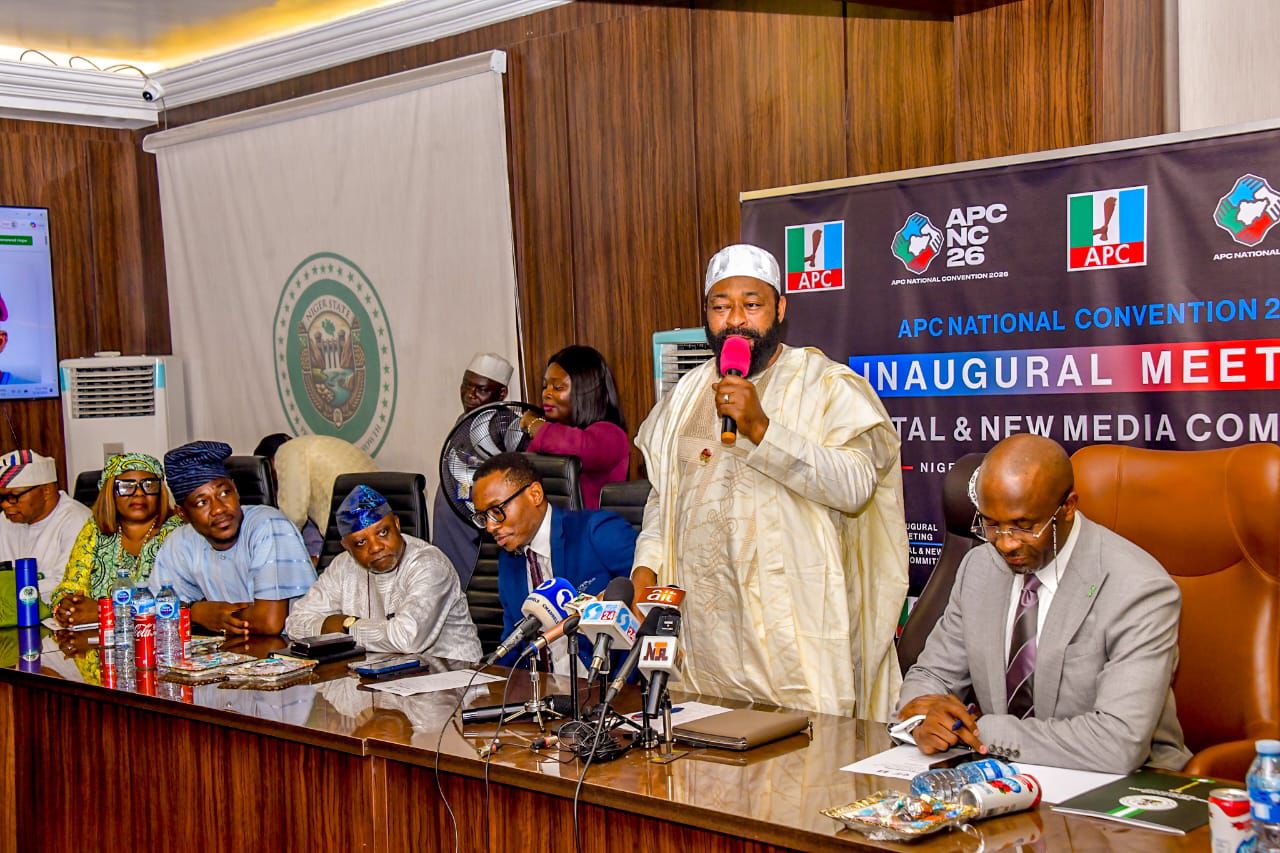
Governor Bago Inaugurates APC Digital Media Sub-Committee Ahead of National Convention.
Governor Umaru Bago has inaugurated the Digital Media Sub-Committee for the forthcoming National Convention of the All Progressives Congress (APC), scheduled to hold on March 27 and 28, 2026 in Abuja.
Chairing the sub-committee, Governor Bago tasked members with the responsibility of effectively communicating the party’s manifesto to the public.
He emphasized the need to leverage social media platforms to highlight the achievements and ongoing efforts of President Bola Ahmed Tinubu, noting that communication gaps have posed challenges that must now be decisively addressed.
The Co-Chair of the sub-committee, Hon. Benjamin Kalu, Deputy Speaker of the House of Representatives, echoed the Governor’s position, urging members to project the activities of both the party and the government to a broader audience.
He called for a deliberate and coordinated effort to showcase the party’s achievements and policy direction, stressing the importance of shaping a compelling and consistent narrative across all digital platforms.
Delivering a presentation to the committee, Otega Ogra, SSA to the President on New Media, who serves as Secretary of the sub-committee, outlined strategic focus areas to guide the team’s operations.
His presentation highlighted communication priorities and actionable steps to achieve the committee’s mandate and strengthen the party’s digital engagement.


-

 society7 months ago
Religion: Africa’s Oldest Weapon of Enslavement and the Forgotten Truth
-

 news4 months ago
WHO REALLY OWNS MONIEPOINT? The $290 Million Deal That Sold Nigeria’s Top Fintech to Foreign Interests
-

 society6 months ago
“You Are Never Without Help” – Pastor Gebhardt Berndt Inspires Hope Through Empower Church (Video)
-

 celebrity radar - gossips2 months ago
Dr. Chris Okafor Returns with Power and Fire of the Spirit -Mounts Grace Nation Altar with Fresh Anointing and Restoration Grace on February 1, 2026