
society
CURBING GRADING BIAS IN TERTIARY INSTITUTIONS


CURBING GRADING BIAS IN TERTIARY INSTITUTIONS
~By Okunlegbe John T
Indices have shown in recent years,how the credibility of examinations in Nigeria’s higher institutions has come under increasing scrutiny and doubts. To a great extent, the skepticism is as a result of allegations of grading bias, and manipulations by lecturers.
Before now, all eyebrows seemed to be against students. They are perceived to be the only culprits in examination malfeasances, seeing they assume a role of the subordinates,and are mostly involved in cheating during exams,buying grades and other related malpractices.
However, as technology advances, particularly with the invention of computer-based tests (CBT) that allow for studends, to write examination online and have their results uploaded via the same means, it is increasingly becoming necessary, to shift the searchlight against examination malpractices to the lecturers.
I speak today as a lecturers, who was once a student, but victimized through grading bias.
Years ago, I had reasons to join a host of others, to register our grievances about how our department handled the collation of our final result— the collations were taking longer than necessary, and many of my course mates were eager to go for NYSC deployment.
Long story made short, some of us who made that journey to school were victimized. Our grades were reduced, and as such we have continued to live with this trauma.
It is important I tell you that, there is an opportunity to ‘call for one’s papers’ in most Nigerian universities, however, such avenues are nothing but means for further frustration and victimisation of students. If anyone has ever scaled such rigour, then, the percentage of those who have come out triumphant must be very infinitesimal.
In most of the cases, students who register disatisfactions about their results or grades are humiliated and marked down during the remarking process.
Because of naivity that comes with adolescence, most students who have such issues prefer to be quite about it. They are spiraled into silence, knowing doing otherwise could spell doom.
It is not out of place, to say most of the lecturers in our tertiary institution have assumed the position of the biblical principalities and powers. Many wield so much powers that, they can do and undo just anything, especially as it concerns students’ academic performances.
It is unfortunate that,an issue as mundane and irrelevant to academics as sex, is used against some unwilling students— a lecturer wants to take an undue advantage of a female student, before such student passes her course at all, or with good grade. What a sacrilege!
To address these challenges and enhance transparency and fairness,there is need for shifting from traditional pen-on-paper examinations to Computer-Based Testing (CBT) across Nigerian universities and colleges:
Curtailing lecturers’ manipulations, is paramount in the quest for academic transparency and integrity in Nigeria. The world had since moved from where most of our institutions now dwell. The days of submitting your examination scripts to a drug or alcohol-influnced lecturer are over. We must embrace the ease, speed and accuracy that technology accords.
With manual grading, the risk of biased marking, grade alterations, and even solicitation of favors (monetary or otherwise) is significantly higher. CBTs remove this vulnerability by automating the marking process for objective questions, reducing human interference, and ensuring that results are based purely on student performance.
The detection of the hitches in 2025 Unified Tertiary Matriculation Examination (UTME) organized recently by Joint Admissions and Matriculation Board (JAMB) is a testament to the fact that, our old grading patterns are indeed archaic and suppressive. Aside the technical glitches, which are easily detectable and amendable, JAMB deploying CBT method remains the best.
Furthermore,for our institutions to score high in objectivity and fairness, candidates must be scored based on definitive algorithms, leaving little to no room for subjectivity– this can only be made possible by CBT. Here,all students are assessed under the same conditions, and the same grading standards are uniformly applied. This gives equal opportunity, or a level playing field, where students’ efforts are the sole determinants of their grades, thereby restoring faith in the integrity of academic assessments.
While computers may not necessarily be able to take over all human activities, we must accept the fact that,they enhance productivity and the management of time. No matter how smart and proficient a lecturer could be, the sight of over a hundred booklets of students during examination sends a wave across his/her spine. It is certain s/he wouldn’t be able to mark all scripts with the same zest, objectivity and speed.
Traditional examinations require a long marking period, during which scripts are often lost, misgraded, or intentionally manipulated. In contrast, CBTs offer instant or much faster results, giving no room for tampering after submission. This rapid turnaround not only benefits students but also reduces the administrative workload on academic departments.
Nigerian institutions must embrace a paradigm shift, if they hope to remain competitive and prepare students for the demands of the modern workforce
Moving fully to CBT is not without its challenges. Infrastructure deficits, erratic power supply, and digital divide are real issues in many Nigerian institutions. However, these challenges are surmountable. Government investment, public-private partnerships, and phased implementation can bridge the gap.
Moreso, while objective questions are easier to grade via CBT, strategies must be developed to accommodate essay-type assessments and practicals. Hybrid models that incorporate both automated testing and supervised evaluations could serve as a balanced approach during the transition phase.
Let me close by emphasising that, transitioning from pen-on-paper examinations to CBT in Nigerian higher institutions, is not just a technological upgrade — it’s a fundamental reform to restore integrity,fairness and transparency in the academic system. It is an easy avenue for the elimination of opportunities for lecturers’ manipulations.
CBT stands as a crucial tool in transforming Nigeria’s education sector into one that truly rewards merit and prepares students for a digital future.
What stops institutions, including JAMB from conducting CBTs where students’ results are displayed immediately the SUBMIT button is clicked?
Okunlegbe John is a lecturer and a pastor. He writes from Ilorin.




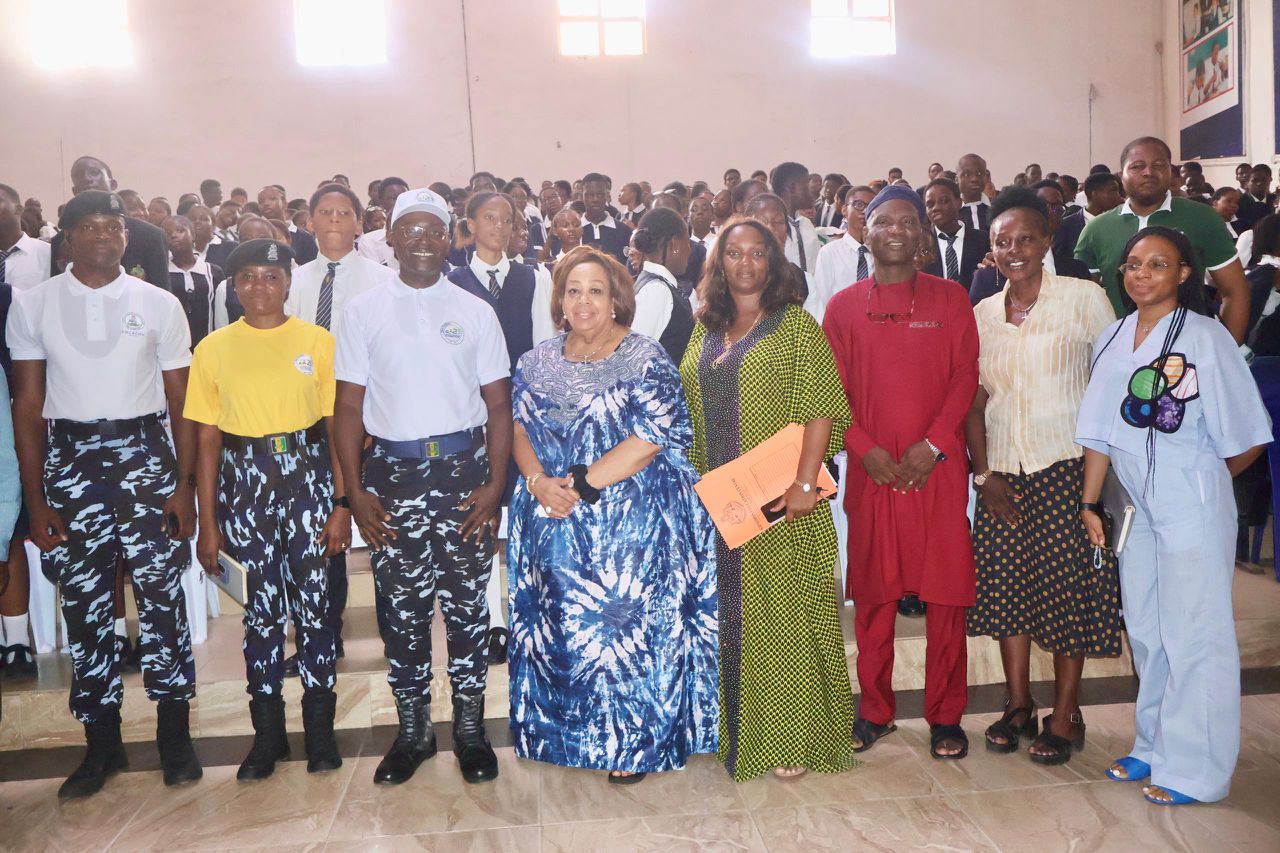
POCACOV Intensifies Sensitization on Cultism, Bullying, and Social Vices Among Students in Edo
In commemoration of the 2026 National Police Day Celebration, the Police Campaign Against Cultism and Other Vices (POCACOV), Edo State Command, has reinforced its preventive policing efforts through a targeted sensitization outreach at Igbinedion Education Centre, Benin City.
The initiative forms part of the broader activities marking this year’s National Police Day, themed “Community Partnership: Building Trust,” which emphasizes collaboration between the Nigeria Police Force and the public in fostering a safer society.
The sensitization programme witnessed the presence of key stakeholders, including the Commissioner of Police, Edo State Command, the Police Public Relations Officer, and the Edo State POCACOV Coordinator, ASP Kingsley Upeh. The team engaged students in an insightful and impactful session focused on the dangers of cultism, bullying, and other social vices prevalent among youths.
During the session, students were educated on the severe and far-reaching consequences of cult-related activities. These include violence, loss of lives, disruption of academic pursuits, and long-term damage to personal reputation and future opportunities. The speakers also highlighted how peer pressure, drug abuse, and negative social influences often serve as gateways into criminal behavior.
In an interactive segment, the Commissioner of Police stressed the legal implications of engaging in criminal acts, noting that involvement in cultism and related offences could lead to arrest, prosecution, and lifelong consequences that may hinder personal growth and career aspirations.
The issue of bullying was also extensively addressed, with emphasis on both its legal ramifications and psychological impact on victims. Students were encouraged to speak up against bullying, report incidents to school authorities or law enforcement, and support peers who may be affected.
Furthermore, the outreach underscored the importance of self-discipline, moral values, and making informed life choices. Students were urged to become ambassadors of peace within their schools and communities by rejecting violence and promoting unity and mutual respect.
The POCACOV team reiterated its commitment to continuous engagement with young people through awareness campaigns, community outreach, and strategic partnerships aimed at preventing crime before it occurs. The initiative aligns with the Nigeria Police Force’s proactive approach to policing, which prioritizes education, prevention, and community involvement.



COAS Launches Nationwide Security Renewal Mission in Plateau
The Chief of Army Staff, Lieutenant General Waidi Shaibu, on Thursday led a high-level delegation of security chiefs to Plateau State, flagging off a nationwide security renewal mission aimed at strengthening civil-military cooperation and restoring lasting peace across the country.
The visit to Jos, the Plateau State capital, marks the first phase of a coordinated national effort to address persistent security challenges through joint operations, community engagement, and proactive intelligence gathering.

Governor Caleb Muftwang received the delegation, describing the initiative as a critical step toward stabilizing affected communities and reinforcing public confidence in security institutions.
Civil-Military Synergy Takes Centre Stage
At the heart of the mission is a renewed emphasis on collaboration between the military, civil authorities, and local communities. Speaking during the visit, Lt. Gen. Shaibu stressed that national security must be treated as a collective responsibility.
He urged citizens to support security agencies by remaining vigilant, sharing credible information, and complying with lawful directives, noting that effective security cannot be achieved in isolation.
Community Engagement as Confidence-Building Tool
In a departure from purely operational engagements, the Army Chief held direct consultations with community leaders and residents in Jos, reinforcing the importance of trust and dialogue in conflict resolution.
Lawmakers, including Dachung Bagos and Ladi Dangyok, commended the initiative, stating that visible engagement by top military leadership helps rebuild confidence among citizens and fosters cooperation.

Proactive Security Operations Underway
Operational updates were provided by Major General Folusho Oyinlola, who disclosed that troops under Operation Enduring Peace have intensified surveillance, intelligence-led patrols, and coordinated actions with other security agencies.
According to the Army, the approach is designed to prevent escalation of threats, safeguard lives and property, and stabilize vulnerable communities before crises emerge.
A Shift Toward Sustainable Peace
Military authorities emphasized that the Plateau visit is part of a broader, long-term strategy to transition from reactive responses to sustainable peacebuilding nationwide. The framework includes strengthening local resilience, ensuring justice, and maintaining continuous engagement with stakeholders.
Analysts view the initiative as a significant policy shift, reflecting a more inclusive security architecture that integrates community participation with military operations.
Call for National Unity
The Army leadership concluded with an appeal to Nigerians to reject divisive narratives and support ongoing efforts to promote unity and peace.
“The success of this mission depends not only on the armed forces but on the cooperation of every citizen,” the COAS stated.
The nationwide security renewal campaign is expected to extend to other regions in the coming weeks as authorities seek to consolidate gains and build a safer, more unified Nigeria.



IGP Disu Visits Plateau, Orders Tactical Deployment To Reinforce Security
The Inspector General of Police, Olatunji Disu, on Thursday paid a working visit to Plateau State following recent unrest, holding strategic talks with Governor Caleb Muftwang on measures to strengthen security and prevent further disturbances.
As part of immediate steps to stabilise the situation, the police chief authorised the deployment of specialised tactical units to support officers already on ground across affected areas.
Governor Muftwang commended the swift intervention of the police leadership, praising the dedication and professionalism of security personnel working to restore calm. He also acknowledged the efforts of mobile police officers and lauded the leadership of the state’s Commissioner of Police, Bassey Ewah.
Both the Nigeria Police Force and the Plateau State Government reaffirmed their commitment to safeguarding lives and property, stressing that enhanced collaboration remains key to restoring lasting peace in Plateau State, popularly known as the Home of Peace and Tourism.


-

 society7 months ago
Religion: Africa’s Oldest Weapon of Enslavement and the Forgotten Truth
-

 news4 months ago
WHO REALLY OWNS MONIEPOINT? The $290 Million Deal That Sold Nigeria’s Top Fintech to Foreign Interests
-

 society6 months ago
“You Are Never Without Help” – Pastor Gebhardt Berndt Inspires Hope Through Empower Church (Video)
-

 celebrity radar - gossips2 months ago
Dr. Chris Okafor Returns with Power and Fire of the Spirit -Mounts Grace Nation Altar with Fresh Anointing and Restoration Grace on February 1, 2026