
Business
Dangote donates N.3bn Business school to University of Ibadan …Vows to raise entrepreneurs for nation building

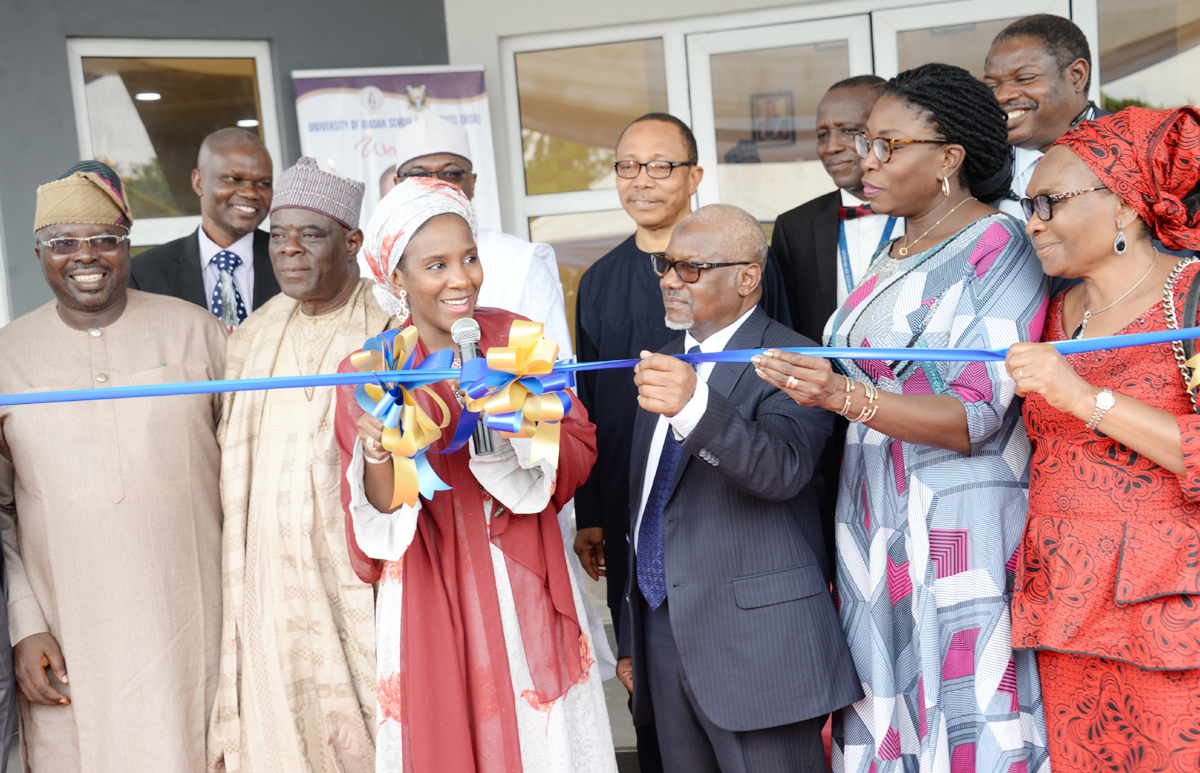
Leading businessman and Chairman of Aliko Dangote Foundation, Alhaji Aliko Dangote has challenged the government to muster the will to provide critical infrastructure that will make the nation’s environment conducive to commerce and industry.
Dangote made this appeal while delivering the third Eminent Persons Business lecture and inauguration of the Aliko Dangote Complex, a N300 million naira ultra-modern building donated to the University of Ibadan, School of Business, at the Ajibode University extension, Ibadan.
He said his foundation will continue to prioritize education as a means of raising entrepreneurs that will change the face of the nation’s economy and lead to real growth and development.
He told his audience comprising of academia, students, royal fathers and businessmen that Nigeria has got the potential s to be among the most industrialized countries in the world and required only the right policies to propel the investors into taking the lead in industrialization efforts.
Delivering his paper titled “Industrialization – Backward Integration as a strategy for National Development: The Story of the Dangote Group”, Dangote whose lecture was delivered by Engr. Ahmed Mansur, the Group Executive Director of the Dangote Industries Limited, stated that for the nation to breakthrough industrially, the leadership and the people must have the political will, the courage and perseverance to succeed.
Dangote was of the opinion that backward integration is one of the fine policies of the government that has helped Nigeria’s economy and that he had led in this regard as a private sector operator, advising that the policy could be replicated in other sectors of the economy.
Highlighting the advantages of the backward integration, the business mogul stated that there would be increased control and efficiency as companies are better able to control quality and coordinate the delivery of raw materials or other supplies.
According to him, this level of control allows companies to increase their supply chain efficiency. Stock outs and over-stocking are better avoided, raw material supply is better managed, and delivery schedules can be better guaranteed.
He pointed out that going by his own experience as leading cement producer using backward integration, there will be cost control as costs can be better managed all along the production process.
Citing instances of countries that have used backward integration to climb the industrial ladder key sectors, Dangote said “Several countries have involved backward integration in some of their industries. Examples include Brazil, Ghana, Malaysia, Norway, and Russia. China and the United States of America probably have the most vertically integrated firms given their size and industrialization focus. This typically start with local content requirements for extractive industries and then includes consolidation across product value chains.
“Norway successfully managed the transition from a country with no direct capabilities in the oil and gas sector on the discovery of oil in the late 1960s to become a competitive producer of a variety of oil field services and equipment. Today, more than half of the capital inputs used in the sector are sourced locally, along with 80% of the sector’s operational and maintenance inputs..
“Similarly, oil and gas firms operating in Brazil were awarded more points when tendering for contracts if they demonstrated commitment to purchasing higher shares of goods and services from local Brazilian suppliers. Specific local content targets were set for onshore projects (70%) and offshore projects in shallow (51%) or deep (37%) water.”
For Nigeria, Dangote stated that using backward integration was not just full of bed of roses as Nigerian businesses face major challenges in developing backward integration.
These according to him include difficulties in obtaining adequate and reliable energy and power supply; lengthy, costly and politically sensitive processes of gaining access to land; poor-quality transportation infrastructure; the high cost of capital; long lead times before backward integration efforts yield rewards; sensitivity to external shocks and unforeseen costs;
“Inconsistency of policy implementation; lack of inter-sectoral policy coordination; inadequacy of knowledge and skills in the workforce; and lack of foreign exchange. Most of these challenges relate to the poor quality of the overall business enabling environment, rather than due to local content policies.”
Nevertheless, he argued that the policy had helped Nigeria in the cement sector pointing out that as at 2002 before the backward integration policy “local installed cement production capacity was about 3 million metric tons per annum (while actual production was under 2 million metric tons). Cement demand was approximately 9 million metric tonnes per annum and the supply gap was filled by cement imports. Imported cement accounted for over 70% of local cement consumption.
“Conservative estimates of the cement import bill as at 2002 placed it at between US$500 – US$600 million annually. More importantly, it essentially exported jobs to other countries and exposed the national economy to risk. Nigeria was one of the largest importers of cement in the world despite its huge limestone deposits. To build the nation’s capacity in the cement sector.”
However, with government introducing the policy in 2002. “It restricted cement imports into Nigeria while the issuance of cement import licenses were tied to investments in local cement production capacity with strict monitoring to ensure compliance. Sector specific incentives for the cement industry, in addition to other more general incentives e.g. tax holidays, capital allowance etc. were also an important part of the policy.”
According to him, “the impact of the policy was felt within the first decade of its implementation as Nigeria became self-sufficient in cement production. Installed cement production capacity that has now grown from 3 million metric tons in 2002 to 44 million metric tons as at December 2017. The country has successfully transitioned from being a net importer to self-sufficiency and then to a net exporter since 2017.”
In his remark earlier, Vice-Chancellor of the University of Ibadan, Prof. Abel Idowu Olayinka thanked Alhaji Dangote for the building describing it as a legacy that would forever be cherished generation yet unborn and by the donation, Dangote has become the first largest individual donor to the university.
He explained that Dangote was to donate N250 million to the university but they prevailed on him to build the complex rather than giving money and that the decision has paid off for the university.
Governor Isiaka Ajimobi of Oyo state, who is the Guest of Honour on the occasion urged Nigerian youths to learn a big lesson from Dangote’s humble beginning but with hard work has become one of the greatest entrepreneur in Africa.
The Governor who was represented by the state Commissioner of Education, Prof. Joseph Adeniyi Olowofela, lamented that most youths of today do not cherish hard work but want to get rich quick which explained the increase in social vices in the country
“We need to shift the paradigm shift from the get rich quickly at all cost to hard work that leads to wealth”, he stated.
The Director of the University of Ibadan, School of Business, Prof. Nike Osofisan said the institution owed Alhaji Dangote a huge debt because the complex was more than a building.
She explained “the fully air conditioned complex has 9 lecture theatres, 10 lecturer offices, four Executive Director Offices, One Canteen, 250 KVA dedicated Transformer, and male and female conveniences”

L-R:
Oyo State Commissioner of Education, Prof. Joseph Adeniyi Olowofela, who represents the State governor, Pro-Chancellor, University of Ibadan, Waklek Joshua Mutka,
Member of Board of Trustees, Aliko Dangote Foundation, Halima Aliko Dangote,
Eng Ahmed Mansur, Executive director, Stakeholder, Management and Corporate Communications, Dangote Industries Limited, who represents the Chairman/Founder of Aliko Dangote Foundation,
MD/CEO, Aliko Dangote Foundation, Zouera Youssoufou, Director, Univeristy of Ibadan school of Business, Prof. Adenike Osofisan
at the unveiling ceremony of the N.3bn Aliko Dangote Business school, donated to the University of Ibadan Business school

L-R:
Vice Chancellor, University of Ibadan, Prof. Abel Olayinka,
Oyo State Commissioner of Education, Prof. Joseph Adeniyi Olowofela, who represents the State governor, Pro-Chancellor, University of Ibadan, Waklek Joshua Mutka,
Member of Board of Trustees, Aliko Dangote Foundation, Halima Aliko Dangote,
Eng Ahmed Mansur, Executive director, Stakeholder, Management and Corporate Communications, Dangote Industries Limited, who represents the Chairman/Founder of Aliko Dangote Foundation,
MD/CEO, Aliko Dangote Foundation, Zouera Youssoufou, Director, Univeristy of Ibadan school of Business, Prof. Adenike Osofisan
at the unveiling ceremony of the N.3bn Aliko Dangote Business school, donated to the University of Ibadan Business school

L-R: Eng Ahmed Mansur, Executive director, Stakeholder, Management and Corporate Communications, Dangote Industries Limited, who represents the Chairman/Founder of Aliko Dangote Foundation, Oyo State Commissioner of Education, Prof. Joseph Adeniyi Olowofela, who represents the State governor, Member of Board of Trustees, Aliko Dangote Foundation, Halima Aliko Dangote, MD/CEO, Aliko Dangote Foundation, Zouera Youssoufou, Vice Chancellor, University of Ibadan, Prof. Abel Olayinka, Prof. Murtala Sagagi, Dean Dangote Business School, Bayero University Kano, at the unveiling ceremony of the N.3bn Aliko Dangote Business school, donated to the University of Ibadan Business school

L-R: Eng Ahmed Mansur, Executive director, Stakeholder, Management and Corporate Communications, Dangote Industries Limited, who represents the Chairman/Founder of Aliko Dangote Foundation, Oyo State Commissioner of Education, Prof. Joseph Adeniyi Olowofela, who represents the State governor, Member of Board of Trustees, Aliko Dangote Foundation, Halima Aliko Dangote, MD/CEO, Aliko Dangote Foundation, Zouera Youssoufou, Vice Chancellor, University of Ibadan, Prof. Abel Olayinka at the unveiling ceremony of the N.3bn Aliko Dangote Business school, donated to the University of Ibadan Business school





Fidelity Bank grows gross earnings by 38% to N434.95b in Q1
Fidelity Bank Plc recorded 37.9 per cent growth in gross earnings to N434.95 billion in first quarter 2026 as the international commercial bank continued to expand its core banking market share.
Interim report and accounts of Fidelity Bank for the three months ended March 31, 2026 released at the Nigerian Exchange (NGX) showed that gross earnings rose from N315.42 billion in first quarter 20025 to N434.95 billion in first quarter 2026, representing an increase of 37.9 per cent.
The top-line performance was driven by impressive growth in the bank’s core business operations with interest incomes rising by 22.8 per cent to N314.48 billion in first quarter 2026 as against N256.10 billion in first quarter 2025.
With net interest income at N180.97 billion, the bank closed the period with profit before tax of N92.48 billion. After taxes, net profit stood at N74.47 billion for the three-month period. Earnings per share remained high at N5.69, underlining the capacity of the bank to reward its shareholders.
The balance sheet of the bank also emerged stronger. Total assets crossed the N11 trillion mark to N11.35 trillion by March 2026 compared with N10.46 trillion recorded in December 2025. Customers’ deposits increased from N6.89 trillion to N7.38 trillion. Total equity rode on the back of earnings growth to a 27.5 per cent increase from N1.09 trillion in December 2025 to N1.39 trillion by March 2026.
The first quarter 2026 results further consolidated the strong earnings outlook of the bank, which had successfully completed its recapitalisation amidst impressive earnings performance in 2025.
Fidelity Bank had recorded double-digit growths in interest and non-interest incomes as well as key balance sheet items during the year ended December 31, 2025.
The audited report showed that gross earnings rose from N1.04 trillion in 2024 to N1.52 trillion in 2025, an increase of 45.6 per cent. Interest and similar incomes had grown by 38.7 per cent from N803.1 billion in 2024 to N1.11 trillion in 2025. Fees and commission incomes also rose by 44.7 per cent from N78.4 billion to N113.4 billion. The bank recorded net profit after tax of N242.4 billion in 2025.
The bank’s balance sheet emerged stronger with total assets rising by 18.6 per cent to N10.46 trillion in 2025 as against N8.82 trillion in 2024. Customer deposits increased by 16.1 per cent from N5.94 trillion to N6.89 trillion, reflecting continued franchise strength and an improved funding profile. Net loans and advances meanwhile declined by 2.4 per cent to N4.28 trillion in 2025 as against N4.39 trillion in 2024, attributable to customers paying down on their mature obligations.
The bank had in 2025 strengthened its capital position, with eligible capital rising to N561 billion, above the regulatory minimum of N500 billion for banks with international authorisation. In addition, capital adequacy had remained robust, with Capital Adequacy Ratio of 30.94 per cent by December 2025 as against 23.47 per cent by December 2024.
Managing Director, Fidelity Bank Plc, Dr. Nneka Onyeali-Ikpe, said the first quarter 2026 results reinforced the bank’s strong and resilient business model.
She noted that with the remarkable success of its recapitalisation programme and continuing expansion, Fidelity Bank has entered a new era of growth and impressive returns.
“We are on a stronger footing and confident that we will set new growth records that are reflective of our legacy and the future we are working on,” Onyeali-Ikpe said.
Business
Dangote Refinery Ends Nigeria’s Era of Fuel Import Dependence, Boosts GDP, FX Earnings — EIU
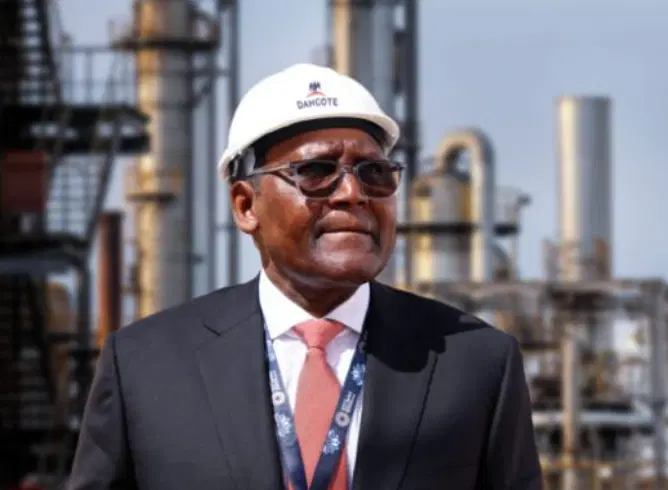
Dangote Refinery Ends Nigeria’s Era of Fuel Import Dependence, Boosts GDP, FX Earnings — EIU
The operational ramp up of the 650,000 barrels per day Dangote Petroleum Refinery & Petrochemicals is fundamentally reshaping Nigeria’s downstream oil sector, significantly reducing the country’s dependence on imported refined petroleum products and strengthening its external position, according to the Economist Intelligence Unit (EIU).
In its latest assessment on Nigeria’s fuel market and regulatory environment, the EIU said the refinery has already transformed a sector that was previously characterised by heavy reliance on imported fuel despite Nigeria being Africa’s largest crude oil producer. The report noted that the refinery met nearly 80 per cent of domestic petrol demand in April and produced enough volumes to satisfy local consumption requirements as operations approached full capacity.
The EIU described Nigeria’s downstream petroleum sector before the refinery as “long dysfunctional”, noting that the country had remained almost entirely dependent on costly imported fuel while producing nearly 1.5 million barrels of crude oil daily.
According to the report, the emergence of the refinery has reduced import dependence, improved domestic fuel availability and strengthened Nigeria’s balance of payments position through lower import demand and rising exports of refined petroleum products.
“The gradual ramp up of the 650,000 barrel/day Dangote refinery since May 2023 has transformed Nigeria’s long dysfunctional downstream sector,” the report stated. “The country’s main refineries, all state owned, had been inoperative for years and Nigeria was almost entirely reliant on costly imported fuel.”
The research and analysis division of The Economist Group, London added that the refinery’s attainment of full operational capacity and its planned expansion would further support Nigeria’s economic growth and foreign exchange earnings over the medium term.
“Meanwhile, the attainment of full capacity at, and an increase in exports from, the Dangote refinery will support real GDP growth and foreign exchange earnings in 2026 and 2027 and beyond, as a planned doubling of the plant’s output comes on stream around the end of the decade,” it added.
Industry analysts said the refinery is increasingly positioning Nigeria as an emerging refining and export hub, altering energy trade flows across Africa and reducing the vulnerability associated with fuel import dependence.
The EIU noted that the refinery’s expansion has coincided with major reforms in Nigeria’s downstream sector, including the removal of fuel subsidies and the introduction of market driven pricing mechanisms.
The report, however, said the transition from a state dominated fuel import structure to large scale domestic refining has triggered resistance from interests linked to the old import regime.
The latest tensions emerged following the decision by the Nigerian Midstream and Downstream Petroleum Regulatory Authority to relax restrictions on petrol imports despite the refinery’s growing capacity to meet domestic demand.
Dangote Industries subsequently initiated legal action, arguing that continued import approvals undermine domestic refining investments and conflict with the objectives of the Petroleum Industry Act, which seeks to encourage local refining capacity and reduce import dependence.
Analysts noted that the availability of large-scale domestic refining capacity has improved Nigeria’s energy security and reduced exposure to external supply shocks and foreign exchange volatility.
The Centre for the Promotion of Private Enterprise also cautioned against unrestrained importation of petroleum products, warning that such a policy could weaken Nigeria’s industrialisation drive and discourage investments in domestic refining.
Chief Executive Officer of CPPE, Muda Yusuf, said continued dependence on imported fuel had historically contributed to pressure on foreign reserves, exchange rate instability and fiscal leakages.
The refinery’s growing impact is also being reflected in Nigeria’s broader macroeconomic indicators. Earlier this month, S&P Global Ratings cited increased domestic refining capacity and rising hydrocarbon exports among the major factors supporting Nigeria’s sovereign credit rating upgrade – the first in 14 years.
Beyond Nigeria, analysts said the refinery is increasingly being viewed as a strategic industrial asset for Africa, where many countries remain heavily dependent on imported fuel despite rising demand for transportation, manufacturing, and power generation.
Business
BREAKING: Court Dismisses $19.6 Million Claim Against NNPCL — Rules Contract Scope Cannot Be Changed Orally
BREAKING: Court Dismisses $19.6 Million Claim Against NNPCL — Rules Contract Scope Cannot Be Changed Orally
In a landmark ruling on Friday, May 22, 2026, the Federal Capital Territory High Court in Abuja threw out a $19.6 million lawsuit filed by Alternate Dimensions Ventures Ltd against the Nigerian National Petroleum Company Limited (NNPCL), affirming a key legal principle: a written contract cannot be expanded through oral agreements or conduct.
Alternate Dimensions had sought $19,600,000 in professional fees, claiming the scope of its Direct Sale, Direct Purchase (DSDP e-pro) contract with NNPCL was orally expanded. Represented by counsel Patrick Peter, the firm argued it was entitled to the revised sum for services rendered under the alleged new terms.
But NNPCL, through its lawyer Ituah Imhanze of KENNA LP, pushed back sharply, arguing that parties are bound exclusively by the clear terms of their written agreement. Imhanze contended that without any written amendment, the claim was legally unsound, and the court agreed.
Delivering judgment, Justice Hamza Mu’azu upheld NNPCL’s defense, stating that the contract was unambiguous and that no evidence was adduced during the trial, which supported the alleged scope expansion. The court further found that NNPCL fully complied with all contractual terms and committed no breach.
Dismissing the suit as meritless, Justice Mu’azu reinforced the doctrine of sanctity of contract: any amendment to a written agreement must be express, unequivocal, and documented, not implied or verbal.
The ruling spares NNPCL from the S19.6 million claim and also a floodgate of similar potential liabilities.


- Economic Community of West African States (ECOWAS) has Deployed a Technical Mission to Observe the Legislative and Local Elections of May 31, 2026 in Guinea May 31, 2026
- President Herminie Attends Seychelles Football Federation (SFF) Cup Final and Presents Trophy to Bazar Brothers FC May 31, 2026
- ‘You are not alone’: World Health Organization (WHO) chief vows to stand with Democratic Republic of the Congo (DR Congo) through Ebola outbreak May 31, 2026
- United Arab Emirates (UAE) Expresses Solidarity with Kenya and Conveys Condolences over Victims of Girls’ School Dormitory Fire May 31, 2026
- Pitcher Awards Announces 2026 Winners, Marking a Landmark Year for Pan‑African Creativity May 30, 2026
- Ghana Commemorates 78th International Day of United Nations Peacekeepers May 30, 2026
- South Africa: President Ramaphosa receives second interim report of Madlanga Commission May 30, 2026
- Asmara Marathon 2026 to be held May 30, 2026
- Powerful call for dialogue and compromise to secure peace in South Sudan issued on International Peacekeepers Day May 30, 2026
- Over 1,000 Participants Join Rwenzori Marathon Activation Run in Mombasa May 30, 2026
- Economic Community of West African States (ECOWAS) has Deployed a Technical Mission to Observe the Legislative and Local Elections of May 31, 2026 in Guinea May 31, 2026
- President Herminie Attends Seychelles Football Federation (SFF) Cup Final and Presents Trophy to Bazar Brothers FC May 31, 2026
- ‘You are not alone’: World Health Organization (WHO) chief vows to stand with Democratic Republic of the Congo (DR Congo) through Ebola outbreak May 31, 2026
- United Arab Emirates (UAE) Expresses Solidarity with Kenya and Conveys Condolences over Victims of Girls’ School Dormitory Fire May 31, 2026
- Pitcher Awards Announces 2026 Winners, Marking a Landmark Year for Pan‑African Creativity May 30, 2026
- Ghana Commemorates 78th International Day of United Nations Peacekeepers May 30, 2026
- South Africa: President Ramaphosa receives second interim report of Madlanga Commission May 30, 2026
-

 news6 months ago
WHO REALLY OWNS MONIEPOINT? The $290 Million Deal That Sold Nigeria’s Top Fintech to Foreign Interests
-

 society4 weeks ago
SOCIAL MEDIA IS NOT A BATTLEFIELD COMMAND – WHY THE NIGERIAN ARMY’S ACTION AGAINST JUSTICE CRACK IS A NATIONAL SECURITY IMPERATIVE
-

 celebrity radar - gossips4 months ago
Dr. Chris Okafor Returns with Power and Fire of the Spirit -Mounts Grace Nation Altar with Fresh Anointing and Restoration Grace on February 1, 2026
-

 celebrity radar - gossips6 months ago
Prophet Kingsley Aitafo Releases 2026 Prophecy: ‘Nigeria Will Rise, but the World Must Prepare for Turbulence’
You must be logged in to post a comment Login
You must log in to post a comment.