
news
Dele Giwa’s Murder: Soyinka replies ex-Police DIG, Omeben


A former London Bureau chief of Newswatch, Kayode Soyinka, who was present when Dele Giwa, the co-founder of the magazine was bombed to death in 1986, has reacted to recent claims by a retired police investigator that Mr. Soyinka fled after the attack and was never questioned.
In an interview with the News Agency of Nigeria, published Monday, Chris Omeben, a retired Deputy Inspector General of Police, who was in charge of investigating the murder, said Mr. Soyinka was shielded from being quizzed.
Mr. Giwa was killed through a letter bomb while having breakfast with Mr. Soyinka in Lagos.
Mr. Omeben, now 80, said Mr. Soyinka was the principal suspect in the attack, and wondered how he survived the powerful blast when he was in the same room.
He said Mr. Soyinka apparently left the scene shortly before the explosion. Mr. Omeben subtly faulted widespread accusations against the then military regime of Ibrahim Babangida, which many blame for the killing.
Mr. Soyinka, who is now the publisher of Africa Today magazine, spoke to PREMIUM TIMES from his London base. He said he was questioned twice by the police after the incident.

He accused Mr. Omeben of deceit, and labelled him a “disgrace” to the Nigerian Police, who worked with the former military regime to cover up the crime. He said the real suspect in the murder was Halilu Akilu, a former army intelligence officer, who called up Mr. Giwa’s house repeatedly to get the description to the property on the day of the attack.
“I gave statements not once but twice to the same Nigerian Police he represents before I eventually left Nigeria. The first one was at the hospital where I was admitted – Dele’s body was next door to me. That interrogation by a senior police officer whose name I cannot recall took place on the spot when the incident was still fresh. It was inside the hospital. Dele Olojede (publisher of defunct 234next newspaper) was beside me – he is alive, go and ask him,” he said.
Mr. Soyinka recalled that Halilu Akilu called Mr. Giwa’s house about three times within 24hours and spoke to Funmilayo, Dele’s wife, to know how to get to the journalist’s Ikeja home.
“On the Sunday of the bomb blast Dele had spoken to Akilu from his upstairs bedroom before coming down to have breakfast with me, to tell him that he heard he had called him on Saturday and asked why. The letter bomb was delivered to the house within 45 minutes after that early morning telephone discussion between Dele and Akilu. So who should be Omeben’s ‘principal suspect’ then? Should it be me who was bombed with Dele? Or Akilu?
“Chris Omeben, who was a Deputy Inspector-General of Police, when the letter bomb blast occurred on October 19, 1986, is a complete disgrace to the Nigeria Police Force. He claimed to be an investigator of the bomb blast. Instead of protecting me, the survivor, who escaped death by a whisker, and by the very special grace of God, he is sadly and disgracefully trying to rewrite the script to make me, as he said, his ‘principal suspect’.
“His ‘principal suspect’ should be Halilu Akilu, who called Dele’s house about three times consecutively Saturday before the Sunday bombing and spoke to Funmilayo, Dele’s wife, to ask for description of and direction to Dele’s house in Ikeja.
“Omeben, said, and I quote: ‘Soyinka knew what was coming and he left the room to hide behind the wall.’ What a blatant lie? This man, who I understand is now a pastor, has no fear of God in him at all, making such bold erroneous statement like that on an issue of such sensitivity and accusing me, an innocent man – a victim and survivor of the bomb blast. He should ask God for forgiveness!
“In this interview he granted the News Agency of Nigeria (NAN) to coincide with this year’s anniversary of the bomb blast, it is ‘behind the wall’ that Omeben said I hid myself. In his interview with The Sun Newspaper in 2012, he said I ran to the toilet before the bomb exploded. You can see the inconsistency in his wild allegations.

“I am very disappointed and shocked that the Nigerian media, who knew and should still know the facts of what happened on that day gave Omeben powerful platform in mainstream media outlets in Nigerian to voice out this falsehood – and without calling me (a member of the Nigerian media family) to at least hear my own story. I am so disappointed particularly with the News Agency of Nigeria, the original vehicle of Omeben’s allegations, that it allowed itself – such an important national institution – to be used by Omeben to peddle such falsehood.
“As a veteran journalist myself, I am ashamed of NAN and those other newspapers who published that story without doing the professional thing of calling me to cross check the veracity of Omeben’s claims and allegations.
“So let me let Omeben know again – if he does not know already, and so that he does not keep repeating these erroneous allegations again when the anniversary comes up again next year – that Dele and I were the only two people in the study when Dele’s son Billy delivered the letter bomb to his father. It is very important here to remember that some unidentified people, who gave it to the security man at the gate, delivered the parcel bomb to Dele’s house.
“The security man, while coming inside the compound with the parcel saw Billy (Dele’s son) on the way and gave it to him. When Billy came to the study and delivered the parcel to his father, Dele looked at it and handed it over to me. I looked at it and was able to vividly see the inscription on the padded envelope and handed it back to him. He received it back from me, moved his recycling chair back slightly to face the window on his left, he held the envelope with both hands, and tried to tear it through the top left-hand corner. He had not really opened it up, if he did it was only very slightly. And boom!! The bomb exploded!’
“A big ball of fire occurred. It was a very powerful bomb explosion! The side of the envelope facing the iron-barred window blew up that window. The side facing Dele exploded on his chest and stomach. And the force that came out from the bottom of the envelope blew up his upper legs and badly affected lower part of his body. He did not die immediately. He died in the hospital.
“Now, you see the vivid description I have just given you – 29 years after the gory incident. If I ran into the toilet or hid myself behind the wall before the bomb exploded like our Mr Omeben will like the world, and particularly Nigerians, to believe, and as he is trying hard, very hard, to label me as the suspect, how would I have been able to know all this, and give this graphic description.
“That partly was what the Oputa Panel missed when it investigated this matter because they did not see it necessary at that time to invite me to give evidence and I was not invited.
So, Mr Omeben should get it now that I did not – and I repeat I did not – run away to toilet or hid behind a wall. I sat on my own chair right in front of Dele. Only the strong mahogany L-shaped desk on which we were eating our breakfast divided us. So I was literarily inches away from him. The huge desk must have mobbed the force of the blast that would have done the damage on me up.
“But the force was so powerful and so powerful enough to still lift me off my chair. The chair itself collapsed. I was thrown on the floor by the exit door. I was momentarily unconscious. But regained consciousness, flung my spectacles off my face, and staggered out of the room. Yes, I received no cut on my body, but my nightgown was spattered with blood – Dele’s blood – and I had burns on my forehead. And I smelt of burns.
“I thank God for sparing my life. I could have been killed on that day. My survival was a Biblical miracle. I told you that I held the letter bomb myself! What of if I was the one that opened it? And I could easily have opened it myself. But I gave it back to Dele. That’s why I believe my survival was the work of God. My own time was not up yet.
“What other allegation did Omeben level against me? He said, ‘Up till today Soyinka never appeared before the police’. Again, how can he be that ignorant? This is a blatant lie. And as a senior police officer, especially one who claims to be investigating this important incident, he should have known that I gave statements not once but twice to the same Nigerian Police he represents before I eventually left Nigeria. The first one was at the hospital where I was admitted – Dele’s body was next door to me. That interrogation by a senior police officer whose name I cannot recall took place on the spot when the incident was still fresh. It was inside the hospital. Dele Olojede was beside me – he is alive, go and ask him’.
“Dele Olojede will recall that as questions were asked I could not hear anything. My both ears were solidly blocked. That was a serious effect of the blast. Then it was confirmed there at the hospital by the ear specialists that my ears were perforated. And this was also confirmed when I got back to the UK after the incident. For about five years after the bomb blast I had to endure continuous noise, humming, nonstop in my both ears. It was very irritating, but there was nothing I could do about it until it improved over the years and stopped’
“And even up till today, 29 years after, I still carry the effect of the bomb blast in my ears because I can hear better on the right ear while my left ear, which was nearer to the blast is still weak. But who am I to complain about not hearing well, when it could have been worse and I could have lost everything completely, including my life.
“The second statement I made when the police requested to see me again. It was made at the premises of Newswatch in Oregun Road in Lagos in the presence of the eminent lawyer Chief Gani Fawehinmi. I don’t know why Omeben did not know about this and he is accusing me wrongly. The statement I made, and the ones made by Funmilayo (Dele’s wife) and Billy, I believe, is now in public domain. Chief Gani Fawehinmi must have published them in the series of books he published on this subject before he died.
“So I don’t understand why Omeben should tell Nigerians such a blatant lies. That is wickedness. He does not fear God at all. Thank God I am alive and I can respond to him. Can you imagine if I had died with Dele, Omeben and cohorts would have succeeded in putting cotton wool on the faces of Nigerians and sold a different story completely to them to exonerate those who did it.
“He said again ‘I have enough evidence to quiz Soyinka now’. Well, Nigerians should help me beg Omeben, if he truly has those ‘enough evidence’, he should do us a big favour in Nigeria by releasing them to the public so that Nigerians can truly know who bombed us, Dele and I, on that day’.
“Again, Omeben said: ‘They started to insinuate that the assassination was masterminded by Babangida, Akilu etc. They said that Akilu ought to have been investigated’. Who else could have had the expertise to assemble a letter bomb in 1986 Nigeria if not the military? He did not want to investigate Akilu who was calling Dele’s house frantically on Saturday and who was the last person Dele spoke to on telephone on that Sunday and the bomb was delivered into the house minutes after. He doesn’t want to investigate Akilu but it is convenient to want to investigate Soyinka the victim and survivor of the bomb blast. Oh, what an investigator?
“Lastly, I did not run away from Nigeria as he also claimed. I was in Nigeria throughout the controversies. My family was in the UK when the bomb occurred. A Good Samaritan went to our home in London and handed them airline tickets to come immediately to Nigeria and join me. We were all in Nigeria throughout. My wife attended Dele’s burial with me at his village near Auchi in Edo State. My pictures with my wife beside me were spread on the pages on national newspapers the following morning after the burial – with my ears still covered with cotton wool. Mr Omeben his pretending he did not know all this and still saying ‘Soyinka ran away to London’.
“I eventually left Nigeria shortly after Dele’s burial, which, if my memory services me right, was about two months after the bombing. And we did not have to leave or “ran away” through the famous “Nadeco Route”. My wife and I, with our two little children, left through the Murtala Mohammed airport in Lagos and no one stopped us from taking the British Caledonian flight to London. Members of our family, Newswatch editors and friends escorted us to the airport. It was in full glare of the public.
“I hope with these comments I have made Nigerian people will come to know Chris Omeben for who he truly is – certainly not an investigator as he claims to be but an errand boy and mischief maker, representing the interests of his ‘Ogas at the Top’, the real culprits who sent us the letter bomb. He knows who the real suspects are. Nigerians know who the real suspects are. Certainly not me – Soyinka! He should beam his searchlight on Akilu and Togun and Babangida. May Dele Giwa’s soul continue to rest in peace,” Mr. Soyinka said.




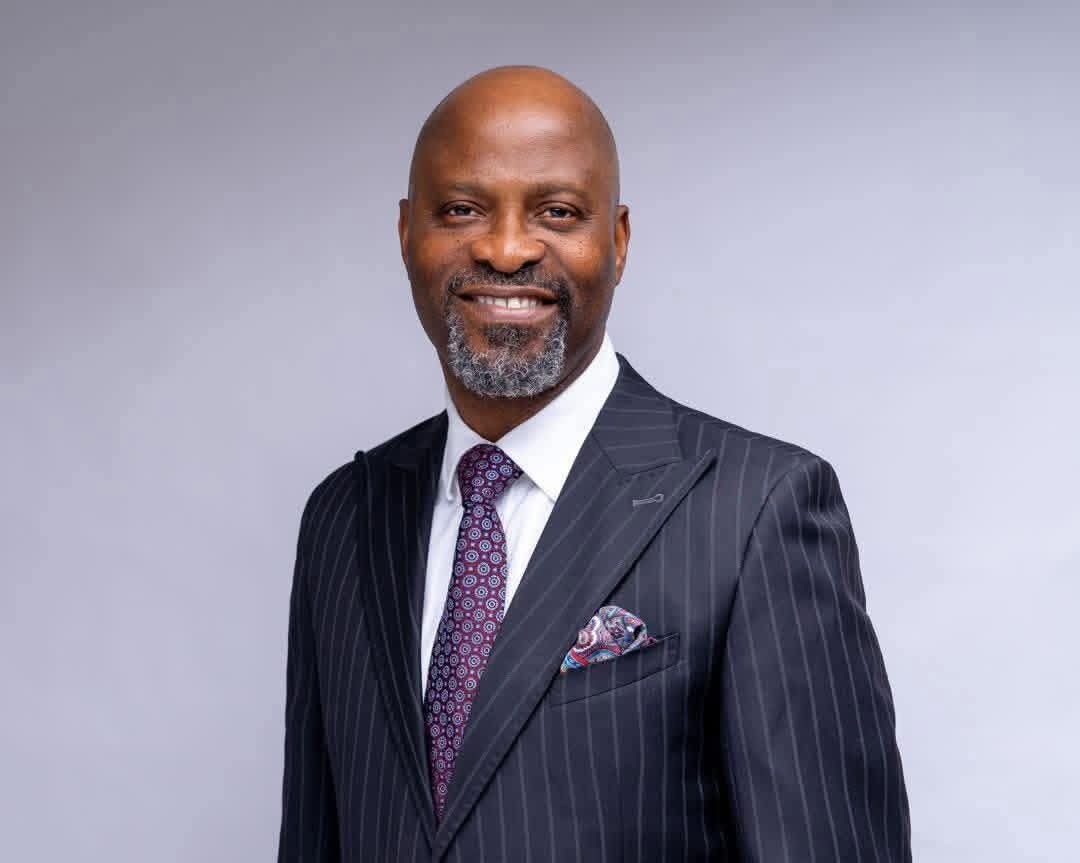

More than ₦3 billion was targeted, but about ₦677 million reached the culprits, with recovery and prosecutions underway, reflecting how banks are responding to more sophisticated fraud risks.
Nigeria’s expanding digital banking sector is facing increasingly sophisticated fraud attempts, as financial institutions adapt to faster transactions and broader online services.
A recent case involving First City Monument Bank (FCMB), linked to fraudulent activity detected in December 2025, has drawn attention to how banks are responding to such incidents, with a focus on limiting exposure, recovering funds and working with law enforcement.
According to findings referenced in proceedings before the Lagos State Special Offences Court, the incident involved unauthorised transactions tied to a digital product. Early reports erroneously suggested more than ₦3 billion was lost. Subsequent clarification shows that over ₦3 billion was targeted, ₦2.4 billion was blocked and recovered, while ₦677 million got into the possession of the culprits. This outcome reflects the bank’s cyber security and monitoring capabilities, as well as improved collaboration among regulated financial institutions and with law enforcement agencies. Several suspects and beneficiaries have been apprehended, while recovery and prosecution efforts are ongoing, led by the Economic and Financial Crimes Commission (EFCC).
Proceedings at the Lagos State Special Offences Court have resulted in convictions, including that of a repeat offender, with restitution orders issued. Related matters are also being handled at the Federal High Court in Lagos, where additional suspects are being tried in connection with the scheme. This process is aimed at ensuring that bad actors are identified and permanently blacklisted from the financial system.
Authorities say recovery efforts are continuing as additional funds are traced.
Analysts note that the pace of legal action reflects closer coordination between financial institutions and enforcement agencies in addressing cyber-related financial crime.
The case comes as banks contend with more complex fraud methods, including social engineering and automated exploitation of system processes.
As digital products and platforms expand, so too does the risk associated with cyber-crime and related fraud.
“The scale of digital banking means risks are evolving alongside the systems,” said a Lagos-based financial analyst. “Institutions are now judged by how they manage these events.”
Observers say the sector is moving toward a stronger focus on response and recovery, rather than prevention alone.
This includes improving monitoring capabilities, strengthening transaction controls and enhancing collaboration with regulators and law enforcement. The FCMB case, with limited exposure relative to the amount targeted and ongoing recovery, reflects that shift.
For customers, the primary concern is the safety of their funds. In this case, there has been no indication of losses affecting customer deposits. Maintaining that level of protection remains central to sustaining trust in the financial system.
Nigeria’s financial sector continues to grow, supported by digital innovation and expanding access to banking services.
However, analysts say fraud attempts are likely to persist as systems become more complex and interconnected.
They say institutions will increasingly be judged not only on their ability to prevent incidents, but on how effectively they respond and recover when they occur.
news
Ex-APC Deputy Guber flag bearer, Joshua MacIver backs Tinubu, express fears over implosion in Bayelsa APC
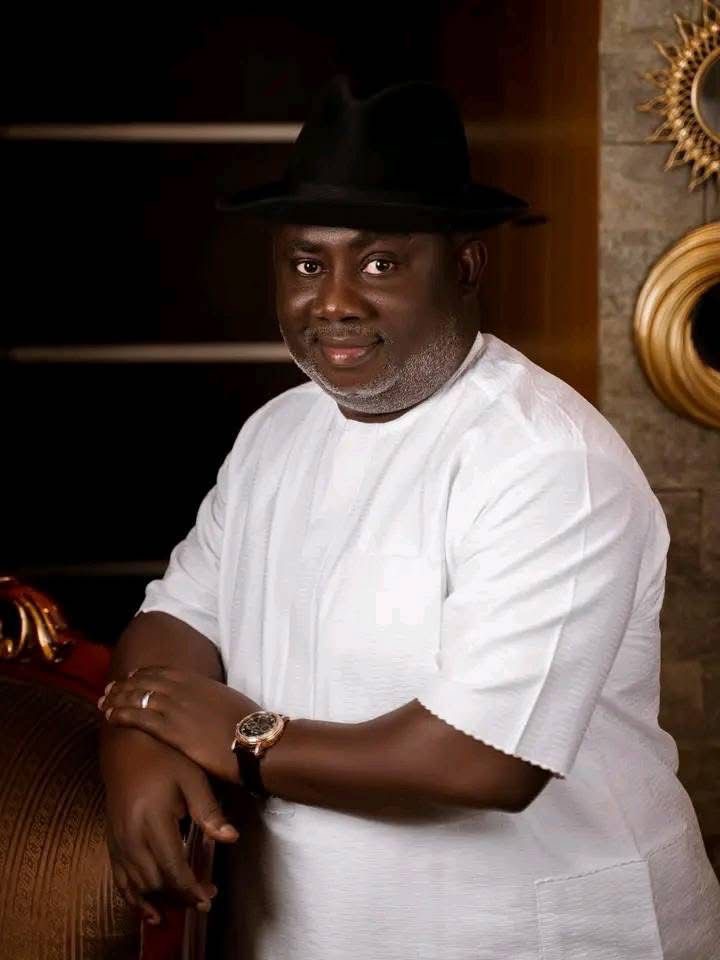
….congratulates new State Party Chairman, Warman Ogoriba
APC Deputy Governorship Candidate in the 2023 general elections in Bayelsa State, Great Joshua MacIver has declared his total commitment to the re-election of President Bola Tinubu come 2027, declaring that the Tinubu re-election project is non-negotiable.
Great Joshua MacIver, in his statement titled ” BAYELSA APC CONGRESSES: GOING FORWARD, A CALL TO LOOK INWARDS” and made available to newsmen in Yenagoa, warned APC leaders in the state to look Inward and take note of certain factors which may hinder or cut short our victory.
According to Great Joshua MacIver, such noticeable pitfalls include the imbalance in the united front being put up by the State Governor,Senator Douye Diri among various political blocs in the state.
In the statement issued at the weekend. Great Joshua MacIver stated that “First, before His Excellency, Senator Douye Diri, joined the APC in the state, there were clearly two political blocs that made up the party, with the approximate population ratios of the blocs standing at 95% to 5%.”
“After the entrance of His Excellency, Senator Douye Diri, ONLY THE SMALLER BLOC IS BEING CARRIED ALONG IN THE AFFAIRS OF THE PARTY, leaving the greater percentage to their fate, and this situation has the potential to build anger and dissatisfaction in our dear party.”
” The consequence of this has been the high level defection we have witnessed in the party recently and we believe more may likely follow, if we do not put our house in order.”
” If we do not pull together as a party, we may witness a situation where we will lose key stakeholders, especially after the State and National Assembly Primaries as well the Gubernatorial Primaries.”
“Finally, while it is very clear that we are the party to beat in the 2027 elections and that our loyalty to Mr. President IS NON-NEGOTIABLE, we must make haste to say that we cannot afford to create situations or loopholes in our unity which will be exploited by other political interests in the state. We cannot afford to under-rate anyone.”
“Our core interest remains the re-election of Mr. President, a project to which we have committed our all. We also pledge our total loyalty to the party as we have no alternative to the APC. However, our concern is that we must, as a party, look inwards and ensure that we do not create loopholes that can impede our common goal.”
Great Joshua MacIver, however congratulated the newly elected State Executives of the APC in Bayelsà State led by Hon. Warman Ogoriba, saying their emergence is welcomed at this critical time in our national history.


- Century Group Joins African Energy Week (AEW) 2026 as Floating Production Storage and Offloading (FPSO) Partner, Showcasing Regional Offshore Expansion April 10, 2026
- Climate Litigation Surge Reshapes Energy Policy as Africa Seeks Stronger Legal Voice April 10, 2026
- ES-KO Secures Five-Year Catering & Facilities Management Contract Renewal with TotalEnergies EP Congo April 10, 2026
- Beyond the Court: The Kalahari Conference Solidifies its Status as Africa’s Premier Sports & Lifestyle Destination April 10, 2026
- Africa Sports Unified Launches Pan-African Sports Deals Tracker to Improve Market Visibility and Decision-Making April 10, 2026
- Nigeria and Senegal Must Follow Ghana and Mozambique Against Exclusionary Practices April 10, 2026
- Sheraton Nouakchott marks the entry of Marriott International in Mauritania April 10, 2026
- Eritrea: Seminar to Nationals in Nairobi and Its Environs April 10, 2026
- African financial institutions call for coordinated financing solutions to unlock Africa’s digital transformation April 9, 2026
- African Energy Chamber (AEC) Supports Perenco Partnership to Advance Industry 4.0 Skills in Central Africa April 9, 2026
- Century Group Joins African Energy Week (AEW) 2026 as Floating Production Storage and Offloading (FPSO) Partner, Showcasing Regional Offshore Expansion April 10, 2026
- Climate Litigation Surge Reshapes Energy Policy as Africa Seeks Stronger Legal Voice April 10, 2026
- ES-KO Secures Five-Year Catering & Facilities Management Contract Renewal with TotalEnergies EP Congo April 10, 2026
- Beyond the Court: The Kalahari Conference Solidifies its Status as Africa’s Premier Sports & Lifestyle Destination April 10, 2026
- Africa Sports Unified Launches Pan-African Sports Deals Tracker to Improve Market Visibility and Decision-Making April 10, 2026
- Nigeria and Senegal Must Follow Ghana and Mozambique Against Exclusionary Practices April 10, 2026
- Sheraton Nouakchott marks the entry of Marriott International in Mauritania April 10, 2026
-

 news4 months ago
WHO REALLY OWNS MONIEPOINT? The $290 Million Deal That Sold Nigeria’s Top Fintech to Foreign Interests
-

 society7 months ago
“You Are Never Without Help” – Pastor Gebhardt Berndt Inspires Hope Through Empower Church (Video)
-

 celebrity radar - gossips2 months ago
Dr. Chris Okafor Returns with Power and Fire of the Spirit -Mounts Grace Nation Altar with Fresh Anointing and Restoration Grace on February 1, 2026
-

 celebrity radar - gossips4 months ago
Prophet Kingsley Aitafo Releases 2026 Prophecy: ‘Nigeria Will Rise, but the World Must Prepare for Turbulence’
You must be logged in to post a comment Login
You must log in to post a comment.