
society
Dele Momodu Reacts To Postponement Of 2019 Elections By INEC


Dele Momodu Reacts To Postponement Of 2019 Elections By Dele Momodu has joined other Nigerians in reacting to the postponement of elections by the Independent Nigeria Electoral Commission (INEC).

The media personality who had earlier persuaded the electoral commission’s chairman to react to rumours of the postponement of elections, stated that he pities the pity the foreigners, media crew, election monitors, who are already on ground to work.
He tweeted;
He further buttressed his claims in an article titled ‘Pendulum: Four Years After, We Are Back to Square One’. Read the article below;
Fellow Nigerians, how time flies indeed. About four years ago, we went through this very ritual, though the election was shifted by six weeks, for reasons we believed was an excuse to get the ruling government better prepared to consolidate its grip on power. Before long, the six weeks arrived, and there was no hiding place. Even as I write this, many doubting Thomases still believe the APC government is not sincerely ready for today’s Presidential election and that it may still spring a surprise on us. Thus, there have been unconfirmed stories of the elections being postponed for a matter of days because of logistic problems. For my own part, I doubt that the authorities will act in such a cavalier manner, particularly as there are numerous local and international observers and world media around. All eyes are on us.
As you know already, my people are never short of conspiracy theories. These have been fuelled by strange events and activities that are occurring very close to E-Day! For example, there have been reports of sporadic fire outbreaks in a few INEC centres, very strange indeed when one considers the proximity of such fires to the election date. However, I have not seen much coverage explaining the magnitude of the respective conflagrations. We have also read reports of some sample ballot papers being found inside many sacks in Kano. Again, no one has come out to explain what any sane human being could be doing with sample ballot papers. The main thing is that PDP is being treated to mind-games in this high-stakes plot, the end of which no one can predict.
Say what you will, I choose to trust two key people in the whole of this election saga. The first is the Chairman of INEC, Professor Mahmood Yakubu, who has already attained the peak of his academic career and would not want to taint and end his distinguished life as a fiendish villain despised by all and treated like a maggot. So far, Professor Yakubu and INEC have managed to acquit themselves well in the preparation and run up to these general elections. They may have blotted their copy book particularly with regard to INEC’s role in the Osun State governorship elections but as this is one of the election cases currently trundling through the courts, I will say no more. It would be the height of foolishness and foolhardiness on his part to lower the bar as set and measured by what his immediate predecessor, Professor Attahiru Jega, achieved with a resounding ovation, barely four years ago. I refuse to imagine that Professor Yakubu would sacrifice his personal reputation and remarkable life, for politicians whose lives have almost expired.
Two. The other important man I choose to trust, almost blindly, although I know little or nothing about him, is the new Acting Inspector General of Police, Mohammed Adamu, who recently took over from the querulous, cantankerous and rambunctious Ibrahim Idris who fought more battles against real and imaginary enemies than he tackled the horrendous security challenges in the land. I have taken time to watch and study Adamu, as meticulously as possible, in the short time since he has been appointed acting I-G. and I’m reasonably convinced that he is educated, intelligent, smart, charismatic and cosmopolitan. I am unsure about some of the decisions he has taken, one relating to the re-deployment of Commissioners of Police in Ogun State. It seems to me that this decision is in good faith and is made because of the disgraceful way in which street urchins and thugs were brought into the arena to hurl stones at the President and other APC leaders during the Presidential rally in Ogun State. This was a remarkable show of shame orchestrated to serve the interest of an opposition candidate and shows the real tragedy that has befallen APC, as the general elections loom. It is inconceivable that the Police would not take steps to ensure that the mayhem that occurred that day is not allowed to repeat itself during the elections. For me, it would be a calamity if it turns out later that I have wasted all these superlative adjectives on another recklessly irresponsible police officer. It is always a pity seeing some overzealous people throw decorum to the winds in order to please a god with feet of clay. Time will tell.
For whatever it means, and because I bear him no grudge, I have said it numerous times, and reiterate, that I personally like President Muhammadu Buhari. His personal attributes particularly his discipline and abstemiousness are worthy of emulation. He has demonstrated in the past that he is a credible person, although that has been put to question by some of the actions that his government has recently been taking. There is a hint of desperation to cling to power which does not augur well for our country or indeed the President himself. I therefore will wish, and pray, that President Buhari meant every word he uttered in his various promises to the nation that he’ll execute free, fair and credible elections starting from today. I have no reason to doubt him. He is acclaimed as a man of integrity. This is the time for him to prove that he is indeed a man who is passionate about Nigeria and means his word that the country will not be broken up and Balkanised. God has been very kind to President Buhari and his family. He practically returned from the dead less than two years ago and has somehow managed to steer the ship of State from then till today. Nigerians have not complained too much about the situation they found themselves. Rather, as is typical, they prayed for the restoration of good health to their President and their prayers were answered. Therefore, if Nigerians reject him at the polls, in a free and fair contest today, or whenever it pleases the almighty INEC, he should thank Allah for the uncommon opportunity and grace given to him for the second chance to serve Nigeria as it’s supreme ruler. He should go home in peace, to enjoy quality time with his gorgeous wife, beautiful children and adorable grandchildren. The Presidency is nobody’s personal property or fiefdom. He should take solace in joining the commendable and enviable company of other incumbent Presidents in Africa, like Goodluck Jonathan of Nigeria and John Dramani Mahama of Ghana, who made no fuss before accepting defeat in good faith, no matter the secret pains. President Buhari should remember to call his successful opponent, most likely, Atiku Abubakar, and offer his best wishes. I promise, this gesture will turn out to be an icing on Buhari’s cake for final retirement. His apotheosis would also have been guaranteed instantly.
On the other hand, if Atiku Abubakar, fails in a free and fair contest, he should accept his destiny with equanimity. I can understand that it would be a difficult time for him because it has been a long arduous journey for him to eventually land the presidential candidacy and ticket of a mainstream party. It is natural that he and his supporters will feel very disappointed having worked extremely hard to defeat and unseat President Buhari. Atiku should take solace in the fact that he has fought a good fight. His campaign has proceeded in a decent manner and he has concentrated mainly on the issues and not allowed himself to be dragged into the gutter politics that has sometimes been employed against him by some of his more overenthusiastic and fanatical opponents. Atiku must accept that in every contest, only one person can win. As long as the election is free and fair enough, the over-all interest of the country must be considered. Besides, there are remedies already embedded in the electoral act if there has been any unfairness. Justice may tarry, but it will come eventually, no matter how much people may try to manipulate the system and the judiciary.
My only worry is about President Buhari’s footsoldiers. From their utterances and body language, it is obvious that they are spoiling for war and are only ready to go down fighting. They do not seem to care about the outcome of free and fair elections as long as their candidate does not lose. They have boisterously announced to the world, and the President himself has echoed them, that no one can unseat him. That statement may be considered condescending and outrightly arrogant and capable of pouring petrol into the raging fire.
This is very sad because only four years ago, we witnessed the public ignominy suffered by Elder Peter Godsday Orubebe who was busy throwing tantrums like a baby while results of the contest between Buhari and President Jonathan were being announced. It was such a show of shame. Why would the government that came in after that disastrous melodrama repeat the same nonsense? Indeed, on reflection, it seems to me that this Government has in recent times been following the same path to perdition that the PDP and Jonathan followed towards the end of that administration. It is like history repeating itself. There is a surreal element of déjà vu playing out. It is my hope that the same silly season and scenario does not repeat itself come the final collation and announcement of results. Nigeria cannot afford such shame and indignity again.
What is wrong with some of the young folks in APC who behave as if they can’t find other things to do expect government work? And because of their own personal avarice and self-aggrandizement, they are unconcerned about the greater good of the greater number of people and their country. No one should ever think of setting Nigeria on fire again. Nigeria has been too kind to these people, and they should, please, leave Nigeria in peace and not in pieces.
From where I stand, I can see very clearly that whatever happens, whenever this election is held, now or in the near future, the ruling government is clearly in trouble and the ruling party has virtually collapsed, with almost no hope of redemption in sight. A house divided against itself that still wishes to stand tall may be mere wishful thinking. APC has abdicated governance and its leadership has started behaving like Emperors and conquerors. The in-fighting is so much that we no longer know who is actually in charge. In all honesty, how can a party that can no longer direct its own affairs, and a President who seems to be clueless about how to maintain party unity, discipline and loyalty, and is apparently not in charge of virtually anything, ask for people’s votes in good conscience? Such a party cannot deliver good governance, much more the change that was promised four years ago. However, it is ultimately the people’s choice as to which road they want to traverse.
From Lagos to Ogun to Adamawa to Imo to Rivers to Zamfara to Kaduna to Delta, it has been one tale of woe or the other. And it all boils down to the refusal of party chieftains to act as true democrats. What is worse, the party has rubbished some of the key figures that brought it to power, many of who have since returned to where they came from, PDP. The major assets that brought Buhari to power have all collapsed and it mainly liabilities that can be seen all around.
The day of reckoning is here. The People will have their say. The contending gladiators must also ensure that the People must have their way. Their choice must prevail no matter whose ox is gored. Nobody is bigger than Nigeria.





Easter: Oyo PDP Guber Aspirant, Ajadi, Greets Gov Makinde, CAN, Others
The leading Peoples Democratic Party, (PDP), Governorship Aspirant in Oyo State, Ambassador Olufemi Ajadi Oguntoyinbo has congratulated the Governor of Oyo State, Engr Seyi Makinde, the Christian Association of Nigeria, (CAN), the Pentecostal Fellowship of Nigeria, (PFN) and the entire Christians on the occasion of this year’s Easter Celebration.
Ajadi said that the Good Friday which marked the remembrance of the crucifixion of Jesus Christ and the Easter Sunday, which marks his risen from the dead, are important dates in the Christiandom.
Ajadi in a statement he personally signed on Friday to commemorate the Easter, said that he rejoiced with Christians that this year’s celebration is being witnessed in an atmosphere of peace and tranquility in the country.
He said that he particularly rejoiced with Gov Makinde saying that his exemplary leadership and good governance in Oyo State in the last seven years has shown him as a selfless person, a lover of the masses and one who cares for others.
He said that these are the traits of a good Christian, praying that God would continue to endear the governor with more wisdom and success.
He called on Christians to remember Jesus Christ’s directive that they should love their neighbours as themselves, saying that if this directive is strictly followed there would be peace in the World.
Ajadi, who is also a renowned philanthropist, called on Christians, especially the well to do, to learn the heart of helping the poor.
He said that the death and resurrection of Jesus Christ will not be in vain if Christians can abide by his directive on humility and love for one another.
Ajadi said that there is hope for Nigeria as a country despite the present harsh economy and prevalent of insecurity.
“We should take solace in the fact that God can do all things and that like He restores the lost glory and resources of the people of Zion, He will do same for Nigeria.
“Nigeria will reclaim her leading position both in Africa and among the black Nations. Let’s continue to pray for the good of our land,” Ajadi said in the statement.
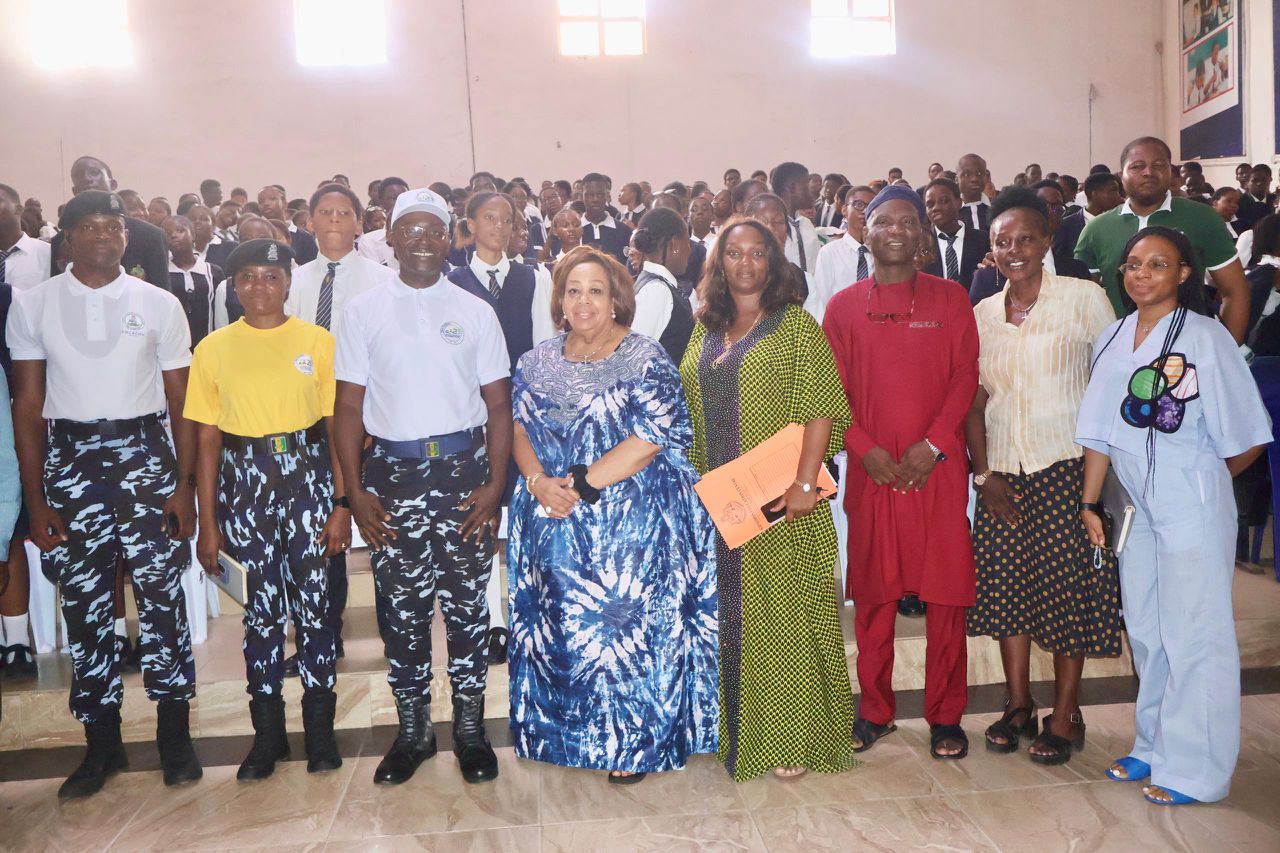
POCACOV Intensifies Sensitization on Cultism, Bullying, and Social Vices Among Students in Edo
In commemoration of the 2026 National Police Day Celebration, the Police Campaign Against Cultism and Other Vices (POCACOV), Edo State Command, has reinforced its preventive policing efforts through a targeted sensitization outreach at Igbinedion Education Centre, Benin City.
The initiative forms part of the broader activities marking this year’s National Police Day, themed “Community Partnership: Building Trust,” which emphasizes collaboration between the Nigeria Police Force and the public in fostering a safer society.
The sensitization programme witnessed the presence of key stakeholders, including the Commissioner of Police, Edo State Command, the Police Public Relations Officer, and the Edo State POCACOV Coordinator, ASP Kingsley Upeh. The team engaged students in an insightful and impactful session focused on the dangers of cultism, bullying, and other social vices prevalent among youths.
During the session, students were educated on the severe and far-reaching consequences of cult-related activities. These include violence, loss of lives, disruption of academic pursuits, and long-term damage to personal reputation and future opportunities. The speakers also highlighted how peer pressure, drug abuse, and negative social influences often serve as gateways into criminal behavior.
In an interactive segment, the Commissioner of Police stressed the legal implications of engaging in criminal acts, noting that involvement in cultism and related offences could lead to arrest, prosecution, and lifelong consequences that may hinder personal growth and career aspirations.
The issue of bullying was also extensively addressed, with emphasis on both its legal ramifications and psychological impact on victims. Students were encouraged to speak up against bullying, report incidents to school authorities or law enforcement, and support peers who may be affected.
Furthermore, the outreach underscored the importance of self-discipline, moral values, and making informed life choices. Students were urged to become ambassadors of peace within their schools and communities by rejecting violence and promoting unity and mutual respect.
The POCACOV team reiterated its commitment to continuous engagement with young people through awareness campaigns, community outreach, and strategic partnerships aimed at preventing crime before it occurs. The initiative aligns with the Nigeria Police Force’s proactive approach to policing, which prioritizes education, prevention, and community involvement.


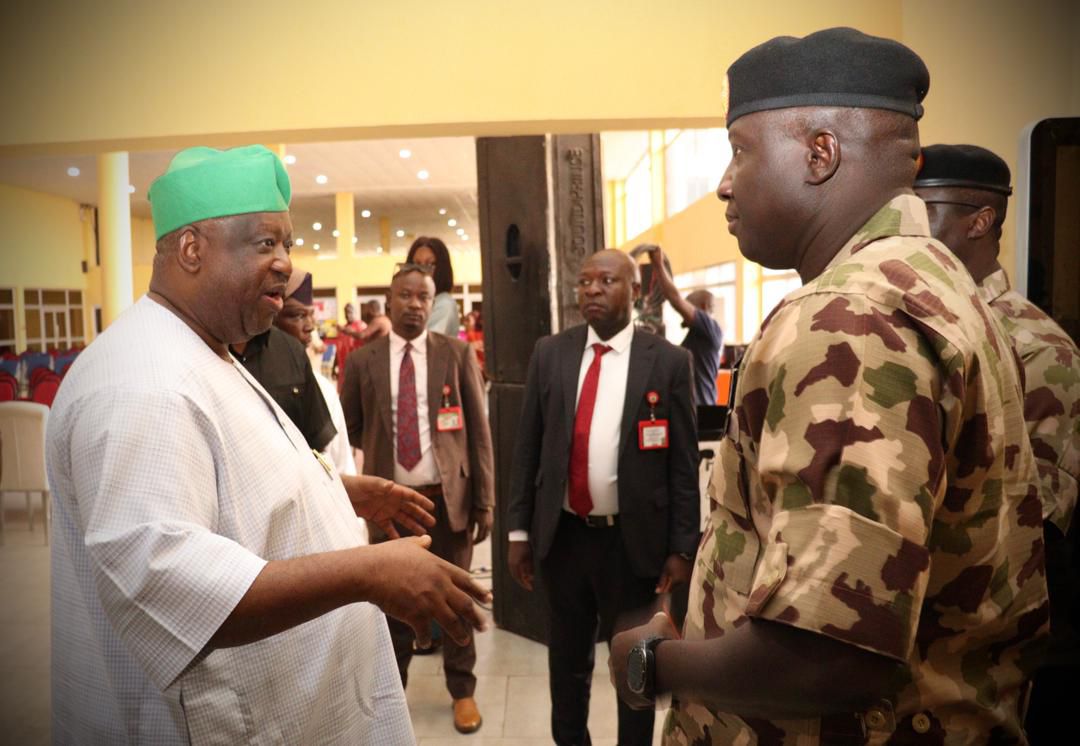
COAS Launches Nationwide Security Renewal Mission in Plateau
The Chief of Army Staff, Lieutenant General Waidi Shaibu, on Thursday led a high-level delegation of security chiefs to Plateau State, flagging off a nationwide security renewal mission aimed at strengthening civil-military cooperation and restoring lasting peace across the country.
The visit to Jos, the Plateau State capital, marks the first phase of a coordinated national effort to address persistent security challenges through joint operations, community engagement, and proactive intelligence gathering.

Governor Caleb Muftwang received the delegation, describing the initiative as a critical step toward stabilizing affected communities and reinforcing public confidence in security institutions.
Civil-Military Synergy Takes Centre Stage
At the heart of the mission is a renewed emphasis on collaboration between the military, civil authorities, and local communities. Speaking during the visit, Lt. Gen. Shaibu stressed that national security must be treated as a collective responsibility.
He urged citizens to support security agencies by remaining vigilant, sharing credible information, and complying with lawful directives, noting that effective security cannot be achieved in isolation.
Community Engagement as Confidence-Building Tool
In a departure from purely operational engagements, the Army Chief held direct consultations with community leaders and residents in Jos, reinforcing the importance of trust and dialogue in conflict resolution.
Lawmakers, including Dachung Bagos and Ladi Dangyok, commended the initiative, stating that visible engagement by top military leadership helps rebuild confidence among citizens and fosters cooperation.

Proactive Security Operations Underway
Operational updates were provided by Major General Folusho Oyinlola, who disclosed that troops under Operation Enduring Peace have intensified surveillance, intelligence-led patrols, and coordinated actions with other security agencies.
According to the Army, the approach is designed to prevent escalation of threats, safeguard lives and property, and stabilize vulnerable communities before crises emerge.
A Shift Toward Sustainable Peace
Military authorities emphasized that the Plateau visit is part of a broader, long-term strategy to transition from reactive responses to sustainable peacebuilding nationwide. The framework includes strengthening local resilience, ensuring justice, and maintaining continuous engagement with stakeholders.
Analysts view the initiative as a significant policy shift, reflecting a more inclusive security architecture that integrates community participation with military operations.
Call for National Unity
The Army leadership concluded with an appeal to Nigerians to reject divisive narratives and support ongoing efforts to promote unity and peace.
“The success of this mission depends not only on the armed forces but on the cooperation of every citizen,” the COAS stated.
The nationwide security renewal campaign is expected to extend to other regions in the coming weeks as authorities seek to consolidate gains and build a safer, more unified Nigeria.


-

 society7 months ago
Religion: Africa’s Oldest Weapon of Enslavement and the Forgotten Truth
-

 news4 months ago
WHO REALLY OWNS MONIEPOINT? The $290 Million Deal That Sold Nigeria’s Top Fintech to Foreign Interests
-

 society6 months ago
“You Are Never Without Help” – Pastor Gebhardt Berndt Inspires Hope Through Empower Church (Video)
-

 celebrity radar - gossips2 months ago
Dr. Chris Okafor Returns with Power and Fire of the Spirit -Mounts Grace Nation Altar with Fresh Anointing and Restoration Grace on February 1, 2026
You must be logged in to post a comment Login
You must log in to post a comment.