
Politics
Democracy Hijacked: Nigeria Under Tinubu and APC’s Reign of Suppression

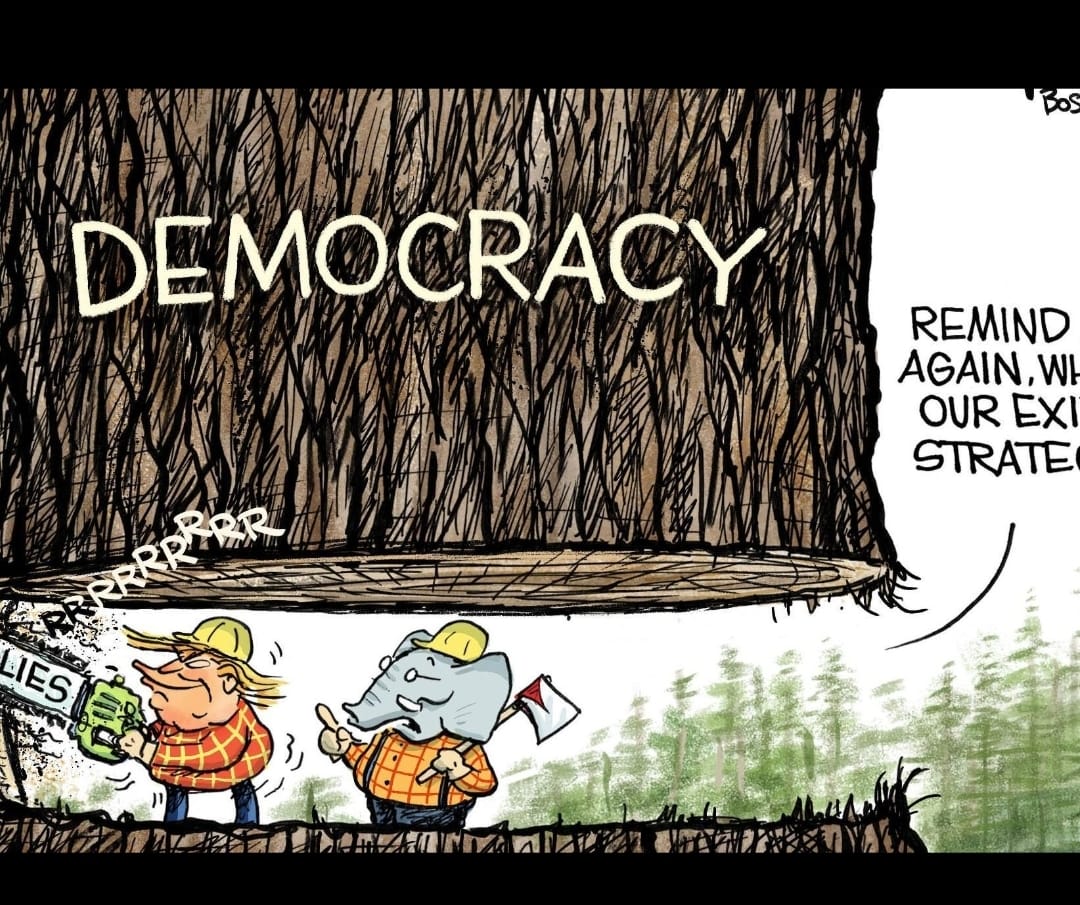
Democracy Hijacked: Nigeria Under Tinubu and APC’s Reign of Suppression
By George Omagbemi Sylvester
Once hailed as Africa’s beacon of hope, Nigeria’s democracy is now a battered relic under the suffocating grip of Bola Ahmed Tinubu and the All Progressives Congress (APC). What the world is witnessing is not the nurturing of democratic ideals, but the systematic strangulation of freedom, rights and popular will. Nigerians no longer possess true political rights. Elections are now caricatures. The judiciary dances to executive tunes. The legislature is a rubber stamp. And the masses? They are muted by fear, poverty and intimidation.

International bodies, supposedly guardians of global democracy, remain mostly silent or issue toothless statements while the giant of Africa bleeds internally.
A Nation in Chains
Since Tinubu’s contested swearing-in on May 29 2023, following what The Guardian (UK) described as a “deeply flawed and poorly conducted election,” Nigeria has descended further into autocracy. The Independent National Electoral Commission (INEC) promised technological transparency with the Bimodal Voter Accreditation System (BVAS) and the INEC Results Viewing Portal (IReV) only for these mechanisms to be crippled on election day, allowing widespread manipulation.
Chidi Odinkalu, former Chairman of Nigeria’s Human Rights Commission, summed it up perfectly:
“You cannot rig a people’s will and claim legitimacy. Tinubu’s government was born in fraud, and fraud cannot father democracy.”
The very essence of democracy, the right to choose one’s leaders freely and fairly; was brazenly hijacked. When protests erupted, they were crushed with brutal force. The media, once vibrant, now operates under threats of shutdowns, fines and arrests. Activists are labeled “terrorists” or “threats to national security.”
Journalist David Hundeyin, an outspoken critic, captured the fear gripping Nigeria:
“We live in a country where telling the truth has become an act of rebellion.”
Poverty, Insecurity, and Silence
While political rights evaporate, Nigerians are suffocated by poverty. Inflation under Tinubu soared to 33.2% by April 2025 (National Bureau of Statistics), the highest in two decades. Food inflation hit 40%, sending millions into deeper hunger. The removal of fuel subsidies without meaningful cushioning plunged transport costs up by 200%, pushing the minimum wage farther below subsistence levels.

Amid these hardships, dissent is criminalized. When labor unions threatened strikes, the regime secured court orders declaring them “illegal.” Protesters are met with police batons and live bullets, just like during the #EndSARS protests in 2020 under Buhari, whose playbook Tinubu is now perfecting.
Even comedians have become unlikely prophets of doom.
Comedian Basketmouth lamented:
“In Nigeria, you now need visa to visit your own human rights. That’s how bad it is.”
International Bodies: Where Are They?
What have international organizations like the United Nations, African Union, ECOWAS, or even the Commonwealth done? Very little.
The United Nations issued general statements calling for “inclusive governance” without naming the perpetrators.
ECOWAS, often quick to act elsewhere (e.g., coups in Mali, Burkina Faso), has been conspicuously muted about Nigeria, perhaps because Tinubu played a leading role in ECOWAS’s structure.
The African Union has focused more on Sudan and the Sahel, leaving Nigeria to burn quietly.

The United States, after initial noise about “concerns” during the 2023 elections, quickly congratulated Tinubu and moved on, prioritizing oil deals and counterterrorism interests.
This hypocritical diplomacy sends a dangerous signal:
As long as Nigeria supplies oil and keeps Western interests safe, the trampling of human rights will be tolerated.
Democracy or Democrazy?
Late Chinua Achebe, in The Trouble with Nigeria (1983), warned:
“The trouble with Nigeria is simply and squarely a failure of leadership.”
Tinubu’s reign proves that leadership failure is no longer just a problem; it is now state policy.
Under APC, Nigeria’s democracy is democracy only in name. Elections are rituals devoid of meaning. Courts rubber-stamp electoral thefts, often dismissing glaring irregularities on “technicalities.” Just in 2023, over 75% of election petitions were struck out on “lack of merit,” despite overwhelming evidence of malpractice (according to data compiled by SBM Intelligence).
Social media, once a tool for accountability, is under siege. In February 2025, the National Assembly passed the draconian “Internet Falsehood and Manipulation Bill,” widely dubbed the “Social Media Gag Law,” criminalizing “insulting public officials” with jail terms up to three years.
As comedian I Go Dye famously quipped:
“In Nigeria, even silence has been accused of hate speech”
The Broader Collapse
Under Tinubu, Nigeria’s global reputation nosedived. According to the 2025 Freedom House report, Nigeria was downgraded from “Partly Free” to “Not Free” for the first time in 20 years.
Transparency International’s 2024 Corruption Perception Index ranked Nigeria 149th out of 180 countries, worse than war-torn Afghanistan.
The Economist Intelligence Unit predicted that unless political repression ends, Nigeria faces “an inevitable descent into full dictatorship by 2027.”
Already, Nigeria’s youth, once energetic are fleeing en masse. The JAPA syndrome (mass emigration) has become an exodus. According to the UK Home Office, over 100,000 Nigerian professionals emigrated in 2024 alone, the highest African migration recorded.
When the best minds flee, when dissent is crushed, when elections are jokes, what remains of a nation?
What Should Be Done?
International bodies must stop hiding behind diplomatic niceties. Sanctions must target corrupt politicians and human rights abusers, not just coup plotters in smaller African countries.
Targeted Visa Bans: Bar corrupt APC politicians and election riggers from traveling abroad.
Asset Freezes: Block the looted wealth sitting in London, Dubai, and New York.
Global Advocacy: Push for independent media protections and human rights watchdog missions into Nigeria.
If the West and multilateral bodies continue their selective outrage, they will be complicit in Nigeria’s descent into full-blown tyranny.
Inside Nigeria, civil society must regroup. Labor unions, students, market women, comedians, musicians, journalists all must reclaim their role as the conscience of the nation. Democracy is not given by dictators; it is seized by the people.
As the late Afrobeat legend Fela Kuti warned:
“My people are scared of the air around them, they always have an excuse not to fight for freedom. We must rise.”
A Clarion Call
Nigeria stands today at the edge of a terrifying abyss. Tinubu and the APC have hijacked democracy, and the world watches as freedom withers. But history teaches us that no tyranny is permanent. From South Africa’s apartheid regime to military juntas across Africa, oppressive regimes eventually fall.
The choice is stark: either Nigerians fight back for their rights now, or resign themselves to decades of sophisticated enslavement.
The international community must act. Nigerians must resist. History must not record that in the hour of greatest need, those who should have fought stayed silent.





Politics
APC Group Endorses Fubara for 2027, Calls on Tinubu and APC to Prioritise Performance Over Politics in Backing Governor’s Second Term Ambition
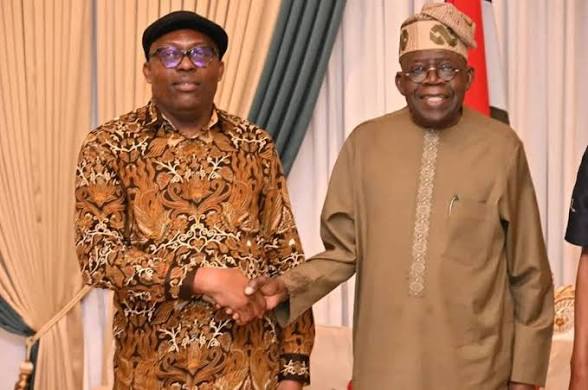
*APC Group Endorses Fubara for 2027, Calls on Tinubu and APC to Prioritise Performance Over Politics in Backing Governor’s Second Term Ambition*
The APC National Vanguard has appealed to President Bola Ahmed Tinubu and the leadership of the All Progressives Congress (APC) to support a second term in office for Siminalayi Fubara, citing what it described as “impressive and verifiable developmental strides” across Rivers State.
In a statement issued on Thursday by its National President, Dr Gbenga Salam (JP), the group said its position followed an extensive assessment tour of key infrastructure and public service projects executed under the Fubara administration.
The APC National Vanguard said the appeal was based strictly on performance, arguing that governance outcomes should outweigh partisan considerations, particularly in a state as economically significant as Rivers.
“We respectfully urge President Bola Ahmed Tinubu and the leadership of the All Progressives Congress to support the continuity of Governor Siminalayi Fubara beyond his current tenure, in recognition of his commitment to development, prudent resource management, and people-focused governance,” the statement read.
According to the group, its delegation visited multiple project sites across the state, observing ongoing and completed works spanning road construction, urban renewal, and public infrastructure upgrades.
It noted that the scale and distribution of these projects reflect a deliberate effort by the state government to extend development beyond traditional urban centres and into underserved communities.
“Our findings from the tour reveal a government that is not only active but intentional in its development agenda. The execution of capital projects across various parts of Rivers State demonstrates a clear understanding of the needs of the people and a commitment to addressing them,” Dr Salam said.
The group particularly commended what it described as prudent financial management by the administration, noting that the projects reviewed showed evidence of careful planning and efficient allocation of resources.
“At a time when economic pressures are evident across the country, it is commendable that the Rivers State government has managed its resources in a way that delivers visible and impactful development without signs of fiscal recklessness,” the statement added.
The APC National Vanguard further observed that despite political tensions in the state, the Fubara administration has maintained focus on governance, ensuring continuity in project execution and service delivery.
The group argued that such stability is critical for sustained development and should be encouraged rather than disrupted.
“Leadership must ultimately be judged by results. In Rivers State, there is clear evidence of progress—projects that are not only announced but executed, and policies that translate into real benefits for citizens,” Dr Salam noted.
The group warned that discontinuity in leadership could stall ongoing projects and reverse gains already recorded, stressing the importance of allowing a performing administration to consolidate its achievements.
“Rivers State is at a pivotal stage where continuity will allow for the completion of ongoing initiatives and the deepening of development gains. Supporting Governor Fubara for a second term is, therefore, a decision in the best interest of the people,” the statement said.
In addition to its call on the APC leadership, the group reaffirmed its support for President Tinubu, expressing confidence in his administration’s broader economic and governance reforms.
The APC group urged Nigerians to remain supportive of efforts aimed at stabilising the economy and strengthening public institutions.
“We reiterate our endorsement of President Bola Ahmed Tinubu for a second term in office, in recognition of his leadership and commitment to national development. With sustained support, the administration can consolidate its reform agenda for the benefit of all Nigerians,” Dr Salam added.
The APC National Vanguard concluded by calling on political actors to prioritise development and public interest over partisan divides, insisting that governance should always be guided by performance and accountability.
“Where leadership demonstrates prudence, delivers development, and remains focused on the welfare of the people, it deserves continuity. This is the position we have reached after a careful and independent assessment of Rivers State,” the statement added.
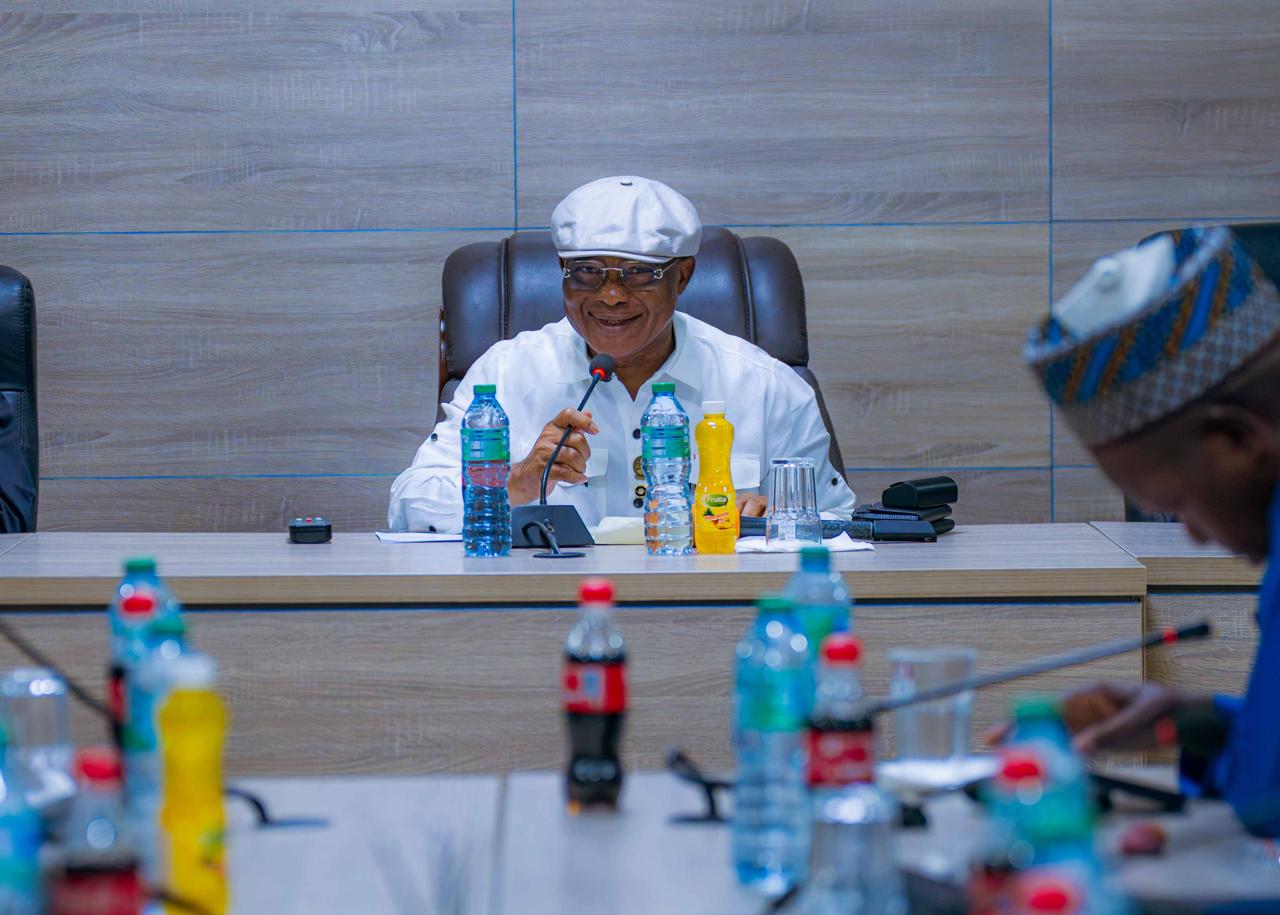
*Renewed Hope Ambassadors Step Into the Next Phase
Fresh from the successful APC 2026 National Convention, the Renewed Hope Ambassadors National, Zonal, and State leadership gathered in Abuja over the weekend, for its fourth strategic meeting, setting the tone for nationwide grassroots activation ahead of 2027.
Chaired by Governor Hope Uzodinma (Imo State) the Director General and National Coordinator of the Renewed Hope Ambassadors, alongside Deputy Director-General, Governor Uba Sani of Kaduna State, and Governor Inuwa Yahaya of Gombe State as Secretary, the session reinforced one clear direction: One Party. One Message. One Mobilization whilst also laying out a strategic roadmap for the activation of the network across all communities in Nigeria.
Backed by the strength of 31 APC-led states, the Renewed Hope Agenda is taking Bola Ahmed Tinubu’s message of progress and reform to every corner of Nigeria.
From bold economic restructuring to initiatives like NELFUND, the increase in the national minimum wage from ₦30,000 to ₦70,000, and strategic investments in critical sectors, including PNiCGI, the mission remains clear: helping Nigerians understand both the purpose and the progress of the Renewed Hope vision.
This is coordination at scale. This is grassroots engagement with purpose. This is the next phase of Renewed Hope with One Party, One Message, and One Mobilisation framework
#RenewedHopeAmbassadors #APC #WeAreAPC


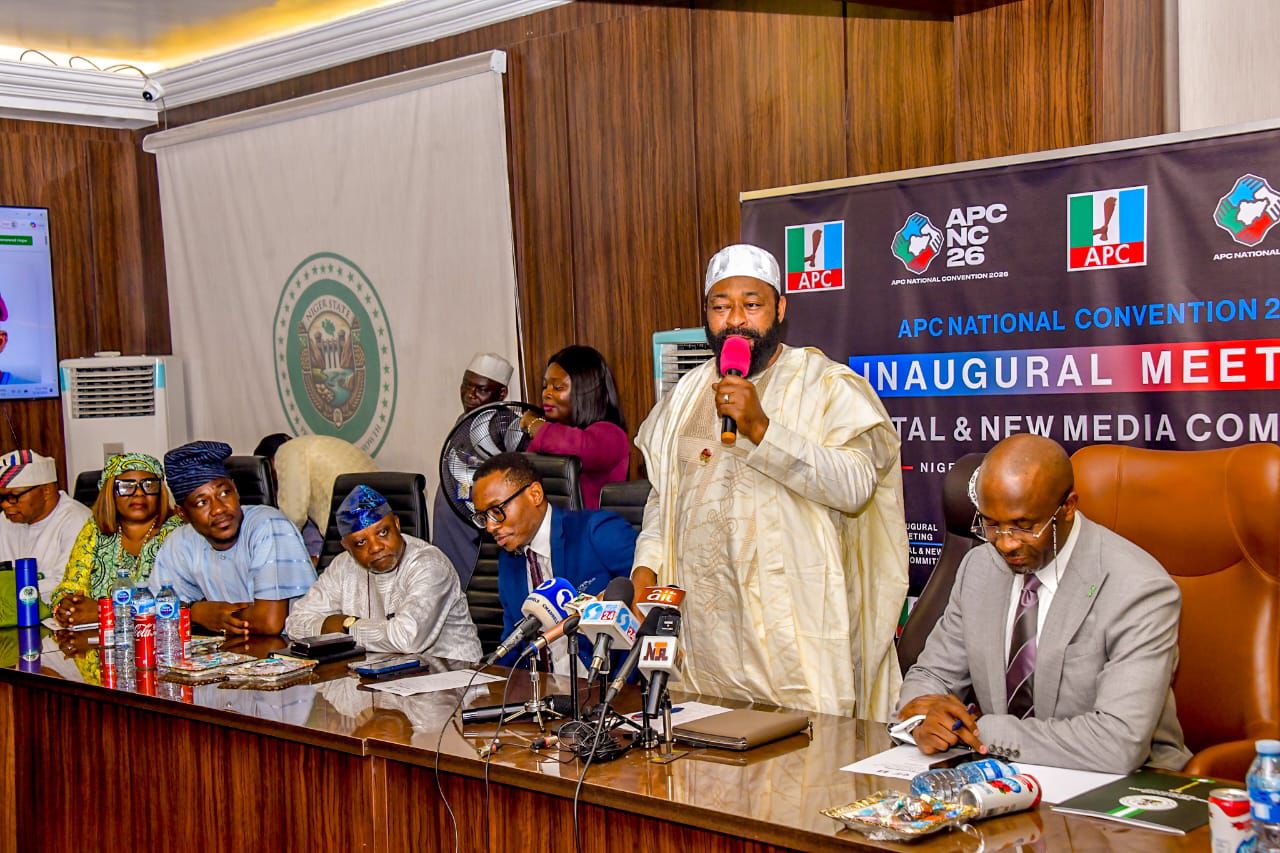
Governor Bago Inaugurates APC Digital Media Sub-Committee Ahead of National Convention.
Governor Umaru Bago has inaugurated the Digital Media Sub-Committee for the forthcoming National Convention of the All Progressives Congress (APC), scheduled to hold on March 27 and 28, 2026 in Abuja.
Chairing the sub-committee, Governor Bago tasked members with the responsibility of effectively communicating the party’s manifesto to the public.
He emphasized the need to leverage social media platforms to highlight the achievements and ongoing efforts of President Bola Ahmed Tinubu, noting that communication gaps have posed challenges that must now be decisively addressed.
The Co-Chair of the sub-committee, Hon. Benjamin Kalu, Deputy Speaker of the House of Representatives, echoed the Governor’s position, urging members to project the activities of both the party and the government to a broader audience.
He called for a deliberate and coordinated effort to showcase the party’s achievements and policy direction, stressing the importance of shaping a compelling and consistent narrative across all digital platforms.
Delivering a presentation to the committee, Otega Ogra, SSA to the President on New Media, who serves as Secretary of the sub-committee, outlined strategic focus areas to guide the team’s operations.
His presentation highlighted communication priorities and actionable steps to achieve the committee’s mandate and strengthen the party’s digital engagement.


-

 society6 months ago
Religion: Africa’s Oldest Weapon of Enslavement and the Forgotten Truth
-

 news4 months ago
WHO REALLY OWNS MONIEPOINT? The $290 Million Deal That Sold Nigeria’s Top Fintech to Foreign Interests
-

 society6 months ago
“You Are Never Without Help” – Pastor Gebhardt Berndt Inspires Hope Through Empower Church (Video)
-

 celebrity radar - gossips2 months ago
Dr. Chris Okafor Returns with Power and Fire of the Spirit -Mounts Grace Nation Altar with Fresh Anointing and Restoration Grace on February 1, 2026