
Politics
Democracy in the Crosshairs: How Nigeria’s Ruling APC Weaponises Power and Silences Dissent

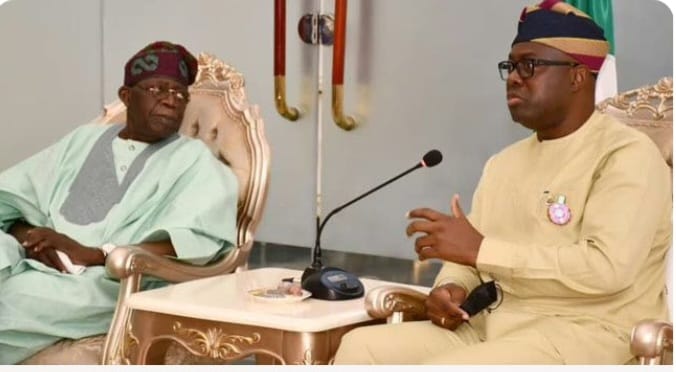
Democracy in the Crosshairs: How Nigeria’s Ruling APC Weaponises Power and Silences Dissent.
By George Omagbemi Sylvester | Published by saharaweeklyng.com
“Tinubu’s Government, the EFCC and the Strategic Undermining of Opposition Governors”.
In a striking indictment of Nigeria’s current political reality, Governor Seyi Makinde of Oyo State declared that “you cannot speak truth to power in this dispensation”, directly accusing the administration of President Bola Ahmed Tinubu of intolerance for dissent and an erosion of democratic norms.
Makinde’s remarks (made during a public event in Ibadan on January 25, 2026) were more than a local governor’s lament. They crystallised a mounting national frustration: that Nigeria’s political landscape has tilted dangerously toward executive overreach, institutional capture and political engineering.

This narrative is not isolated. Across Nigeria, governors from opposition parties have defected to the ruling All Progressives Congress (APC) in numbers unprecedented in the nation’s democratic history. Critics argue that these defections are not merely voluntary political choices, but part of a strategic pressure campaign leveraging federal power and institutions to fracture opposition influence.
At its centre lies Nigeria’s principal anti-graft agency – the Economic and Financial Crimes Commission (EFCC).
The EFCC: Anti-Graft Agency or Political Instrument? Founded to combat corruption, the EFCC’s constitutional mandate is to investigate and prosecute financial and economic crimes across public and private sectors. Its legal independence is enshrined in statute and it has historically pursued high-profile cases, including recovery of nearly $500 million in illicit assets in a single year, demonstrating its capacity for tackling corruption.

However, critics now claim that under the Tinubu administration, the EFCC’s prosecutorial power is being perceived (if not deployed) as a political instrument.
Opposition leaders, including former Vice President Atiku Abubakar and coalition parties such as the African Democratic Congress (ADC), have publicly accused the federal government of using anti-corruption agencies to intimidate opposition figures and governors, effectively pressuring them into aligning with the APC.
In a statement released in December 2025, opposition figures alleged that institutions such as the EFCC, the Nigerian Police and the Independent Corrupt Practices and Other Related Offences Commission were being selectively wielded to weaken political competitors rather than combat financial crime impartially.
This is not merely rhetorical noise. The opposition’s grievances centre on several observable patterns:
Reopened or New Investigations Against Opposition Figures: The ADC pointed to recent abnormal reactivation of long-dormant cases or new inquiries into financial activities involving senior opposition politicians. These, they argue, often arise shortly before critical elections or political realignments.

Alleged Differential Treatment: According to opponents of the current administration, individuals who have defected to the APC appear less likely to face sustained legal scrutiny or prosecution in EFCC proceedings, even in cases of credible allegations of mismanagement.
Timing of Actions: The timing of certain high-profile investigations, emerging ahead of the 2027 general elections, reinforces perceptions that anti-graft measures are tailored to political cycles rather than legal merit.
The EFCC and Presidency have publicly denied these allegations, insisting that the commission operates independently and pursues corruption irrespective of political affiliation and that Nigeria’s democratic freedoms (including party choice and mobility) remain intact.
Yet the perception of bias, once systemic, is hard to erase, especially when political actors deploy powerful state machinery with strategic timing and selective intensity.
Defections and Power Realignment: A Democracy at Risk? Since 2023 and particularly through 2025, a remarkable number of state governors and senior political leaders have crossed over from opposition parties (notably the Peoples Democratic Party – PDP) to the APC. Though defections are normal in Nigeria’s fluid political system, the scale and speed in recent years are historically noteworthy, raising critical questions about underlying incentives.
The SaharaWeeklyNG reported Makinde’s comments within the broader context of a political climate where dissenting voices face greater obstacles than at any time in recent democratic memory.
Governors who remain in opposition find themselves squeezed between growing federal assertiveness and dwindling political capital. Some analysts argue that the combination of federal resource control, political appointments and influence over public agencies exerts tangible pressure on subnational leaders to align with the ruling party for political survival. This dynamic, they contend, undermines competitive party politics and weakens Nigeria’s multiparty democracy.

Speaking Truth to Power: What Makinde’s Critique Exposes. Governor Makinde’s core grievance (that it is increasingly difficult, perhaps perilous, to speak truth to power) resonates widely among civil society actors, political analysts and democratic advocates:
“YOU CANNOT SPEAK TRUTH TO POWER IN THIS DISPENSATION,” Makinde declared, specifically citing the government’s handling of contentious tax reform bills as an example where dissent was neither welcomed nor transparently debated.
Makinde’s critique reflects deeper structural concerns:
Exclusion of Key Stakeholders: Opposition leaders and state executives report being marginalised from meaningful consultation on national policies affecting federal-state relations, revenue sharing and fiscal reforms.
Institutional Intimidation: The perception that state politicians become targets of federal legal scrutiny after taking firm oppositional stances (real or perceived) discourages robust democratic debate.
Erosion of Opposition Space: A symbiotic effect of party defections and institutional pressure is a shrinking viable space for genuine political opposition, weakening checks and balances essential to democratic governance.
A respected political scientist, Dr. Aisha Bello of the University of Lagos, recently argued that “when opposition becomes fraught with state leverage instead of ideological competition, the very foundation of democratic contestation collapses,” adding that “a government that shies away from criticism risks inversion into autocracy.”
Another expert, Prof. Chinedu Eze, former dean of political studies at Ahmadu Bello University, warned that “selective use of anti-corruption agencies as political tools corrodes public trust and ultimately delegates justice into the hands of incumbents rather than independent courts.” These observations echo growing public skepticism.
The Way Forward: Strengthening Democracy and Institutions. Nigeria’s path forward depends on restoring confidence in democratic norms and institutional independence.
Transparent EFCC Processes: Civil society groups and legal scholars are advocating for enhanced transparency in anti-graft investigations, including clear prosecutorial thresholds and independent audits of case initiation and closures.
Judicial Oversight: Strengthening the judiciary’s capacity and independence is critical to ensuring that allegations of political weaponisation do not go unchecked. Courts must remain the ultimate arbiters of evidence and guilt.
Political Reforms: Advocates demand reforms to party financing, federal-state fiscal relations, and consultation mechanisms to reduce incentives for defections driven by federal resource leverage.
Public Engagement: A more informed and engaged civil society, anchored by independent media and civic education, must hold both government and opposition accountable for adherence to democratic principles.
Beyond The Present Moment.
Governor Makinde’s assertion that it is no longer tenable to “speak truth to power” under the current administration reflects unsettling trends in Nigeria’s evolving democratic landscape. While the EFCC and the Presidency maintain that anti-corruption efforts are independent and constitutionally grounded, opposition leaders (backed by political data and patterns of defections) argue that state power is being used to consolidate one-party dominance and undermine political pluralism.
At this critical juncture, Nigeria must choose between entrenching competitive democracy or sliding toward a political monopoly where dissent is subdued, institutions compromised, and power concentrated.
For Nigeria’s democratic ideals to survive (and thrive) its leaders and citizens must ensure that speaking truth to power remains not a perilous act of defiance but an honoured pillar of national life.





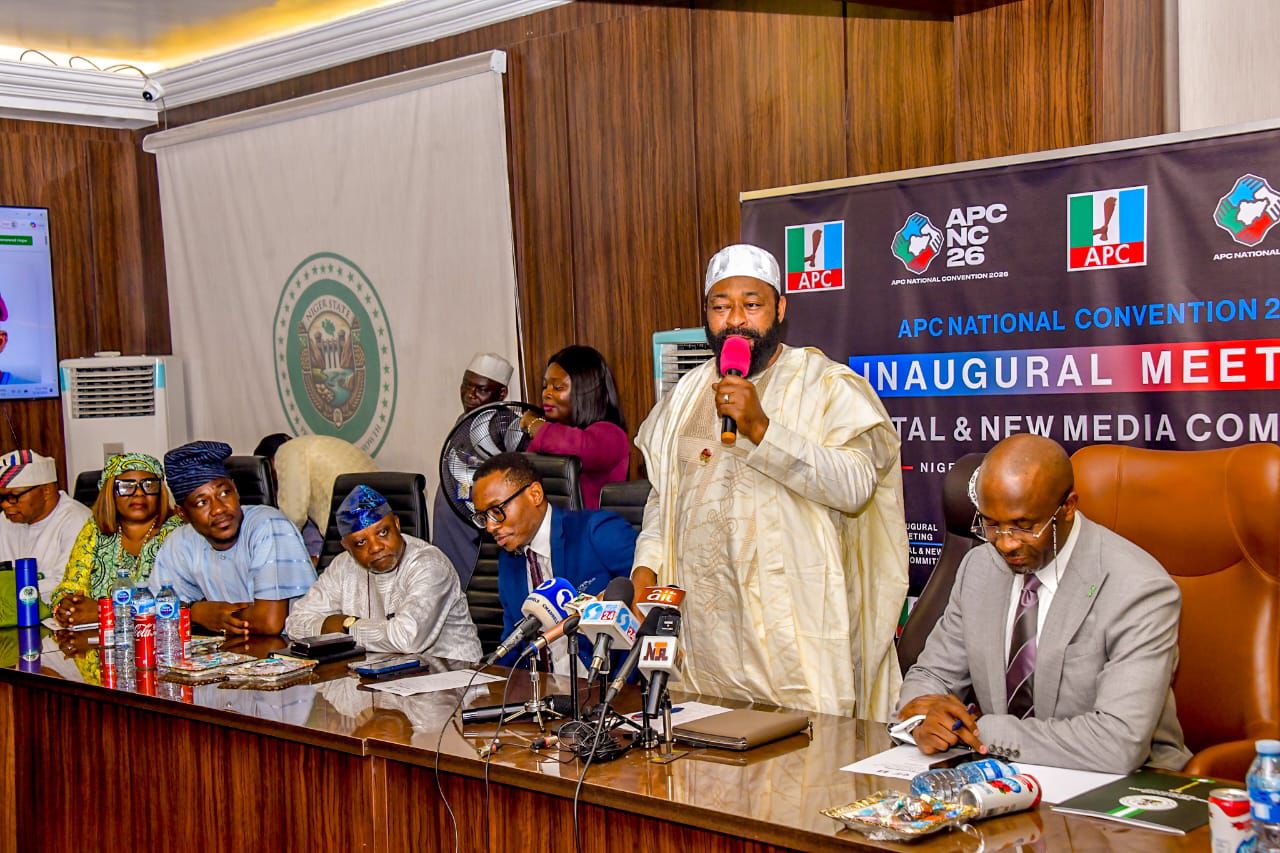
Governor Bago Inaugurates APC Digital Media Sub-Committee Ahead of National Convention.
Governor Umaru Bago has inaugurated the Digital Media Sub-Committee for the forthcoming National Convention of the All Progressives Congress (APC), scheduled to hold on March 27 and 28, 2026 in Abuja.
Chairing the sub-committee, Governor Bago tasked members with the responsibility of effectively communicating the party’s manifesto to the public.
He emphasized the need to leverage social media platforms to highlight the achievements and ongoing efforts of President Bola Ahmed Tinubu, noting that communication gaps have posed challenges that must now be decisively addressed.
The Co-Chair of the sub-committee, Hon. Benjamin Kalu, Deputy Speaker of the House of Representatives, echoed the Governor’s position, urging members to project the activities of both the party and the government to a broader audience.
He called for a deliberate and coordinated effort to showcase the party’s achievements and policy direction, stressing the importance of shaping a compelling and consistent narrative across all digital platforms.
Delivering a presentation to the committee, Otega Ogra, SSA to the President on New Media, who serves as Secretary of the sub-committee, outlined strategic focus areas to guide the team’s operations.
His presentation highlighted communication priorities and actionable steps to achieve the committee’s mandate and strengthen the party’s digital engagement.


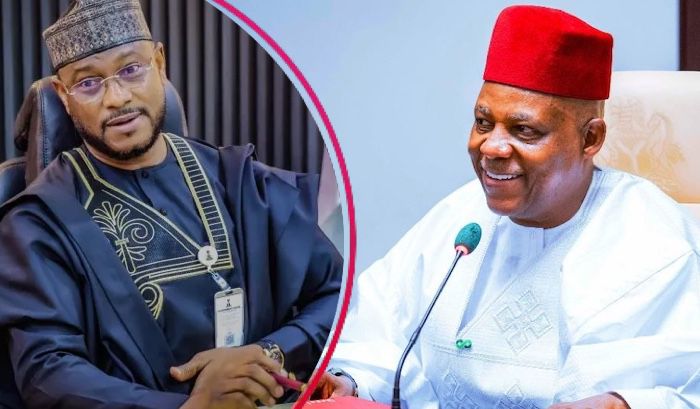
VP Shettima Set to Lead Delegation to Zamfara as Governor Dauda Lawal Formally Joins APC
The Zamfara State chapter of the All Progressives Congress (APC) has finalized plans to receive Vice President Kashim Shettima for the formal defection and reception of Governor Dauda Lawal into the ruling party, scheduled to take place on Tuesday.
State APC Chairman, Tukur Danfulani Maikatako, disclosed this during a high-level stakeholders’ meeting held in Gusau, the state capital. He noted that the Vice President would be joined by the party’s national leadership to mark what he described as a landmark political realignment in the state.
Maikatako expressed the party’s excitement over Governor Lawal’s return, recalling that Zamfara had historically been an APC stronghold and that the Governor was previously a bona fide member of the party before his earlier exit.
“We all know that Zamfara has long been one of the APC’s stronghold states, where the defected Governor was once a bona fide member. Now that he has decided to return home, having been satisfied that the APC remains his second choice after the one he left for obvious reasons,” Maikatako stated.
The Chairman called on all party faithful across the 147 wards in the state’s 14 local government areas to turn out en masse to honour the Vice President’s visit. He emphasized that the event was strategically positioned to bolster the party’s popularity and strengthen its structures ahead of the 2027 general elections.
In a strong appeal for unity, Maikatako urged members to set aside all factional tendencies, stressing that the APC remained one political family with shared goals, particularly the ambition to make Zamfara and Nigeria great again.
Echoing similar sentiments, a former state APC Chairman, Lawal M. Liman, appealed to members to cascade the message to their wards and local government areas. He reinforced the need for cohesion, noting that the party’s collective strength would be critical to achieving success in future elections.

All eyes are now on Gusau as the ruling party prepares for a high-profile political gathering expected to further consolidate its influence in Zamfara State.
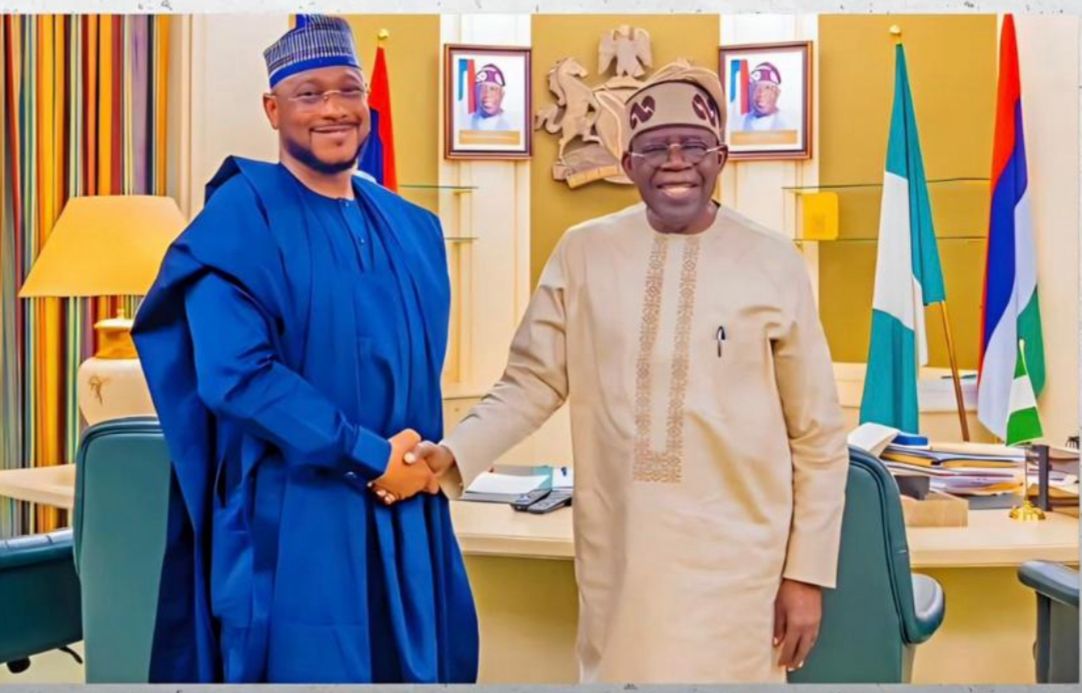
Governor Dauda Lawal Named Part of Presidential Delegation for Historic UK State Visit
Governor Dauda Lawal of Zamfara State has been named as a member of the presidential entourage that will accompany President Bola Ahmed Tinubu and First Lady Oluremi Tinubu on a historic two-day State Visit to the United Kingdom.
According to a statement from the Zamfara State Government House on Monday, the Governor will depart Abuja for the UK on Tuesday for the visit, which is scheduled to take place on March 18 and 19 at the invitation of the British Royal Family.

During the visit, King Charles III will host President Tinubu, the First Lady, and the Nigerian delegation at Windsor Castle, where they will view a special exhibition of Royal Collection items related to Nigeria. The Royal Family will also host a State Banquet in honour of the Nigerian guests on the evening of Wednesday, March 18.
The presidency has outlined that the purpose of the visit is to strengthen bilateral relations between Nigeria and the United Kingdom. President Tinubu is scheduled to hold talks with Prime Minister Keir Starmer, which are expected to lead to expanded bilateral discussions and the signing of Memorandums of Understanding covering trade, investment, defence, and cultural cooperation.
The President will also serve as the guest of honour at the Nigerian Modernism exhibition, which showcases contemporary art and culture, and will participate in a reception with Nigerian and British business leaders as well as members of the diaspora community.
The Zamfara State Government expressed confidence that Governor Lawal’s participation in the high-level delegation will provide valuable networking opportunities, opening significant prospects for investment and economic benefits for Zamfara State. The visit will also see Governor Lawal display his repertoire of knowledge on global policy and corporate governance and also pitch the Mineral and Farming rich state to potential investors during the bilateral meeting with the UK Prime Minister, Keir Starmer.


-

 society6 months ago
Religion: Africa’s Oldest Weapon of Enslavement and the Forgotten Truth
-

 news4 months ago
WHO REALLY OWNS MONIEPOINT? The $290 Million Deal That Sold Nigeria’s Top Fintech to Foreign Interests
-

 society6 months ago
“You Are Never Without Help” – Pastor Gebhardt Berndt Inspires Hope Through Empower Church (Video)
-

 celebrity radar - gossips2 months ago
Dr. Chris Okafor Returns with Power and Fire of the Spirit -Mounts Grace Nation Altar with Fresh Anointing and Restoration Grace on February 1, 2026