
Politics
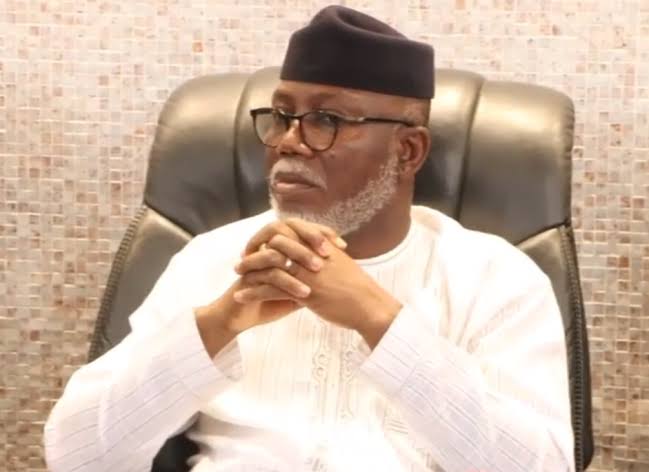
Dispatch from the Diaspora: Ondo South Must Tread Carefully

Dispatch from the Diaspora: Ondo South Must Tread Carefully
Dear compatriots of Ondo South Senatorial District, it has become pertinent to address crucial issues in the buildup to the governorship election in our dear state, Ondo State in September 2024.

We wish to state that the demise of Arakurin Rotimi Akeredolu indeed created a vacuum in the political landscape in Ondo state. The unfortunate incident left a hole in our hearts, and our prayers are with the families he left behind. We commiserate with the entire people of Ondo State even as we pray for God to heal our hearts over this unquantifiable loss.
Given the prevailing circumstances that brought to power, His Excellency Governor Lucky Aiyedatiwa, as the executive governor of Ondo state, some pertinent questions on the distribution of political power among the three senatorial zones in the state have come up.
Governor Lucky Aiyedatiwa is from our Ondo South Senatorial District, completing the term of the late Governor Rotimi Akeredolu. By implication, he would not be eligible to contest two terms. The closest Ondo South has got was five years and 270 days during the tenure of the late Olusegun Agagu. Mr Agagu was Ondo’s governor from 2003 to 2009 when the Court of Appeal sacked him after his 2007 re-election was overturned. Olusegun Mimiko was declared the winner—this truncated Ondo South’s political journey in the state’s political equation.
It is instructive to state that afterwards, Ondo South did not have a chance at governance in the state until the emergence of Governor Lucky Aiyedatiwa upon the death of Governor Rotimi Akeredolu.
The implication is that Governor Lucky Aiyedatiwa is expected to complete the tenure of the late Rotimi Akeredolu in line with constitutional provisions. This has again thrown up a constitutional matter that must be evaluated critically given the constitutional provision that an individual cannot take the oath of office thrice under the constitution. So, the few months that His Excellency Ayiedatiwa is spending to complete the late Governor Akeredolu’s tenure would be counted as he took the oath of office to assume office.
Should Ondo South put forward Governor Lucky Aiyedaitiwa and he is reelected in September, he would be expected to spend a tenure of four years, by which time he would have been sworn in as governor twice. This would shortchange Ondo South Senatorial District. The power of incumbency that should have made us rout for Governor Aiyedatiwa would eventually be our albatross if we tread that path.
It would indeed be a strategic move from Ondo South because if Governor Lucky Aiyedatiwa is given the mandate, it would translate to a political shortchange denying Ondo South an eight-year tenure. The position of the law is clear that a governor cannot take the oath of office thrice.
On the heels of the above, the Ondo South Professionals in the Diaspora are advocating for a candidate from Ondo South with the required capacity and political relevance to vie for the governorship seat come September 2024.
We are conscious of the other competent persons who have stepped into the arena and indicated an interest in representing the interests of Ondo South in the context of who becomes the next state governor. We have consequently established certain parameters.
1. In terms of the balance of power, it is apparent that the ruling All Progressives Congress (APC) continues to hold the upper hand in the impending contest. While our group is apolitical, we find it prudent to focus our consideration on the array of aspirants in the APC and would only consider other political platforms if the interest of our district is not properly accommodated by the APC.
2. We have also zeroed in on a candidate who stands the chance of completing two tenures of four years, which unfortunately rules out our dear incumbent governor.
3. Furthermore, we would like to not recycle past aspirants and candidates. Those who have aspired in the past and failed to clinch the ticket or those who have contested before and didn’t win the election will come with baggage that we can ill afford.
4. We will focus on young, energetic, and dynamic politicians who can make Ondo South proud by propelling Ondo State to greatness. The candidate must have the political capital and network to tap into in promoting the interest of the state. Such a person would be able to meet the aspirations of all even as they satisfy the imperative of treating our district fairly.
These focal points were arrived at following the realisation that other senatorial zones in the state have had entire tenures, and the opportunity is before Ondo South to present a candidate with the relevant political clout to contest the gubernatorial election.
Without intending to de-market any of the aspirants that have indicated an interest in the race, hence our restraint from mentioning names, we have assessed the field of play. Consequently, the Ondo South Professionals in the Diaspora are using this medium to advocate for the candidature of political pedigree and verifiable contributions to the development of the state.
We strongly recommend that Ondo South go for a rounded politician from the District, someone with public service records replete with exceptional exploits that have elicited commendations from near and far.
The Ondo South Professionals in the Diaspora consider that Ondo South must tread carefully in advocating for an aspirant who will become an eventual APC candidate in the gubernatorial election. Such a person must have the requisite qualifications and experience to lead Ondo State. This position of Ondo South Professionals in the Diaspora is hinged on a critical analysis of the Ondo South Senatorial District, the various political actors, and their contributions to the state’s socioeconomic development.
Other factors were also considered, such as national and state spread in the political landscape. We have aspirants who fit the bill, hence our charge that our search should terminate at the doorstep of such a person, who would be a known political figure nationwide and in the state, a known advocate of good governance, transparency, and accountability with invaluable insights on national issues have been sought after in critical times in the country.
It must be considered that the overarching objective is to ensure Ondo South gets the privilege of contributing to the development of the state through a candidate who can complete two terms of eight years. The choice is before the people of Ondo South to take hold of the golden opportunity by supporting an aspirant who will uplift the state.
Ms Feyi Olowu, USA
Mr Bola Akiretan, United Kingdom
Dr Festus Akinwale Canada.
MONDAY JANUARY 15, 2024
ONDO SOUTH PROFESSIONALS IN THE DIASPORA


Politics
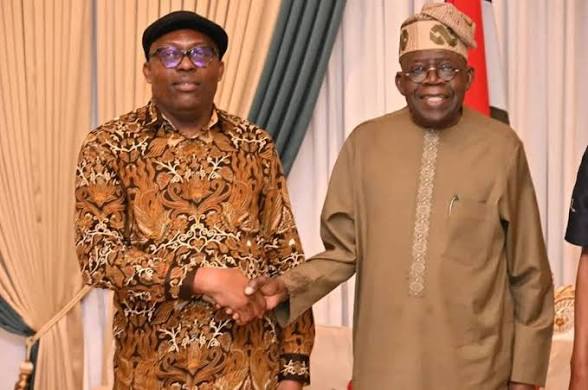
APC Group Endorses Fubara for 2027, Calls on Tinubu and APC to Prioritise Performance Over Politics in Backing Governor’s Second Term Ambition
*APC Group Endorses Fubara for 2027, Calls on Tinubu and APC to Prioritise Performance Over Politics in Backing Governor’s Second Term Ambition*
The APC National Vanguard has appealed to President Bola Ahmed Tinubu and the leadership of the All Progressives Congress (APC) to support a second term in office for Siminalayi Fubara, citing what it described as “impressive and verifiable developmental strides” across Rivers State.
In a statement issued on Thursday by its National President, Dr Gbenga Salam (JP), the group said its position followed an extensive assessment tour of key infrastructure and public service projects executed under the Fubara administration.
The APC National Vanguard said the appeal was based strictly on performance, arguing that governance outcomes should outweigh partisan considerations, particularly in a state as economically significant as Rivers.
“We respectfully urge President Bola Ahmed Tinubu and the leadership of the All Progressives Congress to support the continuity of Governor Siminalayi Fubara beyond his current tenure, in recognition of his commitment to development, prudent resource management, and people-focused governance,” the statement read.
According to the group, its delegation visited multiple project sites across the state, observing ongoing and completed works spanning road construction, urban renewal, and public infrastructure upgrades.
It noted that the scale and distribution of these projects reflect a deliberate effort by the state government to extend development beyond traditional urban centres and into underserved communities.
“Our findings from the tour reveal a government that is not only active but intentional in its development agenda. The execution of capital projects across various parts of Rivers State demonstrates a clear understanding of the needs of the people and a commitment to addressing them,” Dr Salam said.
The group particularly commended what it described as prudent financial management by the administration, noting that the projects reviewed showed evidence of careful planning and efficient allocation of resources.
“At a time when economic pressures are evident across the country, it is commendable that the Rivers State government has managed its resources in a way that delivers visible and impactful development without signs of fiscal recklessness,” the statement added.
The APC National Vanguard further observed that despite political tensions in the state, the Fubara administration has maintained focus on governance, ensuring continuity in project execution and service delivery.
The group argued that such stability is critical for sustained development and should be encouraged rather than disrupted.
“Leadership must ultimately be judged by results. In Rivers State, there is clear evidence of progress—projects that are not only announced but executed, and policies that translate into real benefits for citizens,” Dr Salam noted.
The group warned that discontinuity in leadership could stall ongoing projects and reverse gains already recorded, stressing the importance of allowing a performing administration to consolidate its achievements.
“Rivers State is at a pivotal stage where continuity will allow for the completion of ongoing initiatives and the deepening of development gains. Supporting Governor Fubara for a second term is, therefore, a decision in the best interest of the people,” the statement said.
In addition to its call on the APC leadership, the group reaffirmed its support for President Tinubu, expressing confidence in his administration’s broader economic and governance reforms.
The APC group urged Nigerians to remain supportive of efforts aimed at stabilising the economy and strengthening public institutions.
“We reiterate our endorsement of President Bola Ahmed Tinubu for a second term in office, in recognition of his leadership and commitment to national development. With sustained support, the administration can consolidate its reform agenda for the benefit of all Nigerians,” Dr Salam added.
The APC National Vanguard concluded by calling on political actors to prioritise development and public interest over partisan divides, insisting that governance should always be guided by performance and accountability.
“Where leadership demonstrates prudence, delivers development, and remains focused on the welfare of the people, it deserves continuity. This is the position we have reached after a careful and independent assessment of Rivers State,” the statement added.
*Renewed Hope Ambassadors Step Into the Next Phase
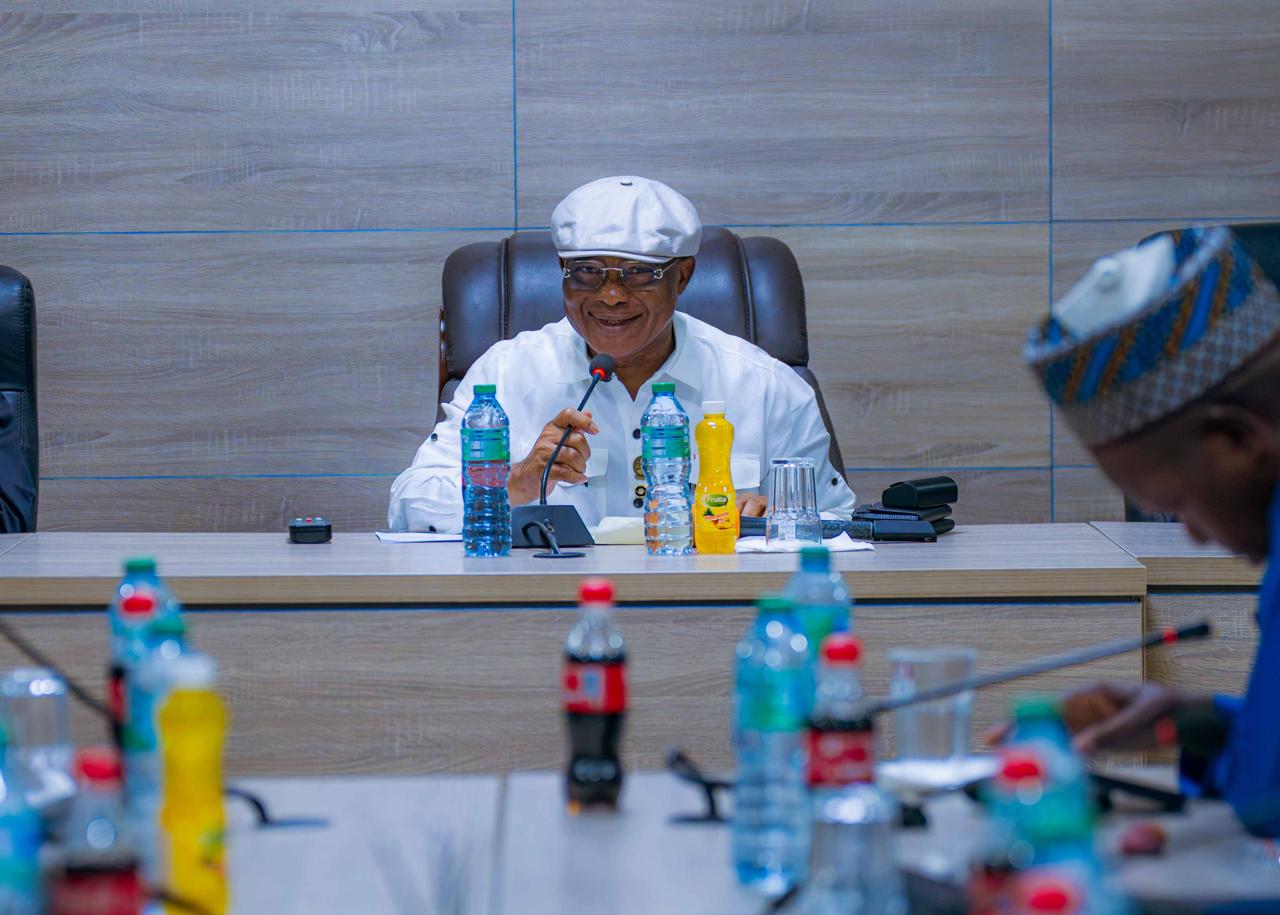
Fresh from the successful APC 2026 National Convention, the Renewed Hope Ambassadors National, Zonal, and State leadership gathered in Abuja over the weekend, for its fourth strategic meeting, setting the tone for nationwide grassroots activation ahead of 2027.
Chaired by Governor Hope Uzodinma (Imo State) the Director General and National Coordinator of the Renewed Hope Ambassadors, alongside Deputy Director-General, Governor Uba Sani of Kaduna State, and Governor Inuwa Yahaya of Gombe State as Secretary, the session reinforced one clear direction: One Party. One Message. One Mobilization whilst also laying out a strategic roadmap for the activation of the network across all communities in Nigeria.
Backed by the strength of 31 APC-led states, the Renewed Hope Agenda is taking Bola Ahmed Tinubu’s message of progress and reform to every corner of Nigeria.
From bold economic restructuring to initiatives like NELFUND, the increase in the national minimum wage from ₦30,000 to ₦70,000, and strategic investments in critical sectors, including PNiCGI, the mission remains clear: helping Nigerians understand both the purpose and the progress of the Renewed Hope vision.
This is coordination at scale. This is grassroots engagement with purpose. This is the next phase of Renewed Hope with One Party, One Message, and One Mobilisation framework
#RenewedHopeAmbassadors #APC #WeAreAPC


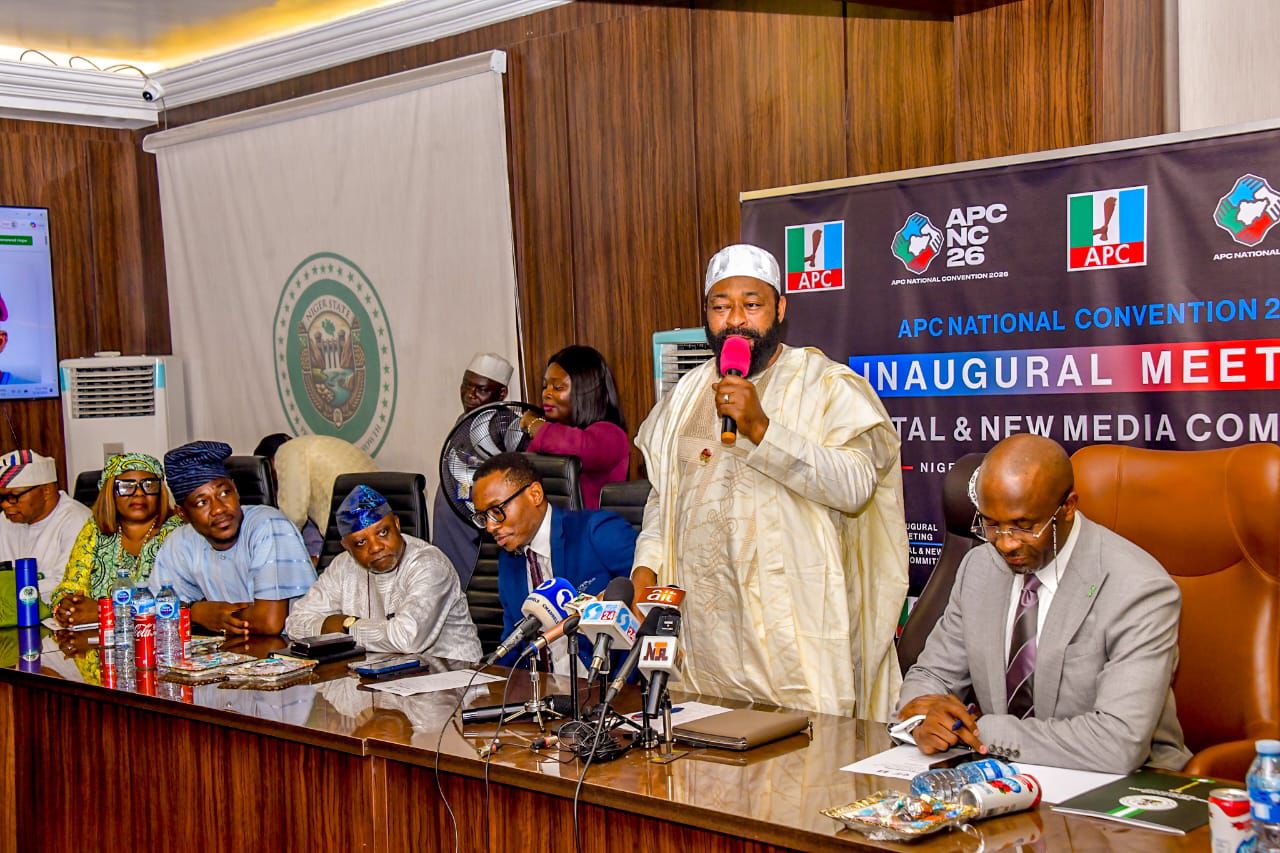
Governor Bago Inaugurates APC Digital Media Sub-Committee Ahead of National Convention.
Governor Umaru Bago has inaugurated the Digital Media Sub-Committee for the forthcoming National Convention of the All Progressives Congress (APC), scheduled to hold on March 27 and 28, 2026 in Abuja.
Chairing the sub-committee, Governor Bago tasked members with the responsibility of effectively communicating the party’s manifesto to the public.
He emphasized the need to leverage social media platforms to highlight the achievements and ongoing efforts of President Bola Ahmed Tinubu, noting that communication gaps have posed challenges that must now be decisively addressed.
The Co-Chair of the sub-committee, Hon. Benjamin Kalu, Deputy Speaker of the House of Representatives, echoed the Governor’s position, urging members to project the activities of both the party and the government to a broader audience.
He called for a deliberate and coordinated effort to showcase the party’s achievements and policy direction, stressing the importance of shaping a compelling and consistent narrative across all digital platforms.
Delivering a presentation to the committee, Otega Ogra, SSA to the President on New Media, who serves as Secretary of the sub-committee, outlined strategic focus areas to guide the team’s operations.
His presentation highlighted communication priorities and actionable steps to achieve the committee’s mandate and strengthen the party’s digital engagement.


-

 society6 months ago
Religion: Africa’s Oldest Weapon of Enslavement and the Forgotten Truth
-

 news4 months ago
WHO REALLY OWNS MONIEPOINT? The $290 Million Deal That Sold Nigeria’s Top Fintech to Foreign Interests
-

 society6 months ago
“You Are Never Without Help” – Pastor Gebhardt Berndt Inspires Hope Through Empower Church (Video)
-

 celebrity radar - gossips2 months ago
Dr. Chris Okafor Returns with Power and Fire of the Spirit -Mounts Grace Nation Altar with Fresh Anointing and Restoration Grace on February 1, 2026