
Business
Dollar Scarcity Eases as Elumelu Briefs Tinubu on FX Stability


Dollar Scarcity Eases as Elumelu Briefs Tinubu on FX Stability
By George Omagbemi Sylvester | Published by SaharaWeeklyNG
The Chairman of United Bank for Africa (UBA), Tony Elumelu, has declared that the era of acute dollar scarcity in Nigeria is effectively over, following a high-level meeting with President Bola Ahmed Tinubu in Abuja. According to Elumelu, reforms introduced by the federal government and the monetary authorities have “sorted” the foreign exchange market, restoring liquidity and improving investor confidence.
The meeting took place at the Presidential Villa in Abuja, where Elumelu briefed the President on developments within the banking and financial services sector. Speaking to State House correspondents afterward, the UBA chairman said commercial banks are no longer experiencing the severe foreign currency shortages that plagued the system throughout 2023 and early 2024. He attributed the improvement to ongoing policy adjustments and enhanced coordination between fiscal and monetary authorities.
The development marks a potentially significant turning point in Nigeria’s macroeconomic management. The country has faced persistent foreign exchange instability since mid-2023, when the government liberalised the naira and dismantled the long-standing multiple exchange rate regime. The policy shift, overseen by the Central Bank of Nigeria (CBN), initially triggered sharp currency depreciation, widened arbitrage opportunities and strained dollar supply channels.
Dollar scarcity had profound consequences. Manufacturers struggled to import raw materials, airlines complained of trapped revenues, foreign investors exited local markets, and inflation accelerated as the naira weakened. The crisis was compounded by a backlog of unmet foreign exchange obligations, which the CBN later confirmed ran into several billions of dollars.
Elumelu’s remarks suggest that recent measures (such as clearing portions of the FX backlog, tightening banking supervision and increasing transparency in currency trading platforms) are beginning to stabilise the market. Analysts note that the CBN has also introduced reforms aimed at curbing speculative activities and boosting diaspora remittances through formal channels.
“The true test of reform is liquidity and confidence,” said Professor Pat Utomi, political economist and founder of the Centre for Values in Leadership, in prior commentary on Nigeria’s economic reforms. “If market participants believe the rules are clear and consistently applied, capital will respond.” Elumelu’s optimism appears to align with that perspective, indicating that domestic banks are now able to meet legitimate foreign currency demands more efficiently.
However, economists urge caution. Dr. Bismarck Rewane, Managing Director of Financial Derivatives Company, has consistently argued that exchange rate stability requires sustained inflows, not episodic interventions. “Stability is not achieved by pronouncement,” he noted in a recent economic briefing. “It comes from productivity, exports, and credible monetary discipline.”
Indeed, while official channels may show improved liquidity, structural vulnerabilities remain. Nigeria’s foreign reserves fluctuate in response to oil price volatility, and crude oil production levels (long below OPEC quotas due to theft and infrastructure challenges) continue to influence dollar inflows. Without significant diversification of export earnings, experts warn that gains could prove fragile.
The government’s broader reform agenda also plays a central role. President Tinubu’s administration has implemented sweeping economic changes since assuming office in May 2023, including the removal of petrol subsidies and the unification of exchange rates. These policies were designed to eliminate distortions and restore fiscal sustainability, but they have also contributed to short-term inflationary pressures and social hardship.
In its 2024 Article IV consultation, the International Monetary Fund emphasized that exchange rate reforms must be accompanied by strong social protection measures and credible fiscal consolidation. “A unified and market-determined exchange rate is critical to restoring confidence,” the IMF stated, while urging authorities to protect vulnerable populations from adjustment shocks.
Elumelu’s intervention carries weight beyond symbolic reassurance. As one of Africa’s most prominent bankers and a major investor across the continent, his assessment reflects sentiment within Nigeria’s financial elite. If commercial banks indeed have improved access to foreign currency and are meeting corporate demand without severe delays, it suggests operational normalisation within the banking system.
Yet market participants will look beyond official optimism to empirical indicators: narrowing spreads between official and parallel exchange rates, declining FX forward premiums, improved foreign portfolio inflows, and rising non-oil export receipts. These metrics will ultimately determine whether the crisis has truly abated.
For now, the meeting in Abuja signals a narrative shift from emergency management to cautious stabilization. Whether this transition becomes durable depends on policy consistency, institutional credibility and Nigeria’s capacity to expand its foreign exchange earning base.
As economic historian Niall Ferguson has observed, “Confidence is the cheapest and most powerful stimulus.” The Tinubu administration appears to be banking on precisely that: restoring belief in Nigeria’s economic direction. Elumelu’s declaration that the dollar scarcity is over may be a milestone, but the sustainability of that claim will be judged not by words, but by the resilience of the market in the months ahead.





Fidelity Bank grows gross earnings by 38% to N434.95b in Q1
Fidelity Bank Plc recorded 37.9 per cent growth in gross earnings to N434.95 billion in first quarter 2026 as the international commercial bank continued to expand its core banking market share.
Interim report and accounts of Fidelity Bank for the three months ended March 31, 2026 released at the Nigerian Exchange (NGX) showed that gross earnings rose from N315.42 billion in first quarter 20025 to N434.95 billion in first quarter 2026, representing an increase of 37.9 per cent.
The top-line performance was driven by impressive growth in the bank’s core business operations with interest incomes rising by 22.8 per cent to N314.48 billion in first quarter 2026 as against N256.10 billion in first quarter 2025.
With net interest income at N180.97 billion, the bank closed the period with profit before tax of N92.48 billion. After taxes, net profit stood at N74.47 billion for the three-month period. Earnings per share remained high at N5.69, underlining the capacity of the bank to reward its shareholders.
The balance sheet of the bank also emerged stronger. Total assets crossed the N11 trillion mark to N11.35 trillion by March 2026 compared with N10.46 trillion recorded in December 2025. Customers’ deposits increased from N6.89 trillion to N7.38 trillion. Total equity rode on the back of earnings growth to a 27.5 per cent increase from N1.09 trillion in December 2025 to N1.39 trillion by March 2026.
The first quarter 2026 results further consolidated the strong earnings outlook of the bank, which had successfully completed its recapitalisation amidst impressive earnings performance in 2025.
Fidelity Bank had recorded double-digit growths in interest and non-interest incomes as well as key balance sheet items during the year ended December 31, 2025.
The audited report showed that gross earnings rose from N1.04 trillion in 2024 to N1.52 trillion in 2025, an increase of 45.6 per cent. Interest and similar incomes had grown by 38.7 per cent from N803.1 billion in 2024 to N1.11 trillion in 2025. Fees and commission incomes also rose by 44.7 per cent from N78.4 billion to N113.4 billion. The bank recorded net profit after tax of N242.4 billion in 2025.
The bank’s balance sheet emerged stronger with total assets rising by 18.6 per cent to N10.46 trillion in 2025 as against N8.82 trillion in 2024. Customer deposits increased by 16.1 per cent from N5.94 trillion to N6.89 trillion, reflecting continued franchise strength and an improved funding profile. Net loans and advances meanwhile declined by 2.4 per cent to N4.28 trillion in 2025 as against N4.39 trillion in 2024, attributable to customers paying down on their mature obligations.
The bank had in 2025 strengthened its capital position, with eligible capital rising to N561 billion, above the regulatory minimum of N500 billion for banks with international authorisation. In addition, capital adequacy had remained robust, with Capital Adequacy Ratio of 30.94 per cent by December 2025 as against 23.47 per cent by December 2024.
Managing Director, Fidelity Bank Plc, Dr. Nneka Onyeali-Ikpe, said the first quarter 2026 results reinforced the bank’s strong and resilient business model.
She noted that with the remarkable success of its recapitalisation programme and continuing expansion, Fidelity Bank has entered a new era of growth and impressive returns.
“We are on a stronger footing and confident that we will set new growth records that are reflective of our legacy and the future we are working on,” Onyeali-Ikpe said.
Business
Dangote Refinery Ends Nigeria’s Era of Fuel Import Dependence, Boosts GDP, FX Earnings — EIU
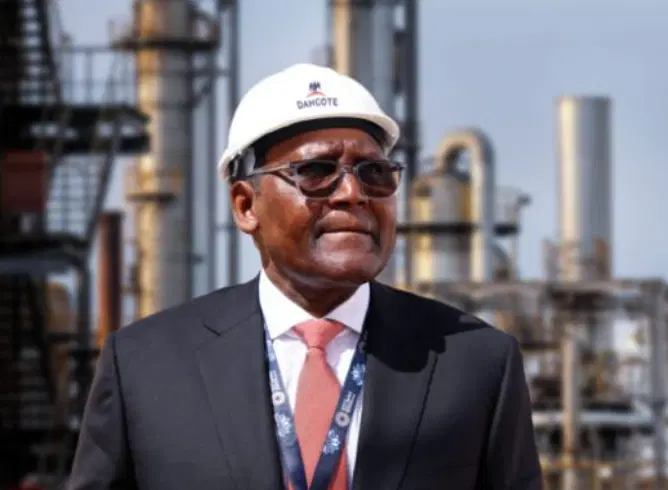
Dangote Refinery Ends Nigeria’s Era of Fuel Import Dependence, Boosts GDP, FX Earnings — EIU
The operational ramp up of the 650,000 barrels per day Dangote Petroleum Refinery & Petrochemicals is fundamentally reshaping Nigeria’s downstream oil sector, significantly reducing the country’s dependence on imported refined petroleum products and strengthening its external position, according to the Economist Intelligence Unit (EIU).
In its latest assessment on Nigeria’s fuel market and regulatory environment, the EIU said the refinery has already transformed a sector that was previously characterised by heavy reliance on imported fuel despite Nigeria being Africa’s largest crude oil producer. The report noted that the refinery met nearly 80 per cent of domestic petrol demand in April and produced enough volumes to satisfy local consumption requirements as operations approached full capacity.
The EIU described Nigeria’s downstream petroleum sector before the refinery as “long dysfunctional”, noting that the country had remained almost entirely dependent on costly imported fuel while producing nearly 1.5 million barrels of crude oil daily.
According to the report, the emergence of the refinery has reduced import dependence, improved domestic fuel availability and strengthened Nigeria’s balance of payments position through lower import demand and rising exports of refined petroleum products.
“The gradual ramp up of the 650,000 barrel/day Dangote refinery since May 2023 has transformed Nigeria’s long dysfunctional downstream sector,” the report stated. “The country’s main refineries, all state owned, had been inoperative for years and Nigeria was almost entirely reliant on costly imported fuel.”
The research and analysis division of The Economist Group, London added that the refinery’s attainment of full operational capacity and its planned expansion would further support Nigeria’s economic growth and foreign exchange earnings over the medium term.
“Meanwhile, the attainment of full capacity at, and an increase in exports from, the Dangote refinery will support real GDP growth and foreign exchange earnings in 2026 and 2027 and beyond, as a planned doubling of the plant’s output comes on stream around the end of the decade,” it added.
Industry analysts said the refinery is increasingly positioning Nigeria as an emerging refining and export hub, altering energy trade flows across Africa and reducing the vulnerability associated with fuel import dependence.
The EIU noted that the refinery’s expansion has coincided with major reforms in Nigeria’s downstream sector, including the removal of fuel subsidies and the introduction of market driven pricing mechanisms.
The report, however, said the transition from a state dominated fuel import structure to large scale domestic refining has triggered resistance from interests linked to the old import regime.
The latest tensions emerged following the decision by the Nigerian Midstream and Downstream Petroleum Regulatory Authority to relax restrictions on petrol imports despite the refinery’s growing capacity to meet domestic demand.
Dangote Industries subsequently initiated legal action, arguing that continued import approvals undermine domestic refining investments and conflict with the objectives of the Petroleum Industry Act, which seeks to encourage local refining capacity and reduce import dependence.
Analysts noted that the availability of large-scale domestic refining capacity has improved Nigeria’s energy security and reduced exposure to external supply shocks and foreign exchange volatility.
The Centre for the Promotion of Private Enterprise also cautioned against unrestrained importation of petroleum products, warning that such a policy could weaken Nigeria’s industrialisation drive and discourage investments in domestic refining.
Chief Executive Officer of CPPE, Muda Yusuf, said continued dependence on imported fuel had historically contributed to pressure on foreign reserves, exchange rate instability and fiscal leakages.
The refinery’s growing impact is also being reflected in Nigeria’s broader macroeconomic indicators. Earlier this month, S&P Global Ratings cited increased domestic refining capacity and rising hydrocarbon exports among the major factors supporting Nigeria’s sovereign credit rating upgrade – the first in 14 years.
Beyond Nigeria, analysts said the refinery is increasingly being viewed as a strategic industrial asset for Africa, where many countries remain heavily dependent on imported fuel despite rising demand for transportation, manufacturing, and power generation.
Business
BREAKING: Court Dismisses $19.6 Million Claim Against NNPCL — Rules Contract Scope Cannot Be Changed Orally

BREAKING: Court Dismisses $19.6 Million Claim Against NNPCL — Rules Contract Scope Cannot Be Changed Orally
In a landmark ruling on Friday, May 22, 2026, the Federal Capital Territory High Court in Abuja threw out a $19.6 million lawsuit filed by Alternate Dimensions Ventures Ltd against the Nigerian National Petroleum Company Limited (NNPCL), affirming a key legal principle: a written contract cannot be expanded through oral agreements or conduct.
Alternate Dimensions had sought $19,600,000 in professional fees, claiming the scope of its Direct Sale, Direct Purchase (DSDP e-pro) contract with NNPCL was orally expanded. Represented by counsel Patrick Peter, the firm argued it was entitled to the revised sum for services rendered under the alleged new terms.
But NNPCL, through its lawyer Ituah Imhanze of KENNA LP, pushed back sharply, arguing that parties are bound exclusively by the clear terms of their written agreement. Imhanze contended that without any written amendment, the claim was legally unsound, and the court agreed.
Delivering judgment, Justice Hamza Mu’azu upheld NNPCL’s defense, stating that the contract was unambiguous and that no evidence was adduced during the trial, which supported the alleged scope expansion. The court further found that NNPCL fully complied with all contractual terms and committed no breach.
Dismissing the suit as meritless, Justice Mu’azu reinforced the doctrine of sanctity of contract: any amendment to a written agreement must be express, unequivocal, and documented, not implied or verbal.
The ruling spares NNPCL from the S19.6 million claim and also a floodgate of similar potential liabilities.


- Annual Meetings 2026 (AM2026): African Development Bank Group’s 2025 Annual Report Highlights Strong Results and a New Chapter for Africa’s Transformation May 29, 2026
- Eritrea: Progress of National Animal and Plant Health Laboratory May 29, 2026
- Invest Africa, the Mayor of London and FirstBank United Kingdom (UK) to Host Joint Closing Reception as part of The Africa Debate 2026 May 29, 2026
- Merck Foundation Chief Executive Officer (CEO) Dr. Rasha Kelej met Gabon First Lady to discuss the strategy to continue their joint programs to build healthcare capacity and support girl education May 29, 2026
- ‘Crude Oil: Power, Turnaround and Transformation in Angola’ Debuts as Top 3 Amazon New Release May 29, 2026
- Société Nationale des Pétroles du Congo (SNPC) Chief Ominga to Speak at African Energy Week (AEW) 2026 as Congo Accelerates Gas Expansion May 29, 2026
- South Africa: Deputy President Mashatile arrives in India for a Working Visit May 29, 2026
- Seychelles: President Visits Key Development Sites on Coetivy Island May 29, 2026
- Accelerating regional action to advance mental health care in Africa May 29, 2026
- President of the Republic of Seychelles Meets Young La Digue Talent Ahead of London Showcase May 29, 2026
- Annual Meetings 2026 (AM2026): African Development Bank Group’s 2025 Annual Report Highlights Strong Results and a New Chapter for Africa’s Transformation May 29, 2026
- Eritrea: Progress of National Animal and Plant Health Laboratory May 29, 2026
- Invest Africa, the Mayor of London and FirstBank United Kingdom (UK) to Host Joint Closing Reception as part of The Africa Debate 2026 May 29, 2026
- Merck Foundation Chief Executive Officer (CEO) Dr. Rasha Kelej met Gabon First Lady to discuss the strategy to continue their joint programs to build healthcare capacity and support girl education May 29, 2026
- ‘Crude Oil: Power, Turnaround and Transformation in Angola’ Debuts as Top 3 Amazon New Release May 29, 2026
- Société Nationale des Pétroles du Congo (SNPC) Chief Ominga to Speak at African Energy Week (AEW) 2026 as Congo Accelerates Gas Expansion May 29, 2026
- South Africa: Deputy President Mashatile arrives in India for a Working Visit May 29, 2026
-

 news6 months ago
WHO REALLY OWNS MONIEPOINT? The $290 Million Deal That Sold Nigeria’s Top Fintech to Foreign Interests
-

 society4 weeks ago
SOCIAL MEDIA IS NOT A BATTLEFIELD COMMAND – WHY THE NIGERIAN ARMY’S ACTION AGAINST JUSTICE CRACK IS A NATIONAL SECURITY IMPERATIVE
-

 celebrity radar - gossips4 months ago
Dr. Chris Okafor Returns with Power and Fire of the Spirit -Mounts Grace Nation Altar with Fresh Anointing and Restoration Grace on February 1, 2026
-

 celebrity radar - gossips6 months ago
Prophet Kingsley Aitafo Releases 2026 Prophecy: ‘Nigeria Will Rise, but the World Must Prepare for Turbulence’