
Business
Nigeria’s Economy May Not Survive on Statistical Manipulation

Nigeria’s Economy May Not Survive on Statistical Manipulation
BY BLAISE UDUNZE
Nigerians should gear up to start seeking accountability from those in power because the country is gradually entering one of the most dangerous phases in its economic history, not merely because inflation is high, unemployment is worsening, or public debt is rising, but because the institutions responsible for telling them the truth about the economy are either failing, compromised, silent or increasingly non-transparent.
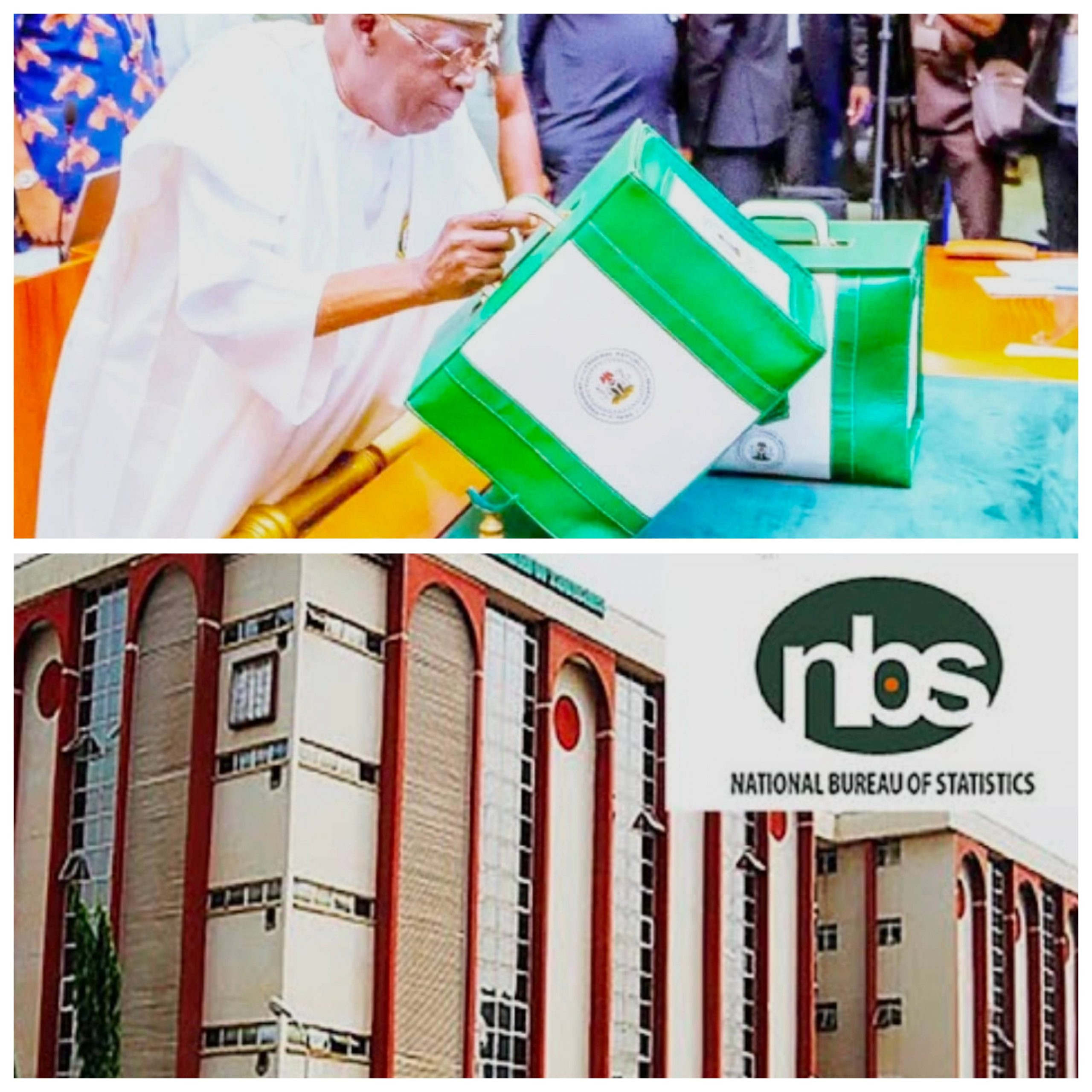
At the centre of this deepening crisis are two disturbing realities. First is the National Bureau of Statistics’ failure to publish credible and updated labour force data for more than 14 months despite unemployment being identified globally as Nigeria’s biggest economic threat. Second is the Budget Office of the Federation’s refusal or inability to publish statutory budget implementation reports for three consecutive quarters in violation of the Fiscal Responsibility Act.
Together, these failures represent something far more dangerous than administrative delay. They expose a governance culture increasingly defined by selective transparency, institutional opacity and economic manipulation. Nigeria is now dangerously close to governing itself without verifiable facts.
A nation cannot plan effectively when it cannot measure unemployment honestly. Neither can it fight corruption or fiscal leakages when it refuses to disclose how public funds are being spent. This is not merely an economic problem. It is a crisis of national credibility.
The irony is painful. While the World Economic Forum’s Global Risks Report identified unemployment and lack of economic opportunity as Nigeria’s leading economic threat for 2026, Nigeria itself has failed to publish official labour statistics capable of accurately measuring that threat since the second quarter of 2024.
That silence speaks volumes and could keep everyone wondering what the problem might be. At a period when millions of Nigerian youths are trapped between hopelessness, with an inflation rate currently 15.69 percent, collapsing purchasing power and shrinking job opportunities, while the absence of current labour data creates an economic blind spot of dangerous proportions. Policymakers are formulating reforms without clear visibility into labour realities.
Investors are assessing risks using outdated or disputed figures. With the apparent lack of clear direction, citizens are left with no choice but to wonder whether economic statistics are now instruments of propaganda rather than reflections of reality.
The controversy surrounding the infamous 4.3 percent unemployment figure released by the NBS in 2024 only deepened this distrust. It is both laughable and amazing for millions of Nigerians struggling daily to survive, the claim that unemployment had magically crashed from over 33 percent in 2020 to about 3.06 percent rate for 2025 felt detached from reality, which is based on March 2026 reports. Factories were shutting down. Multinationals were exiting Nigeria. Manufacturing firms were downsizing. Informal labour was exploding. Youth migration was accelerating. Yet official statistics suggested Nigeria was suddenly approaching near-full employment.
The explanation lay in the controversial redesign of the unemployment methodology. Under the revised framework, anybody who worked even minimal hours weekly could be classified as employed. While the NBS argued that the changes aligned with international best practices, critics insisted that the methodology ignored Nigeria’s peculiar economic conditions dominated by underemployment, survival jobs, disguised unemployment and casual labour.
The backlash was immediate and fierce. The Nigeria Labour Congress described the report as “fraudulent” and a “voodoo document”. Labour leaders warned that rebasing employment definitions merely to produce lower unemployment figures would destroy public trust in national statistics. Trade unions, manufacturers and employers’ associations openly rejected the figures.
The reality confronting businesses contradicted the official optimism. Textile factories were closing. Manufacturers were rationalising staff due to unbearable energy costs, foreign exchange instability and multiple taxation. Labour unions lamented rising casualisation as permanent jobs disappeared. The National Union of Chemical, Footwear, Rubber, Leather and Non-Metallic Products Employees revealed it had lost over 20,000 workers within one year because companies could no longer survive Nigeria’s harsh operating environment.
Yet official figures suggested unemployment was falling. This contradiction is dangerous because economic data is not supposed to comfort governments; it is supposed to guide policy.
When data becomes politically convenient rather than economically truthful, governance itself becomes distorted.
The problem is not merely methodological. It is institutional credibility. Why did the unemployment rate collapse statistically while poverty, inflation and hunger worsened visibly? Why has the NBS failed to publish updated labour force statistics for over 14 months if confidence in the methodology remains intact? Why are citizens increasingly suspicious of official numbers?
Unarguably, these questions matter because trust in national statistics is foundational to economic governance, but it appears that policymakers place less importance on this fact.
One thing that is missing is that they have yet to take into cognizance that countries cannot attract sustainable investments when investors doubt the credibility of official data. This is to say that international lenders, development institutions, and private investors depend on reliable statistics to evaluate risks, forecast growth and allocate resources. Once statistical integrity becomes questionable, economic credibility suffers.
Unfortunately, the non-transparency surrounding labour data is now being mirrored in Nigeria’s fiscal management architecture. The Budget Office of the Federation has failed to publish statutory budget implementation reports for three consecutive quarters despite explicit provisions of the Fiscal Responsibility Act requiring quarterly disclosure.
This failure is profound. Budget implementation reports are not ceremonial publications. But they have failed to acknowledge that these are among the few mechanisms citizens possess to independently evaluate whether public funds are being used responsibly. The simple fact is that these reports reveal actual revenue generated, expenditures incurred, projects executed and budget performance levels. Without them, public finance enters dangerous darkness.
According to findings, reports for the third and fourth quarters of 2025 and the first quarter of 2026 remain unpublished. This marks the first time in 15 years that Nigeria’s Budget Office has failed to release quarterly budget performance reports.
More concerning is that this comes at a time when Nigeria is implementing one of the largest budgets in its history. The National Assembly recently approved a staggering N68.3 trillion 2026 budget, significantly higher than the original N58.4 trillion proposal. While government officials describe it as a “legacy budget” aimed at infrastructure development and capital investment, Nigerians still do not know how previous budgets were substantially implemented.
This creates a dangerous accountability vacuum. How can citizens assess whether previous allocations achieved measurable outcomes when implementation reports are hidden? How can lawmakers exercise oversight without timely disclosures? How can anti-corruption agencies track leakages effectively? How can development partners verify fiscal discipline?
The truth is simple because unpublished budgets create fertile grounds for corruption, waste and fiscal manipulation.
More troubling are recent revelations from the World Bank exposing structural leakages within Nigeria’s fiscal system. According to the institution, over N34.53 trillion was diverted through pre-distribution deductions between 2023 and 2025 before revenues reached the Federation Account.
That figure is staggering. The World Bank warned that approximately 41 percent of government revenues never reached distributable pools because they were deducted as “first-line charges” by agencies operating outside conventional budgetary scrutiny.
Reports indicating that over $214 billion in public funds may have been lost, diverted, or trapped in non-transparent fiscal systems over the last decade capture the scale of Nigeria’s accountability crisis. More recently, it’s the shenanigans on the FAAC allocations of N800billion funds from States’ statutory shares meant to pay civil servants and improve on social amenities were channeled into private accounts linked to the Governor of Imo State, Hope Uzodinma, Chairman of the Progressive Governors Forum, to fund Tinubu’s 2027 re-election campaign.
With these intolerable developments, it becomes glaring that this is precisely why transparency without secrecy matters. The challenge is that when billions and trillions of funds move through non-transparent structures without rigorous disclosure, accountability collapses, whilst the citizens lose visibility over public finances and institutions responsible for oversight become weakened or compromised, which remains a litmus test for trust.
ActionAid Nigeria rightly described the development as “institutionalised revenue erosion” and warned that continued impenetrability undermines fiscal stability, public trust and development.
Truly and without an iota of doubt, its warning deserves more serious attention at this time. At a period when Nigerians are enduring painful economic reforms, rising transport costs, collapsing purchasing power, worsening insecurity and deepening hunger, every missing naira has human consequences. Every hidden expenditure weakens healthcare delivery, education, infrastructure and social protection.
One painful and unbearable approach is that instead of increasing transparency to reassure citizens, government institutions appear increasingly hard to understand, just to continue in their criminal and wasteful acts.
The consequences extend beyond economics into democratic legitimacy itself. Public trust erodes when citizens believe governments manipulate data, conceal budget performance and evade accountability. Eventually, institutions lose moral authority. Official figures become objects of suspicion rather than instruments of governance.
This is the larger danger confronting Nigeria today. Economic suffocation rarely begins with recession alone. It begins when institutions stop telling the truth.
It begins when governments prioritise narrative management over measurable realities. It deepens when citizens can no longer independently verify claims about unemployment, inflation, debt, revenue or budget performance.
Nigeria now risks entering that dangerous territory. Even more concerning is the growing culture of overlapping budgets, delayed implementation cycles and weak fiscal discipline. The government is reportedly still implementing components of previous budgets while simultaneously introducing new appropriations worth tens of trillions of naira.
This raises serious questions about planning efficiency, execution capacity and fiscal sustainability. If only about a quarter of approved capital expenditure is being effectively implemented, as recent reports suggest, then Nigeria’s challenge is not merely budget size but governance quality. Large budgets without transparency become monuments of waste.
The Fiscal Responsibility Commission, established to enforce compliance, has also appeared largely ineffective. Although the Fiscal Responsibility Act outlines numerous offences, enforcement remains weak while violations attract little or no consequences.
This culture of impunity emboldens institutional noncompliance. The implications for Nigeria’s economy are severe.
In every functional business atmosphere, foreign investors seek predictable and transparent environments. Credit rating agencies evaluate governance credibility alongside macroeconomic indicators. Development institutions increasingly emphasise fiscal accountability and data reliability but this does not apply to Nigeria.
An economy governed through disputed statistics and unpublished fiscal reports cannot inspire long-term confidence. The Tinubu administration must take cognizance of the fact that credibility itself is now an economic asset.
Understandably, reforms may initially be painful, but the irresistible fact is that citizens tolerate sacrifice better when governance appears transparent, honest and accountable. What destroys confidence is the perception that institutions are concealing realities while citizens bear the burden of economic hardship.
Nigeria does not merely need economic reforms. It needs truth-based governance. The National Bureau of Statistics must urgently restore credibility by publishing updated labour force statistics transparently and consistently. Methodological frameworks should be openly explained while stakeholder engagement must be strengthened to rebuild public confidence.
Similarly, the Budget Office must immediately release all outstanding budget implementation reports as required by law. Judging from the trend of events, it is a well-known fact that fiscal transparency cannot remain optional in a struggling economy already burdened by debt, inflation and widespread distrust.
Beyond publication, enforcement mechanisms must become stronger. Institutions that violate statutory disclosure obligations should face consequences. Accountability cannot survive where compliance is selective.
Nigeria’s future depends not only on how much revenue it generates or how large its budgets become, but on whether institutions remain credible enough to manage public trust.
Because no economy can thrive sustainably and more importantly, Nigeria cannot build its $1 trllion economy on invisible budgets, missing labour data, manufactured statistics and selective transparency. And no nation survives for long when truth itself becomes negotiable.
Blaise, a journalist and PR professional, writes from Lagos and can be reached via: [email protected]





Fidelity Bank grows gross earnings by 38% to N434.95b in Q1
Fidelity Bank Plc recorded 37.9 per cent growth in gross earnings to N434.95 billion in first quarter 2026 as the international commercial bank continued to expand its core banking market share.
Interim report and accounts of Fidelity Bank for the three months ended March 31, 2026 released at the Nigerian Exchange (NGX) showed that gross earnings rose from N315.42 billion in first quarter 20025 to N434.95 billion in first quarter 2026, representing an increase of 37.9 per cent.
The top-line performance was driven by impressive growth in the bank’s core business operations with interest incomes rising by 22.8 per cent to N314.48 billion in first quarter 2026 as against N256.10 billion in first quarter 2025.
With net interest income at N180.97 billion, the bank closed the period with profit before tax of N92.48 billion. After taxes, net profit stood at N74.47 billion for the three-month period. Earnings per share remained high at N5.69, underlining the capacity of the bank to reward its shareholders.
The balance sheet of the bank also emerged stronger. Total assets crossed the N11 trillion mark to N11.35 trillion by March 2026 compared with N10.46 trillion recorded in December 2025. Customers’ deposits increased from N6.89 trillion to N7.38 trillion. Total equity rode on the back of earnings growth to a 27.5 per cent increase from N1.09 trillion in December 2025 to N1.39 trillion by March 2026.
The first quarter 2026 results further consolidated the strong earnings outlook of the bank, which had successfully completed its recapitalisation amidst impressive earnings performance in 2025.
Fidelity Bank had recorded double-digit growths in interest and non-interest incomes as well as key balance sheet items during the year ended December 31, 2025.
The audited report showed that gross earnings rose from N1.04 trillion in 2024 to N1.52 trillion in 2025, an increase of 45.6 per cent. Interest and similar incomes had grown by 38.7 per cent from N803.1 billion in 2024 to N1.11 trillion in 2025. Fees and commission incomes also rose by 44.7 per cent from N78.4 billion to N113.4 billion. The bank recorded net profit after tax of N242.4 billion in 2025.
The bank’s balance sheet emerged stronger with total assets rising by 18.6 per cent to N10.46 trillion in 2025 as against N8.82 trillion in 2024. Customer deposits increased by 16.1 per cent from N5.94 trillion to N6.89 trillion, reflecting continued franchise strength and an improved funding profile. Net loans and advances meanwhile declined by 2.4 per cent to N4.28 trillion in 2025 as against N4.39 trillion in 2024, attributable to customers paying down on their mature obligations.
The bank had in 2025 strengthened its capital position, with eligible capital rising to N561 billion, above the regulatory minimum of N500 billion for banks with international authorisation. In addition, capital adequacy had remained robust, with Capital Adequacy Ratio of 30.94 per cent by December 2025 as against 23.47 per cent by December 2024.
Managing Director, Fidelity Bank Plc, Dr. Nneka Onyeali-Ikpe, said the first quarter 2026 results reinforced the bank’s strong and resilient business model.
She noted that with the remarkable success of its recapitalisation programme and continuing expansion, Fidelity Bank has entered a new era of growth and impressive returns.
“We are on a stronger footing and confident that we will set new growth records that are reflective of our legacy and the future we are working on,” Onyeali-Ikpe said.
Business
Dangote Refinery Ends Nigeria’s Era of Fuel Import Dependence, Boosts GDP, FX Earnings — EIU
Dangote Refinery Ends Nigeria’s Era of Fuel Import Dependence, Boosts GDP, FX Earnings — EIU
The operational ramp up of the 650,000 barrels per day Dangote Petroleum Refinery & Petrochemicals is fundamentally reshaping Nigeria’s downstream oil sector, significantly reducing the country’s dependence on imported refined petroleum products and strengthening its external position, according to the Economist Intelligence Unit (EIU).
In its latest assessment on Nigeria’s fuel market and regulatory environment, the EIU said the refinery has already transformed a sector that was previously characterised by heavy reliance on imported fuel despite Nigeria being Africa’s largest crude oil producer. The report noted that the refinery met nearly 80 per cent of domestic petrol demand in April and produced enough volumes to satisfy local consumption requirements as operations approached full capacity.
The EIU described Nigeria’s downstream petroleum sector before the refinery as “long dysfunctional”, noting that the country had remained almost entirely dependent on costly imported fuel while producing nearly 1.5 million barrels of crude oil daily.
According to the report, the emergence of the refinery has reduced import dependence, improved domestic fuel availability and strengthened Nigeria’s balance of payments position through lower import demand and rising exports of refined petroleum products.
“The gradual ramp up of the 650,000 barrel/day Dangote refinery since May 2023 has transformed Nigeria’s long dysfunctional downstream sector,” the report stated. “The country’s main refineries, all state owned, had been inoperative for years and Nigeria was almost entirely reliant on costly imported fuel.”
The research and analysis division of The Economist Group, London added that the refinery’s attainment of full operational capacity and its planned expansion would further support Nigeria’s economic growth and foreign exchange earnings over the medium term.
“Meanwhile, the attainment of full capacity at, and an increase in exports from, the Dangote refinery will support real GDP growth and foreign exchange earnings in 2026 and 2027 and beyond, as a planned doubling of the plant’s output comes on stream around the end of the decade,” it added.
Industry analysts said the refinery is increasingly positioning Nigeria as an emerging refining and export hub, altering energy trade flows across Africa and reducing the vulnerability associated with fuel import dependence.
The EIU noted that the refinery’s expansion has coincided with major reforms in Nigeria’s downstream sector, including the removal of fuel subsidies and the introduction of market driven pricing mechanisms.
The report, however, said the transition from a state dominated fuel import structure to large scale domestic refining has triggered resistance from interests linked to the old import regime.
The latest tensions emerged following the decision by the Nigerian Midstream and Downstream Petroleum Regulatory Authority to relax restrictions on petrol imports despite the refinery’s growing capacity to meet domestic demand.
Dangote Industries subsequently initiated legal action, arguing that continued import approvals undermine domestic refining investments and conflict with the objectives of the Petroleum Industry Act, which seeks to encourage local refining capacity and reduce import dependence.
Analysts noted that the availability of large-scale domestic refining capacity has improved Nigeria’s energy security and reduced exposure to external supply shocks and foreign exchange volatility.
The Centre for the Promotion of Private Enterprise also cautioned against unrestrained importation of petroleum products, warning that such a policy could weaken Nigeria’s industrialisation drive and discourage investments in domestic refining.
Chief Executive Officer of CPPE, Muda Yusuf, said continued dependence on imported fuel had historically contributed to pressure on foreign reserves, exchange rate instability and fiscal leakages.
The refinery’s growing impact is also being reflected in Nigeria’s broader macroeconomic indicators. Earlier this month, S&P Global Ratings cited increased domestic refining capacity and rising hydrocarbon exports among the major factors supporting Nigeria’s sovereign credit rating upgrade – the first in 14 years.
Beyond Nigeria, analysts said the refinery is increasingly being viewed as a strategic industrial asset for Africa, where many countries remain heavily dependent on imported fuel despite rising demand for transportation, manufacturing, and power generation.
Business
BREAKING: Court Dismisses $19.6 Million Claim Against NNPCL — Rules Contract Scope Cannot Be Changed Orally

BREAKING: Court Dismisses $19.6 Million Claim Against NNPCL — Rules Contract Scope Cannot Be Changed Orally
In a landmark ruling on Friday, May 22, 2026, the Federal Capital Territory High Court in Abuja threw out a $19.6 million lawsuit filed by Alternate Dimensions Ventures Ltd against the Nigerian National Petroleum Company Limited (NNPCL), affirming a key legal principle: a written contract cannot be expanded through oral agreements or conduct.
Alternate Dimensions had sought $19,600,000 in professional fees, claiming the scope of its Direct Sale, Direct Purchase (DSDP e-pro) contract with NNPCL was orally expanded. Represented by counsel Patrick Peter, the firm argued it was entitled to the revised sum for services rendered under the alleged new terms.
But NNPCL, through its lawyer Ituah Imhanze of KENNA LP, pushed back sharply, arguing that parties are bound exclusively by the clear terms of their written agreement. Imhanze contended that without any written amendment, the claim was legally unsound, and the court agreed.
Delivering judgment, Justice Hamza Mu’azu upheld NNPCL’s defense, stating that the contract was unambiguous and that no evidence was adduced during the trial, which supported the alleged scope expansion. The court further found that NNPCL fully complied with all contractual terms and committed no breach.
Dismissing the suit as meritless, Justice Mu’azu reinforced the doctrine of sanctity of contract: any amendment to a written agreement must be express, unequivocal, and documented, not implied or verbal.
The ruling spares NNPCL from the S19.6 million claim and also a floodgate of similar potential liabilities.


- Africa Centres for Disease Control and Prevention (Africa CDC) Welcomes Pandemic Fund’s US$220m Support for Bundibugyo Virus Outbreak Response June 8, 2026
- Africa Centres for Disease Control and Prevention (Africa CDC) and World Health Organization (WHO) Launch Joint Continental Ebola Response Plan June 8, 2026
- Statement of the Catholic Bishops of Africa on the Tragic Killing of Most Rev. Osório Citora Afonso, Bishop of Quelimane and Apostolic Administrator of the Archdiocese of Beira June 8, 2026
- Journal of Public Health in Africa Expands with New Rapid Communications, Policy and News Sections June 8, 2026
- Mining Review Africa expands coverage to include global mining news June 8, 2026
- 13,000 Hectare Wild Coast Conservation Property Comes to the Market in the Eastern Cape June 8, 2026
- President Isaias Afwerki Departs for Egypt June 7, 2026
- Eritrea: Athlete Nahom Ermias Champion of Asmara Marathon 2026 June 7, 2026
- World Health Organization (WHO) Hands Over Ebola Preparedness Supplies to Strengthen Zambia’s Readiness June 7, 2026
- Joint Statement by the World Health Organization (WHO) and Food and Agriculture Organization of the United Nations (FAO) in South Africa on World Food Safety Day 2026: From burden to solutions – safe food everywhere June 7, 2026
- Africa Centres for Disease Control and Prevention (Africa CDC) Welcomes Pandemic Fund’s US$220m Support for Bundibugyo Virus Outbreak Response June 8, 2026
- Africa Centres for Disease Control and Prevention (Africa CDC) and World Health Organization (WHO) Launch Joint Continental Ebola Response Plan June 8, 2026
- Statement of the Catholic Bishops of Africa on the Tragic Killing of Most Rev. Osório Citora Afonso, Bishop of Quelimane and Apostolic Administrator of the Archdiocese of Beira June 8, 2026
- Journal of Public Health in Africa Expands with New Rapid Communications, Policy and News Sections June 8, 2026
- Mining Review Africa expands coverage to include global mining news June 8, 2026
- 13,000 Hectare Wild Coast Conservation Property Comes to the Market in the Eastern Cape June 8, 2026
- President Isaias Afwerki Departs for Egypt June 7, 2026
-

 news6 months ago
WHO REALLY OWNS MONIEPOINT? The $290 Million Deal That Sold Nigeria’s Top Fintech to Foreign Interests
-

 society1 month ago
SOCIAL MEDIA IS NOT A BATTLEFIELD COMMAND – WHY THE NIGERIAN ARMY’S ACTION AGAINST JUSTICE CRACK IS A NATIONAL SECURITY IMPERATIVE
-

 celebrity radar - gossips4 months ago
Dr. Chris Okafor Returns with Power and Fire of the Spirit -Mounts Grace Nation Altar with Fresh Anointing and Restoration Grace on February 1, 2026
-

 celebrity radar - gossips6 months ago
Prophet Kingsley Aitafo Releases 2026 Prophecy: ‘Nigeria Will Rise, but the World Must Prepare for Turbulence’