Connect with us

celebrity radar - gossips

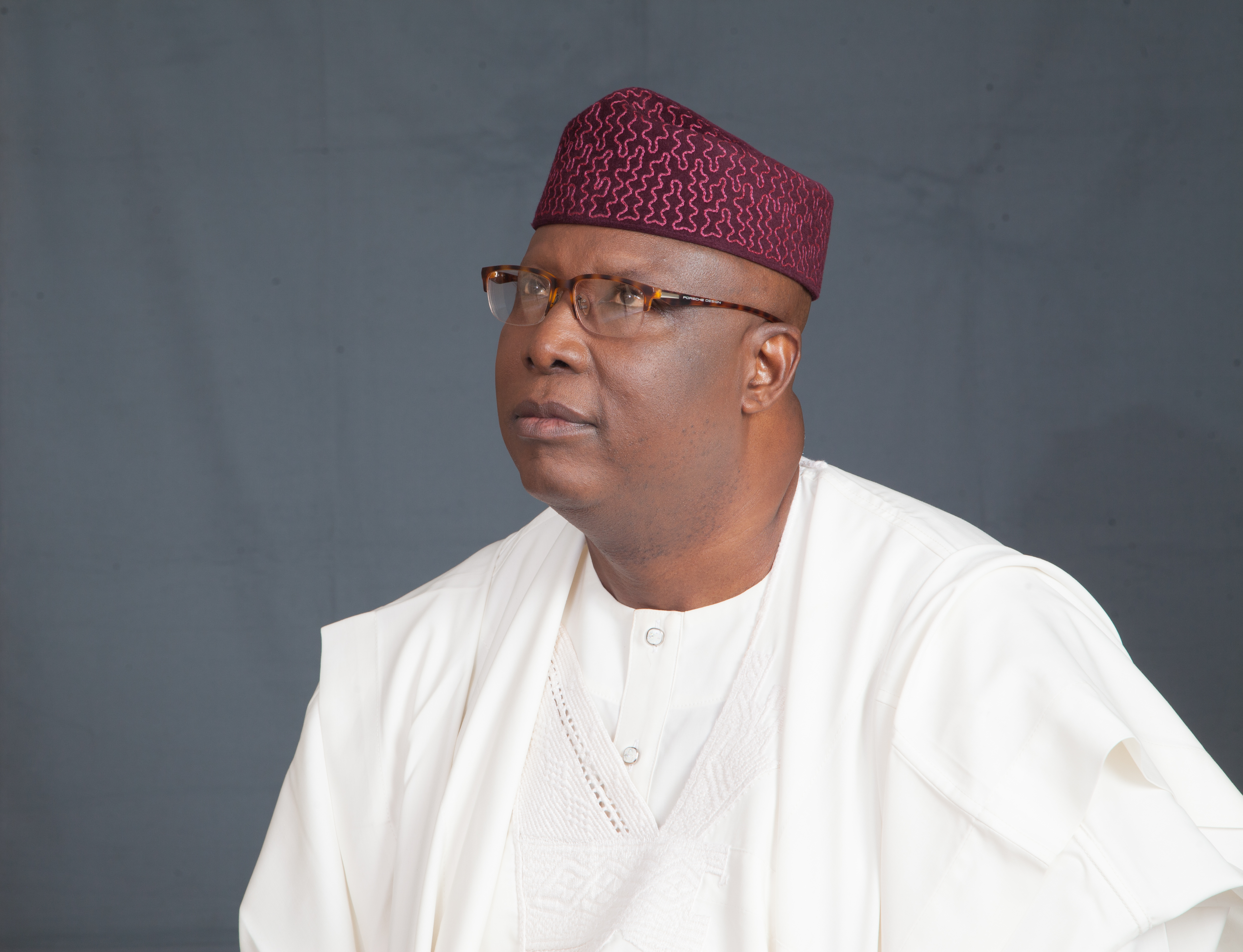
Ekiti Governorship: Factors in favour of Babafemi Ojudu

Published

on

“If we don’t tackle this problem now, help this people out, our children
will not be able to visit this place, not to talk of live here in the
future.” These were the exact words used by Senator Babafemi Ojudu in a
prose elegy he wrote for late Olufunmilayo Adunni Olayinka, who died
while serving as deputy to the immediate past governor of Ekiti State,
Dr John Kayode Fayemi.
Ojudu titled the elegy ‘Adunni: The journey of an accidental
politician’. Though he claimed the words were not his and he credited
them to the late deputy governor, who happened to be a native of Ado
Ekiti like him, they could as well be described as a retrospection of
sort. Due to some characters displayed by Ojudu over time, which people
have described as alien to political conducts, it might not be wrong for
the Senator and Special Adviser to have on different occasions asked
himself why he was venturing into the rough tidal terrain of Nigerian
politics. But, again, Senator Ojudu is a resolute fighter, who would not
give up on his conviction. He would have consoled himself with the words
of the legendary Plato that one of the penalties for refusing to
participate in politics is that one ends up being governed by one’s
inferiors.
From being a journalist to a human rights activist to a pro-democracy
activist to a reformer, then a Senator and currently a Special Adviser
to the President of Nigeria on Political Matters, Ojudu’s journey of
becoming a politician is a highly inspiring one. Though he is neither an
infantile democrat nor a rookie progressive, his venturing into politics
must have been informed by the belief that politics was too serious a
matter to be left to the politicians. His mindset has always been that
whenever the rights of one man are threatened, the rights of every man
are diminished. This explains why he has contested and won an election
before, and has, as well, been appointed a political adviser. He is
well-known for his innovative ideas and initiatives raising
revolutionary consciousness in people.
As Ekiti State goes in search of a governor that will right all the
wrongs of the incumbent Ayodele Fayose, and as the progressives in the
All Progressives Congress jostle for the single ticket, which would
serve as the ace, certain factors must notch an aspirant above others.
And when one thinks of the character traits that make a good politician
like integrity and optimism, Senator Babafemi Ojudu soars shoulder high
above the rest aspirants, especially considering the following factors
that can just not be overlooked:
History of political activism: Senator Babafemi Ojudu rates very high
among those who fought for the return of democracy in Nigeria as
currently being enjoyed. Even as a journalist, Ojudu played a very
active part in not only reorientating journalists in the country towards
emancipation from dictatorship, but confronting the military
dictatorship headlong. He was unfairly incarcerated for fighting for the
entrenchment of democratic rule in Nigeria. He suffered other forms of
persecutions, but his spirit remained non-shattered until democracy was
achieved.
Boldness: In everything he does, Ojudu puts boldness into it. Boldness
in this contest doesn’t mean being rude, obnoxious, loud, or
disrespectful. Rather, Ojudu’s boldness makes him to be firm, sure,
confident, fearless, daring, strong, resilient, and not easily
intimidated. It means he is ever willing to go where he has never been,
willing to try what he has never tried, and willing to trust the team he
leads that they will always trust his leadership. Ojudu’s boldness is an
honest one, and it comes to him naturally. It is roused by the assurance
that he is always doing his best to right the wrongs. For instance, when
Babangida said he was interested in running for president in the 2011
democratic elections, Ojudu, yet a journalist, boldly said that the
second coming of Babangida to rule the nation should be resisted by
every Nigerian who wanted progress for the country. In his words,
“Babangida does not have anything good to offer us. We have suffered
enough in his hands… He is a trickster. Look at how many journalists
were killed during his time. Look at what he did to our colleagues
(journalists)… Look at what happened to our institutions when he was
around. He destroyed the system and he is now seeking to come back”.
Doggedness: Everyone who has ventured into pursuing a course alongside
Ojudu will attest to his doggedness and tenacity. According to Malcolm
Gladwell, success is a function of persistence and doggedness and the
willingness to work hard for twenty-two minutes to make sense of
something that most people would give up on after thirty seconds. That
is Babafemi Ojudu for you. He is determined. Even in the face of
setbacks, you will find him displaying a high dose of enthusiasm and
persistence. His never-say-die spirit is not only legendary but
contagious, as he would always encourage those around him never to give
up. Ojudu remains the only person within the progressive fold that has
beaten Fayose hands down in a political contest. In the April 2011
election for the Ekiti Central Senatorial seat, Ojudu polled 67,747
running on the ACN platform to beat Ayo Fayose, then Labour Party (LP)
candidate and former Ekiti State Governor to a distant third with 29,773
votes. This is the only political dent that Fayose has to date, and
which has kept him shut from boasting that he is unbeatable in Ekiti
politics.
Integrity: Ojudu is straightforward and has come to challenge the
assumption that an honest politician is one of those oxymoron that
people don’t dare fantasize about. Alongside the first two traits, he
displays a high sense of integrity, which may have been his source of
boldness. One of the truest tests of integrity is its blunt refusal to
be compromised. With integrity, Ojudu has not and cannot be compromised.
He has nothing to fear, and he has nothing to hide. His character reads
like an open book. Like Bob Marley once observed, the greatness of a man
is not in how much wealth he acquires, but in his integrity and his
ability to affect those around him positively.
The Ado Factor: If indeed tyranny of the majority counts as an inherent
weakness of direct democracy and majority rule in which the majority of
an electorate can and does place its own interests above, and at the
expense of, those in the minority, then one would need to take the
voting demography of Ekiti, with the domination of Ado Ekiti, serious as
the state approaches the next governorship election.
More than 60 people are jostling for the Ekiti governorship seat just in
all the political parties fielding candidates. 33 of them are vying for
the single slot within the APC. Yet among all of them, only Senator
Babafemi Ojudu is contesting from Ado Ekiti, the one-town local
government area and state capital, with the highest voting capacity of
180,000. Ikere, which comes next to Ado with 55,000 voting capacity, has
the highest number of aspirants for the coveted seat, including Fayose’s
deputy and surrogate, Professor Kolapo Olusola Eleka of PDP. Segun Oni
is from Ifaki in Ijero Local Government and he has other aspirants to
contest with from his LGA. Fayemi, who is from Oye Local Government will
be slugging it out with no fewer than five other aspirants from his
local government. So are all others, except Ojudu who is standing as the
lone runner from Ado Ekiti. This cannot be explained off as a mere
coincidence, but as a deliberate attempt by the people of Ado to pack
their political strength behind their courageous son, thus may have
discouraged any other indigene from pitting against Ojudu.
Apart from these factors that may count in the build up to the 14 July
governorship election in Ekiti State, Senator Babafemi Ojudu also has
some character traits that should be taken into consideration in
determining who the governorship cap fits. They include honesty,
intelligence, good instincts, diplomacy, loyalty, passion, team spirit,
listening skills and empathy.
Continue Reading
Advertisement
Click to comment

You must be logged in to post a comment Login

Leave a Reply

celebrity radar - gossips

Kingdom Advancement: God Does Not Confirm Lies or Gossip — He Confirms His Word .” — Dr. Chris Okafor

Published

on

Kingdom Advancement: God Does Not Confirm Lies or Gossip—He Confirms His Word 

“When Doing Business with God, 

People’s Opinions Do Not Count.”

— Dr. Christian Okafor

The greatest investment any Christian can make is partnering with God. According to the Generational Prophet of God and Senior Pastor of Grace Nation Global, Christopher Okafor, when a believer commits to serving and advancing God’s kingdom, no barrier, lie, gossip, or blackmail can prevail against them.

This message was delivered during the Prophetic Financial Sunday Service held on February 15, 2026, at the international headquarters of Grace Nation Worldwide in Ojodu Berger, Lagos, Nigeria.

Doing Business with God

Teaching on the theme “Kingdom Advancement” with the subtitle “Doing Business with God,” Dr. Okafor emphasized that when a believer enters into covenant partnership with God, divine backing becomes inevitable.

“God is still in the business of covenant,” he declared. “When you make a covenant with Him, He honors the terms. When you win souls into the kingdom and remain committed to His work, He rewards you with what you could never achieve by your own strength.”

The Man of God stressed that God does not confirm lies, gossip, or negative narratives—He confirms His Word. Therefore, anyone genuinely committed to kingdom business should not be distracted by public opinion.

“No matter the blackmail or falsehood circulating around you, if you are focused on God’s assignment, those attacks will only strengthen you,” he stated.

He further noted that a believer’s understanding of God’s covenant determines their experience. “Your mentality about God’s covenant becomes your reality. When you truly know the God you serve, no devil can move you.”

Biblical Examples of Kingdom Partnership

Dr. Okafor cited several biblical figures who prospered through their partnership with God:

Abel

Abel served God with sincerity and offered his very best. His sacrifice pleased God, demonstrating that when a master is honored, he responds with favor.

David

David’s heart was fully devoted to God, and in return, God’s presence and favor rested upon him throughout his life.

Hannah

Hannah made a covenant with God, promising that if He blessed her with a child, she would dedicate him to His service. After fulfilling her vow, God rewarded her abundantly, blessing her with additional children.

Peter

Peter, a professional fisherman, surrendered his boat at Jesus’ request for kingdom work. Through that act of partnership and obedience, he experienced supernatural provision and divine elevation.

Conclusion

In closing, Dr. Okafor emphasized that one’s approach to God’s covenant determines the level of success and prosperity experienced. Commitment to kingdom advancement secures divine confirmation and supernatural results.

The Prophetic Financial Sunday Service was marked by prophetic declarations, deliverance, healings, miracles, restoration, and solutions to diverse cases presented before Elohim.


Continue Reading

celebrity radar - gossips

At 55, Omoyele Sowore Remains a Defiant Voice of Conscience

Published

on

At 55, Omoyele Sowore Remains a Defiant Voice of Conscience By George Omagbemi Sylvester

At 55, Omoyele Sowore Remains a Defiant Voice of Conscience

By George Omagbemi Sylvester | Published by SaharaWeeklyNG


“SaharaWeeklyNG Management and Staff Salute a Relentless Campaigner for Justice and Democratic Accountability.”


As activist, journalist and politician Omoyele Sowore marks his 55th birthday, the management and staff of SaharaWeeklyNG join millions of Nigerians at home and in the diaspora to celebrate a man widely regarded as one of the most persistent and fearless voices for democratic accountability in modern Nigeria.


Born on February 16, 1971, in Ondo State, Sowore rose from student activism at the University of Lagos to become one of the country’s most recognisable pro-democracy figures. His early involvement in the student movement during the military era of the 1990s placed him at the forefront of protests against dictatorship and repression, a role that would shape the course of his life and career.


He later founded Sahara Reporters in 2006, an online investigative platform that quickly gained prominence for exposing corruption, abuse of power and human rights violations. Operating initially from the United States, the outlet became a symbol of citizen journalism and digital activism, publishing stories often ignored or suppressed by mainstream media. Over the years, the platform has reported on high-level corruption cases, electoral malpractices and security failures, earning both praise and fierce criticism from political authorities.


Sowore’s activism took a dramatic turn in 2019 when he contested Nigeria’s presidential election under the African Action Congress (AAC). Although he did not win, the campaign amplified his calls for systemic reform. Months later, he launched the #RevolutionNow movement, a nationwide protest demanding an end to corruption, economic hardship and insecurity.


In August 2019, he was arrested by Nigeria’s Department of State Services (DSS) on charges of treasonable felony. His detention, which lasted several months despite court orders for his release, sparked international condemnation from human rights groups, civil society organisations and foreign observers. The case turned him into a global symbol of resistance against state repression.


Over the years, Sowore has faced multiple arrests, court trials and travel restrictions. Yet he has remained resolute, insisting that his activism is rooted in the constitutional right to freedom of expression and peaceful assembly. Supporters describe him as a principled crusader against injustice, while critics accuse him of political extremism. Regardless of the perspective, his impact on Nigeria’s political discourse is undeniable.


His life’s work echoes the enduring words of Nelson Mandela, who once said, “Freedom is not merely to cast off one’s chains, but to live in a way that respects and enhances the freedom of others.” For many of Sowore’s followers, his sacrifices represent precisely that spirit, an unyielding struggle for a more accountable and equitable society.


Similarly, the philosophy of Martin Luther King Jr. (that “injustice anywhere is a threat to justice everywhere”) resonates deeply with the trajectory of Sowore’s activism. Whether confronting police brutality, electoral irregularities or economic injustice, he has consistently framed his struggle as one for the collective dignity of Nigerians.


Nigerian Nobel laureate Wole Soyinka once observed that “the man dies in all who keep silent in the face of tyranny.” That sentiment captures the essence of Sowore’s public life. For over three decades, he has refused silence, even when it meant imprisonment, harassment and personal sacrifice.


At 55, Sowore’s journey is far from over. He remains active in political advocacy, civil rights campaigns and public commentary, continuing to challenge what he describes as systemic failures in governance and leadership. His career reflects both the promise and the peril of dissent in a fragile democracy; where the line between patriotism and confrontation is often fiercely contested.

At 55, Omoyele Sowore Remains a Defiant Voice of Conscience

By George Omagbemi Sylvester

On this milestone birthday, SaharaWeeklyNG management and staff recognise Sowore not merely as an individual, but as a symbol of the enduring struggle for transparency, justice, and democratic renewal. His story is one of conviction under pressure, a reminder that the quest for a better society often demands courage, resilience and a willingness to stand alone.


As Nigeria navigates its complex political and economic realities, figures like Sowore continue to shape the national conversation. Whether praised or criticised, his voice remains a constant in the country’s democratic journey; loud, uncompromising and impossible to ignore.


Continue Reading

celebrity radar - gossips

Banwo Accuses Alex Otti Administration of Governance by Propaganda

Published

on

Banwo Accuses Alex Otti Administration of Governance by Propaganda


‎Public commentator and lawyer Dr. Ope Banwo has criticised the Abia State Government under Governor Alex Otti, accusing the administration of running what he described as a “propaganda-driven government” built on exaggerated claims and selective messaging rather than measurable governance outcomes.

‎In a detailed commentary, Banwo argued that while Abia State has recorded some progress in specific sectors, the government’s media machinery has inflated limited achievements into what he called “statewide miracles,” creating a disconnect between online narratives and lived realities.

‎Banwo, who said he initially viewed Governor Otti as a symbol of hope following the 2023 elections, noted that his concerns emerged after engaging residents and professionals living in Abia to verify widely circulated claims about infrastructure, power supply, healthcare, and transportation.

‎Central to Banwo’s critique is the portrayal of Abia as a state with uninterrupted electricity. He acknowledged the existence of the Aba ring-fenced power arrangement involving Aba Power and Geometric Power but argued that the arrangement has been misrepresented as statewide energy independence.

‎According to him, extending the Aba power project to represent the entire state amounts to misinformation, especially given acknowledged outages and the limited geographical coverage of the scheme.

‎He further questioned claims that Abia was the first state to assume intrastate electricity regulation, stating that other states, including Lagos State, had taken similar steps earlier.

‎Banwo also raised concerns over viral claims suggesting that biogas facilities are already powering Abia communities, arguing that pilot projects have been prematurely presented as fully operational infrastructure.

‎He noted that residents he spoke with were largely unaware of any functional biogas-powered communities, stressing that government announcements should be backed by publicly available data on scale, output, and sustainability.

‎On healthcare, the founder of Naija Lives Matters (NLM) questioned reports that Abia offers free medical care to all citizens above 60 years of age for life, describing the claim as unverified and unsupported by legislation, budgetary provisions, or formal policy documents.

‎Similarly, he criticised claims suggesting that electric vehicles operate widely across the state and that all roads have been tarred, describing such assertions as exaggerated and misleading.

‎The self-acclaimed Mayor of Fadeyi argued that the core issue is not the absence of development but what he described as a governance style driven by social media optics rather than transparent performance metrics.

‎He warned that excessive reliance on viral content, influencers, and unverified claims risks eroding public trust and undermining accountability, noting that effective governance requires data, timelines, and measurable outcomes.

‎“A serious government does not need to exaggerate results,” Banwo said, adding that citizens require reliable services, not slogans.

‎He also advised the Abia government to avoid constant comparisons with states like Lagos and its governor, Babajide Sanwo-Olu, urging the administration to focus instead on publishing verifiable performance records.

‎Banwo challenged the Otti administration to release clear documentation supporting its claims, including power coverage maps, healthcare policy instruments, infrastructure project lists, and implementation timelines.

‎He concluded that while Abia State has not “collapsed,” the growing gap between online narratives and on-ground realities could become more damaging than infrastructural deficits if left unaddressed.

Continue Reading

Cover Of The Week

Trending