
Uncategorized
End of an Era: Ahmed Musa Retires from International Football, Capping a Monumental 15-Year Super Eagles Legacy


End of an Era: Ahmed Musa Retires from International Football, Capping a Monumental 15-Year Super Eagles Legacy.
By George Omagbemi Sylvester | Published by SaharaWeeklyNG.com
“From Kano to the World Stage. A Football Ambassador’s Journey of Pride, Passion and National Service.”
In a moment that reverberated throughout Nigerian football and beyond, Ahmed Musa, one of the most iconic figures in the history of the Super Eagles, has formally announced his retirement from international football, bringing to a close an extraordinary 15-year career that elevated him to a place of enduring legend in the beautiful game. His decision (delivered with humility and a profound sense of patriotism) marks the end of a chapter that saw him rise from a promising teenage talent to Nigeria’s most capped international footballer and one of Africa’s most recognized sporting ambassadors.
Musa took to social media on 17 December 2025 to share his decision with fans, teammates and the nation. In an emotional and reflective statement, he said:
“I wore this badge with pride for 15 years. From a 17-year-old boy answering every call to becoming the most capped Super Eagle with 111 appearances. AFCON champion. Nigeria’s highest World Cup goalscorer. Captain. Servant. Believer. I gave everything. Thank you, Nigeria, my heart will always beat green.”
These words capture the soul of a player whose career was not just measured in goals and appearances, but in sacrifice, loyalty and an unshakeable commitment to his nation. Musa’s retirement signals more than the end of a playing career, it is the closing of a defining era in Nigeria’s football narrative.

A Journey Forged in the Green and White. Ahmed Musa’s story is one that speaks to the resilience of dreams and the power of national identity through sport. Born and raised with football in his blood, Musa burst onto the international scene as a 17-year-old prodigy, quickly cementing himself as a fixture in the Super Eagles setup. His debut came in 2010, following a call-up by then-coach Lars Lagerbäck, and from that young age, Musa never hesitated when Nigeria came calling and whether for youth or senior national squads.
Over the next decade and a half, Musa’s presence in the team was synonymous with excellence and professionalism. He made 111 international appearances, a record that places him firmly atop Nigeria’s all-time list of most capped players, surpassing revered names such as Joseph Yobo and Vincent Enyeama.
His tally of appearances stands as a testament not just to his athletic durability but to a career defined by consistent selection and trust from head coaches across successive generations of Super Eagles teams.
Musa’s international legacy includes 18 goals for Nigeria; a mark that further underscores his importance in crucial matches over the years.
Moments That Defined an Icon. Across his career, several moments stand out as defining chapters in Musa’s contribution to Nigerian football:
1. 2013 Africa Cup of Nations Triumph
In 2013, Nigeria lifted the Africa Cup of Nations (AFCON) title, a pinnacle achievement for Musa and the Super Eagles. The tournament in South Africa saw Nigeria reclaim continental glory, a triumph etched forever in the hearts of fans and in the nation’s football history. Musa’s role in this campaign was pivotal, showcasing his blend of pace, skill and tactical intelligence.

Renowned African football analyst Paul B. Collins once reflected on this moment: “Winning AFCON 2013 wasn’t just a victory on the pitch, it was a psychological reawakening for Nigerian football. Players like Musa gave the team both flair and belief; they showed that Nigerian talent, when harnessed, can conquer Africa.”
2. World Cup Excellence
On the global stage, Musa wrote his name into World Cup folklore. He became Nigeria’s highest World Cup goalscorer, netting four goals across two tournaments, a record unmatched by any of his contemporaries.
At the 2014 FIFA World Cup in Brazil, Musa etched an unforgettable moment by scoring two goals against Argentina, becoming the first Nigerian to score multiple goals in a World Cup match. He repeated a similar feat in 2018, finding the net twice against Iceland at the Russia tournament.
Football historian Dr. Samuel O. Akande, in reviewing Africa’s impact on world football, stated:
“Musa’s exploits on the world stage elevated Nigerian football’s global profile. Scoring against elite competition like Argentina speaks volumes about his technical quality and mental fortitude.”
These performances did more than win matches, they announced that Nigerian footballers could compete and excel at the highest level.
Leadership and Legacy. Beyond tangible achievements, Musa excelled as a leader and role model. He captained the Super Eagles and embraced responsibilities beyond scoring goals. His leadership was characterized not by flair alone, but by service — mentoring younger players, bridging generational gaps, and personifying the ethos that the national badge stood for something greater than individual ambition.
nigerianeye.com
Veteran sports psychologist Prof. Aisha Bello once noted:
“True leadership in sport isn’t just about scoring goals — it’s about shaping identities, inspiring collective purpose, and leaving a framework for future excellence. Musa embodied these values.”
Under his stewardship, the Super Eagles navigated periods of transition, adversity, and intense public scrutiny — yet Musa remained a constant, often advocating for unity and resilience in press conferences and interviews.
The Final Call and New Beginnings
Ahmed Musa’s final appearance for Nigeria came earlier in 2025 at the Unity Cup in London, where the Super Eagles overcame arch-rivals Ghana in the semifinals — a fitting curtain call for a career built on rivalry, competition and national pride.
ESPN.com

With his international chapter concluded, Musa is expected to focus on his role as General Manager of Kano Pillars FC — the club where his journey first took professional shape. Appointed to the position in July 2025, he has already begun shaping domestic football from the administrative end, blending his on-field experience with strategic leadership off the pitch.
ESPN.com
This transition from player to administrator reflects a deepening of Musa’s commitment to Nigerian football — ensuring his influence will be felt for years to come.
The Enduring Impact
Ahmed Musa retires not merely as a record-holder but as a national symbol — someone whose career narrated the aspirations of generations of Nigerian youths who dreamed of donning the green and white. His legacy is stitched into the very fabric of Nigerian football, with his influence extending into community initiatives, youth development, and the global perception of African football’s competitiveness on the world stage.
As football writer Chioma Nwosu aptly puts it:
“What Musa gave to Nigerian football transcends statistics. He gave belief — belief that talent from Kano, Lagos, Port Harcourt, or Abuja could rise and imprint the world with Nigerian excellence.”
Conclusion
The retirement of Ahmed Musa from international football is a moment of both reflection and celebration. It is the farewell of a player who gave everything — time, talent, heart, and relentless dedication to the Super Eagles and the nation. His journey, marked by historic goals, leadership in continental triumphs, and a steadfast presence over fifteen years, will remain a lodestar for future Nigerian generations.
In paying tribute to his stature, we recognize that legends are defined not only by their records but by the inspiration they sow in the hearts of others. Ahmed Musa’s legacy, adorned with 111 caps, World Cup milestones, and continental glory, is a monument to what it means to serve with passion, lead with humility, and wear the green and white with unwavering pride.
Once an Eagle, always an Eagle.






FOPCHEN Calls for Dialogue as Court Fixes May 28 for Continuation
OTA, OGUN STATE — Proceedings in a widely followed legal case resumed on March 24, 2026, at the High Court of Ogun State, Ota Division, ending with a fresh adjournment as the court fixed May 28, 2026, for continuation.
During the session, legal representatives for all parties restated their positions and addressed preliminary matters, laying the groundwork for more substantive arguments at the next hearing. Observers noted that the case continues to attract significant public attention due to its perceived implications for law, culture, and societal values.
The Foundation for the Protection of Cultural Heritage in Nigeria (FOPCHEN) used the occasion to reiterate its call for constructive national dialogue. The group emphasized that while the judicial process must be respected, broader societal engagement remains essential.
According to the organization, issues relating to values, responsibility, and cultural identity should not be confined solely to courtroom deliberations but should involve active participation from various sectors of society.
Legal analysts present at the proceedings described the matter as one with far-reaching implications, noting that arguments advanced in court could shape future interpretations surrounding sensitive cultural and moral questions.
The presiding judge subsequently adjourned the case to May 28, granting all parties time to refine their submissions and respond to issues raised during the hearing.
As anticipation builds ahead of the next court date, Nigerians across different sectors continue to monitor developments closely, keen to see how the judiciary navigates the delicate balance between constitutional rights and cultural expectations.
Uncategorized
CRG: Politicians Must Stop Witch-Hunting, Focus on Nation Building — Says NYSC Cleared Deputy Speaker Since 2023
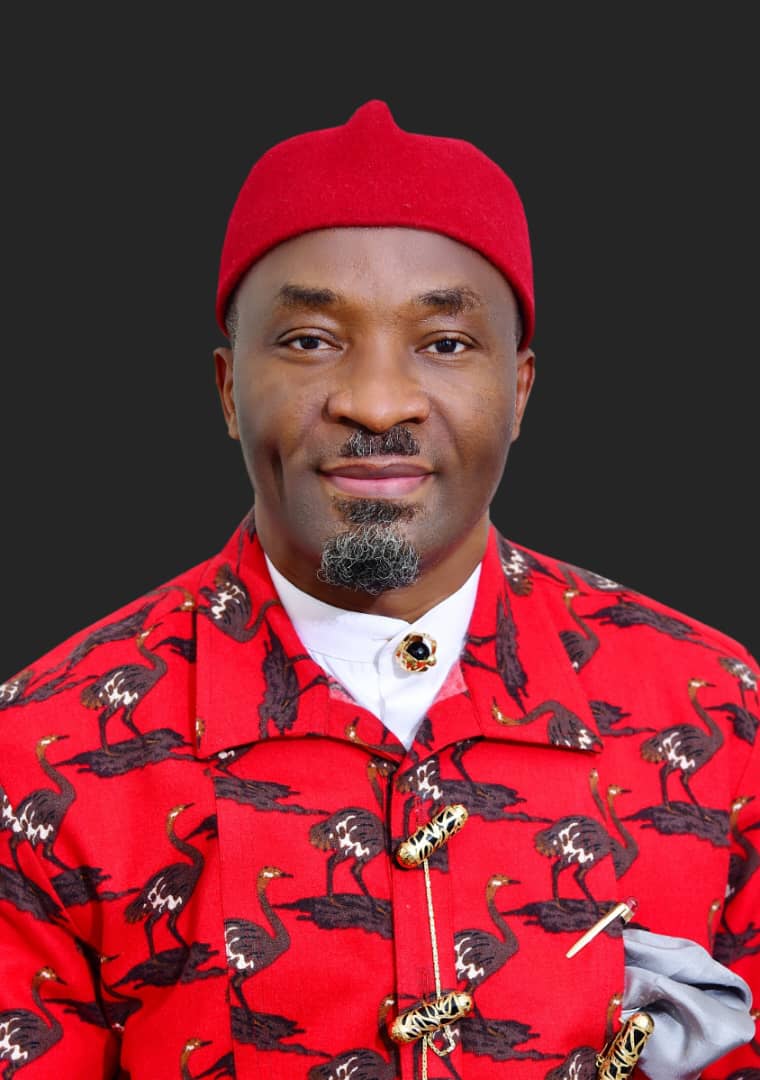
CRG: Politicians Must Stop Witch-Hunting, Focus on Nation Building — Says NYSC Cleared Deputy Speaker Since 2023
By: Boye Ola
The Centre for Responsible Governance (CRG) has called on political actors and interest groups to desist from what it described as needless witch-hunting of the Deputy Speaker of the House of Representatives, Benjamin Okezie Kalu, following renewed controversies surrounding his National Youth Service Corps records.
The organisation noted that the clarification by the National Youth Service Corps (NYSC) regarding the matter is not a recent development, as a formal verification letter had already been issued as far back as May 23, 2023.
The letter, referenced NYSC/CCD/VER/10/5.1/VOL1/02, had already addressed and cleared the questions surrounding the Deputy Speaker’s NYSC records.
Reacting to the renewed debate, the spokesman of the Centre,
Obande George, said it was troubling that issues which had already been clarified by a competent national institution were being resurrected for political purposes.
According to him, the time has come for political actors to move away from destructive engagements and concentrate on building the nation.
“It is important to note that the NYSC had already issued a verification letter dated May 23, 2023 addressing the matter.
Reopening issues that have already been clarified by a competent authority suggests that some individuals are more interested in political witch-hunting than in national progress,” George said.
The CRG stressed that democracy thrives when institutions are respected and their determinations are accepted in good faith rather than constantly questioned for political advantage.

George also commended the Deputy Speaker for demonstrating maturity and composure throughout the controversy, despite what he described as sustained provocations.
“Honourable Benjamin Kalu has shown remarkable calm and maturity in the face of intense public scrutiny and political provocation.
Instead of engaging in unnecessary public confrontation, he allowed institutions to speak through their records.”
The Centre warned that Nigeria’s political culture must evolve beyond constant character attacks and sensational allegations, which often distract public officials from their responsibilities.
According to the organisation, the country’s development requires constructive engagement among political actors rather than continuous attempts to discredit opponents.
“Nigeria cannot move forward if political energy is constantly spent on digging up allegations and amplifying rumours. Our leaders and political actors must redirect their focus to governance, policy and nation building.”
CRG therefore urged Nigerians to rely on verified information from credible institutions and avoid spreading speculative claims that could damage reputations or destabilise public discourse.
The organisation reiterated that respect for due process and institutional integrity remains essential for strengthening Nigeria’s democracy.

@The Centre for Responsible Governance, Email: [email protected], Instagram: crgngo6, Twitter: crgng06, Threads: crgngo6
Uncategorized
IWD 2026: Ajadi Celebrates Women, Urges Them To Seek More Elective Positions In Future Elections

IWD 2026: Ajadi Celebrates Women, Urges Them To Seek More Elective Positions In Future Elections
A Leading People’s Democratic Party, (PDP) Governorship Aspirant in Oyo State, Ambassador Olufemi Ajadi Oguntoyinbo has felicitates with women in the country on the occasion of this year’s International Women’s Day.
The international Women’s Day is celebrated on 8 March, commemorating women’s fight for equality and liberation along with the women right’s movement. It gives focus to issues such as gender equality and reproductive rights. International Women’s Day originated from labour movements in Europe and North America during the early 20th century.
In a statement issued on Sunday to commemorate this year’s edition of the International Women’s Day, Ajadi said the role of the women in nation building cannot be over emphasised.
He recalled the role played by prominent Nigerian women like Mrs Funmilayo Ransome- Kuti, Margaret Ekpo and Wuraola Esan towards the liberalization and the growth of the country and urges women to follow their footsteps by not only participate in the political process but seek more elective positions.
He urges the political leaders to encourage and give more chances to women for them to contest and occupy elective positions in the country.
Ajadi also called for more respect for women, saying they are definitely behind whatever success recorded by the menfolk.
He said domestic violence against women should be stopped, saying they deserves respect for their role in moulding the future leaders.
According to the statement, “I celebrate and congratulate our women on this year’s occasion of International Women’s Day. We cannot underestimate the role played by our women both at home, in the social circle and in politics. They deserve more respect.
“I equally called on them not only to be a passive participants in politics but to determine to seek more elected positions in future elections. They should aspire more from the position of dancing and singing at campaigns to seek more elective positions. The ratio of men to women in elective positions in the country is embarrassing. Women should stand up and fight for more elective positions.
“I also use the occasion of this year’s Women’s Day to appeal to Nigerians to stop domestic violence against the women. If we treat our women well, our country will witness unprecedented developments”.


-

 society7 months ago
Religion: Africa’s Oldest Weapon of Enslavement and the Forgotten Truth
-

 news4 months ago
WHO REALLY OWNS MONIEPOINT? The $290 Million Deal That Sold Nigeria’s Top Fintech to Foreign Interests
-

 society6 months ago
“You Are Never Without Help” – Pastor Gebhardt Berndt Inspires Hope Through Empower Church (Video)
-

 celebrity radar - gossips2 months ago
Dr. Chris Okafor Returns with Power and Fire of the Spirit -Mounts Grace Nation Altar with Fresh Anointing and Restoration Grace on February 1, 2026