
celebrity radar - gossips
#ENDSARS: Dapo Abiodun Closes School, bans Okada, others…. Read Full Text

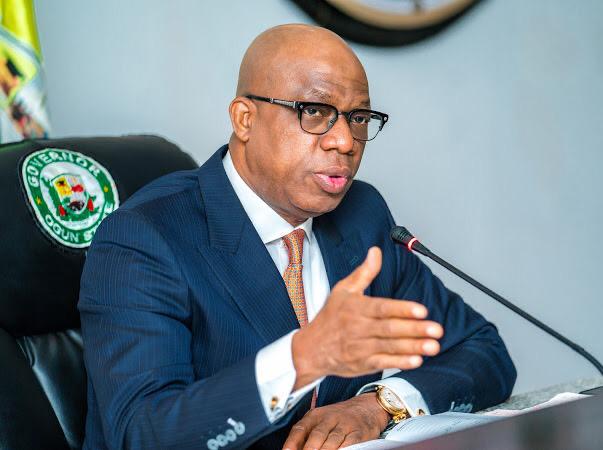
STATE OF THE STATE ADDRESS BY THE GOVERNOR OF OGUN STATE,
HIS EXCELLENCY, PRINCE DAPO ABIODUN MFR, ON THE #ENDSARS PROTEST, ON TUESDAY, 20TH OCTOBER, 2020.
Fellow citizens of Ogun State,
It has become necessary for me to address you once again on an issue of public interest. It has been 13 days now that our dear State and indeed the entire Nigerian Nation have been rocked with protests and agitations leading to disruption in the daily socio-economic lives of our people.
2.In what started as a trending social media campaign, #ENDSARS, thousands of our youths have taken to the streets to express displeasure with the activities of the Special Anti-Robbery Squad (SARS) unit of the Nigeria Police Force. Of specific concern were alleged brutality, high-handedness and professional misconduct of some officers of the now defunct Police Unit.
3.At some point, 31 of our youths were arrested in Ogun State by the Police during the protest. As a responsible and responsive administration, I quickly ordered the Commissioner of Police to facilitate their release and also instructed the Attorney General to drop charges against those arraigned for alleged vandalisation of public properties. In addition, some hitherto unreported arrests were brought to my attention and again, I ordered that they be immediately released.
- I have personally received some of the protesters including youth, students and other stakeholders and addressed them on the legitimacy of their peaceful protest and assured them of the preparedness and commitment of our Government to their safety, welfare and wellbeing.
5.It shows that our youth are taking more than a passing interest on matters affecting them. In fact, in the country of over 200 Million, with over 60 percent of that population as youth, we do not expect anything less than their active participation in our development process. On the other hand, it also manifests the responsiveness of the government, at various levels, to listen to the citizens to and address the demands of the people. The #EndSARS agitation, carefully managed, cultivated and nurtured, may yet provide a template for engagement between the government and the citizenry. Therefore, I want to commend the people of Ogun State, especially our youth, for the peaceful approach at expressing their grievances.
6.A five-point demand was made by our youth in relation to the #EndSARS phenomenon as follows:
i. immediate release of all arrested protesters;
ii. justice to all deceased victims of police brutality and appropriate compensation for their families;
iii. setting up an independent body to oversee the investigation and prosecution of all reports of police misconduct (within ten days);
iv. In line with the Police Act, psychological evaluation and retraining (to be confirmed by an independent body) of all disbanded SARS officers before they can be redeployed;
v. Increase police salary so that they are adequately compensated for protecting lives and property of citizens.
All actions arising from the 5-point demand and instructions from NEC are being implemented by the State diligently.
7.In response to these demands, following actions were taken:
• As mentioned earlier, all those arrested in Ogun State in connection with the protest have been released. Indeed, there is no one in detention in whatever form in the State, thus effectively addressing the first of the demand.
• Furthermore, the SARS unit of the Police, the central object of the protest, has been disbanded, even ahead of the demand for that by the protesters. And it is important to emphasise that unlike on previous occasions when SARS was purportedly banned, the final nail on the coffin of the ban on SARS was pronounced by no less a person than President and Commander-in-Chief, President Muhammadu Buhari.
• The National Economic Council (NEC) convened an emergency meeting on Thursday 15th October with the issue of #EndSARS protest as the main agenda. The meeting agreed on five main points, amongst others, which are:
✓ Each State Governor to take charge of interaction with the protesters in the respective state
✓ Setting up of Judicial Panel of Inquiry to investigate all cases of abuse in the state with a view to bring erring security agents to books and compensating the victims
✓ Setting up of funds to compensate the victims
✓ Setting up of Special Security and Human Rights Committee
✓ Setting up of a Human Rights Complaint office with an Ombudsman.
• Ogun State has fully implemented these resolutions with dispatch.
• Apart from these nationally agreed initiatives, Ogun State went some steps further by announcing other initiatives, including the development of Human Rights Complaints Report portal to make it easy for citizens to report cases on rights abuses by security agencies with facility to upload audio/video and documentary evidence. Others are the establishment of a forensic Laboratory for the police to aid in their investigation and intelligence gathering, and investment in training of the police officers to make them more professional and effective.
8.However, despite all the engagements and practicaldemonstration of government commitment to addressing the demands of the protesters, youth and various pleas to bring an end to the agitation, particularly since most of the issues have been addressed, the protest has since escalated into another dimension, which we have seen:
✓ violence and manifest descent into anarchy
✓ burning of police stations
✓ vandalization of public properties
✓ disruption of vehicular movements on major highways, leading to traffic gridlocks
✓ deployment of okada to transport hoodlums
✓ extortion of members of the public at illegal barricades erected at public spaces
✓ sometimes last week, a vehicle belonging to a top Government functionary was attacked and vandalised
✓ and very sadly, a custom officer was killed earlier today (Tuesday) by a mob on okadas in one of our border towns
The incidents in our state are not isolated cases, indeed the there are worse and gory reports of disturbing developments in other states across the country, including jail breaks and loss of lives and properties.
9.Earlier today, I held a meeting with security chiefs in the state. After an assessment of the prevailing situation, particularly emergingthreats to public safety and security, as a responsible Administration, we considered a number of options, including imposing a curfew on the state. However, in line with our focused, deliberate and measured approach, we are adopting the following measures in the meantime:
✓ All schools are closed till Monday, 26th October, 2020
✓ Operation of commercial motorcycle, popularly called okada, is suspended across the state for tomorrow, Wednesday, 21st October, in the first instance
✓ Increased security around the correctional centres and public buildings
✓ Blockade of highways and molestation of innocent citizensgoing about their lawful business by protesters will no longer be tolerated
✓ Deployment of joint patrol teams of security agencies to ensure no threat to public security
Once again, we are hereby requesting the youth groups to appoint leaders amongst themselves for a meeting with the governor for further dialogue.
We will be reviewing developments on a 24-hourly basis and will not hesitate to announce stringent measures as may be considered necessary.
I must emphasise that we cannot fold our arms and let the state descend into anarchy. No right is absolute. In exercising our rights, we must respect the rights of others. There cannot be a better tomorrow, if we destroy today and the foundation being laid for tomorrow. Let me warn that Ogun State will not be conducive to anyone who may want to test the resolve of government to provide security or those who may want to come from other states to foment trouble in our dear State. The security agencies have been directed to ensure full compliance with the measures announced to ensure security of lives and properties.
10.Therefore, I appeal to all parents, guardians, traditional and religious leaders and indeed all stakeholders to rein their children and wards to avoid any act that may breach public peace or bring them into confrontation with the law enforcement agencies. I urge all to take full advantage of the windows available to express grievances in peaceful manners, including the Ogun State Human Rights Complaints Report portal and allow time for full implementation of the various government initiatives in response to their demands.
11.We must continue to be on eagle alert so that some unscrupulous element who do not have the love of this Nation at heart; who do not share the same development ideals; who may want to take advantage of this situation for their selfish motives, to hijack the process. Our nation can ill-afford such a scenario. I have no doubt that, together, we can build a stronger, united and prosperous nation that works for all.
12.I thank you for listening and God bless.
“Igbega Ipinle Ogun, ajose gbogbo wa ni o!”
Prince Dapo Abiodun, MFR
Governor of Ogun State, Nigeria
Tuesday, 20th October, 2020.





Beauty Meets Glamour as Olaide Ogunyemi Opens New Studio in Mushin
Popular Nollywood actress and professional makeup artiste, Olaide Ogunyemi Oluwayemisi aka Damilola, has expanded her footprint in the beauty industry with the grand opening of her new makeup studio in Lagos.
The talented thespian, who is also the Chief Executive Officer of @Dobc_makeovers_andmore, officially unveiled the ultra-modern beauty space last Thursday, April 2, 2026, in a colourful ceremony filled with glamour, fashion, and pageantry.
Strategically located at 101 Palm Avenue, right beside FitPlus and Sparklight Hospital in Mushin area of Lagos, the new studio is designed to offer top-notch beauty services, reflecting Ogunyemi’s commitment to excellence and professionalism in the ever-growing makeup industry.
The opening ceremony attracted friends, colleagues from the Nollywood industry, beauty enthusiasts, and well-wishers who came out in large numbers to celebrate the entrepreneur’s latest milestone. Guests were treated to a vibrant atmosphere that showcased creativity, style, and the evolving standards of the beauty business in Lagos.
Speaking at the event, Ogunyemi expressed her excitement and gratitude, noting that the new studio represents years of hard work, dedication, and passion for her craft. She reaffirmed her commitment to delivering premium beauty services while empowering aspiring makeup artistes.
The launch of the studio further cements her reputation as a dynamic force, successfully blending her career in Nollywood with a thriving beauty brand.
With this latest development, Olaide Damilola Ogunyemi continues to inspire many young entrepreneurs, proving that talent, consistency, and vision remain key drivers of success in Nigeria’s creative and business landscape.


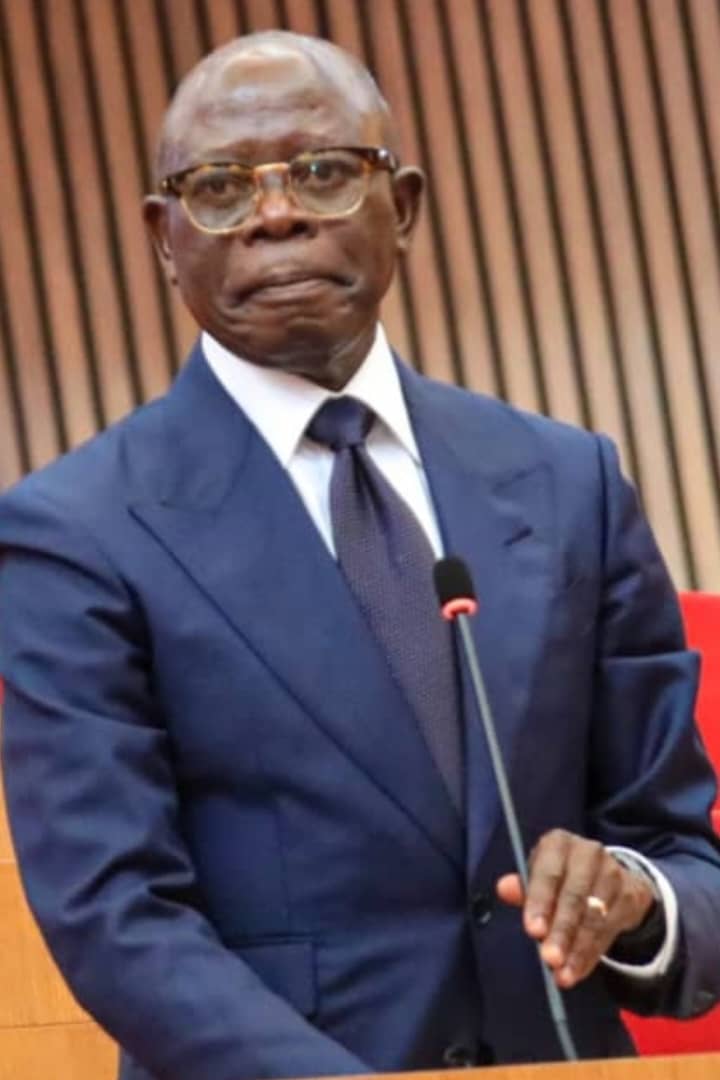
Daniel Eromosele Eulogize Adams Oshiomole as he turns 74 years
Today, I celebrate an exceptional leader, a fearless voice for the people, and a man whose life has remained a symbol of courage, sacrifice, and unwavering commitment to justice—Distinguished Comrade Senator Adams Aliu Oshiomhole.

Your journey has been nothing short of inspiring. From your days as a vibrant labour leader to your impactful tenure as the Executive Governor of Edo State, and now as a respected Senator of the Federal Republic, you have consistently demonstrated what it means to serve with integrity, strength, and purpose. Your contributions to the growth of our nation and the development of Edo State remain indelible and deeply appreciated.
You have not only built structures and institutions but have also built people. I am personally a beneficiary of your leadership, your guidance, and your belief in empowering others. Your influence in my life has been profound, and I remain grateful for the opportunities and inspiration you have given me.
On this special day, I celebrate not just your achievements, but the man you are—resilient, principled, and ever committed to the progress of Nigeria and her people.

May this new year bring you renewed strength, greater wisdom, good health, and more remarkable accomplishments. May your legacy continue to shine brighter with each passing year.
Happy Birthday, sir. Wishing you many more fruitful and impactful years ahead.
celebrity radar - gossips
Accolades to Empress Genevieve Wining as she Celebrate birthday in Grand style

Accolades to Empress Genevieve Wining as she Celebrate birthday in Grand style
Emmanuel Clement
Vilnius, Lithuania – The Grand Hotel Vilnius will host a grand birthday celebration in honor of Her Majesty The Empress Genevieve Wining of the United Kingdom of Atlantis (UKA) on April 4th, 2026.
The four-day event promises to be an extravagant affair, marking the special birthday of Empress Genevieve Wining. The celebration will take place at the prestigious Grand Hotel Vilnius, Lithuania, renowned for its luxurious ambiance and exceptional service.

According to the event flyer, the birthday celebration will be a spectacular occasion, fitting for an empress. Guests can expect an elegant setting adorned with golden accents, sparkling champagne, and festive decorations, creating a regal atmosphere befitting the occasion.
The Empress Genevieve Wining of UKA is expected to grace the event, which will include various festivities and celebrations in her honor. The occasion aims to bring together dignitaries, followers, and guests to commemorate the empress’s birthday with grandeur and joy.
For media inquiries, accreditation, or further information about the birthday celebration of The Empress Genevieve Wining of UKA, please contact the event organizers.
Courtesy of His Excellency Emperor Prof. Solomon Wining. UKA


- United States (U.S.) and Mozambique Advance Cooperation on Emergency Response and Safety April 6, 2026
- The Impacts of the Middle East Conflict on Africa April 6, 2026
- Ghana: President Mahama announces a high-level panel of the Accra Reset April 6, 2026
- Ghana: President Mahama reiterates his determination to build more businesses April 6, 2026
- Mauritius accelerates energy transition with renewable projects of 405 MW April 6, 2026
- Africa Centres for Disease Control and Prevention (Africa CDC) Appoints His Excellency Prof. Yemi Osinbajo as Senior Strategic Advisor to the Director General April 6, 2026
- 2026 Easter Message by the President of the Catholic Bishops’ Conference of Nigeria (CBCN): The Dawn is Coming, Don’t Let Go Now, Hold on to Hope! April 5, 2026
- "A Time to Pause and Begin Again”: President Dr Patrick Herminie reflects in Easter message April 5, 2026
- President Dr. Patrick Herminie Pays Tribute to the Late Seychellois Artist David Philoe April 5, 2026
- Ghana identifies priority areas to strengthen cholera prevention and control April 5, 2026
- United States (U.S.) and Mozambique Advance Cooperation on Emergency Response and Safety April 6, 2026
- The Impacts of the Middle East Conflict on Africa April 6, 2026
- Ghana: President Mahama announces a high-level panel of the Accra Reset April 6, 2026
- Ghana: President Mahama reiterates his determination to build more businesses April 6, 2026
- Mauritius accelerates energy transition with renewable projects of 405 MW April 6, 2026
- Africa Centres for Disease Control and Prevention (Africa CDC) Appoints His Excellency Prof. Yemi Osinbajo as Senior Strategic Advisor to the Director General April 6, 2026
- 2026 Easter Message by the President of the Catholic Bishops’ Conference of Nigeria (CBCN): The Dawn is Coming, Don’t Let Go Now, Hold on to Hope! April 5, 2026
-

 society7 months ago
Religion: Africa’s Oldest Weapon of Enslavement and the Forgotten Truth
-

 news4 months ago
WHO REALLY OWNS MONIEPOINT? The $290 Million Deal That Sold Nigeria’s Top Fintech to Foreign Interests
-

 society6 months ago
“You Are Never Without Help” – Pastor Gebhardt Berndt Inspires Hope Through Empower Church (Video)
-

 celebrity radar - gossips2 months ago
Dr. Chris Okafor Returns with Power and Fire of the Spirit -Mounts Grace Nation Altar with Fresh Anointing and Restoration Grace on February 1, 2026