
society
ENOUGH OF THE PROMISES: Nigerians Demand Security, Not Speeches


ENOUGH OF THE PROMISES: Nigerians Demand Security, Not Speeches
By George Omagbemi Sylvester
When President Bola Ahmed Tinubu once again summoned Nigeria’s service chiefs to Aso Rock for yet another high-level security meeting, Nigerians collectively sighed not with relief, but with exhaustion. We have been here too many times before. The statements are recycled. The directives sound familiar. The assurances ring hollow.
This is not leadership; it is theatre.
The tragic truth is that the Nigerian people are not just tired, they are angry, disillusioned and traumatized. They are tired of being the collateral damage in a war their government pretends to be fighting. They are tired of being promised security while bandits roam free, terrorists regroup and kidnappers demand ransoms without consequence. The real crisis is not just the violence; it is the normalization of that violence.
The Grim State of Insecurity: A Nation Under Siege

Between 2015 and 2024, Nigeria has recorded over 63,000 conflict-related deaths, according to the Council on Foreign Relations’ Nigeria Security Tracker (NST). In 2023 alone, over 4,800 Nigerians were killed in violent incidents, while more than 3,600 were kidnapped. States like Zamfara, Kaduna, Plateau, Borno, Niger and Benue have become synonymous with bloodshed. From Boko Haram insurgents in the Northeast to bandits in the Northwest, to killer herdsmen in the Middle Belt and separatist agitators in the Southeast, the entire federation is under siege.
Rural communities have been abandoned. Highways have become death traps. Urban centers are no longer safe. Nigerians live in fear not because they are weak, but because their leaders have failed to make safety a priority.
Presidential Promises Are Not Bulletproof Vests

President Tinubu came into power with promises of security reform. On May 29, 2023, during his inauguration, he boldly declared that “security shall be the top priority of our administration because neither prosperity nor justice can prevail amidst insecurity and violence.” Yet, as of May 2025, that promise remains largely unfulfilled.
Yes, the president meets with service chiefs. Yes, there are occasional “military successes” trumpeted by the state media. But these are mere tokens in a crisis that requires transformation not tweaking.
You cannot bomb terrorism out of existence while corruption is left intact. Security is not merely about bullets and battalions; it is about intelligence, accountability, justice and trust. It is about rooting out the rot in the system that allows terrorists to be released from jail, while victims receive shallow condolences.

Empty Meetings, Empty Results
Every time there is a mass abduction, a military ambush, or a deadly attack on civilians, the federal government reacts the same way:
A security meeting is convened.
The President is “briefed.”
Service chiefs are “directed” to “intensify efforts.”
The same faces appear in the same photos.
Nothing changes.
These meetings are not solutions, they are distractions. They offer optics, not outcomes.
How many Nigerians must die before action is taken? How many villages must be razed before strategies become realities? How many schoolchildren must be kidnapped before the government sees the urgency that citizens feel every single day?
As Chinua Achebe once warned, “A man who brings home ant-infested firewood should not be surprised when lizards start to visit.” Our leaders have invited chaos by tolerating impunity. And now, Nigeria is crawling with lizards of lawlessness.
A Deafening Silence on Accountability
Nigeria’s political elite have mastered the art of talking without saying anything. They issue statements without solutions, sympathize without sincerity and govern without results.

Why, for instance, has no service chief ever resigned or been dismissed for gross security failures? In civilized democracies, such dereliction would trigger resignations, probes and prosecutions. In Nigeria, it earns a promotion or a national award.
In the words of Professor Wole Soyinka, “Only in Nigeria do criminals get rewarded while victims are forgotten.”
This culture of impunity must end. If the military hierarchy cannot secure Nigeria, then it is time for a national overhaul not another presidential handshake.

The Economic Cost of Insecurity
Beyond the human toll, insecurity is decimating Nigeria’s economy. According to the Nigerian Economic Summit Group (NESG), the country loses over $10 billion annually due to conflict-related disruptions. Farmers cannot access their land due to fear of attacks, which has worsened the food crisis and driven inflation to an alarming 33.2% as of April 2025.
Foreign investors flee at the first hint of instability. Tourism is virtually nonexistent. Domestic businesses relocate or shut down. The World Bank notes that insecurity has become one of the top three obstacles to Nigeria’s economic growth, alongside corruption and poor infrastructure.
A nation without security is a nation without a future.
2025 Is Halfway Through: Why Only Excuses?
It has been nearly two full years since this administration took office. Nigerians are not unreasonably impatient they are rationally demanding results. The APC government has exhausted its grace period.
No more “renewed hope” slogans. No more speeches about “resilience” and “commitment.” Nigerians are not a people who need to be told to endure. They need a government that knows how to act.
As the popular street saying goes: “Na security we wan chop?” No. But without security, no one can chop.
What Must Be Done?
If the Tinubu administration truly desires to end this cycle of bloodshed, it must take the following concrete actions:
Reshuffle and professionalize the military leadership. Promotion must be based on performance not political loyalty.
Invest in local intelligence and surveillance technology. Drones, satellite monitoring and community-based intelligence must be prioritized.
Strengthen state policing frameworks. Centralized policing has failed. Each state must be allowed to manage its own internal security with federal collaboration.
Prosecute collaborators and financiers of terrorism. Enough of the hidden sponsors; name and shame them.
Ensure victims get justice and compensation. Healing starts with acknowledgment.
Quotes to Remember
Nelson Mandela: “Safety and security don’t just happen; they are the result of collective consensus and public investment.”
Barack Obama: “Security and opportunity are two sides of the same coin.”
Thomas Jefferson: “The price of freedom is eternal vigilance.”
But what use is vigilance when those at the top are asleep?
Let the Bullets Stop. Let the Lies End.
Nigerians are not asking for miracles. They are demanding what every responsible government should provide: the right to life, peace and liberty. If this administration cannot guarantee that, then history will judge it harshly not for what it promised, but for what it failed to deliver.
Let the bullets stop. Let the bloodshed end. Let results speak louder than rhetoric.
Nigeria deserves peace. And Nigerians demand nothing less.




society
Liberian Leaders, Citizens Bear Witness as Apostle Suleman Hosts Two-Day Power-Packed Crusade
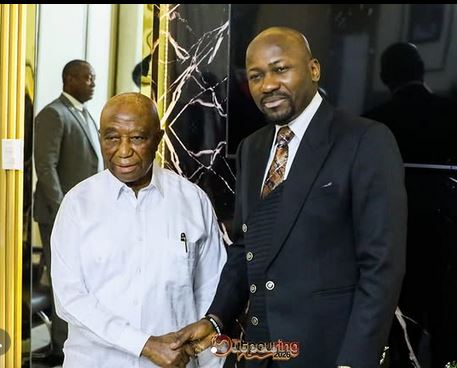
Liberian Leaders, Citizens Bear Witness as Apostle Suleman Hosts Two-Day Power-Packed Crusade
It was testimonies galore on Tuesday, March 31, the first day of the famous servant of God and founder of the Omega Fire Ministries (OFM) worldwide, Apostle Johnson Suleman’s power-packed two-day crusade. The event documented impactful moments with the Gospel and miracles, emphasizing the power of faith and the tangible confirmation of God’s Word through signs and wonders. It was equally an atmosphere of miraculous healing, restoration of lives, and the strengthening of faith.
At the crusade, which was held at the SKD Sports Stadium in Paynesville City, and themed, “Liberia Outpouring Crusade” witnessed testimonies of impact and miracles with participants experiencing instant healing of various kinds of challenges.
Apostle Suleman’s first port of call was Paynesville, the office of Liberian government’s president, Mr. Joseph Nyuma Boakai, who received him in an audience with his junior ministers. Apostle Suleman, who also met with the vice-president, Mr. Jeremiah Kpan Koung, was welcomed by the Liberian leader’s office as part of the president’s ongoing engagements with religious leaders aimed at fostering spiritual support for national development.
The president expressed profound appreciation to Apostle Suleman for the visit and continued prayers and intercessions by men and women of God on behalf of Liberia, emphasizing his firm belief that sustained spiritual guidance and prayer remain vital to the transformation and progress of the nation.
During the visit, Apostle Suleman offered prayers for President Boakai, his cabinet and the Liberian nation, invoking divine alignment, wisdom, and insight in Liberia’s path toward growth and stability. He prayed that the Almighty God would position Liberia for relevance and fulfillment of its national destiny.
Apostle Johnson Suleman, an evangelist who knows no bounds of where preaching the gospel comes to a stop, visited Liberia prepared with the message, compelling power of the Gospel and the work of the Holy Spirit, and bringing people to a point of decision where they surrendered their lives to Christ.
Aside from being prophetic and timely, OFM sources disclosed that the servant of God’s visit underscores the importance of faith-based partnerships in supporting governance and national renewal efforts.
society
Middle Belt Forum Hails Tinubu’s Jos Visit, Calls for United Civil-Military Effort to Restore Lasting Peace
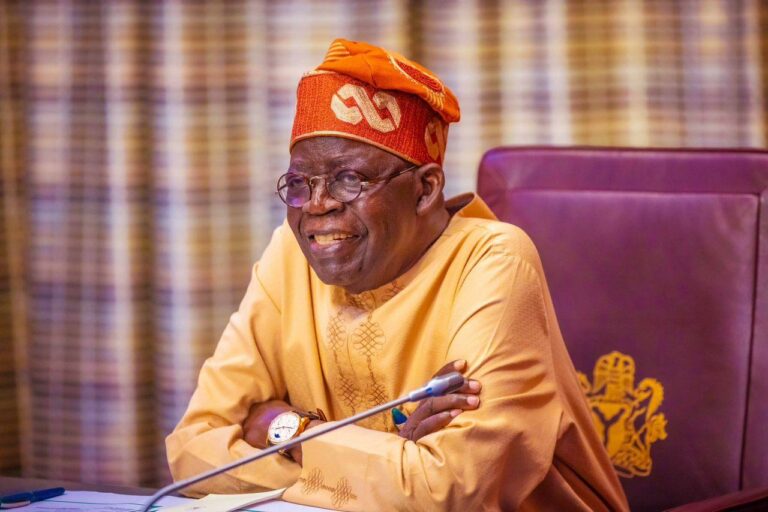
*Middle Belt Forum Hails Tinubu’s Jos Visit, Calls for United Civil-Military Effort to Restore Lasting Peace
The Middle Belt Peace Forum (MBPF) has commended President Bola Ahmed Tinubu for his profound demonstration of empathy and responsive leadership following his decision to postpone an official engagement in Iperu in order to visit victims of the recent attacks in Jos.
In a statement signed by its National Coordinator, Pastor Bulus Garba, in Jos on Friday, the Forum said the President’s decision to personally identify with grieving communities sends a powerful message of solidarity and reinforces public confidence in the commitment of the Federal Government to the protection of lives and property.
“The Middle Belt Peace Forum warmly commends President Bola Ahmed Tinubu for prioritising compassion over ceremony. At a time of deep sorrow for the people of Plateau State, his decision to visit Jos stands as a mark of true leadership—one that listens, responds, and stands with the people in their moment of pain,” the statement read.
The Forum described the perpetrators of the recent attacks as “cowards who prey on innocent and defenceless citizens,” stressing that such acts of violence are not only inhumane but also a direct assault on the unity and peace of the nation.
“We condemn in the strongest terms the actions of these cowardly attackers whose only aim is to instil fear and destabilise peaceful communities. Their actions must be met with firm and decisive resistance from all arms of the state,” Pastor Garba said.
The MBPF further used the opportunity to salute the courage, gallantry, and sacrifices of the Armed Forces of Nigeria under the leadership of the Chief of Defence Staff, General Olufemi Oluyede, noting that their continued efforts remain central to restoring stability across troubled parts of the country.
According to the Forum, the Armed Forces have demonstrated resilience and professionalism in the face of complex security challenges, often operating under difficult conditions to safeguard communities and defend Nigeria’s territorial integrity.
“We salute the Armed Forces of Nigeria for their unwavering commitment and sacrifices. Their gallantry in confronting criminal elements and reclaiming territories is a testament to their dedication to national service. We recognise that the path to peace is demanding, and we honour those who stand daily in defence of our nation,” the statement added.
The Forum pledged its full support to ongoing military operations and called for strengthened collaboration between security agencies and local communities as a critical factor in achieving lasting peace.
It also urged citizens across the Middle Belt to cooperate with security forces by providing timely information and fostering unity within their communities.
The MBPF, however, expressed concern over the need for greater synergy among security agencies, particularly the role of the Nigeria Police in consolidating gains made by the military.
“We call on the Nigeria Police Force to rise fully to its constitutional responsibility by effectively supporting the Armed Forces in stabilising and securing areas that have been cleared of criminal elements. Holding and policing such territories is essential to preventing a resurgence of violence,” Pastor Garba stated.
The Forum emphasised that sustainable peace requires a coordinated approach in which the military clears and secures areas, while the police maintain law and order to enable displaced communities to return and rebuild their lives.
The MBPF concluded by reiterating its commitment to peacebuilding efforts across the Middle Belt and expressed optimism that with sustained leadership, coordinated security efforts, and active citizen participation, lasting peace can be achieved.
“Together, through unity, vigilance, and collective resolve, we can overcome these challenges and build a safer and more peaceful Middle Belt,” the statement added.
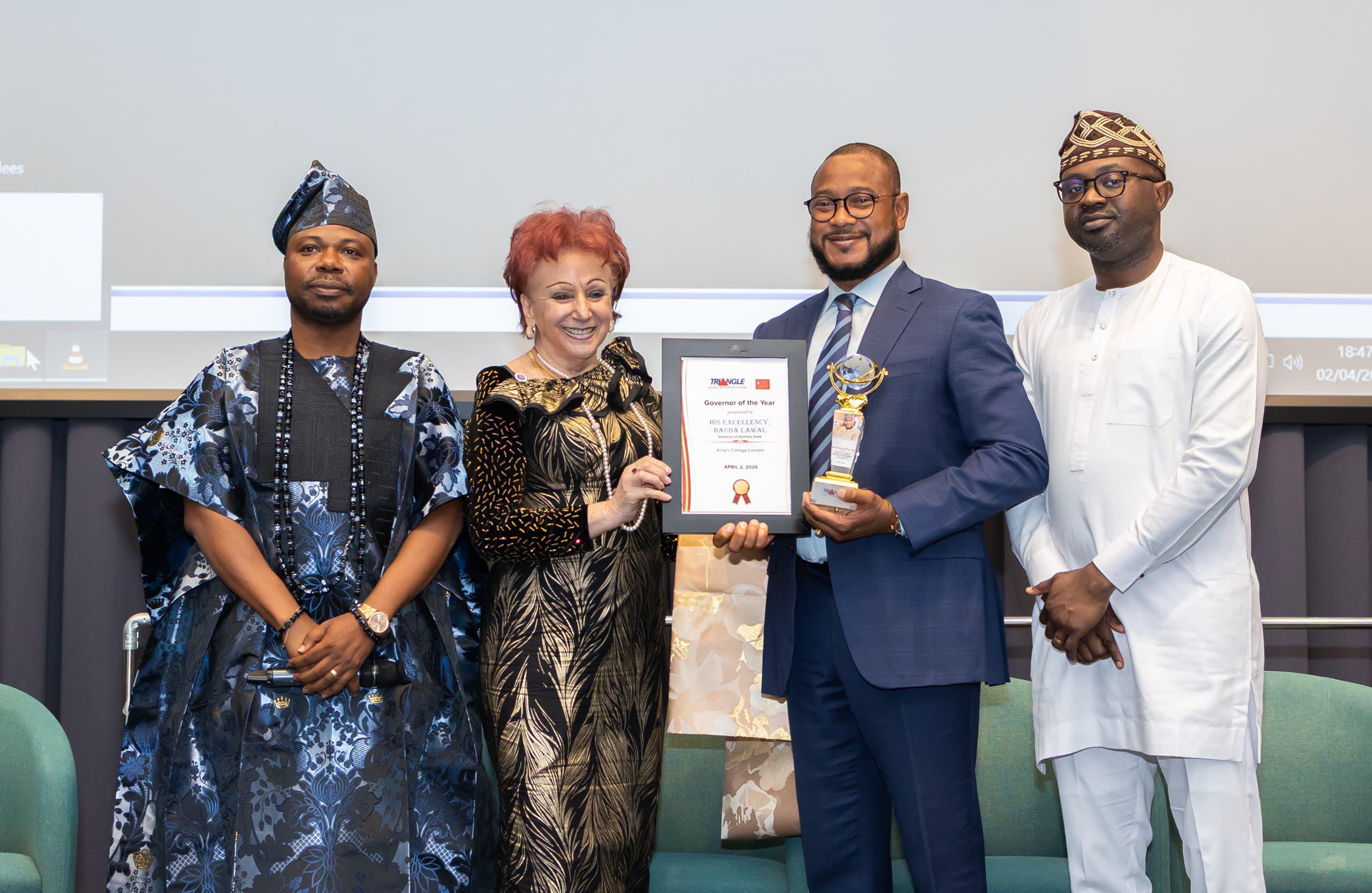
Governor Dauda Lawal Wins Face of Africa Governor of the Year Award in London
Governor Dauda Lawal has been honored with the Outstanding Governor of the Year award by Triangle Media International Magazine.
The award was presented during the magazine’s 10th annual lecture and award ceremony, held on Thursday at the Grand Hall of King’s College, London, United Kingdom.
According to a statement by the governor’s spokesperson, Sulaiman Bala Idris, the awards recognize public and private sector leaders whose leadership positively impacts governance and service delivery.
He added that the lecture, themed “Harnessing the Roles of Nigerians in Diaspora for National Development,” brought together stakeholders from both the public and private sectors.
The statement read in part: “Yesterday, in London, Governor Dauda Lawal received the 2026 Face of Africa Leadership Award for Outstanding Governor of the Year.
“The 2026 edition coincides with the 10th anniversary of Triangle International Magazine, which has over the years celebrated notable Africans across diverse fields.
“The award recognizes the Zamfara State Government under Governor Lawal’s leadership for achieving remarkable milestones in service delivery since his inauguration on 29 May 2023.
“The board of Triangle International noted that, despite inheriting an empty treasury, Governor Dauda Lawal has remained true to the Rescue Agenda’s campaign promise: to rescue and rebuild Zamfara.
“The award also reflects the state government’s innovative approach to indirectly curbing insecurity through educational advancement, demonstrated by the declaration of a state of emergency in the education sector.
“This includes the state government’s swift payment of the outstanding N3.4 billion for WAEC and NECO examinations, as well as the reconstruction and rehabilitation of schools across all 14 Local Government Areas of Zamfara State.
“The international magazine finds these initiatives to be strategic interventions toward long-term efforts to make Zamfara State better.”
The colourful event was attended by the Minister of Interior, Olubunmi Tunji-Ojo, and Sahara Group’s Group Managing Director, Kola Adesina, among others.


-

 society7 months ago
Religion: Africa’s Oldest Weapon of Enslavement and the Forgotten Truth
-

 news4 months ago
WHO REALLY OWNS MONIEPOINT? The $290 Million Deal That Sold Nigeria’s Top Fintech to Foreign Interests
-

 society6 months ago
“You Are Never Without Help” – Pastor Gebhardt Berndt Inspires Hope Through Empower Church (Video)
-

 celebrity radar - gossips2 months ago
Dr. Chris Okafor Returns with Power and Fire of the Spirit -Mounts Grace Nation Altar with Fresh Anointing and Restoration Grace on February 1, 2026