
celebrity radar - gossips
EVELYN JOSHUA, THE GOD’S BATTLE AXE IN THE CHANGING NARRATIVES OF KENYA


EVELYN JOSHUA, THE GOD’S BATTLE AXE IN THE CHANGING NARRATIVES OF KENYA
In Kenya today, there is a renewed hope and better understanding of appreciating human existence and values in Creation with more ardent desire and propulsive yearning for a better and true humanity.
Kenya is a famous and unique African country as a forerunner in democracy and economics. This has made Nairobi the nation’s capital a hallmark for great business opportunities and international recognition.
Notwithstanding its giant strides in human capital developments, hitherto, there has been a gross aberration in the conceptual framework of religious practices particularly in Christianity when juxtaposed with the standard laid by Jesus Christ himself and built upon by his anointed early apostles in one hand and the essence of consanguinity and social responsibilities as homo sapiens in respect of the underprivileged and wretched folks who are also part of the society. Attention to this segment of the society has been at the lowest ebb. A number of critical factors are actually responsible for this that cannot be addressed now.
But things are gradually changing in Kenya. The cloud has been lifted. The veil of insensitivity to the agony and trauma of the disadvantaged has been torn!
Like a bolt out of the blue, the people have seen the light and love in action in their domains.
The joyful activities embarked upon by Pastor Evelyn Joshua of the Synagogue Church Of All Nations SCOAN and EmmanuelTV partners who
with the good news of Jesus Christ in action and practice, touching the foundation and heart of Kenyans are really changing the narratives.
What exactly were the pivots of this transformation?
Three significant events successively took place recently in the nation of Kenya and it’s obvious that a new impetus, the little acorn from which the great oak grows for collective development and happiness of the people is taking root in that famous east African country known for the great rift valley and the world’s best Safari destination with over 50 epic national parks.
These are not just ordinary events, they are a significant turning point in the lives of the people!
One, the 2023 Kenya Crusade; second, the revolutionary tree planting designed to stem the tide of desert encroachment and climatic menace that was gradually ravaging the country; and three, the charity programme to the neglected over 60’000 inhabitants at Piliwa village, Kajiado County the abode of the “wretched of the earth” in the heart of Massai people of Kenya.
The Piliwa people could be described as people with tragic existence. Theirs is a misfortune of birth and settlement. It’s the most neglected part of Kenya just a stone throw from Tanzania. “We are mainly pastoralists. No roads, no water, no health care, no schools, poor shelters, no light just leaving hopelessly as if we were not human beings, having been deprived over the years the basic necessities of life” said the assistant chief officer of the village administration Mr. Yeldon Sonto. “We are mainly pastoralists rearing cattle, sheep and goats which have all been swept away by the ravaging drought that besieged our land”, he added.
“There’s no water to drink” lamented Mr.Lematian Julius, a security operative. “We use donkeys to go and fetch water in a distance of about 10kilometers where there’s a dam. We are living in hunger, sickness and diseases, stress due to long trekking, no livestocks which people mostly depend on, life is hard under the scorching sun, no rainfall, no schools around, we can’t even pay for school fees, no money, suffocating famine, darkness and occasional disturbances of wildlife which eat away our remaining animals”, Lamentian painted a gory picture of living conditions in the area.
This is the grovelling hardship at Piliwa village. You can imagine the presence of Pastor Evelyn Joshua and her team in the rickety and dusty road to these people with a big truck loaded with food and household items and hundreds of cartons of table water!
It was an electrifying moment. The village was agog. Everyone came out to see the miracle of God in their midst. They were all transmogrified in an ecstasy of rejoicing and celebrating, beating drums, singing and dancing with all the paraphernalia of their cultural aesthetics. It was a combination of dream and disbelieve because such a thing had never happened with convoy of vehicles in their community.
“You are all God’s children. God loves you. We are because you are. God has brought us here to remind you that He loves you and you are His people and He would never forsake you. We love you and you have become a part of us as God has beamed His light upon you” said Evelyn Joshua as she was thronged by the mammoth crowd!
“We have never seen this kind of donations to a neglected people in Kenya before, more so by a foreigner. This is unprecedented and you can see how joyful the people are as If God Himself has descended from heaven to bless them. God bless Pastor Evelyn Joshua for this great donation” enthused Elsie Matilong the village administrator.
“We are exceedingly glad with these plenty gifts for these downtrodden, neglected suffering people. It’s beyond our imaginations. God bless Mama Evelyn Joshua and SCOAN for this great heart for the poor” stated by Naomi Parinkoi, the Chief public officer for social services
Mrs Edna Lenku the first lady of the County expressed profound appreciation to Evelyn Joshua, SCOAN and EmmanuelTV team coming to the extreme rural area with all the inconveniences of the roads to lift up the lives of the poor community. “Only God can reward you for these great gifts to these people. We are very grateful. May God continue to bless you and SCOAN” she said.
The tree planting was another epic event. Pastor Evelyn Joshua led by the minister of the environment, Honourable Ibrahim Ouma along with other government officials to Uhuru Park where the official kicked off planting of 20’000 trees in Kenya by Evelyn Joshua started. She did the first planting and supported the effort with $25’000. Pastor Evelyn Joshua had earlier been engaged at the Nairobi House of Parliament led by its speaker, RT. Honourable Kennedy O. Ngondi who expressed the gratitude of Kenyans for the blessings and joyful activities of Pastor Evelyn Joshua in Kenya. That the Kenyans were ready to support Evelyn Joshua in all her God given dreams for the upliftment of Kenya as a nation for the glory of God with peace and prosperity of Kenya.
The Kenya Crusade 2023 was a different ball game entirely. The Kenyans could not imagine a Minister of God holding a crusade without taxing people or asking for donations or offering! “We are on God’s instruction to hold this crusade for God’s glory and blessings for the nation of Kenya. It’s not my assignment but God’s. We are here for the breaking of shackles that fetter lives and destinies down. We are here to give what God has given to us to bless people”, the woman of God stated.
This was unprecedented. Kenya is about seventy five percent Christians. But Christianity in Kenya in the Apostolic fire sense is just burgeoning . It is more of the orthodox. The existing Pentecostal genre is growing and yearning for the true Pentecost as seen in the Acts of Apostles.
Evelyn Joshua brought in a new dimension of understanding in healing and deliverance praying and commanding in the name of Jesus Christ. The Kasarani stadium became a huge furnace of commotion by the spiritual cacophonies of bewildered and arrested demonic spirits by the Holy Spirit with several people yelling, falling and manifesting violently at the voice Evelyn Joshua reminiscent of the Gadara experience during the time of Jesus. The memory of Kenya Crusade in 2023 would continue to linger on with the outpouring of the Holy Spirit as many were receiving healing from different afflictions including those on the wheel chairs to the amazement of over 50’000 people in attendance. Mr. Kabau Muruatetu, a chartered auditor who witnessed it all described it as “a real revival in the land of Kenya, glory to God”.
From this Kenya Crusade 2023, one thing is obvious: Pastor Evelyn Joshua with her team of Evangelists in the legacy of Senior Prophet TBJOSHUA has raised the bar of pure Christianity and the joy of humanity as the beauty of Creation.





celebrity radar - gossips
Buratai, Fagbemi , Shagaya, Olofa, Others Eulogise Olowu Kuta’s Olori On 60th Birthday, Foundation Launch

Buratai, Fagbemi , Shagaya, Olofa, Others Eulogise Olowu Kuta’s Olori On 60th Birthday, Foundation Launch
Eminent personalities across the Nigeria stormed the TFK Event Centre, Bala Mohammed Way, Guzape, Abuja, to celebrate the 60th birthday of Olowu Kuta’s Olori, Queen Jumai Amoke and her Foundation Launch on Saturday 28, March 2026.

From former Chief of Army Staff, Lt Gen TY Buratai rtd, to the Minister of Justice and Attorney-General of the Federation, Prince Lateef Fagbemi; Olofa of Offa, HRM Oba Mufutau Gbadamosi. Even top businesswoman and socialite, Chief (Mrs) Bola Shagaya, was in attendance.


Other dignitaries were newly promoted Deputy Inspector-General of Police and former AIG Zone 2 , Lagos , Adegoke Fayoade, Major General Abdumalik, Major General Samuel Adebayo rtd (Fmr CDI);
Major General Anthony Omozoje rtd (Fmr Copp);
Alhaji Tajudeen Owoyemi (Asiwaju of Offa and CEO Radisson Hotel Nigeria;
Dr Waheed Olagunju, former managing director of Bank of Industry, Oniba of Iba, Lagos State, HRM Oba Dr Suleiman Raji ;
Justice Falola, Olu of Ile-Ogbo , Oba Adetoyese amongst many traditional rulers and captains of industry too numerous to mention.
Speaking at the occasion, the Chief Host, Olowu of Kuta, HRM Oba Dr Adekunle Oyelude Makama, CON , Tegbosun iii, who is also the husband of the celebrant commended Queen Jumai for ‘ her slender arms full of kindness’ to establish such humanitarian Foundation, ‘Amoke Children and mother in Need Foundation’ at a time Nigerians are going through economic crisis occassioned by the global meltdown.
Olowu also commended her steadfastness and love for the less privileged and downtrodden.
The monarch refrenced the task before his wife’s humanitarian gesture said her best is yet to come.
” Olori Amoke Jumai, I celebrate you. You will celebrate 70, 80, 90 and continue to shine as you continue to put a smile on people’s faces. I love you, “Olowu Kuta added.
To Lt Gen Buratai, a former army chief and former Nigerian Ambassador to Benin Republic, the reward of hard work is more work.
Buratai, who also doubles as Balogun Agba of Owu Kuta, a chieftaincy title reserved for a generalismo congratulated Queen Jumai for attaining the age of 60 in good health.
The retired army General said he’s not surprised by the turn out of eminent personalities across the country to celebrate the Olowu Kuta’s Olori because she merited it through her hospitality to all, adding that Allah the most merciful, most beneficial would accept all her act of ibadah.
The minister of Justice, Prince Fagbemi, was full of praises for Queen Jumai for deeming it fit to have a place in her heart to accommodate the needy and less privileged in ‘our society.’
Prince Fagbemi urged the guests to contribute generously to support the Foundation in order to continue to alleviate poverty and put a smile on the faces of the people.
” I congratulate you on your 60th birthday and Foundation Launch. I wish you many happy returns of the day and many more fruitful services to the country and motherland”, Prince Fagbemi added.
The celebrant, Queen Jumai who was grining from ear to ear thankfully said she was excited by the turn out and the response of the people to her foundation.
Queen Jumai, however, promised to continue to use her resources and donations received for the good of the needy and less privileged in the society.
” I want to appreciate my own Kabiesi Olofa of Offa , for his presence and im I’m using him as a point of contact to all other Kabiesis present here, the minister of justice and Attorney-General, you’re welcome, sir; Mrs Bola Shagaya, I salute your enterprise, Lt Gen Buratai, I’m grateful, sir; DIG Fayoade, Justice Falola and other dignitaries too numerous to mention, I thank you, all. To my darling husband, Kabiesi Olowu , I thank you immensely for your support. And to my family and friends, I thank you , all. E se pupo!”, she said.
celebrity radar - gossips
Adron Homes Elevates Cultural Pride as Dignitaries Grace 39th Lisabi Festival in Abeokuta
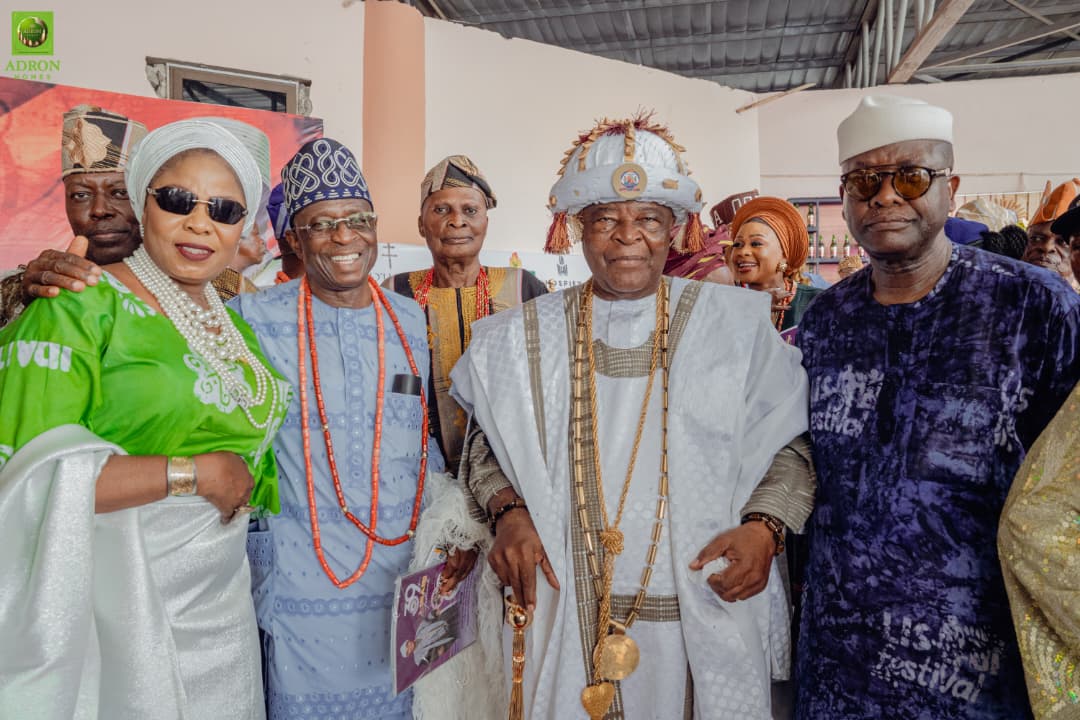
Adron Homes Elevates Cultural Pride as Dignitaries Grace 39th Lisabi Festival in Abeokuta
The ancient city of Abeokuta came alive in a grand display of culture, history, and unity as dignitaries from across Nigeria converged at the iconic Ake Palace Ground for the 39th edition of the Lisabi Festival, an annual celebration deeply rooted in the Egba people’s heritage.
The event, proudly supported by Adron Homes and Properties Limited, witnessed an impressive parade of distinguished personalities, traditional rulers, government officials, business leaders, and cultural enthusiasts, all captured in vibrant pictures that tell the story of a people united by history and pride.
From richly adorned monarchs in regal attire to elegantly dressed guests reflecting the depth of Yoruba tradition, the images from the festival encapsulate moments of honour, reverence, and celebration. Each photograph portrays not just faces, but influence, leaders, and stakeholders who continue to shape cultural preservation and community development.
At the heart of the celebration was the revered Oba Adedotun Aremu Gbadebo, whose presence underscored the festival’s significance as a symbol of Egba resilience and identity. Surrounding him were eminent dignitaries whose attendance further amplified the prestige of the event.
Adron Homes and Properties Limited stood out prominently, not only as a sponsor but as a key driver of cultural sustainability. Through its strategic support, the company reinforced its commitment to preserving indigenous heritage while fostering community engagement. The brand’s visibility across the venue and within the pictorial highlights reflects a deliberate alignment with culture, tradition, and people-centered development.
Beyond real estate, Adron Homes has continued to position itself as a cultural partner, investing in platforms that celebrate history and strengthen communal bonds. Its involvement in the Lisabi Festival is a testament to its broader vision of building not just homes, but legacies rooted in identity and pride.
The 39th Lisabi Festival, as captured through the lens of dignitaries in attendance, is more than an event, it is a narrative of continuity. And through its unwavering support, Adron Homes has once again set the pace, demonstrating that corporate institutions can play a vital role in sustaining the cultural heartbeat of a people.
As the echoes of drums fade and the colours of the festival linger in memory, one thing remains clear: the story told through these images is one of unity, heritage, and the enduring partnership between tradition and progress.


celebrity radar - gossips
Obasa Felicitates President Tinubu @ 74, says Renewed Hope Agenda is steering Nigeria toward stability and prosperity

Obasa Felicitates President Tinubu @ 74, says Renewed Hope Agenda is steering Nigeria toward stability and prosperity
The Speaker of the Lagos State House of Assembly, Rt. Hon. (Dr.) Mudashiru Obasa has congratulated President Bola Ahmed Tinubu on his 74th birthday, commending him for fulfilling his Renewed Hope Agenda promises to Nigerians.
Speaker Obasa’s birthday message is contained in a statement signed by Adeshina Oyetayo, his Special Adviser on Research, Media, and Documentation.
Speaker Obasa described the President as a purposeful and pragmatic leader whose commitment to enthroning a peaceful and prosperous Nigeria should be appreciated by all
“Mr. President, today should be a national day of celebration honouring your selfless and visionary leadership.
“I commend your courage and conviction to initiate and implement necessary economic reforms that have pulled Nigeria out of the doldrums, stabilized the nation, and set it on the path of prosperity.”
Speaker Obasa said that those otherwise painful reforms are now being hailed as ingenious and effective worldwide, citing a January 2026 article in the influential The Economist magazine titled “Nigeria’s economy may be back from the brink.”
The article acknowledged that President Tinubu’s reforms are beginning to yield bountiful returns as evidenced in the easing of headline inflation for the 11th consecutive month, unification of the foreign exchange market, and foreign reserves rising to $46billion.
Notably, the article also referenced the International Monetary Fund (IMF)’s upgraded 4.4% GDP growth forecast for 2026 despite global headwinds, while stating unequivocally that Nigeria’s golden years will return under President Tinubu.
Speaker Obasa said that this submission by an international journal signifies that Nigeria is in safe hands under President Tinubu. He, therefore, urged Nigerians to rally round him and support his re-election bid, promising that the gains of the Renewed Hope agenda will reach every household.
“Our prayer is that the Almighty will grant our dear President long life in robust health and the strength and wisdom to help him achieve the Nigeria of our collective dreams,” Speaker Obasa concluded.


-

 society6 months ago
Religion: Africa’s Oldest Weapon of Enslavement and the Forgotten Truth
-

 news4 months ago
WHO REALLY OWNS MONIEPOINT? The $290 Million Deal That Sold Nigeria’s Top Fintech to Foreign Interests
-

 society6 months ago
“You Are Never Without Help” – Pastor Gebhardt Berndt Inspires Hope Through Empower Church (Video)
-

 celebrity radar - gossips2 months ago
Dr. Chris Okafor Returns with Power and Fire of the Spirit -Mounts Grace Nation Altar with Fresh Anointing and Restoration Grace on February 1, 2026