
Bank
FBNQuest’s Billion-Dollar Freeze Unravels: OML 42 Breaks Free as Mareva Injunction Against Nestoil, Neconde Expires

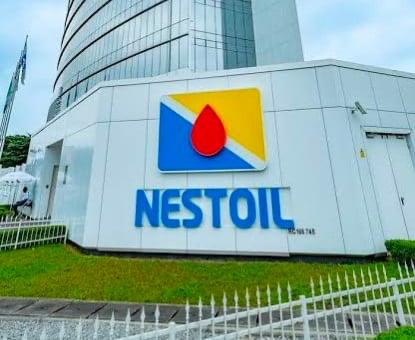
–Legal Experts: Ex Parte Orders Automatically Lapse After 14 Days — Enforcement Now Void
…Corporate Power Struggle Over OML 42 Exposes the Fragility of Interim Judicial Relief in Nigeria
A sudden quiet victory has settled over Nestoil and Neconde. Their offices — once sealed, monitored, and overshadowed by the heavy machinery of FBNQuest and First Trustees — have reopened with renewed activity. Billions of naira once locked in limbo are now accessible again. The dramatic freeze that stalled operations at OML 42 has evaporated, not through courtroom fireworks but through the silent mechanism of the law.
The ex parte orders granted on October 22 by Justice D. I. Dipeolu had allowed the banks to freeze funds, seal premises, and appoint a Receiver to take over operations. The impact was swift and severe: offices shut, crude production threatened, and corporate control seized in a stroke. But under the Federal High Court (Civil Procedure) Rules 2019, such drastic interim relief carries an inbuilt expiry date. Fourteen days after a motion to discharge is filed, the law strips the order of any legal force.
Nestoil and Neconde filed their motion on October 30. On November 13, the orders died a natural legal death.
What had appeared to be the banks’ ironclad grip turned out to be temporary — a procedural illusion bound by time and constitutional safeguards.
Victoria Island had, for weeks, resembled a corporate battleground. Senior Advocate of Nigeria Abubakar Sulu-Gambari, acting as Receiver, walked through seized premises like a custodian of contested billions. Frozen accounts disrupted operations, key decisions were suspended, and OML 42 — a vital crude-producing asset — stood at risk.
But the law is clear: ex parte orders are emergency tools, not instruments of prolonged domination. Under Order 26, Rule 10, they cannot extend beyond fourteen days post–motion to discharge. Section 36(1) of the Constitution reinforces that no party may be deprived of rights indefinitely without being heard. To do otherwise would violate the fair-hearing principle at the heart of Nigerian justice.
With the lapse, any enforcement actions still being carried out became instantly unlawful. Agencies or individuals occupying offices, supervising assets, or restricting corporate activity now lack legal authority. Companies regain autonomy; the banks, if still intent on pressing their claims, must return to court and start afresh.
Legal analysts stress that the brevity of ex parte orders is intentional. “An ex parte order is a temporary shield, not a permanent sword,” one senior counsel explained. “Its lifespan protects fairness. Anything longer would undermine due process.”
For large operators like Nestoil and Neconde, the consequences of extended freezes are not theoretical. Billions of dollars in assets, export schedules, and international business obligations hang in the balance. A prolonged freeze can destabilize operations far more than the underlying dispute itself.
The episode also serves as a cautionary tale for enforcement agencies. Continuing to act after an order lapses exposes them to legal challenge and potential sanctions. Nigerian courts have repeatedly held that enforcement without subsisting authority is unconstitutional.
Across the commercial litigation landscape, Mareva injunctions are well understood as powerful but short-lived. They prevent asset flight but must withstand the strict scrutiny of procedural fairness. Banks often seek them in urgent circumstances — as FBNQuest did, citing an alleged $1 billion exposure — but urgency does not override constitutional limits.
For Nestoil and Neconde, the expiry restores operational stability. For FBNQuest and First Trustees, it closes one chapter and forces a strategic reset. The banks may seek new orders, pursue the substantive case, or recalibrate their approach. The next move could shape not only this dispute but also broader jurisprudence on interim relief.
The corporate world is watching closely. OML 42 is not just another oil asset — it is a pillar of indigenous oil production with national implications. Even a brief freeze affects supply chains, investor confidence, and Nigeria’s energy outlook.
The lesson from this saga is unmistakable: urgency does not trump due process, and interim legal power is inherently temporary. The law’s clock always ticks — and when time runs out, even the most sweeping orders dissolve.
As operations resume on Victoria Island and crude production steadies at OML 42, the drama shifts back to the courts and corporate boardrooms. Will the banks return for another round? Will the court grant fresh relief? Or will the dispute finally move from procedural warfare to substantive adjudication?
For now, the Mareva injunction is dead — but the battle over OML 42 is far from finished.




GTCO Plc Releases 2025 Full Year Audited Result
…Declares Another Record Dividend of ₦12.76k; Re-affirming Unrivalled Capacity to Creating Value
Guaranty Trust Holding Company Plc (“GTCO” or the “Group”) has released its Audited Consolidated and Separate Financial Statements for the year ended December 31, 2025, to the Nigerian Exchange Group (NGX) and London Stock Exchange (LSE).
The Group reported profit before tax of ₦1.23trillion underpinned by strong growth in core earnings, with interest income and fee income increasing y-o-y by 23.2% and 25.9%, respectively. The performance reaffirms its capacity to generate sustainable earnings and builds on the momentum from 2024, when GTCO delivered a record profit of ₦1.27trillion, driven in part by ₦517.5billion in fair value gains, which did not recur in 2025.
The Group’s 2025 profit after tax came in at ₦865.75billion against ₦1.02trillion recorded in 2024. The profit after tax reflects the impact of recent fiscal policy adjustments to the taxation of investment securities, notably withholding tax on short-term instruments. However, when normalised for this effect, underlying earnings remain robust, driven by growth in core operating income.
The Group continues to maintain a well-structured, healthy, and diversified balance sheet in all the jurisdictions wherein it operates a Banking franchise, as well as across its Payments, Pension and Funds Management business verticals. Total assets and shareholders’ funds closed at ₦17.8trillion and ₦3.4trillion, respectively. Capital Adequacy Ratio (CAR) remained very robust and strong, closing at 43.8%, likewise asset quality improved as evidenced by IFRS 9 Stage 3 Loans which closed at 3.4% and 5.0% at Bank and Group level in FY-2025 (Bank, 3.5%, and Group, 5.2% in December 2024). Cost of Risk (COR) also improved to 2.2% from 4.9% in December 2024. In specific terms, the Group’s loan book (net) grew by 12.4% from ₦2.79trillion as of December 2024 to ₦3.13trillion in December 2025. Similarly, deposit liabilities grew by 23.8% from ₦10.40trillion to ₦12.87trillion during the same period.
Commenting on the results, the Group Chief Executive Officer of Guaranty Trust Holding Company Plc, Mr. Segun Agbaje, said: “Our 2025 result underscores the resilience and depth of our earnings capacity. Following a record 2024, which included significant fair value gains, our focus has been on strengthening the sustainability of our earnings by driving growth across our core banking and ecosystem businesses. The strength of our underlying earnings, despite a stronger Naira and tighter regulatory parameters, reflects the quality of our franchise and the discipline with which we execute our strategy. Importantly, this strong core earnings performance underpins our capacity to sustain and grow shareholder returns. Our record dividend payout this year is not only a reflection of our current profitability but also of our confidence in the Group’s long-term earnings potential. Looking ahead, we remain focused on scaling our ecosystem, driving innovation across our financial services platform, and delivering consistent, high-quality earnings that support superior value creation for our shareholders.”
Overall, the Group continues to post one of the best metrics in the Nigerian Financial Services Industry in terms of key financial ratios i.e., Post-Tax Return on Equity (ROAE) of 28.3%, Post-Tax Return on Assets (ROAA) of 5.3%, Capital Adequacy Ratio (CAR) of 43.8% and Cost to Income Ratio of 27.9%.
Guaranty Trust Holding Company Plc is a leading financial services group with operations across Africa and the United Kingdom. Renowned for its strong corporate governance, innovative financial solutions, and customer-centric approach, the Group provides a wide range of banking and non-banking services including payments, funds management, and pension fund administration. GTCO Plc is committed to delivering long-term value to stakeholders while driving growth and development across its markets

ZENITH BANK OPENS MANCHESTER BRANCH TO SUPPORT CROSS-BORDER TRADE AND INVESTMENT
Zenith Bank Plc has announced the opening of a new branch in Manchester, United Kingdom, marking another significant milestone in the bank’s international growth and its commitment to strengthening financial connections between Africa and global markets.
The official opening ceremony, scheduled to hold on Tuesday, March 17, 2026, is expected to attract government officials from Nigeria and the United Kingdom, regulators, investors, customers, and business leaders from both countries, underscoring the growing economic ties and investment opportunities between the two markets.
The new Manchester branch will complement Zenith Bank’s existing operations in the United Kingdom and serve as a strategic hub for supporting businesses engaged in international trade and investment. Through the branch, the bank will provide corporate banking, trade finance, treasury and related financial services to clients operating across the United Kingdom, Europe and Africa.Speaking ahead of the launch, the Group Managing Director/Chief Executive Officer of Zenith Bank Plc, Dame Dr. Adaora Umeoji, OON, said: “The opening of our Manchester branch represents another important step in Zenith Bank’s growth as a leading African financial institution connecting businesses and markets across continents. Manchester is one of the United Kingdom’s most dynamic commercial centres, and our presence here will further strengthen financial connections between businesses in the UK and opportunities across Africa’s rapidly expanding markets.
”Founded in 1990 by its Founder and Chairman, Jim Ovia, CFR, Zenith Bank has grown into one of Africa’s most respected banking institutions, boasting a robust capital base and a remarkable history of year-on-year profitability. Built on a strong foundation of people, technology and service, the Bank has consistently delivered innovative financial solutions while maintaining a disciplined approach to growth and risk management. The impressive performance of the Bank has consistently earned it excellent ratings, recognition and endorsement from local and international agencies and institutions.Headquartered in Lagos, Nigeria, Zenith Bank operates over 500 branches and business offices across the 36 States of the Federation and the Federal Capital Territory (FCT). The Bank currently operates subsidiaries in several African countries including Ghana, Sierra Leone, Gambia, and Cote d’Ivoire, while maintaining a presence in major international financial centres including the United Kingdom, France, UAE and China.
In recent years, Zenith Bank has continued to expand its international network as part of its strategy to support global trade and investment flows involving Africa.Manchester, widely regarded as one of the United Kingdom’s most vibrant economic centres, hosts a diverse base of businesses across sectors such as manufacturing, engineering, logistics, technology and consumer goods. The city’s strong commercial ecosystem and international outlook align closely with Zenith Bank’s expertise in corporate banking, structured finance and trade finance.The Manchester branch will work closely with the Bank’s London operations and its broader international network to support clients seeking to expand across markets and unlock new opportunities in both the United Kingdom and Africa.
With the opening of the Manchester branch, Zenith Bank continues to advance its vision of building a truly global African banking institution that connects businesses, facilitates trade and investment, and creates stronger economic bridges between Africa and the world.
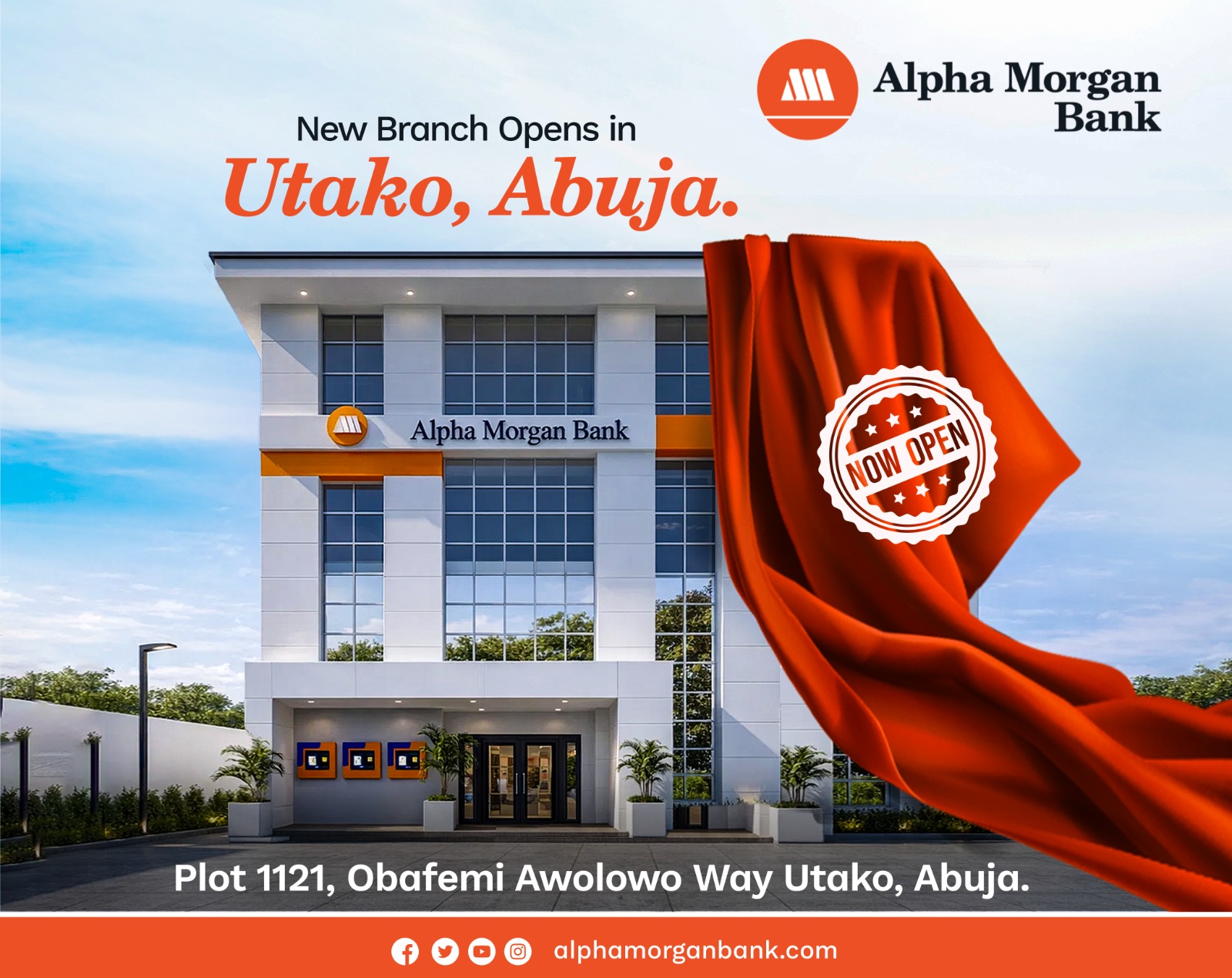
Alpha Morgan Bank Deepens Presence in Abuja with New Branch in Utako
Marking another milestone in its expansion drive, Alpha Morgan Bank has opened a new branch in Utako, Abuja, reinforcing its strategy of building closer institutional ties within key business communities and bringing its financial expertise closer to individuals, and enterprises driving the city’s growth.
The new branch, located at Plot 1121 Obafemi Awolowo Way, Utako, Abuja is strategically positioned to serve individuals, entrepreneurs, and corporate clients within Utako and surrounding districts.
The expansion follows the Bank’s recently concluded Economic Review Webinar held in February 2026, as the bank continues to position as a thought-leader in the financial services industry.
Speaking on the opening, Ade Buraimo, Managing Director of Alpha Morgan Bank, said the move underscores the Bank’s commitment to accessibility and service excellence.
“Proximity matters in banking. As communities grow and commercial activity expands, financial institutions also evolve to meet customers where they are. The Utako Branch allows us to deliver our services to people in that community efficiently while maintaining the high standards our customers expect,”
The Utako location will provide a full suite of retail and corporate banking services, including account opening, deposits, transfers, business banking solutions, and financial advisory support.
Customers and members of the public are invited to visit the new Utako Branch to experience the Bank’s approach to satisfying banking.


-

 society6 months ago
Religion: Africa’s Oldest Weapon of Enslavement and the Forgotten Truth
-

 news4 months ago
WHO REALLY OWNS MONIEPOINT? The $290 Million Deal That Sold Nigeria’s Top Fintech to Foreign Interests
-

 society6 months ago
“You Are Never Without Help” – Pastor Gebhardt Berndt Inspires Hope Through Empower Church (Video)
-

 celebrity radar - gossips2 months ago
Dr. Chris Okafor Returns with Power and Fire of the Spirit -Mounts Grace Nation Altar with Fresh Anointing and Restoration Grace on February 1, 2026