
society
Fear, Fractions and Factions: Why the APC Government Fears the Coalition More Than an Election Defeat.


Fear, Fractions and Factions: Why the APC Government Fears the Coalition More Than an Election Defeat.
By George Omagbemi Sylvester | Published by SaharaWeeklyNG.com
In a country bruised by decades of misgovernance, economic sabotage and elite manipulation, one would assume that any attempt to salvage the democratic space through coalition-building would be celebrated. Unfortunately, that is not the case in Nigeria. What we are witnessing is not a democratic government promoting political plurality, but a ruling regime that has become allergic to dissent and terrified of unity among the opposition.
The fear is EVIDENT. The panic is LOUD. The desperation is SHAMELESS.
The recent waves of government-led intimidation, including the bullying of event centres meant to host the official unveiling of the opposition coalition and the curious emergence of factional crises within the newly adopted platform, are nothing short of coordinated political sabotage. These are not coincidences; they are state-sponsored tactics driven by an irrational fear of being held accountable in 2027.
Why the Fear?
The question on every conscious Nigerian’s lips is simple: Why is the APC government so scared of this coalition?
It is because, for the first time since 2015, Nigerians from all walks of Life (market traders, students, civil servants, religious leaders and even former APC loyalists) are beginning to find hope in something that is not wrapped in a broom. The coalition, despite its imperfections, is perceived as a potential people’s movement not just a merger of political interests. That frightens the cabal that currently profits from Nigeria’s status quo.
This coalition represents a direct threat to the monopolistic control APC has over Nigeria’s electoral machinery, state resources and security institutions. A united opposition disrupts the illusion of invincibility the APC has built over time, especially since it has used defections and factionalism as tools to divide and conquer any opposing force.
Bullying Tactics: A Hallmark of a Dying Regime.
It is a tale as old as African politics; when an authoritarian-leaning government sees its grip slipping, it doesn’t tighten its belt; it reaches for the baton. From pressuring event centres to cancel bookings, to using the Department of State Services (DSS) and police to intimidate political opponents, the APC is clearly exhibiting what Chinua Achebe called “the MADNESS of the FALLING TREE.”
This regime thrives on chaos. If it cannot CO-OPT you, it will CRUSH you. If it cannot DIVIDE you, it will DEMONIZE you. If it cannot DISCREDIT you, it will FABRICATE a crisis within your ranks.
The emergence of new factions in the opposition party barely 48 hours after the coalition’s unveiling is suspect. As former Deputy Senate President Ike Ekweremadu once warned, “Nigerian politics is not just a game of INTEREST; it is a game of INFILTRATION.” These factions do not represent ideological disagreements; they are symptoms of a larger plan to weaken the coalition before it gains grassroots traction.
A Regime Built on Fear, Not Performance.
The APC government’s paranoia is not baseless, it is earned. Under its watch, Nigeria has become the global capital of poverty, food insecurity has skyrocketed and insecurity continues to claim lives daily. The fuel subsidy removal was done with the swiftness of a dictator’s pen but without a sustainable economic cushion for the people. Naira devaluation has made basic commodities unaffordable. Foreign investors are fleeing. Universities are constantly on strike; and now, they borrow to pay salaries in most states.
According to data from the Debt Management Office (DMO), the Buhari administration left a debt burden of ₦48 trillion. In just two years, President Tinubu has doubled it to ₦96 trillion, without providing basic subsidies for education, transportation, health or fuel. This level of borrowing (combined with hyper-inflation and high unemployment) has made the APC extremely vulnerable to voter revolt in 2027. Hence, the coalition must not be allowed to breathe.
Senator Shehu Sani said it best: “The APC is not afraid of the opposition’s incompetence; it is afraid of the opposition’s unity.”
Defections Mean Nothing Without Will-power.
One may argue that almost all state governors are defecting to the APC, thus neutralizing the threat posed by the opposition. However, this assumption fails to recognize that in today’s Nigeria, party loyalty no longer means ideological alignment, it means self-preservation. Most of these defectors are driven by fear of EFCC investigations or the desire to secure second-term tickets, not any genuine love for APC.
Moreover, Nigerian voters are more politically aware today than in 2015. The #EndSARS generation is not silent anymore. The diaspora is mobilizing. The youth are watching. The citizens have seen what a united front like Labour Party could achieve even without deep structures. Imagine what a real coalition with grassroots presence, electoral agents and shared manifesto could do in 2027.
As political analyst Jide Ojo notes, “The 2023 elections broke the myth that only the ruling party can win. It showed that with passion, coordination and purpose, the so-called political giants can be retired.”
The Strategy of Intimidation Will Backfire.
By trying to suffocate the coalition in its infancy, the APC is planting the seeds of its own downfall. History has shown us that popular movements are strengthened by oppression. The African National Congress (ANC) in apartheid South Africa, the Movement for Democratic Change (MDC) in Zimbabwe, and even NADECO in Nigeria, all thrived under government intimidation.
Trying to destabilize a people’s project with DSS & EFCC intimidation and political faction creation only gives it more attention and moral legitimacy.
Governor Nyesom Wike once said, “You cannot be in government and still behave like an opposition. You have all the instruments of governance. Use them to govern, not to persecute.” Sadly, the APC behaves like a wounded opposition even while holding power.
A Call to the Nigerian People.
This moment is bigger than parties or coalitions. This is a fight for Nigeria’s democratic soul. The coalition may not be perfect, but it is currently the only serious alternative that the APC fears. That alone is worth defending. Let the people (especially the youth) rally around the idea, not just the personalities. Let the agenda (not just the anthem) be revolutionary.
We must not allow this moment to be stolen by the usual games of betrayal, bribery and internal sabotage. The price of failure is too high. Nigerians must recognize that this government’s obsession with crushing the coalition is not about protecting the people; it’s about protecting the looters of the future.
In Summary
The APC government’s fear of the coalition is not rooted in morality but in survival. They know what they’ve done. They know what they’ve failed to do and they know that a united opposition armed with the people’s voice is the one thing that could end their reign.
To quote the late Dora Akunyili: “You cannot cover a smoke with bare hands.”
The more the APC tries to suppress the coalition, the more obvious their guilt becomes. Nigerians must rise and defend this window of change, before it’s too late.


Written by George Omagbemi Sylvester
Published by SaharaWeeklyNG.com




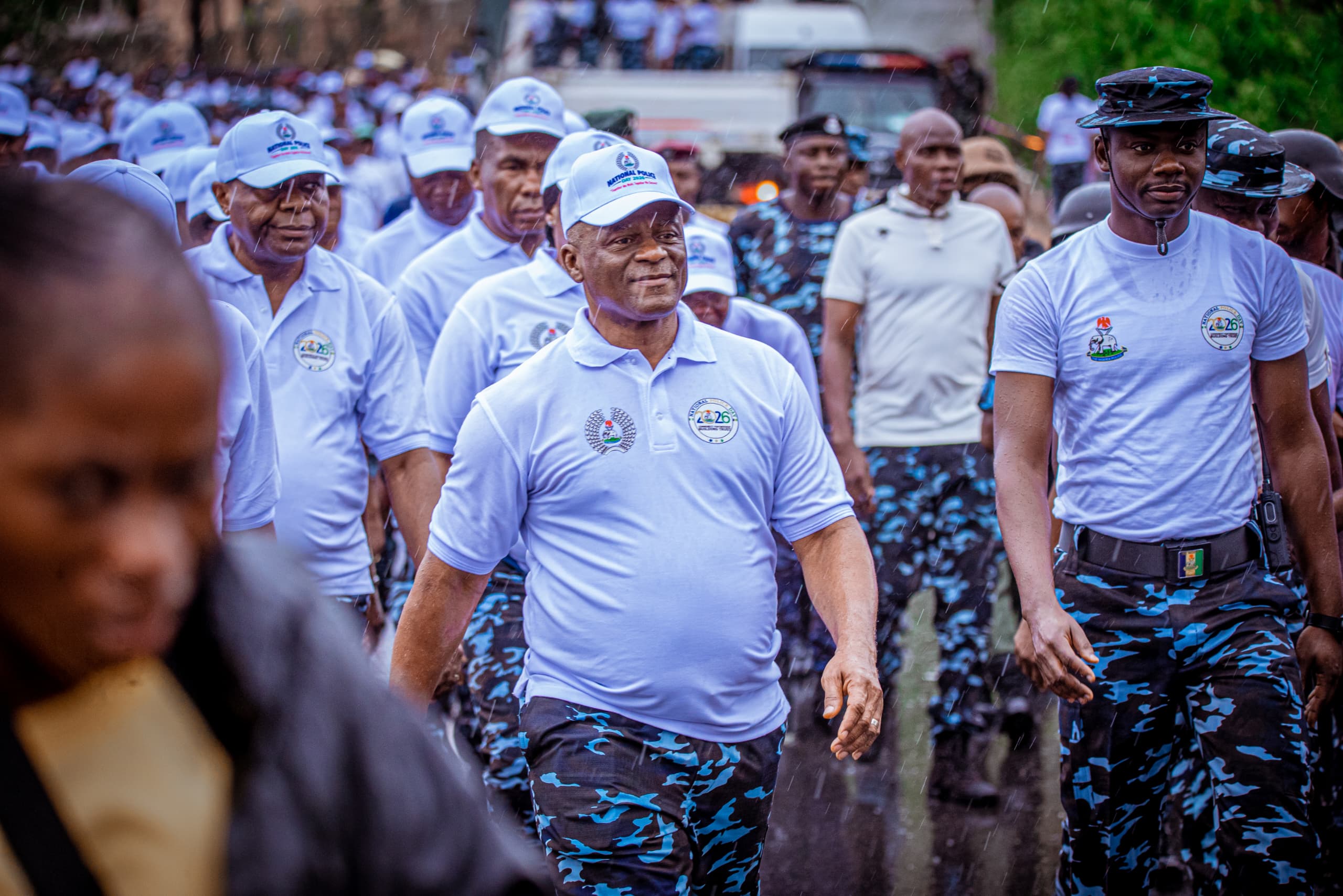
Police Day 2026: IGP Disu Leads Nationwide Walkathon To Strengthen Community Trust
The Inspector-General of Police, Olatunji Disu, on Tuesday led the management team, alongside officers and personnel of the Nigeria Police Force, in a nationwide walkathon to commemorate the 2026 National Police Day.
The event, held across state capitals and the Federal Capital Territory, formed part of activities marking Day Two of the annual celebration, themed “Community Partnership: Building Trust.”
The symbolic exercise, which drew participation from both police personnel and members of the public, was aimed at showcasing unity, discipline, and a renewed commitment to community policing and public safety.
According to the Force leadership, the walkathon underscores the Nigeria Police Force’s resolve to strengthen public trust, deepen engagement with citizens, and enhance collaboration in tackling security challenges across the country.
Participants described the initiative as a practical step toward bridging the gap between law enforcement and the communities they serve, while also promoting physical fitness and mental well-being among officers and civilians alike.
With the theme reflecting a shared responsibility for safety, the Police reiterated that sustainable security can only be achieved through active partnership with the public.
The event concluded with a renewed call for collective action under the banner: “Together We Walk, Together We Secure,” emphasizing unity of purpose in building a safer and more secure society for all Nigerians.


society
Dr. Chris Okafor invokes divine retribution upon individuals blackmailing the Grace Nation church
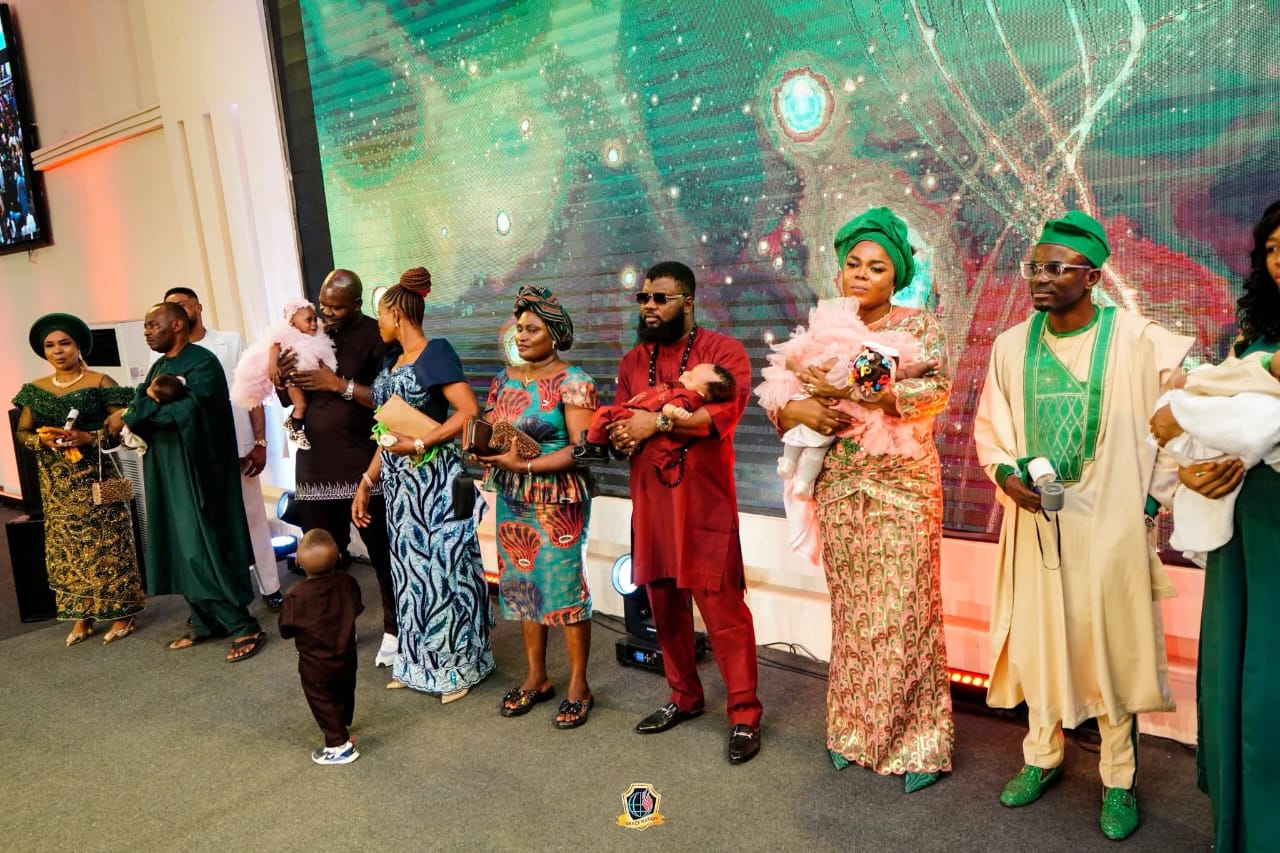
Dr. Chris Okafor invokes divine retribution upon individuals blackmailing the Grace Nation church
… Affirming God’s omnipotence to unveil malicious schemes.
To be frank, the ability of Doris Ogala and her associates to withstand the arduous challenges set by Senior Pastor Dr. Chris Okafor of Grace Nation Global at the culmination of the Harvest of Babies 2026 conference, the church’s flagship event, continues to elude me.
It’s advisable not to offend a powerful spiritual leader like Prophet Chris Okafor to avoid potential consequences, as seen in the situation with Doris Ogala, who was rebuked by the prophet; can she rectify the situation through confession?
Insiders close to the man of God claim that despite relentless online bullying and blackmailing, the Generational Prophet remains resolute, stating that God’s power has been evident throughout the commission’s existence. The reason for this wonderful statement is found in the scriptures, “Upon this rock I shall build my Church, and the gates of hell shall not prevail.” The more falsehoods are spread about the church and its leader, the more God elevates the church and propels him to greater heights, he asserted. He emphasized that blessings and fruitfulness are antidotes to curses, noting that God continues to bestow blessings upon the church, including miracles and the gift of children, which is one reason for the grand finale of the annual family liberation program, The Harvest of Babies.
However, the man of God issued a curse on each person speaking ill of the church, blackmailing, and uttering all sorts of falsehoods against the church, declaring that if they refused to repent within a few days, the earth would swallow them and their family members, stating that they would be of no use to themselves, their families, or society at large.
The spiritual leader cautions his followers to beware of such individuals including Doris Ogala who may taint their faith, and urges them to treat these persons as emissaries of the devil, avoiding them altogether.
Recall that the 2026 harvest of babies concluded with a remarkable birth of a miracle baby boy to a woman on the third day of the conference, accompanied by the dedication of several other miracle babies, all to the glory of God.
Christopher Sunday David writes from
Austria
“Together We Walk, Together We Secure”: Police Launch 2026 Walkathon In Abuja
The Nigeria Police Force has announced plans to host a walkathon in commemoration of the 2026 National Police Day, aimed at promoting unity, peace, and stronger community partnership.
The event is scheduled to take place on Tuesday, March 31, 2026, with participants expected to converge at the Force Headquarters Abuja by 6:00 a.m., where the walk will commence.
According to the organisers, the walkathon is designed to bring together members of the public, stakeholders, and security personnel in a show of solidarity and shared commitment to national security.
With the theme, “Together we walk, together we secure,” the initiative underscores the importance of collaboration between the police and citizens in maintaining peace and safety across the country.
Members of the public have been encouraged to participate in the exercise, which forms part of activities lined up to mark this year’s National Police Day celebration.
It is believed that the walkathon would not only foster closer ties between the police and the communities but also serve as a platform to promote awareness on collective responsibility in ensuring a safer society.


-

 society6 months ago
Religion: Africa’s Oldest Weapon of Enslavement and the Forgotten Truth
-

 news4 months ago
WHO REALLY OWNS MONIEPOINT? The $290 Million Deal That Sold Nigeria’s Top Fintech to Foreign Interests
-

 society6 months ago
“You Are Never Without Help” – Pastor Gebhardt Berndt Inspires Hope Through Empower Church (Video)
-

 celebrity radar - gossips2 months ago
Dr. Chris Okafor Returns with Power and Fire of the Spirit -Mounts Grace Nation Altar with Fresh Anointing and Restoration Grace on February 1, 2026