
Business
FirstBank Cardholders Records N1.18trn in Transactions Value during Lockdown

Since its establishment in 1894, FirstBank has consistently built relationships with her customers, focusing on the fundamentals of good corporate governance, strong liquidity, optimised risk management and effective leadership. These, amongst others, are the reasons the Bank has dominated the financial market for over 126 years.
The Bank has led the financing of private investment in infrastructural development in the Nigerian economy by playing key roles in the Federal Government’s privatisation and commercialization schemes, and entrenchment of the cashless policy which gave rise to electronic cards being a veritable entity in the day to day transactions among the bank’s customers. Consequently, the use of its wide range of cards, developed with the ‘man on the move’ in mind, come with far reaching benefits and rewards, connecting the remotest of places even as the world is plagued by the novel Corona virus disease today.
The world as we know it today, is a global village, and its connectivity is at the tip of an individual’s finger. That aside, it also revolves around the use of ‘ordinary’ but highly customised cards and FirstBank is a confirmed Leader in this space. There’s no gainsaying the fact that for 126 years and counting, FirstBank, Nigeria’s premier bank, with accolades and awards trailing its existence, has continued to blaze the trail in certainly every financial innovation. And as the name signifies, has continued to be the first in virtually everything banking and finance. Little wonder that in December 2015 and May 2016, FirstBank was named the first financial institution in the country to achieve sustained alternative channels transaction volumes of 100 million transactions. Subsequently in 2017, the Bank also attained the Milestone of 10million card base, a feat that is first of its kind in West Africa and Second in Africa.
There is hardly any banking innovation, which is not traced to the company that has overtime woven itself into the very fabric of the society. Commenting on FirstBank’s strides, the Chief Executive Officer, Dr. Adesola Adeduntan, disclosed that the bank’s 53, 000 agents across the country processed about N512 billion worth of transactions with differing values while the lockdown lasted. He noted that the bank was “able to actively support her customers, their families and businesses through these challenging times.” This is nothing short of the FirstBank advantage.
Adeduntan reiterated the faith Nigerians have in the use of FirstBank cards, saying that during the period of the lockdown, Nigerians with FirstBank cards used them 105 million times to make payments or withdrawals worth about N1.18 Trillion as they relied on the Bank to settle their banking needs. In addition, the Bank’s CEO noted that approximately 12.6 million withdrawals to the tune of N156 billion were carried out across FirstBank’s ATMs nationwide.
“Our customers made transfers over 106 million times with a total value of about N8.18 Trillion across our digital channels. We have also recorded over 275,000 new sign-ups to alternative channels covering our Firstmobile, USSD and First-Online platforms,” the CEO informed.
While calling on lovers of stress-free banking to get on board, the FirstBank CEO further assured existing customers of the bank’s relentless efforts to ensure that banking transactions continue seamlessly, adding that COVID-19 will not slow down her activities and efforts at staying true to her brand promise to her customers.
FirstBank cards come in a wide range of categories, each fulfilling tasks that are better imagined, but nevertheless are flexible and offer comfort, stress-free banking and wholesome peace of mind. It is therefore not a coincidence, that FirstBank is and remains Nigeria’s highest card transacting bank; a product of carefully thought out process, hard work and the quest to keep its customers first in all things. This is especially important at a time when movement and business activities were largely hampered by the lockdown, with the maintenance of social distance and the potential increase in the use of the Bank’s alternative channels – which is facilitated by its cards – for various transactions and business activities, thus staying safe to win the fight against the COVID-19 pandemic.
The range of cards available to customers of FirstBank are categorised into three broad groups, viz; DEBIT, CREDIT and PREPAID Cards. The grouping covers outstanding cards offerings such as Naira MasterCard, Verve Card and the pioneering Visa Multi-Currency Card. Others are Expressions MasterCard, Platinum MasterCard, Visa Infinite Credit Card, Visa Gold Credit Card, Naira Credit Cards (Visa Classic and Platinum), Visa Prepaid Card and Verve Prepaid Card.
FirstBank’s Naira MasterCard & Verve Card are Secured by Chip & PIN technology with local POS/Web limit increase available upon request. The Naira denominated MasterCard comes with various benefits such as online purchases, bills payments and cash withdrawals at ATMs world-wide. The various transaction limit(s) on Naira MasterCard issued by the Bank are N150,000 for ATM transactions, N2,500,000 for POS and N1,000,000 for Web transactions.
The FirstBank Verve Debit Card works with Chip and PIN technology to secure transactions. It allows the cardholder to conveniently pay for goods and services and is accepted by all ATMs, POS, Web, Mobile, Kiosk, and Bank Branch connected to the Interswitch network in Nigeria. It is available to all account holders and enables daily transaction limits of N150,000, and N500,000 on ATM and POS channels respectively. Customers can transact up to N1 million on the Web in a single transaction.
FirstBank cards also offer the Card Protection Transactions feature, which allows the cardholder to activate or deactivate it for all types of transactions, channels and locations, through the Card-in-Control Service on the Firstmobile app. The steps are few and simple: On the Firstmobile app, go to Self Service > Card Services and choose card type (Debit, Credit, or Prepaid) to be activated or deactivated.
Another card innovation service by FirstBank is the Visa Gold Card, which offers higher daily spending capacity and limit on ATM, POS and Web. With the Visa Gold Card, the customer is assured of $1,000 daily ATM withdrawal, $10,000 POS transaction and $5,000 on the Web at any location around the world. It is a dollar denominated international Premium Credit Card issued in partnership with Visa International.
Moreso, it guarantees access to international emergency services such as Emergency Card Replacement & Emergency Cash Advance in situations where the card gets lost or damaged. The Visa Gold card comes handy when making airline bookings with its smooth seamless purchase options.
Yet another, among the FirstBank’s super cards, is VISA Debit Multi-Currency Card. It is by all intent and purpose, the first of its kind to be offered by any financial institution in Nigeria. It is an enhancement to the existing Visa Debit Dual Currency card and can be linked to any or all NAIRA, USD, EURO and GBP accounts. It is an international card with Chip and PIN technology which can be used to make payment anywhere in the world and across all channels – ATMs, POS & Web. With the Visa Debit Multi-Currency card, cardholders can make daily withdrawals to the tune of N150,000 (local) and $1,000 (international) from the ATM. However, on the Web, a total of N1,000,000 is permitted locally while $6,250 is allowed on the international corridor daily. POS transaction limit is N2,500,000 (local) and $2,500 (international).
The Platinum Debit MasterCard is a premium Debit Card denominated in Naira. It is linked directly to a customer’s Naira denominated Current and/or Savings account. It offers a convenient alternative to the use of cash, and cheques by giving direct access to funds in cardholders’ accounts across all channels like ATM, POS, and WEB etc.
Like other card types, its transactions are easily monitored via the FirstBank FirstMobile App or FirstBank Internet Banking service and offers 24-hour access support for all card-related complaints through First Contact. It is a card linked to a Naira denominated account, and it is valid for three years.
It is designed to suit the lifestyle of senior and management executives of multinational companies and leaders across various industries and sector of the global economy. Its daily limits include; ATM: N300,000; POS: N3million; Web: N2,000,000 as well as Cross-border TXN limit: $500 monthly.
For a brand that has consistently remained on top of its game, FirstBank Cards have received global recognition, as well as multiple honour for its reliable and trusted services.
Speaking further, Adeduntan highlighted that the contactless capability of the bank’s Visa and MasterCards support less human-to-human contact in executing transactions, in the same way that the Debit Cards have remained the base channel for self-onboarding to any digital channel such as USSD, Firstmobile, FirstOnline etc. It is therefore, imperative that customers get a Debit Card because of its peculiar nature to get enrolled on FirstBank’s digital channel for the best of services.
FirstBank’s benevolence did not end with making cards available to customers, but has initiated value added services attached to the cards including ‘discount at Merchants location such as Jumia Friday, Health Plus, among others. These are, without an iota of doubt, exclusive to FirstBank cardholders. This is why you must get your card(s) if you are yet to. Email us at [email protected], or call your Relationship Manager/Private Banker for whatever card options you require.
No lockdown on FirstBank alternative channels. Sign up for FirstMobile, FirstOnline, *894# and FirstBank cards today! #EnablingYou |




GTCO Launches “Take on Squad” Hackathon 3.0, Opens Call for Applications
Guaranty Trust Holding Company Plc (“GTCO” or the “Group”) has announced the launch of “Take on Squad” Hackathon 3.0, reaffirming its commitment to fostering innovation, empowering talent, and supporting the development of technology-driven solutions that address real-world challenges across Africa.
Now in its third edition, the Hackathon brings together developers, designers and entrepreneurs across Nigeria in a collaborative environment to build practical solutions across key sectors including financial services, healthcare, commerce and digital inclusion. Under the theme “Smart Systems: The Intelligent Economy,” participants are challenged to design and build intelligent, data-driven solutions that transform how communities engage with money.
Applications are now open, and interested teams can find full guidelines and registration details on the official portal at https://squadco.com/hackathon.
Speaking on the initiative, Eduophon Japhet, Managing Director of HabariPay, stated: “Today’s dynamic, digitally driven world demands continuous innovation, which is shaping how economies grow, how businesses scale, and how societies evolve. Through “Take on Squad” Hackathon, we are deliberately investing in the ideas and talent that will define the future. Our objective is not simply to encourage innovation, but to enable its translation into scalable solutions that deliver real and measurable impact. This reflects GTCO’s role as a financial services platform that connects capital, capability, and creativity to drive sustainable progress.”
The social coding event remains a cornerstone of HabariPay’s mission to foster creativity and problem-solving among emerging tech talents. Competing teams will leverage Squad’s advanced APIs to create scalable digital tools that address everyday challenges faced by businesses and individuals.
Through initiatives such as this, GTCO continues to position itself at the intersection of finance, technology and enterprise, actively shaping the future of digital transformation in Africa.
About HabariPay
HabariPay Ltd is the fintech subsidiary of Guaranty Trust Holding Company Plc (GTCO), one of the largest financial services institutions in Africa with direct and indirect investments in a network of operating entities located in 10 countries across Africa and the United Kingdom.
Licensed by the Central Bank of Nigeria (CBN), our goal is to support SMEs, micro merchants, large corporations and other fintechs (Tech Stars) with the tools they need to thrive in an evolving digital economy and expand beyond their current market reach. HabariPay’s solutions include Squad, a full-scale digital payments toolkit to make in-person and online payments simpler, HabariPay Storefront, an e-commerce website to facilitate online purchases, Value-Added Services to help merchants access cost-effective and flexible airtime and data bundles to run their businesses, as well as a switching infrastructure that enables tech-focused businesses to optimise cost and make transactions more efficient.
HabariPay’s contributions to Accelerating Digital Acceptance in Africa have not gone unnoticed–it received Mastercard’s Innovative Mobile Payment Solution Award at TIA 2022 for its innovative payment solution, SquadPOS.
About Squad
Squad is a complete digital payments solution that is reliable, secure, and affordable, making receiving in-person and online payments simpler and convenient.
Thousands of merchants currently leverage Squad’s payment solutions for their daily business operations. Squad’s current products and service offerings include SquadPOS, Squad Payment Links, Squad Virtual Accounts, USSD, and E-Commerce Storefront.
Find out more at www.squadco.com.
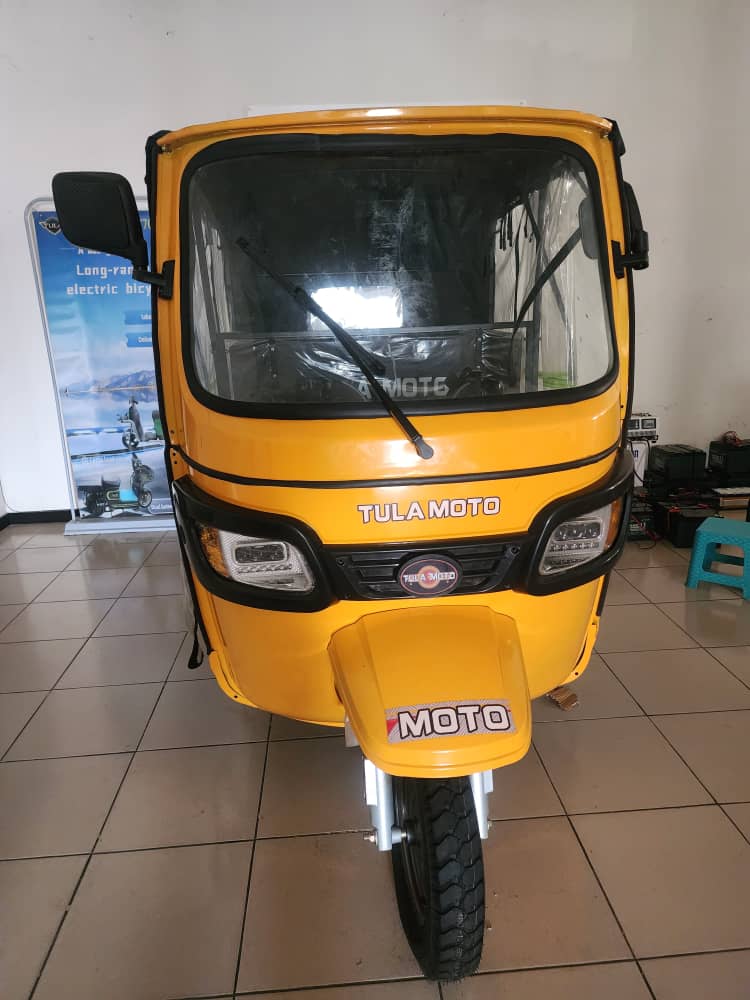
Electric 8-Seater Tula Moto Keke Enters Nigerian Market, Targets Higher Operator Earnings
LAGOS — A new electric-powered tricycle with an expanded passenger capacity has been introduced into Nigeria’s urban transport sector, offering operators a potentially more profitable and eco-friendly alternative to conventional petrol-driven “keke.”
The newly launched 8-seater electric tricycle, now available in Lagos with plans for nationwide distribution, features a dual-row seating arrangement capable of accommodating up to eight passengers per trip—significantly higher than the standard three-passenger configuration common across the country.
Promoters of the innovation say the increased capacity is designed to boost daily earnings for operators, particularly amid persistent fluctuations in fuel prices. By running entirely on electric power, the vehicle eliminates dependence on petrol, reducing operating costs and shielding drivers from fuel price volatility.
According to the distributors, the tricycle is equipped with a durable battery system capable of covering extended distances on a single charge, making it suitable for commercial operations across high-traffic routes, residential estates, campuses, and marketplaces.
“The concept is straightforward—enable drivers to earn more while spending less,” a company representative stated. “With higher passenger capacity and zero fuel requirements, operators can maximise each trip without the burden of daily fuel expenses.”
Beyond its cost-saving potential, the electric keke is also said to require less maintenance than traditional models, offering additional long-term savings. Its quieter and smoother operation is expected to enhance passenger comfort and overall commuting experience.
Industry analysts note that the introduction of electric mobility solutions reflects a growing shift toward cleaner and more sustainable transportation alternatives in Nigeria, particularly in densely populated urban centres such as Lagos.
The distributors added that the product is currently available under a limited promotional offer, with delivery options across the country.
For inquiries and purchase: 📞 08153432071
📞 08035889103
Office Address:
📍 Plot 9, Block 113, Beulah Plaza,
Lekki–Epe Expressway,
Lekki Phase 1, Lagos
As transportation costs continue to rise and environmental concerns gain prominence, innovations like the electric 8-seater keke may signal an emerging transition toward more efficient and sustainable mobility solutions nationwide.


Business
A Pipeline, a Licence, and a Storm Brewing: Corruption allegations Draw global oil giant, Shell, Into Nigeria’s Reform Test
*A Pipeline, a Licence, and a Storm Brewing: Corruption allegations Draw global oil giant, Shell, Into Nigeria’s Reform Test*
By Deji Johnson and Mustapha Bello
t begins with a pipeline that should have been completed by June 2026. It widens into a regulatory dispute. And it now risks becoming a defining test of Nigeria’s gas reforms under President Bola Ahmed Tinubu.
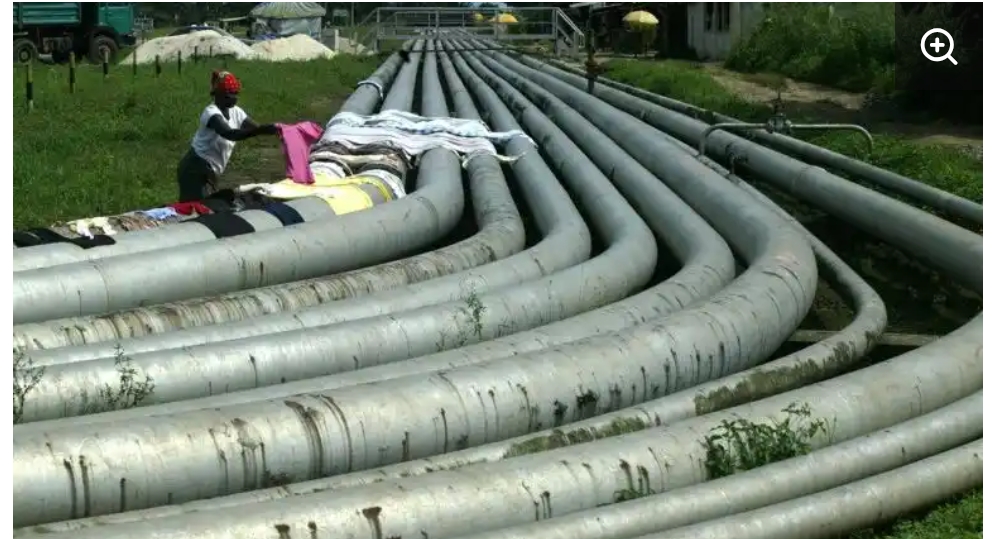
At the center is a stalled 80 kilometre gas pipeline from Sagamu to Ibadan, a project backed by over 100 million dollars in investment and built on a protected Gas Distribution Licence issued under the Petroleum Industry Act 2021. The licence granted NGML–NIPCO exclusive rights to distribute gas within Ibadan for 25years based on Nigeria’s Petroleum Industry Act.
On paper, the law is clear. On the ground, the situation is anything but.
For more than three months, construction has been halted following a stop work order issued by the Oyo State Government led by former Shell Contractor and engineer, Governor Seyi Makinde. No detailed public justification has been provided that aligns with existing federal approvals already secured for the project.
What might have remained a quiet regulatory disagreement has now escalated into something far more politically charged. How?
In recent remarks, Nigeria’s Minister of the Federal Capital Territory, Nyesom Wike, who is of the same political party as Governor Seyi Makinde, made a pointed allegation that has since rippled across political and industry circles. He suggested that the Governor of Oyo State and Shell were in what could be described as an “unholy alliance.”
It is a serious claim. One that, if substantiated, would raise profound questions about the intersection of corporate influence, state level action, and federal law.
Neither Shell nor the Oyo State Government has publicly responded in detail to the allegation.
But the silence is now part of the story.
*THE SHELL QUESTION*
For Shell, this moment carries particular weight.
The company has operated in Nigeria for decades, building one of its most significant global portfolios in the Niger Delta. But that history is not without controversy. From corruption claims to environmental damage claims and community disputes amongst others, Shell has faced years of litigation and, in several high profile cases, adverse rulings tied to its operations in the region.
Those cases, many adjudicated in foreign courts, have shaped a negative reputation that continues to follow the company.
Now, a new question emerges.
Is Shell once again operating at the edge of Nigeria’s regulatory framework seeking to exert undue influence in circumventing Nigeria’s petroleum laws, or firmly within it?
Industry sources including a widely reported meeting between their representatives, Oyo State Government representatives and the newly appointed midstream and downstream chief executive, indicate that engagements involving Shell and the Nigerian Midstream and Downstream Petroleum Regulatory Authority could enable the company to enter a gas distribution zone already licensed to another operator in breach of the PIA.
If true, the implications are immediate and far reaching.
A licence meant to protect investors and investments in Nigeria’s gas space ceases to be exclusive against the dictates of the guiding laws. A framework begins to look flexible, and a reform risks appearing reversible.
To many, it seems more than just a commercial dispute and is not just about one company versus another.
Nigeria is in the middle of an energy transition where gas is expected to play a central role in powering industries, stabilising electricity supply, and reducing reliance on expensive diesel. President Bola Tinubu has emerged as a global champion of using gas as a transition fuel in Nigeria and Africa whilst rolling out elaborate but clearly defined plans to achieve it. Yet gas availability remains inconsistent, constraining power generation and limiting industrial output.
Projects like the Sagamu to Ibadan pipeline are designed to close that gap. To halt such a project is to delay not just infrastructure, but impact. To undermine its legal basis is to question the system that enabled it and to introduce competing claims within the same licensed zone is to risk regulatory confusion at a time when clarity is most needed.
This is where the issue moves from commercial to national because at stake is not only an investment, but the credibility of the reform architecture itself.
*OYO STATE AND THE FEDERAL QUESTION*
The role of the Oyo State Government adds another layer of complexity.
Energy regulation in Nigeria, particularly in the gas sector, is governed by federal law. Yet implementation often intersects with state authority, creating spaces where jurisdiction can blur.
The stop work order issued on the pipeline has become the clearest manifestation of that tension. Was it a regulatory necessity?
A precautionary measure? Or, as alleged by Minister Wike, part of a broader alignment with external interests? Without transparency, speculation fills the vacuum and the regulator must avoid finding itself mired in such allegations.
*QUESTIONS THAT WILL NOT GO AWAY*
For Shell, the questions are now direct and unavoidable:
Is Shell, a global energy giant, seeking to operate within the Ibadan gas distribution zone already licensed to NGML–NIPCO?
What assurances, if any, has it received from regulators or state actors?
How does it reconcile such actions with the exclusivity provisions of the PIA?
For the regulator, NMDPRA:
Can a Gas Distribution Licence be effectively shared, diluted, or overridden after issuance? According to Nigerian laws, the answer is No.
What precedent does this set for Nigeria’s gas infrastructure market?
For the Oyo State Government:
On what legal grounds does the stop work order stand, given federal approvals already in place?
And how does this action align with national energy priorities or the state’s gas needs?
Nigeria has spent the last two years telling a new story to the world. A story of reform, of discipline, of a country ready to compete for global capital. And it has worked so far with stability returning to Nigeria’s economy and over $20bn of energy investments looking to enter the country in the short to midterm.
But reforms are not tested in policy papers. They are tested in moments like this.
Moments where law meets influence, investment meets interference and promise meets pressure.
For Shell, long mired in issues surrounding ethical operations in Nigeria, this is more than a business decision. It is a reputational crossroads.
For Nigeria, it is something even larger. Whether the country’s laws will hold when they are most challenged or Whether its reforms will stand when they are most inconvenient or even whether Nigeria’s energy investments future will be shaped by the rules of law, adherence to regulatory protections and provisions or by unethical and corrupt relationships.
Until those questions are answered clearly, publicly, and decisively, the pipeline in Ibadan will remain more than steel in the ground.
It will remain a symbol of a country still deciding which path it truly intends to follow. Nigeria must act quickly and decisively because the world is watching.


-

 society7 months ago
Religion: Africa’s Oldest Weapon of Enslavement and the Forgotten Truth
-

 news4 months ago
WHO REALLY OWNS MONIEPOINT? The $290 Million Deal That Sold Nigeria’s Top Fintech to Foreign Interests
-

 society6 months ago
“You Are Never Without Help” – Pastor Gebhardt Berndt Inspires Hope Through Empower Church (Video)
-

 celebrity radar - gossips2 months ago
Dr. Chris Okafor Returns with Power and Fire of the Spirit -Mounts Grace Nation Altar with Fresh Anointing and Restoration Grace on February 1, 2026