
Business
FIRSTBANK INTRODUCES THE FIRST HUMANOID ROBOT


FIRSTBANK INTRODUCES THE FIRST HUMANOID ROBOT, REINFORCES ITS COMMITMENT TO PROVIDING INNOVATIVE FINANCIAL SOLUTIONS FOR CUSTOMERS
- FirstBank has launched an industry-first Humanoid Robot at its Adetokunbo Ademola VI, Lagos Digital Experience Centre (DXC) Branch
- The robot is among the phased configuration of the bank’s state-of-the-art digitally led self-service branch
- The Humanoid Robot is equipped with Video Banking and Artificial Intelligence (AI), taking on the role of friendly branch staff.
In furtherance to its leading role in providing innovative financial solutions in Nigeria, First Bank of Nigeria Limited, Nigeria’s premier financial institution and leading financial inclusion services provider, has announced the launch of a Humanoid Robot, the first of its kind in the financial services space in Nigeria. The robot is equipped with Video Banking and Artificial Intelligence (AI), taking on the role of a friendly branch staff.
The Humanoid Robot can engage customers in conversations as well as through a touch screen strapped to his chest. The services performed by the robot include responding to customer enquiries on cash deposits, withdrawals, and ATM cards. The robot also aids complaint management as customers can log a complaint via QR with feedback generated within the advised time.

The Humanoid Robot also keeps customers up to date with happenings about the Bank, including products launch and upgrades designed to strengthen the customer experience and satisfaction. The robot is a one-stop point to keep customers informed about the Bank. It also effectively manages customers’ accounts.
Expressing his delight at the initiative, Dr Adesola Adeduntan, the CEO of FirstBank Group noted that “the addition of the Humanoid Robot to our state-of-the-art Digital Experience Centre represents a purposeful stride towards transforming the banking landscape in the country and further showcases the priority we give to innovation within the Bank. With its advanced capabilities, the robot is designed to elevate the quality of our customers’ lives in today’s rapidly evolving digital world. Our unwavering dedication to delivering unparalleled banking services remains steadfast, as we leave no stone unturned in innovating to fulfil our customers’ needs.” he concluded.
The introduction of the Humanoid Robot is among the phased configuration of the Bank’s state-of-the-art digitally led self-service branch called Digital Experience Centre, launched in December 2021.
Another Humanoid Robot will also be deployed in the Bank’s next and second Digital Experience Centre, soon to be announced in the coming months.
About FirstBank
First Bank of Nigeria Limited (FirstBank) is the premier Bank in West Africa and the leading financial inclusion services provider in Nigeria for 129 years.
With over 800 business offices across our footprints and over 200,000 Banking Agents spread across 99% of the 774 Local Government Areas in Nigeria, FirstBank provides a comprehensive range of retail and corporate financial services to serve its over over 41 million customer accounts (including digital wallets) in Nigeria and over 700,000 customer accounts outside the country. The Bank has an international presence with subsidiaries operating in 9 other countries. These subsidiaries are FirstBank (UK) Limited in London and Paris, FirstBank in The Gambia, FirstBank Sierra-Leone, FirstBank in the Republic of Congo, FBNBank in Ghana, FBNBank in Guinea, FBNBank in Senegal as well as a Representative Office in Beijing, China. The Bank is at the forefront of promoting digital banking in the country and has issued over 12 million cards, the first bank to achieve such a milestone. FirstBank’s cashless transaction drive extends to having more than 12 million people on its USSD Quick Banking service through the nationally renowned *894# Banking code and over 4.5 million people on the FirstMobile platform. It is, by far, the leader in the number of digital transactions per minute across multiple channels.
FirstBank’s commitment to Diversity is shown in its policies, partnerships and initiatives, such as its employees’ ratio of female to male (about 39%:61%; and 32% women in management) as well as the FirstBank Women Network, an initiative that seeks to address the gender gap and increase the participation of women at all levels within the organization. In addition, the Bank’s membership of the UN Women is an affirmation of a deliberate policy that is consistent with UN Women’s Women Empowerment’s Principles – Equal Opportunity, Inclusion, and Nondiscrimination.
Since its establishment in 1894, FirstBank has consistently built relationships with customers focusing on the fundamentals of good corporate governance, strong liquidity, optimised risk management and leadership. Over the years, the Bank has led the financing of private investment in infrastructure development in the Nigerian economy by playing key roles in the Federal Government’s privatisation and commercialisation schemes. With its global reach, FirstBank provides prospective investors wishing to explore the vast business opportunities available in Nigeria an internationally competitive world-class brand and a credible financial partner.
For six consecutive years (2011 – 2016), FirstBank was named “Most Valuable Bank Brand in Nigeria” by the globally renowned The Banker Magazine of the Financial Times Group and “Best Retail Bank in Nigeria” eight times in a row, 2011 – 2018, by the Asian Banker International Excellence in Retail Financial Services Awards.
Notably, in 2022, the Bank took a long stride on its growth trajectory with the Bank’s Viability and Long-Term Issuer Default Ratings upgraded to ‘B’ from ‘B-‘ (with Outlooks Stable) by Fitch, a leading global rating agency. This is an indication of the Bank’s strong internal capital generation and the corresponding recession of its risks to capitalisation. Fitch also upgraded the Bank’s National Long-Term Ratings to ‘A (nga)’ from ‘BBB (nga)’, to reflect its improved creditworthiness relative to that of other issuers in Nigeria. Furthermore, the Top 100 African Bank rankings 2022 released by The Banker Magazine revealed FirstBank’s ranking as number one in Nigeria in terms of Overall Performance, Profitability, Efficiency and Return on Risk.
Other laudable feats in 2022 include FirstBank’s international recognitions on major indices by Euromoney Market Leaders, an independent global assessment of the leading financial service providers where FirstBank was crowned:
- Market Leader: (tier-1 recognition) in Corporate and Social Responsibility (CSR),
- Market Leader: (tier -1 recognition) Environmental, Social and Governance (ESG),
- Highly Regarded: in Corporate Banking and Digital Solutions,
- Notable: in SME Banking.
Also, in 2022 International Finance Magazine named the Bank “Most Innovative Banking Product in Nigeria” and “Best Retail Bank in Nigeria”. FirstBank was also awarded “Best Corporate Banking Western Africa, 2022” and “Best CSR Bank Western Africa, 2022’’ by Global Banking and Finance Magazine. Other notable awards in FirstBank coffers include: “Best Bank in Nigeria” by Global Finance magazine – fifteen times in a row; “Best Private Bank in Nigeria-2021” awarded by Global Finance magazine; “Best Internet Banking Nigeria” and ‘’Best CSR Bank Africa’’ by International Business Magazine.
In 2023, FirstBank has received notable awards including “Best Private Bank for Sustainable Investing in Africa 2023” by Global Finance Awards; “Best Sustainable Bank in Nigeria 2023” by International Investors Awards; “Best Bespoke Banking Services in Nigeria 2023” by International Investors Awards; “Best Financial Inclusion Service Provider in Nigeria 2023” by Digital Banker Africa; and “African Bank of the Year” by African Leadership Magazine.
Our vision is ‘To be Africa’s Bank of first choice’ and our mission is ‘To remain true to our name by providing the best financial services possible. This commitment is anchored on our core values of EPIC – Entrepreneurship, Professionalism, Innovation and Customer-Centricity. Our strategic ambition is ‘To deliver accelerated growth in profitability through customer-led innovation and disciplined execution and our brand promise is always to deliver the ultimate “gold standard” of value and excellence to position You First in every respect.
Folake Ani-Mumuney
Group Head, Marketing & Corporate Communications
First Bank of Nigeria Limited




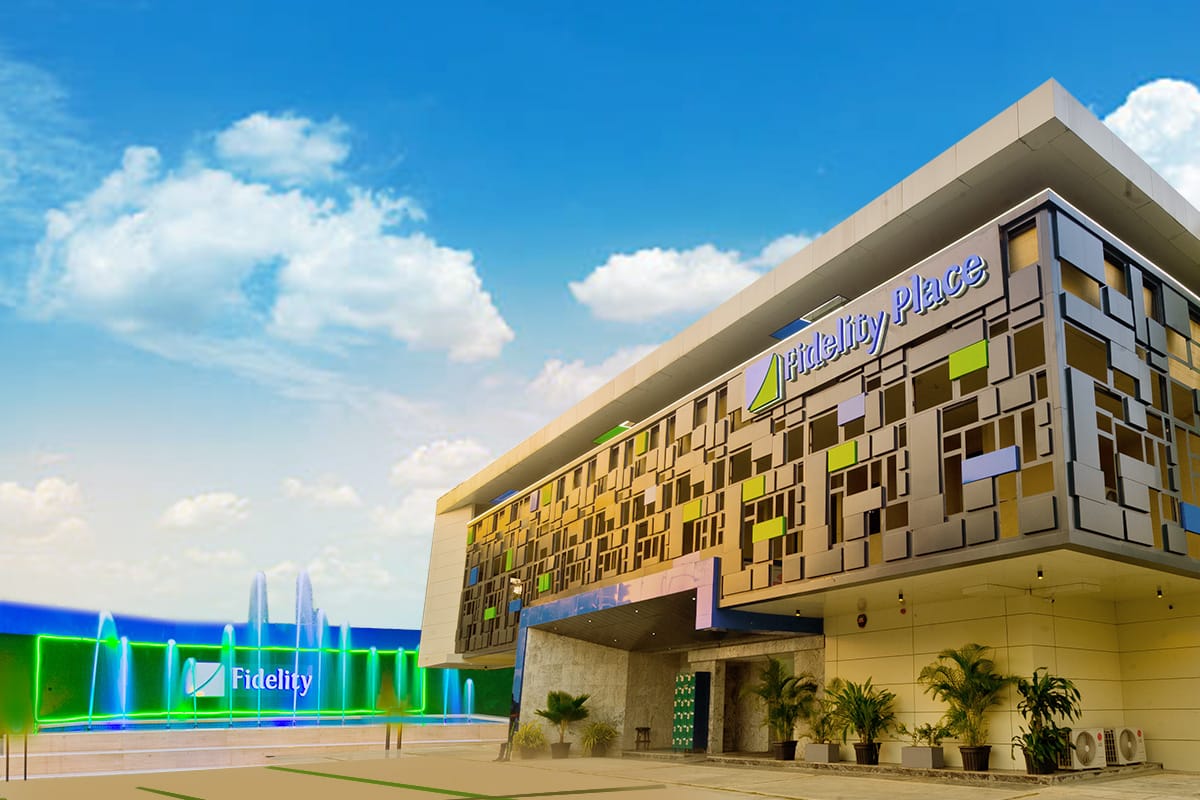
Fidelity Bank grows gross earnings by 38% to N434.95b in Q1
Fidelity Bank Plc recorded 37.9 per cent growth in gross earnings to N434.95 billion in first quarter 2026 as the international commercial bank continued to expand its core banking market share.
Interim report and accounts of Fidelity Bank for the three months ended March 31, 2026 released at the Nigerian Exchange (NGX) showed that gross earnings rose from N315.42 billion in first quarter 20025 to N434.95 billion in first quarter 2026, representing an increase of 37.9 per cent.
The top-line performance was driven by impressive growth in the bank’s core business operations with interest incomes rising by 22.8 per cent to N314.48 billion in first quarter 2026 as against N256.10 billion in first quarter 2025.
With net interest income at N180.97 billion, the bank closed the period with profit before tax of N92.48 billion. After taxes, net profit stood at N74.47 billion for the three-month period. Earnings per share remained high at N5.69, underlining the capacity of the bank to reward its shareholders.
The balance sheet of the bank also emerged stronger. Total assets crossed the N11 trillion mark to N11.35 trillion by March 2026 compared with N10.46 trillion recorded in December 2025. Customers’ deposits increased from N6.89 trillion to N7.38 trillion. Total equity rode on the back of earnings growth to a 27.5 per cent increase from N1.09 trillion in December 2025 to N1.39 trillion by March 2026.
The first quarter 2026 results further consolidated the strong earnings outlook of the bank, which had successfully completed its recapitalisation amidst impressive earnings performance in 2025.
Fidelity Bank had recorded double-digit growths in interest and non-interest incomes as well as key balance sheet items during the year ended December 31, 2025.
The audited report showed that gross earnings rose from N1.04 trillion in 2024 to N1.52 trillion in 2025, an increase of 45.6 per cent. Interest and similar incomes had grown by 38.7 per cent from N803.1 billion in 2024 to N1.11 trillion in 2025. Fees and commission incomes also rose by 44.7 per cent from N78.4 billion to N113.4 billion. The bank recorded net profit after tax of N242.4 billion in 2025.
The bank’s balance sheet emerged stronger with total assets rising by 18.6 per cent to N10.46 trillion in 2025 as against N8.82 trillion in 2024. Customer deposits increased by 16.1 per cent from N5.94 trillion to N6.89 trillion, reflecting continued franchise strength and an improved funding profile. Net loans and advances meanwhile declined by 2.4 per cent to N4.28 trillion in 2025 as against N4.39 trillion in 2024, attributable to customers paying down on their mature obligations.
The bank had in 2025 strengthened its capital position, with eligible capital rising to N561 billion, above the regulatory minimum of N500 billion for banks with international authorisation. In addition, capital adequacy had remained robust, with Capital Adequacy Ratio of 30.94 per cent by December 2025 as against 23.47 per cent by December 2024.
Managing Director, Fidelity Bank Plc, Dr. Nneka Onyeali-Ikpe, said the first quarter 2026 results reinforced the bank’s strong and resilient business model.
She noted that with the remarkable success of its recapitalisation programme and continuing expansion, Fidelity Bank has entered a new era of growth and impressive returns.
“We are on a stronger footing and confident that we will set new growth records that are reflective of our legacy and the future we are working on,” Onyeali-Ikpe said.
Business
Dangote Refinery Ends Nigeria’s Era of Fuel Import Dependence, Boosts GDP, FX Earnings — EIU
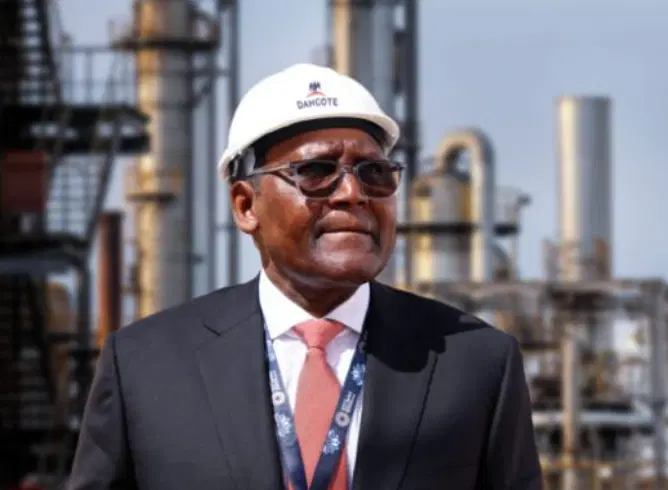
Dangote Refinery Ends Nigeria’s Era of Fuel Import Dependence, Boosts GDP, FX Earnings — EIU
The operational ramp up of the 650,000 barrels per day Dangote Petroleum Refinery & Petrochemicals is fundamentally reshaping Nigeria’s downstream oil sector, significantly reducing the country’s dependence on imported refined petroleum products and strengthening its external position, according to the Economist Intelligence Unit (EIU).
In its latest assessment on Nigeria’s fuel market and regulatory environment, the EIU said the refinery has already transformed a sector that was previously characterised by heavy reliance on imported fuel despite Nigeria being Africa’s largest crude oil producer. The report noted that the refinery met nearly 80 per cent of domestic petrol demand in April and produced enough volumes to satisfy local consumption requirements as operations approached full capacity.
The EIU described Nigeria’s downstream petroleum sector before the refinery as “long dysfunctional”, noting that the country had remained almost entirely dependent on costly imported fuel while producing nearly 1.5 million barrels of crude oil daily.
According to the report, the emergence of the refinery has reduced import dependence, improved domestic fuel availability and strengthened Nigeria’s balance of payments position through lower import demand and rising exports of refined petroleum products.
“The gradual ramp up of the 650,000 barrel/day Dangote refinery since May 2023 has transformed Nigeria’s long dysfunctional downstream sector,” the report stated. “The country’s main refineries, all state owned, had been inoperative for years and Nigeria was almost entirely reliant on costly imported fuel.”
The research and analysis division of The Economist Group, London added that the refinery’s attainment of full operational capacity and its planned expansion would further support Nigeria’s economic growth and foreign exchange earnings over the medium term.
“Meanwhile, the attainment of full capacity at, and an increase in exports from, the Dangote refinery will support real GDP growth and foreign exchange earnings in 2026 and 2027 and beyond, as a planned doubling of the plant’s output comes on stream around the end of the decade,” it added.
Industry analysts said the refinery is increasingly positioning Nigeria as an emerging refining and export hub, altering energy trade flows across Africa and reducing the vulnerability associated with fuel import dependence.
The EIU noted that the refinery’s expansion has coincided with major reforms in Nigeria’s downstream sector, including the removal of fuel subsidies and the introduction of market driven pricing mechanisms.
The report, however, said the transition from a state dominated fuel import structure to large scale domestic refining has triggered resistance from interests linked to the old import regime.
The latest tensions emerged following the decision by the Nigerian Midstream and Downstream Petroleum Regulatory Authority to relax restrictions on petrol imports despite the refinery’s growing capacity to meet domestic demand.
Dangote Industries subsequently initiated legal action, arguing that continued import approvals undermine domestic refining investments and conflict with the objectives of the Petroleum Industry Act, which seeks to encourage local refining capacity and reduce import dependence.
Analysts noted that the availability of large-scale domestic refining capacity has improved Nigeria’s energy security and reduced exposure to external supply shocks and foreign exchange volatility.
The Centre for the Promotion of Private Enterprise also cautioned against unrestrained importation of petroleum products, warning that such a policy could weaken Nigeria’s industrialisation drive and discourage investments in domestic refining.
Chief Executive Officer of CPPE, Muda Yusuf, said continued dependence on imported fuel had historically contributed to pressure on foreign reserves, exchange rate instability and fiscal leakages.
The refinery’s growing impact is also being reflected in Nigeria’s broader macroeconomic indicators. Earlier this month, S&P Global Ratings cited increased domestic refining capacity and rising hydrocarbon exports among the major factors supporting Nigeria’s sovereign credit rating upgrade – the first in 14 years.
Beyond Nigeria, analysts said the refinery is increasingly being viewed as a strategic industrial asset for Africa, where many countries remain heavily dependent on imported fuel despite rising demand for transportation, manufacturing, and power generation.
Business
BREAKING: Court Dismisses $19.6 Million Claim Against NNPCL — Rules Contract Scope Cannot Be Changed Orally
BREAKING: Court Dismisses $19.6 Million Claim Against NNPCL — Rules Contract Scope Cannot Be Changed Orally
In a landmark ruling on Friday, May 22, 2026, the Federal Capital Territory High Court in Abuja threw out a $19.6 million lawsuit filed by Alternate Dimensions Ventures Ltd against the Nigerian National Petroleum Company Limited (NNPCL), affirming a key legal principle: a written contract cannot be expanded through oral agreements or conduct.
Alternate Dimensions had sought $19,600,000 in professional fees, claiming the scope of its Direct Sale, Direct Purchase (DSDP e-pro) contract with NNPCL was orally expanded. Represented by counsel Patrick Peter, the firm argued it was entitled to the revised sum for services rendered under the alleged new terms.
But NNPCL, through its lawyer Ituah Imhanze of KENNA LP, pushed back sharply, arguing that parties are bound exclusively by the clear terms of their written agreement. Imhanze contended that without any written amendment, the claim was legally unsound, and the court agreed.
Delivering judgment, Justice Hamza Mu’azu upheld NNPCL’s defense, stating that the contract was unambiguous and that no evidence was adduced during the trial, which supported the alleged scope expansion. The court further found that NNPCL fully complied with all contractual terms and committed no breach.
Dismissing the suit as meritless, Justice Mu’azu reinforced the doctrine of sanctity of contract: any amendment to a written agreement must be express, unequivocal, and documented, not implied or verbal.
The ruling spares NNPCL from the S19.6 million claim and also a floodgate of similar potential liabilities.


- Economic Community of West African States (ECOWAS) has Deployed a Technical Mission to Observe the Legislative and Local Elections of May 31, 2026 in Guinea May 31, 2026
- President Herminie Attends Seychelles Football Federation (SFF) Cup Final and Presents Trophy to Bazar Brothers FC May 31, 2026
- ‘You are not alone’: World Health Organization (WHO) chief vows to stand with Democratic Republic of the Congo (DR Congo) through Ebola outbreak May 31, 2026
- United Arab Emirates (UAE) Expresses Solidarity with Kenya and Conveys Condolences over Victims of Girls’ School Dormitory Fire May 31, 2026
- Pitcher Awards Announces 2026 Winners, Marking a Landmark Year for Pan‑African Creativity May 30, 2026
- Ghana Commemorates 78th International Day of United Nations Peacekeepers May 30, 2026
- South Africa: President Ramaphosa receives second interim report of Madlanga Commission May 30, 2026
- Asmara Marathon 2026 to be held May 30, 2026
- Powerful call for dialogue and compromise to secure peace in South Sudan issued on International Peacekeepers Day May 30, 2026
- Over 1,000 Participants Join Rwenzori Marathon Activation Run in Mombasa May 30, 2026
- Economic Community of West African States (ECOWAS) has Deployed a Technical Mission to Observe the Legislative and Local Elections of May 31, 2026 in Guinea May 31, 2026
- President Herminie Attends Seychelles Football Federation (SFF) Cup Final and Presents Trophy to Bazar Brothers FC May 31, 2026
- ‘You are not alone’: World Health Organization (WHO) chief vows to stand with Democratic Republic of the Congo (DR Congo) through Ebola outbreak May 31, 2026
- United Arab Emirates (UAE) Expresses Solidarity with Kenya and Conveys Condolences over Victims of Girls’ School Dormitory Fire May 31, 2026
- Pitcher Awards Announces 2026 Winners, Marking a Landmark Year for Pan‑African Creativity May 30, 2026
- Ghana Commemorates 78th International Day of United Nations Peacekeepers May 30, 2026
- South Africa: President Ramaphosa receives second interim report of Madlanga Commission May 30, 2026
-

 news6 months ago
WHO REALLY OWNS MONIEPOINT? The $290 Million Deal That Sold Nigeria’s Top Fintech to Foreign Interests
-

 society4 weeks ago
SOCIAL MEDIA IS NOT A BATTLEFIELD COMMAND – WHY THE NIGERIAN ARMY’S ACTION AGAINST JUSTICE CRACK IS A NATIONAL SECURITY IMPERATIVE
-

 celebrity radar - gossips4 months ago
Dr. Chris Okafor Returns with Power and Fire of the Spirit -Mounts Grace Nation Altar with Fresh Anointing and Restoration Grace on February 1, 2026
-

 celebrity radar - gossips6 months ago
Prophet Kingsley Aitafo Releases 2026 Prophecy: ‘Nigeria Will Rise, but the World Must Prepare for Turbulence’