
celebrity radar - gossips
Five Minutes — Or I’ll Switch It Off”: When Pageantry Collides with Power

“Five Minutes — Or I’ll Switch It Off”: When Pageantry Collides with Power.
By George Omagbemi Sylvester | Published by saharaweeklyng.com
“How Senator Oluremi Tinubu’s interruption of Gov. Ademola Adeleke at Ile-Ife exposes constitutional ambiguities, protocol failures and a dangerous precedent for Nigerian public life.”
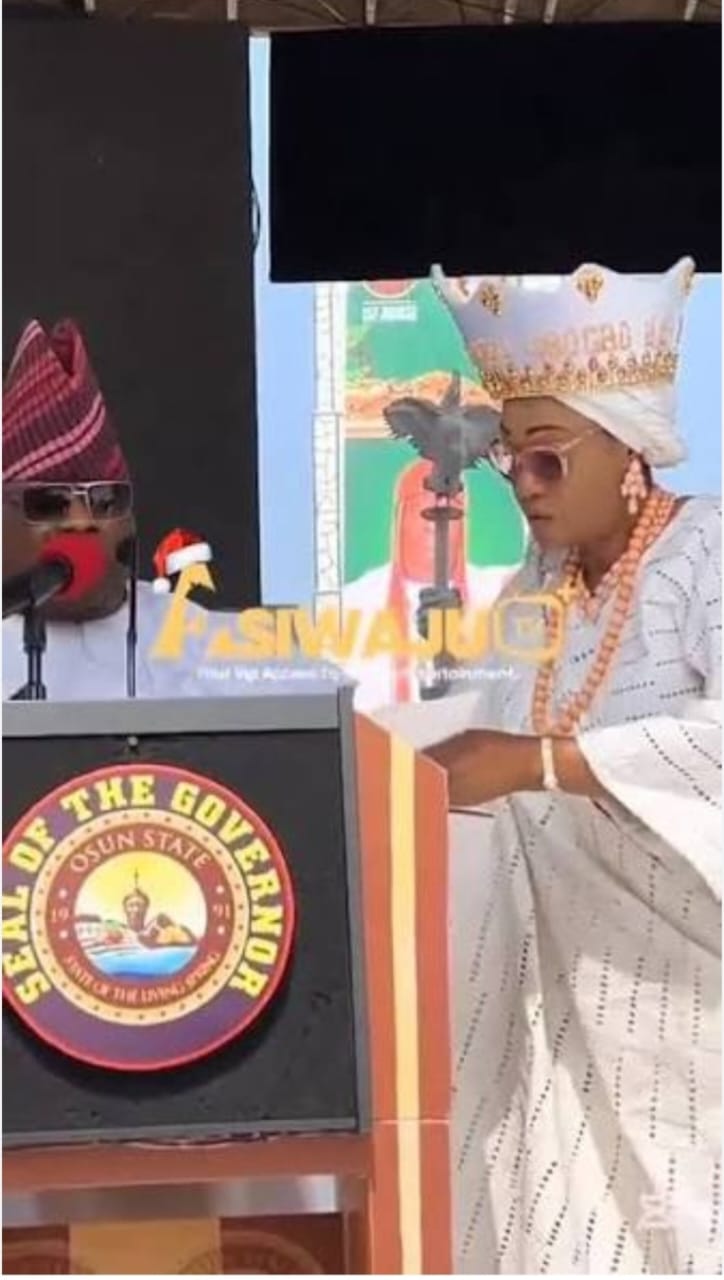
The grainy clip that has riveted Nigerians this week is short, sharp and unnerving. At a glittering cultural occasion in Ile-Ife, where royalty, ex-presidents and senior public figures had come together to honour the First Lady, Senator Oluremi Tinubu is seen approaching the podium, leaning over the microphone and saying, in words that thundered across social media: “I give you five minutes to conclude your speech. Enough with the music or I’ll switch off the microphone.” The target of that rebuke was Governor Ademola Adeleke of Osun State, who had taken the stage for a welcome address and lapsed into one of his characteristic, jubilant moments of song and dance. The exchange was captured on multiple phones and has since been replayed, remixed and debated across the country.

On its face the scene is a minor, theatre-of-politics moment; a First Lady chiding a governor for extending a speech beyond what she considered decorous. This clip is not merely entertainment: it crystallises a set of deeper issues that go to the heart of democratic practice in Nigeria and the rule of law; the separation between ceremonial presence and authority; protocol and respect for elected office; and the creeping normalization of raw personal power in public spaces.
First, the facts. The incident occurred during Senator Tinubu’s investiture with a high-profile chieftaincy title in Ile-Ife at an event attended by former President Olusegun Obasanjo, several governors and senior traditional rulers. Videos from the ceremony show Governor Adeleke moving from the scripted welcome into spontaneous singing; Senator Tinubu then interrupted him twice, each time warning she would cut the microphone if he did not stop. The confrontation lasted less than a minute, but the fallout has been disproportionate.
Second, the constitutional reality. Nigeria’s Constitution does not create an “office of the First Lady,” nor does it vest the president’s spouse with any formal powers or authority over other elected officials. This is not a modern controversy: constitutional scholars and commentators have repeatedly observed that the First Lady’s role is informal, customary and without statutory backing. The absence of a constitutional or legal remit does not, of course, prevent a president’s spouse from being influential in politics or public life; but it does make any exercise of coercive or corrective authority by the First Lady a matter of norms and courtesy rather than law.

Third, protocol and power. Even if one accepts that the First Lady is a high-ranking dignitary at ceremonial events, precedent and common sense suggest limits. Protocol in formal gatherings (especially those involving state hosts such as a governor) ordinarily recognises the primacy of the convenor. The judge of whether a speech has exceeded its welcome is usually the event chair or organiser, not a visiting dignitary. When a non-elected figure publicly threatens to silence an elected governor, the action is less a correction of decorum and more an assertion of personal muscle in a public setting. That is politically corrosive: it tells citizens that proximity to the presidency can substitute for protocol, and that democratic furniture can be rearranged on the spot by social clout.
Fourth, the politics of perception. The incident has divided public opinion along familiar lines. Critics see an overreach and quite a disrespectful interruption of a governor who, by virtue of election, answers to the people of his state. Defenders argue that the host or the event had reasons to control time and maintain decorum and that the First Lady merely spoke up because the programme demanded it. This is disingenuous: style and substance matter in politics. An elected governor, even when exuberant, embodies a democratic mandate. A president’s spouse, however prominent, does not. Blurring these distinctions feeds cynicism about who actually governs and who merely commands attention.
Fifth, what the law and scholarship tell us. Authors who have studied the First Lady’s place in Nigerian governance highlight a paradox: enormous informal influence, and almost no formal accountability. Legal scholars have proposed formalising the role or else strictly policing the boundaries between ceremonial visibility and executive power but not to diminish the social contributions of presidential spouses but to ensure that democratic roles are transparent and accountable. As one academic review of the subject notes, the position is “not elective, carries no statutory duties and no salary,” yet across successive administrations it has acquired de-facto powers and institutional trappings that raise questions of legitimacy and oversight.
Where does this leave us? There are three practical takeaways:
Reinforce protocol and organisers’ authority. High-profile events must have clear, enforced lines of protocol. If time-keeping is essential, the MC, the event chair or the hosting governor should be empowered to enforce it — not a visiting dignitary who, however well-intentioned, is not the arbiter of the agenda.
Clarify norms surrounding the “First Lady” role. Nigerians should decide whether they want the First Lady to remain a moral and charitable presence without public-office prerogatives, or to formalise her responsibilities — with the attendant duties and accountabilities. Scholars have long argued for one of these two approaches: either integrate the role into constitutional and administrative frameworks, or deliberately strip it of state-like powers. Ambiguity is the enemy of good governance.
scirp.org
Respect electoral mandates. The republican idea is that voters elect officeholders who then exercise authority in accordance with law and procedure. Allowing personality, proximity or social clout to displace that principle will hollow out democratic norms over time. Public actors, whether elected or ceremonial, must model deference to institutional roles if they expect citizens to take democracy seriously.
Finally, this episode is less about one hot-headed minute and more about the set of habits and assumptions that minute reveals. The optics of democracy depend on limits: limits on the use of force, limits on the exercise of personal will, and limits on who may displace elected authority. When those limits are eroded — when a microphone becomes a tool of command rather than a tool of speech — the damage is done gradually, in increments that many will shrug off until it is too late to reclaim them.
Senator Oluremi Tinubu’s intervention at Ile-Ife will be remembered as a moment — a small drama in the theatre of Nigerian public life. But drama, in a country still consolidating democratic norms, has outsized consequences. We can treat the incident as an amusing viral clip, or we can treat it as a teachable moment: one that calls for clearer protocols, firmer respect for institutional roles, and a public conversation about what power (visible and invisible) should be allowed to do on our stages. If the latter is chosen, Nigeria’s public life will be the better for it.
George Omagbemi Sylvester is a political commentator and columnist. This piece is published by saharaweeklyng.com





Oba Ara Releases Emotional Tribute to Late Taiwo Adegbodu
Taofik Afolabi
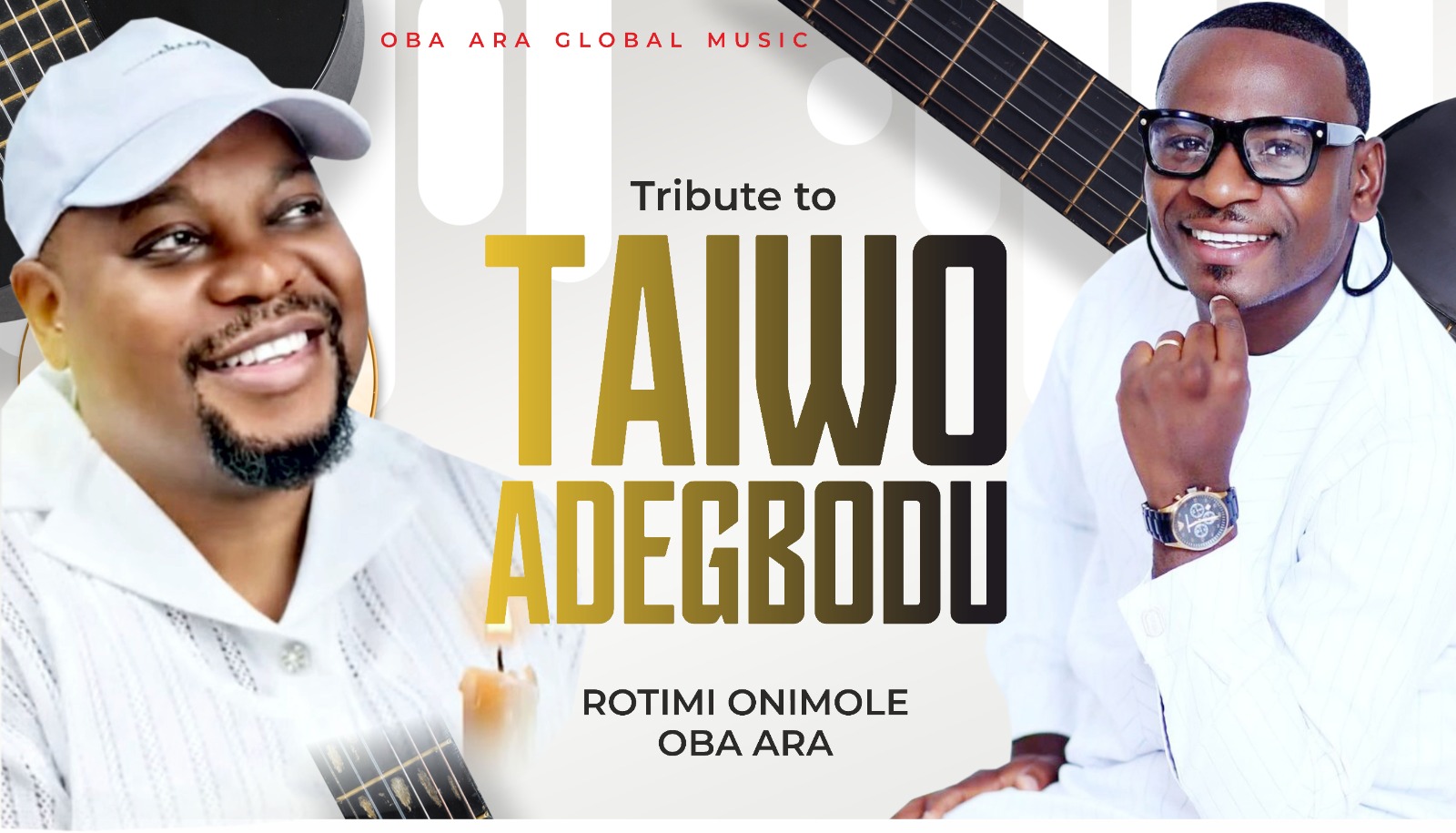
The gospel music community continues to grieve the painful loss of Taiwo Adegbodu, a beloved figure whose sudden departure left a deep void among fans, colleagues, and loved ones. In response to this loss, renowned gospel minister Rotimi Onimole, popularly known as Oba Ara, has released a moving tribute song that captures both the sorrow of the moment and the enduring legacy of the late singer.
Oba Ara, a proud son of Isale Eko, channels raw emotion throughout the song, using heartfelt lyrics and soul-stirring melodies to reflect on his personal connection with Taiwo Adegbodu. In the tribute, he openly expresses how deeply the news of Adegbodu’s passing shook him, describing it as a painful and unexpected loss that is difficult to come to terms with.
The song goes beyond mourning, it celebrates the life, ministry, and impact of Taiwo Adegbodu. Oba Ara highlights the late artist’s dedication to spreading the gospel through music, his inspiring voice, and the spiritual influence he had on many within and beyond Nigeria. Through powerful verses, he paints a picture of a man who lived for God and touched countless lives through his ministry.
Listeners have described the tribute as both comforting and deeply emotional, as it resonates with the collective grief of the gospel music community. It serves as a reminder that although Taiwo Adegbodu is no longer physically present, his music, message, and legacy will continue to live on.
In honoring his late colleague, Oba Ara not only pays his respects but also offers a source of healing for fans and fellow ministers, using music as a tool to process grief and celebrate a life well lived.
celebrity radar - gossips
Buratai, Fagbemi , Shagaya, Olofa, Others Eulogise Olowu Kuta’s Olori On 60th Birthday, Foundation Launch
Buratai, Fagbemi , Shagaya, Olofa, Others Eulogise Olowu Kuta’s Olori On 60th Birthday, Foundation Launch
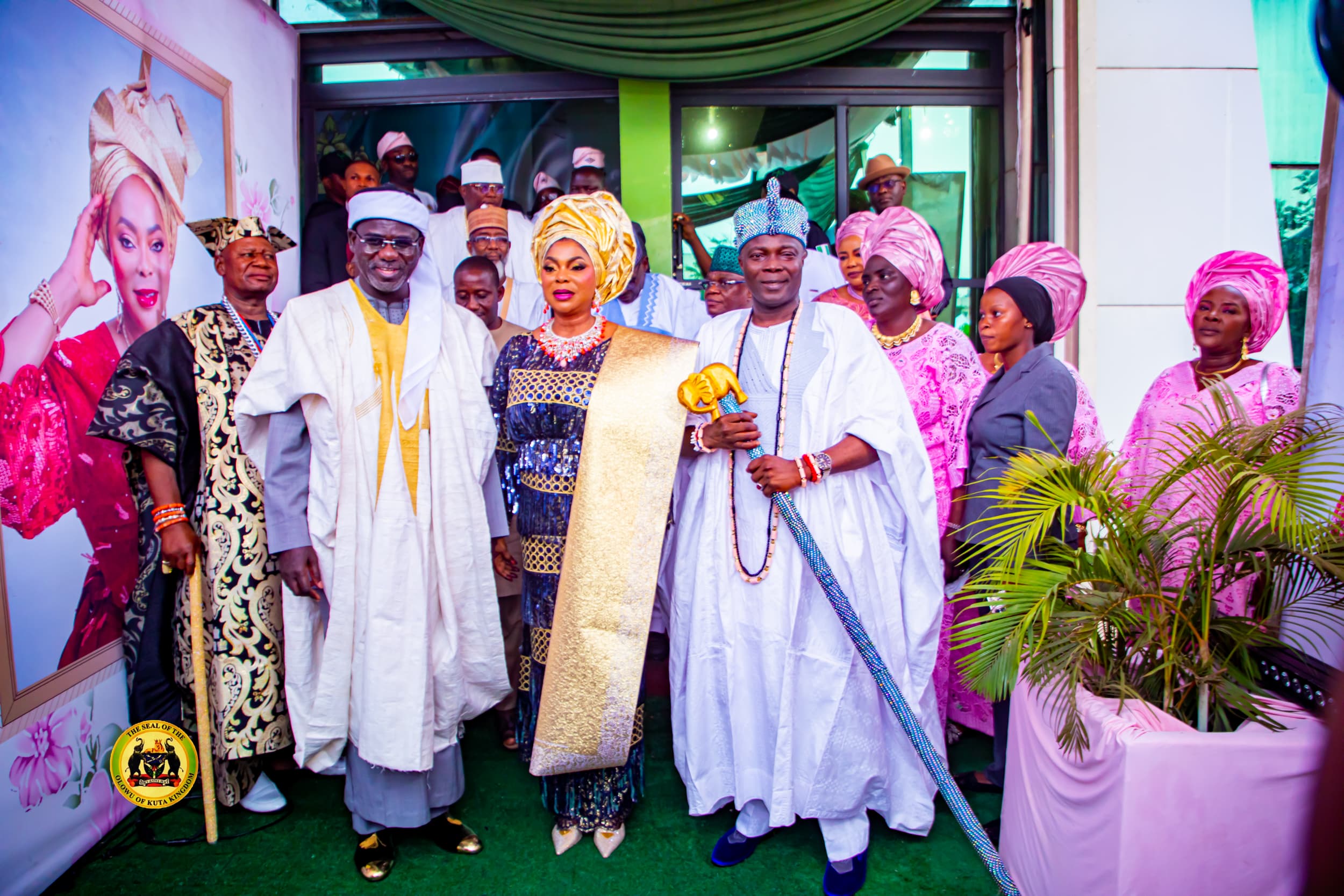
Eminent personalities across the Nigeria stormed the TFK Event Centre, Bala Mohammed Way, Guzape, Abuja, to celebrate the 60th birthday of Olowu Kuta’s Olori, Queen Jumai Amoke and her Foundation Launch on Saturday 28, March 2026.

From former Chief of Army Staff, Lt Gen TY Buratai rtd, to the Minister of Justice and Attorney-General of the Federation, Prince Lateef Fagbemi; Olofa of Offa, HRM Oba Mufutau Gbadamosi. Even top businesswoman and socialite, Chief (Mrs) Bola Shagaya, was in attendance.


Other dignitaries were newly promoted Deputy Inspector-General of Police and former AIG Zone 2 , Lagos , Adegoke Fayoade, Major General Abdumalik, Major General Samuel Adebayo rtd (Fmr CDI);
Major General Anthony Omozoje rtd (Fmr Copp);
Alhaji Tajudeen Owoyemi (Asiwaju of Offa and CEO Radisson Hotel Nigeria;
Dr Waheed Olagunju, former managing director of Bank of Industry, Oniba of Iba, Lagos State, HRM Oba Dr Suleiman Raji ;
Justice Falola, Olu of Ile-Ogbo , Oba Adetoyese amongst many traditional rulers and captains of industry too numerous to mention.
Speaking at the occasion, the Chief Host, Olowu of Kuta, HRM Oba Dr Adekunle Oyelude Makama, CON , Tegbosun iii, who is also the husband of the celebrant commended Queen Jumai for ‘ her slender arms full of kindness’ to establish such humanitarian Foundation, ‘Amoke Children and mother in Need Foundation’ at a time Nigerians are going through economic crisis occassioned by the global meltdown.
Olowu also commended her steadfastness and love for the less privileged and downtrodden.
The monarch refrenced the task before his wife’s humanitarian gesture said her best is yet to come.
” Olori Amoke Jumai, I celebrate you. You will celebrate 70, 80, 90 and continue to shine as you continue to put a smile on people’s faces. I love you, “Olowu Kuta added.
To Lt Gen Buratai, a former army chief and former Nigerian Ambassador to Benin Republic, the reward of hard work is more work.
Buratai, who also doubles as Balogun Agba of Owu Kuta, a chieftaincy title reserved for a generalismo congratulated Queen Jumai for attaining the age of 60 in good health.
The retired army General said he’s not surprised by the turn out of eminent personalities across the country to celebrate the Olowu Kuta’s Olori because she merited it through her hospitality to all, adding that Allah the most merciful, most beneficial would accept all her act of ibadah.
The minister of Justice, Prince Fagbemi, was full of praises for Queen Jumai for deeming it fit to have a place in her heart to accommodate the needy and less privileged in ‘our society.’
Prince Fagbemi urged the guests to contribute generously to support the Foundation in order to continue to alleviate poverty and put a smile on the faces of the people.
” I congratulate you on your 60th birthday and Foundation Launch. I wish you many happy returns of the day and many more fruitful services to the country and motherland”, Prince Fagbemi added.
The celebrant, Queen Jumai who was grining from ear to ear thankfully said she was excited by the turn out and the response of the people to her foundation.
Queen Jumai, however, promised to continue to use her resources and donations received for the good of the needy and less privileged in the society.
” I want to appreciate my own Kabiesi Olofa of Offa , for his presence and im I’m using him as a point of contact to all other Kabiesis present here, the minister of justice and Attorney-General, you’re welcome, sir; Mrs Bola Shagaya, I salute your enterprise, Lt Gen Buratai, I’m grateful, sir; DIG Fayoade, Justice Falola and other dignitaries too numerous to mention, I thank you, all. To my darling husband, Kabiesi Olowu , I thank you immensely for your support. And to my family and friends, I thank you , all. E se pupo!”, she said.
celebrity radar - gossips
Adron Homes Elevates Cultural Pride as Dignitaries Grace 39th Lisabi Festival in Abeokuta
Adron Homes Elevates Cultural Pride as Dignitaries Grace 39th Lisabi Festival in Abeokuta
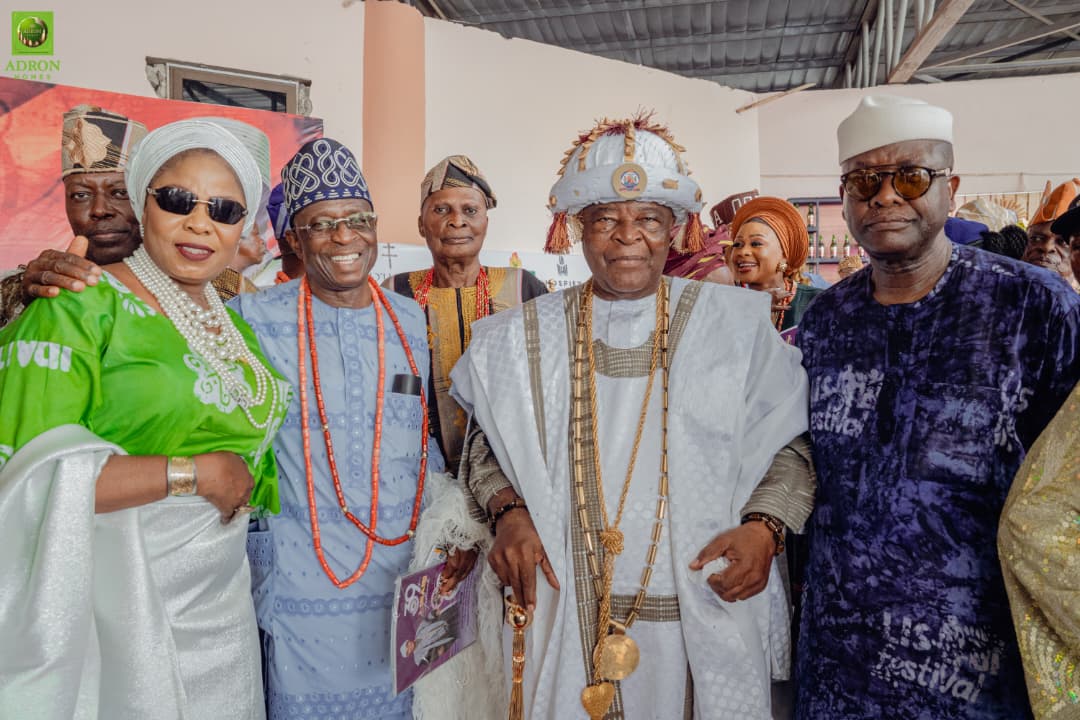
The ancient city of Abeokuta came alive in a grand display of culture, history, and unity as dignitaries from across Nigeria converged at the iconic Ake Palace Ground for the 39th edition of the Lisabi Festival, an annual celebration deeply rooted in the Egba people’s heritage.
The event, proudly supported by Adron Homes and Properties Limited, witnessed an impressive parade of distinguished personalities, traditional rulers, government officials, business leaders, and cultural enthusiasts, all captured in vibrant pictures that tell the story of a people united by history and pride.
From richly adorned monarchs in regal attire to elegantly dressed guests reflecting the depth of Yoruba tradition, the images from the festival encapsulate moments of honour, reverence, and celebration. Each photograph portrays not just faces, but influence, leaders, and stakeholders who continue to shape cultural preservation and community development.
At the heart of the celebration was the revered Oba Adedotun Aremu Gbadebo, whose presence underscored the festival’s significance as a symbol of Egba resilience and identity. Surrounding him were eminent dignitaries whose attendance further amplified the prestige of the event.
Adron Homes and Properties Limited stood out prominently, not only as a sponsor but as a key driver of cultural sustainability. Through its strategic support, the company reinforced its commitment to preserving indigenous heritage while fostering community engagement. The brand’s visibility across the venue and within the pictorial highlights reflects a deliberate alignment with culture, tradition, and people-centered development.
Beyond real estate, Adron Homes has continued to position itself as a cultural partner, investing in platforms that celebrate history and strengthen communal bonds. Its involvement in the Lisabi Festival is a testament to its broader vision of building not just homes, but legacies rooted in identity and pride.
The 39th Lisabi Festival, as captured through the lens of dignitaries in attendance, is more than an event, it is a narrative of continuity. And through its unwavering support, Adron Homes has once again set the pace, demonstrating that corporate institutions can play a vital role in sustaining the cultural heartbeat of a people.
As the echoes of drums fade and the colours of the festival linger in memory, one thing remains clear: the story told through these images is one of unity, heritage, and the enduring partnership between tradition and progress.


-

 society6 months ago
Religion: Africa’s Oldest Weapon of Enslavement and the Forgotten Truth
-

 news4 months ago
WHO REALLY OWNS MONIEPOINT? The $290 Million Deal That Sold Nigeria’s Top Fintech to Foreign Interests
-

 society6 months ago
“You Are Never Without Help” – Pastor Gebhardt Berndt Inspires Hope Through Empower Church (Video)
-

 celebrity radar - gossips2 months ago
Dr. Chris Okafor Returns with Power and Fire of the Spirit -Mounts Grace Nation Altar with Fresh Anointing and Restoration Grace on February 1, 2026