
society
From Democracy to Dictatorship: Nigeria’s Descent into Autocracy Since 2015

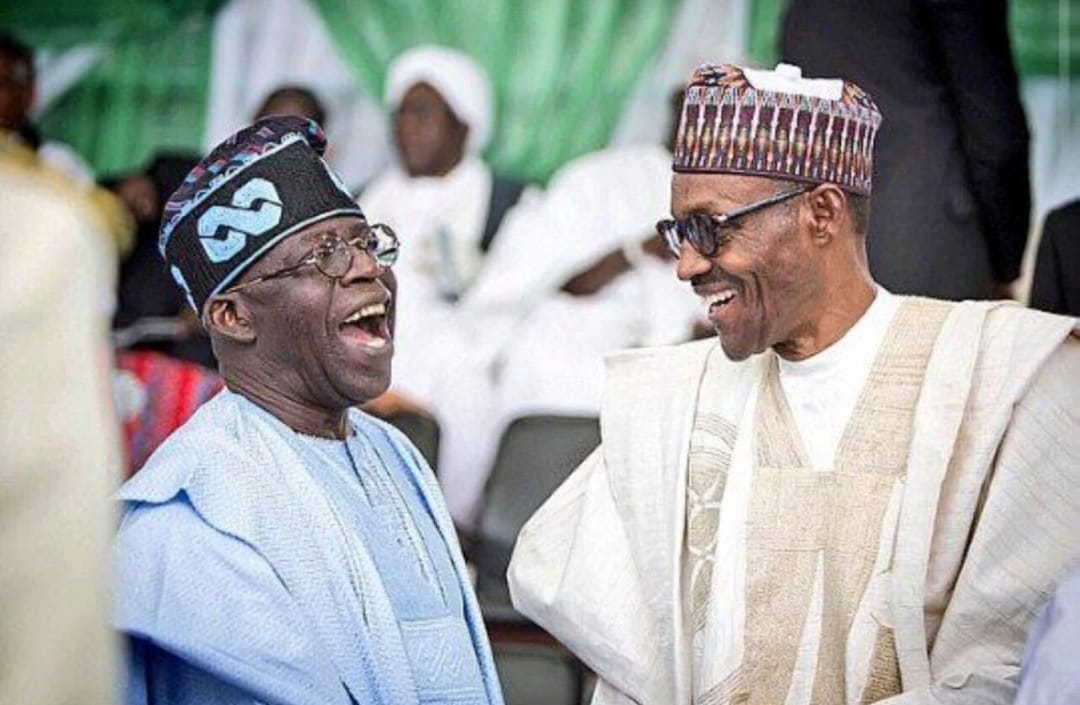
From Democracy to Dictatorship: Nigeria’s Descent into Autocracy Since 2015
By George Omagbemi Sylvester
Since the All Progressives Congress (APC) took over Nigeria’s leadership in 2015, the country has not only witnessed a decline in democratic values but has steadily descended into a dangerous state of autocracy. What began as a hopeful transition of power soon turned into a nightmare marked by economic collapse, repression of civil liberties, electoral manipulation, and widespread insecurity. This is not a democracy. This is a hijacked republic.
A Promise Betrayed

When President Muhammadu Buhari and the APC were elected in 2015, they rode a wave of public discontent with the People’s Democratic Party (PDP). Nigerians yearned for transparency, security, and economic reform. But what they got instead was a regime that centralized power, weakened democratic institutions, and silenced dissent with an iron grip.
Buhari’s government—backed by APC party loyalists—pursued an agenda that systematically undermined democracy. Between 2015 and 2023, the government was notorious for disobeying court orders, arresting journalists, intimidating judges, and deploying security agencies to suppress peaceful protests. From the illegal detention of activists like Omoyele Sowore to the bloody repression of the #EndSARS protests, the Buhari era mirrored a military dictatorship cloaked in civilian garb.
Elevate your moments with Logs Premium Wine and Champagne
Online order now available
FB:
https://www.facebook.com/logswine
IG :
https://www.instagram.com/logs_wine
The Death of Accountability
Under APC rule, checks and balances became a joke. Institutions that should serve as watchdogs—like the National Assembly and the judiciary—were reduced to rubber stamps. The rule of law was trampled underfoot with alarming regularity. Court rulings, including those from the ECOWAS Court of Justice, were routinely ignored by the presidency and security agencies.
Corruption, the very evil Buhari promised to fight, flourished under his watch. Nigeria dropped significantly on Transparency International’s Corruption Perception Index, ranking 154 out of 180 countries in 2021. Multi-billion-naira scandals involving public funds—like the NNPC missing billions, the arms procurement fraud, and the Pandora Papers revelations—were either brushed aside or buried under a mountain of government propaganda.
Electoral Fraud Disguised as Elections
Perhaps the most disturbing assault on democracy under APC has been the bastardization of the electoral process. The 2019 and 2023 general elections were marred by voter suppression, ballot box snatching, intimidation of voters, and open partisanship by security agencies. The Independent National Electoral Commission (INEC), once respected, lost its credibility as electoral umpire.
The 2023 presidential election is a glaring example. Despite promises of electronic transmission of results and transparency, INEC inexplicably abandoned its BVAS and IREV technologies midway through result collation. International observers including the European Union and the National Democratic Institute condemned the elections as lacking transparency, credibility, and fairness.
What kind of democracy exists when the votes of the people are disregarded, and leaders are imposed against the will of the majority?
Suppression of the Press and Civil Society
Freedom of speech and the press, hallmarks of any functioning democracy, have suffered grave attacks since 2015. Journalists were harassed, media houses fined or shut down, and online platforms were targeted. In 2021, the Nigerian government banned Twitter for over seven months simply because citizens used it to criticize the president. This action not only violated the constitution but exposed the government’s deep authoritarian impulse.
Civil society groups and human rights organizations became targets of smear campaigns and regulatory clampdowns. The Buhari regime and its successors sought to monitor, regulate, and restrict non-governmental organizations through draconian laws and policies.
An Economy in Ruins
A thriving economy supports a stable democracy. But under APC rule, Nigeria’s economy collapsed. The country slipped into two recessions in five years, inflation soared, and the naira depreciated to record lows. Insecurity, mismanagement, and policy inconsistencies drove away investors. Unemployment skyrocketed to over 33%, and poverty rose so dramatically that Nigeria became the world’s “poverty capital,” surpassing India.
Fuel subsidy mismanagement, crude oil theft, forex fraud, and mounting debt (now over $110 billion) are all legacies of APC’s gross misgovernance. How can democracy thrive in the face of economic asphyxiation?
Insecurity as a Political Tool
Under APC governance, Nigeria became a killing field. Boko Haram insurgents, Fulani herdsmen, bandits, and unknown gunmen unleashed terror across the nation. From Kaduna to Zamfara, from Plateau to Borno, the blood of innocent Nigerians flowed freely. Rather than confront the crisis with transparency and competence, the government played politics with the lives of its citizens.
Security agencies were often accused of ethnic bias, selective intervention, and extrajudicial killings. Amnesty International and Human Rights Watch documented numerous human rights violations by state actors. Thousands died, while millions were displaced—turning Nigeria into a humanitarian disaster zone.
A Stolen Republic
Make no mistake: Nigeria today is not a democracy. It is an autocratic state run by a cartel of politicians who wield power without accountability, enforce obedience through fear, and manipulate institutions to serve personal interests. Elections are rigged rituals. Courts are co-opted. The National Assembly is compromised. And the voices of the people are ignored.
This is not what democracy looks like. This is a betrayal of the Nigerian people.
It is time for Nigerians—home and abroad—to wake up to the brutal truth: our republic has been stolen. Our votes no longer count. Our leaders no longer listen. Our institutions no longer protect us.
The first step to reclaiming our democracy is to recognize its absence. The second is to mobilize civic resistance, strengthen independent media, support judicial independence, and rebuild credible opposition. The Nigerian people must demand electoral reform, transparency, and accountability with louder voices and bolder actions.
If we do nothing, the autocrats will tighten their grip further, and democracy will become a relic of the past. But if we rise, if we organize, and if we persist, we can reclaim the soul of our nation from those who have hijacked it.





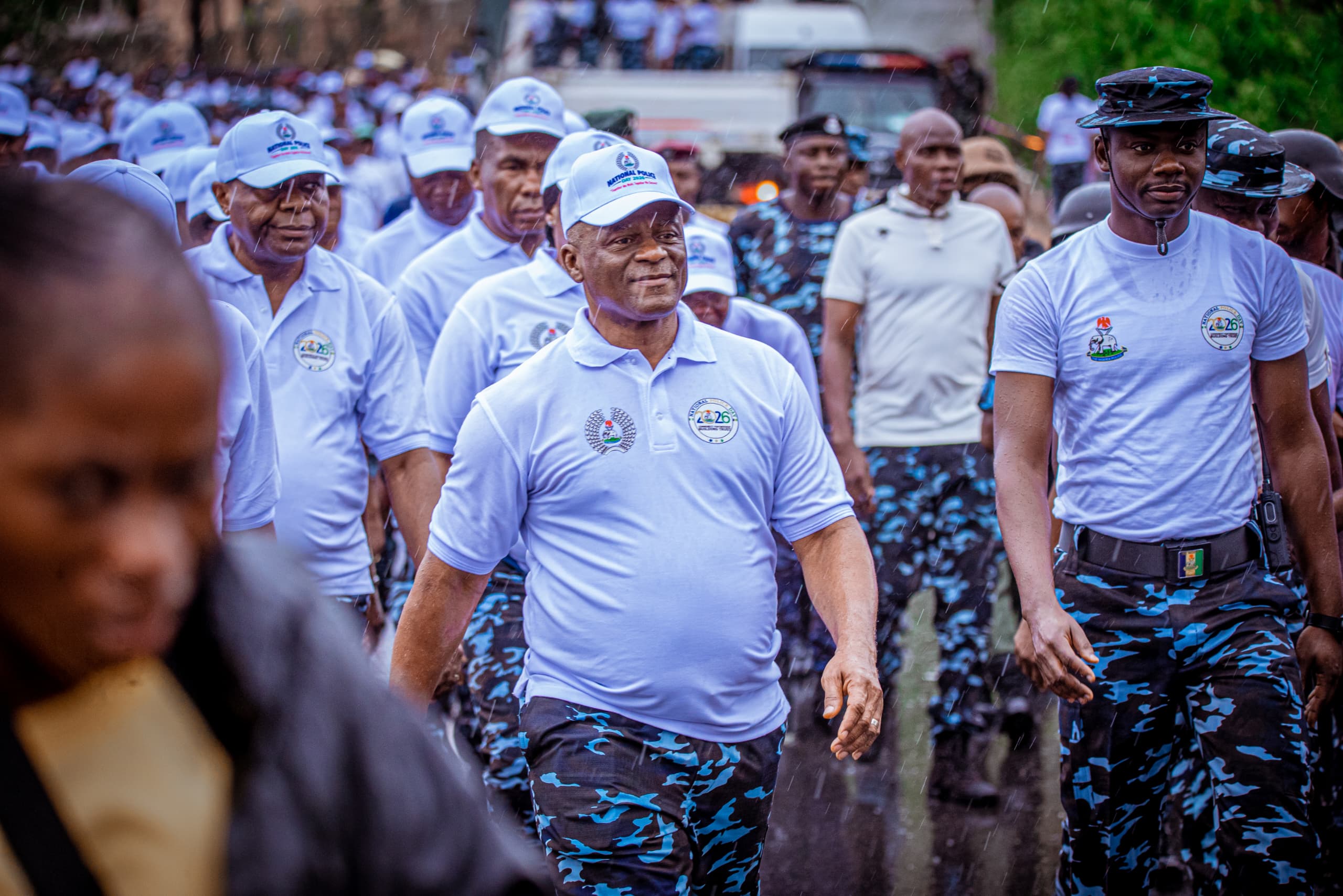
Police Day 2026: IGP Disu Leads Nationwide Walkathon To Strengthen Community Trust
The Inspector-General of Police, Olatunji Disu, on Tuesday led the management team, alongside officers and personnel of the Nigeria Police Force, in a nationwide walkathon to commemorate the 2026 National Police Day.
The event, held across state capitals and the Federal Capital Territory, formed part of activities marking Day Two of the annual celebration, themed “Community Partnership: Building Trust.”
The symbolic exercise, which drew participation from both police personnel and members of the public, was aimed at showcasing unity, discipline, and a renewed commitment to community policing and public safety.
According to the Force leadership, the walkathon underscores the Nigeria Police Force’s resolve to strengthen public trust, deepen engagement with citizens, and enhance collaboration in tackling security challenges across the country.
Participants described the initiative as a practical step toward bridging the gap between law enforcement and the communities they serve, while also promoting physical fitness and mental well-being among officers and civilians alike.
With the theme reflecting a shared responsibility for safety, the Police reiterated that sustainable security can only be achieved through active partnership with the public.
The event concluded with a renewed call for collective action under the banner: “Together We Walk, Together We Secure,” emphasizing unity of purpose in building a safer and more secure society for all Nigerians.


society
Dr. Chris Okafor invokes divine retribution upon individuals blackmailing the Grace Nation church
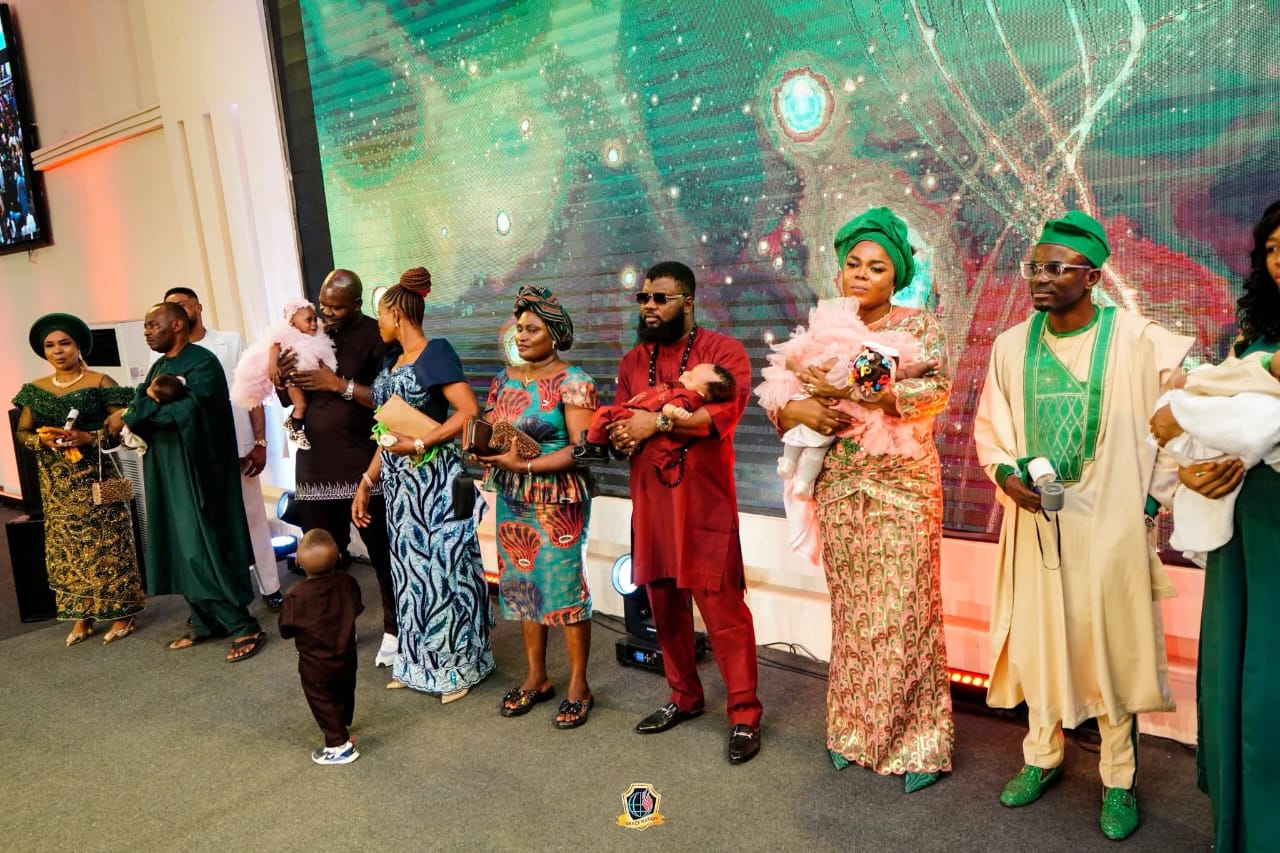
Dr. Chris Okafor invokes divine retribution upon individuals blackmailing the Grace Nation church
… Affirming God’s omnipotence to unveil malicious schemes.
To be frank, the ability of Doris Ogala and her associates to withstand the arduous challenges set by Senior Pastor Dr. Chris Okafor of Grace Nation Global at the culmination of the Harvest of Babies 2026 conference, the church’s flagship event, continues to elude me.
It’s advisable not to offend a powerful spiritual leader like Prophet Chris Okafor to avoid potential consequences, as seen in the situation with Doris Ogala, who was rebuked by the prophet; can she rectify the situation through confession?
Insiders close to the man of God claim that despite relentless online bullying and blackmailing, the Generational Prophet remains resolute, stating that God’s power has been evident throughout the commission’s existence. The reason for this wonderful statement is found in the scriptures, “Upon this rock I shall build my Church, and the gates of hell shall not prevail.” The more falsehoods are spread about the church and its leader, the more God elevates the church and propels him to greater heights, he asserted. He emphasized that blessings and fruitfulness are antidotes to curses, noting that God continues to bestow blessings upon the church, including miracles and the gift of children, which is one reason for the grand finale of the annual family liberation program, The Harvest of Babies.
However, the man of God issued a curse on each person speaking ill of the church, blackmailing, and uttering all sorts of falsehoods against the church, declaring that if they refused to repent within a few days, the earth would swallow them and their family members, stating that they would be of no use to themselves, their families, or society at large.
The spiritual leader cautions his followers to beware of such individuals including Doris Ogala who may taint their faith, and urges them to treat these persons as emissaries of the devil, avoiding them altogether.
Recall that the 2026 harvest of babies concluded with a remarkable birth of a miracle baby boy to a woman on the third day of the conference, accompanied by the dedication of several other miracle babies, all to the glory of God.
Christopher Sunday David writes from
Austria
“Together We Walk, Together We Secure”: Police Launch 2026 Walkathon In Abuja
The Nigeria Police Force has announced plans to host a walkathon in commemoration of the 2026 National Police Day, aimed at promoting unity, peace, and stronger community partnership.
The event is scheduled to take place on Tuesday, March 31, 2026, with participants expected to converge at the Force Headquarters Abuja by 6:00 a.m., where the walk will commence.
According to the organisers, the walkathon is designed to bring together members of the public, stakeholders, and security personnel in a show of solidarity and shared commitment to national security.
With the theme, “Together we walk, together we secure,” the initiative underscores the importance of collaboration between the police and citizens in maintaining peace and safety across the country.
Members of the public have been encouraged to participate in the exercise, which forms part of activities lined up to mark this year’s National Police Day celebration.
It is believed that the walkathon would not only foster closer ties between the police and the communities but also serve as a platform to promote awareness on collective responsibility in ensuring a safer society.


-

 society6 months ago
Religion: Africa’s Oldest Weapon of Enslavement and the Forgotten Truth
-

 news4 months ago
WHO REALLY OWNS MONIEPOINT? The $290 Million Deal That Sold Nigeria’s Top Fintech to Foreign Interests
-

 society6 months ago
“You Are Never Without Help” – Pastor Gebhardt Berndt Inspires Hope Through Empower Church (Video)
-

 celebrity radar - gossips2 months ago
Dr. Chris Okafor Returns with Power and Fire of the Spirit -Mounts Grace Nation Altar with Fresh Anointing and Restoration Grace on February 1, 2026