
celebrity radar - gossips
General Buratai Calls For advanced technical Skills, training And Discipline in Curriculum as He Accepts Award,conferment of Doctorate Degree By Nigerian Army University

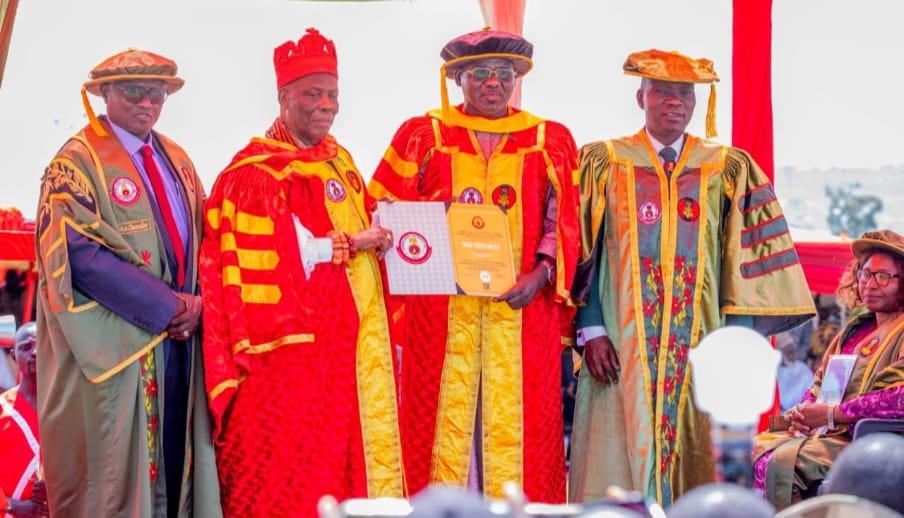
Details Of Buratai’s Acceptance Speech On The Occasion of Award, Conferment of Doctorate Degree By Nigerian Army University
In a significant development, the Nigerian Army University Biu (NAUB), during its maiden convocation ceremony on Saturday, October 28th,2023 conferred an Honorary Doctorate Degree of Letters (honoris causa) on former Chief of Army Staff (COAS), Lt. General Tukur Yusuf Buratai (Rtd) and Doctor of Law on His Royal Majesty, the Orodje of Okpe and Chairman of the Delta State Council of Traditional Rulers, Major General Felix Mujakperuo Rtd CFR.

Speaking during the occasion on behalf of the duo, Buratai who played a critical role in the establishment of the University in 2018 while he was the COAS, thanked the management of the university for the honour and expressed gratitude to God for seeing him through his 40 years of a military career and blessing him with life and good health after retirement.

The former COAS noted that the award will motivate him to further rededicate his life to the service of humanity.
Noting that the Nigerian Army University Biu (NAUB) was established to curtail insecurity in the North-East through education, Buratai urged the management of the university to include in its curriculum, life skills that must be taught to the youths to make them become responsible members of the larger society.

Buratai commended the Vice Chancellor of the University, Professor Kyari Mohammed for his diligence, hard work, discipline, and prudence in the management of resources of the institution.
He also thanked his successors, the immediate former COAS, Lt.-Gen Faruk Yahaya (Rtd) and the current COAS, Lt.-Gen Taoreed Abiodun Lagbaja for maintaining the legacy he laid for the university.
Here is the full acceptance speech…
ACCEPTANCE SPEECH ON BEHALF OF THE CHANCELLOR HIS ROYAL MAJESTY MAJ GEN FELIX MUJAKPEROU (RTD) ORHUE I, THE ORODJE OF OKPE KINGDOM AND CHAIRMAN DELTA STATE COUNCIL OF TRADITIONAL RULERS AND MY HUMBLE SELF, LT GEN (AMB) TUKUR BURATAI RTD, CFR FORMER CHIEF OF ARMY STAFF ON THE OCCASION OF AWARD AND CONFERMENT OF HONORARY DOCTORATE DEGREES BY THE NIGERIAN ARMY UNIVERSITY BIU ON 28TH OCTOBER 2023
Protocol
- It is my good fortune and privilege to not only address this august gathering, but to also speak on behalf of His Royal Majesty, the Orodje of Okpe and Chairman of the Delta State Council of Traditional Rulers, Major General Felix Mujakperuo Rtd CFR. Your Majesty, I am honoured that you trust me to speak for the two of us as this young, promising and flowering university honours us with its highest degrees. I am also glad to be sharing the same podium with our First Chancellor on the day of his formal investiture and installation. Your Majesty, May your reign be long, peaceful and prosperous. We are therefore excited to accept the award of the degrees of Doctor of Laws (honoris causa) and that of Letters (honoris causa) on the Chancellor and my humble self respectively. It is indeed a privilege to be a part of Africa’s first green university, the Nigerian Army University, Biu, particularly on the day of its inaugural convocation. I would like to thank the Pro-Chancellor and members of Council, Lt Gen TA Lagbaja NAM, the Vice Chancellor Prof Kyari Mohammed and members of Senate, and the university community for finding us worthy of these prestigious awards. We understand these degrees automatically confer on us membership of the Alumni Association and Board of Fellows, like good alumni, we promise to be good ambassadors of the university. You have given us additional opportunity to continue our association with, and contributions to this exceptional institution.
- His Royal Majesty, Gen Felix Mujakperou Rtd CFR is a well-known personality in Nigeria. Although, while in service, I was far junior, because as at the time he retired from Service, I was a Major in rank. I had admired him from far. Fortunately, I was privileged to meet and interact closely with him at his palatial palace in Orerokpe during my visit as then Chief of Army Staff. He is an enigma to behold. A highly respected traditional ruler at home and beyond, Gen Mujakperou personifies excellence right from his time in the Nigerian Defence Academy. In March 1971 he graduated as the Best-All-Round Cadet of the Academy Course 5. A professional Infantry General who saw action in Sierra Leone where he served as the force commander under ECOMOG. I am sure President Muhammadu Buhari, himself a retired general, must have weighted all these in appointing you, out of numerous deserving traditional rulers, as our First Chancellor. We thank the former President for this wise decision.
- To the Nigerian Army University Biu, it is gratifying to see what has been accomplished in such a short period of only five years. I am confident that those of us who participated in the establishment of the Nigerian Army University Biu, will share my delight at the institution’s outstanding performance.
- Since the arrival of colonial masters, the people of Biu and, by extension, Borno State, have been leaders and pioneers in educational initiatives throughout the country and beyond. This is because our people recognize the transformative power of education on individuals, their families, villages, and communities. For this reason, throughout contemporary history of this land, families and communities have made significant investments in education. They view it as a means to escape poverty, acquire gainful employment, generate wealth, improve the standard of living, and empower the next generation to live a better life than they did. The insecurity that has been the bane of Nigeria since 2009 has it’s roots in ignorance as a consequence of lack of education by a large section of the society. The decision of the Nigerian Army to establish this university is strategic. It is a long term strategy to to contain insecurity in the North East through education.
- Yesterday, the Biu Emirate Council, under the skillful leadership of His Royal Highness, Dr Mustapha Umar Mustapha II, CON graciously turbaned me as the Betara of Biu. Today, this university is doing me yet another honor by conferring upon me this doctorate degree of Letters honoris causa. I am grateful to the Almighty Allah for seeing me through my 40-year military career and for blessing me with life and good health after retirement so that I can continue to contribute to the betterment of our fatherland. These two prestigious awards will motivate me to further rededicate my life to the service of humanity.
- I can’t avoid the thorny issue of security in a forum like this because I come from a military background. Let’s not forget that maintaining security requires teamwork, therefore I’ll remind everyone to heed the maxim, “If you see something, say something.”
- As I conclude, I urge those in charge of this institution to include in their curriculum the life skills that must be taught to our youths in order for them to become responsible members of the larger society and develop good character, as education is not only about learning but also about character development. It is essential to acquire advanced technical skills, but it is also expedient to have the training and discipline necessary to live in harmony with other members of society. I have in mind skills that foster tolerance for the differing perspectives of others, skills that promote peace, skills that instill ethical behavior in the practice of our profession, and above all, patriotism for our nation. Only by cultivating individuals with a diverse set of talents can we ensure that they will contribute to their own well-being and to that of society.
- Lastly, ladies and gentlemen, I would like to extend my congratulations to all of the graduates for earning their degrees. Be excellent representatives of this institution wherever you find yourself. I applaud the sacrifices your parents and guardians have made to support your education. I also applaud the university administration for it’s dedication and sacrifice in achieving today’s success. I must appreciate the Vice Chancellor, Prof Kyari Mohammed for his diligence, hardwork, discipline and prudence in the management of resources. I call him the rescuer of this university following a shaky start during its formative stage. I thank Prof Kyari Muhammed most sincerely.
- As the foundation Pro-Chancellor, I owe it a duty to thank all my successors who have kept the flame of learning in this unique institution burning. I say thank you Lt Gen Faruk Yahaya Rtd CFR (Zaruman Sokoto) for continuing with this legacy of financial and infrastructural support to NAUB. You continued and upscaled from where I stopped. To Lt Gen TA Lagbaja, the Chief of Army Staff I say thank you for maintaining the legacy also. Your first word to me when I discussed the university on your assumption of office you said that ‘I will support the NAUB.’ You have kept to your words. You personally approved and signed this honour bestowed on the Chancellor HRM Gen Felix A Mujakperou Rtd and myself. Thank you so much.
- As a way of reminiscing, I must thank and appreciate members of the Nigerian Army Committee that worked hard, who travelled round the country and to similar universities abroad that eventually led to the establishment of the NAUB. I thank and commend Maj Gen Mathaias Efevbokhan Rtd the chairman of the defunct establishment Committee that was later transformed into the NAUB Transition Committee. Maj Gen Mathaias Efevbokhan Rtd is one gentlemen senior officer who showed commitment, dedication, selflessness, strong will and progressive leadership. I must also appreciate the National Universities Commission, especially its former Executive Secretary NUC, Professor Abubakar Adamu Rasheed, who along with then Honourable Minister of Education, Mallam Adamu Adamu, took personal interest in the establishment of this university. The Nigerian Army University owe these two gentlemen and elder statesmen gratitude. Thank you Mallam Adamu Adamu and Professor Rasheed. I must also thank the former ministers of Defence Brig Gen MM Dan-Ali Rtd and Maj Gen BS Magashi Rtd CFR for their leadership of the ministry and the Armed Forces during their tenures as ministers of Defence. Your support to the NAUB is highly appreciated. I welcome the new Ministers of Defence H.E. Muhammad Abubakar Badaru CON and H.E. Mohammed Bello Matawalle CON for their support to NAUB. Let me also on behalf of us the honorees, thank members of the National Assembly for their role in the speedy passage of the bill establishing NAUB and its eventual assent by the President. This is highly appreciated. I must thank Senator Mohammed Ali Ndume and Honourable Mukhtar Aliyu Betara for their continued support to the university especially in the areas of infrastructures. We also appreciate the good people of Biu who have been accommodative to the students and staff of the University who come from all walks of life and different parts of the country. I pay tribute to HRH the late Alhaji Umar Mustahpha Aliyu, during whose eventful reign this university was established. May Allah grant him paradise, Amin. HRH Alh Dr Mustapha Umar Mustapha II CON who assumed the mantle of leadership of the Biu Emirate has continued to support the university. We appreciate you, Your Royal Highness.
- I will not fail to mention His Excellency Kashim Settima, the current Vice President, who then as the Governor of Borno State, did everything possible to see to the establishment of this university. The 5000-hectare land upon which this university stands was approved and donated to the Nigerian Army University by him. He was personally here to witness the ground-breaking ceremony. We are grateful to his Excellency Senator Kashim Shattima, GCON, the Vice President Federal Republic of Nigeria. I am even happier that his successor, Professor Babagana Umara Zulum has shown more than passing interest in the affairs of the University. Your Excellency we appreciate your passion for development, education and indeed personal interest in the Nigerian Army University Biu. Your Excellency, your love for the Biu people and the NAUB is highly appreciated.
- I must also thank former President, His Excellency, Muhammadu Buhari GCFR, in whose time NAUB was established. Let me also appreciate our current President, HE, President Bola Ahmed Tinubu GCFR for his love for education and his support to our teeming youthful population who form the bulk of tertiary institutions students in our country. The students’ loan scheme introduced by President Bola Ahmed Tinubu will transform the educational system in the country. I most sincerely thank you for your support to the Nigerian Army and the Nigerian Army University Biu. The ultimate gratitude and praise goes to Almighty Allah the most beneficent and the most merciful. I thank Almighty Allah for the gift of life to each and everyone of us and for sustaining us to see this day, Amin.
- I thank you all for your attention. May God bless our country Nigeria, and continue to grant us peace in Borno State.
Long live Nigerian Army University.
Long live Borno State.
Long live Federal Republic of Nigeria.




celebrity radar - gossips
Buratai, Fagbemi , Shagaya, Olofa, Others Eulogise Olowu Kuta’s Olori On 60th Birthday, Foundation Launch
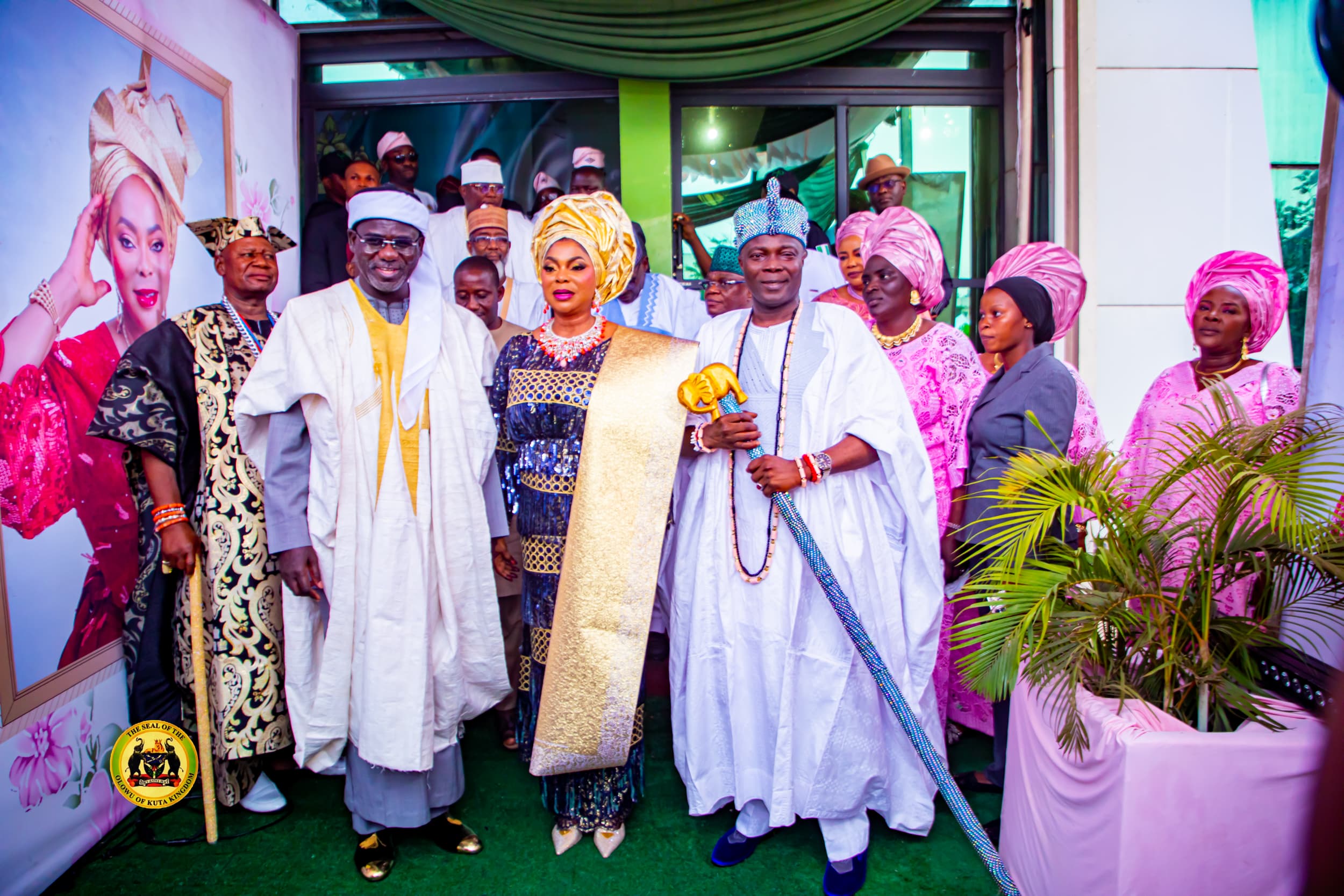
Buratai, Fagbemi , Shagaya, Olofa, Others Eulogise Olowu Kuta’s Olori On 60th Birthday, Foundation Launch
Eminent personalities across the Nigeria stormed the TFK Event Centre, Bala Mohammed Way, Guzape, Abuja, to celebrate the 60th birthday of Olowu Kuta’s Olori, Queen Jumai Amoke and her Foundation Launch on Saturday 28, March 2026.

From former Chief of Army Staff, Lt Gen TY Buratai rtd, to the Minister of Justice and Attorney-General of the Federation, Prince Lateef Fagbemi; Olofa of Offa, HRM Oba Mufutau Gbadamosi. Even top businesswoman and socialite, Chief (Mrs) Bola Shagaya, was in attendance.


Other dignitaries were newly promoted Deputy Inspector-General of Police and former AIG Zone 2 , Lagos , Adegoke Fayoade, Major General Abdumalik, Major General Samuel Adebayo rtd (Fmr CDI);
Major General Anthony Omozoje rtd (Fmr Copp);
Alhaji Tajudeen Owoyemi (Asiwaju of Offa and CEO Radisson Hotel Nigeria;
Dr Waheed Olagunju, former managing director of Bank of Industry, Oniba of Iba, Lagos State, HRM Oba Dr Suleiman Raji ;
Justice Falola, Olu of Ile-Ogbo , Oba Adetoyese amongst many traditional rulers and captains of industry too numerous to mention.
Speaking at the occasion, the Chief Host, Olowu of Kuta, HRM Oba Dr Adekunle Oyelude Makama, CON , Tegbosun iii, who is also the husband of the celebrant commended Queen Jumai for ‘ her slender arms full of kindness’ to establish such humanitarian Foundation, ‘Amoke Children and mother in Need Foundation’ at a time Nigerians are going through economic crisis occassioned by the global meltdown.
Olowu also commended her steadfastness and love for the less privileged and downtrodden.
The monarch refrenced the task before his wife’s humanitarian gesture said her best is yet to come.
” Olori Amoke Jumai, I celebrate you. You will celebrate 70, 80, 90 and continue to shine as you continue to put a smile on people’s faces. I love you, “Olowu Kuta added.
To Lt Gen Buratai, a former army chief and former Nigerian Ambassador to Benin Republic, the reward of hard work is more work.
Buratai, who also doubles as Balogun Agba of Owu Kuta, a chieftaincy title reserved for a generalismo congratulated Queen Jumai for attaining the age of 60 in good health.
The retired army General said he’s not surprised by the turn out of eminent personalities across the country to celebrate the Olowu Kuta’s Olori because she merited it through her hospitality to all, adding that Allah the most merciful, most beneficial would accept all her act of ibadah.
The minister of Justice, Prince Fagbemi, was full of praises for Queen Jumai for deeming it fit to have a place in her heart to accommodate the needy and less privileged in ‘our society.’
Prince Fagbemi urged the guests to contribute generously to support the Foundation in order to continue to alleviate poverty and put a smile on the faces of the people.
” I congratulate you on your 60th birthday and Foundation Launch. I wish you many happy returns of the day and many more fruitful services to the country and motherland”, Prince Fagbemi added.
The celebrant, Queen Jumai who was grining from ear to ear thankfully said she was excited by the turn out and the response of the people to her foundation.
Queen Jumai, however, promised to continue to use her resources and donations received for the good of the needy and less privileged in the society.
” I want to appreciate my own Kabiesi Olofa of Offa , for his presence and im I’m using him as a point of contact to all other Kabiesis present here, the minister of justice and Attorney-General, you’re welcome, sir; Mrs Bola Shagaya, I salute your enterprise, Lt Gen Buratai, I’m grateful, sir; DIG Fayoade, Justice Falola and other dignitaries too numerous to mention, I thank you, all. To my darling husband, Kabiesi Olowu , I thank you immensely for your support. And to my family and friends, I thank you , all. E se pupo!”, she said.
celebrity radar - gossips
Adron Homes Elevates Cultural Pride as Dignitaries Grace 39th Lisabi Festival in Abeokuta
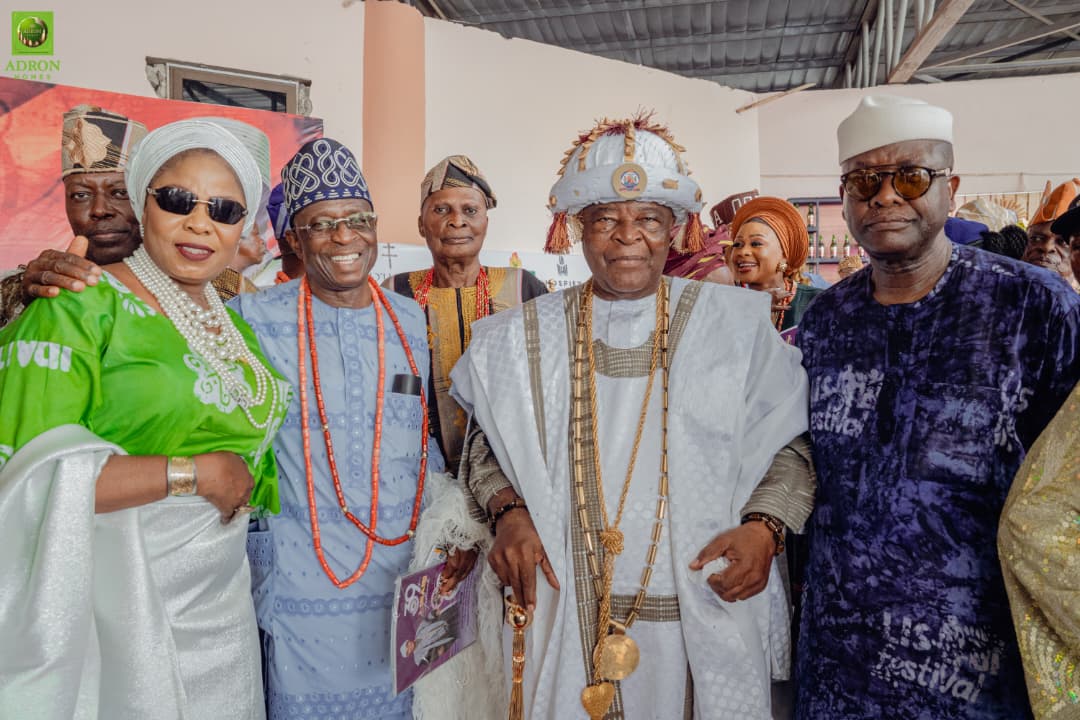
Adron Homes Elevates Cultural Pride as Dignitaries Grace 39th Lisabi Festival in Abeokuta
The ancient city of Abeokuta came alive in a grand display of culture, history, and unity as dignitaries from across Nigeria converged at the iconic Ake Palace Ground for the 39th edition of the Lisabi Festival, an annual celebration deeply rooted in the Egba people’s heritage.
The event, proudly supported by Adron Homes and Properties Limited, witnessed an impressive parade of distinguished personalities, traditional rulers, government officials, business leaders, and cultural enthusiasts, all captured in vibrant pictures that tell the story of a people united by history and pride.
From richly adorned monarchs in regal attire to elegantly dressed guests reflecting the depth of Yoruba tradition, the images from the festival encapsulate moments of honour, reverence, and celebration. Each photograph portrays not just faces, but influence, leaders, and stakeholders who continue to shape cultural preservation and community development.
At the heart of the celebration was the revered Oba Adedotun Aremu Gbadebo, whose presence underscored the festival’s significance as a symbol of Egba resilience and identity. Surrounding him were eminent dignitaries whose attendance further amplified the prestige of the event.
Adron Homes and Properties Limited stood out prominently, not only as a sponsor but as a key driver of cultural sustainability. Through its strategic support, the company reinforced its commitment to preserving indigenous heritage while fostering community engagement. The brand’s visibility across the venue and within the pictorial highlights reflects a deliberate alignment with culture, tradition, and people-centered development.
Beyond real estate, Adron Homes has continued to position itself as a cultural partner, investing in platforms that celebrate history and strengthen communal bonds. Its involvement in the Lisabi Festival is a testament to its broader vision of building not just homes, but legacies rooted in identity and pride.
The 39th Lisabi Festival, as captured through the lens of dignitaries in attendance, is more than an event, it is a narrative of continuity. And through its unwavering support, Adron Homes has once again set the pace, demonstrating that corporate institutions can play a vital role in sustaining the cultural heartbeat of a people.
As the echoes of drums fade and the colours of the festival linger in memory, one thing remains clear: the story told through these images is one of unity, heritage, and the enduring partnership between tradition and progress.


celebrity radar - gossips
Obasa Felicitates President Tinubu @ 74, says Renewed Hope Agenda is steering Nigeria toward stability and prosperity
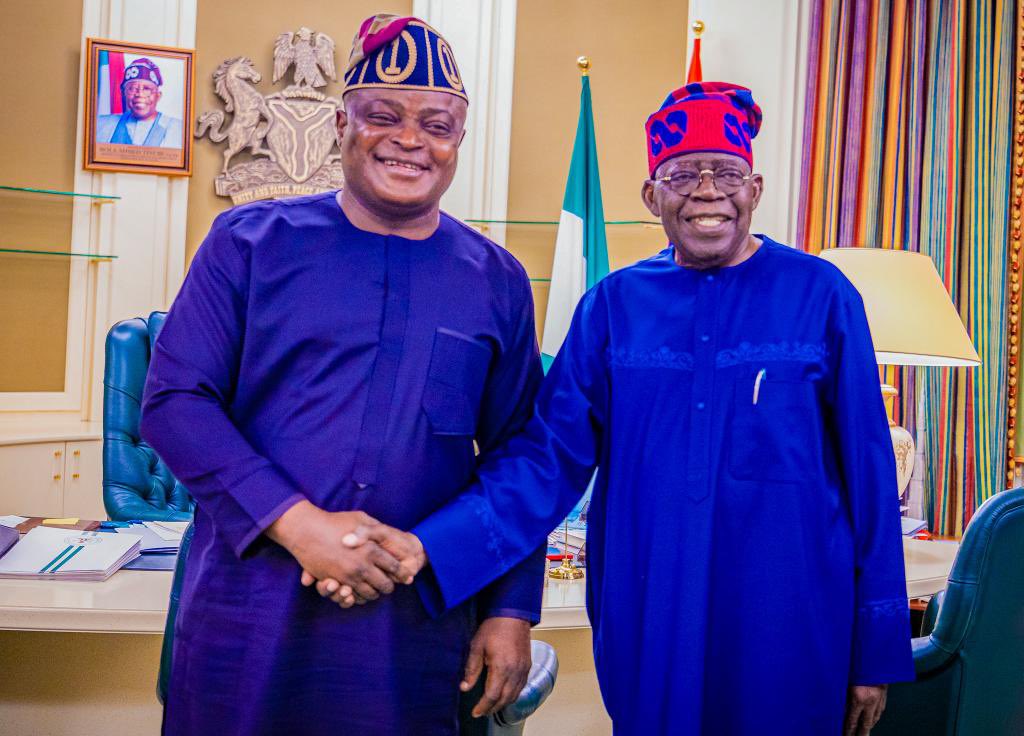
Obasa Felicitates President Tinubu @ 74, says Renewed Hope Agenda is steering Nigeria toward stability and prosperity
The Speaker of the Lagos State House of Assembly, Rt. Hon. (Dr.) Mudashiru Obasa has congratulated President Bola Ahmed Tinubu on his 74th birthday, commending him for fulfilling his Renewed Hope Agenda promises to Nigerians.
Speaker Obasa’s birthday message is contained in a statement signed by Adeshina Oyetayo, his Special Adviser on Research, Media, and Documentation.
Speaker Obasa described the President as a purposeful and pragmatic leader whose commitment to enthroning a peaceful and prosperous Nigeria should be appreciated by all
“Mr. President, today should be a national day of celebration honouring your selfless and visionary leadership.
“I commend your courage and conviction to initiate and implement necessary economic reforms that have pulled Nigeria out of the doldrums, stabilized the nation, and set it on the path of prosperity.”
Speaker Obasa said that those otherwise painful reforms are now being hailed as ingenious and effective worldwide, citing a January 2026 article in the influential The Economist magazine titled “Nigeria’s economy may be back from the brink.”
The article acknowledged that President Tinubu’s reforms are beginning to yield bountiful returns as evidenced in the easing of headline inflation for the 11th consecutive month, unification of the foreign exchange market, and foreign reserves rising to $46billion.
Notably, the article also referenced the International Monetary Fund (IMF)’s upgraded 4.4% GDP growth forecast for 2026 despite global headwinds, while stating unequivocally that Nigeria’s golden years will return under President Tinubu.
Speaker Obasa said that this submission by an international journal signifies that Nigeria is in safe hands under President Tinubu. He, therefore, urged Nigerians to rally round him and support his re-election bid, promising that the gains of the Renewed Hope agenda will reach every household.
“Our prayer is that the Almighty will grant our dear President long life in robust health and the strength and wisdom to help him achieve the Nigeria of our collective dreams,” Speaker Obasa concluded.


-

 society6 months ago
Religion: Africa’s Oldest Weapon of Enslavement and the Forgotten Truth
-

 news4 months ago
WHO REALLY OWNS MONIEPOINT? The $290 Million Deal That Sold Nigeria’s Top Fintech to Foreign Interests
-

 society6 months ago
“You Are Never Without Help” – Pastor Gebhardt Berndt Inspires Hope Through Empower Church (Video)
-

 celebrity radar - gossips2 months ago
Dr. Chris Okafor Returns with Power and Fire of the Spirit -Mounts Grace Nation Altar with Fresh Anointing and Restoration Grace on February 1, 2026