
celebrity radar - gossips
Governance & Grievance – A PERSPECTIVE. written by O’tega OGRA

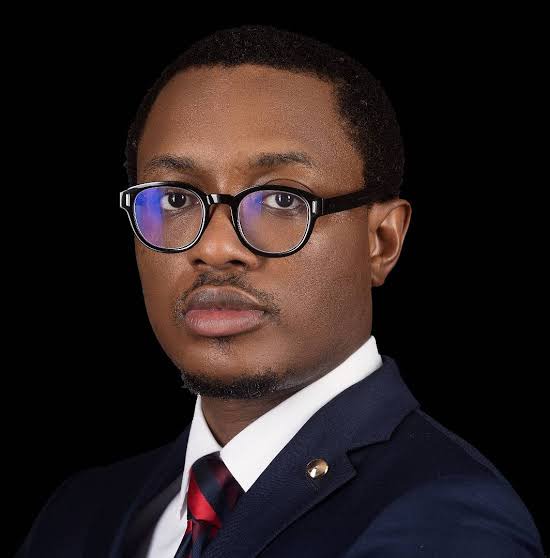
Governance & Grievance – A PERSPECTIVE. written by O’tega OGRA
O’tega ‘The Tiger’ Ogra
@otegaogra
·
It is disheartening to see various discourses on the proposed demonstrations by some turn into ugly narratives that should never have a place in our national space. Here are my thoughts, and feel free to engage respectfully…

1. It is every Nigerian’s constitutional right to peaceful assembly and freedom of expression
2. The Nigerian state also has a constitutional obligation to guarantee every constitutional right of every Nigerian, including free movement, safety, and security.
It is also the right of hundreds of millions of Nigerians to choose not to join any protests as many have chosen – and all parties must respect this. Asserting one’s rights should not lead to the denial of another’s.
3. If you claim you want to have a peaceful demonstration yet have allowed some actively involved in your protest to use your platform to mobilise people publicly in the name of causing destruction and chaos, you are also responsible for whatever chaos they cause.
4. To the protest leaders, can you confidently say you have a grip on the behaviour of those you have sought to join you in the protests? To those who have chosen to join the protests, can you confidently say you are fully aware of the plans—seen and unseen—of those mobilising you to demonstrate?
5. Even worse, if you haven’t come out to openly condemn and dissociate your protest platform from calls for the destruction of regular Nigerians’ livelihood and violence against the Nigerian people and state, it could mean you consent to your protest platform to be used for chaos – directly or indirectly.
6. President Bola Tinubu @officialasiwajubat is aware of the pains Nigerians are facing due to global economic shocks and local policies that have been put in place to secure a prosperous future for Nigeria.
7. Mr President listens—just as he has been listening since Day 1 of his presidency. He has shown a willingness, never seen at this level before, to return to the drawing board where policies may have been unpopular.
7. Today, the numbers speak for themselves—foreign reserves have not been depleted despite paying off over USD7.5bn in outstanding obligations/backlogs. The frivolous and sometimes unconstitutional use of the CBN’s way and means to borrow money from the CBN and mortgage our meagre revenues while putting the nation further into penury is no longer the case. Now, spending is mainly tied to earnings.
8. We are also seeing the rate of inflation slowing considerably.
Families can now breathe a sigh of relief and enjoy more disposable income, thanks to initiatives such as the student loans scheme and credicorp. These programs alleviate the pressure of making immediate bulk payments for everyday expenses. Additionally, the P-CNG Initiative is driving down commercial transportation costs by providing free conversion kits, enabling the use of more affordable CNG fuel for commercial vehicles. These are all in addition to other programmes like I-DICE, NIYA, and various MSME support programmes/interventions. The number of taxes is being reduced by at least one-fifth, with some out of the way already. Imports of critical food items have been exempt from levies for a period of time. What more?
On the security front, we have successfully reduced incidents of internal insurrection and kidnappings. Over 5,000 of our fellow Nigerians have secured their freedom, and an impressive number of terrorists and insurgents (over 11,000) have been either neutralised or captured. Our tactical operations will persist until Nigeria is entirely safe. We trust in the protection of our brave men and women in Uniform who courageously risk their lives daily, even leaving their loved ones for extended periods, to secure our freedoms. Institutions like the EFCC actively pursue those exploiting gaps in our system to undermine the country. Whether it’s the former CBN governor accused of misappropriation, customs officials arrested for accepting bribes to sabotage the economy, or fraudulent individuals tarnishing the image of hardworking young Nigerians worldwide, rest assured, your day in court is approaching. Justice will prevail.
10. The country is experiencing a resurgence in FDI, particularly in the energy/oil & gas sector, thanks to the new presidential directives (40, 41, 42), which plug some of the gaps in the PIA. As you may already know, NNPCL now operates as a fully commercial enterprise whilst regulatory functions have been removed and clearly defined under crucial regulatory agencies – NUPRC and NMDPRA, who regulate the petroleum value chain and all local and international players, including NNPCL. Total Energies/NNPCL JV has signed the Final Investment Decision on the USD550m Ubeta Gas Development project on the back of executive directives 40,41, &42. More are to be announced in due course. The international scene is more confident than they have been in recent years about coming back to Nigeria.
11. Foreign companies leaving? Yes, some are, but we must not ignore that many of those leaving failed for years to invest in the value chain of their businesses or did not adopt suitable approaches to the local markets. Others were following a global trend to cut down their scale in markets such as Africa. However, for every company that leaves, their businesses have been taken over by other foreign investors who see the opportunities in Nigeria or local investors who have built the capacity to operate in this environment. The high exchange rate may not be ideal, but what about the opportunities presented? Countries like Indonesia and Vietnam, with exchange rates between 12,000 to 25,000 in their local currencies to the dollar, have used similar opportunities to push their countries to become two of the fastest growing in the world spurred by increased productivity, value addition, and exports, which a weaker currency provides. Nigerian companies that add value and are export-focused are already taking advantage of this.
12. President Bola Tinubu is unwavering in his commitment to bringing governance to the grassroots. President Tinubu’s administration has secured local government financial autonomy through the successful Supreme Court case brought by the AGF, implemented policies to support unemployed youth like the out-of-job social safety stipends, and increased FAAC allocations to states for further development investments. His focus is firmly on stabilising the economy to ensure a secure future for all our children. President Bola Tinubu is resolute, focused on his job, and won’t be swayed. Every eligible Nigerian will have the opportunity to judge his performance at the ballot box in three years. This hard-fought democracy gives every Nigerian the power to hold all leaders accountable.
Know This: President Bola Tinubu is not beholden to any special interests, and despite expected resistance by some ‘Hands of Esau’ who cannot get their way, and trying to rile up the polity, he will always put the interests of Nigerians first
13. Again, it is your constitutionally guaranteed right to peaceful assembly, but in this case, where some mobilisers have come out on various platforms to say they aim for destruction and chaos, how do you guarantee your objectives are aligned? How do you now convince or guarantee the hundreds of millions of non-protesting Nigerians that those of you who choose to protest are simply out to air your voices and not to cause violence or destruction as has been pushed by many within your midst?
The choice is yours. Think about it and decide if you are in support of violence against our communities or for us to join hands in moving the country forward. Where do you stand?
God Bless Nigeria. #NigeriaWillSucceed.
Otega O
#TheTiger #Nigeria
#TheTiger #Nigeria #FreedomOfAssembly #RespectEngagement #Constitutionalrights
#PeacefulProtests #ConstitutionalObligations #NationalUnity #PresidentBolaTinubu
https://x.com/otegaogra/status/1817722963325567291?s=46&t=-WT1A6V3jj52Bil8fk9JSg




celebrity radar - gossips
Adron Homes Celebrates Visionary Chairman, Aare Adetola Emmanuel King, at 51
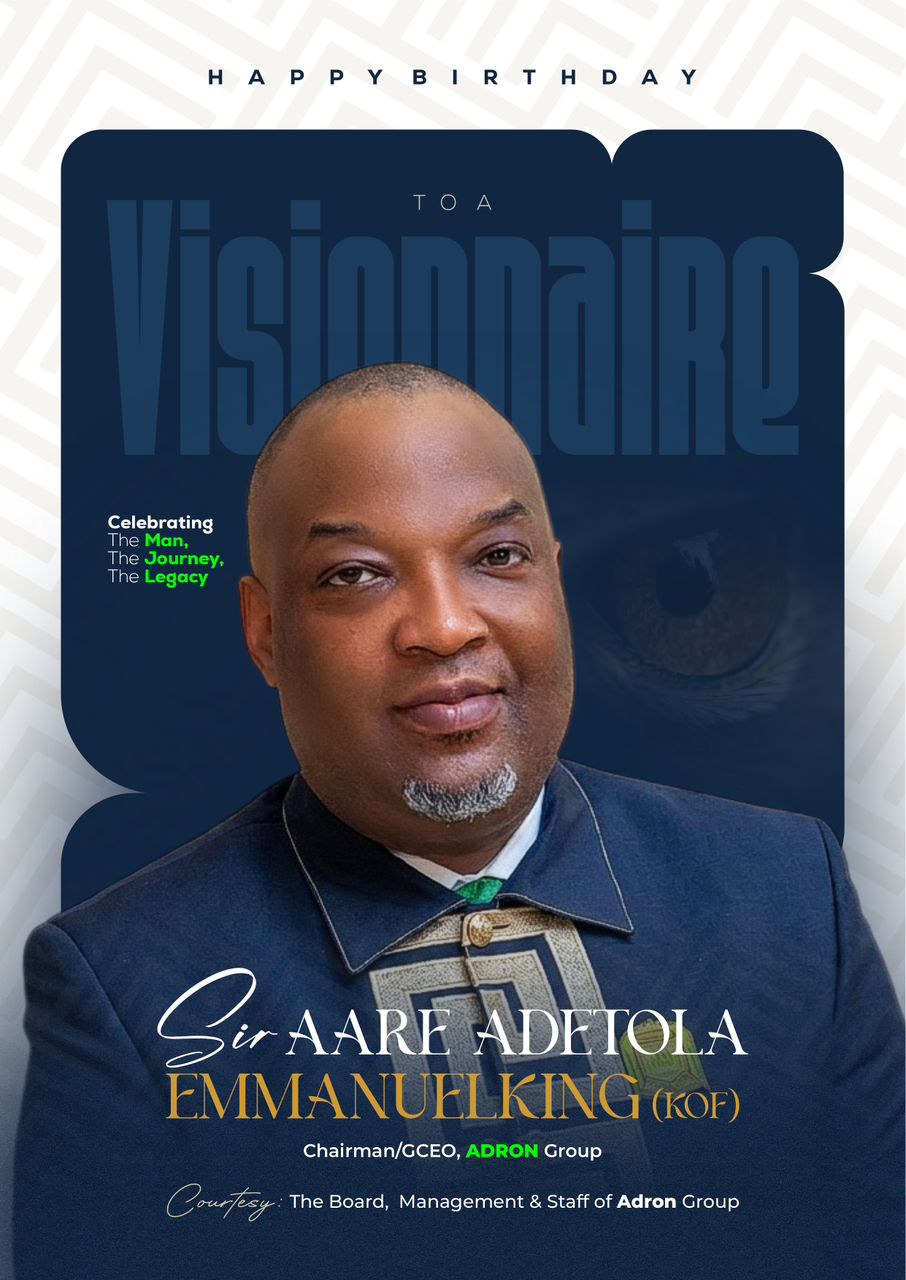
Adron Homes Celebrates Visionary Chairman, Aare Adetola Emmanuel King, at 51
The management and staff of Adron Homes and Properties Limited have joined family, friends, associates, and well-wishers across the globe to celebrate their Chairman and Chief Executive Officer, Aare Adetola EmmanuelKing, as he marks his 51st birthday.

In a statement released by the company, the milestone was described as a celebration of an exceptional leader whose vision, resilience, and entrepreneurial brilliance have not only transformed Adron Homes into a household name in Nigeria’s real estate sector but have also redefined affordable housing across the country.
Under his dynamic leadership, Adron Homes has continued to expand its footprint, delivering value-driven residential solutions while empowering thousands of Nigerians with opportunities for home ownership. His commitment to excellence, innovation, and customer satisfaction has remained the driving force behind the company’s sustained growth and industry leadership.
The statement further highlighted Aare EmmanuelKing’s passion for nation-building and community development, noting his significant contributions to job creation, youth empowerment, and the promotion of socio-economic development through real estate investments.
“As a leader, mentor, and visionary, Aare Adetola EmmanuelKing has consistently inspired a culture of excellence, integrity, and dedication within the organization. His ability to turn bold ideas into reality continues to position Adron Homes as a trailblazer in the industry,” the statement read.
The company expressed profound gratitude for his steadfast leadership and prayed for continued wisdom, strength, and sound health as he embarks on another year of impactful achievements.
As he celebrates his 51st birthday, the entire Adron Homes family proudly honours a man whose legacy continues to shape the future of real estate in Nigeria.
Happy 51st Birthday, Aare Adetola EmmanuelKing!
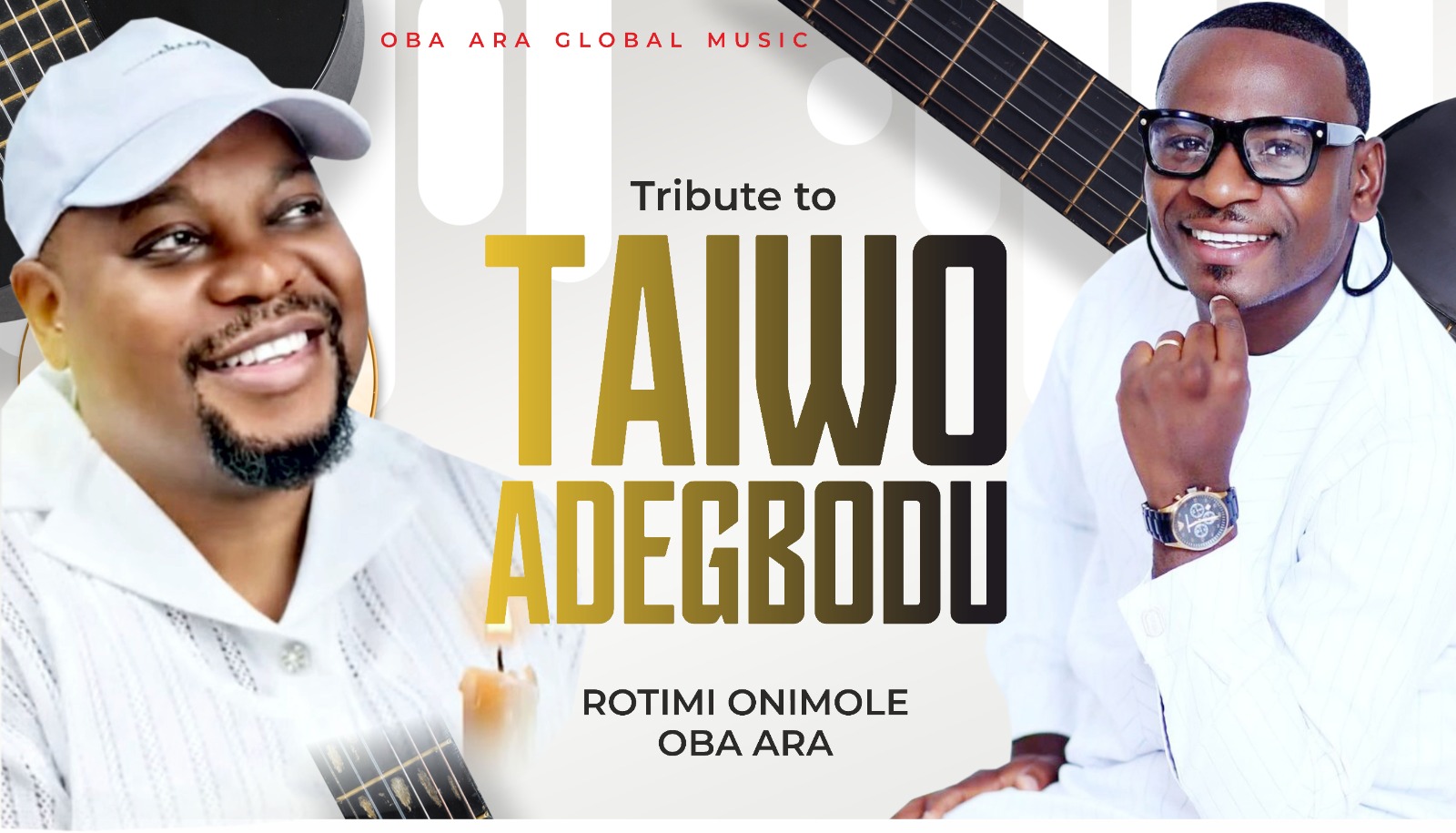
Oba Ara Releases Emotional Tribute to Late Taiwo Adegbodu
Taofik Afolabi
The gospel music community continues to grieve the painful loss of Taiwo Adegbodu, a beloved figure whose sudden departure left a deep void among fans, colleagues, and loved ones. In response to this loss, renowned gospel minister Rotimi Onimole, popularly known as Oba Ara, has released a moving tribute song that captures both the sorrow of the moment and the enduring legacy of the late singer.
Oba Ara, a proud son of Isale Eko, channels raw emotion throughout the song, using heartfelt lyrics and soul-stirring melodies to reflect on his personal connection with Taiwo Adegbodu. In the tribute, he openly expresses how deeply the news of Adegbodu’s passing shook him, describing it as a painful and unexpected loss that is difficult to come to terms with.
The song goes beyond mourning, it celebrates the life, ministry, and impact of Taiwo Adegbodu. Oba Ara highlights the late artist’s dedication to spreading the gospel through music, his inspiring voice, and the spiritual influence he had on many within and beyond Nigeria. Through powerful verses, he paints a picture of a man who lived for God and touched countless lives through his ministry.
Listeners have described the tribute as both comforting and deeply emotional, as it resonates with the collective grief of the gospel music community. It serves as a reminder that although Taiwo Adegbodu is no longer physically present, his music, message, and legacy will continue to live on.
In honoring his late colleague, Oba Ara not only pays his respects but also offers a source of healing for fans and fellow ministers, using music as a tool to process grief and celebrate a life well lived.
celebrity radar - gossips
Buratai, Fagbemi , Shagaya, Olofa, Others Eulogise Olowu Kuta’s Olori On 60th Birthday, Foundation Launch

Buratai, Fagbemi , Shagaya, Olofa, Others Eulogise Olowu Kuta’s Olori On 60th Birthday, Foundation Launch
Eminent personalities across the Nigeria stormed the TFK Event Centre, Bala Mohammed Way, Guzape, Abuja, to celebrate the 60th birthday of Olowu Kuta’s Olori, Queen Jumai Amoke and her Foundation Launch on Saturday 28, March 2026.

From former Chief of Army Staff, Lt Gen TY Buratai rtd, to the Minister of Justice and Attorney-General of the Federation, Prince Lateef Fagbemi; Olofa of Offa, HRM Oba Mufutau Gbadamosi. Even top businesswoman and socialite, Chief (Mrs) Bola Shagaya, was in attendance.


Other dignitaries were newly promoted Deputy Inspector-General of Police and former AIG Zone 2 , Lagos , Adegoke Fayoade, Major General Abdumalik, Major General Samuel Adebayo rtd (Fmr CDI);
Major General Anthony Omozoje rtd (Fmr Copp);
Alhaji Tajudeen Owoyemi (Asiwaju of Offa and CEO Radisson Hotel Nigeria;
Dr Waheed Olagunju, former managing director of Bank of Industry, Oniba of Iba, Lagos State, HRM Oba Dr Suleiman Raji ;
Justice Falola, Olu of Ile-Ogbo , Oba Adetoyese amongst many traditional rulers and captains of industry too numerous to mention.
Speaking at the occasion, the Chief Host, Olowu of Kuta, HRM Oba Dr Adekunle Oyelude Makama, CON , Tegbosun iii, who is also the husband of the celebrant commended Queen Jumai for ‘ her slender arms full of kindness’ to establish such humanitarian Foundation, ‘Amoke Children and mother in Need Foundation’ at a time Nigerians are going through economic crisis occassioned by the global meltdown.
Olowu also commended her steadfastness and love for the less privileged and downtrodden.
The monarch refrenced the task before his wife’s humanitarian gesture said her best is yet to come.
” Olori Amoke Jumai, I celebrate you. You will celebrate 70, 80, 90 and continue to shine as you continue to put a smile on people’s faces. I love you, “Olowu Kuta added.
To Lt Gen Buratai, a former army chief and former Nigerian Ambassador to Benin Republic, the reward of hard work is more work.
Buratai, who also doubles as Balogun Agba of Owu Kuta, a chieftaincy title reserved for a generalismo congratulated Queen Jumai for attaining the age of 60 in good health.
The retired army General said he’s not surprised by the turn out of eminent personalities across the country to celebrate the Olowu Kuta’s Olori because she merited it through her hospitality to all, adding that Allah the most merciful, most beneficial would accept all her act of ibadah.
The minister of Justice, Prince Fagbemi, was full of praises for Queen Jumai for deeming it fit to have a place in her heart to accommodate the needy and less privileged in ‘our society.’
Prince Fagbemi urged the guests to contribute generously to support the Foundation in order to continue to alleviate poverty and put a smile on the faces of the people.
” I congratulate you on your 60th birthday and Foundation Launch. I wish you many happy returns of the day and many more fruitful services to the country and motherland”, Prince Fagbemi added.
The celebrant, Queen Jumai who was grining from ear to ear thankfully said she was excited by the turn out and the response of the people to her foundation.
Queen Jumai, however, promised to continue to use her resources and donations received for the good of the needy and less privileged in the society.
” I want to appreciate my own Kabiesi Olofa of Offa , for his presence and im I’m using him as a point of contact to all other Kabiesis present here, the minister of justice and Attorney-General, you’re welcome, sir; Mrs Bola Shagaya, I salute your enterprise, Lt Gen Buratai, I’m grateful, sir; DIG Fayoade, Justice Falola and other dignitaries too numerous to mention, I thank you, all. To my darling husband, Kabiesi Olowu , I thank you immensely for your support. And to my family and friends, I thank you , all. E se pupo!”, she said.


-

 society6 months ago
Religion: Africa’s Oldest Weapon of Enslavement and the Forgotten Truth
-

 news4 months ago
WHO REALLY OWNS MONIEPOINT? The $290 Million Deal That Sold Nigeria’s Top Fintech to Foreign Interests
-

 society6 months ago
“You Are Never Without Help” – Pastor Gebhardt Berndt Inspires Hope Through Empower Church (Video)
-

 celebrity radar - gossips2 months ago
Dr. Chris Okafor Returns with Power and Fire of the Spirit -Mounts Grace Nation Altar with Fresh Anointing and Restoration Grace on February 1, 2026