
Politics
Governor Usman Ododo and The Desecration of His Oath of Office By Nelson Ekujumi

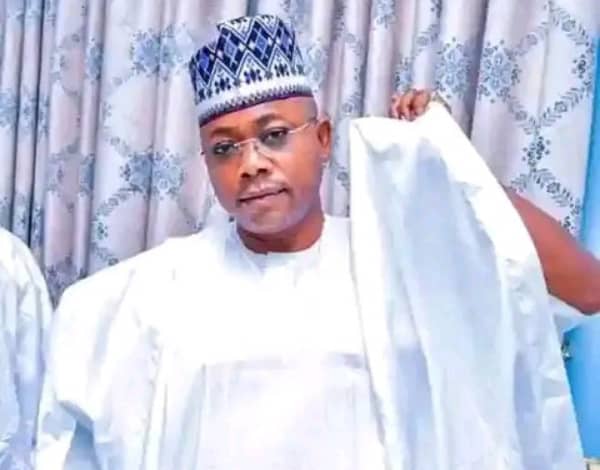
Governor Usman Ododo and The Desecration of His Oath of Office
By Nelson Ekujumi
On being sworn into office on the 27th of January, 2024 as the Executive Governor of Kogi State, Alhaji Usman Ododo swore with the Quran to uphold the constitution of the Federal Republic of Nigeria.
However, since his assumption into office and with subsequent events surrounding his immediate predecessor, Alhaji Yahaya Bello, who is presently on the run from the law, have exposed Governor Usman Ododo as a leader who is violating his oath of office and by extension, pushing to the back burner, the welfare and well-being of the good people of Kogi State.
On several occasions, Governor Usman Ododo has abused his office to assault the constitution in preventing the EFCC from arresting Alhaji Yahaya Bello, the latest being his abracadabra visit to the EFCC office in Abuja, where he was pictured, holding hands with the wanted suspect and thus, misused his constitutional immunity to prevent a wanted Yahaya Bello from being arrested.
Sadly, we also recollect how the EFCC stormed the Kogi State Government lodge in Abuja on two separate occasions in April 2024 and on the 18th of September, 2024 with the intention of arresting Alhaji Yahaya Bello for questioning over corruption allegations while in office as governor after failing to honour EFCC’s invitations and how Governor Usman Ododo on both occasions prevented the arrest by leveraging on the immunity he enjoys as a sitting Governor.
As we write, former Governor Yahaya Bello has been declared wanted by the EFCC for failing to honour it’s summons to explain himself on issues surrounding the misappropriation of billions of Kogi tax payers’ money. In addition, ex Governor Yahaya Bello’s wanted person tag has been affirmed by the courts, though he has tried unsuccessfully to have it removed from his neck.
Fortunately, while Alhaji Yahaya Bello is on the run from the law, though temporarily, one is aware that some of his accomplices who partook in the alleged illegal and corrupt siphoning of the people of Kogi state’s money are presently standing trial for the crime of corruption and abuse of public office and misuse oftrust. In addition, some of the stolen funds have been traced to where they were lodged by Alhaji Yahaya Bello.
However, in the midst of the commendable efforts of the present EFCC administration to live up to it’s core responsibility of fighting corruption as mandated by the constitution, one is shocked and ashamed that the Kogi State House of Assembly which ought to be in the forefront of supporting the anti graft agency in it’s war against corruption for the collective interest of the good and long suffering people of Kogi State, is rather waging a parochial, self serving and anti people war against the EFCC for carrying out it’s statutory functions.
The Kogi State House of Assembly which ought to put the collective interest of the people of Kogi State as it’s topmost priority, which is the reason why they were voted into office, by their conduct so far, have proven to be enablers of corruption by waging a campaign of blackmail and calumny against the anti graft agency to hands off ex Governor Yahaya Bello, that the Kogi people’s money is not missing!
While we are embarrassed by this condemnable and anti-people conduct of the Kogi State House of Assembly in prioritising the interest of an individual far and above the collective good of the people of Kogi State, we are not surprised that they are following in the shameful, despicable and condemnable footsteps of the Delta state house of assembly in 2013 during the former Governor James Ibori saga, when they claimed that Delta state funds is not missing, that EFCC should leave him alone, even in the face of the incontrovertible facts of James Ibori attempt to bribe the then EFCC chairman now National Security Adviser (NSA) Mallam Nuhu Ribadu with the sum of $15 million dollars which was deposited with the CBN as an evidence.
But while the show of shame by the Delta state House of Assembly as an enabler of corruption lasted, former Governor James Ibori was arrested by the authorities in London, prosecuted and jailed for corruption, only for the same shameless Delta state house of assembly to come back to public glare and demand for the return of the seized bribe money of $15 million from ex Governor and convict James Ibori to be returned to the state coffers that they previously mounted a campaign that it was not stolen from.
Tragically, it’s sad and unfortunate that in our democracy today from the Kogi State show of shame by Governor Usman Ododo and the Kogi State House of Assembly, we are now witness to the violation and abuse of the constitution by persons who ought to uphold the provisions of the constitution for the collective good that they swore to on oath; but have rather turned violators because of individual, personal, self-serving and corrupt interest, this is condemnable in it’s entirety.
But we must commend the EFCC under the present leadership for it’s professionalism and diligent conduct in the face of intimidation, provocation, campaign of blackmail and calumny to distract it from performing it’s constitutional duty. We urge EFCC to remain focused, law abiding and consistent to ensure that the war against corruption is fought to a logical conclusion with the Yahaya Bello case and others in tandem with the provisions of the law and the collective good of the people of Nigeria.
Nelson Ekujumi, is a good governance advocate and rights activist.




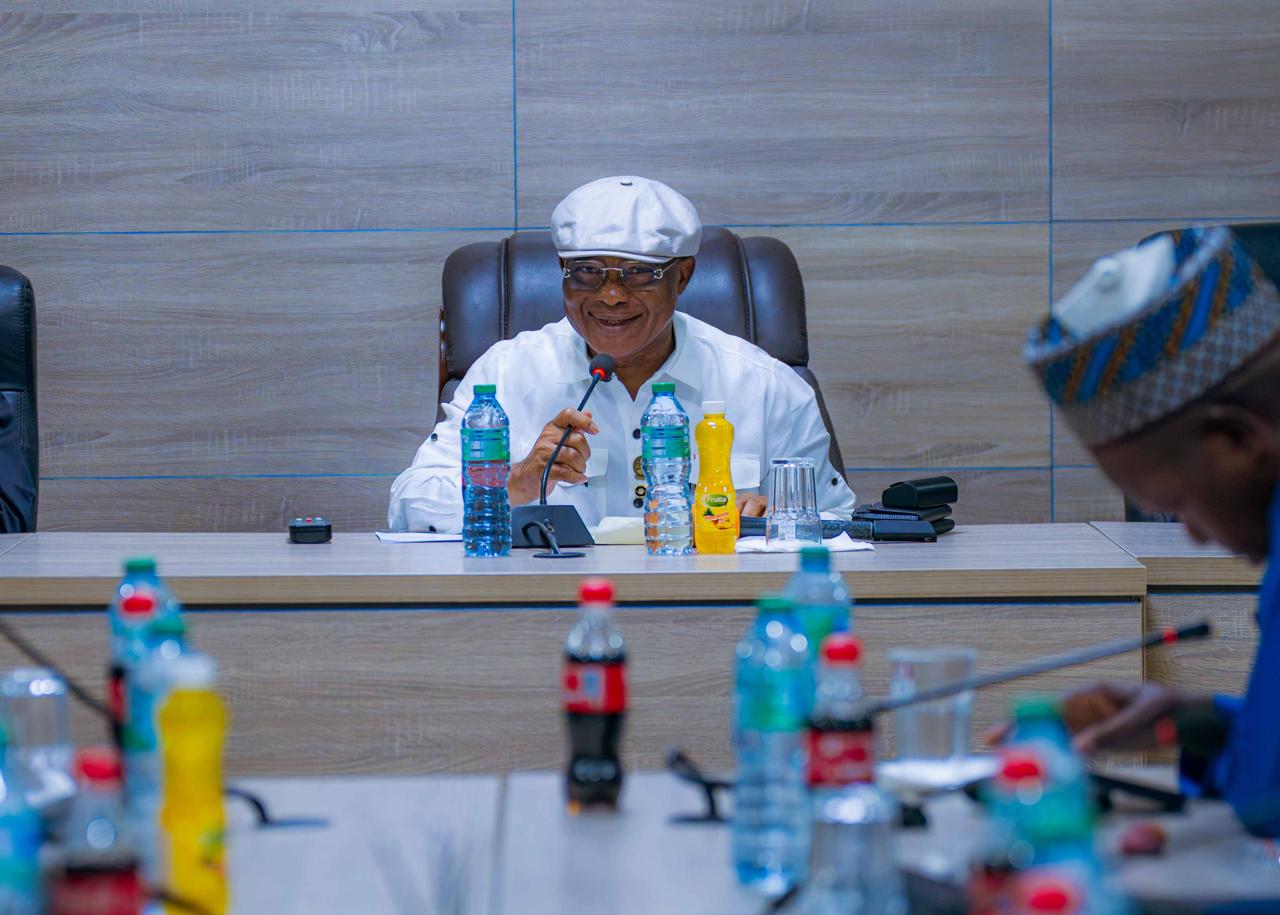
*Renewed Hope Ambassadors Step Into the Next Phase
Fresh from the successful APC 2026 National Convention, the Renewed Hope Ambassadors National, Zonal, and State leadership gathered in Abuja over the weekend, for its fourth strategic meeting, setting the tone for nationwide grassroots activation ahead of 2027.
Chaired by Governor Hope Uzodinma (Imo State) the Director General and National Coordinator of the Renewed Hope Ambassadors, alongside Deputy Director-General, Governor Uba Sani of Kaduna State, and Governor Inuwa Yahaya of Gombe State as Secretary, the session reinforced one clear direction: One Party. One Message. One Mobilization whilst also laying out a strategic roadmap for the activation of the network across all communities in Nigeria.
Backed by the strength of 31 APC-led states, the Renewed Hope Agenda is taking Bola Ahmed Tinubu’s message of progress and reform to every corner of Nigeria.
From bold economic restructuring to initiatives like NELFUND, the increase in the national minimum wage from ₦30,000 to ₦70,000, and strategic investments in critical sectors, including PNiCGI, the mission remains clear: helping Nigerians understand both the purpose and the progress of the Renewed Hope vision.
This is coordination at scale. This is grassroots engagement with purpose. This is the next phase of Renewed Hope with One Party, One Message, and One Mobilisation framework
#RenewedHopeAmbassadors #APC #WeAreAPC


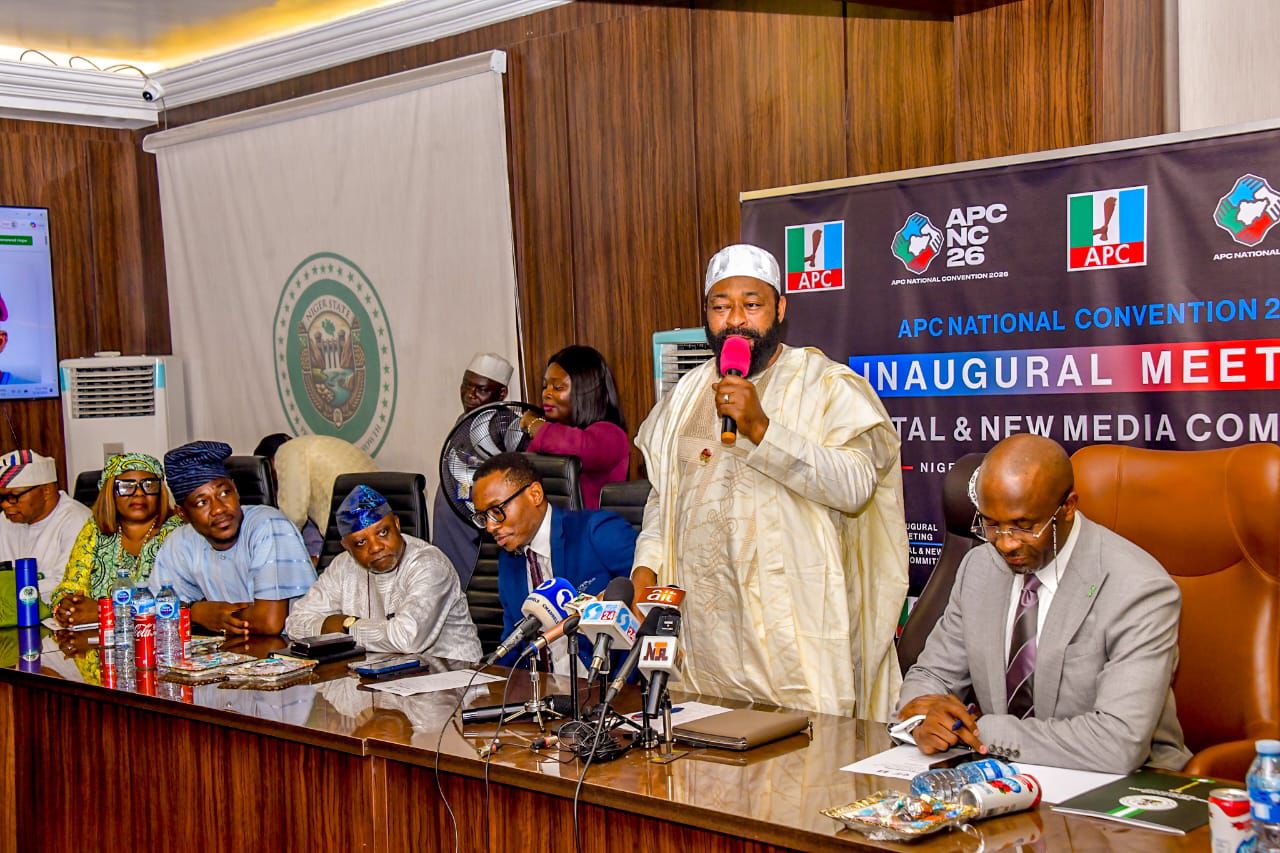
Governor Bago Inaugurates APC Digital Media Sub-Committee Ahead of National Convention.
Governor Umaru Bago has inaugurated the Digital Media Sub-Committee for the forthcoming National Convention of the All Progressives Congress (APC), scheduled to hold on March 27 and 28, 2026 in Abuja.
Chairing the sub-committee, Governor Bago tasked members with the responsibility of effectively communicating the party’s manifesto to the public.
He emphasized the need to leverage social media platforms to highlight the achievements and ongoing efforts of President Bola Ahmed Tinubu, noting that communication gaps have posed challenges that must now be decisively addressed.
The Co-Chair of the sub-committee, Hon. Benjamin Kalu, Deputy Speaker of the House of Representatives, echoed the Governor’s position, urging members to project the activities of both the party and the government to a broader audience.
He called for a deliberate and coordinated effort to showcase the party’s achievements and policy direction, stressing the importance of shaping a compelling and consistent narrative across all digital platforms.
Delivering a presentation to the committee, Otega Ogra, SSA to the President on New Media, who serves as Secretary of the sub-committee, outlined strategic focus areas to guide the team’s operations.
His presentation highlighted communication priorities and actionable steps to achieve the committee’s mandate and strengthen the party’s digital engagement.


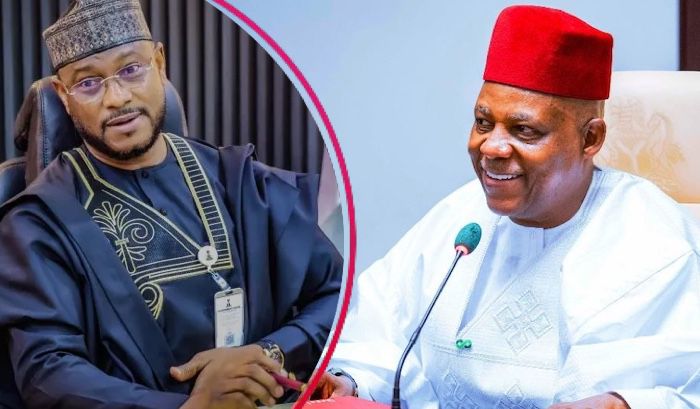
VP Shettima Set to Lead Delegation to Zamfara as Governor Dauda Lawal Formally Joins APC
The Zamfara State chapter of the All Progressives Congress (APC) has finalized plans to receive Vice President Kashim Shettima for the formal defection and reception of Governor Dauda Lawal into the ruling party, scheduled to take place on Tuesday.
State APC Chairman, Tukur Danfulani Maikatako, disclosed this during a high-level stakeholders’ meeting held in Gusau, the state capital. He noted that the Vice President would be joined by the party’s national leadership to mark what he described as a landmark political realignment in the state.
Maikatako expressed the party’s excitement over Governor Lawal’s return, recalling that Zamfara had historically been an APC stronghold and that the Governor was previously a bona fide member of the party before his earlier exit.
“We all know that Zamfara has long been one of the APC’s stronghold states, where the defected Governor was once a bona fide member. Now that he has decided to return home, having been satisfied that the APC remains his second choice after the one he left for obvious reasons,” Maikatako stated.
The Chairman called on all party faithful across the 147 wards in the state’s 14 local government areas to turn out en masse to honour the Vice President’s visit. He emphasized that the event was strategically positioned to bolster the party’s popularity and strengthen its structures ahead of the 2027 general elections.
In a strong appeal for unity, Maikatako urged members to set aside all factional tendencies, stressing that the APC remained one political family with shared goals, particularly the ambition to make Zamfara and Nigeria great again.
Echoing similar sentiments, a former state APC Chairman, Lawal M. Liman, appealed to members to cascade the message to their wards and local government areas. He reinforced the need for cohesion, noting that the party’s collective strength would be critical to achieving success in future elections.

All eyes are now on Gusau as the ruling party prepares for a high-profile political gathering expected to further consolidate its influence in Zamfara State.


-

 society6 months ago
Religion: Africa’s Oldest Weapon of Enslavement and the Forgotten Truth
-

 news4 months ago
WHO REALLY OWNS MONIEPOINT? The $290 Million Deal That Sold Nigeria’s Top Fintech to Foreign Interests
-

 society6 months ago
“You Are Never Without Help” – Pastor Gebhardt Berndt Inspires Hope Through Empower Church (Video)
-

 celebrity radar - gossips2 months ago
Dr. Chris Okafor Returns with Power and Fire of the Spirit -Mounts Grace Nation Altar with Fresh Anointing and Restoration Grace on February 1, 2026