
Business
Govt must use windfall tax revenue for critical infrastructure projects-OAU Prof of Economic History

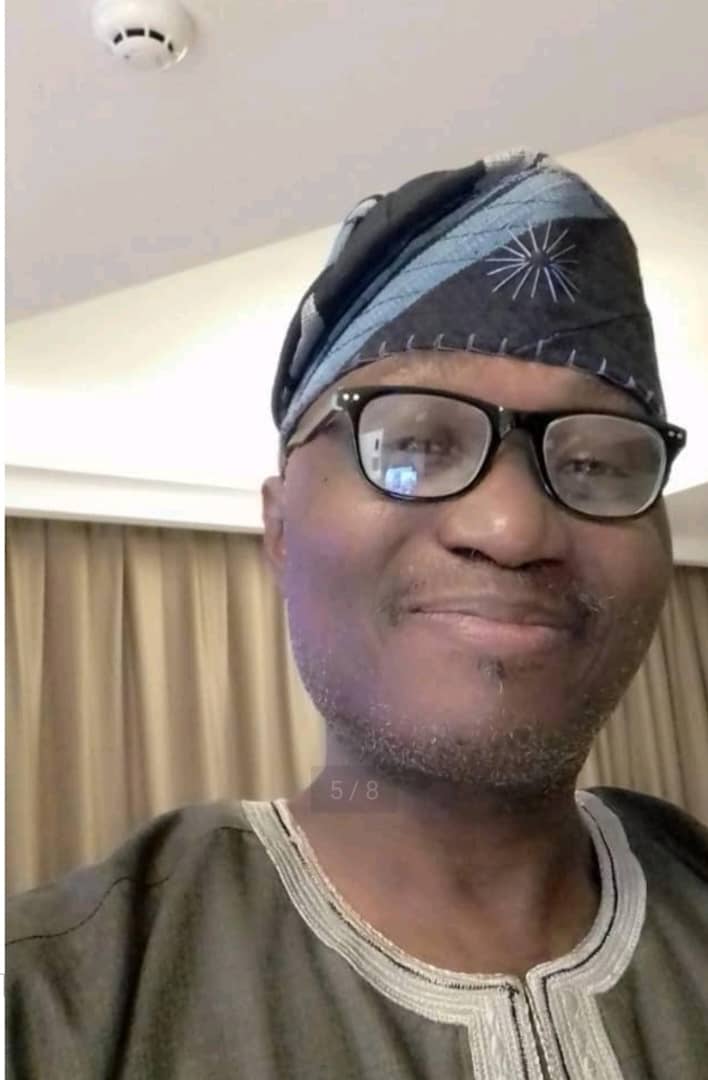
Govt must use windfall tax revenue for critical infrastructure projects-OAU Prof of Economic History
A Professor of Economic History at the Obafemi Awolowo University, Ile Ife, Adetunji Ogunyemi, speaks on the amendment of the Finance Act 2020 by the National Assembly to accommodate windfall levy on banks’ profits on foreign exchange transactions. The lawyer, public finance expert submits that the policy is perfectly in order, asking banks to see it as contribution to national development. Excerpts:
The windfall levy generated some debate in the polity with government justifying it as the right thing to do in order to strike a balance in the key sectors of the economy. How justified is this levy on banks’ foreign exchange gains?
Nigeria is currently in dire straits financially and generally speaking economically. It is within the power of the government of the Federation going by its stated exclusive jurisdiction in the First Schedule Part I of the constitution of the Federal Republic of Nigeria to make such laws and to direct such policies and actions as to ensure peace, good order and good government in Nigeria. Therefore, if Nigeria is in dire straits and some Nigerians, whether persons or bodies or corporate organisations, that have been feeding fat on the system, especially when that feeding fat is not directly a function of their own productive energies, then it behoves the Federal Government to ensure a balancing of duties and responsibilities within the system such that a resource-deficient sector of the economy can benefit from the resource-surplus part through what is called economic stabilisation. So, to me, it is perfectly in order to amend the Finance Act 2020 in order to accommodate the collection of this one-off levy on the windfall that the banks in the financial system have benefited from on foreign exchange transactions in the last one year. To me, it is perfectly in order and it is part of the duties of the government to stabilise the economy and also redistribute wealth.
Part of the arguments of those kicking against the policy is that allowing the windfall levy on banks may create uncertainty about the future as government may come with another windfall tax in some other sectors. Is this fear justified?
A situation of paralysis needs a shock therapy to bring it to normalcy. In 1929 up to 1932, there were decisions made in the United States under Herbert Hoover to stabilise the economy by ensuring that government deliberately pumps into the economy huge expenditure financed under public-private partnership arrangement. Nigeria is in such a situation now as the United States was under Hoover. So, it is not out of place to request that that banks that have made unplanned, spontaneous, unpredicted, sudden income to donate to the system a portion of their profits. This levy is actually on their windfall which is not part of their projections in their respective budgets. So, there is nothing that is malicious about this levy. After all, the levy is not for the benefit of persons. It is for the benefit of the public and it is in order.
Naturally, the Chartered Institute of Bankers of Nigeria (CIBN) has risen in defence of the banks to say asking them to pay a windfall levy amounts to double taxation because banks have already paid Companies Income Tax. What do you make of this argument?
I disagree absolutely with such stance from CIBN. What of the progressive deductions that the banks have been making with respect to ATM withdrawals by both the depositors and the withdrawers? Banks charge N20 per transaction and at times N50. Many of these deductions are actually illegal and the CBN should have asked them to return the money to their customers. These deductions run into billions of naira. But it would seem that the CBN did not want to rock the boat and has allowed the banks to earn some income for their stabilisation so that when a request for re-capitalisation would come, they would have something to use for that purpose. So, the banks can’t approbate and reprobate at the same time. They can’t be placing unlimited charges on their customers and expect government not to come in with a decision to stabilise the system. The windfall levy is a patriotic call made on the banks to contribute to the system. The banks should not see it as a tax. After all, it is a one-off levy. At any rate, why are the banks trying to shy away from their responsibility of contributing to the system? Their wealth comes from the commonwealth of Nigeria. Is that not? If your wealth comes from the commonwealth of a country and that country is in dire straits and it calls upon you to pay a levy on profits arising from your unpredicted income, I don’t think that it is out of place for them to obey such call to help fatherland.
Are there special benefits from a windfall tax?
The benefits are many. One, insofar as the government will not pump the revenue arising from this windfall levy on banks into the general budget, then there is no problem. But if government puts the revenue into the general budget and uses it to fund recurrent expenditure, that is going to be unacceptable. However, if government pumps the money from the windfall tax specifically into certain projects, for example, the Sokoto-Badagry Highway, the coastal road, the Port Harcourt-Maiduguri railway, etc, it is going to be absolutely correct. It can also be used for industrial development through the Bank of Industry or specifically into some agricultural projects such as dam development and so on. These are the specific areas the money can be channelled into. But I would advise that the government uses the revenue to fund critical projects such as the Lagos-Calabar Coastal road, the Sokoto-Badagry Highway, Port Harcourt-Maiduguri rail line, expansion of the standard gauge from Ibadan to Abuja and then onward to Kaduna. These are the critical projects that will create a trickle-down effect on the economy to jumpstart it from its doldrums and provoke productive enterprises among business concerns.
The three tiers of government have been smiling to the banks every month on account of huge revenue collected by the FederaI Inland Revenue Service (FIRS) for the Federation. Shouldn’t focus shift to the other two tiers of government who have been getting more money since the removal of petrol subsidy by President Bola Tinubu?
That is what we call financial injustice in the system.
Actually, many governors in Nigeria, maybe for political correctness, did not say much about the issue of workers conflicting with the Federal Government on the issue of minimum wage neither did they support the Federal Government to do at least some defence within the realm so that citizens will not be unnecessarily agitated and then begin disturbances. But the truth of the matter is that the respective governments of the states of the federation today are now earning at least 40 per cent more than what they were earning before. It behoves them to come forward to explain to Nigerians why some A, and B, C policies have been done in their favour by the Federal Government. For example, the removal of subsidy from petrol has helped states that were previously in debts like Osun State to begin to successfully and significantly exit those debts and be able to pay workers. But do they give the credit to the Federal Government? The answer is No. The states have been giving the credit to themselves as if they conjured up the fat allocations they are now getting. Whereas, we know it is directly as a result of the fact that the FAAC has been to get more money through removal of subsidy and the efficient revenue collection by FIRS. This is why the states have now been financially strong to do their capital projects. Some of these states are even doing a kind of subtle blackmail to give a dog a bad name in order to hang it. Otherwise, if your income has increased as a result of government policy, why can’t the states explain to their citizens and spend the money to make things better for the citizens in their respective states? They have put all the burden on the Federal Government. It is a shame.
Do you think the recent Supreme Court judgment which states that allocations should be paid directly into the accounts of local government areas will also help bring down tension and enhance development at the grassroots?
I support the Federal Government’s view, position and policy on this and for the Attorney General of the Federation to approach the Supreme Court for interpretation of the constitution and to make declarative orders. This is perfectly in order. This is actually how to govern a country. Do not forget that the local government councils in Nigeria are 768 and not 774. This is provided in Section 3 subsection 6 of the 1999 Constitution as amended. There six area councils in Abuja and if you add this number, you will get 774. But the area councils in Abuja are not local government councils.
The Supreme Court ruled on this in 2002 in the Attorney General of the Federation versus Attorney General of Abia State and 35 others. But let us not go there. The truth of the matter is that the 768 local government councils in Nigeria will now directly benefit from their allocations pursuant to Section 162 of the Constitution. The Supreme Court judgment is just half of the battle won. The other half of the battle to be won is to ensure that election into local government councils is not conducted by State Independent Electoral Commissions (SIECs). There should be an amendment to the Electoral Act for that purpose so that the same election will be conducted by INEC in order that there will be a level-playing field. The SIECs are actually not independent of the governors who appoint their officers. But it is a good thing that local governments are now going to get their allocations directly from FAAC beginning from this month, that is July.
Quote “The windfall levy is a patriotic call made on the banks to contribute to the system. The banks should not see it as a tax. After all, it is a one-off levy.”




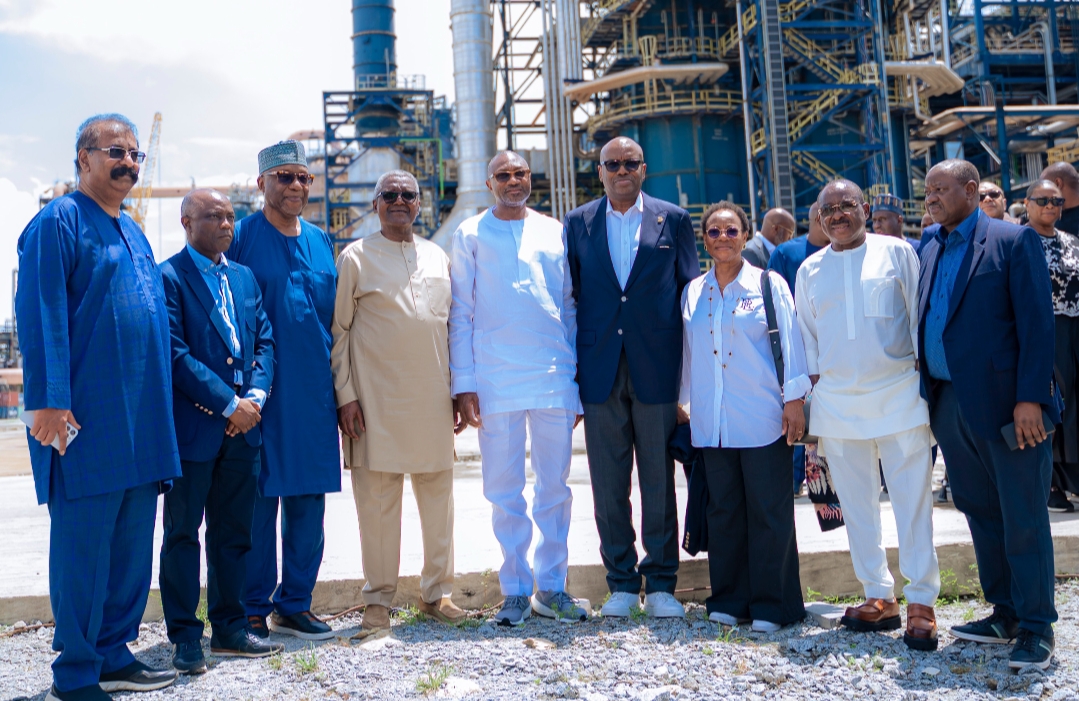
First HoldCo Group Companies’ Boards and Management teams visit Dangote Refinery
…All Nigerians will have access to the Refinery’s IPO and be part-owners-Dangote
Chairman of FirstHoldCo, Femi Otedola, has appealed to the President of Dangote Group, Aliko Dangote, to allocate $100 million worth of shares to him in the proposed listing of Dangote Petroleum Refinery & Petrochemicals. He disclosed that he divested his stake in Geregu Power Plc specifically to position himself for investment in the refinery’s initial public offering (IPO), which he described as a transformative industrial platform helping to free Africa from decades of reliance on imported petroleum products.
Otedola made these remarks during a visit by the FirstHoldCo leadership team to the 650,000 barrels-per-day refinery and Dangote Fertiliser Limited in Ibeju Lekki, Lagos, where he commended Dangote for building the world’s largest single-train refinery and accelerating Africa’s industrial transformation.
“He is a genius and one of the greatest men to emerge from Africa. What he has achieved is helping to liberate the continent from economic dependency and import reliance,” Otedola said. “I have visited this refinery more than 25 times, and I have consistently appealed for $100 million worth of shares during the private placement. That informed my decision to sell my stake in Geregu so I can reinvest in the Dangote Petroleum Refinery.”
Otedola also expressed strong confidence in the Group’s planned expansion of refining capacity to 1.4 million barrels per day, noting that Africa’s growing demand for refined petroleum products clearly supports further investment in domestic refining infrastructure.


In his remarks, President of Dangote Group, Aliko Dangote, assured that the refinery’s IPO would be broadly inclusive, enabling ordinary Nigerians to become part-owners and benefit from its value creation. He emphasised that the Group is committed to democratising access to investment opportunities by opening participation to retail investors across Nigeria and the African continent.
“We want ordinary Africans to participate in the value being created,” Dangote said. “What companies like Amazon and Apple achieved globally in terms of wealth creation is what we seek to replicate in Africa. We want people to invest, grow with us, and share in the prosperity.”
Dangote further disclosed plans for a proposed East Africa refinery with a projected capacity of 700,000 barrels per day, alongside polypropylene and base oil production facilities. According to him, the project could commence within the next three to four years once construction begins. He noted that the initiative was not originally captured in the Group’s Vision 2030 strategy, underscoring the company’s trajectory toward exceeding its long-term growth targets.
Chief Executive Officer of FirstBank Group, Olusegun Alebiosu, described the refinery as a symbol of vision, courage, and industrial ambition capable of inspiring similar investments across Africa.
“If you see this refinery and realise that an individual conceived and delivered a project of this magnitude, already helping to stabilise energy supply across Africa, you cannot help but be inspired,” Alebiosu said. “We have delegates here from the United Kingdom and several African countries who will return home with renewed commitment to building industries that can transform their economies. It is about building Africa together.”
Dangote also highlighted the Group’s sustained leadership across its core businesses over the past five years, including cement operations in 11 African countries, alongside significant investments in refining, petrochemicals, and fertiliser production. He noted that cement capacity has expanded to 55 million tonnes per annum, supported by the development of clinker export terminals to strengthen regional trade.
“We have built businesses that address Africa’s critical needs and create long-term value for the continent,” Dangote said. “Africa must stop exporting raw materials and importing finished goods. That amounts to exporting jobs and importing poverty.”
He added that investor appetite for the refinery’s listing on the Nigerian Exchange has remained exceptionally strong, with demand for the private placement already exceeding $2 billion.
“There is significant interest in both the IPO and the private placement,” he said. “While we are not able to meet all requests, the strong demand reflects investors’ confidence in the refinery and in Africa’s industrial future.”

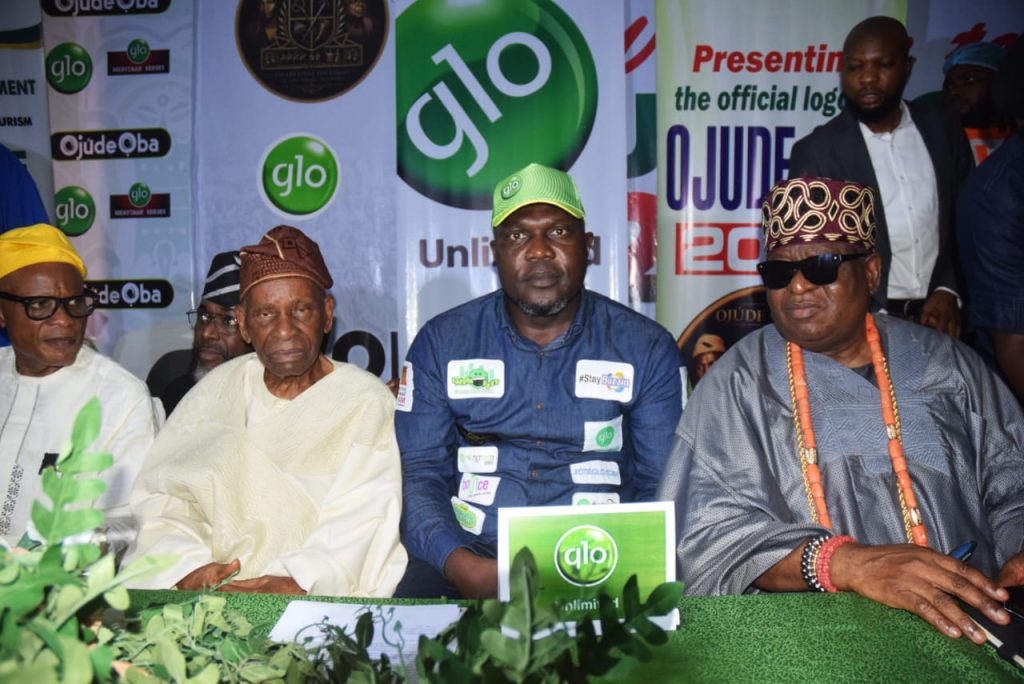
Globacom Marks 21 Years Of Ojude Oba Festival Sponsorship
Nigeria’s leading indigenous digital solutions company, Globacom, has reaffirmed its support for cultural preservation with the announcement of its headline sponsorship of the 2026 Ojude Oba Festival, marking 21 consecutive years of partnership with the people of Ijebuland.
Speaking at the festival’s pre-event press conference in Ijebu-Ode, Globacom’s representative, Mr. Olumide Orojimi, described the milestone as a testament to the company’s commitment to promoting culture, unity, and national identity.
“This edition represents a defining milestone for us,” he stated. “For twenty-one unbroken years, Globacom has walked this cultural journey with the people of Ijebuland.
“Beyond sponsorship, this partnership symbolises our deep respect for tradition, community, and the enduring spirit of our heritage.
“To commemorate this historic anniversary, we are committed to making this year’s celebration even more colourful, memorable, and impactful for Ijebu sons and daughters across the world.”
He noted that the company’s longstanding collaboration with the festival has helped enhance its profile as a globally recognised cultural and tourism event, adding that culture remains “the invisible architecture of a people’s soul.”
The 2026 edition, themed “Ojude Oba: Celebration of Culture Beyond Borders,” will also honour the legacy of the late Awujale of Ijebuland, Oba Sikiru Kayode Adetona, whose reign significantly shaped the festival’s growth and prominence.
Globacom disclosed that winners in the age-grade competitions will receive cash prizes of ₦750,000, ₦600,000, and ₦500,000 for first, second, and third places respectively. Festival attendees will also have access to a range of Globacom products and devices during the event.
In his remarks, the Coordinator of the Ojude Oba Festival Organising Committee, Chief Fassy Adetokunbo Yusuff, described Globacom as “the Pacesetter in the sponsorship of Ojude Oba” and commended the company for its unwavering support over the past 21 years.
Said he, ” this festival serves as a major catalyst for economic growth and commercial activities throughout Ijebuland, “as he gave kudos to Globacom for raising the bar of the event.
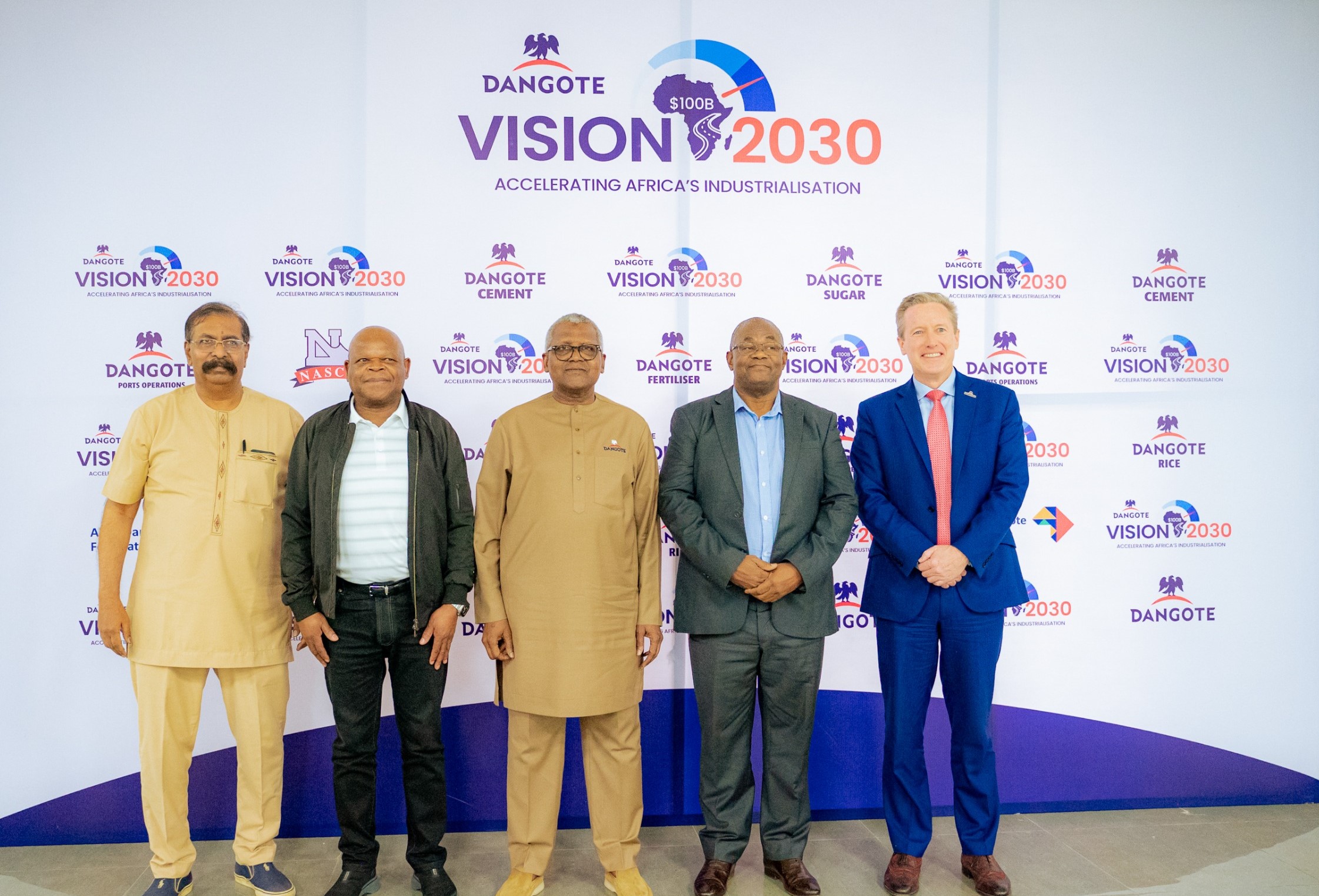
Refinery Listing Will Democratise Africa’s Industrial Prosperity – Dangote
… South African investors eye investment opportunities
President/Chief Executive, Dangote Group, Aliko Dangote, has said the planned listing of the Dangote Petroleum Refinery & Petrochemicals on the Nigerian Exchange is designed to democratise wealth creation and give Africans direct access to participate in the continent’s industrial transformation.
Dangote spoke during the visit of the leadership of South Africa’s Government Employees Pension Fund (GEPF), alongside the Public Investment Corporation and Alterra Capital Partners, to the Dangote Petroleum Refinery & Petrochemicals and Dangote Fertiliser Limited in Lagos. The South African delegation included Chairperson of GEPF, Frans Baleni; Principal Executive Officer of GEPF, Musa Mabesa; Deputy Chairperson of PIC, Mongwena Maluleke; Chief Executive Officer of PIC, Patrick Dlamini; and Managing Partner of Alterra Capital Partners, Genevieve Sangudi.
The visit comes amid rising investor interest in Africa-led industrialisation and long-term infrastructure investments. GEPF is Africa’s largest defined benefit pension fund, managing the retirement and associated benefits of more than 1.8 million public sector workers in South Africa, while PIC is the continent’s largest asset manager.
Speaking on the planned refinery listing, Dangote said Africa’s next phase of economic growth must be anchored on large-scale industrial projects capable of creating jobs, strengthening domestic production capacity and generating broad-based prosperity.
“We are opening the doors for investors to participate directly in Africa’s industrial future and the prosperity it will create,” Dangote said.
According to him, the refinery project reflects the scale of untapped opportunities within Africa’s energy market, particularly as most African countries remain dependent on imported refined petroleum products despite growing industrial demand and rising consumption.
Dangote said the Group’s long-term investment strategy is driven by Africa’s expanding energy needs and the urgent requirement for regional refining capacity capable of serving multiple markets across the continent.
The billionaire industrialist noted that demand for products such as polypropylene, aviation fuel and refined petroleum products has exceeded earlier projections, reinforcing the commercial viability of the refinery and shaping future expansion plans.
“We thought about Nigeria first and then exports, but even with our current production, we are practically living hand to mouth because the market demand is extremely high,” he said.
Speaking after the tour of the Dangote facilities in Ibeju-Lekki, the Chairperson of GEPF, Frans Baleni, said that the refinery stands as evidence that Africa can execute transformational infrastructure projects when backed by visionary leadership, long-term investment and strong technical expertise.
“If it can be done anywhere else in the world, it can be done in Africa,” he said. “This project has shown that the continent is capable of achieving world-class industrialisation at scale.”
Baleni added that the significance of the project extends well beyond Nigeria’s borders. “What has been built here is reshaping how the world should think about African industrial capability — and it should reshape how Africa thinks about itself. For too long, projects of this magnitude have been associated with other parts of the world. The Dangote Refinery and Petrochemicals Complex is a powerful demonstration that, with visionary leadership and long-term capital, that perception no longer holds. This is the kind of African-led industrial scale that institutional investors on this continent should be backing.”
On his part, Chief Executive Officer of PIC, Patrick Dlamini, described the refinery as one of the most transformative industrial projects undertaken on the continent, saying it is reshaping global perceptions about Africa’s industrial capabilities and economic potential.
Quoting former South African President Nelson Mandela, Dlamini said: “It always looks impossible until it’s done. This project is redefining the story of Africa and the possibilities of Africa.”
He said PIC, which manages about $230 billion in assets largely on behalf of South Africa’s Government Employees Pension Fund, is actively seeking long-term partnerships aligned with infrastructure development, industrialisation and economic transformation across Africa.
“PIC’s mandate is to deploy long-term, patient capital in service of industrialisation, infrastructure and economic transformation across Africa,” Dlamini said. “What we have seen today reinforces our conviction that the next chapter of African prosperity will be written through partnership between African institutional capital and African industrial champions. There is real strategic alignment between Dangote’s industrial agenda and how we are positioning our portfolio, and we look forward to exploring meaningful avenues for collaboration.”
According to him, poverty, unemployment and economic exclusion remain major drivers of instability across Africa, making industrialisation and large-scale job creation critical to the continent’s long-term development.


- Strengthening Zambia’s Readiness for Health Emergencies: From Surveillance to Pandemic Preparedness May 21, 2026
- Economic Community of West African States (ECOWAS) Strengthens Regional Integration Through Cross-Border Cooperation Stakeholders’ Meeting in Abuja, Nigeria May 21, 2026
- Senegal Retains Title as Overall Champion at ECOWAS African Wrestling Tournament (TOLAC 14) May 21, 2026
- Eritrea: Diaspora Nationals Celebrate Independence Day Anniversary May 21, 2026
- Seychelles: President Herminie Visits District Administration Office and Library on La Digue May 21, 2026
- Egypt: President El-Sisi Meets Tunisian Minister Mohamed Ali Nafti May 21, 2026
- Joint statement welcoming the Republic of Togo’s announcement on Visa facilitation for African nationals May 21, 2026
- Advancing Regional Political Commitment and Cross Border Coordination for Ebola Preparedness and Response May 21, 2026
- Morocco: African Development Bank commits €200 Million to boost employability and develop future skills May 21, 2026
- Société Nationale des Pétroles du Congo (SNPC) Targets Global Operator Status as African Energy Chamber (AEC) Engagement Reinforces Congo’s Energy Ambitions May 21, 2026
- Strengthening Zambia’s Readiness for Health Emergencies: From Surveillance to Pandemic Preparedness May 21, 2026
- Economic Community of West African States (ECOWAS) Strengthens Regional Integration Through Cross-Border Cooperation Stakeholders’ Meeting in Abuja, Nigeria May 21, 2026
- Senegal Retains Title as Overall Champion at ECOWAS African Wrestling Tournament (TOLAC 14) May 21, 2026
- Eritrea: Diaspora Nationals Celebrate Independence Day Anniversary May 21, 2026
- Seychelles: President Herminie Visits District Administration Office and Library on La Digue May 21, 2026
- Egypt: President El-Sisi Meets Tunisian Minister Mohamed Ali Nafti May 21, 2026
- Joint statement welcoming the Republic of Togo’s announcement on Visa facilitation for African nationals May 21, 2026
-

 news5 months ago
WHO REALLY OWNS MONIEPOINT? The $290 Million Deal That Sold Nigeria’s Top Fintech to Foreign Interests
-

 society3 weeks ago
SOCIAL MEDIA IS NOT A BATTLEFIELD COMMAND – WHY THE NIGERIAN ARMY’S ACTION AGAINST JUSTICE CRACK IS A NATIONAL SECURITY IMPERATIVE
-

 celebrity radar - gossips4 months ago
Dr. Chris Okafor Returns with Power and Fire of the Spirit -Mounts Grace Nation Altar with Fresh Anointing and Restoration Grace on February 1, 2026
-

 celebrity radar - gossips5 months ago
Prophet Kingsley Aitafo Releases 2026 Prophecy: ‘Nigeria Will Rise, but the World Must Prepare for Turbulence’