
celebrity radar - gossips
How Delta State Attorney General aided release of suspected criminals, kidnappers arrested by Police – Gbagi

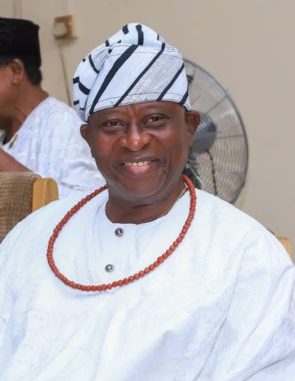
Former Minister of State for Education, Olorogun Kenneth Gbagi, has accused the Delta State Attorney General, Peter Mrakpor, of using his office to secure the release of suspected notorious kidnappers, assassins already apprehended by the police in Delta State.
The allegation was contained in a petition dated 5th October, 2020, and addressed to the Secretary, Legal Practitioners Privileges Committee, Supreme Court of Nigeria.
According to Gbagi, the Attorney General through a Nolle Prosecui – No case submission – was alleged to have released a total of 150 criminals in the custody of the Police after receiving various sums of money.
The former Minister also alleged in the petition that the Attorney General had severally used his Law firm to defend the notorious criminals, thereby acting in dual capacity as the prosecuting counsel and defence counsel.
Lamenting the release of the suspects, Gbagi added that the Attorney General’s action was largely responsible for the rise in crime across Delta State, and the collapse of its economic and social life.
“My attention has been drawn to your Notice/Press Release of 24th day of September, 2020. It is on that premise that I write to intimate you on the unprecedented display of impunity, corruption and administrative rascality by Barr. Peter Mrakpor, the Delta State Attorney-General.
“While it is not in doubt that, the powers granted to the Attorney General of the state by section 211 of the Constitution of the Federal Republic of Nigeria 1999 as amended are not without limits, such powers must be exercised in line with the overall good of the public.
“It is however my utmost dismay to discover that the A. G of Delta State aforementioned has colluded and connived with Armed Robbers, murderers, assassins and kidnappers on numerous occasions to terrorize the entire Delta State populace.
“As written and published in ECONOMIC CONFIDENTIAL of May 4, 2020 in an article titled “a cry for help; why Federal Government must intervene to rescue Delta State from Kidnappers” by Omatsola Tosan, an activist, between 2015 and 2020 Peter Mrakpor is alleged to have relied on Nolle Prosequi to effect the release of 150 suspected criminals apprehended for serious crimes ranging from murder to kidnapping. The number remains the highest in Nigeria as a whole.
“It is a fact on record that the Delta State Attorney General has released armed robbers, kidnappers, assassins, murderers with the use of his powers conferred by the constitution for sums of money ranging from N2,000,000 (Two Million Naira) to N30,000,000 (Thirty Million Naira) depending on the gravity of the offence. The said article is herein attached and marked as Annexure I.
“In the case of State V Stella Odozi which was pending at the High Court Umunede Delta State before Hon. Justice Celestina Dafe, a group of hardened armed robbers who had been terrorizing the community, killing several persons and carting away valuable properties met their waterloo and were apprehended by the Police and eventually arraigned in court.
“Upon arraignment, the Delta State Attorney-General upon receipt of an undisclosed amount of money wrote an opinion stating that these hardened criminals who were well known as such had no case to answer thereby exonerating them.
“This was particularly troubling as several of the culprits had confessed to various crimes in their statements to the Police. Despite the above, the Attorney-General (Peter Mrakpor) instructed their release.
“Their release did not go down well with the complainant in that case who wrote a petition as to why the culprits cannot be left unpunished.
“It was on this premise that the same Delta State Attorney-General (Peter Mrakpor) turned, somersaulted and wrote another opinion stating that the suspects had a case to answer.
“Unfortunately, the suspects had been released and absconded. All efforts by the Police to apprehend these criminals thereafter proved abortive till date.
“It is a notorious fact that Delta State as result of the acts of Peter Mrakpor with regards to his association with criminals has lost its glory as investors have left the state and everybody going about sleeping with one eye open.
“This is the reason for the collapse in the economic and social life in Delta State as evident to the world hence my interest as the most prominent investor in the State.
“Mrakpo uses his Law firm to defend these notorious criminals thereby acting in dual capacity as the prosecuting counsel and defence counsel,” Gbagi said.
Signed:
Gbagi Media Office




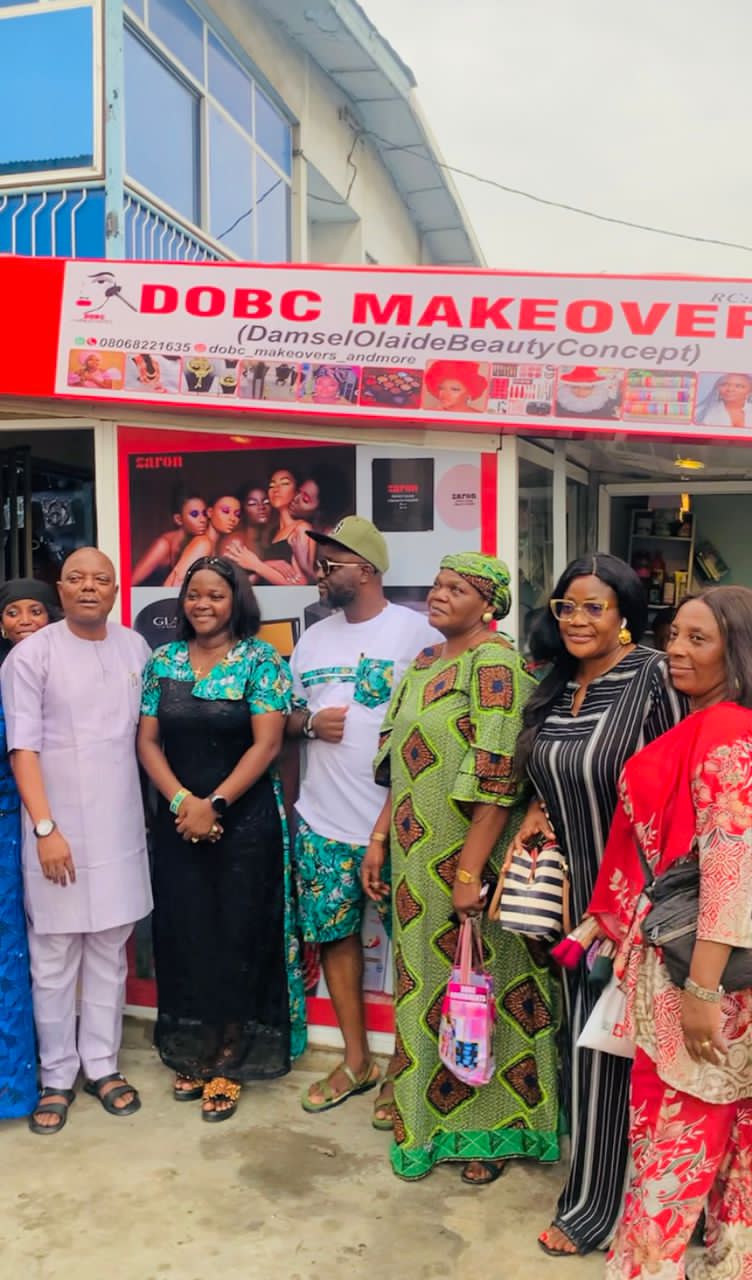
Beauty Meets Glamour as Olaide Ogunyemi Opens New Studio in Mushin
Popular Nollywood actress and professional makeup artiste, Olaide Ogunyemi Oluwayemisi aka Damilola, has expanded her footprint in the beauty industry with the grand opening of her new makeup studio in Lagos.
The talented thespian, who is also the Chief Executive Officer of @Dobc_makeovers_andmore, officially unveiled the ultra-modern beauty space last Thursday, April 2, 2026, in a colourful ceremony filled with glamour, fashion, and pageantry.
Strategically located at 101 Palm Avenue, right beside FitPlus and Sparklight Hospital in Mushin area of Lagos, the new studio is designed to offer top-notch beauty services, reflecting Ogunyemi’s commitment to excellence and professionalism in the ever-growing makeup industry.
The opening ceremony attracted friends, colleagues from the Nollywood industry, beauty enthusiasts, and well-wishers who came out in large numbers to celebrate the entrepreneur’s latest milestone. Guests were treated to a vibrant atmosphere that showcased creativity, style, and the evolving standards of the beauty business in Lagos.
Speaking at the event, Ogunyemi expressed her excitement and gratitude, noting that the new studio represents years of hard work, dedication, and passion for her craft. She reaffirmed her commitment to delivering premium beauty services while empowering aspiring makeup artistes.
The launch of the studio further cements her reputation as a dynamic force, successfully blending her career in Nollywood with a thriving beauty brand.
With this latest development, Olaide Damilola Ogunyemi continues to inspire many young entrepreneurs, proving that talent, consistency, and vision remain key drivers of success in Nigeria’s creative and business landscape.


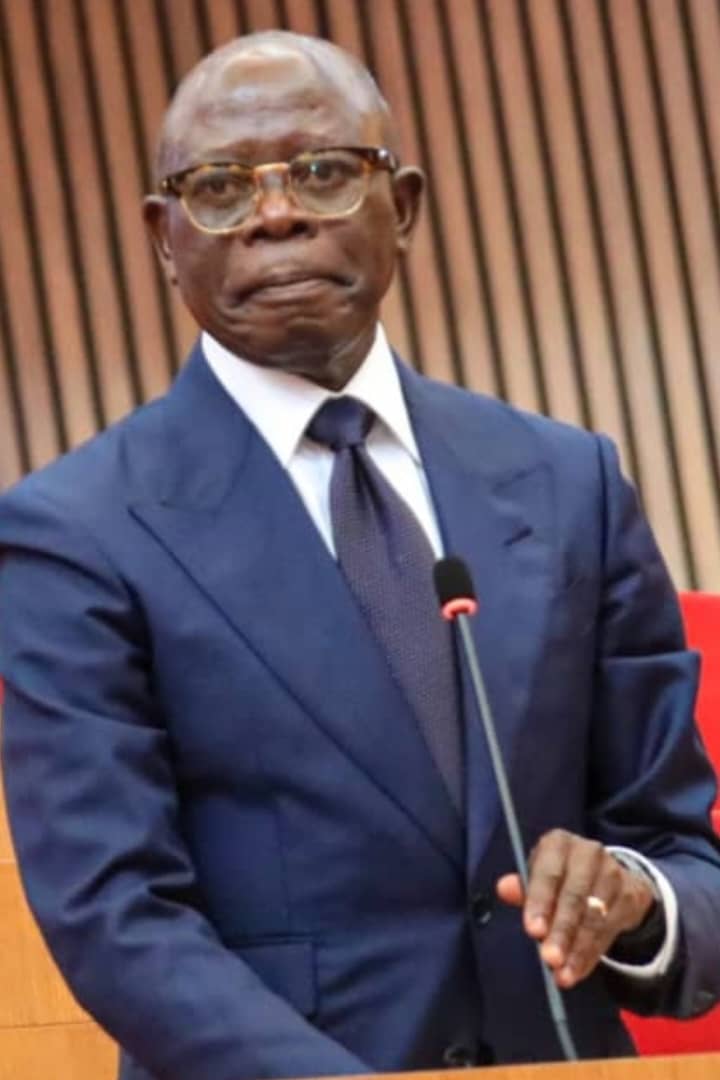
Daniel Eromosele Eulogize Adams Oshiomole as he turns 74 years
Today, I celebrate an exceptional leader, a fearless voice for the people, and a man whose life has remained a symbol of courage, sacrifice, and unwavering commitment to justice—Distinguished Comrade Senator Adams Aliu Oshiomhole.

Your journey has been nothing short of inspiring. From your days as a vibrant labour leader to your impactful tenure as the Executive Governor of Edo State, and now as a respected Senator of the Federal Republic, you have consistently demonstrated what it means to serve with integrity, strength, and purpose. Your contributions to the growth of our nation and the development of Edo State remain indelible and deeply appreciated.
You have not only built structures and institutions but have also built people. I am personally a beneficiary of your leadership, your guidance, and your belief in empowering others. Your influence in my life has been profound, and I remain grateful for the opportunities and inspiration you have given me.
On this special day, I celebrate not just your achievements, but the man you are—resilient, principled, and ever committed to the progress of Nigeria and her people.

May this new year bring you renewed strength, greater wisdom, good health, and more remarkable accomplishments. May your legacy continue to shine brighter with each passing year.
Happy Birthday, sir. Wishing you many more fruitful and impactful years ahead.
celebrity radar - gossips
Accolades to Empress Genevieve Wining as she Celebrate birthday in Grand style

Accolades to Empress Genevieve Wining as she Celebrate birthday in Grand style
Emmanuel Clement
Vilnius, Lithuania – The Grand Hotel Vilnius will host a grand birthday celebration in honor of Her Majesty The Empress Genevieve Wining of the United Kingdom of Atlantis (UKA) on April 4th, 2026.
The four-day event promises to be an extravagant affair, marking the special birthday of Empress Genevieve Wining. The celebration will take place at the prestigious Grand Hotel Vilnius, Lithuania, renowned for its luxurious ambiance and exceptional service.

According to the event flyer, the birthday celebration will be a spectacular occasion, fitting for an empress. Guests can expect an elegant setting adorned with golden accents, sparkling champagne, and festive decorations, creating a regal atmosphere befitting the occasion.
The Empress Genevieve Wining of UKA is expected to grace the event, which will include various festivities and celebrations in her honor. The occasion aims to bring together dignitaries, followers, and guests to commemorate the empress’s birthday with grandeur and joy.
For media inquiries, accreditation, or further information about the birthday celebration of The Empress Genevieve Wining of UKA, please contact the event organizers.
Courtesy of His Excellency Emperor Prof. Solomon Wining. UKA


- United States (U.S.) and Mozambique Advance Cooperation on Emergency Response and Safety April 6, 2026
- The Impacts of the Middle East Conflict on Africa April 6, 2026
- Ghana: President Mahama announces a high-level panel of the Accra Reset April 6, 2026
- Ghana: President Mahama reiterates his determination to build more businesses April 6, 2026
- Mauritius accelerates energy transition with renewable projects of 405 MW April 6, 2026
- Africa Centres for Disease Control and Prevention (Africa CDC) Appoints His Excellency Prof. Yemi Osinbajo as Senior Strategic Advisor to the Director General April 6, 2026
- 2026 Easter Message by the President of the Catholic Bishops’ Conference of Nigeria (CBCN): The Dawn is Coming, Don’t Let Go Now, Hold on to Hope! April 5, 2026
- "A Time to Pause and Begin Again”: President Dr Patrick Herminie reflects in Easter message April 5, 2026
- President Dr. Patrick Herminie Pays Tribute to the Late Seychellois Artist David Philoe April 5, 2026
- Ghana identifies priority areas to strengthen cholera prevention and control April 5, 2026
- United States (U.S.) and Mozambique Advance Cooperation on Emergency Response and Safety April 6, 2026
- The Impacts of the Middle East Conflict on Africa April 6, 2026
- Ghana: President Mahama announces a high-level panel of the Accra Reset April 6, 2026
- Ghana: President Mahama reiterates his determination to build more businesses April 6, 2026
- Mauritius accelerates energy transition with renewable projects of 405 MW April 6, 2026
- Africa Centres for Disease Control and Prevention (Africa CDC) Appoints His Excellency Prof. Yemi Osinbajo as Senior Strategic Advisor to the Director General April 6, 2026
- 2026 Easter Message by the President of the Catholic Bishops’ Conference of Nigeria (CBCN): The Dawn is Coming, Don’t Let Go Now, Hold on to Hope! April 5, 2026
-

 society7 months ago
Religion: Africa’s Oldest Weapon of Enslavement and the Forgotten Truth
-

 news4 months ago
WHO REALLY OWNS MONIEPOINT? The $290 Million Deal That Sold Nigeria’s Top Fintech to Foreign Interests
-

 society6 months ago
“You Are Never Without Help” – Pastor Gebhardt Berndt Inspires Hope Through Empower Church (Video)
-

 celebrity radar - gossips2 months ago
Dr. Chris Okafor Returns with Power and Fire of the Spirit -Mounts Grace Nation Altar with Fresh Anointing and Restoration Grace on February 1, 2026