
Business
How Not to Defame a Saint: Gbenga Komolafe’s Unblemished Record in the Nigerian Oil Sector

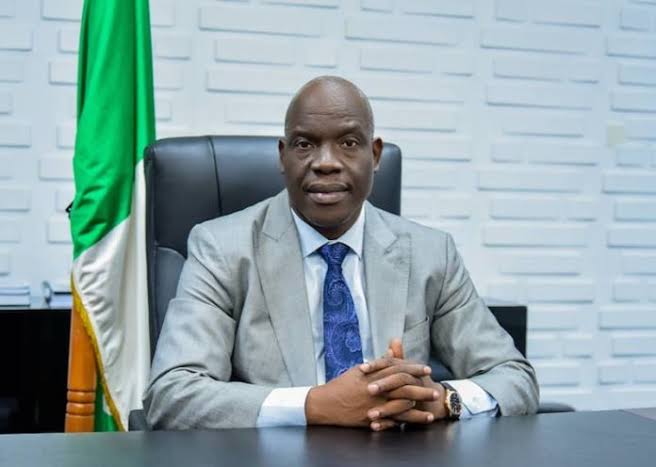
How Not to Defame a Saint: Gbenga Komolafe’s Unblemished Record in the Nigerian Oil Sector*
By Benedict Aguele
In the age of instant narratives and social media-driven outrage, few things are as dangerous as unverified allegations leveled against competent public servants. Engr. Gbenga Komolafe, former Chief Executive of the Nigerian Upstream Petroleum Regulatory Commission (NUPRC), has recently been subjected to a torrent of claims alleging corruption, asset manipulation, and revenue concealment. Yet, a careful examination of the facts reveals that these allegations are not only unfounded but also reflect a troubling pattern of targeting individuals who are effective reformers in Nigeria’s critical oil and gas sector.
Komolafe’s tenure at the NUPRC coincided with a transformative period in the Nigerian petroleum industry. The Petroleum Industry Act (PIA), signed into law in 2021, established a robust legal framework for regulating upstream operations, enhancing transparency, and modernizing revenue management. As CEO, Komolafe applied his extensive knowledge of petroleum law and regulatory best practices to ensure that the agency fulfilled its statutory mandate. His focus on compliance, due process, and legal integrity naturally ruffled the feathers of individuals accustomed to the old ways of doing business, and it is within this context that the recent allegations must be understood.
One of the most striking aspects of the claims against Komolafe is their audacious scope. Petitioners have accused him of controlling dozens of bank accounts, concealing billions in oil and gas revenues, and orchestrating the unlawful reduction of multiple oil mining leases. Verified records, however, demonstrate that Komolafe maintains only two bank accounts. There is no evidence to suggest that these accounts were used for illicit purposes. Such inaccuracies underscore a fundamental flaw in the allegations: they are based on conjecture and selective interpretation rather than documented proof.
It is also important to consider the behavior of the petitioner, who initially approached the Director-General of the Department of State Services (DSS) to request an investigation. Once scrutiny began, he went underground, apparently seeking a settlement that never materialized. This pattern strongly suggests that the allegations were motivated more by personal gain or retaliation than by genuine concern for regulatory compliance. Komolafe, on his part, did not kowtow to these pressures, choosing instead to operate transparently and within the bounds of the law.
Throughout his tenure, Komolafe emphasized regulatory integrity, transparency, and accountability. Any suggestion that he could single-handedly manipulate Nigeria’s upstream assets without detection ignores the complex checks and balances embedded in the PIA framework. These include multi-agency oversight, audits by the Nigerian Extractive Industries Transparency Initiative (NEITI), monitoring by the Ministry of Petroleum Resources, and scrutiny by international partners. Claims that billions were “concealed” or that strategic oil and gas assets were mismanaged do not withstand scrutiny when the systemic regulatory and institutional safeguards are considered.
*Facts Over Fiction: Debunking Misleading Claims*
Another central allegation pertains to Oil Prospecting Licence (OPL) 227 and its supposed conversion to OML 146, allegedly reducing the acreage drastically. Here again, the claims misrepresent both the law and the operational reality. Regulatory approval processes under the PIA require thorough documentation, technical verification, and alignment with existing lease agreements. Any lawful conversion or adjustment is subject to board approval, ministerial ratification, and public disclosure. Komolafe’s involvement in overseeing these processes was purely administrative and statutory, consistent with his legal obligations as the NUPRC chief executive. There is no evidence of personal enrichment or unlawful action.
Similar accusations were made regarding OMLs 33, 46, and 74, purportedly reduced without proper justification. However, independent assessments reveal that all regulatory decisions during Komolafe’s tenure were conducted under the established legal framework. Assertions that portions of these leases were misappropriated or that revenues were diverted are not supported by verifiable documents or audits. They reflect a narrative constructed for maximum sensational impact rather than a factual account.
Equally misleading are claims about the operation of Sterling Exploration and Energy Production Company (SEEPCO) and alleged underreporting of wells. While SEEPCO’s operations are indeed licensed, any discrepancies in reporting fall under the remit of multiple regulatory bodies, and there is no evidence that Komolafe personally facilitated any illicit operations. The insinuation that he orchestrated financial opacity or laundered proceeds through multiple bank accounts is categorically false and inconsistent with both public records and his documented professional conduct.
*Preserving Integrity and Justice*
Komolafe’s career exemplifies the highest standards of public service. His commitment to legal compliance, transparency, and institutional reform was evident in every decision taken at the NUPRC. Allegations rooted in hearsay, unverified documents, or personal vendettas not only threaten his reputation but also undermine broader governance reforms. When reformers are targeted without due process, it signals to the nation’s bureaucracy and private sector that compliance, professionalism, and integrity may be punished rather than rewarded.
It is also essential to consider the principle of proportionality in accountability. Public servants must be evaluated on the basis of evidence, not conjecture or political expediency. Komolafe’s resignation from office should be viewed within the normal course of administrative transition, not as an admission of guilt. He acted within his statutory powers, and there is no credible evidence linking him to corruption or fraudulent manipulation of assets.
Civil society organizations, media professionals, and regulatory stakeholders must recognize the dangers of perpetuating unverified claims. While oversight and accountability are non-negotiable in a democratic system, the deployment of inflammatory allegations without substantiation amounts to character assassination. Nigeria’s petroleum sector, already complex and strategically critical, cannot afford the destabilizing effects of misinformation and false narratives.
In this context, Komolafe’s example is instructive. He navigated an era of major reform, applying his expertise to safeguard national interests while maintaining professional integrity. His conduct demonstrates that effective regulatory leadership is possible without succumbing to personal enrichment, nepotism, or corruption.
The path forward for Nigeria’s extractive industry lies in institutional strengthening, transparency, and evidence-based oversight. Petitions and claims should be rigorously investigated, but the presumption of innocence must be maintained. Komolafe’s record should remind policymakers, journalists, and civic actors alike that constructive reformers are assets to the nation, not targets for defamatory campaigns.
In conclusion, Engr. Gbenga Komolafe’s tenure as NUPRC chief executive reflects dedication, legality, and reformist zeal. To defame a public servant without evidence is not only unfair to the individual but detrimental to national development.
Aguele is a member, governing council Maritime University Oron.





Fidelity Bank grows gross earnings by 38% to N434.95b in Q1
Fidelity Bank Plc recorded 37.9 per cent growth in gross earnings to N434.95 billion in first quarter 2026 as the international commercial bank continued to expand its core banking market share.
Interim report and accounts of Fidelity Bank for the three months ended March 31, 2026 released at the Nigerian Exchange (NGX) showed that gross earnings rose from N315.42 billion in first quarter 20025 to N434.95 billion in first quarter 2026, representing an increase of 37.9 per cent.
The top-line performance was driven by impressive growth in the bank’s core business operations with interest incomes rising by 22.8 per cent to N314.48 billion in first quarter 2026 as against N256.10 billion in first quarter 2025.
With net interest income at N180.97 billion, the bank closed the period with profit before tax of N92.48 billion. After taxes, net profit stood at N74.47 billion for the three-month period. Earnings per share remained high at N5.69, underlining the capacity of the bank to reward its shareholders.
The balance sheet of the bank also emerged stronger. Total assets crossed the N11 trillion mark to N11.35 trillion by March 2026 compared with N10.46 trillion recorded in December 2025. Customers’ deposits increased from N6.89 trillion to N7.38 trillion. Total equity rode on the back of earnings growth to a 27.5 per cent increase from N1.09 trillion in December 2025 to N1.39 trillion by March 2026.
The first quarter 2026 results further consolidated the strong earnings outlook of the bank, which had successfully completed its recapitalisation amidst impressive earnings performance in 2025.
Fidelity Bank had recorded double-digit growths in interest and non-interest incomes as well as key balance sheet items during the year ended December 31, 2025.
The audited report showed that gross earnings rose from N1.04 trillion in 2024 to N1.52 trillion in 2025, an increase of 45.6 per cent. Interest and similar incomes had grown by 38.7 per cent from N803.1 billion in 2024 to N1.11 trillion in 2025. Fees and commission incomes also rose by 44.7 per cent from N78.4 billion to N113.4 billion. The bank recorded net profit after tax of N242.4 billion in 2025.
The bank’s balance sheet emerged stronger with total assets rising by 18.6 per cent to N10.46 trillion in 2025 as against N8.82 trillion in 2024. Customer deposits increased by 16.1 per cent from N5.94 trillion to N6.89 trillion, reflecting continued franchise strength and an improved funding profile. Net loans and advances meanwhile declined by 2.4 per cent to N4.28 trillion in 2025 as against N4.39 trillion in 2024, attributable to customers paying down on their mature obligations.
The bank had in 2025 strengthened its capital position, with eligible capital rising to N561 billion, above the regulatory minimum of N500 billion for banks with international authorisation. In addition, capital adequacy had remained robust, with Capital Adequacy Ratio of 30.94 per cent by December 2025 as against 23.47 per cent by December 2024.
Managing Director, Fidelity Bank Plc, Dr. Nneka Onyeali-Ikpe, said the first quarter 2026 results reinforced the bank’s strong and resilient business model.
She noted that with the remarkable success of its recapitalisation programme and continuing expansion, Fidelity Bank has entered a new era of growth and impressive returns.
“We are on a stronger footing and confident that we will set new growth records that are reflective of our legacy and the future we are working on,” Onyeali-Ikpe said.
Business
Dangote Refinery Ends Nigeria’s Era of Fuel Import Dependence, Boosts GDP, FX Earnings — EIU
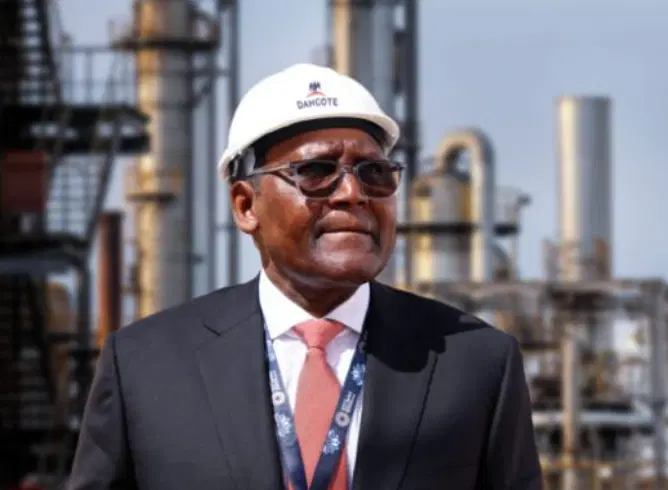
Dangote Refinery Ends Nigeria’s Era of Fuel Import Dependence, Boosts GDP, FX Earnings — EIU
The operational ramp up of the 650,000 barrels per day Dangote Petroleum Refinery & Petrochemicals is fundamentally reshaping Nigeria’s downstream oil sector, significantly reducing the country’s dependence on imported refined petroleum products and strengthening its external position, according to the Economist Intelligence Unit (EIU).
In its latest assessment on Nigeria’s fuel market and regulatory environment, the EIU said the refinery has already transformed a sector that was previously characterised by heavy reliance on imported fuel despite Nigeria being Africa’s largest crude oil producer. The report noted that the refinery met nearly 80 per cent of domestic petrol demand in April and produced enough volumes to satisfy local consumption requirements as operations approached full capacity.
The EIU described Nigeria’s downstream petroleum sector before the refinery as “long dysfunctional”, noting that the country had remained almost entirely dependent on costly imported fuel while producing nearly 1.5 million barrels of crude oil daily.
According to the report, the emergence of the refinery has reduced import dependence, improved domestic fuel availability and strengthened Nigeria’s balance of payments position through lower import demand and rising exports of refined petroleum products.
“The gradual ramp up of the 650,000 barrel/day Dangote refinery since May 2023 has transformed Nigeria’s long dysfunctional downstream sector,” the report stated. “The country’s main refineries, all state owned, had been inoperative for years and Nigeria was almost entirely reliant on costly imported fuel.”
The research and analysis division of The Economist Group, London added that the refinery’s attainment of full operational capacity and its planned expansion would further support Nigeria’s economic growth and foreign exchange earnings over the medium term.
“Meanwhile, the attainment of full capacity at, and an increase in exports from, the Dangote refinery will support real GDP growth and foreign exchange earnings in 2026 and 2027 and beyond, as a planned doubling of the plant’s output comes on stream around the end of the decade,” it added.
Industry analysts said the refinery is increasingly positioning Nigeria as an emerging refining and export hub, altering energy trade flows across Africa and reducing the vulnerability associated with fuel import dependence.
The EIU noted that the refinery’s expansion has coincided with major reforms in Nigeria’s downstream sector, including the removal of fuel subsidies and the introduction of market driven pricing mechanisms.
The report, however, said the transition from a state dominated fuel import structure to large scale domestic refining has triggered resistance from interests linked to the old import regime.
The latest tensions emerged following the decision by the Nigerian Midstream and Downstream Petroleum Regulatory Authority to relax restrictions on petrol imports despite the refinery’s growing capacity to meet domestic demand.
Dangote Industries subsequently initiated legal action, arguing that continued import approvals undermine domestic refining investments and conflict with the objectives of the Petroleum Industry Act, which seeks to encourage local refining capacity and reduce import dependence.
Analysts noted that the availability of large-scale domestic refining capacity has improved Nigeria’s energy security and reduced exposure to external supply shocks and foreign exchange volatility.
The Centre for the Promotion of Private Enterprise also cautioned against unrestrained importation of petroleum products, warning that such a policy could weaken Nigeria’s industrialisation drive and discourage investments in domestic refining.
Chief Executive Officer of CPPE, Muda Yusuf, said continued dependence on imported fuel had historically contributed to pressure on foreign reserves, exchange rate instability and fiscal leakages.
The refinery’s growing impact is also being reflected in Nigeria’s broader macroeconomic indicators. Earlier this month, S&P Global Ratings cited increased domestic refining capacity and rising hydrocarbon exports among the major factors supporting Nigeria’s sovereign credit rating upgrade – the first in 14 years.
Beyond Nigeria, analysts said the refinery is increasingly being viewed as a strategic industrial asset for Africa, where many countries remain heavily dependent on imported fuel despite rising demand for transportation, manufacturing, and power generation.
Business
BREAKING: Court Dismisses $19.6 Million Claim Against NNPCL — Rules Contract Scope Cannot Be Changed Orally
BREAKING: Court Dismisses $19.6 Million Claim Against NNPCL — Rules Contract Scope Cannot Be Changed Orally
In a landmark ruling on Friday, May 22, 2026, the Federal Capital Territory High Court in Abuja threw out a $19.6 million lawsuit filed by Alternate Dimensions Ventures Ltd against the Nigerian National Petroleum Company Limited (NNPCL), affirming a key legal principle: a written contract cannot be expanded through oral agreements or conduct.
Alternate Dimensions had sought $19,600,000 in professional fees, claiming the scope of its Direct Sale, Direct Purchase (DSDP e-pro) contract with NNPCL was orally expanded. Represented by counsel Patrick Peter, the firm argued it was entitled to the revised sum for services rendered under the alleged new terms.
But NNPCL, through its lawyer Ituah Imhanze of KENNA LP, pushed back sharply, arguing that parties are bound exclusively by the clear terms of their written agreement. Imhanze contended that without any written amendment, the claim was legally unsound, and the court agreed.
Delivering judgment, Justice Hamza Mu’azu upheld NNPCL’s defense, stating that the contract was unambiguous and that no evidence was adduced during the trial, which supported the alleged scope expansion. The court further found that NNPCL fully complied with all contractual terms and committed no breach.
Dismissing the suit as meritless, Justice Mu’azu reinforced the doctrine of sanctity of contract: any amendment to a written agreement must be express, unequivocal, and documented, not implied or verbal.
The ruling spares NNPCL from the S19.6 million claim and also a floodgate of similar potential liabilities.


- CANAL+ lists on the Johannesburg Stock Exchange (JSE), strengthening the Group’s dual-continental approach and reinforcing South Africa’s (SA) role as a gateway to global capital and African growth June 3, 2026
- African Mining Week (AMW) Country Focus to Spotlight Liberia’s Iron Ore, Gold and Critical Minerals Prospects June 3, 2026
- Venezuela to Host Its Largest-Ever International Energy Investment Summit June 3, 2026
- Canada–Africa Business Conference Preparations Advance Following Canadian Secretary of State’s High-Level Visit to Nigeria June 3, 2026
- Uganda: Parliament concludes vetting of ministers June 2, 2026
- Fund for Export Development in Africa (FEDA) Board Appoints Mr. Emmanuel Assiak as Chief Executive Officer June 2, 2026
- Ecobank Group Launches World First Nature Bond Mobilising Global Capital to Protect Africa’s Natural Ecosystems June 2, 2026
- Merck Foundation Chief Executive Officer (CEO) Dr. Rasha Kelej together with Kenya First Lady support the education of 47 Kenyan Schoolgirls by providing Annual Scholarships till they Graduate June 2, 2026
- Annual Meetings 2026: Governors Back the Bank’s Platform Solutions to Transform Aviation and Health Systems in Africa June 2, 2026
- ThinkMarkets launches ChelseaAI, bringing live CFD trading into Artificial Intelligence (AI) assistants June 2, 2026
- CANAL+ lists on the Johannesburg Stock Exchange (JSE), strengthening the Group’s dual-continental approach and reinforcing South Africa’s (SA) role as a gateway to global capital and African growth June 3, 2026
- African Mining Week (AMW) Country Focus to Spotlight Liberia’s Iron Ore, Gold and Critical Minerals Prospects June 3, 2026
- Venezuela to Host Its Largest-Ever International Energy Investment Summit June 3, 2026
- Canada–Africa Business Conference Preparations Advance Following Canadian Secretary of State’s High-Level Visit to Nigeria June 3, 2026
- Uganda: Parliament concludes vetting of ministers June 2, 2026
- Fund for Export Development in Africa (FEDA) Board Appoints Mr. Emmanuel Assiak as Chief Executive Officer June 2, 2026
- Ecobank Group Launches World First Nature Bond Mobilising Global Capital to Protect Africa’s Natural Ecosystems June 2, 2026
-

 news6 months ago
WHO REALLY OWNS MONIEPOINT? The $290 Million Deal That Sold Nigeria’s Top Fintech to Foreign Interests
-

 society1 month ago
SOCIAL MEDIA IS NOT A BATTLEFIELD COMMAND – WHY THE NIGERIAN ARMY’S ACTION AGAINST JUSTICE CRACK IS A NATIONAL SECURITY IMPERATIVE
-

 celebrity radar - gossips4 months ago
Dr. Chris Okafor Returns with Power and Fire of the Spirit -Mounts Grace Nation Altar with Fresh Anointing and Restoration Grace on February 1, 2026
-

 celebrity radar - gossips6 months ago
Prophet Kingsley Aitafo Releases 2026 Prophecy: ‘Nigeria Will Rise, but the World Must Prepare for Turbulence’