
Business
How Prophet TB Joshua Transformed Paraguayan Teenager from Homosexuality




It was great awe and shock as Popular Prophet, TB Joshua during his just concluded crusade in Paraguay, delivered an individual Antionio Caceres, Born a man, lived his entire adult life as a woman. His clothing was female. His mannerisms were female. His style of speech was female. The only connection to ‘males’ he had were the clients who paid for his nocturnal services as a professional prostitute on the streets of Lambare, Paraguay.
Here is the incredible story, told in his own words, of his transformation back to the original position in which God created him:
Antonio was just seven years old when he first realised a growing affection for the males in his classroom. He tried to shelve the nauseating urge by playing sports and engaging in predominantly ‘masculine’ activities. But the young boy soon began stealing his sister’s underwear and wearing it at whim, buoyed by a strange form of guilty pleasure. His first full-blown homosexual encounter came at the tender age of 11. It was downhill from there.
“When I was 18, I went onto the streets,” the Paraguayan explained. It was the beginning of ten years in which Antonio would change his name, identity and – almost – his gender. Dressed in seductively tight female clothing, pumped with feminine hormones to remove body hair and develop breasts, cars with male occupants would stop to pick him up every night. Drug-fuelled, drunken orgies became the norm, to the shady extent that Antonio could not even remember who he had been with the previous night or what he had done.
“Something within me kept telling me I was a lady,” he explained, adding that he went by the female pseudonym ‘Dexis’ when attracting suitors online. And Antonio was not just prostituting in the physical alone. “Different men would call me by my female name in my dream and sleep with me,” he revealed. This was a ‘normal’ life for Antonio, one which he saw nothing wrong with. He was a notorious transvestite and drug addict, known not just in his neighbourhood but throughout the country.


Thus, when his sister invited him to attend a Christian crusade with Prophet T.B. Joshua, he not only refused but mocked her for even nursing such a notion. “I thought everything about that crusade was fake and false,” he admitted. On Friday 11th August 2017, Antonio lazily switched on the live broadcast of the crusade on YouTube to see the ‘freak-show’ his sister had strangely chosen to attend. Unbeknown to him, she was feverishly clutching a picture of her brother, praying for the Spirit of God to touch him right in their house that night.
“I was watching just to make jest of the whole programme,” Antonio explained. He snidely laughed as people fell at the prayer of the ‘prophet’. What nonsense! But then, something inexplicable began to happen. Something supernatural. Something Antonio never imagined or bargained for. “As Pastor Joshua began to pray, something touched my inner being,” he recounted.
Right in his house, in front of his phone where the live broadcast was transmitting via YouTube’s Emmanuel TV channel, Antonio fell on the ground and began to vomit. Simultaneously, his sister was holding his picture as Prophet T.B. Joshua began ministering Mass Prayer, pleading with God for Divine intervention. Heaven was at work and distance was no barrier! For more than five minutes, the young Paraguayan lay shaking uncontrollably on the floor. “Something was coming out of me. When I got up, I felt empty. I then started feeling remorse for the life I was living.”
In one Divine instant, everything changed for Antonio. Literally everything! It was if a dark veil had been lifted from his eyes. “I began looking at myself and asking why I was wearing female clothes,” he recalled. “I lost affection for men and stopped taking the female hormones. Now, I want to be a man again!” Antonio spontaneously threw his phone away – filled with all the contacts and connections to his past life – and took a hair cut to remove the long flowing blonde locks he was once known for. “After the deliverance, I actually slept in peace for the first time in my life,” he tearfully testified.


Moved at seeing the condition of Antonio, who didn’t even own a single item of male clothing, the Emmanuel TV Team in Paraguay sprang to action, taking him to a local shopping mall. $500 worth of male clothing was purchased and freely given to the young man. Subsequently, Prophet T.B. Joshua sent the team to Antonio’s house. The reaction of neighbours and family members when the young man exited the vehicle next to his home was priceless. No words can do justice to depict that emotional moment.
Tears flowed as witnesses came forward to explain that all their lives, they had known Antonio as a woman. “God has restored back to us what the devil had stolen,” his sister declared. “If God has delivered me, there is no one He cannot deliver,” Antonio advised. “If you are living the lifestyle I once lived, you may think it’s normal but it’s not; you need deliverance.” Free indeed!




Business
Alpha Morgan Bank Reinforces Commitment to Education at Redeemer’s University Business School Commissioning
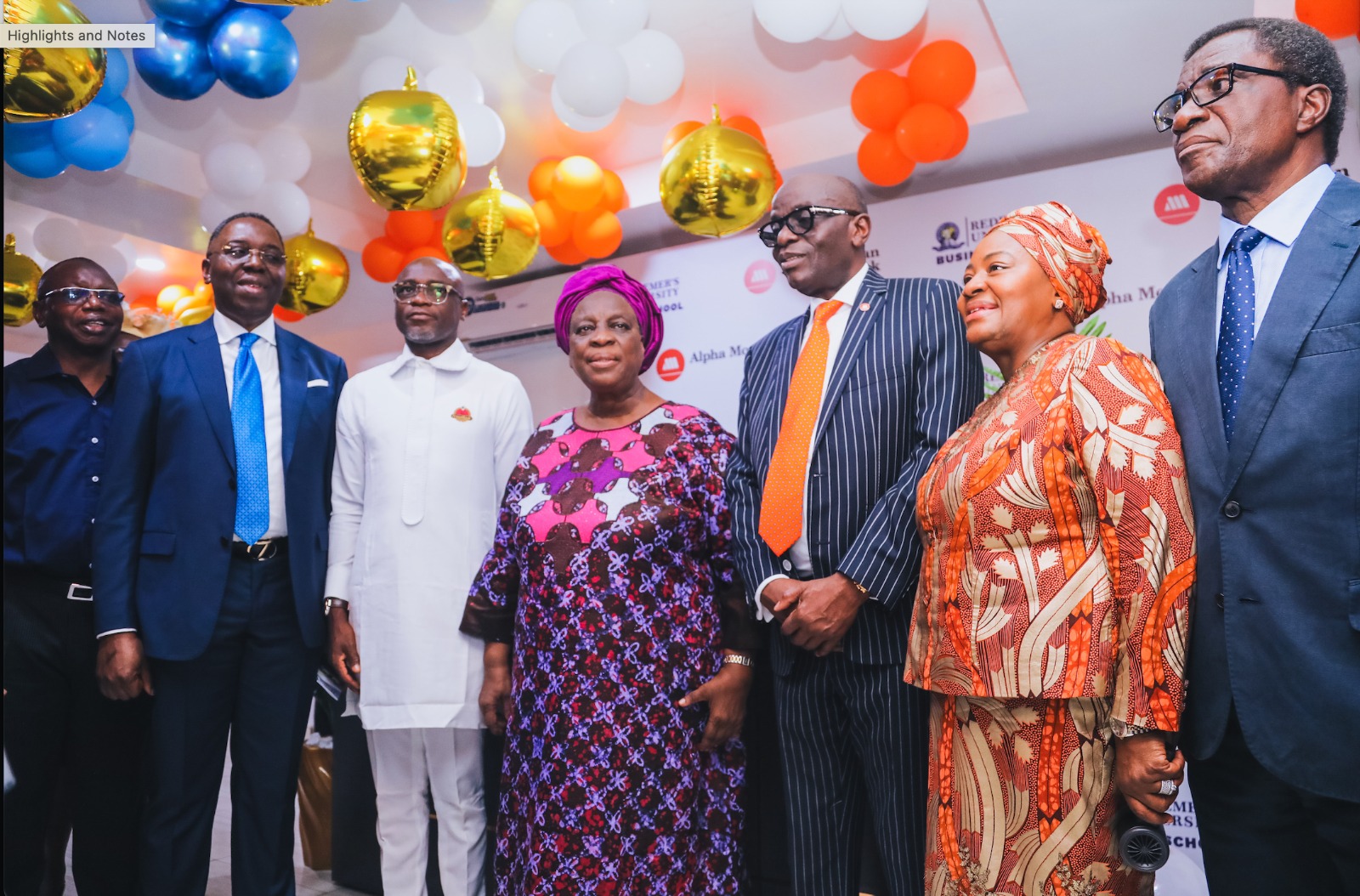
Alpha Morgan Bank Reinforces Commitment to Education at Redeemer’s University Business School Commissioning
Alpha Morgan Bank has reaffirmed its commitment to education and institutional development through its support for the commissioning of the Redeemer’s University Business School.
The Business School was officially inaugurated by Pastor (Mrs.) Folu Adeboye, at the commissioning ceremony attended by distinguished guests including Her Excellency, Mrs. Bola Obasanjo; the Pro-Chancellor and Chairman, Governing Council of Redeemers University, Professor Oluwatoyin Ogundipe; the Vice Chancellor, Professor Shadrach Olufemi Akindele; and other notable dignitaries.
Speaking at the event, the Managing Director of Alpha Morgan Bank reiterated the Bank’s commitment to supporting institutions that drive intellectual growth and national development.
As part of its broader focus on knowledge sharing and thought leadership, Alpha Morgan Bank will host its Economic Review Webinar in May 2026, bringing together experts to share insights on key economic trends and opportunities.
The Bank’s involvement reflects its continued dedication to empowering institutions and shaping the future of business and leadership in Nigeria.
Read more about Alpha Morgan Bank on www.alphamorganbank.com
PHOTO
L-R: Prof. Shadrach Olufemi Akindele, Vice Chancellor, Redeemers University, Engr. Eloka Eje, Dr Perez Araka, Pastor (Mrs) Folu Adeboye, Mother-In-Israel, The Redeemed Christian Church of God, Mr Ade Buraimo, MD/CEO Alpha Morgan Bank, Dr (Mrs) Oluwatomi Somefun, Dr. Simeon Ifere, at the inauguration of the Redeemer’s University Business School, Redemption City, Ogun State on Thursday 2nd April, 2026
Tinubu Aide Rebuts Rufai Oseni Over ₦3.3tn Power Debt Deal
Business
Aare Adetola Emmanuelking Welcomes President Tinubu to Gateway International Airport Commissioning in Iperu-Remo

Aare Adetola Emmanuelking Welcomes President Tinubu to Gateway International Airport Commissioning in Iperu-Remo
In a momentous occasion that underscores the rapid infrastructural advancement of Ogun State, renowned real estate mogul and philanthropist, Aare Adetola Emmanuelking, warmly received the President of the Federal Republic of Nigeria, Bola Ahmed Tinubu, at the official commissioning of the Gateway International Airport, located in Iperu-Remo.
The landmark event, held under the visionary leadership of the Ogun State Governor, Dapo Abiodun, marks a significant stride in the state’s economic transformation agenda, positioning Ogun as a key hub for aviation, commerce, and investment in Nigeria.
Aare Emmanuelking, who is also the Chairman/CEO of Adron Homes and Properties, commended the Ogun State Government for its foresight and commitment to infrastructural excellence. He described the airport project as a “game-changer” that will not only boost connectivity but also stimulate real estate growth, tourism, and industrial expansion across the region.
Speaking during the commissioning, President Tinubu lauded Governor Abiodun’s administration for delivering a world-class facility that aligns with the Federal Government’s Renewed Hope Agenda, emphasizing the importance of strategic infrastructure in driving national development.
The Gateway International Airport is expected to serve as a critical gateway for investors and travelers, further enhancing Ogun State’s reputation as one of Nigeria’s most business-friendly environments.
The presence of top dignitaries, industry leaders, and stakeholders at the event underscores the project’s significance and its anticipated impact on the state’s socio-economic landscape and beyond.


- Afreximbank supports Dangote Group as it targets US$100 billion annual revenue by 2030 April 8, 2026
- Africa's top-ranked Global Reporting Initiative (GRI) Training Partner launches 15th cohort of globally recognized sustainability reporting certification April 8, 2026
- African Energy Chamber (AEC) Intervenes in Landmark Climate Case to Defend Africa’s Energy Future April 8, 2026
- Eswatini opens to investors for first-of-its-kind roadshow April 8, 2026
- Egypt: President El-Sisi Meets Ministers of Electricity, Petroleum April 8, 2026
- Seychelles and Japan explore expanded cooperation and future partnerships April 8, 2026
- President Mahama to headline The Africa Debate 2026 as Ghana-United Kingdom (UK) investment ties deepen April 8, 2026
- Angolan Production Gets New Uplift as Eni’s Guido Brusco Joins Angola Oil & Gas (AOG) 2026 April 8, 2026
- Liquid C2 launches Africa’s first Google Cloud-powered Experience Centre to accelerate Artificial Intelligence (AI) adoption April 8, 2026
- Uganda: Opposition calls for reforms amid rising debt burden April 8, 2026
- Afreximbank supports Dangote Group as it targets US$100 billion annual revenue by 2030 April 8, 2026
- Africa's top-ranked Global Reporting Initiative (GRI) Training Partner launches 15th cohort of globally recognized sustainability reporting certification April 8, 2026
- African Energy Chamber (AEC) Intervenes in Landmark Climate Case to Defend Africa’s Energy Future April 8, 2026
- Eswatini opens to investors for first-of-its-kind roadshow April 8, 2026
- Egypt: President El-Sisi Meets Ministers of Electricity, Petroleum April 8, 2026
- Seychelles and Japan explore expanded cooperation and future partnerships April 8, 2026
- President Mahama to headline The Africa Debate 2026 as Ghana-United Kingdom (UK) investment ties deepen April 8, 2026
-

 news4 months ago
WHO REALLY OWNS MONIEPOINT? The $290 Million Deal That Sold Nigeria’s Top Fintech to Foreign Interests
-

 society7 months ago
“You Are Never Without Help” – Pastor Gebhardt Berndt Inspires Hope Through Empower Church (Video)
-

 celebrity radar - gossips2 months ago
Dr. Chris Okafor Returns with Power and Fire of the Spirit -Mounts Grace Nation Altar with Fresh Anointing and Restoration Grace on February 1, 2026
-

 celebrity radar - gossips4 months ago
Prophet Kingsley Aitafo Releases 2026 Prophecy: ‘Nigeria Will Rise, but the World Must Prepare for Turbulence’
You must be logged in to post a comment Login
You must log in to post a comment.