
Business
How Revolutionplus Settled Land Allocation Issue With Customers


Last week Tuesday, precisely 1st of February, 2022, popular real estate firm, RevolutionPlus Property Development Company got the shock of the year! The company was in a deep scandal. There was an allegation from social media alleging that the company didn’t allocate land to a few customers after their payment. What started as a joke suddenly became a very serious issue when different people started calling the company, asking about their land. Both the friends and family of the brand became worried.
WHAT REALLY HAPPENED?
There were about 2 to 3 people who reported to an online blogger that they have paid money for land for about two years and they are yet to be allocated. Mrs Doyin Adetola reported that she bought a landed property from Revolutionplus Property.
Also, Funmi Olabimtan also made a similar allegation. And that’s how it became a very big issue.
GMD APOLOGISES AND PROFFER SOLUTIONS
The GMD, Dr Bamidele Onalaja, appealed to every aggrieved customer. “We are sorry. I can assure you that you are with the best brand and I don’t want you to lose hope in us. We are in partnership. I want to apologise on behalf of the management. It would never happen again. You are hearing from me as the CEO of the company. We would put up a stronger structure to resolve all issues. And it is not that we don’t have the land. We have land and in the next few months, every issue of allocation would be resolved because we also want you to bring your relatives to patronise us. We got so many referrals from people. I’m not happy about what happened because one of the best ways to sell is through the word of mouth. I want to assure you that all your investment is safe with us. We have a strong structure and I hold you in high esteem. And also, because of my position as the Chairman of Real Estate Association of Nigeria, Lagos Chapter. It is important we all do the right thing. All you need to do is walk into any of our offices. We will respond promptly to your complaint. You can even send me a mail on [email protected] or send to ED, [email protected]. We would quickly attend to you
See also Details: Ifie Sekibo, Bank M.D Who Told Workers To Protest At Home Of Senator Uba Over Debt On His Way Out Of Office
ALLOCATION ISSUES
RevolutionPlus Property is the proud owner of over 40 estates with several declared sold out and over 5,000 subscribers both in and out of the country. Currently, in our portfolio, we have 19 landed properties and 7 houses (4 completely built) still selling.
As per the policy of the company, once a property has been fully paid for the company provides a provisional letter of allocation which states that allocation is done between 3 to 6 months after full payment has been made. As a result of the high volume of subscribers who subscribe to our estates, allocations are often done in batches and often we may exceed the time frame given for allocation. (This is duly communicated to the clients, informing them of a later date at which allocation would be carried out.)
Between 2020 and 2021, the company had a total of 40 batches of allocations in 26 estates.
REASONS WHY CLIENTS MAY NOT BE ALLOCATED
Before every purchase on any of our estates, prospective clients are given a subscription form to fill which contains FAQ and terms which binds both the company and the client, the clients are expected to read the terms and conditions, fill the form and duly execute before making payment for any of our estates. One of such terms is a 90 days deadline in which the client is required to pay for other stipulated charges, failure of which would lead to loss of allocation with the option of a refund or relocation to another estate.
Clients are allocated in batches. We may experience a slight delay in allocation when a specific number required to be sent to the Surveyor for processing has not been completed.
See also World Baking Day 2021: CFM Celebrates Bakers, To Raise More Baking Entrepreneurs
OUR RESOLUTION
In as much as we have stated reasons why a client may be aggrieved, we do not take for granted the investment you have made to our company. In light of the above, we would like to receive the full complaints of all subscribers via the provided emails and phone numbers.
DELAY IN ALLOCATION
While we have stated the possible faults of some clients, we are aware that some clients have subscribed and fully made payments for both land and statutory fees and have not been allocated within the said allotted timeframe. We are working tirelessly round the clock to ensure that all allocation pending will be sorted out as soon as possible.
In addition to the above, we have allocated our Dreamcity by the 4th of February 2022. All clients involved have been duly communicated to.
Other allocations to be done in February are Richmond Court 2 (Ibadan), Pacesetter (Ibadan) and Anfield Garden (Port Harcourt). Our communications will be constant as all clients will be given the necessary feedback.
See also Ooni Of Ife, Oba Adeyeye Ogunwusi To Attend Primate Ayodele’s Annual Thanksgiving In February
MRS TOLULOPE ONALAJA, GED TENDERS APOLOGY
First of all, I want to sincerely apologise to all our customers all over the world. Sometimes I get overwhelmed with work and what I have to deal with. I am sorry about what I said. I have been the GED of this company for about 8 years. Without you, there’s no Revolutionplus. We have enjoyed so much love from subscribers all over the world. You can imagine having 20 thousand subscribers who have come to buy land with us. And it’s not as if they don’t have a choice but they chose to invest the money with us. We do not take this for granted. I tender an apology for what I said.
HOW TO REACH THEM FOR A LASTING SOLUTION?
Several clients who have tendered their complaints on social media could have fallen into any of the above categories and some may truly have not been called for allocation but we need to ascertain the actual reason before a solution could be proffered.
All clients who have any form of allocation issue should kindly send an email to customercareikeja @revolutionplusproperty.com or customercarelekki @revolutionplusproperty.com. It will be duly attended to.
You can also contact the customer care line:
09060000991, 09060000992, 09060000993



Fidelity Bank grows gross earnings by 38% to N434.95b in Q1
Fidelity Bank Plc recorded 37.9 per cent growth in gross earnings to N434.95 billion in first quarter 2026 as the international commercial bank continued to expand its core banking market share.
Interim report and accounts of Fidelity Bank for the three months ended March 31, 2026 released at the Nigerian Exchange (NGX) showed that gross earnings rose from N315.42 billion in first quarter 20025 to N434.95 billion in first quarter 2026, representing an increase of 37.9 per cent.
The top-line performance was driven by impressive growth in the bank’s core business operations with interest incomes rising by 22.8 per cent to N314.48 billion in first quarter 2026 as against N256.10 billion in first quarter 2025.
With net interest income at N180.97 billion, the bank closed the period with profit before tax of N92.48 billion. After taxes, net profit stood at N74.47 billion for the three-month period. Earnings per share remained high at N5.69, underlining the capacity of the bank to reward its shareholders.
The balance sheet of the bank also emerged stronger. Total assets crossed the N11 trillion mark to N11.35 trillion by March 2026 compared with N10.46 trillion recorded in December 2025. Customers’ deposits increased from N6.89 trillion to N7.38 trillion. Total equity rode on the back of earnings growth to a 27.5 per cent increase from N1.09 trillion in December 2025 to N1.39 trillion by March 2026.
The first quarter 2026 results further consolidated the strong earnings outlook of the bank, which had successfully completed its recapitalisation amidst impressive earnings performance in 2025.
Fidelity Bank had recorded double-digit growths in interest and non-interest incomes as well as key balance sheet items during the year ended December 31, 2025.
The audited report showed that gross earnings rose from N1.04 trillion in 2024 to N1.52 trillion in 2025, an increase of 45.6 per cent. Interest and similar incomes had grown by 38.7 per cent from N803.1 billion in 2024 to N1.11 trillion in 2025. Fees and commission incomes also rose by 44.7 per cent from N78.4 billion to N113.4 billion. The bank recorded net profit after tax of N242.4 billion in 2025.
The bank’s balance sheet emerged stronger with total assets rising by 18.6 per cent to N10.46 trillion in 2025 as against N8.82 trillion in 2024. Customer deposits increased by 16.1 per cent from N5.94 trillion to N6.89 trillion, reflecting continued franchise strength and an improved funding profile. Net loans and advances meanwhile declined by 2.4 per cent to N4.28 trillion in 2025 as against N4.39 trillion in 2024, attributable to customers paying down on their mature obligations.
The bank had in 2025 strengthened its capital position, with eligible capital rising to N561 billion, above the regulatory minimum of N500 billion for banks with international authorisation. In addition, capital adequacy had remained robust, with Capital Adequacy Ratio of 30.94 per cent by December 2025 as against 23.47 per cent by December 2024.
Managing Director, Fidelity Bank Plc, Dr. Nneka Onyeali-Ikpe, said the first quarter 2026 results reinforced the bank’s strong and resilient business model.
She noted that with the remarkable success of its recapitalisation programme and continuing expansion, Fidelity Bank has entered a new era of growth and impressive returns.
“We are on a stronger footing and confident that we will set new growth records that are reflective of our legacy and the future we are working on,” Onyeali-Ikpe said.
Business
Dangote Refinery Ends Nigeria’s Era of Fuel Import Dependence, Boosts GDP, FX Earnings — EIU
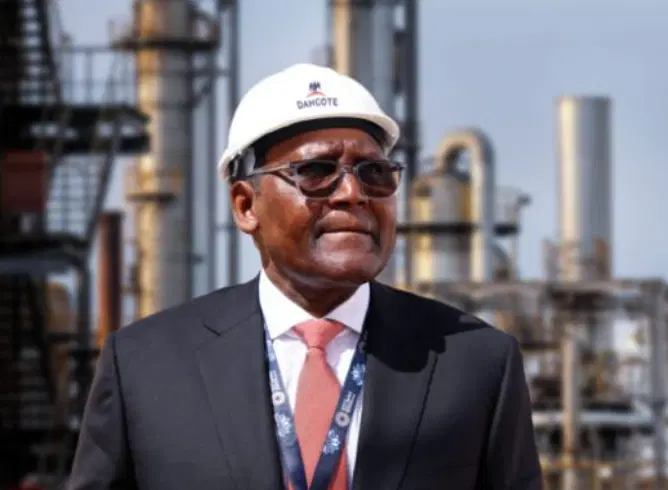
Dangote Refinery Ends Nigeria’s Era of Fuel Import Dependence, Boosts GDP, FX Earnings — EIU
The operational ramp up of the 650,000 barrels per day Dangote Petroleum Refinery & Petrochemicals is fundamentally reshaping Nigeria’s downstream oil sector, significantly reducing the country’s dependence on imported refined petroleum products and strengthening its external position, according to the Economist Intelligence Unit (EIU).
In its latest assessment on Nigeria’s fuel market and regulatory environment, the EIU said the refinery has already transformed a sector that was previously characterised by heavy reliance on imported fuel despite Nigeria being Africa’s largest crude oil producer. The report noted that the refinery met nearly 80 per cent of domestic petrol demand in April and produced enough volumes to satisfy local consumption requirements as operations approached full capacity.
The EIU described Nigeria’s downstream petroleum sector before the refinery as “long dysfunctional”, noting that the country had remained almost entirely dependent on costly imported fuel while producing nearly 1.5 million barrels of crude oil daily.
According to the report, the emergence of the refinery has reduced import dependence, improved domestic fuel availability and strengthened Nigeria’s balance of payments position through lower import demand and rising exports of refined petroleum products.
“The gradual ramp up of the 650,000 barrel/day Dangote refinery since May 2023 has transformed Nigeria’s long dysfunctional downstream sector,” the report stated. “The country’s main refineries, all state owned, had been inoperative for years and Nigeria was almost entirely reliant on costly imported fuel.”
The research and analysis division of The Economist Group, London added that the refinery’s attainment of full operational capacity and its planned expansion would further support Nigeria’s economic growth and foreign exchange earnings over the medium term.
“Meanwhile, the attainment of full capacity at, and an increase in exports from, the Dangote refinery will support real GDP growth and foreign exchange earnings in 2026 and 2027 and beyond, as a planned doubling of the plant’s output comes on stream around the end of the decade,” it added.
Industry analysts said the refinery is increasingly positioning Nigeria as an emerging refining and export hub, altering energy trade flows across Africa and reducing the vulnerability associated with fuel import dependence.
The EIU noted that the refinery’s expansion has coincided with major reforms in Nigeria’s downstream sector, including the removal of fuel subsidies and the introduction of market driven pricing mechanisms.
The report, however, said the transition from a state dominated fuel import structure to large scale domestic refining has triggered resistance from interests linked to the old import regime.
The latest tensions emerged following the decision by the Nigerian Midstream and Downstream Petroleum Regulatory Authority to relax restrictions on petrol imports despite the refinery’s growing capacity to meet domestic demand.
Dangote Industries subsequently initiated legal action, arguing that continued import approvals undermine domestic refining investments and conflict with the objectives of the Petroleum Industry Act, which seeks to encourage local refining capacity and reduce import dependence.
Analysts noted that the availability of large-scale domestic refining capacity has improved Nigeria’s energy security and reduced exposure to external supply shocks and foreign exchange volatility.
The Centre for the Promotion of Private Enterprise also cautioned against unrestrained importation of petroleum products, warning that such a policy could weaken Nigeria’s industrialisation drive and discourage investments in domestic refining.
Chief Executive Officer of CPPE, Muda Yusuf, said continued dependence on imported fuel had historically contributed to pressure on foreign reserves, exchange rate instability and fiscal leakages.
The refinery’s growing impact is also being reflected in Nigeria’s broader macroeconomic indicators. Earlier this month, S&P Global Ratings cited increased domestic refining capacity and rising hydrocarbon exports among the major factors supporting Nigeria’s sovereign credit rating upgrade – the first in 14 years.
Beyond Nigeria, analysts said the refinery is increasingly being viewed as a strategic industrial asset for Africa, where many countries remain heavily dependent on imported fuel despite rising demand for transportation, manufacturing, and power generation.
Business
BREAKING: Court Dismisses $19.6 Million Claim Against NNPCL — Rules Contract Scope Cannot Be Changed Orally
BREAKING: Court Dismisses $19.6 Million Claim Against NNPCL — Rules Contract Scope Cannot Be Changed Orally
In a landmark ruling on Friday, May 22, 2026, the Federal Capital Territory High Court in Abuja threw out a $19.6 million lawsuit filed by Alternate Dimensions Ventures Ltd against the Nigerian National Petroleum Company Limited (NNPCL), affirming a key legal principle: a written contract cannot be expanded through oral agreements or conduct.
Alternate Dimensions had sought $19,600,000 in professional fees, claiming the scope of its Direct Sale, Direct Purchase (DSDP e-pro) contract with NNPCL was orally expanded. Represented by counsel Patrick Peter, the firm argued it was entitled to the revised sum for services rendered under the alleged new terms.
But NNPCL, through its lawyer Ituah Imhanze of KENNA LP, pushed back sharply, arguing that parties are bound exclusively by the clear terms of their written agreement. Imhanze contended that without any written amendment, the claim was legally unsound, and the court agreed.
Delivering judgment, Justice Hamza Mu’azu upheld NNPCL’s defense, stating that the contract was unambiguous and that no evidence was adduced during the trial, which supported the alleged scope expansion. The court further found that NNPCL fully complied with all contractual terms and committed no breach.
Dismissing the suit as meritless, Justice Mu’azu reinforced the doctrine of sanctity of contract: any amendment to a written agreement must be express, unequivocal, and documented, not implied or verbal.
The ruling spares NNPCL from the S19.6 million claim and also a floodgate of similar potential liabilities.


- World Cup accredited journalists raise concerns over unfair United States (US) visa restrictions, International Sports Press Association (AIPS) calls on FIFA to intervene June 6, 2026
- Ghana: President Mahama arrives in Belarus, lays wreath at Victory Monument June 6, 2026
- Liberia: President Boakai Advances Clean Energy Agenda; Dedicates 20-Megawatt Solar Power Plant at Mount Coffee June 6, 2026
- African Union (AU) Commission Chairperson mourns Passing of the Former Angola Minister of Foreign Affairs June 6, 2026
- Economic Community of West African States (ECOWAS) Welcomes Students on an Educational Visit to Its Headquarters June 6, 2026
- Seychelles: President Patrick Herminie attended Official Opening of Rise and Shine Day Care Centre at Mont Fleuri June 6, 2026
- Faith, fear and trust: Inside Democratic Republic of the Congo's (DR Congo) fight against Ebola June 6, 2026
- Economic Community of West African States (ECOWAS) Commission and Women in Law and Development (WiLDAF) Train Women Cross-Border Traders in The Gambia June 5, 2026
- Eritrea: Seminar to Nationals in The Hague June 5, 2026
- Eritrea: Training on Photography and Video Production June 5, 2026
- World Cup accredited journalists raise concerns over unfair United States (US) visa restrictions, International Sports Press Association (AIPS) calls on FIFA to intervene June 6, 2026
- Ghana: President Mahama arrives in Belarus, lays wreath at Victory Monument June 6, 2026
- Liberia: President Boakai Advances Clean Energy Agenda; Dedicates 20-Megawatt Solar Power Plant at Mount Coffee June 6, 2026
- African Union (AU) Commission Chairperson mourns Passing of the Former Angola Minister of Foreign Affairs June 6, 2026
- Economic Community of West African States (ECOWAS) Welcomes Students on an Educational Visit to Its Headquarters June 6, 2026
- Seychelles: President Patrick Herminie attended Official Opening of Rise and Shine Day Care Centre at Mont Fleuri June 6, 2026
- Faith, fear and trust: Inside Democratic Republic of the Congo's (DR Congo) fight against Ebola June 6, 2026
-

 news6 months ago
WHO REALLY OWNS MONIEPOINT? The $290 Million Deal That Sold Nigeria’s Top Fintech to Foreign Interests
-

 society1 month ago
SOCIAL MEDIA IS NOT A BATTLEFIELD COMMAND – WHY THE NIGERIAN ARMY’S ACTION AGAINST JUSTICE CRACK IS A NATIONAL SECURITY IMPERATIVE
-

 celebrity radar - gossips4 months ago
Dr. Chris Okafor Returns with Power and Fire of the Spirit -Mounts Grace Nation Altar with Fresh Anointing and Restoration Grace on February 1, 2026
-

 celebrity radar - gossips6 months ago
Prophet Kingsley Aitafo Releases 2026 Prophecy: ‘Nigeria Will Rise, but the World Must Prepare for Turbulence’