
Business
CBN Governor, Godwin Emefiele, Not Interested in 2023 Presidential Race

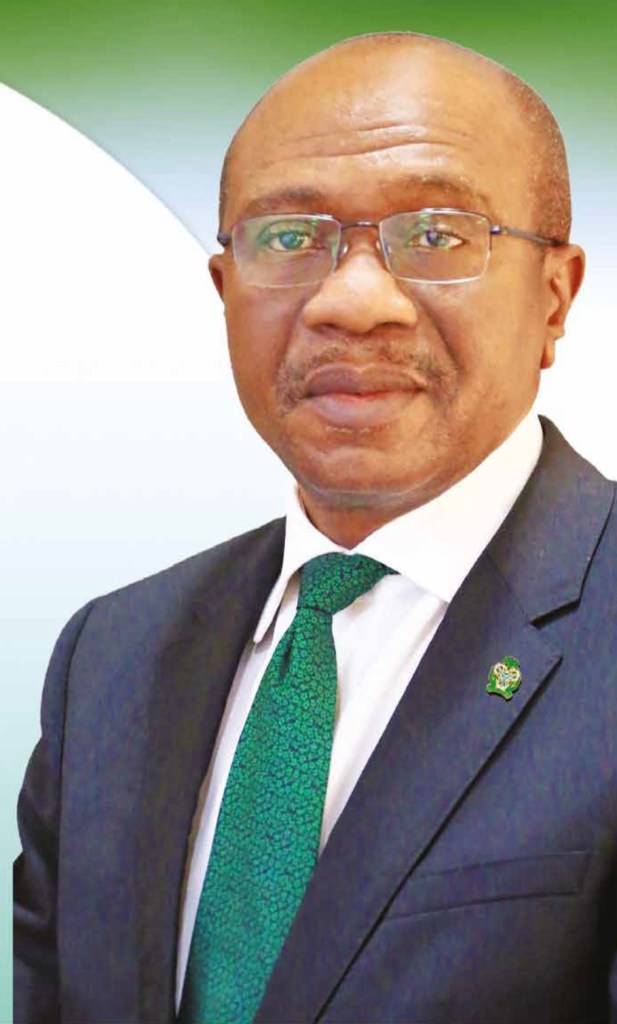
CBN Governor, Godwin Emefiele, Not Interested in 2023 Presidential Race
Why Powerful Nigerians Are Rooting For Him
No doubt, President Muhammadu Buhari bears, like a badge, an indecipherable flame of affection for the Central Bank of Nigeria, CBN Governor, Godwin Emefiele. Honestly, his love for Emefiele resonates, even as you read, as a melody of faith whose mutuality and passionate intensity appear to make it untarnished and priceless.
Of course, this can, however, be attributed to Emefiele’s undisguised passion for Nigeria and Nigerians.
There is no gainsaying that the Delta State-born banker has lived a remarkable and eventful life. Despite rising from humble beginnings to assume leadership of the nation’s apex banking institution, he has remained humble and uncompromising of his values. He has maintained a culture of unflinching uprightness and unwavering commitment to the collective good and has remained a staunch patriot and advocate of the common man. This, among others, guarantees his place in the pantheon of Nigeria’s finest citizens.
But, rumour is that alchemy of quiet malice by which mischief-makers concoct a subtle poison from ordinary trifles. No wonder why the CBN governor is perplexed that his name is now being thrown up as a possible candidate in the 2023 presidential election.
For the past few days, there had been a groundswell of speculations that some of Nigeria’s most powerful and wealthiest businessmen and governors within the All Progressives Congress, APC, and the Peoples Democratic Party, PDP, are pushing for the candidacy of a neutral south-south person, preferably, a technocrat in the 2023 Presidential election. This powerful coalition reportedly met in Abuja and Lagos days apart to decide on a president who understands the ease of doing business, the plight of the private sector, and the undercurrents of international business in the 21st Century.
The CBN governor was unanimously pinpointed as the ideal man. One of the reasons reportedly being adduced for his choice is that he is eminently qualified for the top job especially as agitations for a candidate of South-south extraction continue to gather traction.
Though a Delta Igbo, Emefiele speaks Yoruba fluently. Before his banking career, he was a lecturer in Finance and Insurance in two Nigerian Universities. He holds degrees in Banking and Finance from the University of Nigeria, Nsukka, and is also an alumnus of Stanford University, Harvard, and Wharton Graduate Schools of Business where he took courses in Negotiation, Service Excellence, Critical Thinking, Leading Change, and Strategy. Before joining the CBN, he spent over 26 years in commercial banking culminating in his tenure as Group Managing Director and Chief Executive Officer of Zenith Bank PLC, one of Nigeria’s largest banks.
He is also regarded as a child of destiny because he did not lobby for his elevation as Group Managing Director of Zenith Bank. Neither did he lobby the PDP government of former President Goodluck Jonathan, which appointed him CBN governor in 2014. Interestingly, despite being a PDP appointee, he was retained by the new APC government of President Buhari. To underscore how much confidence the president reposes in him, he reappointed Emefiele for a second term of five years as CBN governor in May 2019.
Sources close to the president said he appreciates Emefiele for helping Nigeria to experience stable monetary policies, even as it did not witness any crude oil windfall, which is the backbone of the economy. Conversely, the oil price volatility impacted not only the country’s revenue base, but the inflow of foreign exchange (forex), stoking currency depreciation, system arbitrage, and consequent policy measures, leading to calls for the devaluation of the naira.
The CBN governor’s ability to hold on to his belief in the economy and not allow the ship to sink on his watch may have also earned him the second term. Also, through his monetary policies and even interventions in fiscal issues over the past seven years, Emefiele has insisted that the country still holds a high return on investment with huge opportunities given its over the 200-million-people market.
Emefiele oversaw Nigeria’s widely acclaimed response to plummeting oil prices, spiraling inflation, significant exchange rate pressures, sharp fall in forex inflows, delisting of Nigeria from the JP Morgan Bond Index, normalisation of U.S. monetary policy, geopolitical tensions amongst global superpowers, and overall uncertainty after the change of administration in 2015.
Indeed, the stability he brought into the system has been attributed to his innovative Investors and Exporters Window worth $25 billion, which liberalised official transactions of forex, as well as the directive to banks to sell forex to customers over the counter for basic travel allowance (BTA) and medical and education bills.
Beyond forex stability, which saw massive accretion in Nigeria’s foreign exchange reserves from about $23 billion in October 2016 to nearly $48 billion in June 2018, Emefiele’s policies also significantly helped Nigeria achieve a fast recovery from recession, which was caused by sharp and sustained oil price declines from 2015 through 2017.
In the area of fiscal interventions, the CBN governor sustained large-scale financing of agriculture through the innovative Anchor Borrowers’ Programme, which has disbursed hundreds of billions of naira in small loans to hundreds of thousands of peasant farmers, thereby creating millions of jobs across the country. As evidence of the new discipline through tight monetary policies, his tenure has witnessed unprecedented profits in the banking industry, with GT Bank and Zenith Bank leading the way with record performances.
With all these, Emefiele succeeded in facilitating major improvement in Nigeria’s ranking on the World Bank’s Doing Business Indicators through the creation of the collateral registry and credit reference bureaus.
This record of achievements is why the coalition believes that Emefiele is eminently qualified to succeed President Buhari and steer the ship of state aright.
However, sources close to the CBN governor say emphatically that he is not interested in the top job. Rather, he is content seeing through his term and enthroning a Central Bank that is professional, apolitical, and people-focused.
Governor Emefiele, according to sources very close to him, has neither privately or publicly expressed interest or desire to contest for any election. Going by the highlighted fact, a powerful source maintained that, “If the records must be set straight, the Governor that I know is one straightforward individual who does not shy away from taking responsibility for his intentions or actions.
“Consequently, if he is interested in contesting, by now, he would have appropriately put the issue in the public domain without having to cut corners.”
Emefiele, he stressed, by virtue of his antecedents and pedigree is eminently qualified to run in 2023
“Nevertheless, a popular adage says that you cannot shave a man’s hair in his absence. Therefore, if and when he decides to throw his hat into the ring, the good people of Nigerians will be adequately put in the picture.





Fidelity Bank grows gross earnings by 38% to N434.95b in Q1
Fidelity Bank Plc recorded 37.9 per cent growth in gross earnings to N434.95 billion in first quarter 2026 as the international commercial bank continued to expand its core banking market share.
Interim report and accounts of Fidelity Bank for the three months ended March 31, 2026 released at the Nigerian Exchange (NGX) showed that gross earnings rose from N315.42 billion in first quarter 20025 to N434.95 billion in first quarter 2026, representing an increase of 37.9 per cent.
The top-line performance was driven by impressive growth in the bank’s core business operations with interest incomes rising by 22.8 per cent to N314.48 billion in first quarter 2026 as against N256.10 billion in first quarter 2025.
With net interest income at N180.97 billion, the bank closed the period with profit before tax of N92.48 billion. After taxes, net profit stood at N74.47 billion for the three-month period. Earnings per share remained high at N5.69, underlining the capacity of the bank to reward its shareholders.
The balance sheet of the bank also emerged stronger. Total assets crossed the N11 trillion mark to N11.35 trillion by March 2026 compared with N10.46 trillion recorded in December 2025. Customers’ deposits increased from N6.89 trillion to N7.38 trillion. Total equity rode on the back of earnings growth to a 27.5 per cent increase from N1.09 trillion in December 2025 to N1.39 trillion by March 2026.
The first quarter 2026 results further consolidated the strong earnings outlook of the bank, which had successfully completed its recapitalisation amidst impressive earnings performance in 2025.
Fidelity Bank had recorded double-digit growths in interest and non-interest incomes as well as key balance sheet items during the year ended December 31, 2025.
The audited report showed that gross earnings rose from N1.04 trillion in 2024 to N1.52 trillion in 2025, an increase of 45.6 per cent. Interest and similar incomes had grown by 38.7 per cent from N803.1 billion in 2024 to N1.11 trillion in 2025. Fees and commission incomes also rose by 44.7 per cent from N78.4 billion to N113.4 billion. The bank recorded net profit after tax of N242.4 billion in 2025.
The bank’s balance sheet emerged stronger with total assets rising by 18.6 per cent to N10.46 trillion in 2025 as against N8.82 trillion in 2024. Customer deposits increased by 16.1 per cent from N5.94 trillion to N6.89 trillion, reflecting continued franchise strength and an improved funding profile. Net loans and advances meanwhile declined by 2.4 per cent to N4.28 trillion in 2025 as against N4.39 trillion in 2024, attributable to customers paying down on their mature obligations.
The bank had in 2025 strengthened its capital position, with eligible capital rising to N561 billion, above the regulatory minimum of N500 billion for banks with international authorisation. In addition, capital adequacy had remained robust, with Capital Adequacy Ratio of 30.94 per cent by December 2025 as against 23.47 per cent by December 2024.
Managing Director, Fidelity Bank Plc, Dr. Nneka Onyeali-Ikpe, said the first quarter 2026 results reinforced the bank’s strong and resilient business model.
She noted that with the remarkable success of its recapitalisation programme and continuing expansion, Fidelity Bank has entered a new era of growth and impressive returns.
“We are on a stronger footing and confident that we will set new growth records that are reflective of our legacy and the future we are working on,” Onyeali-Ikpe said.
Business
Dangote Refinery Ends Nigeria’s Era of Fuel Import Dependence, Boosts GDP, FX Earnings — EIU
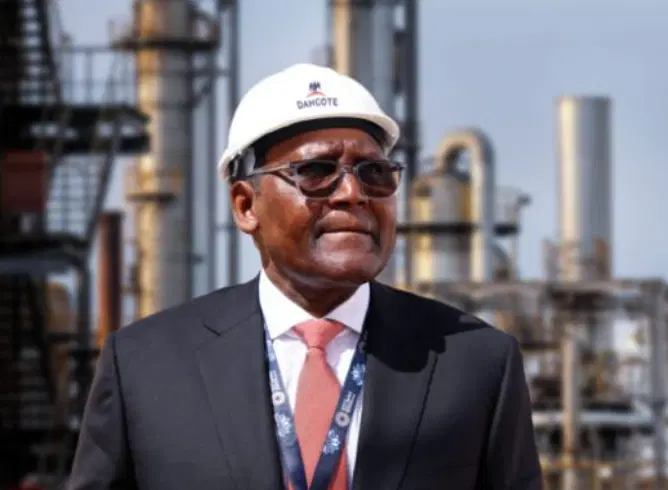
Dangote Refinery Ends Nigeria’s Era of Fuel Import Dependence, Boosts GDP, FX Earnings — EIU
The operational ramp up of the 650,000 barrels per day Dangote Petroleum Refinery & Petrochemicals is fundamentally reshaping Nigeria’s downstream oil sector, significantly reducing the country’s dependence on imported refined petroleum products and strengthening its external position, according to the Economist Intelligence Unit (EIU).
In its latest assessment on Nigeria’s fuel market and regulatory environment, the EIU said the refinery has already transformed a sector that was previously characterised by heavy reliance on imported fuel despite Nigeria being Africa’s largest crude oil producer. The report noted that the refinery met nearly 80 per cent of domestic petrol demand in April and produced enough volumes to satisfy local consumption requirements as operations approached full capacity.
The EIU described Nigeria’s downstream petroleum sector before the refinery as “long dysfunctional”, noting that the country had remained almost entirely dependent on costly imported fuel while producing nearly 1.5 million barrels of crude oil daily.
According to the report, the emergence of the refinery has reduced import dependence, improved domestic fuel availability and strengthened Nigeria’s balance of payments position through lower import demand and rising exports of refined petroleum products.
“The gradual ramp up of the 650,000 barrel/day Dangote refinery since May 2023 has transformed Nigeria’s long dysfunctional downstream sector,” the report stated. “The country’s main refineries, all state owned, had been inoperative for years and Nigeria was almost entirely reliant on costly imported fuel.”
The research and analysis division of The Economist Group, London added that the refinery’s attainment of full operational capacity and its planned expansion would further support Nigeria’s economic growth and foreign exchange earnings over the medium term.
“Meanwhile, the attainment of full capacity at, and an increase in exports from, the Dangote refinery will support real GDP growth and foreign exchange earnings in 2026 and 2027 and beyond, as a planned doubling of the plant’s output comes on stream around the end of the decade,” it added.
Industry analysts said the refinery is increasingly positioning Nigeria as an emerging refining and export hub, altering energy trade flows across Africa and reducing the vulnerability associated with fuel import dependence.
The EIU noted that the refinery’s expansion has coincided with major reforms in Nigeria’s downstream sector, including the removal of fuel subsidies and the introduction of market driven pricing mechanisms.
The report, however, said the transition from a state dominated fuel import structure to large scale domestic refining has triggered resistance from interests linked to the old import regime.
The latest tensions emerged following the decision by the Nigerian Midstream and Downstream Petroleum Regulatory Authority to relax restrictions on petrol imports despite the refinery’s growing capacity to meet domestic demand.
Dangote Industries subsequently initiated legal action, arguing that continued import approvals undermine domestic refining investments and conflict with the objectives of the Petroleum Industry Act, which seeks to encourage local refining capacity and reduce import dependence.
Analysts noted that the availability of large-scale domestic refining capacity has improved Nigeria’s energy security and reduced exposure to external supply shocks and foreign exchange volatility.
The Centre for the Promotion of Private Enterprise also cautioned against unrestrained importation of petroleum products, warning that such a policy could weaken Nigeria’s industrialisation drive and discourage investments in domestic refining.
Chief Executive Officer of CPPE, Muda Yusuf, said continued dependence on imported fuel had historically contributed to pressure on foreign reserves, exchange rate instability and fiscal leakages.
The refinery’s growing impact is also being reflected in Nigeria’s broader macroeconomic indicators. Earlier this month, S&P Global Ratings cited increased domestic refining capacity and rising hydrocarbon exports among the major factors supporting Nigeria’s sovereign credit rating upgrade – the first in 14 years.
Beyond Nigeria, analysts said the refinery is increasingly being viewed as a strategic industrial asset for Africa, where many countries remain heavily dependent on imported fuel despite rising demand for transportation, manufacturing, and power generation.
Business
BREAKING: Court Dismisses $19.6 Million Claim Against NNPCL — Rules Contract Scope Cannot Be Changed Orally
BREAKING: Court Dismisses $19.6 Million Claim Against NNPCL — Rules Contract Scope Cannot Be Changed Orally
In a landmark ruling on Friday, May 22, 2026, the Federal Capital Territory High Court in Abuja threw out a $19.6 million lawsuit filed by Alternate Dimensions Ventures Ltd against the Nigerian National Petroleum Company Limited (NNPCL), affirming a key legal principle: a written contract cannot be expanded through oral agreements or conduct.
Alternate Dimensions had sought $19,600,000 in professional fees, claiming the scope of its Direct Sale, Direct Purchase (DSDP e-pro) contract with NNPCL was orally expanded. Represented by counsel Patrick Peter, the firm argued it was entitled to the revised sum for services rendered under the alleged new terms.
But NNPCL, through its lawyer Ituah Imhanze of KENNA LP, pushed back sharply, arguing that parties are bound exclusively by the clear terms of their written agreement. Imhanze contended that without any written amendment, the claim was legally unsound, and the court agreed.
Delivering judgment, Justice Hamza Mu’azu upheld NNPCL’s defense, stating that the contract was unambiguous and that no evidence was adduced during the trial, which supported the alleged scope expansion. The court further found that NNPCL fully complied with all contractual terms and committed no breach.
Dismissing the suit as meritless, Justice Mu’azu reinforced the doctrine of sanctity of contract: any amendment to a written agreement must be express, unequivocal, and documented, not implied or verbal.
The ruling spares NNPCL from the S19.6 million claim and also a floodgate of similar potential liabilities.


- World Cup accredited journalists raise concerns over unfair United States (US) visa restrictions, International Sports Press Association (AIPS) calls on FIFA to intervene June 6, 2026
- Ghana: President Mahama arrives in Belarus, lays wreath at Victory Monument June 6, 2026
- Liberia: President Boakai Advances Clean Energy Agenda; Dedicates 20-Megawatt Solar Power Plant at Mount Coffee June 6, 2026
- African Union (AU) Commission Chairperson mourns Passing of the Former Angola Minister of Foreign Affairs June 6, 2026
- Economic Community of West African States (ECOWAS) Welcomes Students on an Educational Visit to Its Headquarters June 6, 2026
- Seychelles: President Patrick Herminie attended Official Opening of Rise and Shine Day Care Centre at Mont Fleuri June 6, 2026
- Faith, fear and trust: Inside Democratic Republic of the Congo's (DR Congo) fight against Ebola June 6, 2026
- Economic Community of West African States (ECOWAS) Commission and Women in Law and Development (WiLDAF) Train Women Cross-Border Traders in The Gambia June 5, 2026
- Eritrea: Seminar to Nationals in The Hague June 5, 2026
- Eritrea: Training on Photography and Video Production June 5, 2026
- World Cup accredited journalists raise concerns over unfair United States (US) visa restrictions, International Sports Press Association (AIPS) calls on FIFA to intervene June 6, 2026
- Ghana: President Mahama arrives in Belarus, lays wreath at Victory Monument June 6, 2026
- Liberia: President Boakai Advances Clean Energy Agenda; Dedicates 20-Megawatt Solar Power Plant at Mount Coffee June 6, 2026
- African Union (AU) Commission Chairperson mourns Passing of the Former Angola Minister of Foreign Affairs June 6, 2026
- Economic Community of West African States (ECOWAS) Welcomes Students on an Educational Visit to Its Headquarters June 6, 2026
- Seychelles: President Patrick Herminie attended Official Opening of Rise and Shine Day Care Centre at Mont Fleuri June 6, 2026
- Faith, fear and trust: Inside Democratic Republic of the Congo's (DR Congo) fight against Ebola June 6, 2026
-

 news6 months ago
WHO REALLY OWNS MONIEPOINT? The $290 Million Deal That Sold Nigeria’s Top Fintech to Foreign Interests
-

 society1 month ago
SOCIAL MEDIA IS NOT A BATTLEFIELD COMMAND – WHY THE NIGERIAN ARMY’S ACTION AGAINST JUSTICE CRACK IS A NATIONAL SECURITY IMPERATIVE
-

 celebrity radar - gossips4 months ago
Dr. Chris Okafor Returns with Power and Fire of the Spirit -Mounts Grace Nation Altar with Fresh Anointing and Restoration Grace on February 1, 2026
-

 celebrity radar - gossips6 months ago
Prophet Kingsley Aitafo Releases 2026 Prophecy: ‘Nigeria Will Rise, but the World Must Prepare for Turbulence’