
celebrity radar - gossips
HOW TO FREEZE A DADDY( THE ART OF THE MASTERFUL SMACKDOWN)

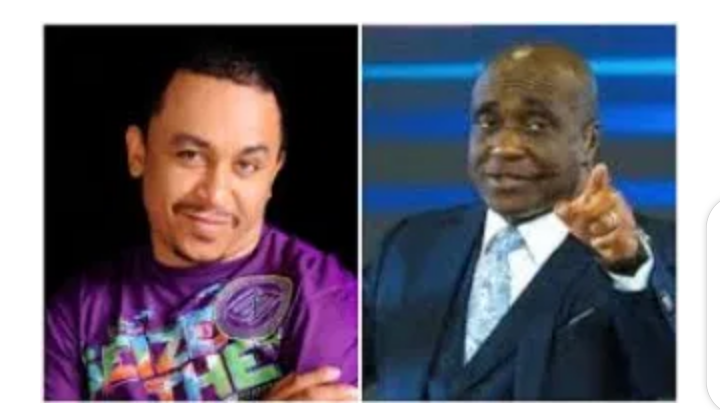
By Gbenga X-Adebija
One of the major lessons I learnt very early in my career was the art of communication. I was taught how to communicate but equally as important, how NOT to communicate. It is a lesson I have shared with others over the years and will share with everyone who has seen that viral video of Pastor David Ibiyeomie
Let me issue a caveat upfront that this write up is purely to share insights on communication and not a theological or faith-based evaluation of the merits (or lack thereof) of either side’s position

Pastor David Ibiyeomie and Daddy Freeze have constitutional rights to free speech and beliefs.
So, let us look at the words the Pastor used verbatim.
“Anybody insult my father again, I will pray you to….. He may not talk but I will talk.
You can’t insult my father when I’m alive
“Tell Daddy Freeze, the day I hear him talk about my daddy again if I don’t finish him… Insult me, I wouldn’t mind but insult Oyedepo then…,
“that bastard, Any day I hear him talk about Oyedepo… do they know his father? Does Daddy Freeze have a father? That half-caste that is born by a Somalian”
“The day I hear him insult Oyedepo again, I will deal with him. Who gave birth to him? If he has a father let him show us his father’s picture”
“Somebody they gave birth to in a ship, does he look like a Nigerian? That’s a Somalian. I can’t let him insult my father”
“I curse the day he was born. If I’m alive and you insult my father, I will tear you into pieces. Those who have fathers don’t insult fathers”
“He can insult a father because he doesn’t have a father. Tell him oh! This is the last time he talks about Oyedepo again. He is a bastard.”
“A man who can’t marry, he has no wife. He can’t manage his home; he is coming to talk on television. Is it not his wife who left him?”
“A broadcaster, does he have a good job? I can’t be alive and you insult my father, that person is not born. I will kill you; I will tear you into pieces”
“Very soon I will arrest him and charge him and see which money he has. I will charge him to court, I will follow him with the law, follow him spiritually, I will fight him till he crashes. How much does he have”
“I will fight him to the point that he will say which kind of trouble is this. Someone that is a newscaster, how much does he earn? Someone who is trekking in Lagos… He will soon go to the cemetery.”
All this was delivered in a harsh and vengeful voice filled with wrath. Pastor Ibiyeomie was incandescent with rage

First, let us look at the major points the Pastor wanted to make( not in any order)
- Thou shalt not abuse Bishop Oyedepo
- Thou art an ordinary broadcaster
- Thou art a Somalian
- Thou art of dubious parentage
- Thou hath no respect for elders
- Thou art in life-threatening trouble with me
- Thou art a nobody
There are a few more subsets of the above named points but let us for the purpose of this scholarly dissertation focus on these seven points.
So how should Pastor David Ibiyeomie have handled the matter? One fundamental mistake he made was that he spoke while clearly in a rage. That was a big mistake. Never ever speak to the world while in a REAL rage. Pastor David Ibiyeomie muddled his message because anger makes you garble your words. Very few people can speak eloquently and articulately while incandescent with rage and judging by the video, Pastor Ibiyeomie is not one of them.
Again, back to the question, how should he have handled the matter ?
Let us press the rewind button and see Pastor Ibiyeomie in front of his flock

Scene 1( Pastor speaking)
“ Ah yes, before we close, one of my young friends drew my attention to something on social media by someone who calls himself Dr. Something, Something
(Pauses to think)
Dr.. ehm, something to do with ice blocks. Holy Spirit, help me remember.
( Congregation helpfully shouts “ Daddy Freeze!” )
“ Thank you so much. The name just didn’t’ register in my brain. Sorry about that .
FREEZE
What has the Pastor achieved here? He has succeeded in positioning his adversary as a nonentity whose name he could not even remember.
Scene 2( Pastor Speaking and smiling)
“ So Dr. Freeze or Daddy Freeze made some comments which were critical of my Father in the Lord, Bishop Oyedepo which I found quite amusing because I don’t think he understands that when it comes to matters of Scripture, a doctor cannot be contradicting a Bishop and besides..”
( Shouts from the congregation and Pastor looks shocked)
“ What? Are you saying he is not a real doctor? Are you sure about that ?”
( More shouts from the congregation)
“ Na wa o. So why is he calling himself a doctor when he is not a doctor ?
FREEZE
What has the Pastor achieved here? He has succeeded in denigrating his adversary’s character and portraying him as an unserious charlatan
Scene 3 ( Pastor pacing and looking perplexed)
“ So what is his job then if you say he is not a doctor?
(shouts from the congregation)
“ OAP ? What does that mean? Is that what he does?
(shouts from the congregation)
“ Oh okay, he is a broadcaster? I see. Radio or TV?
(shouts from the congregation)
“ Did I hear CNN ? No? He does not work for CNN ? Oh, he works for a Radio station here in Nigeria ?
Ok, I see.
FREEZE
What has the Pastor achieved here? Without saying so directly, he has implied that his adversary is a “ mere broadcaster” working for a “local” radio station. This has been achieved without being offensive to broadcast media as well as situated the vocation as well below that of a Pastor.
Scene 4( Pastor now looking slightly vexed)
“ You know, when some of you described him as an OAP, I thought you meant Old Age Pensioner, but from what I am deducing, he must be quite a young man. Probably not more than in his 30s or 40s. That means by the time Bishop Oyedepo started working in the Lord’s vineyard, he was not even born yet. It’s a real shame because in this part of the world, we respect our elders and you just don’t speak anyhow to people older than you. Except he is not a Nigerian? Sorry, is he a Nigerian? Not Somalian ? Because that name Freeze is confusing…
FREEZE
What has the Pastor achieved here? He has succeeded in positioning his adversary as a rude and disrespectful person who lacks manners.
Scene 5 ( Pastor still looking slightly vexed)
“ So Doctor Freeze, sorry, Daddy Freeze is a Nigerian ? Interesting because most Nigerian parents are very strict about bringing up their children to be respectful to elders even when they don’t necessarily agree with their opinions.
Anyway…
(Pastor shrugs )
“ I am sure we all remember what the Bible says in Exodus 20 v 12 and I quote
Honour thy father and thy mother: that thy days may be long. Bishop Oyedepo is old enough to be Daddy Freeze’s father and definitely his Spiritual father when it comes to matters of the faith. I don’t know how many of you here know him personally or maybe those of you watching this telecast, please pull his ears, please speak to his parents, especially his father who I am sure definitely wants his son to carry on the family lineage. It is important that Daddy Freeze sees the error of his ways and apologizes to Bishop Oyedepo. I know the Bishop has a forgiving heart and if like the prodigal son, Daddy Freeze begs for forgiveness, it shall be well with him and his days would be long.
FREEZE
What has the Pastor achieved here? He has succeeded in chastising his adversary’s parents for not bringing him up well, cast doubts on his paternity, threatened his life, and demanded an apology for Bishop Oyedepo.
To say that video of Pastor Ibiyeomie was not a good outing for him would be an understatement. He came across as rather coarse and agrarian. The biblical namesake David used a slingshot to fell the giant Goliath, not an AK 47 submachine rifle.
Less is more….
This article was originally published in The Cable( www.thecable.ng




celebrity radar - gossips
Adron Homes Celebrates Visionary Chairman, Aare Adetola Emmanuel King, at 51
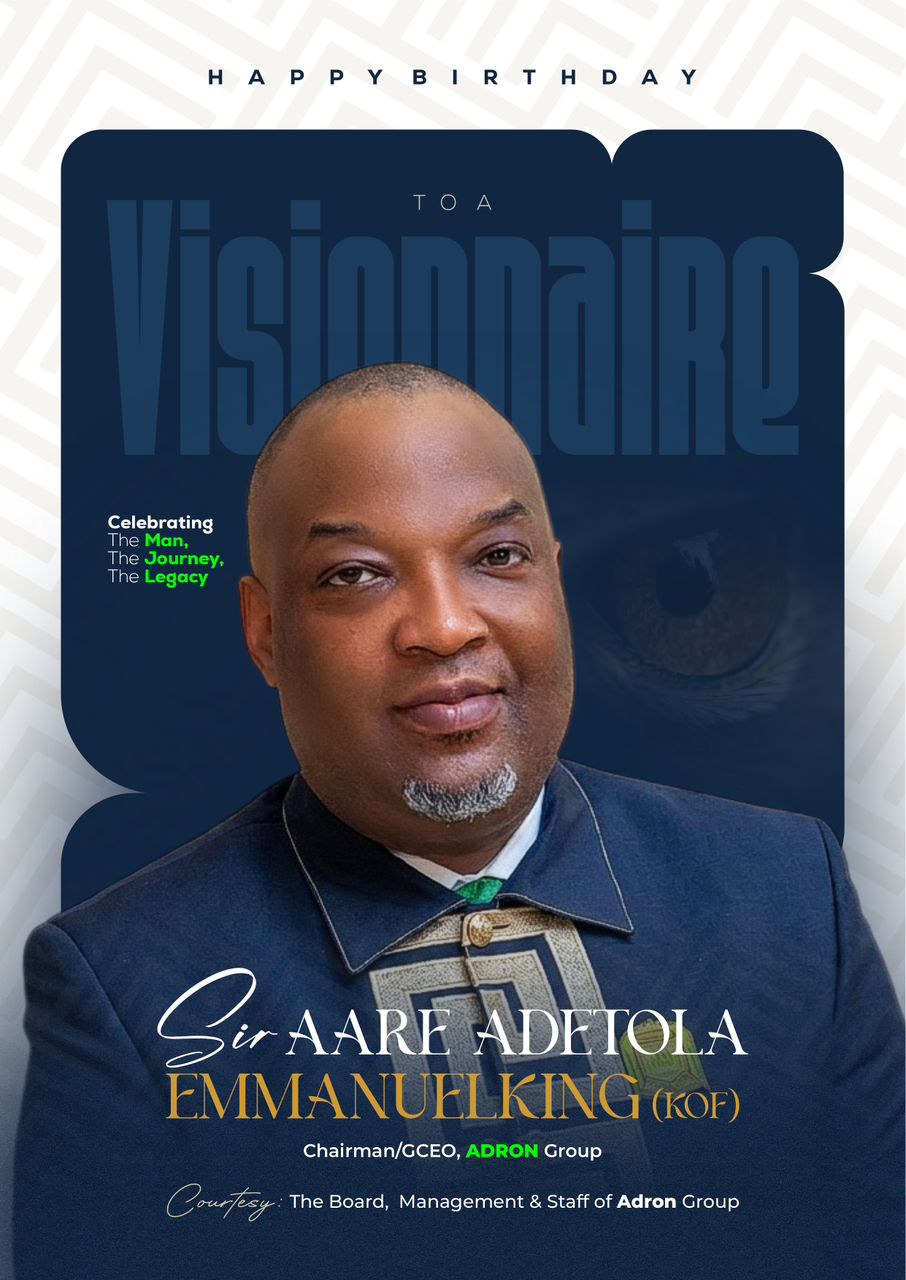
Adron Homes Celebrates Visionary Chairman, Aare Adetola Emmanuel King, at 51
The management and staff of Adron Homes and Properties Limited have joined family, friends, associates, and well-wishers across the globe to celebrate their Chairman and Chief Executive Officer, Aare Adetola EmmanuelKing, as he marks his 51st birthday.

In a statement released by the company, the milestone was described as a celebration of an exceptional leader whose vision, resilience, and entrepreneurial brilliance have not only transformed Adron Homes into a household name in Nigeria’s real estate sector but have also redefined affordable housing across the country.
Under his dynamic leadership, Adron Homes has continued to expand its footprint, delivering value-driven residential solutions while empowering thousands of Nigerians with opportunities for home ownership. His commitment to excellence, innovation, and customer satisfaction has remained the driving force behind the company’s sustained growth and industry leadership.
The statement further highlighted Aare EmmanuelKing’s passion for nation-building and community development, noting his significant contributions to job creation, youth empowerment, and the promotion of socio-economic development through real estate investments.
“As a leader, mentor, and visionary, Aare Adetola EmmanuelKing has consistently inspired a culture of excellence, integrity, and dedication within the organization. His ability to turn bold ideas into reality continues to position Adron Homes as a trailblazer in the industry,” the statement read.
The company expressed profound gratitude for his steadfast leadership and prayed for continued wisdom, strength, and sound health as he embarks on another year of impactful achievements.
As he celebrates his 51st birthday, the entire Adron Homes family proudly honours a man whose legacy continues to shape the future of real estate in Nigeria.
Happy 51st Birthday, Aare Adetola EmmanuelKing!
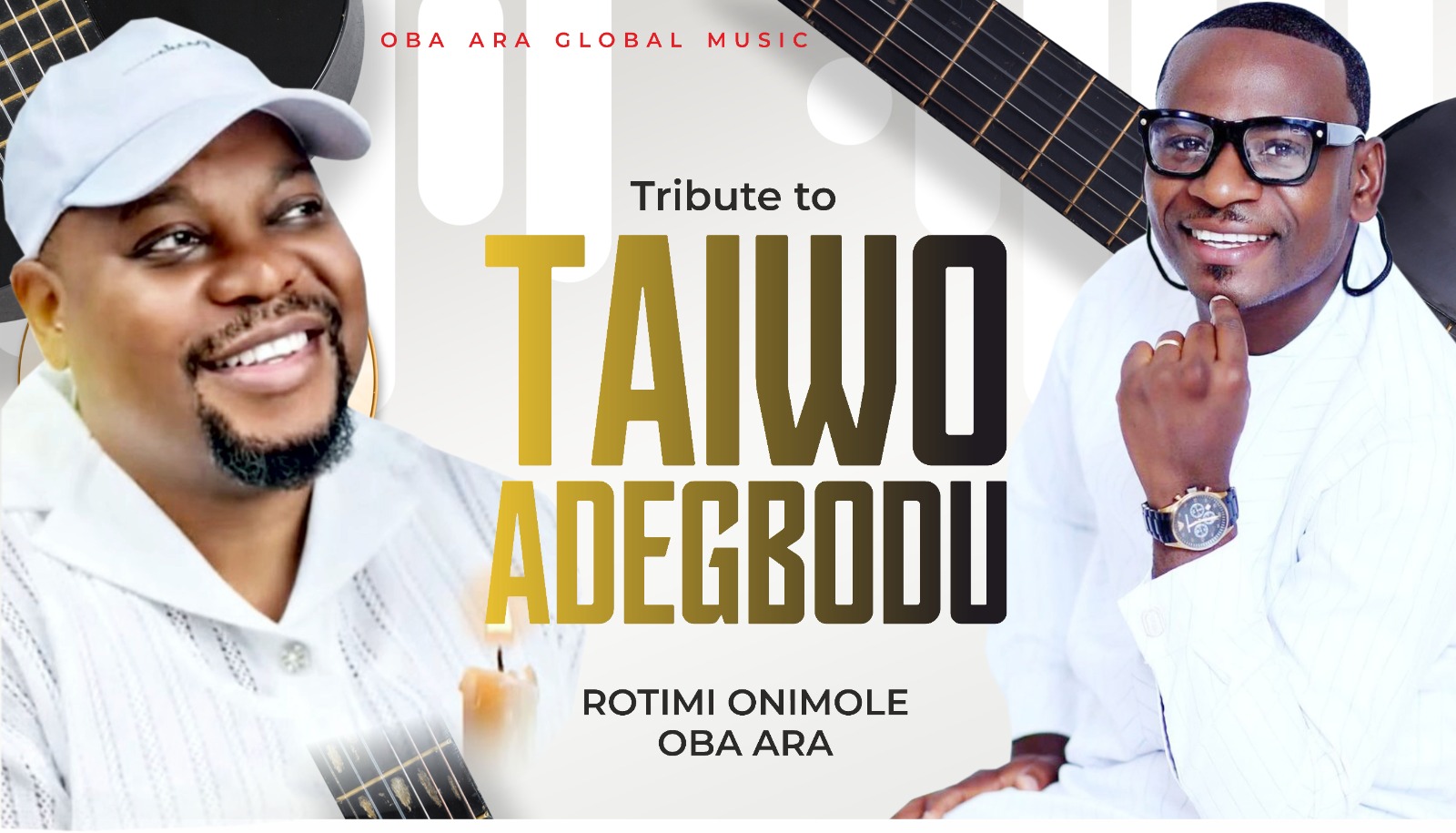
Oba Ara Releases Emotional Tribute to Late Taiwo Adegbodu
Taofik Afolabi
The gospel music community continues to grieve the painful loss of Taiwo Adegbodu, a beloved figure whose sudden departure left a deep void among fans, colleagues, and loved ones. In response to this loss, renowned gospel minister Rotimi Onimole, popularly known as Oba Ara, has released a moving tribute song that captures both the sorrow of the moment and the enduring legacy of the late singer.
Oba Ara, a proud son of Isale Eko, channels raw emotion throughout the song, using heartfelt lyrics and soul-stirring melodies to reflect on his personal connection with Taiwo Adegbodu. In the tribute, he openly expresses how deeply the news of Adegbodu’s passing shook him, describing it as a painful and unexpected loss that is difficult to come to terms with.
The song goes beyond mourning, it celebrates the life, ministry, and impact of Taiwo Adegbodu. Oba Ara highlights the late artist’s dedication to spreading the gospel through music, his inspiring voice, and the spiritual influence he had on many within and beyond Nigeria. Through powerful verses, he paints a picture of a man who lived for God and touched countless lives through his ministry.
Listeners have described the tribute as both comforting and deeply emotional, as it resonates with the collective grief of the gospel music community. It serves as a reminder that although Taiwo Adegbodu is no longer physically present, his music, message, and legacy will continue to live on.
In honoring his late colleague, Oba Ara not only pays his respects but also offers a source of healing for fans and fellow ministers, using music as a tool to process grief and celebrate a life well lived.
celebrity radar - gossips
Buratai, Fagbemi , Shagaya, Olofa, Others Eulogise Olowu Kuta’s Olori On 60th Birthday, Foundation Launch

Buratai, Fagbemi , Shagaya, Olofa, Others Eulogise Olowu Kuta’s Olori On 60th Birthday, Foundation Launch
Eminent personalities across the Nigeria stormed the TFK Event Centre, Bala Mohammed Way, Guzape, Abuja, to celebrate the 60th birthday of Olowu Kuta’s Olori, Queen Jumai Amoke and her Foundation Launch on Saturday 28, March 2026.

From former Chief of Army Staff, Lt Gen TY Buratai rtd, to the Minister of Justice and Attorney-General of the Federation, Prince Lateef Fagbemi; Olofa of Offa, HRM Oba Mufutau Gbadamosi. Even top businesswoman and socialite, Chief (Mrs) Bola Shagaya, was in attendance.


Other dignitaries were newly promoted Deputy Inspector-General of Police and former AIG Zone 2 , Lagos , Adegoke Fayoade, Major General Abdumalik, Major General Samuel Adebayo rtd (Fmr CDI);
Major General Anthony Omozoje rtd (Fmr Copp);
Alhaji Tajudeen Owoyemi (Asiwaju of Offa and CEO Radisson Hotel Nigeria;
Dr Waheed Olagunju, former managing director of Bank of Industry, Oniba of Iba, Lagos State, HRM Oba Dr Suleiman Raji ;
Justice Falola, Olu of Ile-Ogbo , Oba Adetoyese amongst many traditional rulers and captains of industry too numerous to mention.
Speaking at the occasion, the Chief Host, Olowu of Kuta, HRM Oba Dr Adekunle Oyelude Makama, CON , Tegbosun iii, who is also the husband of the celebrant commended Queen Jumai for ‘ her slender arms full of kindness’ to establish such humanitarian Foundation, ‘Amoke Children and mother in Need Foundation’ at a time Nigerians are going through economic crisis occassioned by the global meltdown.
Olowu also commended her steadfastness and love for the less privileged and downtrodden.
The monarch refrenced the task before his wife’s humanitarian gesture said her best is yet to come.
” Olori Amoke Jumai, I celebrate you. You will celebrate 70, 80, 90 and continue to shine as you continue to put a smile on people’s faces. I love you, “Olowu Kuta added.
To Lt Gen Buratai, a former army chief and former Nigerian Ambassador to Benin Republic, the reward of hard work is more work.
Buratai, who also doubles as Balogun Agba of Owu Kuta, a chieftaincy title reserved for a generalismo congratulated Queen Jumai for attaining the age of 60 in good health.
The retired army General said he’s not surprised by the turn out of eminent personalities across the country to celebrate the Olowu Kuta’s Olori because she merited it through her hospitality to all, adding that Allah the most merciful, most beneficial would accept all her act of ibadah.
The minister of Justice, Prince Fagbemi, was full of praises for Queen Jumai for deeming it fit to have a place in her heart to accommodate the needy and less privileged in ‘our society.’
Prince Fagbemi urged the guests to contribute generously to support the Foundation in order to continue to alleviate poverty and put a smile on the faces of the people.
” I congratulate you on your 60th birthday and Foundation Launch. I wish you many happy returns of the day and many more fruitful services to the country and motherland”, Prince Fagbemi added.
The celebrant, Queen Jumai who was grining from ear to ear thankfully said she was excited by the turn out and the response of the people to her foundation.
Queen Jumai, however, promised to continue to use her resources and donations received for the good of the needy and less privileged in the society.
” I want to appreciate my own Kabiesi Olofa of Offa , for his presence and im I’m using him as a point of contact to all other Kabiesis present here, the minister of justice and Attorney-General, you’re welcome, sir; Mrs Bola Shagaya, I salute your enterprise, Lt Gen Buratai, I’m grateful, sir; DIG Fayoade, Justice Falola and other dignitaries too numerous to mention, I thank you, all. To my darling husband, Kabiesi Olowu , I thank you immensely for your support. And to my family and friends, I thank you , all. E se pupo!”, she said.


-

 society6 months ago
Religion: Africa’s Oldest Weapon of Enslavement and the Forgotten Truth
-

 news4 months ago
WHO REALLY OWNS MONIEPOINT? The $290 Million Deal That Sold Nigeria’s Top Fintech to Foreign Interests
-

 society6 months ago
“You Are Never Without Help” – Pastor Gebhardt Berndt Inspires Hope Through Empower Church (Video)
-

 celebrity radar - gossips2 months ago
Dr. Chris Okafor Returns with Power and Fire of the Spirit -Mounts Grace Nation Altar with Fresh Anointing and Restoration Grace on February 1, 2026