
Politics
I Am Not A Coward, I Will Not Join APC: Bala Mohammed’s Defiant Stand Against Political Persecution and the Weaponisation of State Power in Nigeria

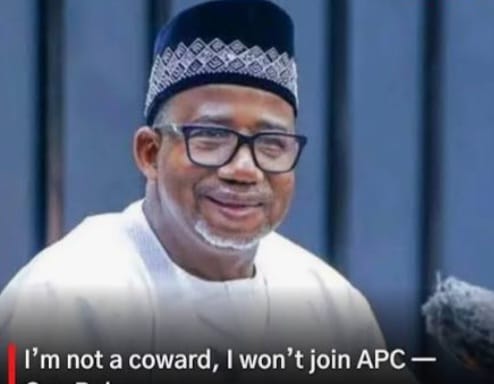
I Am Not A Coward, I Will Not Join APC: Bala Mohammed’s Defiant Stand Against Political Persecution and the Weaponisation of State Power in Nigeria.
By George Omagbemi Sylvester | Published by saharaweeklyng.com
“Governor Bala Mohammed Rejects Coercion, Affirms Loyalty to PDP and Exposes Dangerous Trends Undermining Democratic Pluralism in Nigeria.”
In a political environment increasingly defined by coercion, defections and the alarming weaponisation of state institutions, Governor Bala Abdulkadir Mohammed of Bauchi State has issued a defiant and historic statement that resonates far beyond his state borders: “ _I’m not a coward. I will not join them. I refuse to join their party_.” This declaration, made on January 2, 2026, is not just a personal pledge of political fidelity, but it is a clarion call for democratic integrity and resistance to authoritarian drift in Nigeria’s political landscape.

Bala Mohammed, a seasoned politician with decades of public service as a senator, former Federal Capital Territory (FCT) Minister and three-term Governor of Bauchi State committed under the banner of the Peoples Democratic Party (PDP), spoke with unwavering confidence as he received an award as Safety Ambassador from the Institute of Safety Professionals of Nigeria. His remarks came against the backdrop of allegations that federal agencies, most notably the Economic and Financial Crimes Commission (EFCC), have launched investigations and court actions he alleges are politically motivated and designed to intimidate him into abandoning his party.
An Unapologetic Stand Against Political Intimidation. Governor Mohammed’s posture is rooted in both principle and history. Having navigated multiple national positions (most notably as Minister of the Federal Capital Territory from 2010 to 2015 under President Goodluck Jonathan) Bala Mohammed is no stranger to the ebb and flow of Nigerian politics. Despite this experience, what he faces today is a distinct and troubling pattern: opposition leaders being singled out by powerful federal agencies in ways that blur the lines between legitimate law enforcement and political vendetta.
In his address in Bauchi, he pointed out that even with constitutional immunity as a sitting governor, his name (and that of his commissioner) was referenced in court matters with serious charges including terrorism financing, conspiracy and money laundering. He described these actions as part of an effort to criminalise him and coerce him into the ruling All Progressives Congress (APC).
This, he warned, is beyond mere political rivalry. It represents the weaponisation of state institutions, transforming bodies designed to uphold justice into instruments of political suppression. “The APC-led federal government thinks they can use the courts and institutions of government to persecute Nigerians who are not within their own party,” he said.
Why This Matters: Democratic Principles at Stake. At the heart of Governor Mohammed’s stance is a fundamental democratic principle: a politician should not be forced to change party allegiance under duress. In a healthy democracy, political competition should be decided in the marketplace of ideas and votes not through judicial pressure or law enforcement harassment.
Political scholar Robert Dahl once observed that “Democracy requires not only free and fair elections but also the freedom for opposition to campaign without fear of reprisal.” If this principle erodes, the very essence of pluralism is jeopardised. Bala Mohammed’s words underscore the urgency of this truth in Nigeria’s context.
Moreover, political analyst Professor Claude Ake of Nigerian political thought emphasised that “Democracy is not merely electoral competition; it is about the rules (and respect for those rules) that allow such competition.” When state institutions appear to serve one party’s ends, the legitimacy of Nigeria’s democratic order is tested. Bala Mohammed’s charge challenges Nigerians to ask whether their political institutions serve citizens equally or whether they have become tools for partisan advantage.

Allegations of Federal Abdication of Responsibility. Governor Mohammed did not limit himself to critiquing political pressure tactics. He also lambasted what he described as a failure of the federal government to deliver tangible development to Bauchi State, despite commanding a significant share of national resources. “In my state, they have not provided one kilometre of road. They have not provided water. Even security agencies (I am the one paying them to work for us) and they have the guts to talk,” he lamented.
This accusation strikes at two core issues plaguing Nigeria’s federal system: resource control imbalances and the insufficient delivery of basic infrastructure and security. Many governors, especially in opposition states, have long argued that federal allocation disparities weaken subnational governments and create dependency that can be exploited politically.
The governor further criticised the current tax regime, warning that policies implemented without adequate consideration of grassroots realities risk deepening poverty rather than alleviating it. This echoes concerns of economists like Ngozi Okonjo-Iweala, who have warned that fiscal policies must be balanced with economic growth and citizens’ welfare to avoid crippling the productive capacities of subnational units.
Resistance, Not Retreat. Perhaps the most compelling dimension of Governor Mohammed’s speech was his rejection of silence in the face of what he describes as political intimidation. He affirmed that peace and security do not require submission to coercion. “IF THEY WANT WAR, WE WILL GIVE THEM WAR. IF THEY WANT PEACE, WE WILL GIVE THEM PEACE,” he declared an underscoring and a commitment to resist victimisation while upholding order.
This posture (resolute yet rooted in democratic engagement) is reminiscent of civil rights leader Martin Luther King Jr.’s call to “stand up for justice, even if it means standing alone.” Bala Mohammed’s insistence on accountability, transparency and continued cooperation with the federal government for national development separates principled opposition from antagonistic defiance.
The Broader Political Context. Governor Mohammed’s remarks arrive amid a broader wave of political defection in Nigeria. In 2025, several governors and political figures left the PDP for the APC, driven by various motives and some ideological, others pragmatic. Yet Bala Mohammed has firmly resisted such trends. Two months before his recent stand, he reassured party faithful that he was not defecting and remained committed to the PDP’s vision, even as other governors departed.
His position also underscores a larger debate within Nigeria’s opposition ranks: how to rebuild a viable political alternative capable of challenging the APC’s dominance and presenting credible governance propositions for the 2027 general elections. As he declared earlier in 2025, defections would not sink the PDP and the party could reclaim political space with strategic leadership and grassroots engagement.
Final Take: A Defining Moment for Nigerian Democracy. Governor Bala Mohammed’s statement (“I AM NOT A COWARD. I WILL NOT JOIN APC”) is far more than a personal declaration. It is a reaffirmation of democratic choice, political courage and resistance to the misuse of power. In a climate where political coercion can easily be mischaracterised as loyalty shifts, his defiance becomes an emblem of democratic resilience.
For Nigeria to deepen its democratic culture, leaders across the spectrum must respect institutional neutrality and allow political competition to be resolved through public engagement, policy debates, and the will of the electorate, not through intimidation or judicial warfare.

As political theorist Samuel P. Huntington once remarked, “The essence of democracy is competition between alternatives.” Bala Mohammed’s bold stance exemplifies this essence and challenges all Nigerians (politicians and citizens alike) to hold fast to the ideals of free political choice, accountability and constitutional governance.





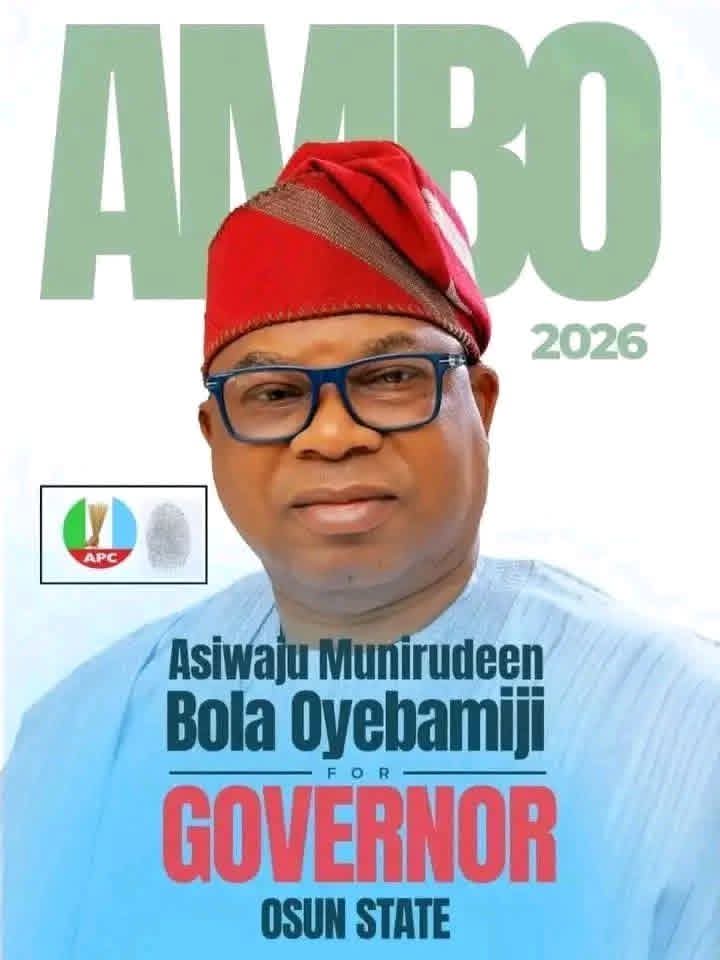
AMBO and the Osun Governorship Race: Assessing the Man, the Politics and the Vision
As political activities gather momentum ahead of the 2026 Osun State governorship election, a public affairs commentator, Oluseyi Olonade, has described the emergence of Asiwaju Munirudeen Bola Oyebamiji, popularly known as AMBO, as a significant development in the state’s political landscape.
In an article titled “Oyebamiji: The Man, The Politics and The Aspiration,” Olonade argued that the All Progressives Congress governorship hopeful possesses the character, experience and vision needed to reposition Osun State for sustainable growth.
According to the writer, Oyebamiji’s appeal stems from his extensive background in the banking sector, where he spent nearly three decades working with institutions including Wema Bank, Trans International Bank, Spring Bank and Enterprise Bank.
A native of Ikire in Irewole Local Government Area, Oyebamiji was described as a technocrat whose experience in corporate governance, finance and risk management has shaped his approach to public administration.
The article noted that his public service journey gained prominence in 2012 when he was appointed to oversee the then Osun State Investment Company Limited. Under his leadership, the organisation was reportedly restructured and transformed into Omoluabi Holdings Limited.
The writer further highlighted Oyebamiji’s tenure as Commissioner for Finance under successive APC administrations, where he was credited with managing the state’s finances during challenging economic periods.
Olonade also referenced Oyebamiji’s appointment as Managing Director of the National Inland Waterways Authority, describing it as further evidence of his administrative and leadership capabilities.
The article contrasted Oyebamiji’s governance philosophy with that of the current administration in Osun State, arguing that the APC aspirant favours institutional reforms, economic diversification and fiscal discipline.

According to the writer, Oyebamiji’s proposed agenda includes strengthening transparency in government spending, expanding internally generated revenue, attracting private-sector investments and promoting industrial and agricultural development.
The article also highlighted youth empowerment, entrepreneurship development and digital skills acquisition as key components of his vision for the state.
Olonade concluded that the forthcoming governorship election would present voters with a choice between different approaches to governance, expressing confidence that Oyebamiji’s experience and developmental agenda make him a strong contender in the race.
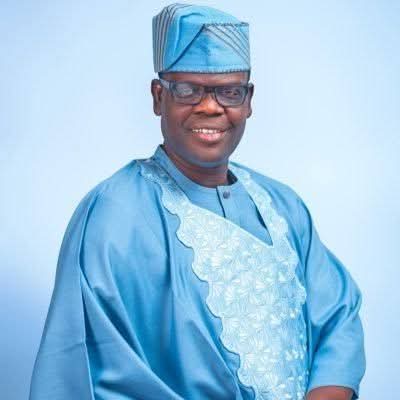
*Oselu Tiwa nTiwa Endorses Oriyomi Hamzat for Oyo Governorship*
A sociopolitical support group in Oyo State, Oselu Tiwa nTiwa, has declared its support for Alhaji Oriyomi Hamzat as the authentic governorship candidate of the Accord Party ahead of the forthcoming governorship election in the state.
The group made its position known in a statement jointly signed by its President, Mr. Adewale Oluwaseyi and Secretary, Alh. Adebayo Oyewole, on Thursday, describing Hamzat as a grassroots figure with strong connection to the people and a track record of humanitarian interventions across Oyo State.

According to the group, the endorsement followed what it described as careful observation of Hamzat’s leadership qualities, compassion and dedication to the welfare of ordinary citizens.
“Oriyomi Hamzat has consistently demonstrated empathy, courage and selfless commitment to humanity. Through his numerous interventions in the lives of ordinary citizens, he has become a symbol of hope to many families and communities,” the statement read.
Oselu Tiwa nTiwa also appealed to the national leadership of the Accord Party to prioritise the long-term future and electoral growth of the party in its decision-making process.
The group noted that Hamzat’s candidacy presents an opportunity for the party to strengthen its grassroots support base and expand its political relevance across Oyo State.
“We respectfully appeal to the National Leadership of the Accord Party to look beyond immediate political calculations and consider the bigger picture, the future growth, stability and electoral success of the party in Oyo State and beyond,” the statement added.
The group further expressed confidence in the leadership of the party, saying it believes the party’s national officers and stakeholders would take decisions that reflect fairness, inclusiveness and the collective interest of members.
While calling on party loyalists to remain calm and united, Oselu Tiwa nTiwa said continued consultations among stakeholders would help strengthen the Accord Party ahead of the election.
Signed:
Alh. Adebayo Oyewole,
Secretary.
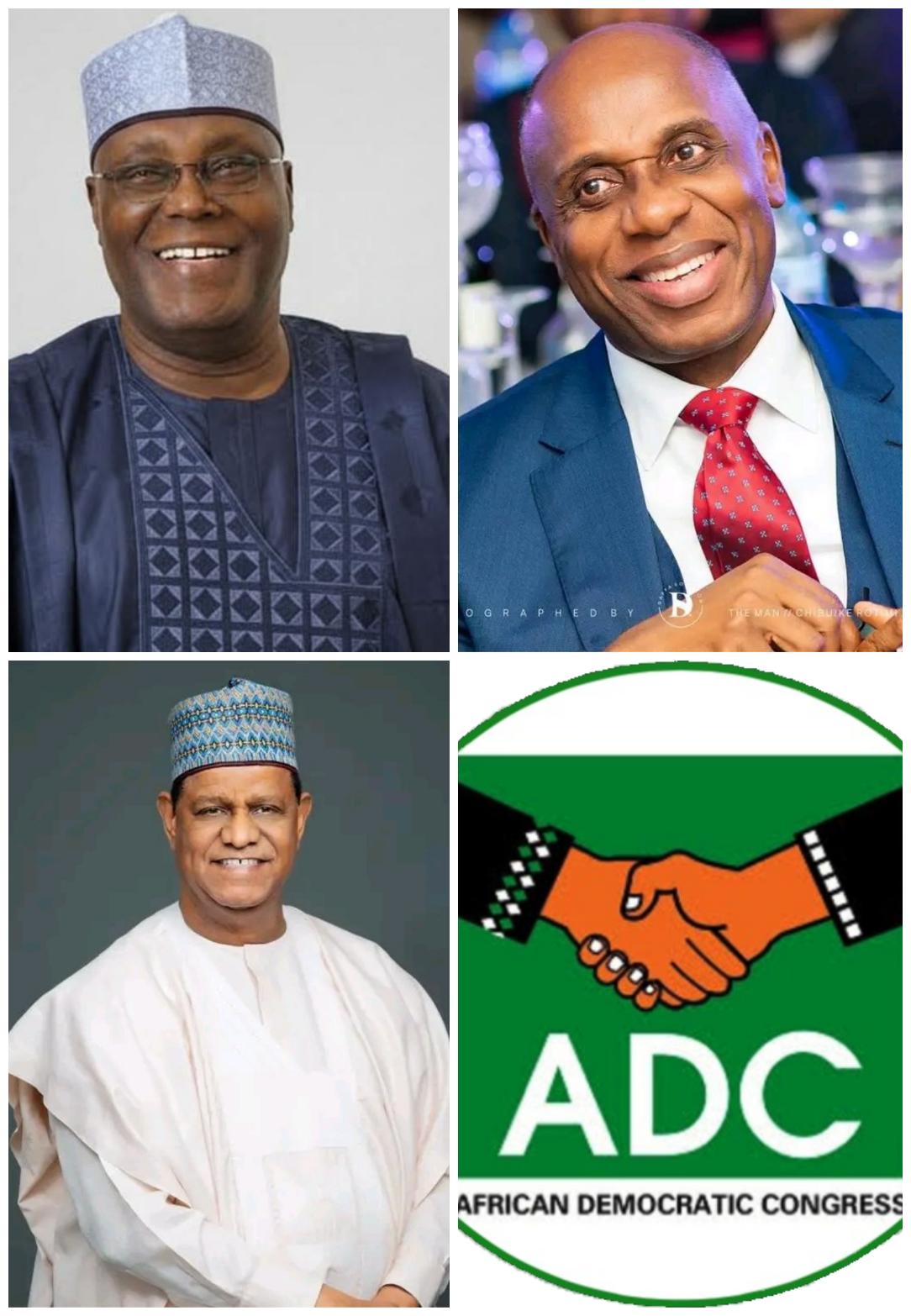
Atiku Set To Clinch ADC Presidential Ticket, Leads Amaechi, Hayatu-Deen In 34 States
Former Vice President of Nigeria and frontline presidential aspirant of the African Democratic Congress (ADC), Atiku Abubakar, is projected to emerge winner of the party’s presidential primaries, according to impeccable sources in Abuja.
The primaries, conducted across over 8,000 wards in the 36 states of the federation and the Federal Capital Territory, reportedly placed Atiku far ahead of his closest rivals — former Rivers State Governor, Rotimi Amaechi, and former Chairman of the Nigerian Economic Summit Group, Mohammed Hayatu-Deen.

Highly placed party insiders disclosed that Atiku is currently leading in 34 states, including the FCT, after securing dominance across the 19 Northern states, the five South-East states, and the six South-West states, while also maintaining a strong showing in at least three states in the South-South geopolitical zone.
The sources added that the outcome reflects what they described as “an overwhelming nationwide acceptance” of the former vice president within the opposition party ahead of the 2027 general election.
Meanwhile, the ADC leadership has invited members of the press to the official announcement of the final collated results scheduled for 11:00 a.m. on Tuesday, May 26, 2026, in Abuja.
The declaration of results is expected to be broadcast live on ARISE Television and two other major television stations, while also being livestreamed on the party’s official social media platforms on X and Facebook.
Speaking ahead of the announcement, the founding National Chairman of the ADC, Chief Ralph Nwosu, said the decision to televise the exercise live was aimed at promoting transparency and democratic accountability.
“We want millions of Nigerians at home and in the Diaspora to witness democracy in action,” Nwosu said.
He further revealed that the party leadership would encourage all three presidential aspirants to publicly embrace a peace accord and commit themselves to working together in unity for the party’s success.
According to him, the move is necessary to strengthen internal cohesion and position the ADC for victory in the presidential election scheduled for January 16, 2027.
Details later.


- When women farm better, Eswatini eats better June 3, 2026
- Togo Hosts the 8th Annual Forum of National Volunteer Agencies in the Economic Community of West African States (ECOWAS) Region June 3, 2026
- Indigenous Peoples gravely vulnerable to Ebola epidemic, warn United Nations (UN) independent experts June 3, 2026
- Meeting between Parliamentary Vice-Minister ONISHI and His Excellency (H.E.) Mr. Cosgrow, Principal Minister and Minister for Agriculture, Fisheries and Blue Economy of Seychelles June 3, 2026
- Eritrea: Construction of Elementary School in Gogni Sub-Zone June 3, 2026
- African Union Commission (AUC) Chairperson His Excellency (H.E.) Mahmoud Ali Youssouf highlighted thePermanent Representatives’ Committee (PRC) critical role in advancing the Union’s agenda and laying the groundwork for the forthcoming Mid-Year Coordination Meeting (MYCM) June 3, 2026
- Eritrea: Eighth Grade National Examination Commences June 3, 2026
- Many Africans see justice system as unequal, costly, and slow, Afrobarometer survey reveals June 3, 2026
- Prof. Benedict Oramah to Chair Finance Summit as African Energy Week (AEW) 2026 Prepares for Major Deal Flow June 3, 2026
- The Islamic Development Bank (IsDB) Group Affiliates to Host the 14th Private Sector Forum in Baku, Azerbaijan (16-19 June 2026) June 3, 2026
- When women farm better, Eswatini eats better June 3, 2026
- Togo Hosts the 8th Annual Forum of National Volunteer Agencies in the Economic Community of West African States (ECOWAS) Region June 3, 2026
- Indigenous Peoples gravely vulnerable to Ebola epidemic, warn United Nations (UN) independent experts June 3, 2026
- Meeting between Parliamentary Vice-Minister ONISHI and His Excellency (H.E.) Mr. Cosgrow, Principal Minister and Minister for Agriculture, Fisheries and Blue Economy of Seychelles June 3, 2026
- Eritrea: Construction of Elementary School in Gogni Sub-Zone June 3, 2026
- African Union Commission (AUC) Chairperson His Excellency (H.E.) Mahmoud Ali Youssouf highlighted thePermanent Representatives’ Committee (PRC) critical role in advancing the Union’s agenda and laying the groundwork for the forthcoming Mid-Year Coordination Meeting (MYCM) June 3, 2026
- Eritrea: Eighth Grade National Examination Commences June 3, 2026
-

 news6 months ago
WHO REALLY OWNS MONIEPOINT? The $290 Million Deal That Sold Nigeria’s Top Fintech to Foreign Interests
-

 society1 month ago
SOCIAL MEDIA IS NOT A BATTLEFIELD COMMAND – WHY THE NIGERIAN ARMY’S ACTION AGAINST JUSTICE CRACK IS A NATIONAL SECURITY IMPERATIVE
-

 celebrity radar - gossips4 months ago
Dr. Chris Okafor Returns with Power and Fire of the Spirit -Mounts Grace Nation Altar with Fresh Anointing and Restoration Grace on February 1, 2026
-

 celebrity radar - gossips6 months ago
Prophet Kingsley Aitafo Releases 2026 Prophecy: ‘Nigeria Will Rise, but the World Must Prepare for Turbulence’