
Politics
PDP’s Resurgence: Forward Ever, Backward Never

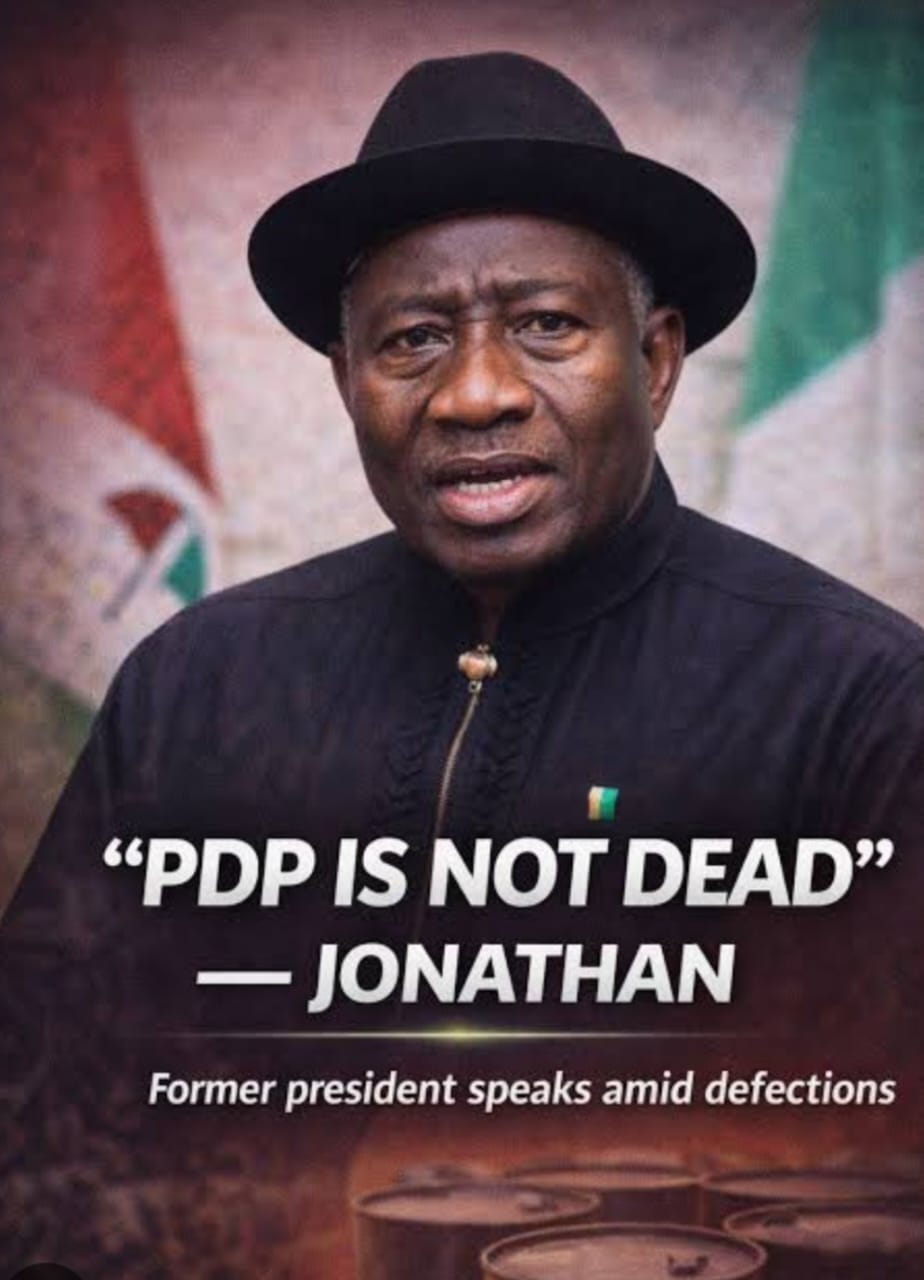
PDP’s Resurgence: Forward Ever, Backward Never.
By George Omagbemi Sylvester
Published by saharaweeklyng.com
“Why Resolve, Reform and National Purpose Will Propel the Peoples Democratic Party Back to Victory.”
“FORWARD EVER, BACKWARD NEVER.” These words embody not only a mantra but a clarion call to persistence, strategic renewal and unwavering resolve. In the context of Nigeria’s opposition politics, this phrase captures the essence of why the Peoples Democratic Party (PDP), despite its challenges, can and will emerge victorious, not as a relic of past triumphs, but as a revitalised force affirming democratic choice and national progress.
To appreciate this assertion, it is essential to examine the PDP’s past, the obstacles it faces today, the evolving political landscape in Nigeria and the pathway that leads toward political success. At the core of this narrative is a simple truth: political resolve (when anchored in reform, unity and purpose) shapes eventual triumph.
From Dominance to Diminishment: A Historical Reflection. The PDP was born in 1998 as Nigeria transitioned from decades of military rule to democratic governance. For sixteen uninterrupted years (from 1999 to 2015) the party dominated Nigeria’s political landscape, winning consecutive presidential elections, controlling a majority of federating units and shaping policy across the nation. Its national reach and inclusive structure allowed it to operate not merely as a party but as a dominant stabilising force in the nascent Fourth Republic.
Yet, the party’s strength ultimately contributed to its vulnerability. Broad inclusivity without equally robust internal discipline gradually eroded foundational coherence. By 2015, the PDP lost the presidency, marking the beginning of a period of tumult, introspection and transformation.
The years that followed revealed leadership crises, factional struggles and public perceptions of a party at war with itself. Infighting over zoning agreements, succession and internal primaries eroded unity. The aftermath of the 2023 elections, in which PDP candidate Atiku Abubakar was defeated by the incumbent and legal challenges were mounted, intensified internal divisions, contributing to defections and weakening the party’s organisational coherence.
At its nadir in late 2025, the PDP governed only four states nationwide, compared with double-digit holdings in prior years which is a dramatic reduction that laid bare the seriousness of its challenges.
Facing the Storm: Challenges That Tested Resolve. Critics have depicted the PDP as a party in decline, fractured and unable to effectively challenge the ruling All Progressives Congress (APC). Internal crises have frequently dominated headlines with disputes between governors and national leaders, court battles over leadership and factional discord have plagued the party’s public image.
Political analysts note that these disputes at times overshadowed substantive political engagement with Nigerians on core issues like insecurity, unemployment, economic stagnation and infrastructure deficits. Some state chapters struggled operationally and defections by key figures accentuated perceptions of organisational decline.
However, to focus solely on weaknesses obscures the resilience embedded in the PDP’s DNA. Throughout its history, the PDP has survived political setbacks before. It has re-emerged, recalibrated and adjusted when confronted with strategic adversity. This historical pattern of resilience is the foundation upon which its recalibration for future success rests.
A New Strategic Framework: Unity, Reform and Grassroots Renewal. The path to victory for the PDP is not merely nostalgic but rooted in strategic reform. Political scientist Professor Adebanwi A. once observed: “Political resurgence is not born from mnemonic nostalgia but from reinvigoration of purpose and reengagement with the people.” This principle (bridging ideology with public service) is central to the PDP’s forward march.
1. Internal Reconciliation and Leadership Reform.
Unity within the party is not sentimental; it is strategic. Reconciliation among factions, genuine conflict resolution, and adherence to constitutional procedures build trust within the organisation and among Nigerians who look for credible choices beyond the incumbent party. Efforts at reconciliation (such as establishing disciplinary, constitutional reform and unity committees) reflect recognition that old power struggles must yield to common purpose. These steps, if sincerely implemented, strengthen organisational cohesion and signal to the electorate that the PDP is committed to internal democracy and accountability.
2. Policy Reorientation Around Citizen Priorities.
Nigerians demand governance that delivers security, economic opportunity, job creation and social inclusion. A reformed PDP that articulates an actionable, evidence-based policy platform (one rooted in improving everyday life) will resonate with voters eager for alternatives that reflect lived realities. The party’s intellectual capital should be marshalled toward a comprehensive platform that responds to issues such as inflation, educational access, healthcare delivery and national security. Opposition without constructive policy proposals will falter; opposition with vision endures.
3. Grassroots Mobilisation and Youth Engagement.
Nigeria’s electorate is young. The vitality of the PDP’s future rests with Nigerians under 35 who seek opportunities and credible representation. A revitalised PDP strategy must invest in genuine grassroots mobilisation, youth engagement initiatives and policy platforms that reflect the aspirations of a new generation. Embedded within this strategy is the understanding that political resurgence is not simply electoral but societal though rooted in inclusion, empowerment and shared purpose.
The International Dimension: Democracy, Competition and Choice. Nigerians are not alone in navigating the challenges of democratic competition. Globally, vibrant democracies thrive where opposition parties are strong, cohesive and capable of offering credible alternatives. The strength of a political opposition (whether in Latin America, Asia, or Africa) is often the barometer of democratic resilience.
Prominent democratic theorist Dr. Joseph Nye once wrote, “Political competition does not weaken statecraft; it strengthens it.” In this light, the PDP’s resurgence is not a Nigerian parochial interest but part of a broader affirmation of competitive democracy, where choices are articulated, alternatives refined and the electorate empowered.
International observers often view Nigeria as a bellwether of democratic vitality in Africa. The resurgence of a strong opposition reflects well on democratic institutions and fosters confidence in Nigeria’s political trajectory. Therefore, an emergent PDP (resolute, reformed and future-focused) reinforces the global perception of Nigeria as a thriving democracy.
The Broader Opposition Landscape: Unity and Coalition Politics. It is also important to recognise that the PDP’s prospects are intrinsically linked to the broader opposition ecosystem in Nigeria. Coalitions and strategic alliances (like the recently formed efforts among key opposition leaders to challenge one-party dominance) expand the political space and create dynamic pathways for competitive politics.
Rather than retreating into isolation, the PDP’s forward strategy embraces cooperation where appropriate, without compromising core values. In doing so, it builds a political front that reflects diversity yet remains anchored in shared principles of democratic governance.
Closing Perspective: Forward Ever With Victory Through Resolve. The challenges the PDP has faced in recent years are real with organisational fragmentation, public scepticism, defections and electoral setbacks attest to a period of difficulty. Yet, political history teaches that adversity is not destiny. What defines political success is not the absence of struggle but the resolve to overcome it.
The PDP’s future lies in strategic unity, reform-oriented leadership, powerful and people-centered policy articulation and inclusive mobilisation that resonates across demographics.
As veteran Nigerian political commentator Professor Olabanji Olajide once said, “A political party that listens, learns and adapts gains not just followers, but trust.” It is trust (not nostalgia) that will unlock the PDP’s pathway to victory.
“Forward ever, backward never” is more than a slogan. It is a commitment to resilience, renewal and Nigeria’s democratic promise. With unity, strategic vision and grassroots engagement, the Peoples Democratic Party will emerge not merely victorious in electoral terms, but as a renewed political force anchored in the will and aspirations of Nigerians; ready to lead a united and prosperous Nigeria into a brighter future.





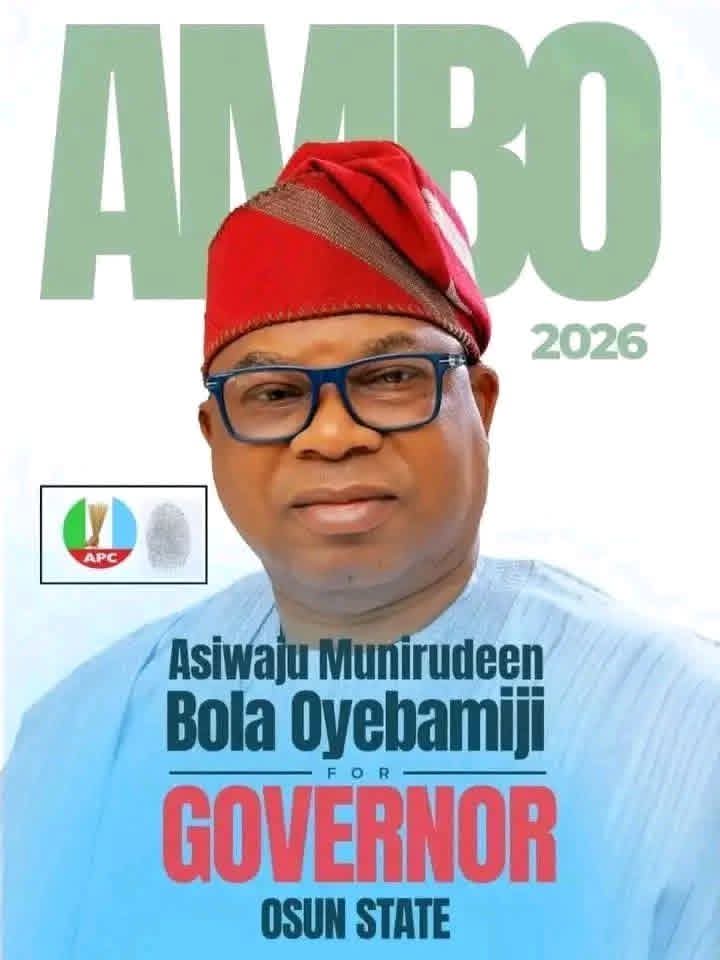
AMBO and the Osun Governorship Race: Assessing the Man, the Politics and the Vision
As political activities gather momentum ahead of the 2026 Osun State governorship election, a public affairs commentator, Oluseyi Olonade, has described the emergence of Asiwaju Munirudeen Bola Oyebamiji, popularly known as AMBO, as a significant development in the state’s political landscape.
In an article titled “Oyebamiji: The Man, The Politics and The Aspiration,” Olonade argued that the All Progressives Congress governorship hopeful possesses the character, experience and vision needed to reposition Osun State for sustainable growth.
According to the writer, Oyebamiji’s appeal stems from his extensive background in the banking sector, where he spent nearly three decades working with institutions including Wema Bank, Trans International Bank, Spring Bank and Enterprise Bank.
A native of Ikire in Irewole Local Government Area, Oyebamiji was described as a technocrat whose experience in corporate governance, finance and risk management has shaped his approach to public administration.
The article noted that his public service journey gained prominence in 2012 when he was appointed to oversee the then Osun State Investment Company Limited. Under his leadership, the organisation was reportedly restructured and transformed into Omoluabi Holdings Limited.
The writer further highlighted Oyebamiji’s tenure as Commissioner for Finance under successive APC administrations, where he was credited with managing the state’s finances during challenging economic periods.
Olonade also referenced Oyebamiji’s appointment as Managing Director of the National Inland Waterways Authority, describing it as further evidence of his administrative and leadership capabilities.
The article contrasted Oyebamiji’s governance philosophy with that of the current administration in Osun State, arguing that the APC aspirant favours institutional reforms, economic diversification and fiscal discipline.

According to the writer, Oyebamiji’s proposed agenda includes strengthening transparency in government spending, expanding internally generated revenue, attracting private-sector investments and promoting industrial and agricultural development.
The article also highlighted youth empowerment, entrepreneurship development and digital skills acquisition as key components of his vision for the state.
Olonade concluded that the forthcoming governorship election would present voters with a choice between different approaches to governance, expressing confidence that Oyebamiji’s experience and developmental agenda make him a strong contender in the race.
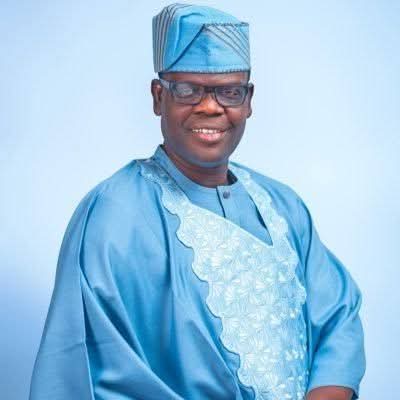
*Oselu Tiwa nTiwa Endorses Oriyomi Hamzat for Oyo Governorship*
A sociopolitical support group in Oyo State, Oselu Tiwa nTiwa, has declared its support for Alhaji Oriyomi Hamzat as the authentic governorship candidate of the Accord Party ahead of the forthcoming governorship election in the state.
The group made its position known in a statement jointly signed by its President, Mr. Adewale Oluwaseyi and Secretary, Alh. Adebayo Oyewole, on Thursday, describing Hamzat as a grassroots figure with strong connection to the people and a track record of humanitarian interventions across Oyo State.

According to the group, the endorsement followed what it described as careful observation of Hamzat’s leadership qualities, compassion and dedication to the welfare of ordinary citizens.
“Oriyomi Hamzat has consistently demonstrated empathy, courage and selfless commitment to humanity. Through his numerous interventions in the lives of ordinary citizens, he has become a symbol of hope to many families and communities,” the statement read.
Oselu Tiwa nTiwa also appealed to the national leadership of the Accord Party to prioritise the long-term future and electoral growth of the party in its decision-making process.
The group noted that Hamzat’s candidacy presents an opportunity for the party to strengthen its grassroots support base and expand its political relevance across Oyo State.
“We respectfully appeal to the National Leadership of the Accord Party to look beyond immediate political calculations and consider the bigger picture, the future growth, stability and electoral success of the party in Oyo State and beyond,” the statement added.
The group further expressed confidence in the leadership of the party, saying it believes the party’s national officers and stakeholders would take decisions that reflect fairness, inclusiveness and the collective interest of members.
While calling on party loyalists to remain calm and united, Oselu Tiwa nTiwa said continued consultations among stakeholders would help strengthen the Accord Party ahead of the election.
Signed:
Alh. Adebayo Oyewole,
Secretary.
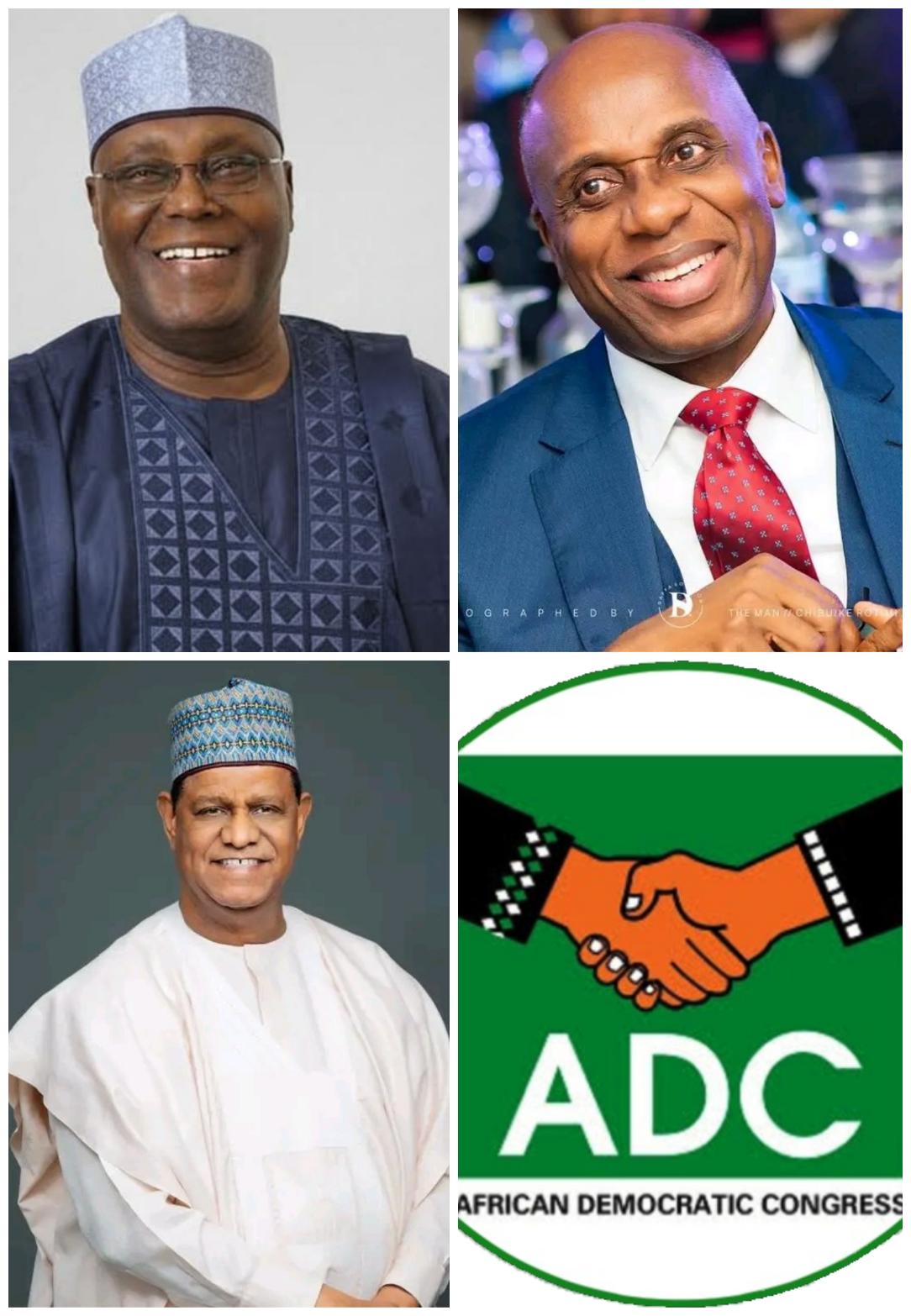
Atiku Set To Clinch ADC Presidential Ticket, Leads Amaechi, Hayatu-Deen In 34 States
Former Vice President of Nigeria and frontline presidential aspirant of the African Democratic Congress (ADC), Atiku Abubakar, is projected to emerge winner of the party’s presidential primaries, according to impeccable sources in Abuja.
The primaries, conducted across over 8,000 wards in the 36 states of the federation and the Federal Capital Territory, reportedly placed Atiku far ahead of his closest rivals — former Rivers State Governor, Rotimi Amaechi, and former Chairman of the Nigerian Economic Summit Group, Mohammed Hayatu-Deen.

Highly placed party insiders disclosed that Atiku is currently leading in 34 states, including the FCT, after securing dominance across the 19 Northern states, the five South-East states, and the six South-West states, while also maintaining a strong showing in at least three states in the South-South geopolitical zone.
The sources added that the outcome reflects what they described as “an overwhelming nationwide acceptance” of the former vice president within the opposition party ahead of the 2027 general election.
Meanwhile, the ADC leadership has invited members of the press to the official announcement of the final collated results scheduled for 11:00 a.m. on Tuesday, May 26, 2026, in Abuja.
The declaration of results is expected to be broadcast live on ARISE Television and two other major television stations, while also being livestreamed on the party’s official social media platforms on X and Facebook.
Speaking ahead of the announcement, the founding National Chairman of the ADC, Chief Ralph Nwosu, said the decision to televise the exercise live was aimed at promoting transparency and democratic accountability.
“We want millions of Nigerians at home and in the Diaspora to witness democracy in action,” Nwosu said.
He further revealed that the party leadership would encourage all three presidential aspirants to publicly embrace a peace accord and commit themselves to working together in unity for the party’s success.
According to him, the move is necessary to strengthen internal cohesion and position the ADC for victory in the presidential election scheduled for January 16, 2027.
Details later.


- Joint Statement by the World Health Organization (WHO) and Food and Agriculture Organization of the United Nations (FAO) in South Africa on World Food Safety Day 2026: From burden to solutions – safe food everywhere June 7, 2026
- Liberia: President Boakai Oversees Signing of US$125 Million in World Bank Financing Agreements for Digital Connectivity, Renewable Energy, and Road Infrastructure June 7, 2026
- President Mahama explores Belarus’ agro-industrial hub; seeks partnerships to boost Ghana’s food security June 7, 2026
- National Insurance Corporation of Eritrea (NICE): Shareholders’ Annual Regular Meeting June 6, 2026
- World Cup accredited journalists raise concerns over unfair United States (US) visa restrictions, International Sports Press Association (AIPS) calls on FIFA to intervene June 6, 2026
- Ghana: President Mahama arrives in Belarus, lays wreath at Victory Monument June 6, 2026
- Liberia: President Boakai Advances Clean Energy Agenda; Dedicates 20-Megawatt Solar Power Plant at Mount Coffee June 6, 2026
- African Union (AU) Commission Chairperson mourns Passing of the Former Angola Minister of Foreign Affairs June 6, 2026
- Economic Community of West African States (ECOWAS) Welcomes Students on an Educational Visit to Its Headquarters June 6, 2026
- Seychelles: President Patrick Herminie attended Official Opening of Rise and Shine Day Care Centre at Mont Fleuri June 6, 2026
- Joint Statement by the World Health Organization (WHO) and Food and Agriculture Organization of the United Nations (FAO) in South Africa on World Food Safety Day 2026: From burden to solutions – safe food everywhere June 7, 2026
- Liberia: President Boakai Oversees Signing of US$125 Million in World Bank Financing Agreements for Digital Connectivity, Renewable Energy, and Road Infrastructure June 7, 2026
- President Mahama explores Belarus’ agro-industrial hub; seeks partnerships to boost Ghana’s food security June 7, 2026
- National Insurance Corporation of Eritrea (NICE): Shareholders’ Annual Regular Meeting June 6, 2026
- World Cup accredited journalists raise concerns over unfair United States (US) visa restrictions, International Sports Press Association (AIPS) calls on FIFA to intervene June 6, 2026
- Ghana: President Mahama arrives in Belarus, lays wreath at Victory Monument June 6, 2026
- Liberia: President Boakai Advances Clean Energy Agenda; Dedicates 20-Megawatt Solar Power Plant at Mount Coffee June 6, 2026
-

 news6 months ago
WHO REALLY OWNS MONIEPOINT? The $290 Million Deal That Sold Nigeria’s Top Fintech to Foreign Interests
-

 society1 month ago
SOCIAL MEDIA IS NOT A BATTLEFIELD COMMAND – WHY THE NIGERIAN ARMY’S ACTION AGAINST JUSTICE CRACK IS A NATIONAL SECURITY IMPERATIVE
-

 celebrity radar - gossips4 months ago
Dr. Chris Okafor Returns with Power and Fire of the Spirit -Mounts Grace Nation Altar with Fresh Anointing and Restoration Grace on February 1, 2026
-

 celebrity radar - gossips6 months ago
Prophet Kingsley Aitafo Releases 2026 Prophecy: ‘Nigeria Will Rise, but the World Must Prepare for Turbulence’