
society
Is Yahaya Bello the Sinner or the Sinned Against?* By Smart Origbo

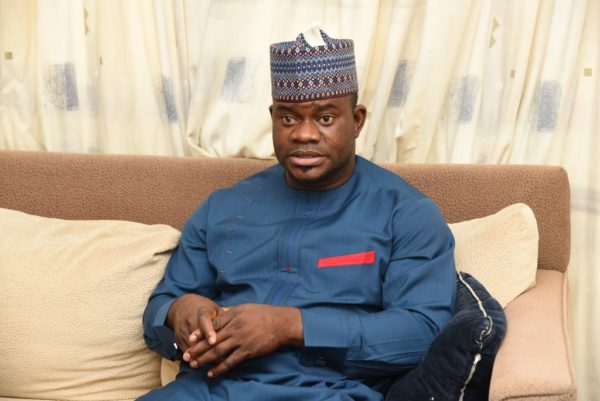
*Is Yahaya Bello the Sinner or the Sinned Against?*
By Smart Origbo
For unsavoury reasons, the story of the immediate past governor of Kogi State, Mr Yahaya Bello has literally seized the media space in the country, week-in, week-out.
The hide -and seek game between Bello and the Economic and Financial Crimes Commission (EFCC), blew open a forthnight ago when the anti-graft agency decided to “catch” Bello right in his house at the Wuse district in Abuja.
The agency had barricaded the street forbidding even residents from entering or exiting the street. The planned arrest turned a fiasco as the sitting Kogi State governor, Governor Usman Ododo was alleged to have nestled Yahaya Bello into his car and driven him out of the vicinity, basking in the immunity that covers him and even his car.
Ever since then, the polity had been agog with the issue of Bello. Opinions have been divided whether or not the former Kogi governor is the sinner or the one sinned against.
The way the EFCC has presented Yahaya Bello to the polity, with all the accompanying drama, is that Bello is a thief who must be stripped at the market square for maximum shame. But those who are more circumspect and critical in criminal procedures have faulted the approach of the EFCC.
Those who so believe, argue that the EFCC has breached the due process in an attempt to hastily humiliate the former governor, having pasted on him the tag of a crooked thief, without allowing the court to do so.
Perhaps it is in the fear that this may happen that the former governor had secured a court order forbidding the anti-graft agency from arresting or harassing him. But the EFCC in believing that Yahaya Bello has a case to answer, had appealed against that order. While the appeal is yet to be heard, the EFCC moved his men, in a gestapo fashion, to go for Bello’s jugular. This happened few days to the date the said appeal by the EFCC was due to be heard in the court.
So the question arises: why the haste to breach legal due process on the part of the EFCC, thus causing a needless social hoopla? If the anti-graft commission was so sure that it could do as it pleases, regardless of the provisions of the law, then why did it bother going to court to vacate the order stopping it from inviting, arresting or harassing Bello? Yes, nobody (including Yahaya Bello) is above the law, but is the EFCC above the law?
It is doubly tragic and ironical that the EFCC is currently being run and headed by Ola Olukoyede, a lawyer of over 22 years experience. So, which part of the law he read permits him to pre-empt the pronouncement of the court by deciding to do as he wants, regardless of constitutionally laid down procedure?
Indeed, even if the EFCC had a good case against Bello, the way and manner it has gone about it has despoiled the case fundamentally. And this prosecutorial incapacity is one reason the EFCC had lost many of its good cases in the past. Does the EFCC need to be schooled on the basic ethos of the law which pays great attention to, not what done, but how done?Little wonder that the EFCC has, on its own accord, now withdrawn the appeal against the court injunction restraining the EFCC from arresting Bello, allegedly on the grounds that events have overtaken the appeal. What events have overtaken it? A sham claim!
It is even more curious to know that the same EFCC Chairman is a Pastor. As a senior clergy man, his actions both in private and public appearances should, like Ceaser’s wife, be above board. But sadly, this outing of Pastor Olukoyede is shamefully dirtied by procedural impropriety, fueling suspicion that his actions are politically motivated. A case of the voice of Jacob and the hands of Esau.
What is more? In all the back-and-forth of the matter, the EFCC has not been able to prove that it actually formally invited Bello for questioning over the pending allegations of money laundering. The closest to this was when the EFCC chairman, himself recently said he had put a call to Bello inviting him to his office for interrogation. No formal letter of invitation was ever sent to him. What if it is not true that Olukoyede is not telling the whole truth? It is certain that if the EFCC had formally invited Yahaya Bello, they would have long circulated the letter on the social media.
Did the EFCC not breach the process by suddenly sending its men to arrest Bello without formally inviting him for questioning? Even a suspected criminal, with bloody hands, is presumed innocent until proven guilty by a court of competent jurisdiction. This is what the law prescribes. Mr Olukoyede should know this. Neither he nor the EFCC can be a judge in their own case. It is when this process is duly followed that prosecution is not seen as persecution.
Even if indeed, Bello is a sinner and has some questions to answer, the EFCC has turned him to a man more sinned against by seemingly bungling the prosecution procedure. Justice and the route to it must be freed from emotion, propaganda and media trial. Until the EFCC learns to follow due process, its actions and inactions will continue to smell political.
Its best antidote is strict adherence to the rule of law.The EFCC cannot resort to self-help by side-stepping the provisions of the law. It must show its committed adherence to legal and judicial due process in securing convictions of accused persons.
The EFCC had furthered its affront on propriety by demanding the refund of the so-called school fees paid by Bello for his children in an Abuja high-nitch school. The school allegedly refunded the said fees which were paid in dollars, out of the intimidation tendencies of EFCC. The EFCC has a case with Yahaya Bello, not the school. So, coercing the school to refund the fees paid is clear case of institutional bullying.
In all, the law in any society is put in place to shield the citizenry from any form of political or institutional thralldom and so the EFCC, no matter how important and needed its role(s) might be in getting the system to function effectively, must be seen to be doing the right things at the right time and in the right way. Anything short of that will be a perfect prescription for chaos and crisis.
*Origbo is a lawyer and public affairs analyst*





Police Day 2026: IGP Disu Leads Nationwide Walkathon To Strengthen Community Trust
The Inspector-General of Police, Olatunji Disu, on Tuesday led the management team, alongside officers and personnel of the Nigeria Police Force, in a nationwide walkathon to commemorate the 2026 National Police Day.
The event, held across state capitals and the Federal Capital Territory, formed part of activities marking Day Two of the annual celebration, themed “Community Partnership: Building Trust.”
The symbolic exercise, which drew participation from both police personnel and members of the public, was aimed at showcasing unity, discipline, and a renewed commitment to community policing and public safety.
According to the Force leadership, the walkathon underscores the Nigeria Police Force’s resolve to strengthen public trust, deepen engagement with citizens, and enhance collaboration in tackling security challenges across the country.
Participants described the initiative as a practical step toward bridging the gap between law enforcement and the communities they serve, while also promoting physical fitness and mental well-being among officers and civilians alike.
With the theme reflecting a shared responsibility for safety, the Police reiterated that sustainable security can only be achieved through active partnership with the public.
The event concluded with a renewed call for collective action under the banner: “Together We Walk, Together We Secure,” emphasizing unity of purpose in building a safer and more secure society for all Nigerians.


society
Dr. Chris Okafor invokes divine retribution upon individuals blackmailing the Grace Nation church
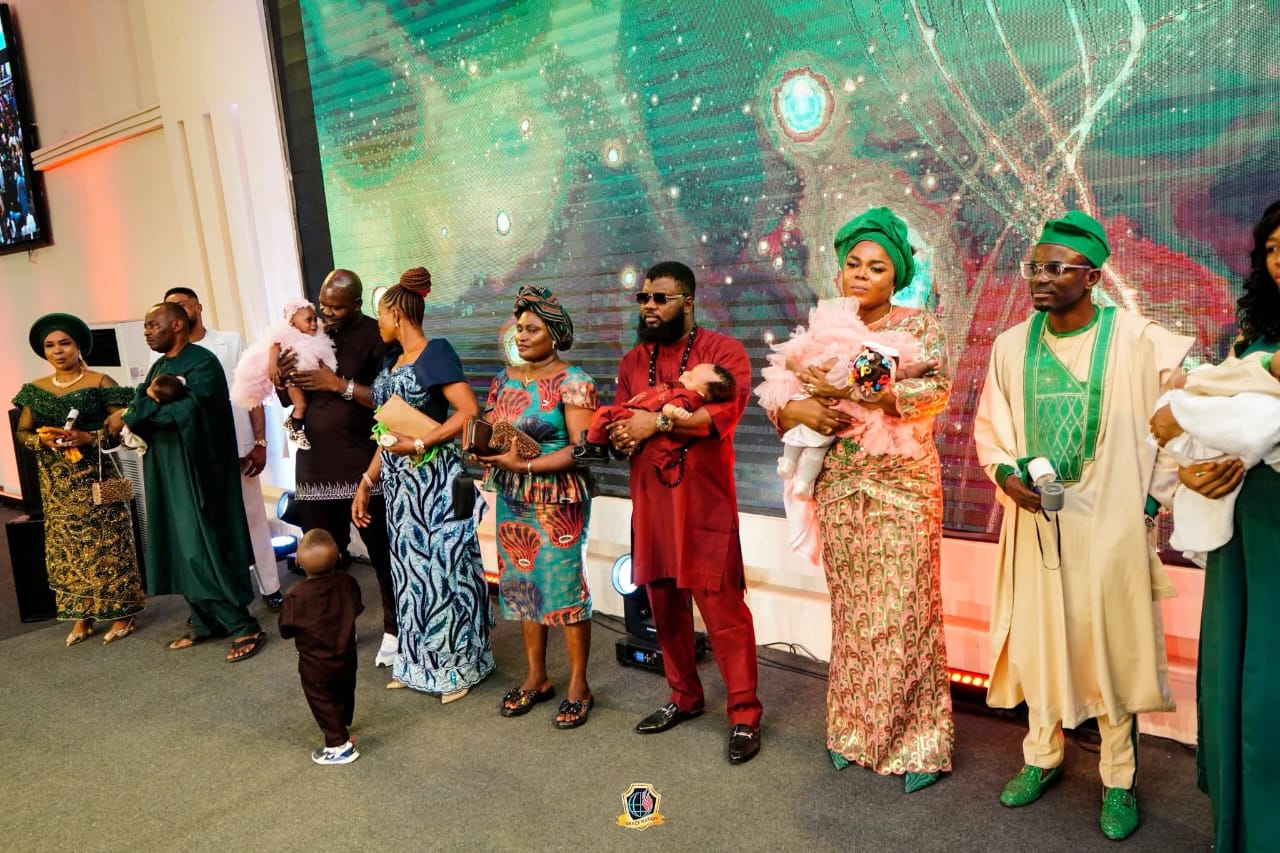
Dr. Chris Okafor invokes divine retribution upon individuals blackmailing the Grace Nation church
… Affirming God’s omnipotence to unveil malicious schemes.
To be frank, the ability of Doris Ogala and her associates to withstand the arduous challenges set by Senior Pastor Dr. Chris Okafor of Grace Nation Global at the culmination of the Harvest of Babies 2026 conference, the church’s flagship event, continues to elude me.
It’s advisable not to offend a powerful spiritual leader like Prophet Chris Okafor to avoid potential consequences, as seen in the situation with Doris Ogala, who was rebuked by the prophet; can she rectify the situation through confession?
Insiders close to the man of God claim that despite relentless online bullying and blackmailing, the Generational Prophet remains resolute, stating that God’s power has been evident throughout the commission’s existence. The reason for this wonderful statement is found in the scriptures, “Upon this rock I shall build my Church, and the gates of hell shall not prevail.” The more falsehoods are spread about the church and its leader, the more God elevates the church and propels him to greater heights, he asserted. He emphasized that blessings and fruitfulness are antidotes to curses, noting that God continues to bestow blessings upon the church, including miracles and the gift of children, which is one reason for the grand finale of the annual family liberation program, The Harvest of Babies.
However, the man of God issued a curse on each person speaking ill of the church, blackmailing, and uttering all sorts of falsehoods against the church, declaring that if they refused to repent within a few days, the earth would swallow them and their family members, stating that they would be of no use to themselves, their families, or society at large.
The spiritual leader cautions his followers to beware of such individuals including Doris Ogala who may taint their faith, and urges them to treat these persons as emissaries of the devil, avoiding them altogether.
Recall that the 2026 harvest of babies concluded with a remarkable birth of a miracle baby boy to a woman on the third day of the conference, accompanied by the dedication of several other miracle babies, all to the glory of God.
Christopher Sunday David writes from
Austria
“Together We Walk, Together We Secure”: Police Launch 2026 Walkathon In Abuja
The Nigeria Police Force has announced plans to host a walkathon in commemoration of the 2026 National Police Day, aimed at promoting unity, peace, and stronger community partnership.
The event is scheduled to take place on Tuesday, March 31, 2026, with participants expected to converge at the Force Headquarters Abuja by 6:00 a.m., where the walk will commence.
According to the organisers, the walkathon is designed to bring together members of the public, stakeholders, and security personnel in a show of solidarity and shared commitment to national security.
With the theme, “Together we walk, together we secure,” the initiative underscores the importance of collaboration between the police and citizens in maintaining peace and safety across the country.
Members of the public have been encouraged to participate in the exercise, which forms part of activities lined up to mark this year’s National Police Day celebration.
It is believed that the walkathon would not only foster closer ties between the police and the communities but also serve as a platform to promote awareness on collective responsibility in ensuring a safer society.


-

 society6 months ago
Religion: Africa’s Oldest Weapon of Enslavement and the Forgotten Truth
-

 news4 months ago
WHO REALLY OWNS MONIEPOINT? The $290 Million Deal That Sold Nigeria’s Top Fintech to Foreign Interests
-

 society6 months ago
“You Are Never Without Help” – Pastor Gebhardt Berndt Inspires Hope Through Empower Church (Video)
-

 celebrity radar - gossips2 months ago
Dr. Chris Okafor Returns with Power and Fire of the Spirit -Mounts Grace Nation Altar with Fresh Anointing and Restoration Grace on February 1, 2026