
Politics
Jagaban: Welcoming A UK Patient, Discharged For Presidential Race

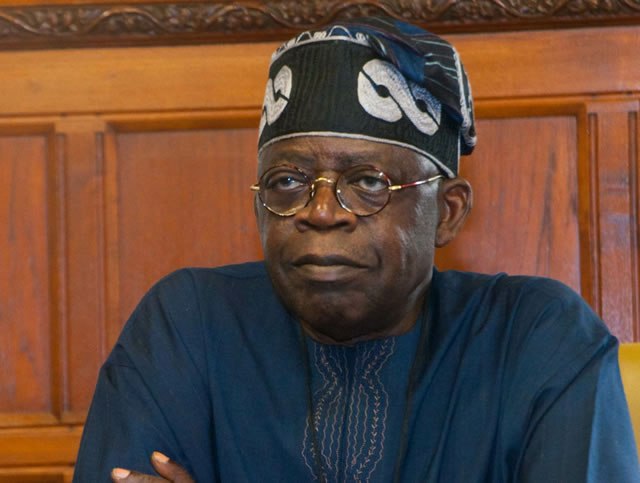
Jagaban: Welcoming A UK Patient, Discharged For Presidential Race
By Bolaji O Akinyemi.
Sahara Weekly Reports That Jagaban Welcoming A UK Patient, Discharged For Presidential Race. Our journey into the 4th republic started with hope. 1999 began the race with the rest of the world. Obasanjo was the man at the center, Tinubu, the man at the Center of Excellence. No other word can describe the opposition provided by BAT under AD. The dice was cast and Tinubu beat the progressives Elders in the game they thought him. ACN was formed as an offshoot of the progressive family.

If all virtues of progressivism were lost by Asiwaju one was left, the skills and dynamism of opposition. It was simply excellent! PDP was tackled on the streets and Obasanjo was taught several times in court, lessons in the rule of law and in constitutional democracy.
But ACN was slow paced in its conquest drive for political control of the South West, but for advance tribunal methodology, that saw to it that Osun, Ekiti and Edo States were taken over, it would have been restricted to Lagos!
By 2015, a political propaganda machinery of unequal proportion in the history of the world was supervised by the enigmatic Bola Ahmed Tinubu. PDP was battered on all media, and Buhari was successfully sold for what he wasn’t!
If today is a regret to all, I doubt if it is, to Jagaban! He knew what his fellows in the new ship of APC were capable of, but he presumed he will have no problems outwitting them in the game, but alas, they are not as dull as they look!
Respect must be given to Tinubu against PDP, but I don’t see him surviving the civil war in APC between CPC and the ACN components in the party.
Sentiments is one thing we must not allow to drive our decisions as we approach 2023! Over dose of it drove us to the brink we are in today. My opposition to Asiwaju Bola Ahmed Tinubu’s ambition for 2023 presidential race has absolutely nothing to do with hatred. Truth be told, he is too burnt out for the dynamism to be provided, bruce and beaten by the code of conduct to escape the oligarchy prows without something to pick. Though, he is the tongue tagged progressive leader of the Yoruba people of South West Nigeria. But my understanding and experience of progressive leadership of Lagos State under the leadership of Lateef Kayode Jakande makes him look like nothing but a capitalist hidden behind progressivism to fester his nest!
The lion of Boudillon is too old to hunt and if left to it, the horn of an antelope may hurt it and end its life!
Let me pull a paragraph from my last article on him, titled, “A Tripling Jagaban”, that makes me a prophet to the nation of Nigeria. “To save us from the risk of fostering any invalid on ourselves in 2023, I will suggest that a bill should be drafted by the office of the Attorney General of the Federation and should be forwarded to the National Assembly insisting on a comprehensive medical examination for everyone offering themselves for service to our nation who are above the age of 60, which must be made public”. Malami is too busy with how to keep the list of sponsors of terrorism away from the public to bother about this all important issue!
The decision of APC to zone Presidency to the South is a welcome development, but the fatal consequences of a President who has passed his/her flower must be kept in focus. The decision of Atiku Abubakar to withdraw from 2023 race on the grounds of being 77years old, though still looking smart and fit, is to help us avoid the parable that Joe Biden has become to United States of America!
Atiku, though 77 has not shown the aging signs that BAT has become. It was first revealed at a book launch in the comfort of the banquet hall of the Presidency, where though big, but the retina of Jagaban captured the image of Mrs Osibajo but the memory affixed a different name!
Then came the figure muddling in Kano, where an accountant of no mean repute substituted 50,000 with 50 million!
Then came the straw that broke the Carmel’s back, the event was the 2021 Arewa House Lecture,, the 11th Saudana Leadership lecture series, where he was the Chairman of the occasion, all eyes were on him, he was there at the city of the man with the little finger in the Nigeria game of thrones who once showed up in Lagos to teach Muiz Banire and his co-political travellers how to sack political Godfathers which he boasted he has done successfully in Kaduna State!
If Tinubu must trip, why should it be in Kaduna? The threat to sack him from politics remained an empty threat until ageing showed its hands. Tinubu was walking by the high table, exchanging pleasantries with other dignitaries when the unexpected happened!
From a close study of the video of the event available, it was his left knee that buckled, then the right followed, the struggle that followed showed a body that was hopelessly following his knees, though he staggered, his security details rescued him in time from what would have been the fall of a southern grace on a northern grass!
Eye witness says, the drama was plotted by a sudden decent in the floor level. This however has been generating some concerns for his health and has become a public debate of the state of his health fitness for what lies ahead!
Ageing comes to us in different forms particularly from age 60, this may become pronounced at 70, a recent research has shown that at 70 to 71 a man is considered old, the women have two years advantage over their male counterparts, theirs is pegged at 73. There are however exceptions to this research findings.
In preparation for my mother, late Dorcas Aduke Ogunseye’s 70th birthday in 2010, I had travelled to Ibadan in company of one of my sisters to make necessary arrangements for a successful event, one of which was to decide the event Center and make payment. We were received at our family house by my father who was then 79, he advised that we should leave the cars to make our movements and connections with different events easier. We chased after our 79 years old father all through the movements in the terrain of Apata Ganga, if you know what I mean!
He was very fit while our mother, was already a pitiable sight of her articulate self. Mama teacher had memory challenges. My father recently celebrated his 90th, still showing fitness, I wish President Muhammadu Buhari can. I am sure his driver can’t get him to sign any documents, nor take any undue advantage of him!
Ageing is not a curse but the reality of challenges we are bound to face at certain periods in our lives, it comes with joint changes, raging from minor stiffness to severe arthritis, bones are easily broken at this period if a fall occurs. Memory loss is the worst of it.
What Jagaban displayed in Kaduna was not different from General Muhammadu Buhari’s experience in the build up to 2019 elections, the then Presidential candidate of the APC tripped in Lokoja at the campaign ground, whether it was caused by sudden stiffness of his joints or severe arthritis, no one could tell, for our joke of a nation never provided us a second opinion, if only for political reasons as in Asiwaju’s case!
The President went on to show several other signs of ageing during his electioneering campaigns.Loss of memory, with difficulty to recognize faces was his bane in Delta State, where he mistook the party Chairman for the State Gubernatorial Candidate and raised his hands to a bemoaned crowd! The situation came to a head when on the set with the candidate hosted by Kadara live on NTA. His obvious ageing sign will later inform my question to the Vice President at the Grill, a platform for campaign with Pastors in Lagos.
My question was coloured without sentiments; Sir, given the embarrassments Nigerians were thrown into by the incoherent responses of Mr President on the candidate, and your attempts at allaying his thoughts in the direction of the questions without success, will you before God and man say that the President is mentally and physically fit for the rigours of duties, if elected as the President? The answer to that question posterity has given contrary to what the Vice President made us believe.
If only ours is a country where the health of our President matters, if only ours is a country where democracy is practised, the state would have carried out the duty it owes us of making known our President’s state of health then, failure to do that should have led to our demand for medical investigations into the reasons our President, tripped in Kogi, fumbled in Delta and showing dementia symptoms when he lifted the hands of the party chairman as that of the candidate. We however carried on as usual as if nothing had happened. The consequences of our inaction is a President deceived by his driver to sign a multi million naira contract!
How many of such deceptions our President had and will suffer before he will hand over in 2023 is left to the days ahead to reveal!
President Mohammadu Buhari, in his honest state of mind had informed us after his election in 2015, that he will serve for a term of four years. He gave the toil of age on his body and mind as his reasons. However a man known for one thing, which is keeping to his words, changed it and his life time earning of integrity was squandered!
What Buhari informed us of by words, Asiwaju has, with incoherent and fluttering speech at the Presidency, 3 years earlier of his chance. 50 million for 50,000 and with his trippling in Kaduna!
But ọmọ Alhaja is not the type that will give up on his goal. What Buhari fixed in medical tourism in over a 127 days with direct payments from our taxes, he generously, as usual, probably fixed with over flow of Lagos taxes from Alpha Beta and in less than a 100 days!
With a knee worked on, stuttering tongue, unattended to and memory bank untouched, our patient is discharged to come and become President in 2023! It isn’t about whether he will win or not, but the impact of a patient after another on our Presidency and future as a nation should be weighed by APC Delegates. They will do well to give us a body fit for the job, a brain balanced for the duty.
Nigerians must avoid a repeat of Buhari’s incompetence which is compounded in this 2nd term by his being incoherent. We are obviously under a President whom decisions are taken for and duties discharged by proxy!
On the fall in Kaduna, I wrote, “without doubting the floor excuse, Tinubu’s tripling in Kaduna is worrisome, probably a sign of old age that cooperated with the floor, which must have been as a result of knee buckling, also known as knee instability or weak knees. Frequent knee buckling raises the risk of falling and serious injuries. How often this has been happening is left to Asiwaju to let us know. This should be investigated medically, so that we can figure out the underlying causes. Nature has a way of showing its impact on us with aging differently. While I have nothing against old men and women of Asiwaju’s age who want to serve the nation. But everyone who truly loves them should be worried when tripping becomes regular”.
This 90 days sojourn in UK has confirmed that his spoke person lied to us when he said it was the floor, for the floor has not been operated and may never be. Asiwaju’s knee’s operation has finally confirmed that it wasn’t the floor that gave way, but his knee that buckled.
The roles of spoke persons have have started in earnest. High Chief Raymond Dokpesi confirmed the confusion of our political elites, when in one speech he echoed the right of the north to 2023 supported by PDP zoning, in the same, he reminded us his support will be for Bola Ahmed Tinubu on APC zoning to the South, not for competence but for that which they shared in the past and will continue to share. If “Share” is it for them, what is it for us? Our elites are party less, they are only interested in places where their share are preserve. We also must learn that whichever the party or candidate, good governance should be it for us.
We can’t but hope that APC Delegates will put the interest of a healthy nation first and give consideration to the need for a healthy Presidential candidate!
Dr Bolaji O. Akinyemi, an Apostle focusing on revival in the church and revolution in the nation, the BID, as he is fondly called, is also a communication strategist.




Politics
Political Earthquake in Kano: How, Senator Rabiu Musa Kwankwaso, Nasiru Gawuna’s Move to ADC Reshapes North-West Politics
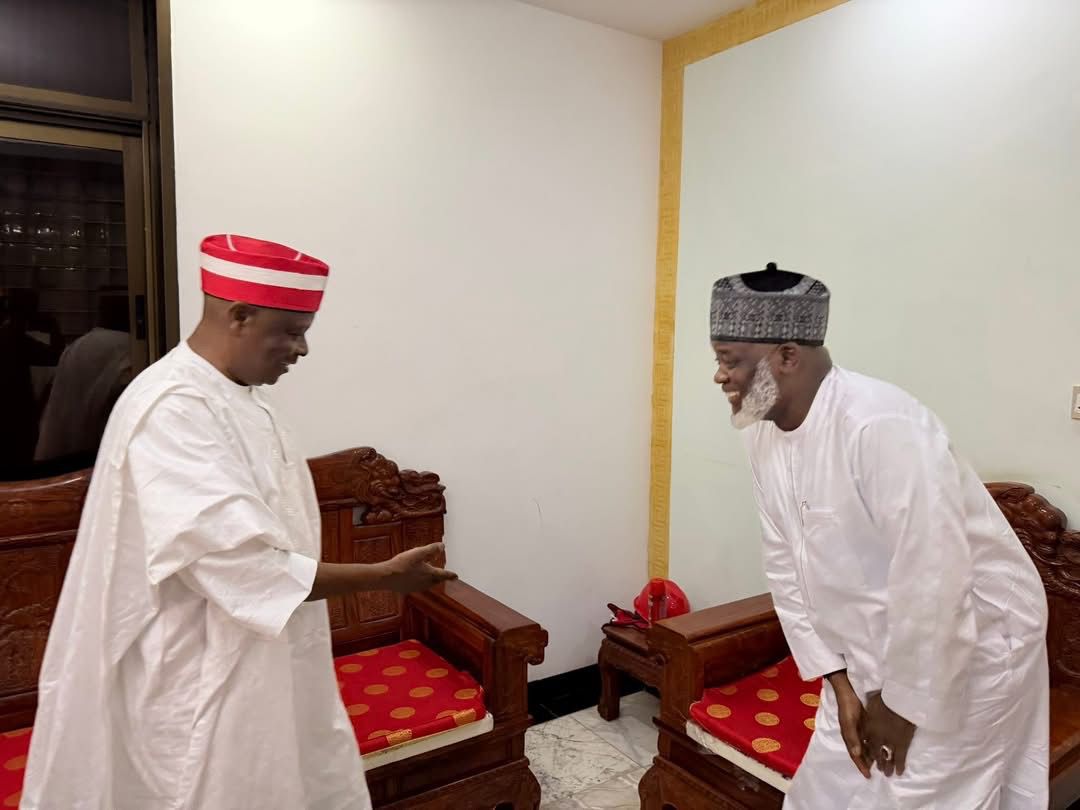
Political Earthquake in Kano: How, Senator Rabiu Musa Kwankwaso, Nasiru Gawuna’s Move to ADC Reshapes North-West Politics
The political atmosphere of Nigeria’s North-West was fundamentally altered on a sweltering afternoon in 2026 after Senator Rabiu Musa Kwankwaso former Governor of Kano State and Former Minister for Defence who is also the “Grand Commander” of the Red-Cap revolution, finalized a move that many viewed as the ultimate masterstroke of his political career. By transitioning from the NNPP to the African Democratic Congress (ADC), Kwankwaso did more than change platforms; he effectively reset the coordinates of the nation’s largest voting bloc.
Senator Kwankwaso’s pedigree is defined by a singular devotion to human capital development and an almost mythical grassroots loyalty preceded him. He turned a local movement, the Kwankwasiyya, into a disciplined, ideological army that transcends traditional party structures. His entry into the ADC instantly transformed a secondary party into a formidable fortress, signaling to the ruling elite that the North-West is no longer a monolith under their control.
The gravity of this shift is most profound in Kano, the heartbeat of Northern commerce. For years, the state was a polarized battlefield between the Kwankwasiyya and established conservative wings. However, the entry of Nasiru Yusuf Gawuna into the same ADC orbit has created a “Kano Super-Alliance” that was previously unthinkable. Kwankwaso, the visionary architect who sent thousands of Kano’s children to global universities, now finds his populist ideology merging with Gawuna’s administrative steadiness and deep-rooted institutional connections.
This synergy is a seismic departure from the politics of “zero-sum” rivalry; it is a calculated fusion of mass appeal and the strategic machinery required to protect and deliver votes.
This move reshuffles the entire North-West deck. As Kwankwaso plants the ADC flag across the region, he is attracting a wave of heavyweights from Kaduna to Sokoto who feel marginalized by the status quo. His political pedigree allows him to speak with a regional authority that others lack, positioning himself as a protector during a time of economic uncertainty. By bringing Gawuna into this fold, the dynamics of Kano politics have shifted from a war of attrition to a coalition of necessity. This alliance creates a “Third Way” that bypasses the failures of the old guard, promising a return to the rapid growth that defined the Kwankwaso years, but with a broader, more inclusive base that could dictate the occupant of Aso Rock in 2027.
Kwankwaso’s career has always been defined by a uniquely personal brand of power. From 1999 to 2015, he served two terms as Governor of Kano State, in addition to roles as Minister of Defence and Senator. While many were surprised by his recent maneuvers; especially following closed-door meetings with President Bola Tinubu, he chose the emerging ADC over the ruling APC.
In the high-stakes theater of Nigerian politics, few events have jolted the region quite like the defection of Nasiru Yusuf Gawuna from the APC to the ADC on March 31, 2026. Coming just twenty-four hours after Kwankwaso’s move, Gawuna’s transition fundamentally has also altered the political calculus in Kano. What makes this moment remarkable is the sheer drama of the reversal. Gawuna’s political journey has been a steady, calculated ascent through Kano’s establishment. He first shot to prominence as Commissioner of Agriculture under Governor Abdullahi Umar Ganduje, earning a reputation for hands-on management in a state where farming is the economic backbone. He eventually rose to Deputy Governor, serving for nearly six years and gaining invaluable executive experience. Beyond partisan politics, Gawuna distinguished himself as Chairman of the Governing Council of Bayero University and, most recently, as Chairman of the Federal Mortgage Bank of Nigeria (FMBN). He resigned from the FMBN on March 27, 2026, citing compliance with presidential directives regarding political appointees.
A look back at the 2023 gubernatorial election reveals just how significant Gawuna is. Running under the APC, he polled over 890,000 votes against the formidable Kwankwasiyya machine. This proved that he is one of the few politicians in Kano who can genuinely compete with Kwankwaso’s electoral machinery. His strength is threefold: he appeals to the youth, the religious establishment (Ulama), and the business community; he has the capacity to split the APC vote; and he has demonstrated he can deliver votes independently of a larger party wave. To understand the magnitude of this defection, one must appreciate the complete inversion of alliances since 2023. Back then, Governor Abba Kabir Yusuf ran on the NNPP ticket with Kwankwaso’s backing, while Gawuna carried the APC banner with Ganduje’s support. By 2027, the roles will likely reverse: Governor Yusuf is positioned to run under the APC with Ganduje’s blessing, while Gawuna is poised to run under the ADC with Kwankwaso’s endorsement.
From the perspective of the Kwankwasiyya movement, Gawuna’s arrival is a “return” rather than a “recruitment,” as he was part of the movement’s pioneer cohort. This narrative neutralizes accusations of opportunism. For his part, Gawuna framed his move in terms of service and divine guidance, with sources indicating he felt marginalized within the APC after his 2023 defeat.
The reaction from within the APC has been one of worry and regret. President Tinubu, recognizing the stakes, reportedly directed party leaders to prevent Gawuna’s move, even offering him an automatic Senatorial ticket for 2027. The failure of this pressure campaign, Gawuna reportedly placed his phone on “Do Not Disturb” and traveled abroad to avoid lobbyists represents a significant defeat for the presidency’s political management. This crisis prompted emergency meetings between President Tinubu, Dr. Ganduje, and Badaru Abubakar at the Presidential Villa to reorganize their strategy.
The long-term implication is the potential break of the APC-PDP duopoly. The ADC is now positioning itself as a genuine “third force” in the North-West. The defection of high-profile figures like Senator Ahmed Babba-Kaita, Senator Aishatu “Binani” Ahmed, and former Justice Minister Abubakar Malami suggests a coordinated realignment. This competition could force more substantive policy debates and reduce the “zero-sum” intensity of regional elections.
The projected 2027 gubernatorial rematch between Gawuna (ADC) and Governor Yusuf (APC) will be a battle between two men with established records. Voters will have a genuine choice between performance and platform rather than just shifting loyalties. As Gawuna put it: “Allah gives power to whom He wants and when He wants.” While the 2027 elections will reveal where that power flows, it is already clear that the political landscape of the North-West will never look the same again.
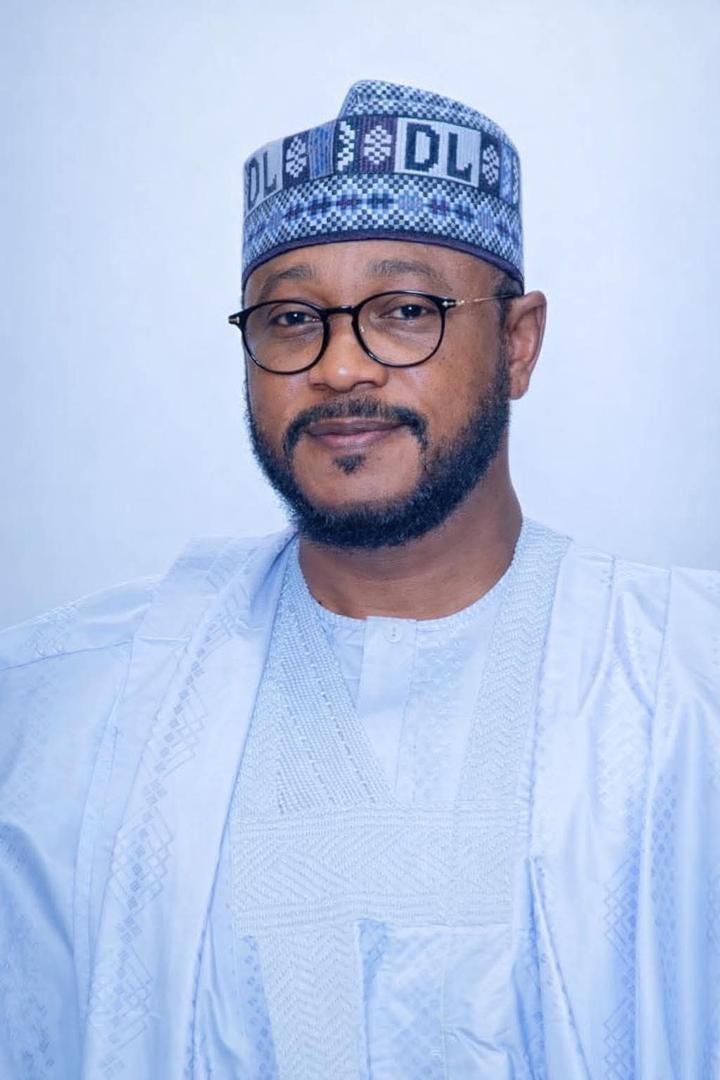
Governor Dauda Lawal Approves Gratuity Payment
The Zamfara State Government, under the visionary leadership of Governor Dauda Lawal, has approved the release of funds for the payment of Gratuity Batch 3 for the 2024/25 period. This decisive action underscores the administration’s unwavering commitment to the welfare of retired civil servants who dedicated years of service to the state’s development.
The Accountant General of the State is already working diligently to ensure that all eligible retirees receive their payments promptly and efficiently, reflecting the government’s resolve to uphold transparency and accountability in the disbursement process.
This timely gratuity payment is a testament to Governor Dauda Lawal’s people-centered leadership, which recognizes the sacrifices and contributions of retirees to the progress and stability of Zamfara State. It also reaffirms the government’s pledge to honor its financial obligations without unnecessary delays.
The Zamfara State Government calls on all retirees in the affected batch to exercise patience as the necessary administrative and financial processes are finalized. Every effort is being made to ensure smooth and uninterrupted payments.
This initiative is part of Governor Dauda Lawal’s broader vision to empower citizens and retirees, strengthen confidence in public service, and sustain the morale of those who have committed their lives to the growth of Zamfara State.
Politics
APC Group Endorses Fubara for 2027, Calls on Tinubu and APC to Prioritise Performance Over Politics in Backing Governor’s Second Term Ambition
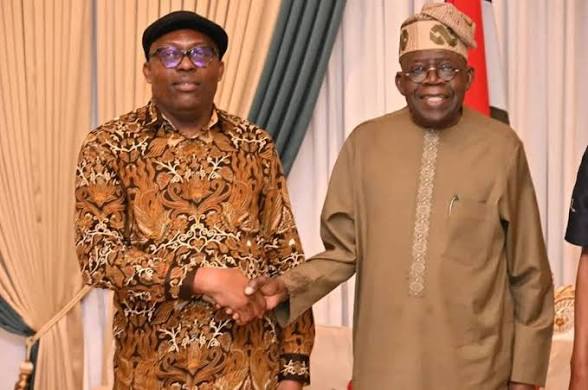
*APC Group Endorses Fubara for 2027, Calls on Tinubu and APC to Prioritise Performance Over Politics in Backing Governor’s Second Term Ambition*
The APC National Vanguard has appealed to President Bola Ahmed Tinubu and the leadership of the All Progressives Congress (APC) to support a second term in office for Siminalayi Fubara, citing what it described as “impressive and verifiable developmental strides” across Rivers State.
In a statement issued on Thursday by its National President, Dr Gbenga Salam (JP), the group said its position followed an extensive assessment tour of key infrastructure and public service projects executed under the Fubara administration.
The APC National Vanguard said the appeal was based strictly on performance, arguing that governance outcomes should outweigh partisan considerations, particularly in a state as economically significant as Rivers.
“We respectfully urge President Bola Ahmed Tinubu and the leadership of the All Progressives Congress to support the continuity of Governor Siminalayi Fubara beyond his current tenure, in recognition of his commitment to development, prudent resource management, and people-focused governance,” the statement read.
According to the group, its delegation visited multiple project sites across the state, observing ongoing and completed works spanning road construction, urban renewal, and public infrastructure upgrades.
It noted that the scale and distribution of these projects reflect a deliberate effort by the state government to extend development beyond traditional urban centres and into underserved communities.
“Our findings from the tour reveal a government that is not only active but intentional in its development agenda. The execution of capital projects across various parts of Rivers State demonstrates a clear understanding of the needs of the people and a commitment to addressing them,” Dr Salam said.
The group particularly commended what it described as prudent financial management by the administration, noting that the projects reviewed showed evidence of careful planning and efficient allocation of resources.
“At a time when economic pressures are evident across the country, it is commendable that the Rivers State government has managed its resources in a way that delivers visible and impactful development without signs of fiscal recklessness,” the statement added.
The APC National Vanguard further observed that despite political tensions in the state, the Fubara administration has maintained focus on governance, ensuring continuity in project execution and service delivery.
The group argued that such stability is critical for sustained development and should be encouraged rather than disrupted.
“Leadership must ultimately be judged by results. In Rivers State, there is clear evidence of progress—projects that are not only announced but executed, and policies that translate into real benefits for citizens,” Dr Salam noted.
The group warned that discontinuity in leadership could stall ongoing projects and reverse gains already recorded, stressing the importance of allowing a performing administration to consolidate its achievements.
“Rivers State is at a pivotal stage where continuity will allow for the completion of ongoing initiatives and the deepening of development gains. Supporting Governor Fubara for a second term is, therefore, a decision in the best interest of the people,” the statement said.
In addition to its call on the APC leadership, the group reaffirmed its support for President Tinubu, expressing confidence in his administration’s broader economic and governance reforms.
The APC group urged Nigerians to remain supportive of efforts aimed at stabilising the economy and strengthening public institutions.
“We reiterate our endorsement of President Bola Ahmed Tinubu for a second term in office, in recognition of his leadership and commitment to national development. With sustained support, the administration can consolidate its reform agenda for the benefit of all Nigerians,” Dr Salam added.
The APC National Vanguard concluded by calling on political actors to prioritise development and public interest over partisan divides, insisting that governance should always be guided by performance and accountability.
“Where leadership demonstrates prudence, delivers development, and remains focused on the welfare of the people, it deserves continuity. This is the position we have reached after a careful and independent assessment of Rivers State,” the statement added.


-

 society7 months ago
Religion: Africa’s Oldest Weapon of Enslavement and the Forgotten Truth
-

 news4 months ago
WHO REALLY OWNS MONIEPOINT? The $290 Million Deal That Sold Nigeria’s Top Fintech to Foreign Interests
-

 society6 months ago
“You Are Never Without Help” – Pastor Gebhardt Berndt Inspires Hope Through Empower Church (Video)
-

 celebrity radar - gossips2 months ago
Dr. Chris Okafor Returns with Power and Fire of the Spirit -Mounts Grace Nation Altar with Fresh Anointing and Restoration Grace on February 1, 2026